
Stepwell ll
Challenge to design a contemporary stepwell
Overview
 Fig: 1 - Water continues as an important aspect, although the way we manage it differs in quantities and methodologies.
WATER AN INTEGRAL ELEMENT OF LIFE
In ancient Indian literature, water has seen itself transcend its physicality to become an intrinsic part of spirituality, philosophy, cosmology, medicine, and poetry. It permeates various rituals across religion and is not only integral to everyday life but also becomes part of celebrations in various forms. Throughout history, humans have found ways to channelise and utilise water in various ways ranging from washing to creating energy.
This maximisation, a consequence of evolution, has unfortunately also ushered in with it a pressing environmental concern. Today we are battling water pollution and water scarcity in the same breath. Water is slowly creeping into a realm where it becomes a luxury despite it being integral to life.
If we are to continue thriving as a species we must begin to work towards establishing a greener future and perhaps revisiting some of our past practices.
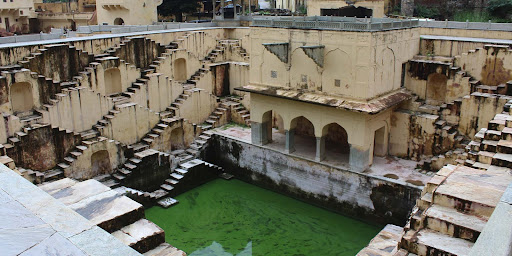 Fig: 2 - Baolis only only helped traditional india to save water but also regulate temperatures in humid/dry regions
STEPWELLS OF INDIA
Indians have been creating stepwells or baolis for aeons as a direct consequence of weather and geography, in order to combat recurring droughts. With time baolis came to represent important public spaces.
While some of them, particularly the ones built by wealthier patrons, emerged as elaborate structures painstakingly detailed by artisans. Others became shrines for rituals. In certain communities, they came to be seen as divine spaces where goddesses of fertility dwelled. In others, they became important retreats for travellers since they provided shaded pavilions where one could rest.
Historically they even gained importance to women who often lived constrained lives, and thus the social gathering while collecting water became important moments of escape.
As a result, these spaces were not just functional daily use spaces that protected and channelled an important resource-water- but they also became intrinsic to cultural amalgamation and public life.
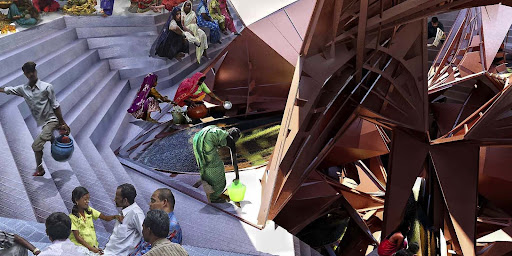
BRINGING BACK THE PAST
As our modern urban world deal with mounting environmental challenges, it may be imperative for us to relook at existing traditional practices and reintroduce them in our worlds. In India, baolis don’t just provide a solution to a pressing environmental concern but they also become important public spaces for community interaction and cultural coalescence.
Brief: The challenge here is to attempt to design a Baoli centric landscape intervention for the new India.
You may borrow or be inspired by the existing typologies and essential qualities of historical Indian stepwells but you must reinterpret the same for modern India and its future aspirations.
The designed outcome must act as a space for people to enjoy a waterfront but also raise awareness of the mounting water crisis amidst its visitors. In addition it must serve the dual purpose of historical Baolis as both a space for managing water resources as well as being an important public space for the surrounding community.
OBJECTIVES
- Design: The designed solution must present your novel approach to a stepwell centric landscape intervention in urban India
- Functional: The space should be a functional and open public space that can change based on the needs of the community
- Sustainable: The design must use sustainable designs, materials and technologies
- Sanitise: The design must create ways to treat and sanitise the accumulated water so it may be used in its surroundings.
SITE
The site for this project is located in Cubbon Park, Bangalore, India. The park is well known for its natural beauty across its sprawling acreage, however, the chosen site is in a bamboo grove that is slowly drying out due to lack of water.
The park that is located in central Bangalore is frequented by visitors from across the city throughout the day. It is home to many species of flora and small fauna, hence the participants are urged to incorporate the existing bamboo groves on the site. Bangalore has a sandy clay and clay soil type.
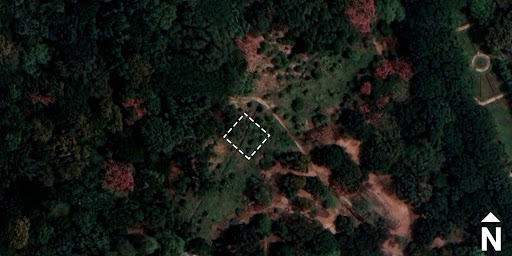
Coordinates: Maps
Site Area: 494 sqm
Maximum FAR: 0.5
Height Restriction: 4 m
Setbacks as per CAD plan
