
Tokyo Dojo
Uniting people via a sports hub
OVERVIEW
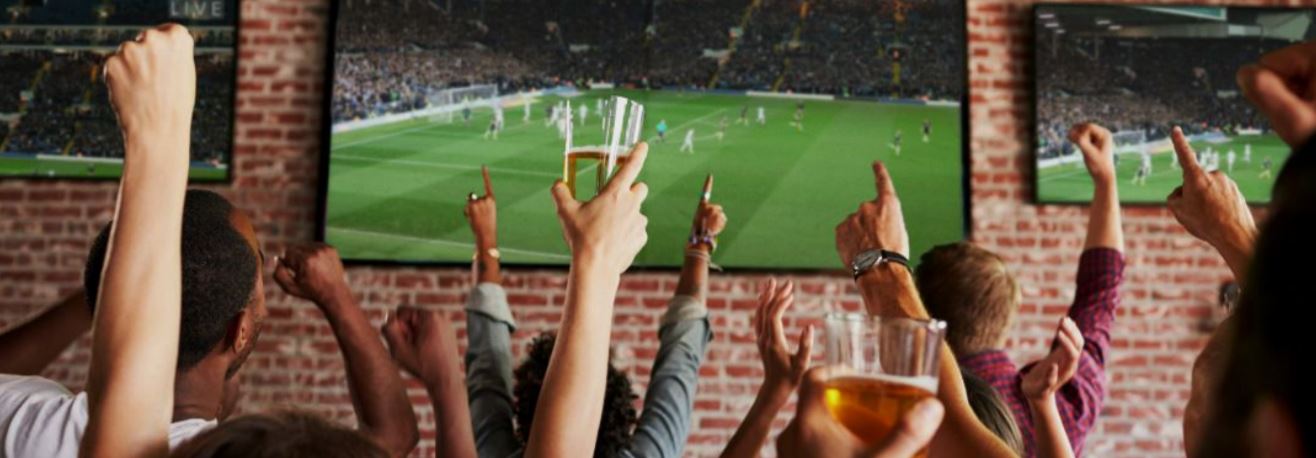
Image 1 :People watching and cheering for a sports match in a public place.
Premise
Sports is the cry of triumph, the tears of joy, the beating of chest when your team loses in nail biting crusade. Gathering up on streets in front of a TV, listening to radio broadcast in a remote village or watching with your friends on a 52 inch screen - the euphoria with which the whole country cheers is unparalleled. It has the power to captivate, to enable people to forget the sorrows and differences in unison, for those fleeting few seconds.
The value of sport to local government and communities extends beyond the medals won and records broken. Besides bringing communities together, it has an impact in developing capital and reducing social isolation. An opportunity for society to grow and let the unspoken divides get blurred.
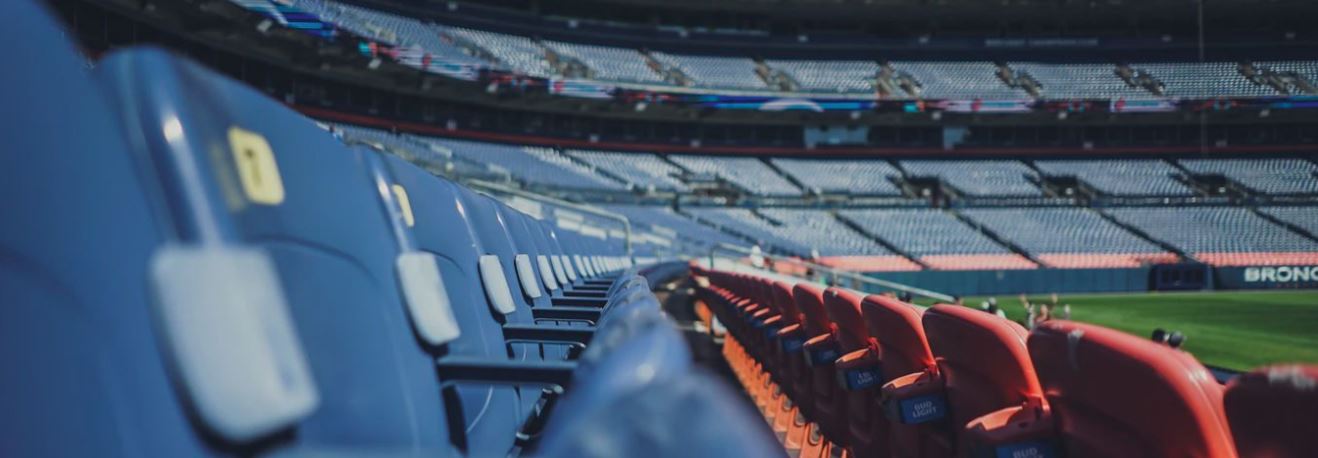
Image 2 :Empty Stadiums
Issue
The way the audience is consuming sports is changing. In USA itself, there was a 10% decrease in number of people going to stadiums to watch Major League Baseball. Reasons attributed to hectic office hours, people spending time on transit, exuberant ticket prices and most importantly - Technology.
Technology and economics encourage a more in-person experience, atleast offline. Today, we can watch any game from anywhere, and view it in the climate-controlled comfort of our house. Media contracts has made TV as valuable if not more than a spectator in a stadium, and rather encourages it for monetary benefit. This has led to sports becoming a television event, like a WWE, than one can move on from by changing the channel.
From an experience, it has become another spectacle. From an event that was relieved by a community in unison to a show put on display for individual consumption. The fervour that activated a city is slowly getting eroded. (Source)
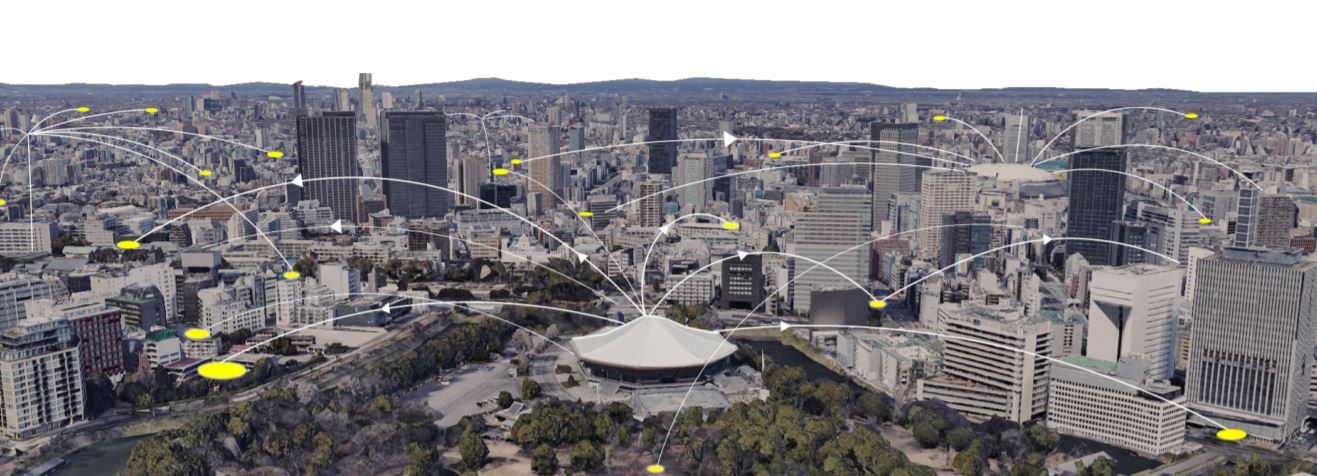
Image 3 :Sports event in a stadium activating micro hubs present all over the city fabric.
Brief
A community lives its best experience when everyone is interacting under the same roof. And sports has the potential to provide such a platform. Unfortunately a dense city fabric, work-life and technology has changed viewing patterns. An in-person experience has taken precedence over community integration. This has led to lack of street activity, hence a vanishing neighborhood and unsafe dead streets.
How can an activity that plays within the confines of four walls be shifted back to the streets? Without disrupting the pattern of virtual consumption.
Challenge is to design an interactive sports hub, where people can come together, watch and enjoy a sporting event.
A structure housing various functions that can be installed in different neighbourhoods. It becomes a space for people to come together without any transit problems mitigating it.
Objectives
Iconic: Represent the spirit of sports and its significant contribution.
Flexibility: Using the space for other public activities besides a sporting event.
Scale: Reimagining a stadium experience in a micro hub.
Temporary: Temporary structure due to land use constraints and limited use.
The following objectives can be a point of beginning to conceive this design.
The main objective is to design an area that could recreate the atmosphere of a stadium for fans who have missed out on the live experience.
Beyond that it aims to reap the benefits of community maneuvering that sports has the potential to ignite. Dense fabric of Tokyo has open spaces that act as active voids in every district. Aim is to design a temporary structure in these spaces, that will act as hotspot for public integration.
Participants can assume data wherever necessary and have to devise their own programme.
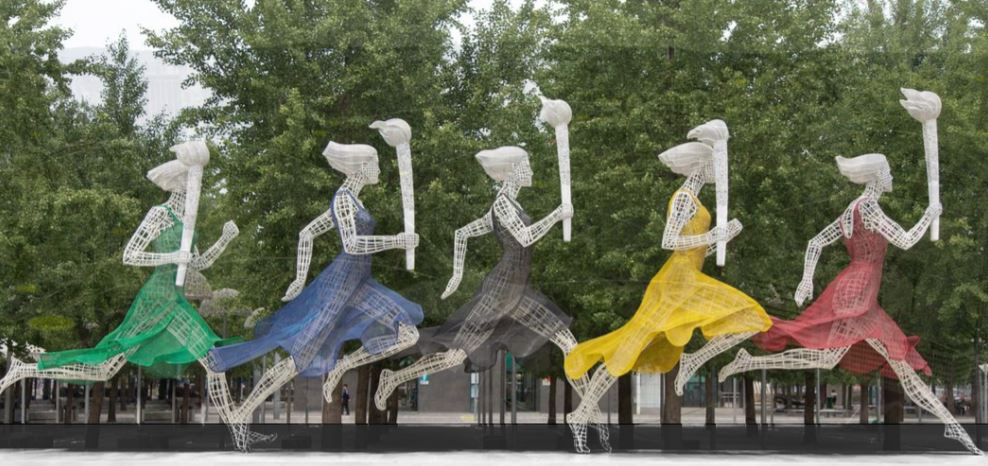
Img 4: Summer Olympics and Paralympic Games 2020, Japan
Summer Olympics and Paralympic Games
The biggest sporting showdown of the world, Summer Olympic and Paralympic Games 2020, will commence in Tokyo, Japan from July 24th. Around 11,000 participants from 206 nations are expected to take part. The host country is aiming for the Olympics 2020 to be the most innovative Games in history.
Work culture, unpaid overtime hours, pressure of succeeding young, heavy reliance on technology - have curated a culture of loneliness in Japan. People are completely withdrawing from any social life, leading to a disappearing communal fabric. (Source) Events like Olympics besides elevating the city to a tourist hub, have the potential to bring people out and engage them with the city. Thus competition besides designing a spectator hub provides an opportunity to address the issue of Japan’s vanishing neighbourhood fabric.
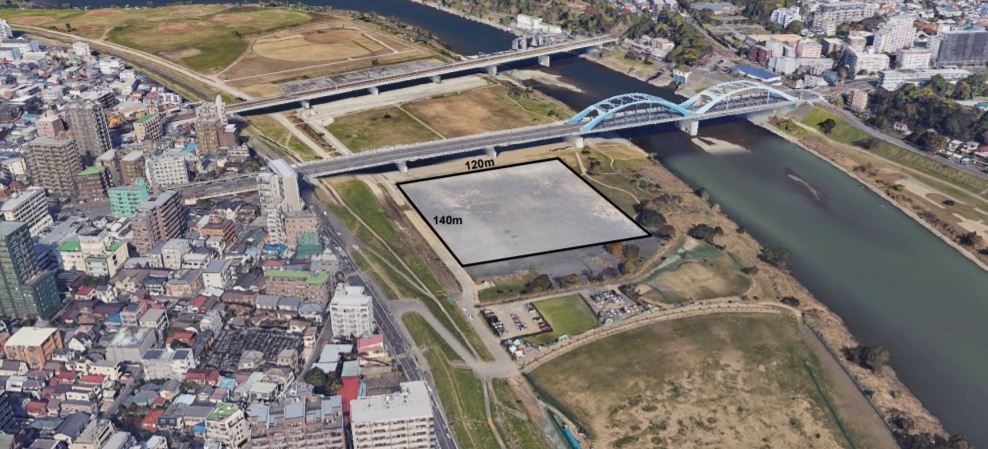
Img 5:: View of Maruko Square in Kawasaki, Kanagawa.
Kawasaki, Kanagawa
Kawasaki is a city in Kanagawa Prefecture, Japan part of the Greater Tokyo Area. It is the 8th most populated city in Japan and has a population density of 10,000 persons per km2 . Maruko Square is an open space along the Tama River, designed to accommodate the extra floodwater and also used as a platform for public community activities.
The structure hence designed, has the possibility for an influx of audience 24x7. The structure is aimed to be the center point for community manoeuvring during sports and other important events.The maximum built-up area is 5000 square metres, and it could be placed anywhere within the given site parameters according to the suitability of the participant.
- Area - 16,000 sqm
- Coordinates - 35°35'01.4"N 139°40'02.7"E
- Climate - Humid Subtropical Climate
- Height Restriction - 25m
Similar Competitions
Discover competitions you might be interested in


Challenge to design an outdoor ice-rink and park

Challenge to design a barrier free sports center
