
AIR Circular Campus and Cooking Club: A Landmark in Sustainable Restaurant Architecture by OMA and Zarch Collaboratives
AIR Circular Campus in Singapore redefines fine dining with sustainable restaurant architecture, blending farming, cooking, and community engagement in innovative spaces.

The AIR Circular Campus and Cooking Club in Singapore redefines fine dining by blending sustainability, community engagement, and architectural innovation. Designed by OMA in collaboration with Zarch Collaboratives, this 700 m² project transforms the act of eating from a passive indulgence into an interactive journey—encouraging guests to learn, participate, and think critically about food sourcing, waste reduction, and the environmental impact of dining.
Historical Context and Site Transformation
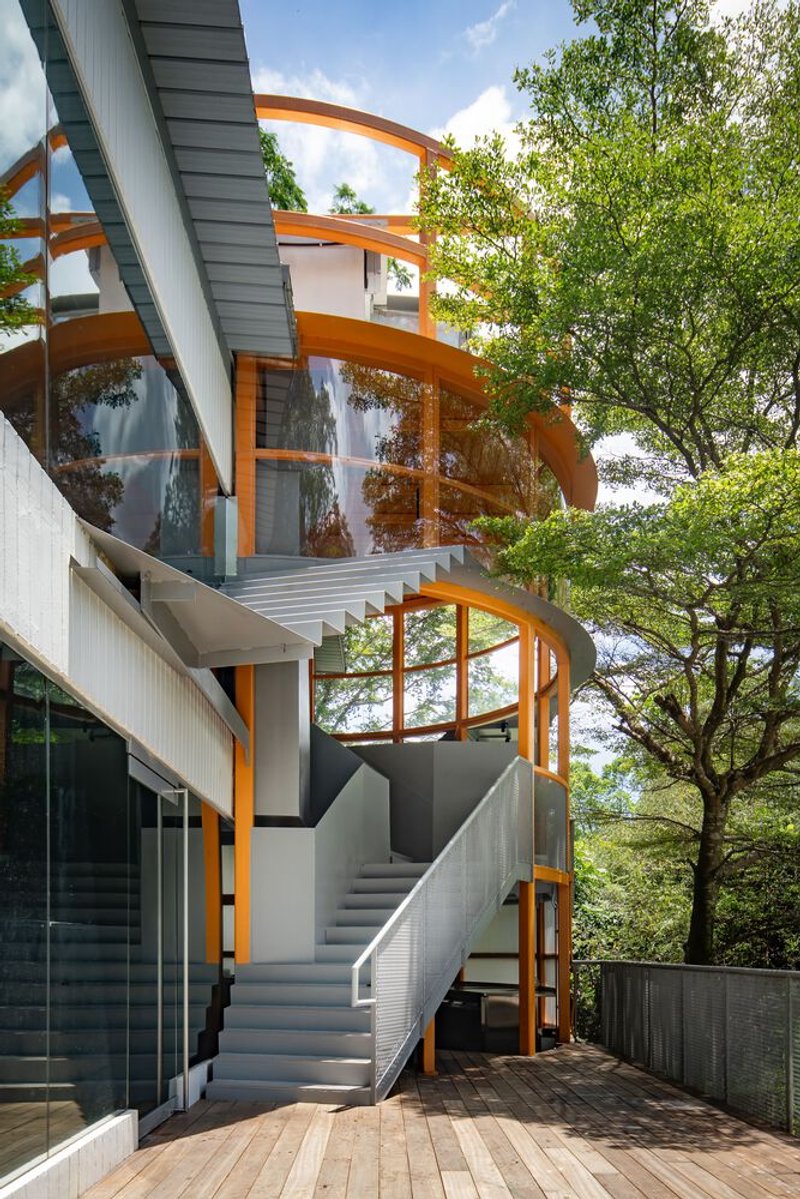
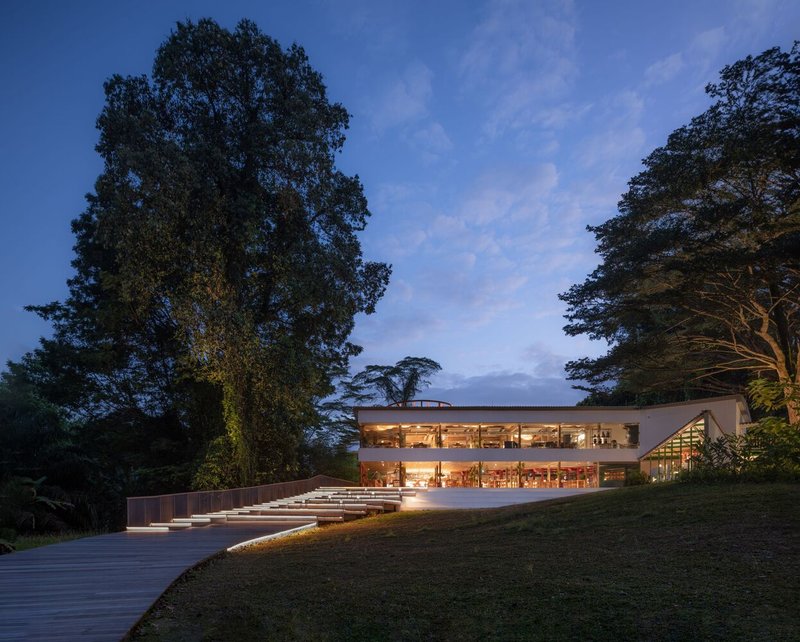
Located on Dempsey Hill, a site with a layered history as a 19th-century nutmeg plantation and later a military barracks, AIR occupies the CSC Dempsey Clubhouse built in the 1970s. While the building itself holds no formal heritage status, the surrounding 4,000 m² green space is protected—trees with a girth over one meter must be conserved. OMA’s approach respected both conditions: minimal alterations to the existing structure reduced construction waste, while the design celebrated the site’s natural assets, merging architectural and landscape elements into one cohesive experience.
Architectural Interventions for Sustainability and Engagement
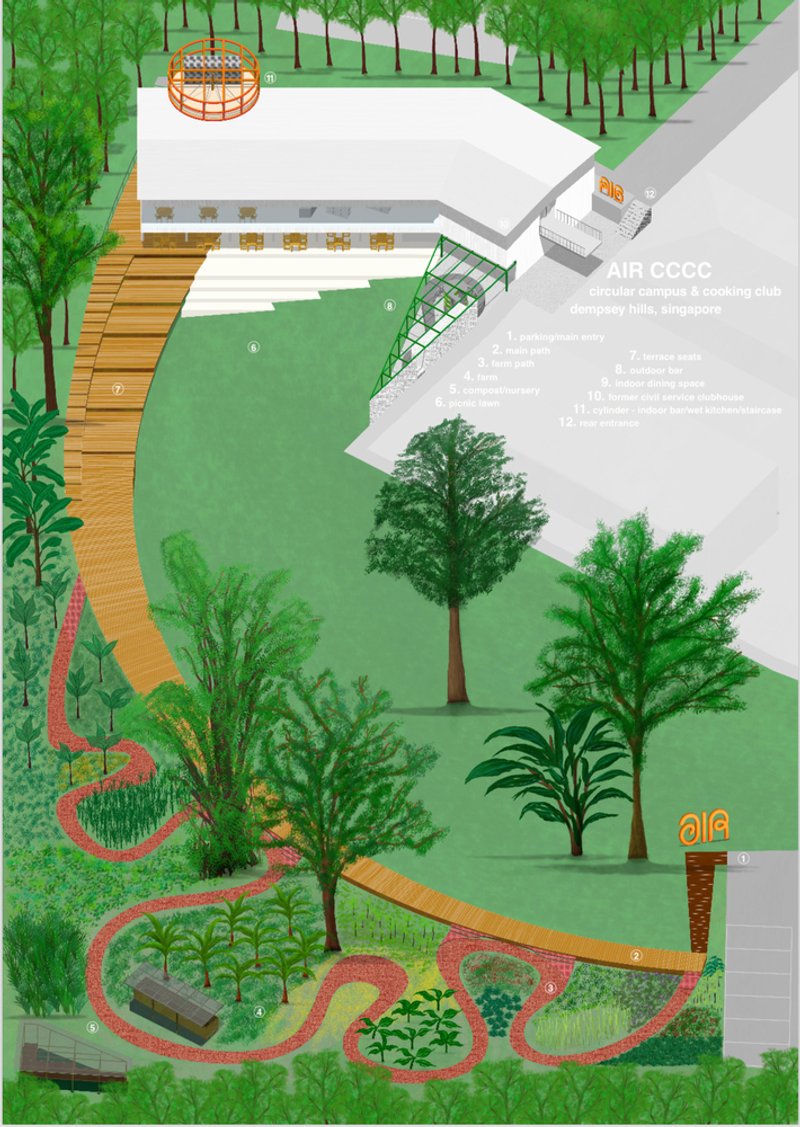
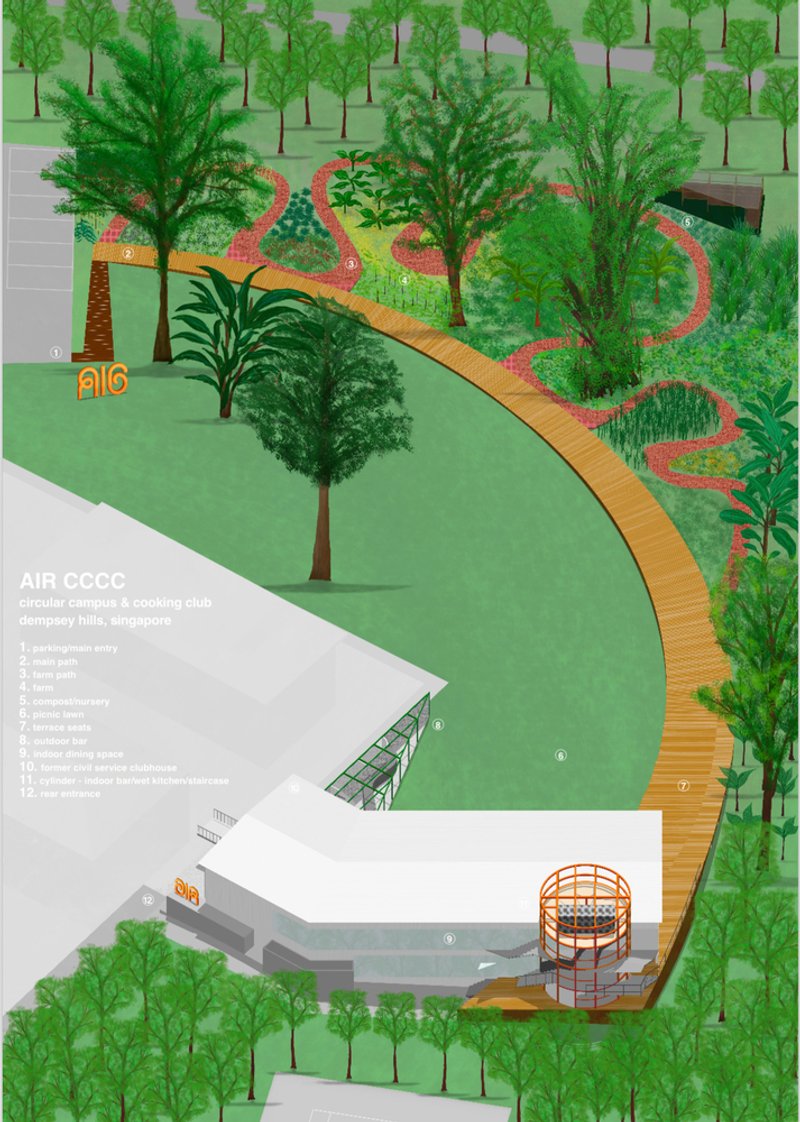
A defining feature is the 100-meter organic walkway connecting a main parking area to the clubhouse. This curving path not only improves accessibility but also frames the campus into two zones: a productive garden—home to AIR’s urban farm—and an expansive lawn for picnics, events, and casual gatherings. Along the route, shaded patios offer spaces for relaxation, encouraging interaction with the landscape.
Reimagining the Clubhouse
The modernist clubhouse, with its ribbon windows, is reconfigured to maximize transparency, openness, and engagement:
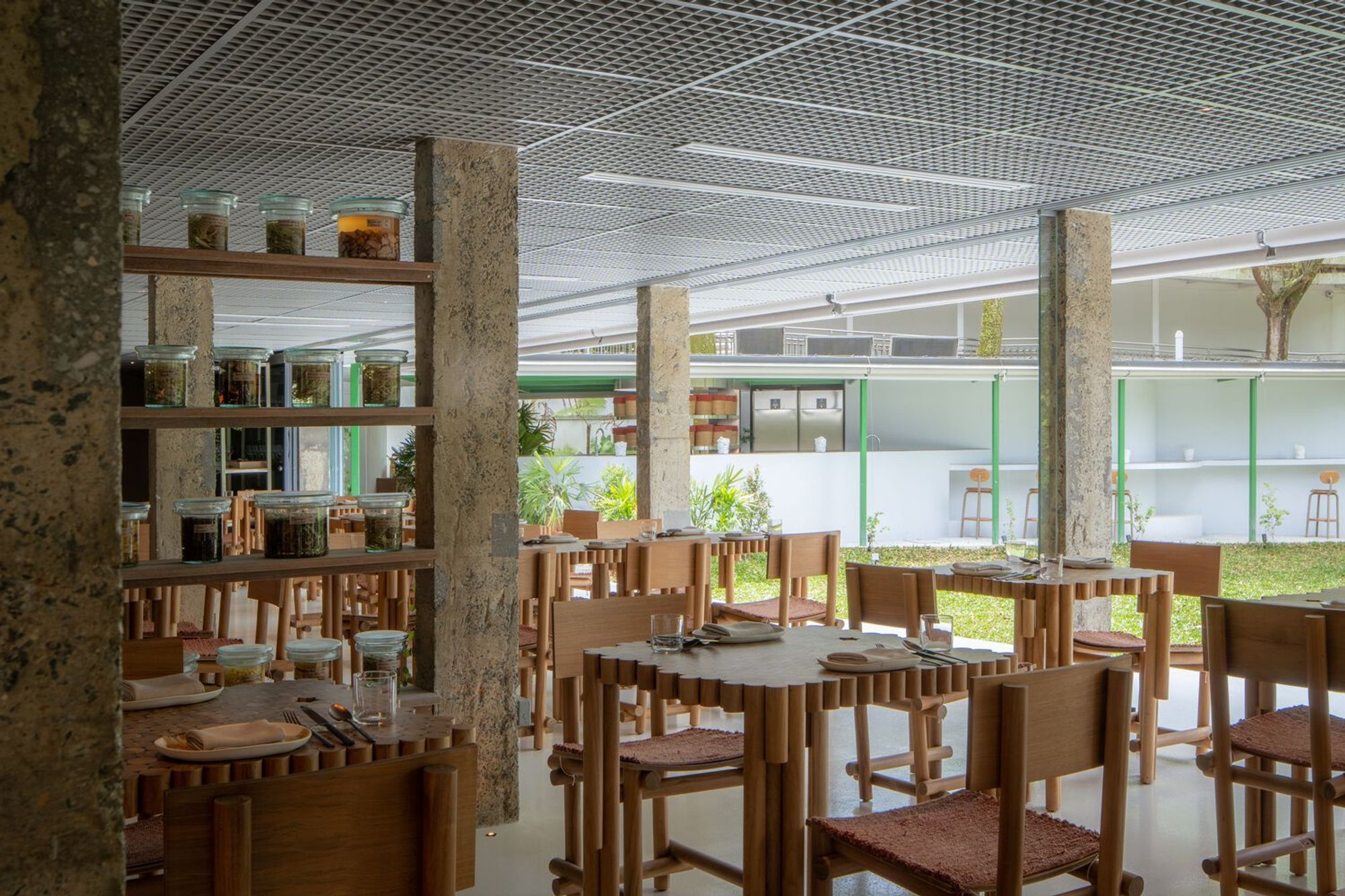
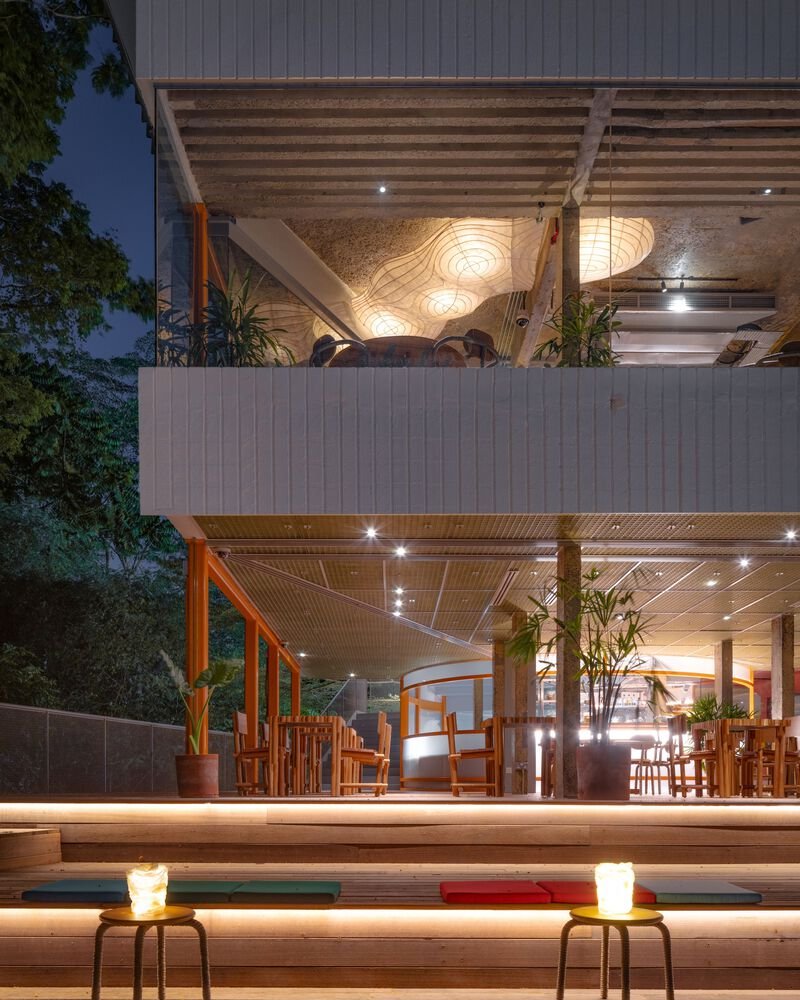
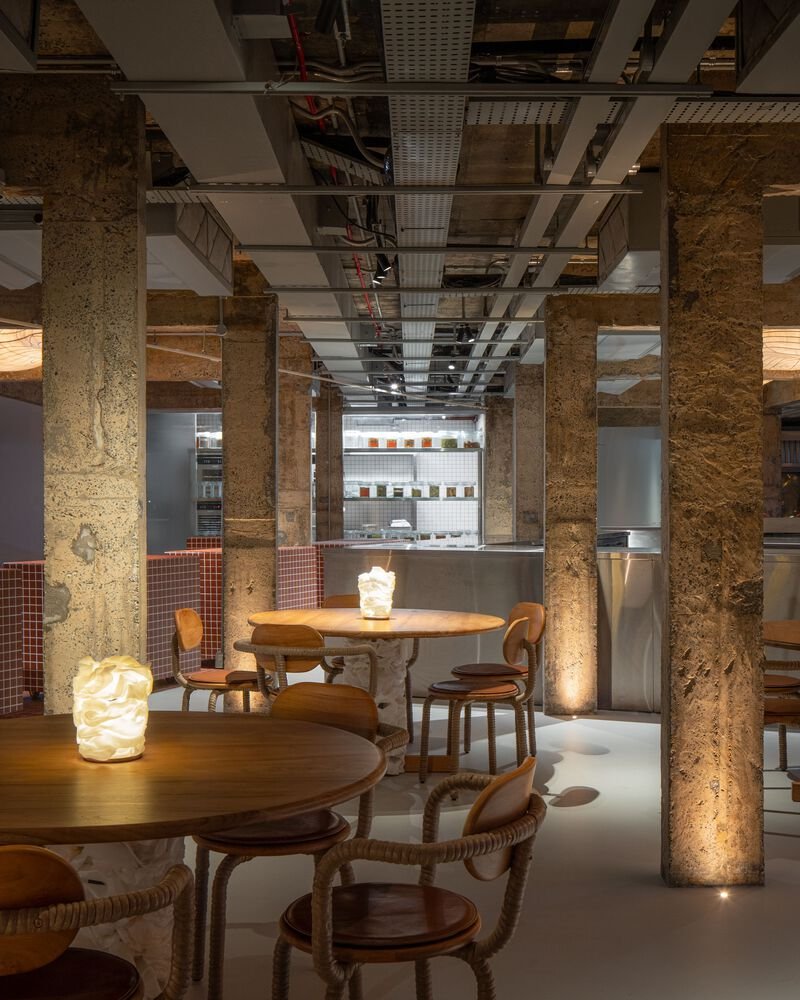
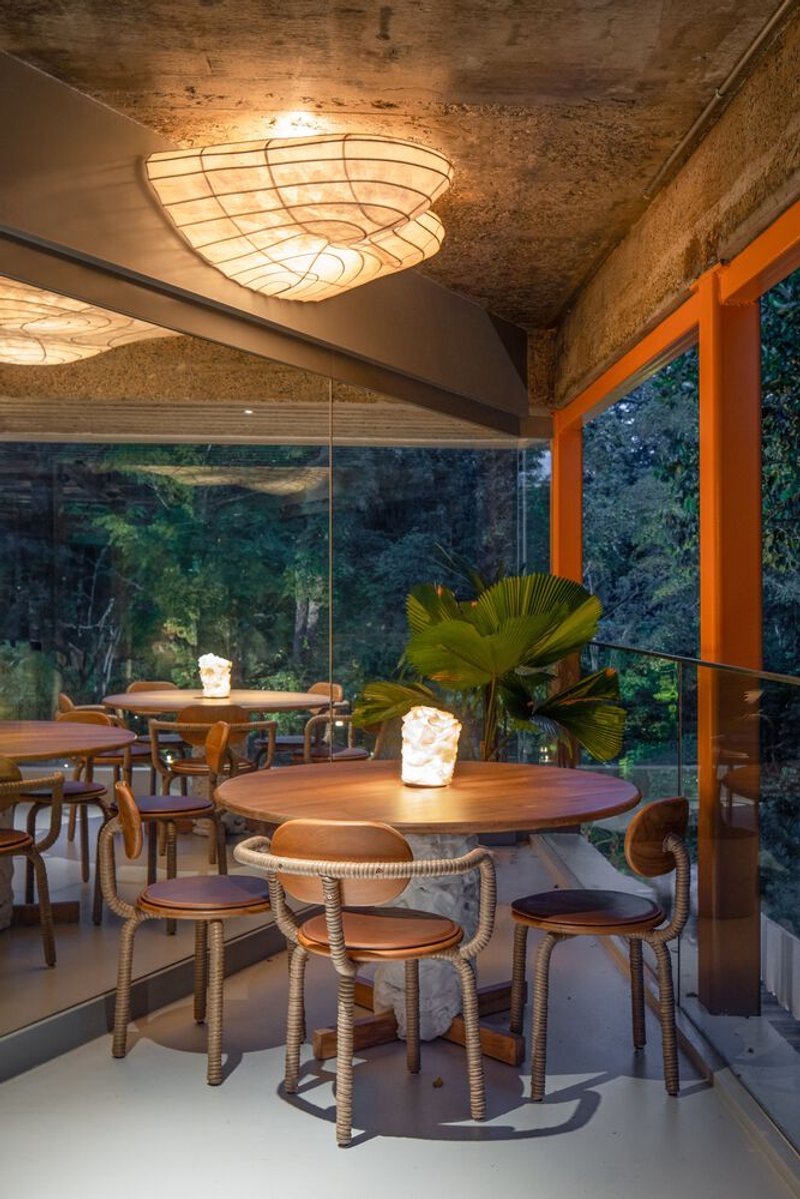
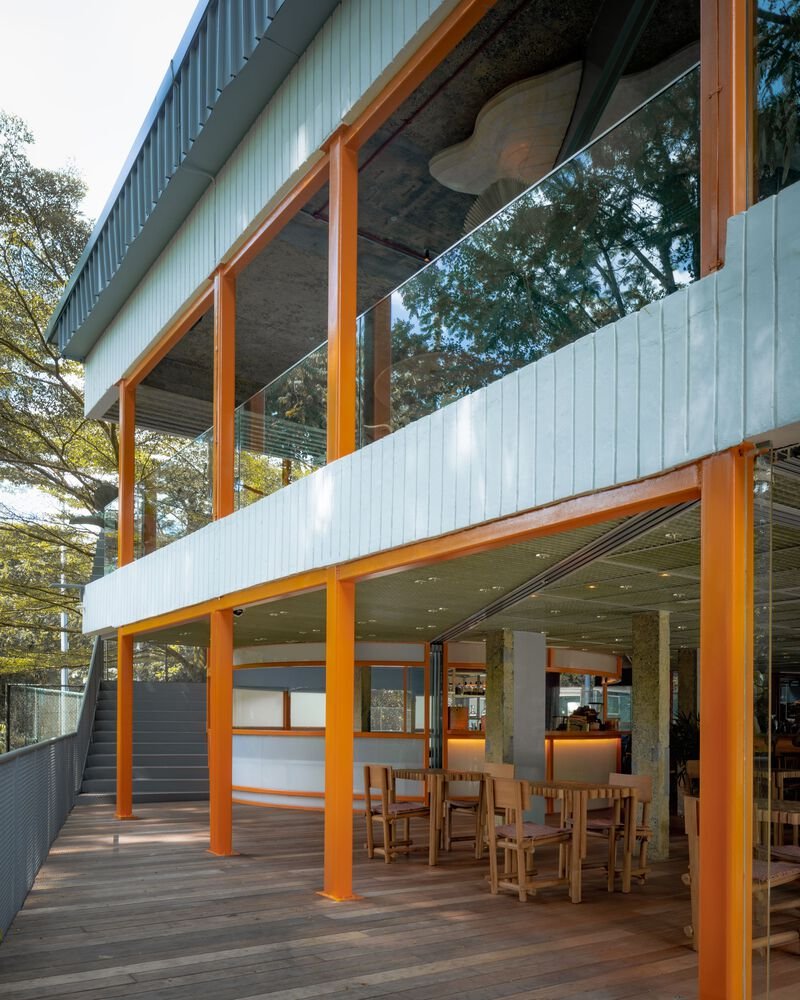
- Ground Floor: The walkway extends into the building, guiding visitors past an open kitchen to a semi-outdoor dining space overlooking the lawn. Operable façades dissolve barriers between inside and outside, creating a breezy, casual atmosphere.
- Upper Floor: Glazed façades offer panoramic views of the lawn and garden. This level houses a more intimate dining area, a research lab for ingredient innovation, and a cooking school where guests can share culinary skills and experiment with farm-to-table creations.
The Cylinder – Merging Old and New
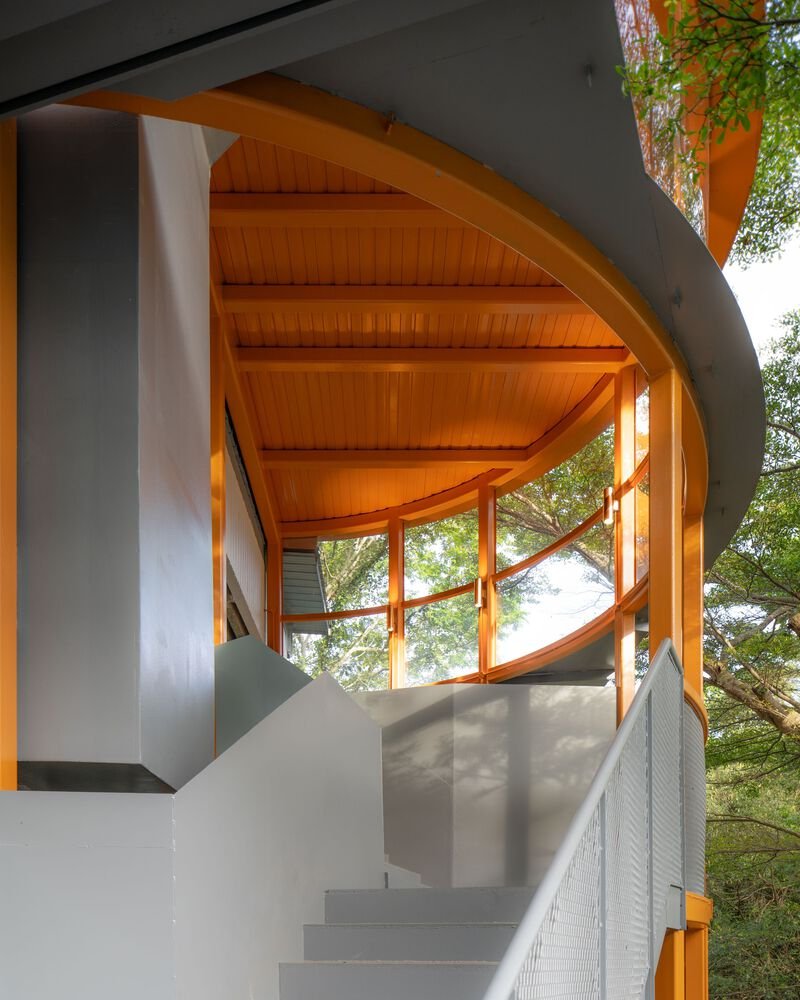
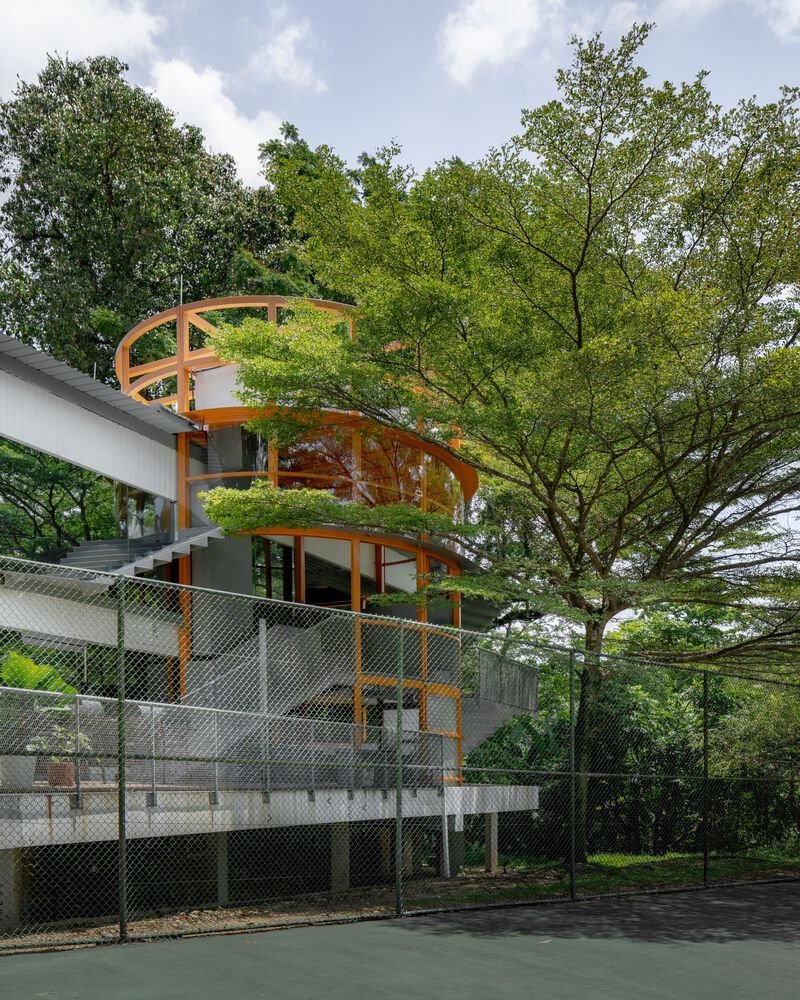
OMA introduced a cylindrical volume at the rear of the building to consolidate essential back-of-house and guest functions, including staircases, a bar, and service areas. This element is a clear architectural statement—acknowledging the existing building’s character while introducing a bold, functional intervention.
Material Innovation and Upcycled Design
In line with AIR’s sustainability ethos, Andreu Carulla designed the furniture and fixtures using recycled materials:
- Timber and HDPE plastic from a previous art installation.
- Reclaimed Styrofoam, referencing disposable food packaging, transformed into functional, aesthetic elements. These choices reinforce the project’s mission to uncover beauty and utility in materials often considered waste.
An Immersive Dining Ecosystem
AIR’s campus model expands dining into a day-long experience: visitors can harvest produce from the garden, attend cooking classes, enjoy picnics, and dine in both casual and refined settings. The architecture supports this fluidity, making guests active participants in a new paradigm of sustainable restaurant architecture—where design, gastronomy, and environmental responsibility converge.
The AIR Circular Campus and Cooking Club is not just a restaurant—it is an architectural statement and a cultural movement. OMA and Zarch Collaboratives have crafted a space that challenges conventions, transforms the role of diners, and sets a benchmark for sustainable restaurant architecture worldwide.
All the photographs are works of Frans Parthesius




Popular Articles
Popular articles from the community

Alton Cliff House: A Harmonious Retreat by f2a Architecture in Lake Country, Canada
Alton Cliff House blends corten steel, prefabrication, and sustainable design, creating a luxurious, energy-efficient retreat perched on Canadian cliffs.

Solar Steam: A Climate-Responsive Architecture That Redefines the Monument
A climate-responsive memorial architecture that transforms heat, decay, and time into a living system reflecting humanity’s ecological impact.


The Ken Roberts Memorial Delineation Competition (Krob)
As the most senior architectural drawing competition currently in operation anywhere in the world, it draws hundreds of entries each year, awarding the very best submissions in a series of medium-based categories.
Atelier Macri Concept Store Interior Design by CASE-REAL
Atelier Macri store features a "ko" counter, walnut wood details, cork displays, blending retail, gallery, and seamless customer experiences.
Similar Reads
You might also enjoy these articles

Free Architecture Competitions You Can Enter Right Now
No entry fees, real prizes. Here are the best free architecture competitions open for submissions in 2026.

Top 15 Architecture Competitions to Enter in 2026
From student-friendly idea competitions to prestigious international awards, here are the best architecture competitions open for entries in 2026. Updated regularly.

DIY & Engineering in Computational Design : Enter the BeeGraphy Design Awards
Showcase Your Creativity with Computational Design and Open Source Projects
Innovative Design Solutions: Award-Winning Projects from Recent Architecture Competitions
Exploring award-winning architectural projects shaping the future of design, sustainability, and community.


Explore Architecture Competitions
Discover active competitions in this discipline




The International Standard for Design Portfolios


The Global Benchmark for Architecture Dissertation Awards


The Global Benchmark for Graduation Excellence


Challenge to reimagine the Iron Throne
Comments (0)
Please login or sign up to add comments
No comments yet. Be the first to comment!