![[ANYSPACE] - Rethinking Modular Architecture for the Future of Work](https://ojo2mx38l6.execute-api.ap-south-1.amazonaws.com/image/eyJidWNrZXQiOiJ1bmktYmxvZyIsImtleSI6IjI4LzEzMWM0M2I3LWFlNmItNGE5OS04ZDYzLTc5NWNjZDk2MWRmMi91bmllZGl0b3JpYWwyMDI1LTA2LTIyVDE4LTAwLTI1LTE2MjM3MC5wbmciLCJlZGl0cyI6eyJyZXNpemUiOnsid2lkdGgiOjUwfSwianBlZyI6eyJxdWFsaXR5IjoxMH0sImZsYXR0ZW4iOmZhbHNlLCJub3JtYWxpc2UiOmZhbHNlfX0=)
![[ANYSPACE] - Rethinking Modular Architecture for the Future of Work](https://ojo2mx38l6.execute-api.ap-south-1.amazonaws.com/image/eyJidWNrZXQiOiJ1bmktYmxvZyIsImtleSI6IjI4LzEzMWM0M2I3LWFlNmItNGE5OS04ZDYzLTc5NWNjZDk2MWRmMi91bmllZGl0b3JpYWwyMDI1LTA2LTIyVDE4LTAwLTI1LTE2MjM3MC5wbmciLCJlZGl0cyI6eyJyZXNpemUiOnsid2lkdGgiOjIwMDAsImZpdCI6Imluc2lkZSJ9LCJqcGVnIjp7InF1YWxpdHkiOjg1fSwiZmxhdHRlbiI6ZmFsc2UsIm5vcm1hbGlzZSI6ZmFsc2V9fQ==)
[ANYSPACE] - Rethinking Modular Architecture for the Future of Work
Seoul’s future of work—modular architecture meets AI to create adaptive, shared, and sustainable spaces for the next generation.

Designed by Yasemen Engin, [ANYSPACE] is a visionary concept shortlisted in the Breaking Work - Singularity competition. This futuristic proposal redefines the spatial and functional parameters of workplaces by introducing a modular architecture model that adapts to an evolving urban and digital landscape.
As Seoul accelerates toward becoming a hyper-connected metropolis, [ANYSPACE] responds to the rapid urbanization and changing dynamics of work culture. The concept reflects on the evolution of workspace—from ancient sheltered places to the highly adaptive, network-driven hubs of the 21st century. The transformation is spatial, technological, and philosophical.
Evolution of Workspace: From Monasteries to Modular Networks
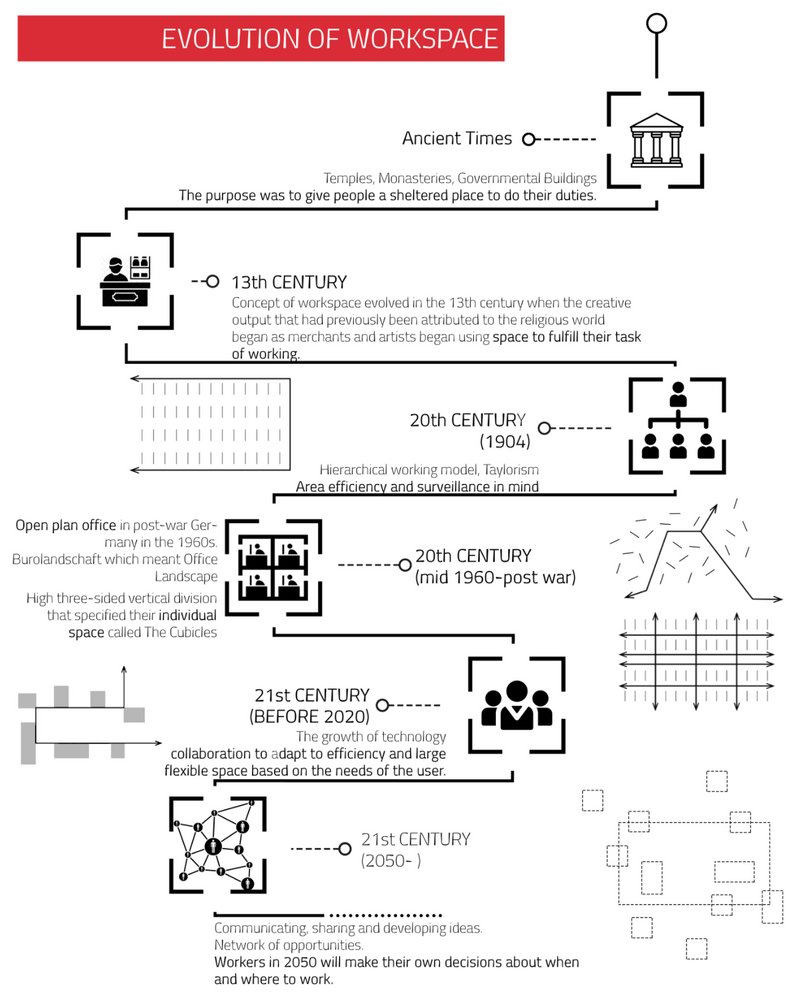
Workspaces have historically mirrored the societal structure of their time. In ancient civilizations, they were integrated into temples, monasteries, and government halls. The 13th century marked a turning point where creative output shifted into merchant guilds and studios, giving rise to space as a facilitator of productivity.
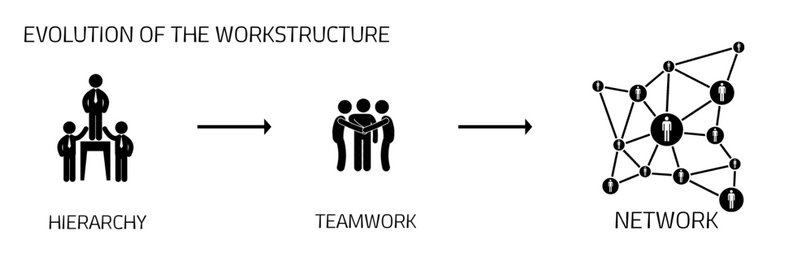
By the 20th century, Taylorist models focused on surveillance and efficiency, giving birth to cubicles and open office landscapes. The post-war years introduced Burolandschaft in Germany—fluid office layouts intended to enhance interaction. The 21st century brought a shift toward flexibility, where the needs of the user dictated spatial configurations. Now, with the dawn of AI and digital infrastructure, 2050 is envisioned as an era of complete autonomy in choosing how and where to work.
Reclaiming Redundant Spaces in Urban Seoul
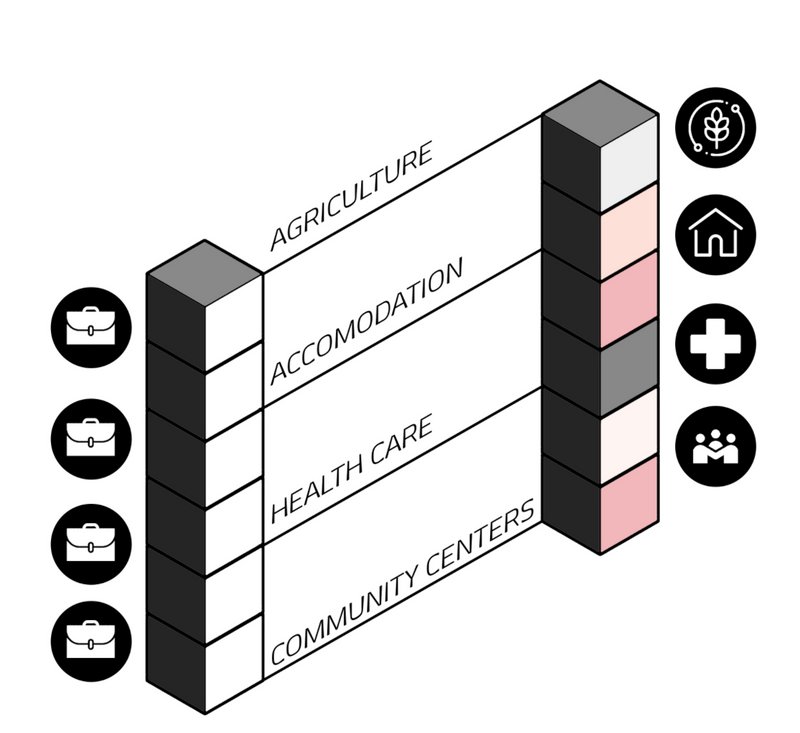
Seoul’s Central Business District, emblematic of growth and density, is the anchor for [ANYSPACE]. As traditional office buildings become obsolete, this project envisions repurposing them into hybrid-use vertical zones: healthcare, agriculture, accommodations, and community hubs. The intent is not only to optimize space, but to return it to the public as active, accessible urban infrastructure.
The Benefits of [ANYSPACE] Modular Architecture
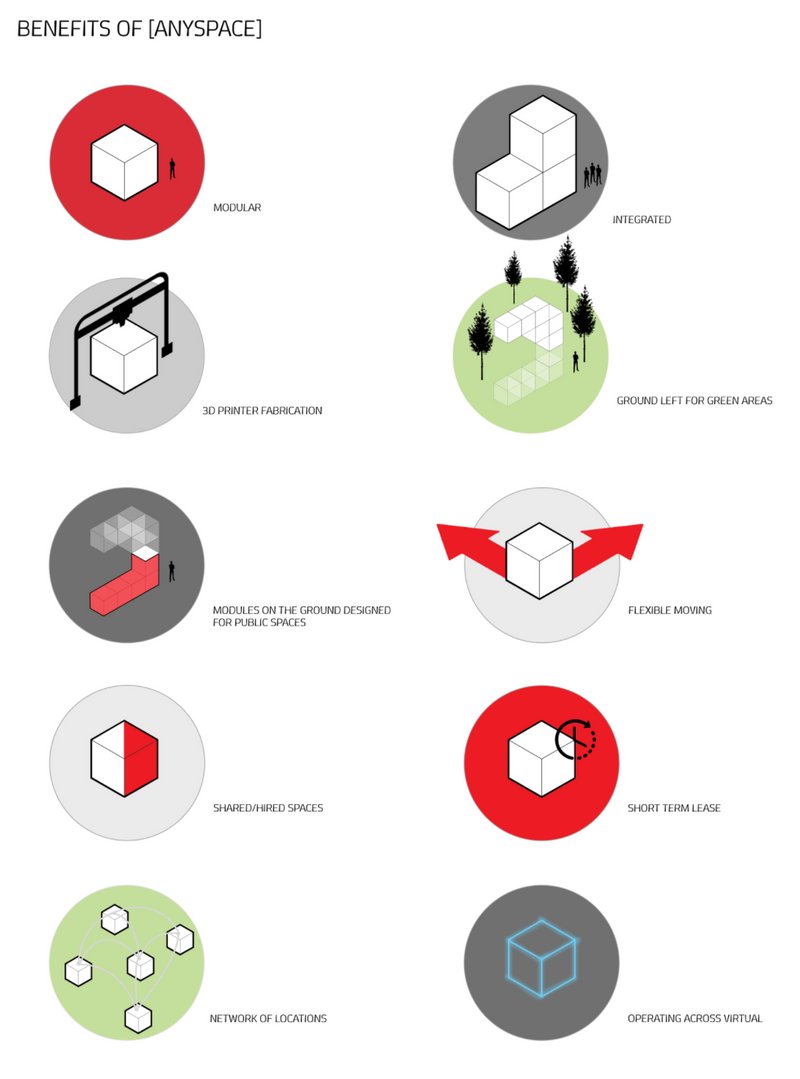
[ANYSPACE] proposes a future where architectural construction is machine- and AI-driven, allowing for maximum flexibility. The key features include:
- Modular & Integrated Design: Units are interchangeable, stackable, and easily deployable.
- 3D Printed Fabrication: Speeds up construction and enables precision customization.
- Green Integration: Strategic voids in vertical arrangements preserve ground-level green areas.
- Public-Oriented Layouts: Ground-level modules support shared public functions.
- Flexibility & Mobility: Easily relocatable, short-term lease adaptable spaces.
- Cross-Virtual Operation: Supporting digital collaboration across geographies.
This versatility enables a seamless shift between individual focus, shared spaces, and hybrid remote work setups. [ANYSPACE] is more than an office; it is a toolkit for future cities.
Urban Architecture as Community Infrastructure
Positioned in a high-density urban fabric, [ANYSPACE] integrates workspace into the community ecosystem. It becomes not just a place to perform tasks, but a node of culture, care, and interaction. The layout respects accessibility, openness, and coexistence with urban life, redefining the role of office space from corporate enclosure to civic asset.
Toward Adaptive, Human-Centered Urban Design
In an age where automation dominates routine tasks, [ANYSPACE] highlights how modular architecture can humanize urban life. With a design rooted in flexibility, networked presence, and environmental responsibility, the project positions Seoul at the frontier of workspace innovation. It anticipates a future where architecture does not dictate function, but enables freedom.
Project by Yasemen Engin
Shortlisted entry of Breaking Work - Singularity



Popular Articles
Popular articles from the community


The Ken Roberts Memorial Delineation Competition (Krob)
As the most senior architectural drawing competition currently in operation anywhere in the world, it draws hundreds of entries each year, awarding the very best submissions in a series of medium-based categories.

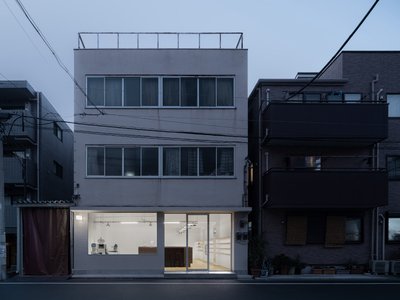
Atelier Macri Concept Store Interior Design by CASE-REAL
Atelier Macri store features a "ko" counter, walnut wood details, cork displays, blending retail, gallery, and seamless customer experiences.
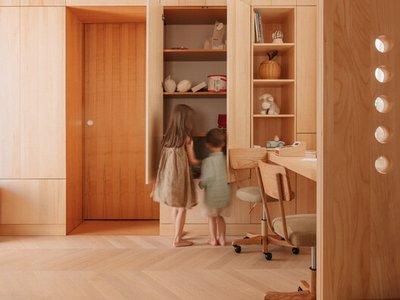
Treehouse Apartment: A Warm Timber Interior Blending Craft, Play, and Contemporary Living
Warm timber apartment with integrated treehouse, combining natural materials, craftsmanship, and playful design to create a flexible, family-oriented living environment.
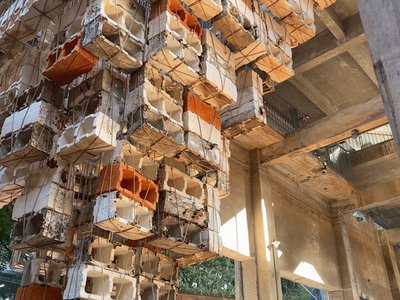
Inverted Architecture Installation by Studio Link-Arc: Exploring the Intersection of Architecture and Living Organisms
Inverted Architecture Installation by Studio Link-Arc blends mycelium, sustainability, inverted design, ecological cycles, and urban adaptive architecture in Shenzhen.

Similar Reads
You might also enjoy these articles

Top 15 Architecture Competitions to Enter in 2026
From student-friendly idea competitions to prestigious international awards, here are the best architecture competitions open for entries in 2026. Updated regularly.
DIY & Engineering in Computational Design : Enter the BeeGraphy Design Awards
Showcase Your Creativity with Computational Design and Open Source Projects
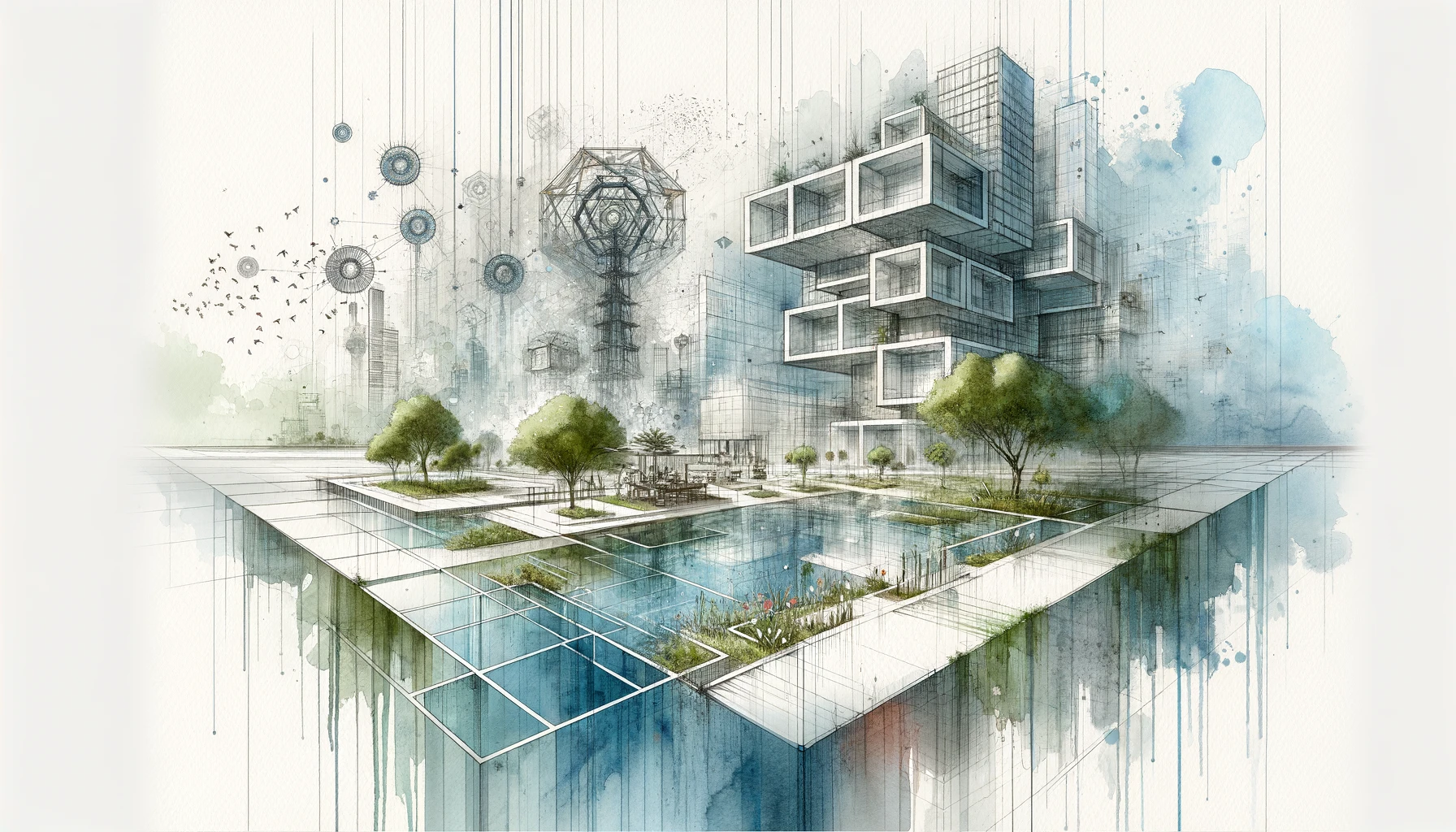
Innovative Design Solutions: Award-Winning Projects from Recent Architecture Competitions
Exploring award-winning architectural projects shaping the future of design, sustainability, and community.






Comments (0)
Please login or sign up to add comments
No comments yet. Be the first to comment!