
Bamboo Pavilion Design in Hong Kong – Urban Living Lab by Su Chang Design Research Office
Urban Living Lab showcases bamboo pavilion design, blending heritage craftsmanship, sustainable materials, and community participation in Hong Kong’s dense urban landscape.

Introduction to Urban Living Lab
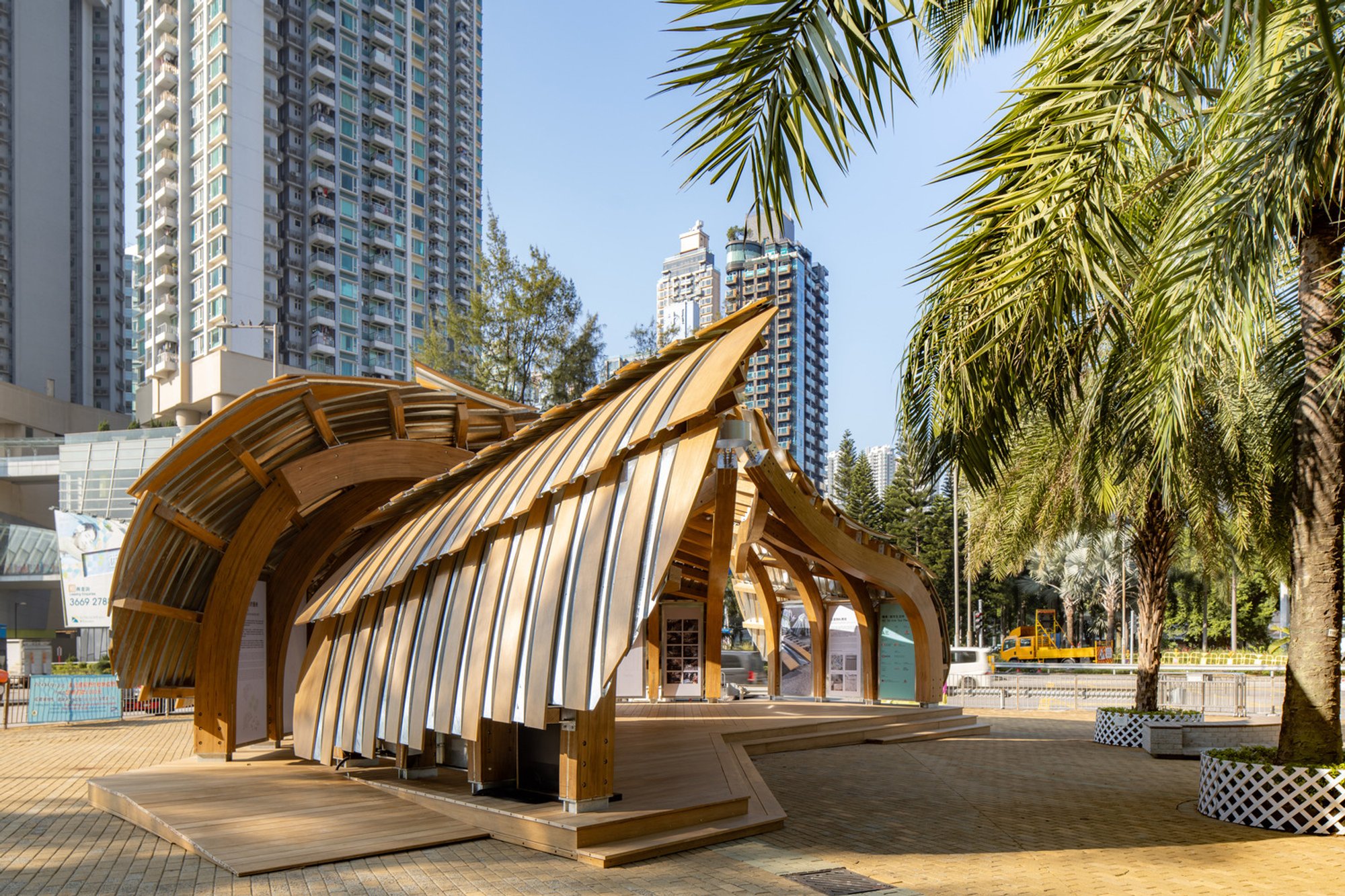
The Urban Living Lab, designed by Su Chang Design Research Office, redefines bamboo pavilion design in Hong Kong’s Tai Kok Tsui district. As the first glulam bamboo structure in the city, it blends traditional material culture with contemporary urban needs, creating a shaded public space that serves as a catalyst for community engagement and sustainable construction practices.
Urban Context and Social Challenge
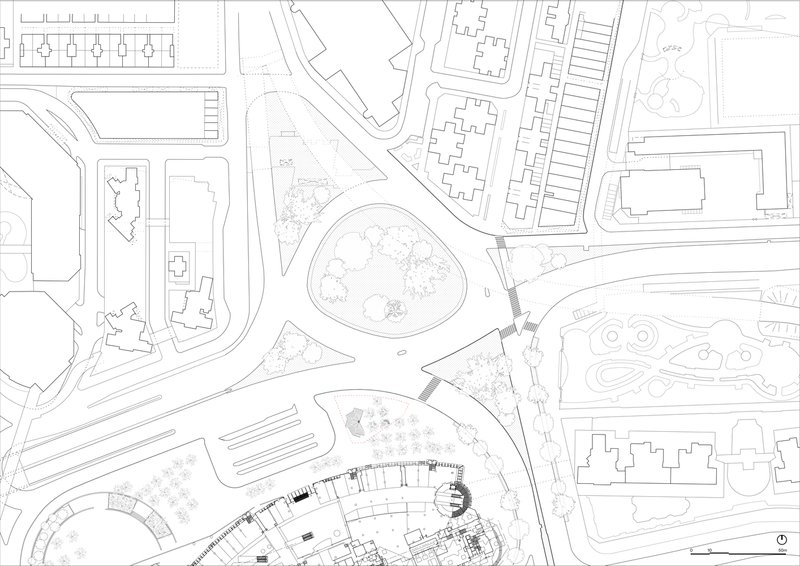
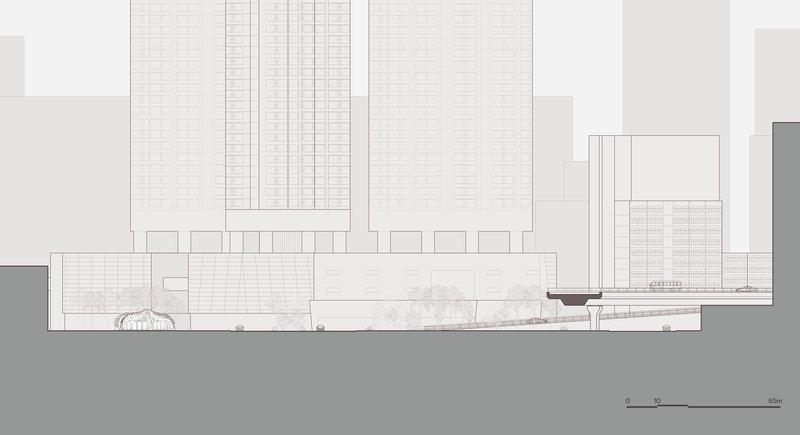
Tai Kok Tsui is one of Hong Kong’s most densely populated areas, where rapid urban renewal meets an aging building stock. With a population density six times the city average and just 0.43 square meters of public recreational space per person, the need for inclusive, high-quality community spaces is urgent. The Urban Living Lab responds by transforming an underused urban site into a place of gathering, rest, and cultural memory.
Design Concept and Public Space Activation
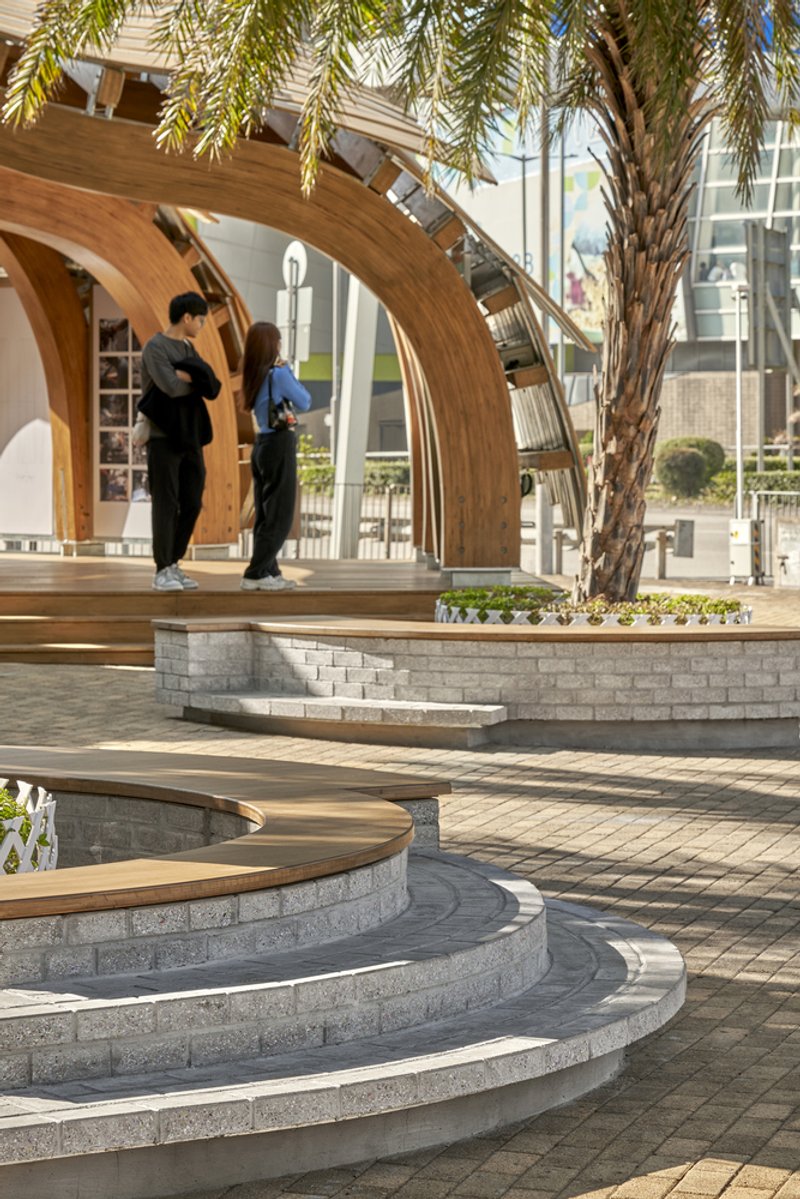
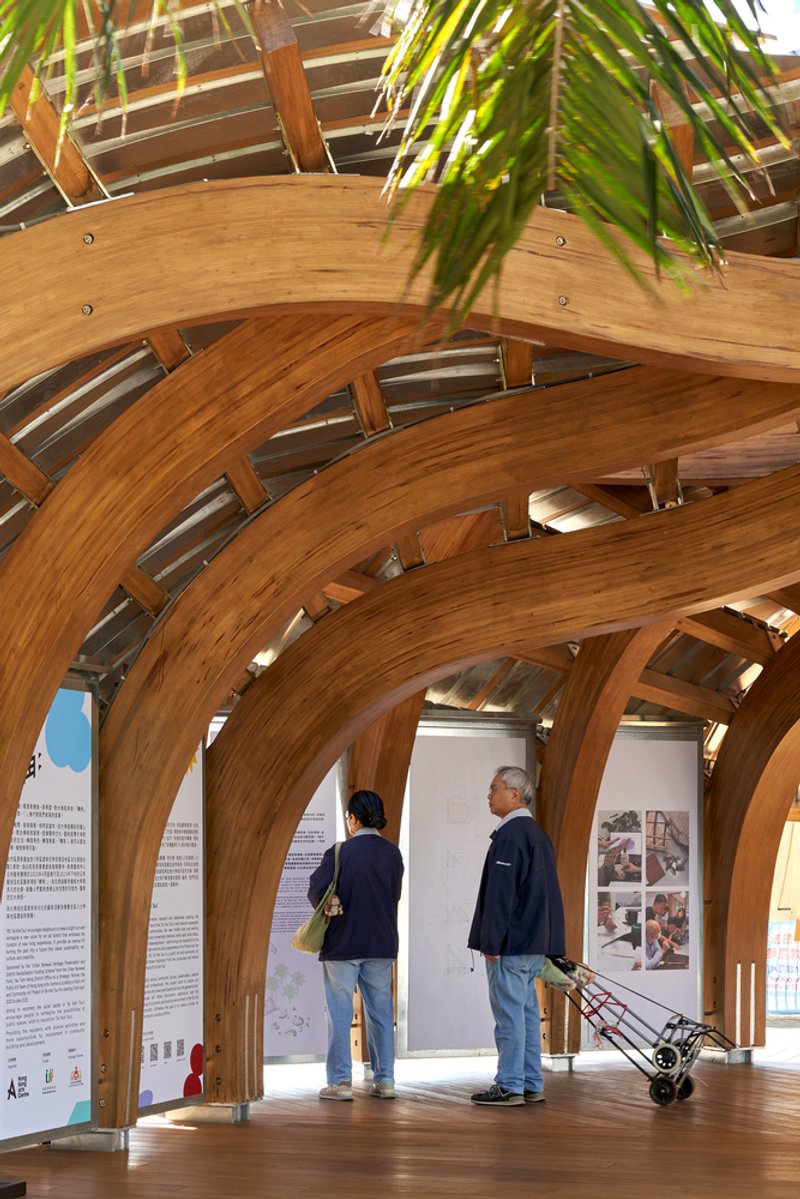
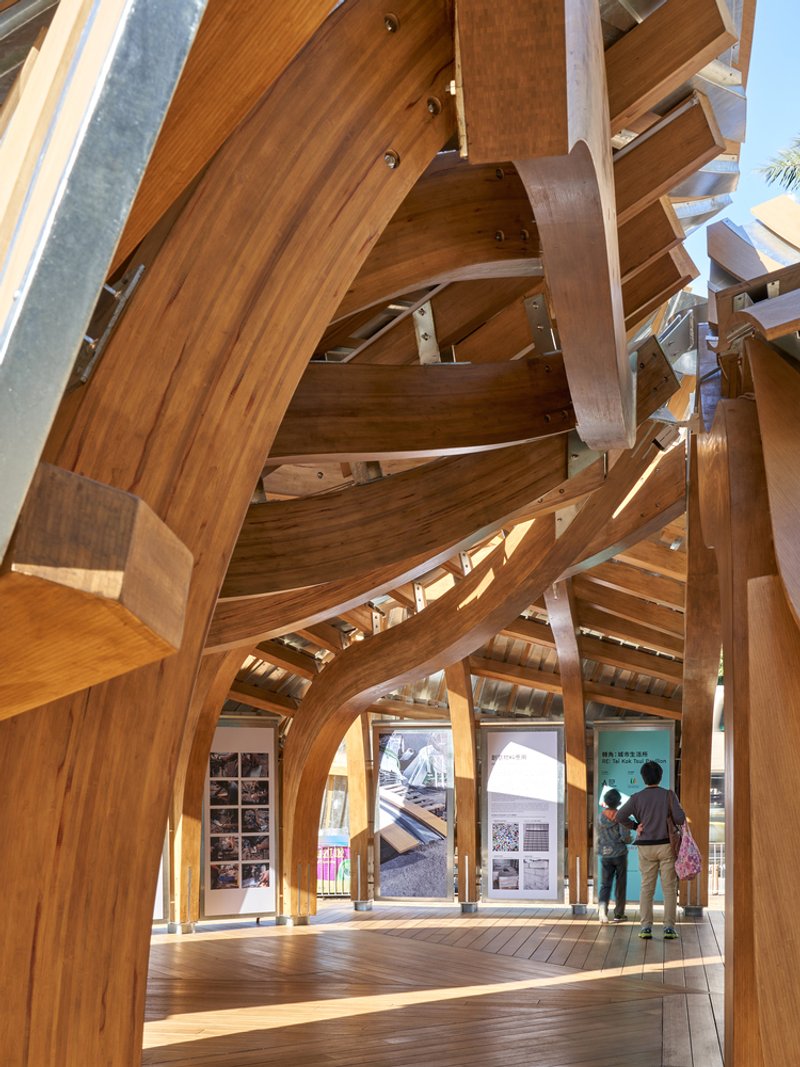
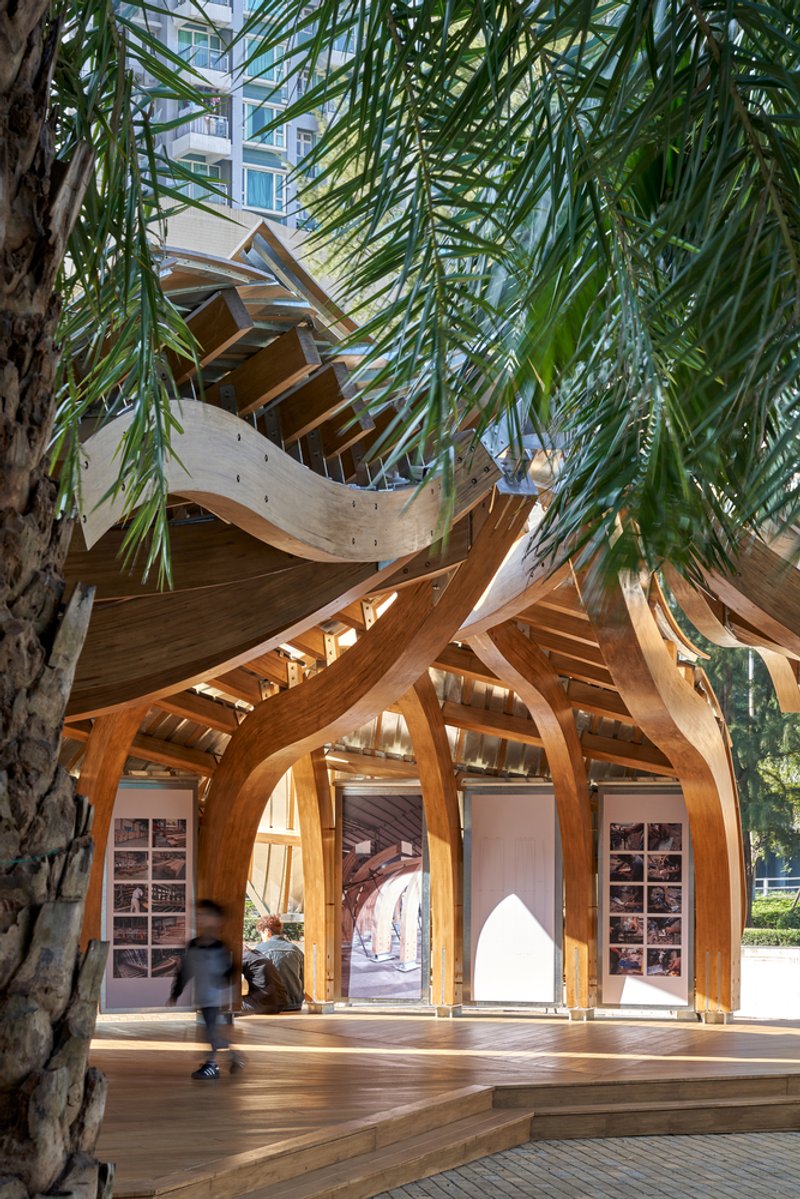
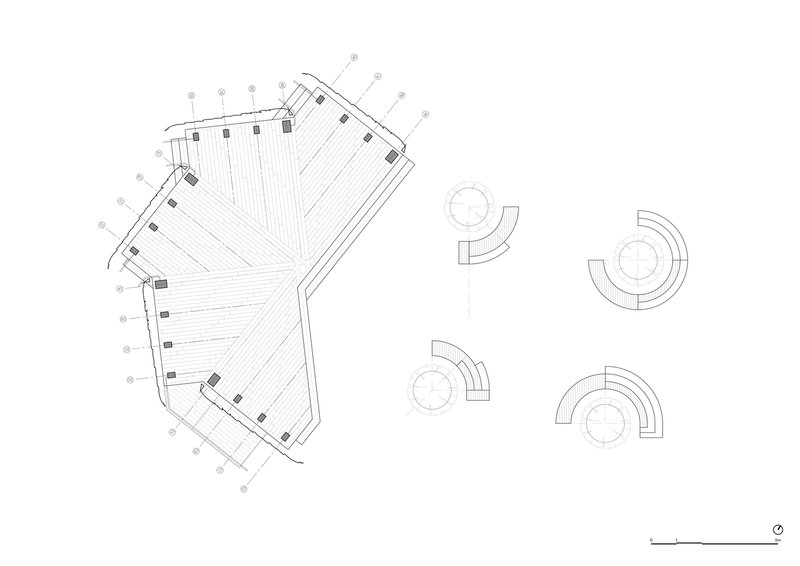
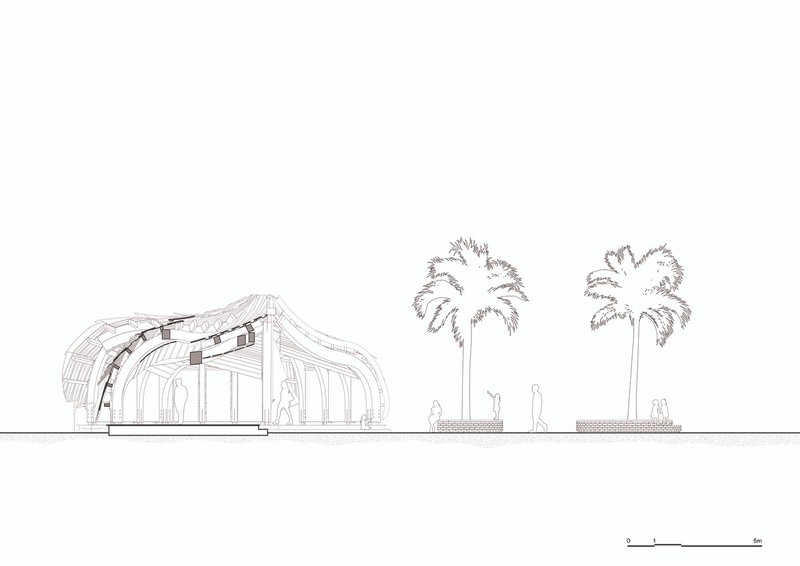
The pavilion’s form draws inspiration from Tai Kok Tsui’s maritime heritage, evoking the waves of the surrounding sea. Designed as a public parasol, it offers relief from the subtropical sun, creating shaded, naturally ventilated spaces that encourage social interaction. The shell-like structure is carefully positioned to work with existing palm trees, maximizing natural breezes while framing an inviting communal square.
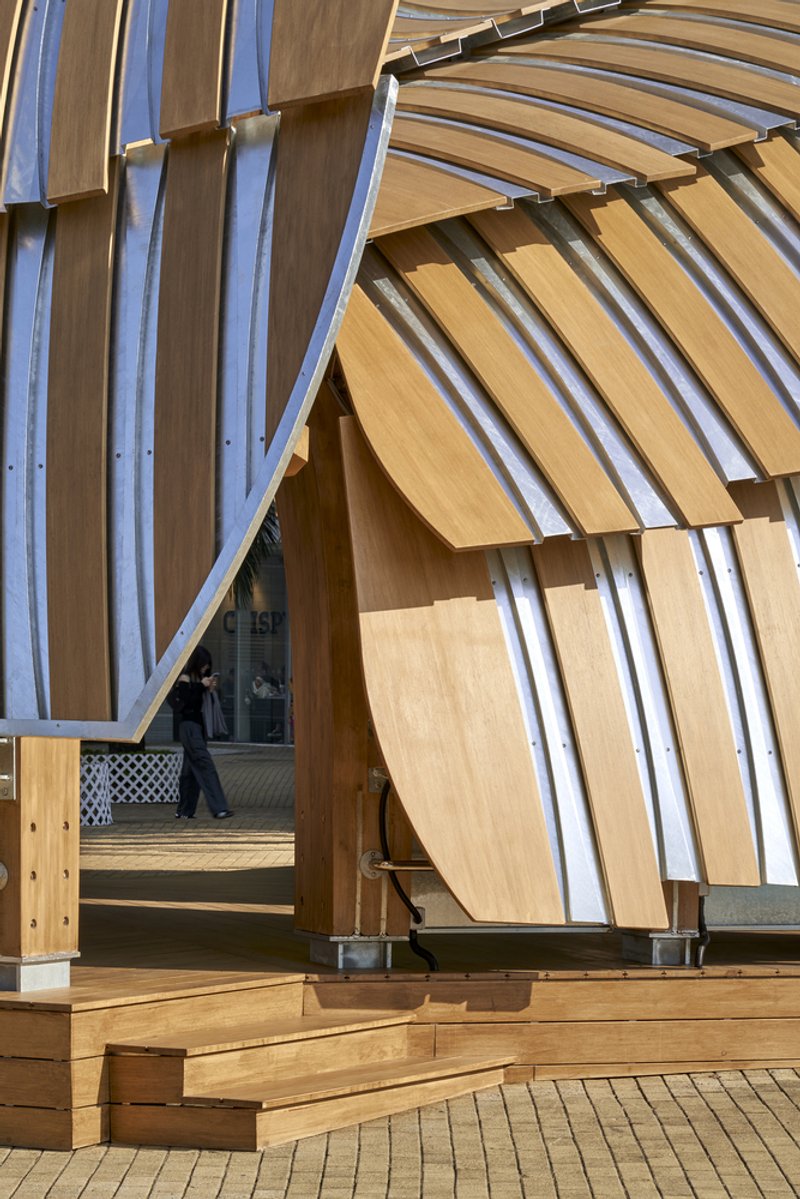
Materiality – Bamboo and Galvanized Steel
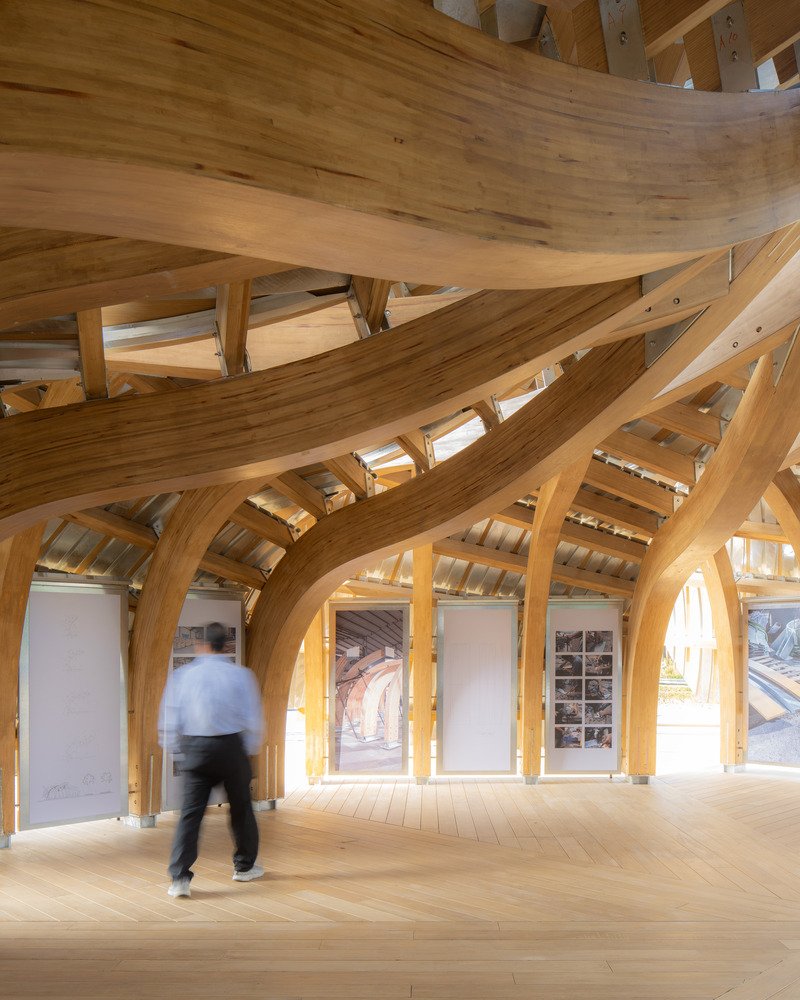
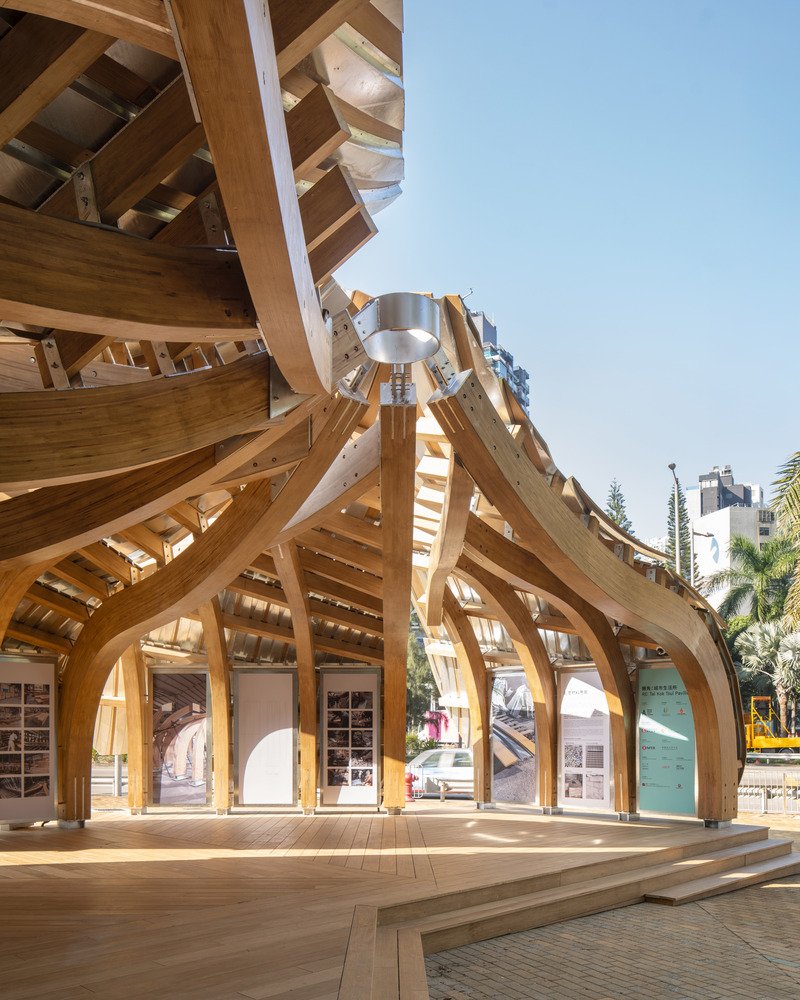
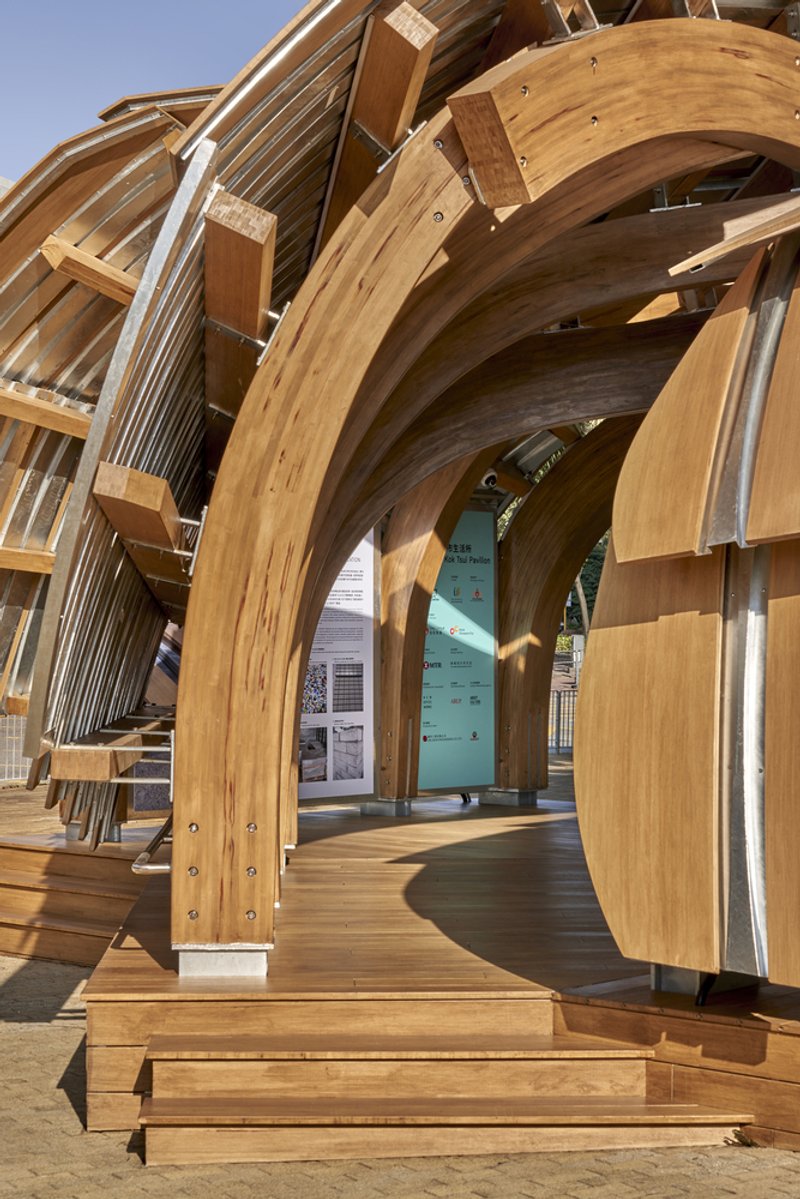
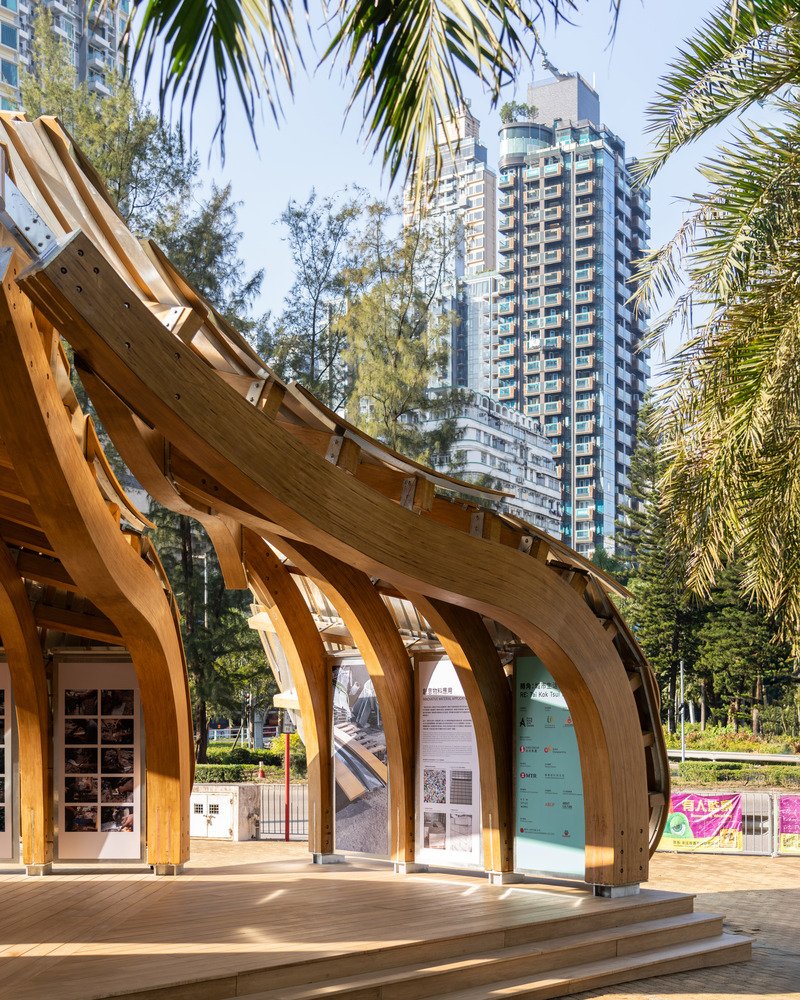
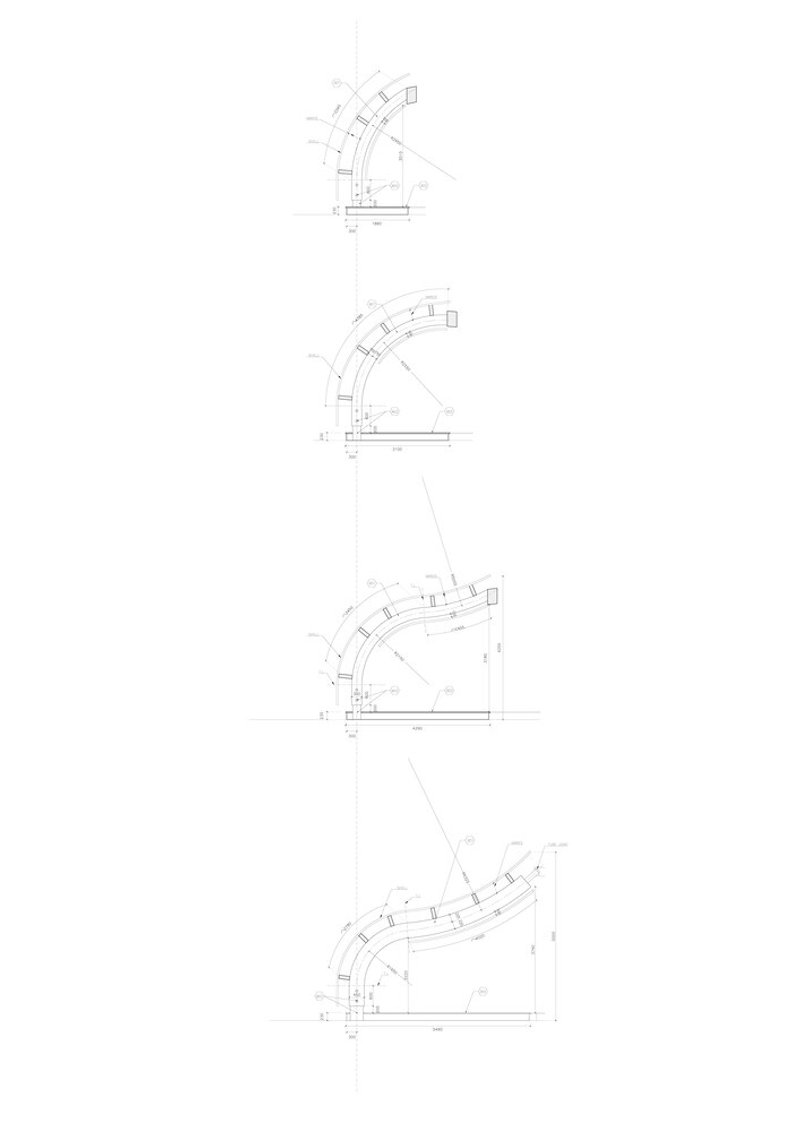
Rooted in the area’s shipyard and typhoon shelter history, the design merges traditional galvanized steel craftsmanship with structural glulam bamboo. Local artisans collaborated with the architects to blend heritage techniques with modern fabrication, reviving craftsmanship while reducing environmental impact. Compared to a steel-only system, the bamboo structure achieved a 75% reduction in embodied carbon, equivalent to 7 tons of CO₂ savings.
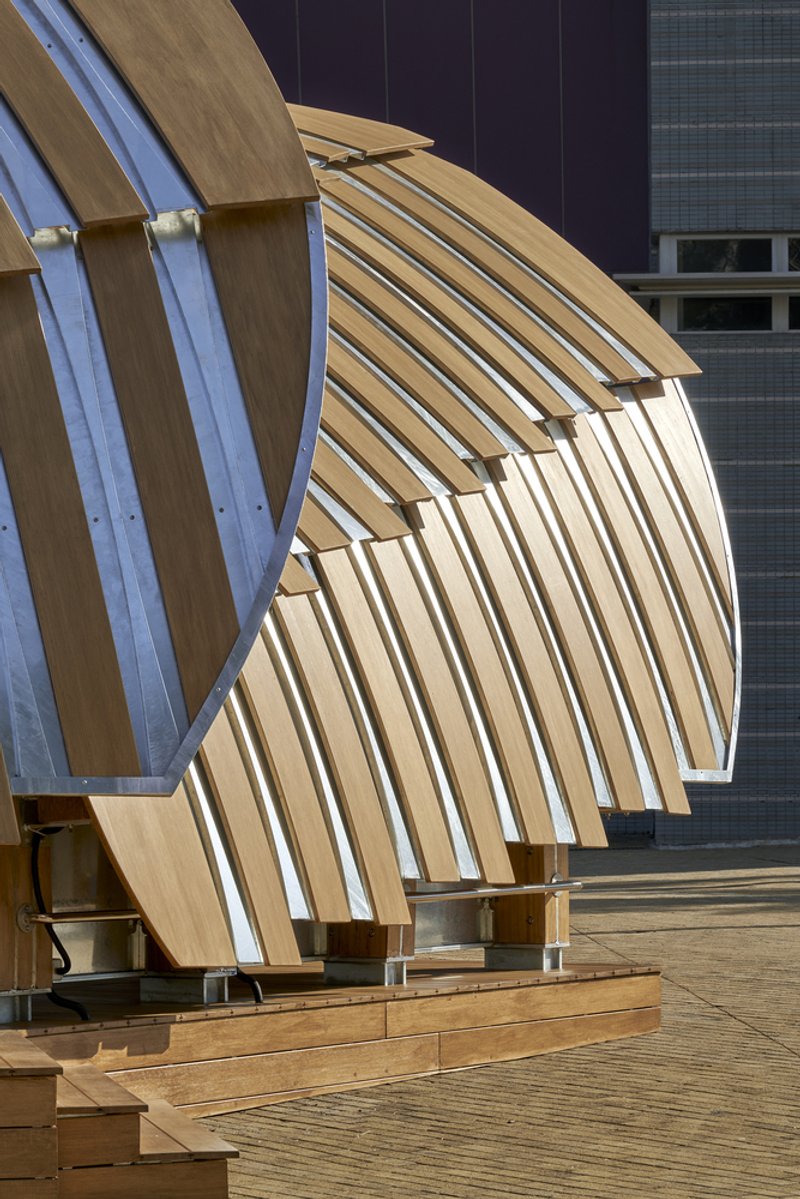
Climate-Responsive Architecture
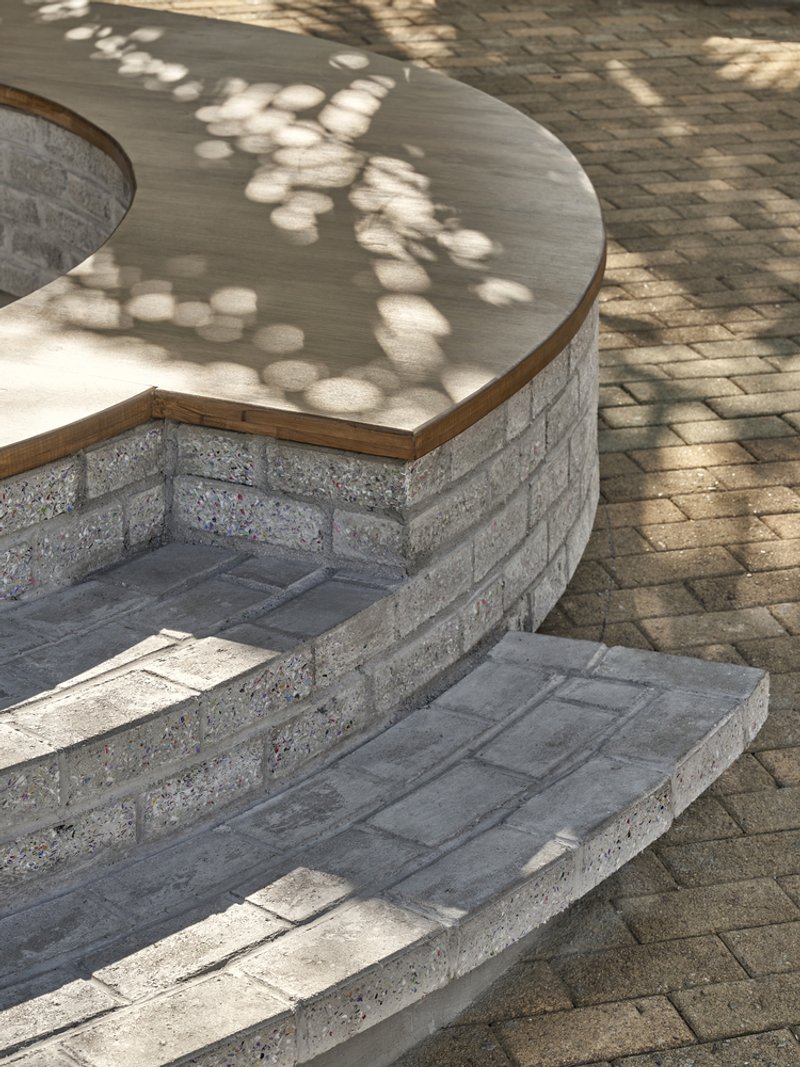
The pavilion’s orientation and geometry respond directly to site conditions, blocking harsh summer sunlight while allowing reflected winter light to enter. The combination of bamboo’s low thermal mass and the surrounding vegetation ensures a comfortable microclimate year-round. Rainwater is guided through the tinplate-clad roof toward permeable brick surfaces, reducing runoff and integrating water into the landscape.
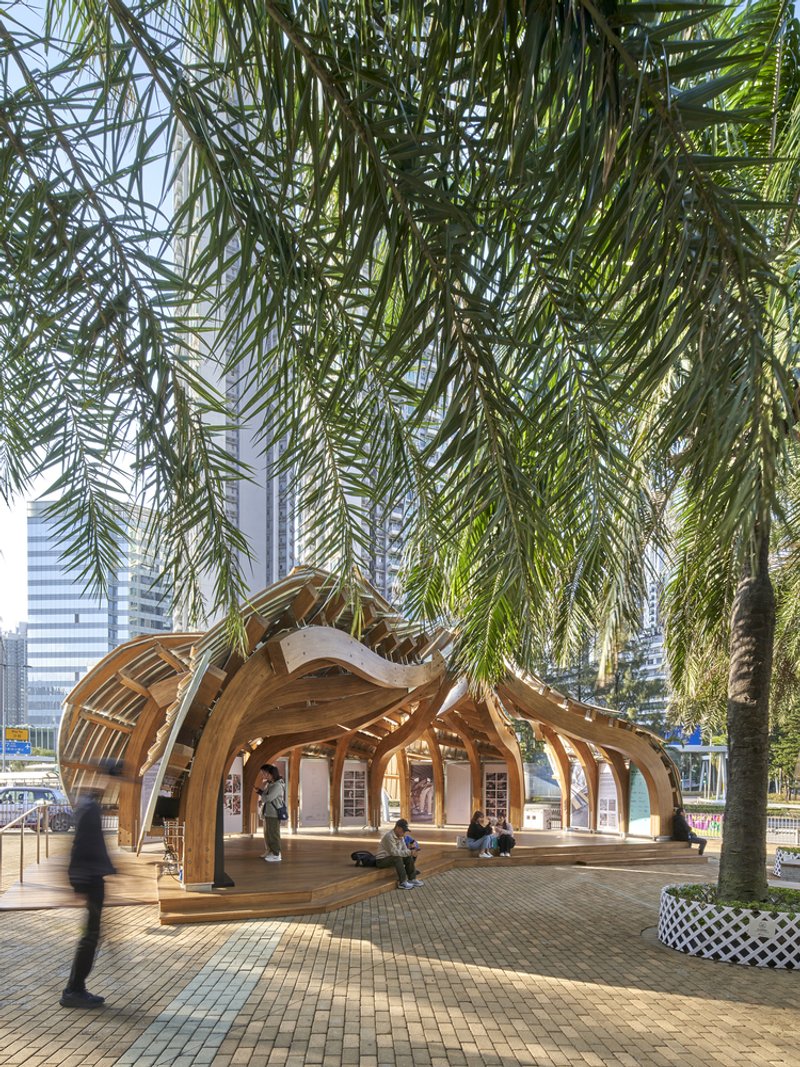
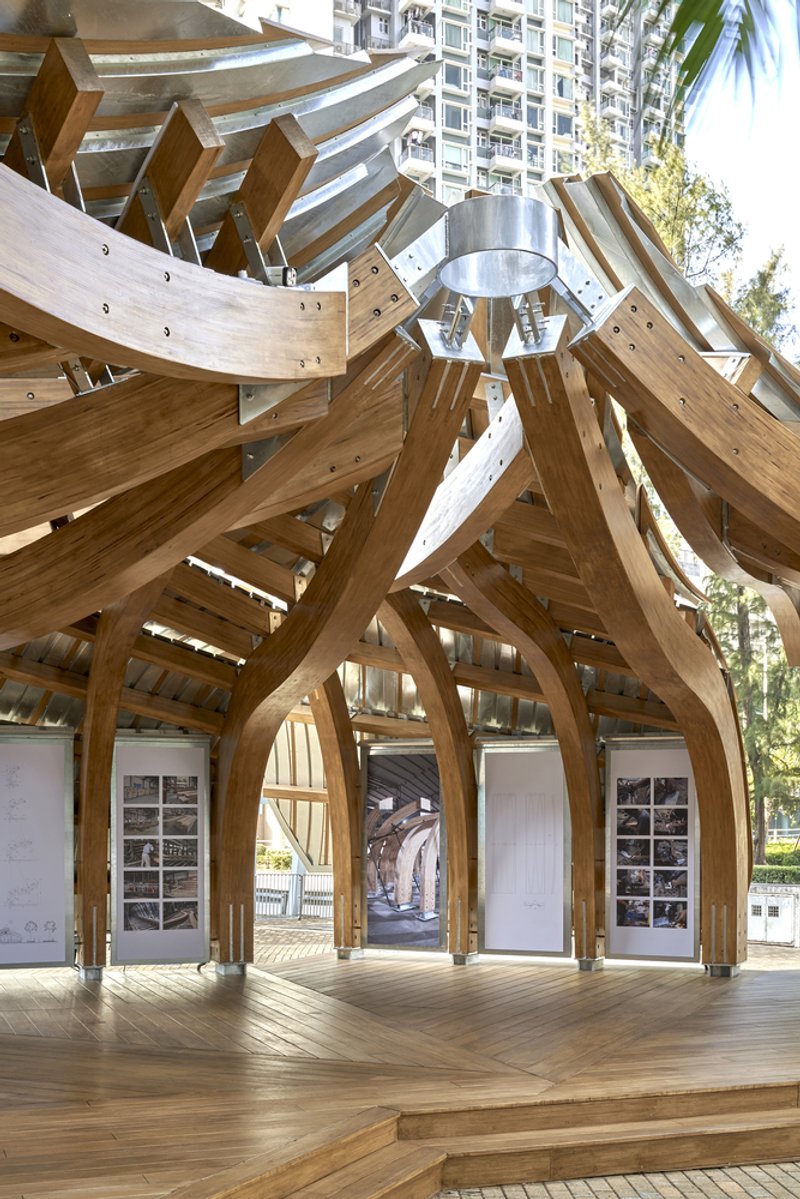
Participatory and Adaptive Design
The Urban Living Lab emerged through an inclusive design process, involving residents, NGOs, government representatives, and private stakeholders. Community workshops and on-site research confirmed the need for shade and social space, shaping the pavilion’s final form.
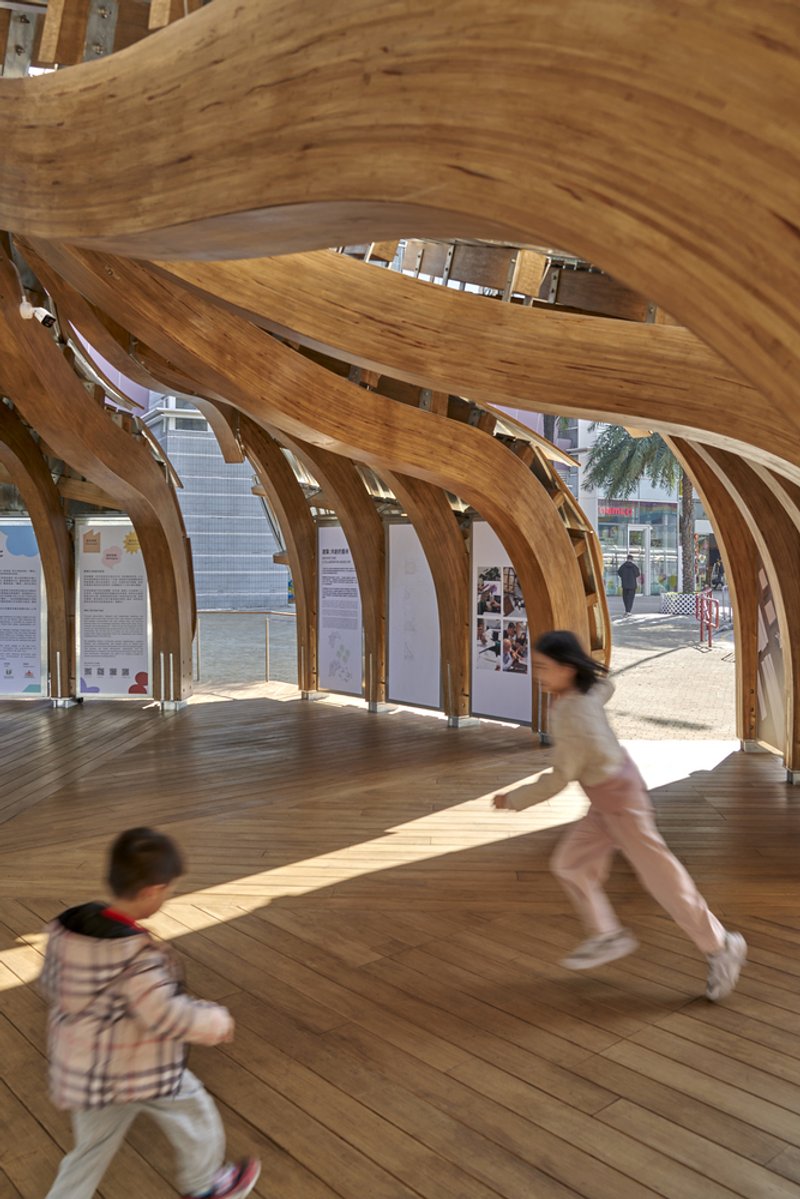
Its modular design enables relocation: after twelve months in its initial location, the structure will be dismantled and reassembled in another neighborhood facing similar renewal challenges. This adaptability supports a circular construction model rooted in locally sourced, renewable materials.
Circular and Sustainable Impact
Beyond its immediate social function, the Urban Living Lab is part of a long-term vision to establish a bio-based, carbon-negative building system for dense urban contexts. By reimagining bamboo as a high-performance structural material and combining it with local steelworking traditions, the project demonstrates how heritage crafts can be future-ready.
The Urban Living Lab is more than a pavilion—it is a prototype for sustainable, community-driven architecture in high-density cities. Its bamboo pavilion design connects history with innovation, offering shade, gathering space, and a replicable model for resilient urban futures.
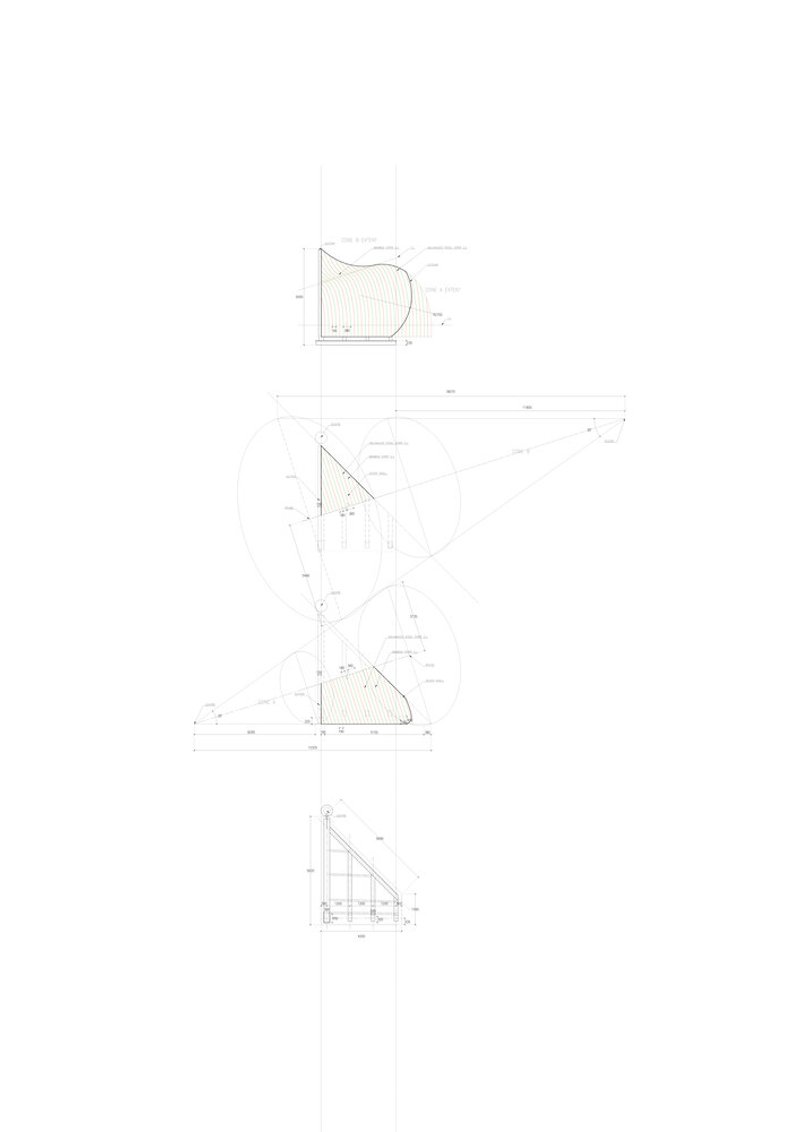
All Photographs are works of Kris Provoost, Leon Xu Liang, Eugene Chan



Popular Articles
Popular articles from the community

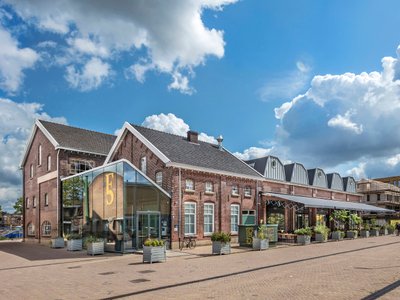
Fifth NRE Jazz Club – De Bever Architecten: Eindhoven’s Revitalized Cultural Hub
Historic gas factory transformed into Fifth NRE Jazz Club blending modern sustainability, jazz culture, dining, and heritage architecture seamlessly.
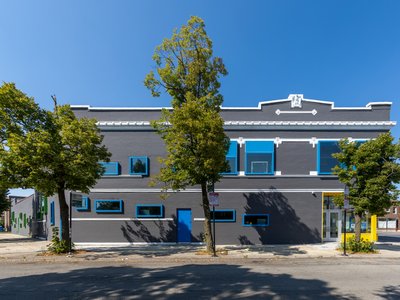
Gads Hill Early Learning Center by JGMA: Adaptive Reuse Shaping Community-Focused Educational Architecture
Adaptive reuse transforms fragmented structure into vibrant early learning center with playful façade, natural light, and community-focused sustainable design.
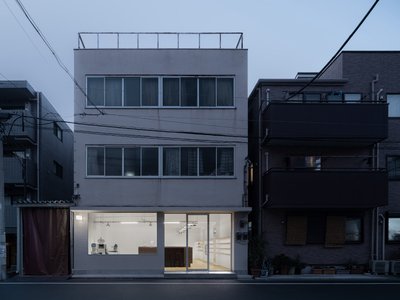
Atelier Macri Concept Store Interior Design by CASE-REAL
Atelier Macri store features a "ko" counter, walnut wood details, cork displays, blending retail, gallery, and seamless customer experiences.
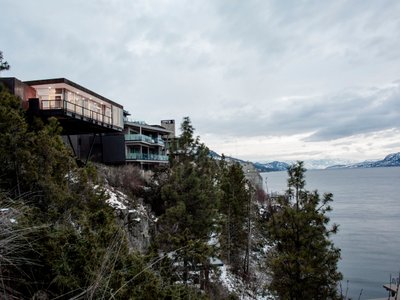
Alton Cliff House: A Harmonious Retreat by f2a Architecture in Lake Country, Canada
Alton Cliff House blends corten steel, prefabrication, and sustainable design, creating a luxurious, energy-efficient retreat perched on Canadian cliffs.

Similar Reads
You might also enjoy these articles

Free Architecture Competitions You Can Enter Right Now
No entry fees, real prizes. Here are the best free architecture competitions open for submissions in 2026.
Top 15 Architecture Competitions to Enter in 2026
From student-friendly idea competitions to prestigious international awards, here are the best architecture competitions open for entries in 2026. Updated regularly.

DIY & Engineering in Computational Design : Enter the BeeGraphy Design Awards
Showcase Your Creativity with Computational Design and Open Source Projects
Innovative Design Solutions: Award-Winning Projects from Recent Architecture Competitions
Exploring award-winning architectural projects shaping the future of design, sustainability, and community.

Explore Architecture Competitions
Discover active competitions in this discipline




The International Standard for Design Portfolios


The Global Benchmark for Architecture Dissertation Awards


The Global Benchmark for Graduation Excellence


Challenge to reimagine the Iron Throne
Comments (0)
Please login or sign up to add comments
No comments yet. Be the first to comment!