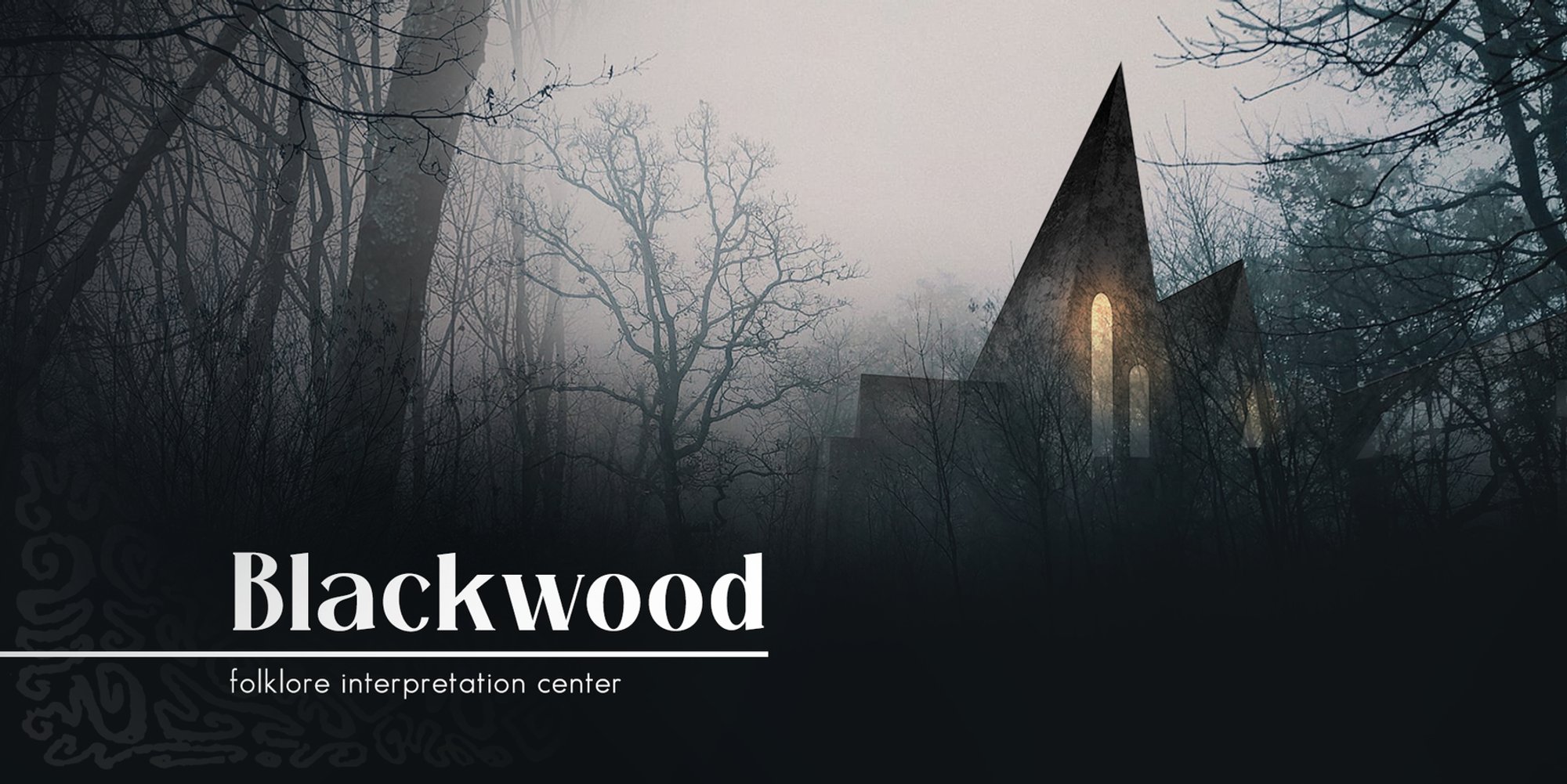
Blackwood Folklore Interpretation Center
A journey through folklore architecture, where swamps, myths, and memory shape the spaces between the seen and the unseen.


Reviving Folklore through Architecture: A Journey into Mythical Landscapes
The Blackwood Folklore Interpretation Center is a visionary exploration of folklore architecture, where built space becomes a vessel for cultural storytelling, mythological exploration, and emotional memory. This conceptual design pays homage to the eerie and enchanted landscapes of the British Isles, particularly inspired by the short story Ancient Lights by Algernon Blackwood. Set within the haunting swamplands and moorlands of western England, the narrative and spatial qualities of the center merge to create an immersive, mystical architectural experience. By reinterpreting the archetype of the English country estate through symbolism and minimalist form, the project invites visitors into a liminal realm where the past breathes through stone, light, and shadow.
A Literary and Mystical Foundation
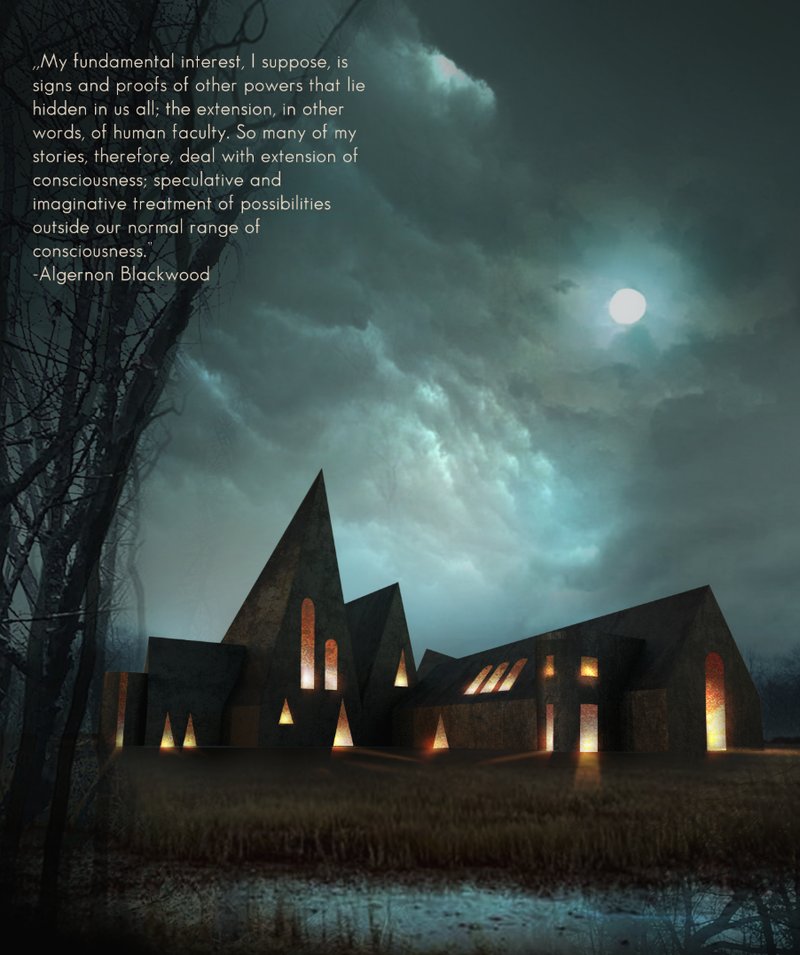
Algernon Blackwood (1869–1951), a master of early 20th-century weird fiction, was captivated by nature’s hidden energies and the human psyche’s connection to the supernatural. His stories delve into the boundary between the real and the unseen, often using landscape as a psychological mirror. Blackwood’s fascination with the uncanny echoes throughout the design of the interpretation center. His quote—"My fundamental interest... is signs and proofs of other powers that lie hidden in us all"—serves as a guiding principle. The architecture reflects this philosophical approach by constructing experiences that are emotionally and spiritually resonant, blurring the line between narrative and environment.
Architecture that Channels Myth and Memory
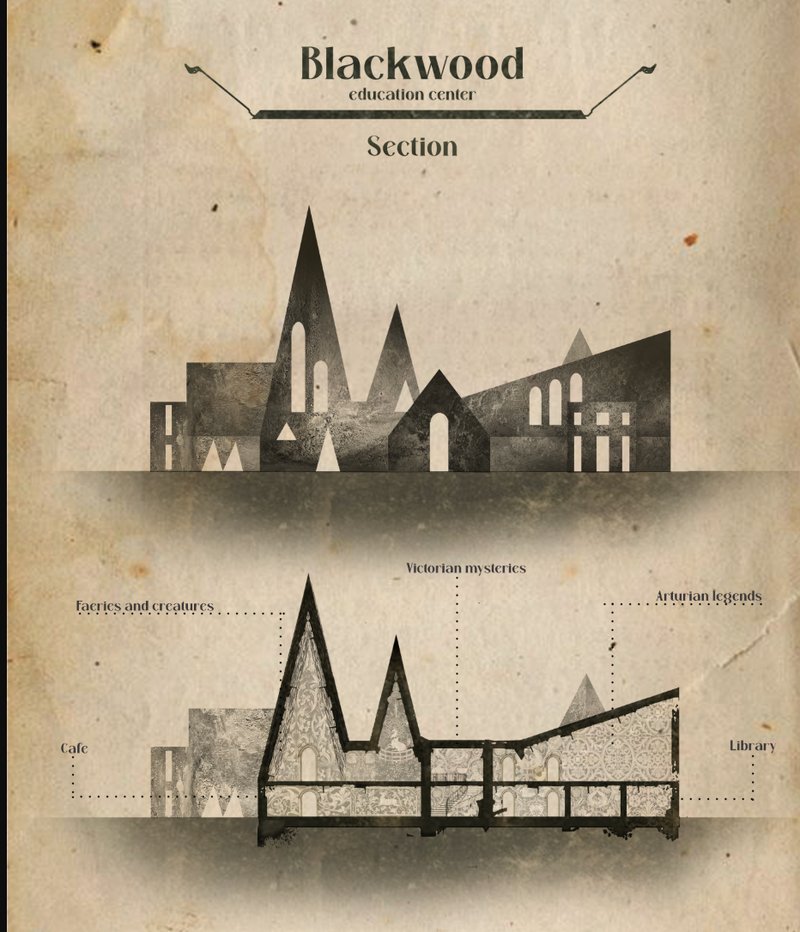
Rather than replicating a Victorian estate, the building abstractly deconstructs its familiar elements—steep gables, elongated windows, and central halls—into sharp, sculptural silhouettes. The result is an unsettling yet poetic reinterpretation of the past, one that carries the memory of grandeur and myth but strips away the decorative excess. This transformation reveals a haunting purity, as though the estate itself has become a legend, suspended in time. Visitors feel as if they’ve entered a dreamscape where myth becomes tangible and architecture whispers forgotten tales.
Swamps as Storyscapes
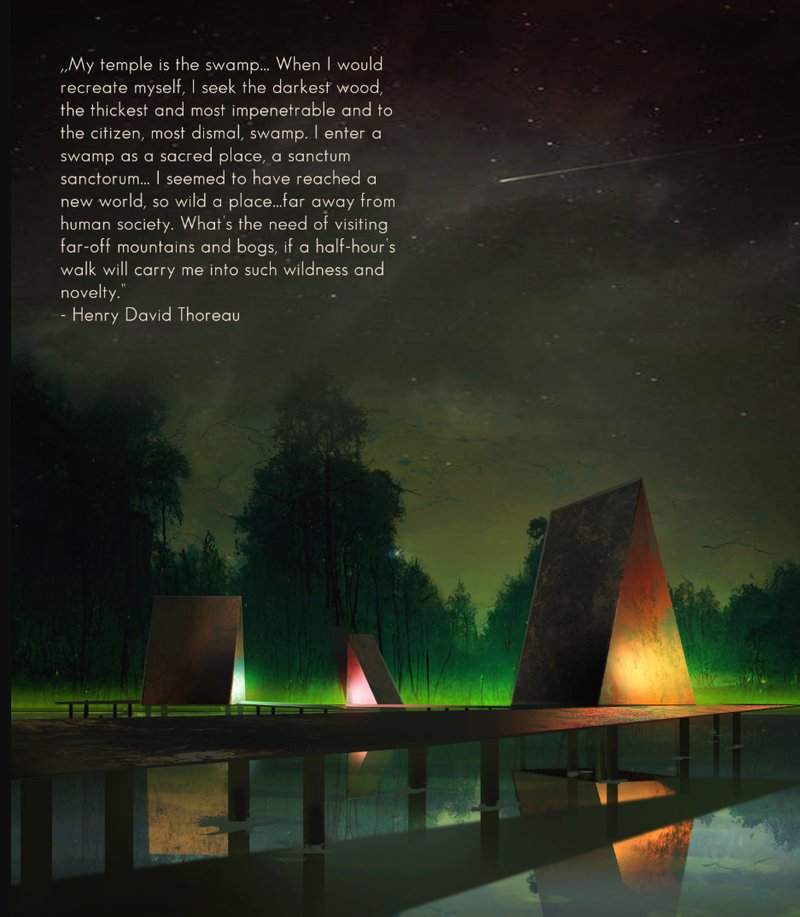
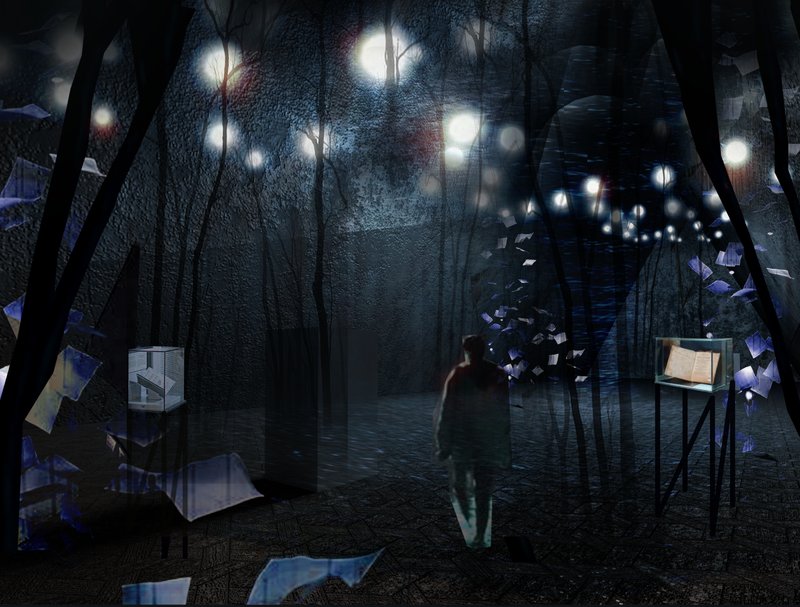
Central to the experience is the swamp—long regarded as a place of mystery, fear, and transformation. The visitor's journey begins on a raised walkway that guides them over bogs and wetlands, weaving between storytelling pavilions. These structures recount tales of supernatural beings deeply rooted in English and Celtic folklore. The will-o’-the-wisp, an ethereal light said to lead travelers astray, flickers through glowing orbs embedded in the pathways. The púca, a mischievous shapeshifter from Irish myth, is hinted at in mirrored surfaces that distort reality. The kelpie, a deadly aquatic spirit, is evoked in the watery reflections and sculptural installations. This sequence culminates in a guided night walk through the dark forest, where ambient lighting and soundscapes immerse visitors in the primal emotions that folklore evokes.
Folklore Architecture as Education and Experience
The center functions as more than a museum—it is an experiential learning space, an archive of oral tradition, and a celebration of the narrative dimension of space. Exhibition halls offer curated collections of folk artifacts, manuscripts, and multimedia installations that delve into the mythologies of Britain. Regular lectures, symposiums, and performances engage scholars, artists, and storytellers. The architecture facilitates multiple modes of learning: visual, auditory, tactile, and spatial. Leisure spaces, including a moody café, themed reading alcoves, and interactive storytelling rooms, further blur the boundaries between education and atmosphere, encouraging visitors to dwell, imagine, and reflect.
The Three Attic Realms: Time as a Narrative Structure
The attic floor of the center is divided into three immersive zones, each designed to reflect a distinct era in British cultural mythology. Here, time becomes a spatial tool:
- The Pagan and Celtic Past — Darkened rooms filled with glowing runes, sculptural trees, and ethereal sound evoke a time of elemental deities and shapeshifting spirits. Faeries, dragons, dwarves, and ogres are represented through interactive light displays and shadow projections, showing their transformation across centuries of storytelling.
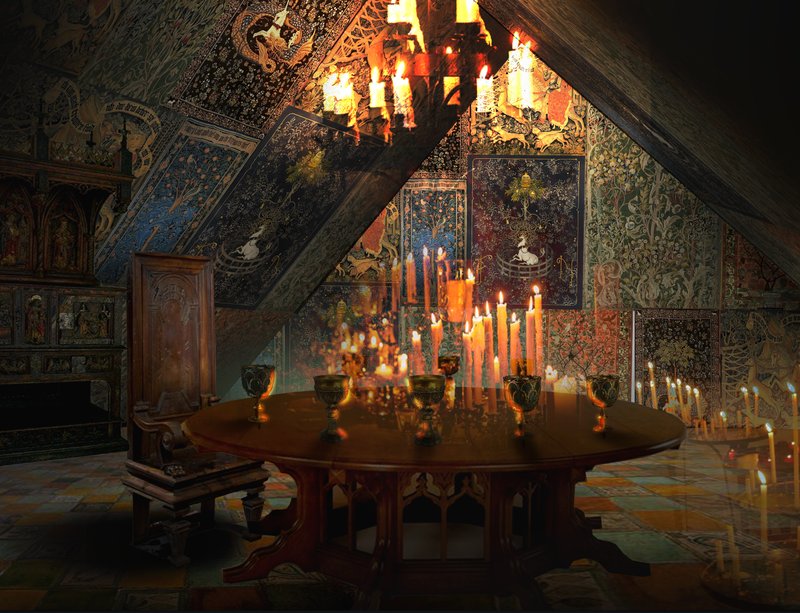
- Arthurian Legends — A richly textured setting inspired by medieval stone halls and castle interiors tells the stories of King Arthur, Guinevere, Merlin, and the Knights of the Round Table. Scroll projections, tapestry motifs, and sword-and-shield iconography turn the room into a ritualistic space of chivalry and mythic heroism.
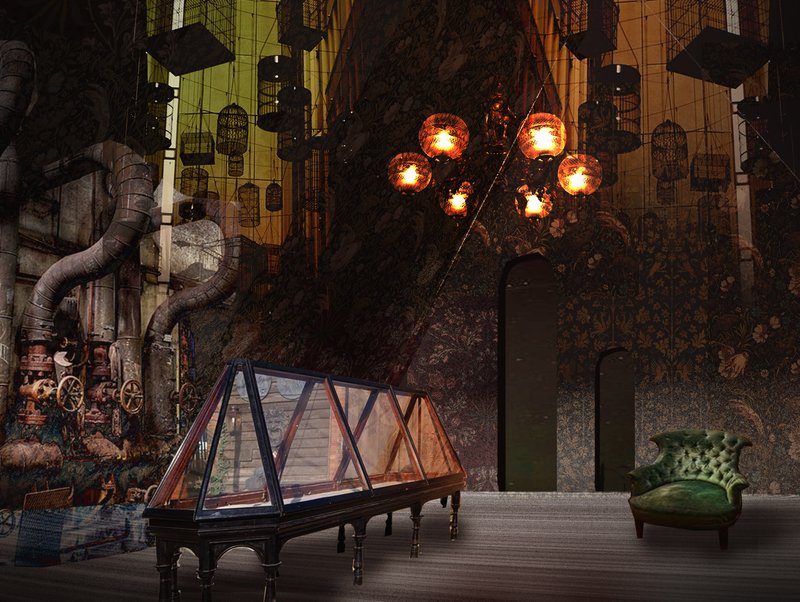
- The Victorian Era and the Industrial Revolution — Stepping into this zone is like crossing into a smoky 19th-century cityscape. Brick walls, iron structures, and mechanical gears evoke the ambiance of gothic literature and industrial innovation. This is the world of Mary Shelley’s Frankenstein, Bram Stoker’s Dracula, and Conan Doyle’s Sherlock Holmes. Ghost stories, hauntings, and urban legends fill the air as light flickers like gaslamps and mysterious shadows dance along the walls.
Labyrinthine Gardens: Myth through Landscape
Outside, the gardens play a vital role in storytelling. Inspired by medieval monastic labyrinths, the garden paths are not only aesthetically structured but imbued with narrative purpose. Visitors walk through spirals and dead-ends meant to symbolize moral journeys, life’s complexities, and spiritual transformation. Stories from Welsh mythology—such as Pwyll’s adventure in the Otherworld—are subtly embedded into the paving patterns, sculptural elements, and landscape typography. The garden becomes a sacred space of introspection, where the physical movement through space mirrors the internal quest of myth.
Architecture as Living Folklore
This WIC-shortlisted project by Tadej Djurovic reconceptualizes folklore architecture as an active storytelling practice. It challenges conventional museum typologies by embracing an atmospheric, multisensory approach to cultural preservation. By uniting myth, materiality, and memory, the Blackwood Folklore Interpretation Center becomes a timeless bridge between ancient belief systems and contemporary spatial experience. It stands not just as a building, but as an invitation—to listen, to remember, and to believe.