
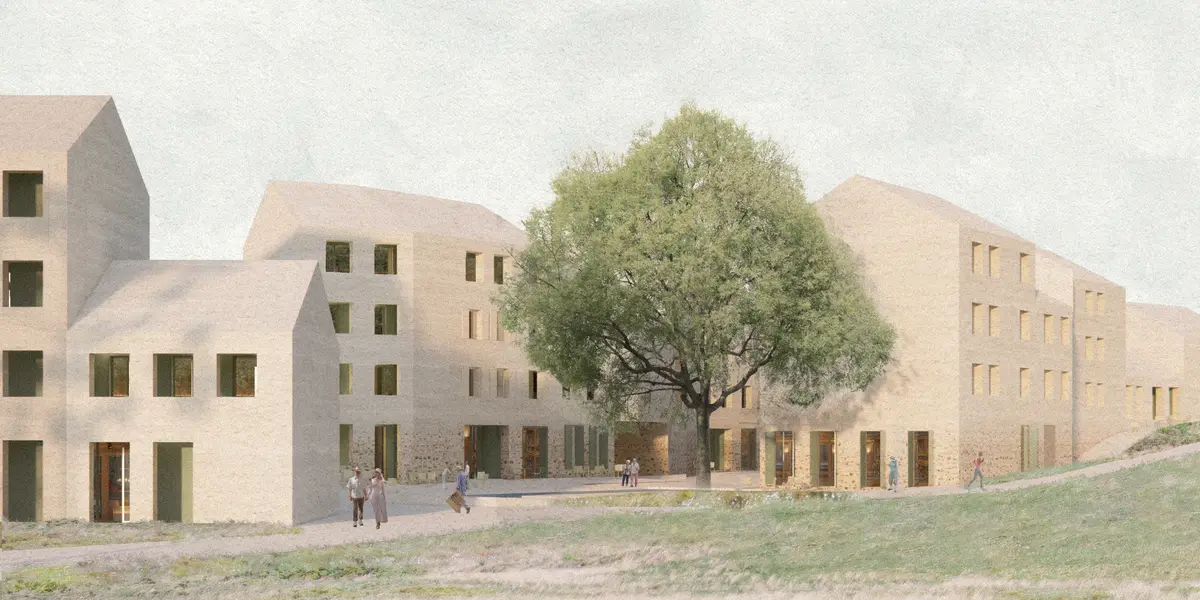
Community eco-village for the elderly
Pantalla, Italy

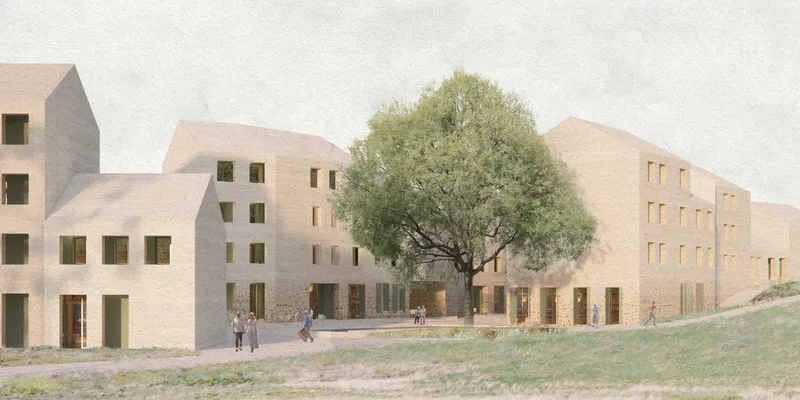
The goal of the project was to create an eco-village in the spirit of co-living for 100 people over the age of 52 in the Italian village of Pantalla. Particularly important aspects were to provide independence, a sense of belonging and close contact with nature for the elderly.
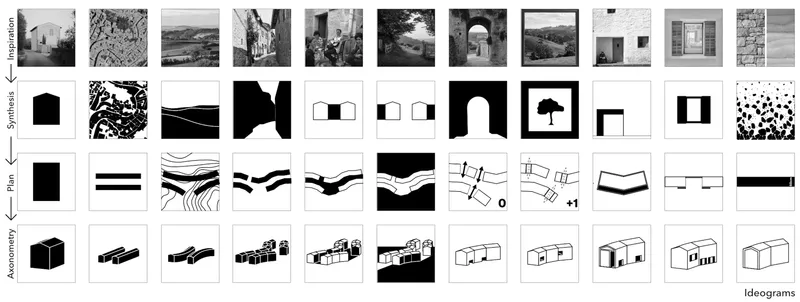
The concept was based on local urban and architectural patterns. The development was divided into two zones: urban - bustling Italian street and rural - idyllic, picturesque garden. An effort was made to capture these assets by creating sequences of spatial frames in the punctures, spaces and breaks of the buildings. A series of indoor and outdoor spaces were designed to support the establishment of relationships and the development of bonds among residents. The resulting development is intended to be a modern, safe and comfortable place for residents to live, referring, however, to familiar patterns and sentiments. For the same reason, efforts were made to select ecological solutions in the spirit of low tech, avoiding saturation with building technology. The project sought to return to traditional, sustainable solutions for dealing with air-conditioning and ventilation of rooms and the street, creating an optimal microclimate. The used natural, local materials enhance this effect.

The idea of the site plan design is based on the division into a bustling public "street" and semi-private, peaceful gardens with vegetable patches. Future residents will be able to cultivate vines on the southern slope of the plot (4), flower meadows, an orchard and home vegetable gardens will be created in the northern part, and arable fields in the south-west corner. There is also an apiary here (1), thanks to which residents can obtain their own honey. In the center of the complex, seniors will be able to meet and rest in the pleasant shade of a large tree and dip their feet in a natural pond (5).
There is also a stream running along the street to cool the air on hot days. The entire street surface has been designed to be semi-permeable and locally reinforced to facilitate the movement of wheelchair users. The project provides parking spaces for guests and garages for electric cars, operating in the car-sharing system, available to residents.
The buildings of the complex were designed linearly along the street and adapted to the hilly topography of the area. The "broken" nature of the buildings, different heights and numerous passages on the ground floors make the street expressive and lively. The forms of houses refers to the traditional architecture of the region, with the shape, proportions and slope of the roofs. Numerous services are located on the ground floors, such as: a canteen (2), a wine cellar (5) with a bar and a cafe (6) near the vinery slopes (4), a shop (7) where residents can sell their own crops and products, and a doctor with a physiotherapist (9). Residents will also be able to spend their free time in the hobby and sports space (1) and work in a coworking office (3). There will also be a rental space (4) available for enterprising residents, where they can start a business such as a hairdresser or a ceramics workshop.
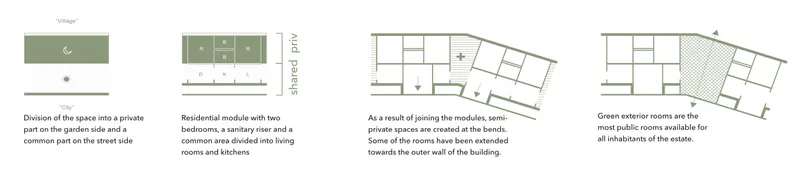
The apartments have been divided into a night zone facing the garden, and a common zone facing the bustling street. The apartments are based on residential modules, consisting of: two bedrooms, a sanitary riser, living rooms and a kitchen. As a result of joining the modules in a "broken" way, semi-private spaces were created on the bends, for any use by roommates, eg a work room, a reading room. Apart from the coliving apartments described above, there are also separate apartments for 1-4 people and separate guest rooms. Green spaces in the building that function as external rooms are the most public zones for all inhabitants of the ecovillage. Such a division enables seniors with different social requirements and needs to choose a flat.
The buildings are designed with natural and ecological materials such as stone, rammed earth and wood. The structure was reinforced with reinforced concrete rings.
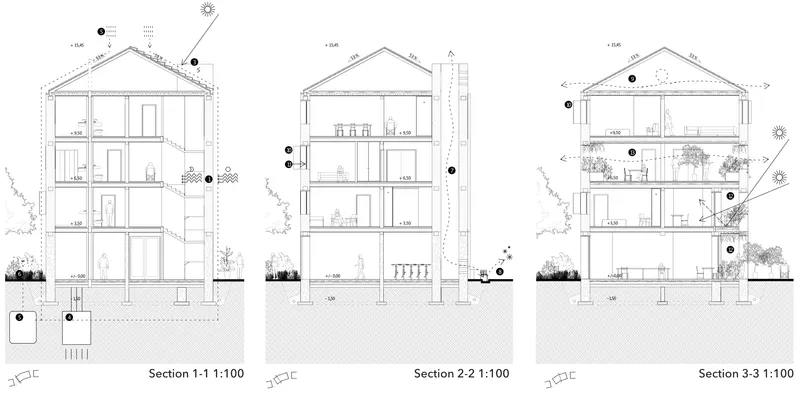
A number of ecological solutions have been used in the buildings:
1. thermal storage wall massive stone and rammed earth wall construction stabilizes internal conditions, absorbs and releases heat when needed, supporting the energy efficiency of the designed building
2. materials that reduce the carbon footprint mostly of natural origin and locally occurring
3. photovoltaic roof tiles photovoltaic tiles arranged on the southern slope of the roof
4. ground source heat pump
5. rainwater tanks
6. use of rainwater for site irrigation and watering plants in the garden
7. wind tower provides cooling for the "street" and supports ventilation of the building
8. water path along the "street" cooling the walking path and meeting places in summer
9. ventilated attic provides additional insulation against heating of the top floors
10. shutters sun protection traditional for the region
11. windows recessed toward the interior of the building reduction of glazing heating, sun and thermal protection
12. recessed south facade arcades creating a buffer zone between the interior and exterior, providing increased thermal comfort, privacy and contact with the "city".
13. exterior rooms allow contact with both garden and street areas, additional ventilation of the building, space for growing herbs and relax


Popular Articles
Popular articles from the community


Lunar Spiral: Space Architecture Shaped by the Mathematics of the Universe
Lunar Spiral reimagines space architecture through Fibonacci geometry, lunar regolith, levitating habitats, and self-sustaining Moon living.

The Musturak Paradise: Senior Living Architecture for a Connected Future in Temara, Morocco
The Musturak Paradise reimagines senior living architecture in Temara via private homes, social spaces, culture, community, and shared care.

Hill & Cross Opera: Sculptural Opera House Architecture Shaped by Tallinn’s Landscape and Identity
Hill & Cross Opera reimagines opera house architecture in Tallinn through its sculptural hill, civic plaza, glass wave and a luminous cross.

Co-Life: Senior Housing Design That Reconnects Older Adults With the City
Co-Life reimagines senior housing design through healing gardens, shared streets, workshops, and a sustainable community across generations.

Similar Reads
You might also enjoy these articles

Day and Night Park: A Time-Based Urban Newsstand in Beijing
A temporary urban newsstand in Beijing blending travel, light, and reading through poetic colors, compact form, and community-focused design.

Modernist Patio Renovation in El Masnou, Barcelona by Oliver Segura Arquitectura + Cebrià Arquitectura
Modernist patio renovation blending tradition and innovation with a movable pool, leveled floors, and Catalan materials in El Masnou.

Alto Residencial Coop: Cooperative Housing Development in Santiago de Compostela by Carbajo Barrios Arquitectos
A linear cooperative housing complex blending white volumes and perforated metal façades, enhancing community living, natural light, privacy, and urban integration.
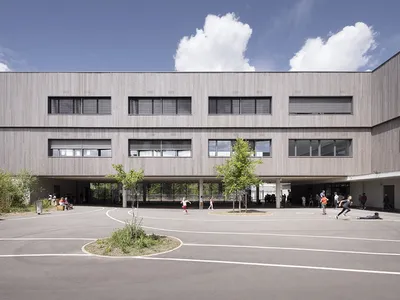
Vil Genis School by BPA ARCHITECTURE – Massy, France
Vil Genis School in Massy, France, features sustainable design, south-facing classrooms, community integration, accessible spaces, and modern educational architecture.

Explore Housing Competitions
Discover active competitions in this discipline


Challenge to reimagine the Iron Throne

Photograph architecture without architects

Illustrate the lost glory of Angkor Wat - Render Challenge

Design challenge to reuse E-waste
Comments (0)
Please login or sign up to add comments
No comments yet. Be the first to comment!