Designing a modular lifestyle using shipping containers.
Container City - Result Story


The trade & commerce across the works are bustling despite the pandemic push. The innovation of shipping containers is somehow the only way cross-border trade happens especially in the case of waterways. Trade previously had been much organic package sizes, but now the size definitions help not only the manufacturer to anticipate their capacity and cost, but it has boosted logistical speeds tremendously.
There are some great things especially when we see in the context of this breakthrough in freight delivery. But at the same time, it brings a lot of this waste because of the decaying of these containers due to loss in serviceability and use. There are especially two key takeaways in this story, emphasizing two sides of the shipping container story. Let's look at them objectively.
Starting with the good side, shipping containers bring modularity that is unparallelled which has boosted trade largely. A quality that the construction industry has severely ignored in the past. No matter how much we demand customization, urban living pushes for modular construction in a lot of ways at least in spatial planning (eg. Apartments, Condos). The quality of modularity is unavoidable when the rise in housing demand is so high and time is crucial.
At the same time, shipping containers bring a downside of generating waste by frequent decommissioning. They are costly to dismantle hence finding alternative uses is a great way to address the excess waste generation. At the same time bringing down construction costs for design projects. How can we use these qualities to our advantage to deliver better habitats to our people as architects?
Rising rents in urban areas and shrinking the quality of living is a huge problem urban areas face. The biggest components of this cost are - 1. Land Prices (Which are impossible to change) or 2. Construction cost (Which can be brought down through various strategies)
And modular construction may be the only known way that can do it.
The prices can not only be offset by faster construction but quicker making times as well. This is the biggest reason, despite the availability of containers in a port city, it can be a point to explore manufactured housing as a concept especially for dense urban areas.
The design brief is to design a student housing concept made of 15 shipping containers. Devise the spaces and the requirements based on how many people ideally can this shipping container setup can fit. Please note the housing concept has to be made out of shipping containers primarily. If you wish to create extensions, canopies, bridges, made of other materials (Like timber, steel, concrete) you may do that, but only limited to 15% of the surface area of these 15 containers only. The size of the container can be any of the two 40' x 8' x 8'6" and 20' x 8' x 8'6". You can include plinths, columns, or frameworks made of other materials.
The container setup will be placed on vacant land leased for a certain duration or deck on the water like the Urban Rigger - by BIG or on a structural grid to keep land below accessible for other use - to mitigate the rising land cost. Space efficiency matters the most, hence effective utilization of inside and outside spaces is a must. Please note no more than 4 containers can be stacked on top of each other. They are designed only for laying horizontally.
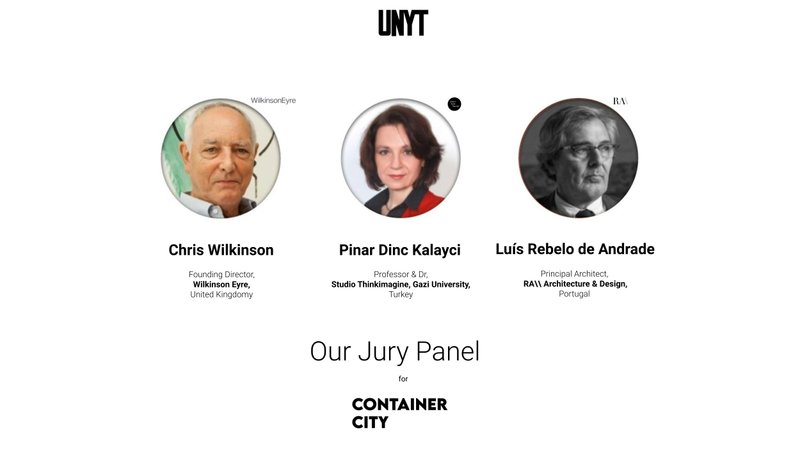
The jury for the competition consisted of esteemed designers, professionals, and academicians from around the world. The Lead Jurors for the competitions were as follows:
Chris Wilkinson, Founding Director, Wilkinson Eyre, United Kingdom
Pinar Dinc Kalayci, Professor & Dr, Studio Thinkimagine, Gazi University, Turkey
Luís Rebelo de Andrade, Principal Architect, RA\\ Architecture & Design, Portugal
Some of the Best of competition projects are:
Winning Project: Vertical Village
By: Ruben Andersen
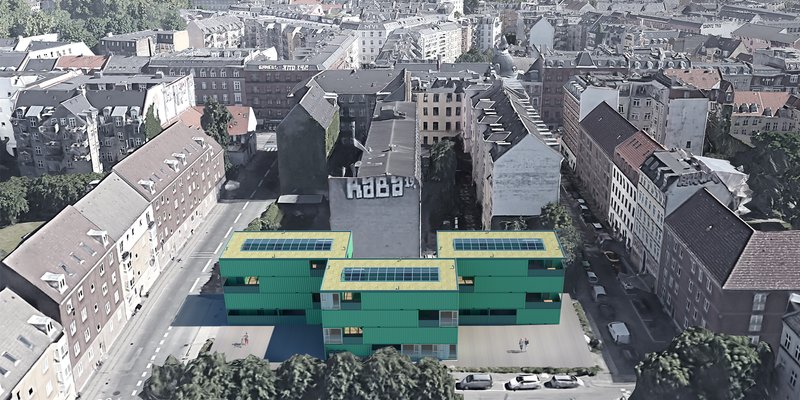
Fig: 1 Cover image
Description: A small community of manufactured & affordable student housing; living closely together in a block of industrial containers
------------------
Runner Up: Two Towers
By: Páricsy Zoltán, Zwickl Terez & Bence N. Krajnyák
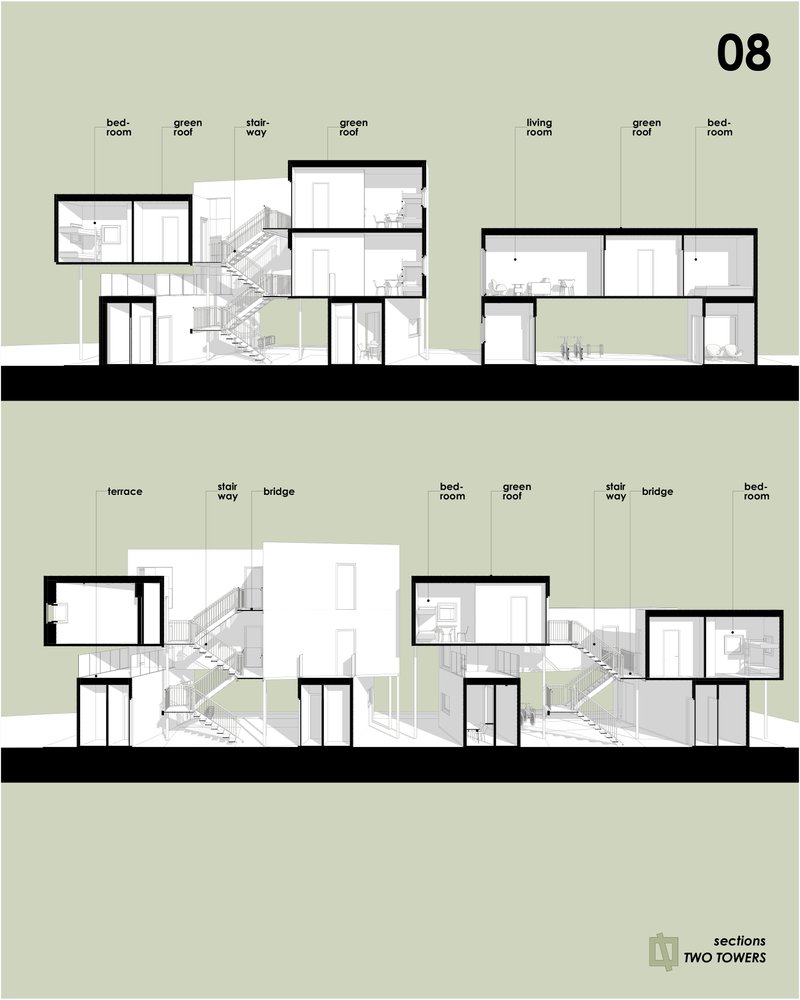
Fig: 2 Elevational Plan
Description: „Words create a bridge between two people” (by LGT, a Hungarian rock band)
----------------
Runner Up: SPIRAL
By: Bence N. Krajnyák, Jager Lorincz Orsolya & Páricsy Zoltán
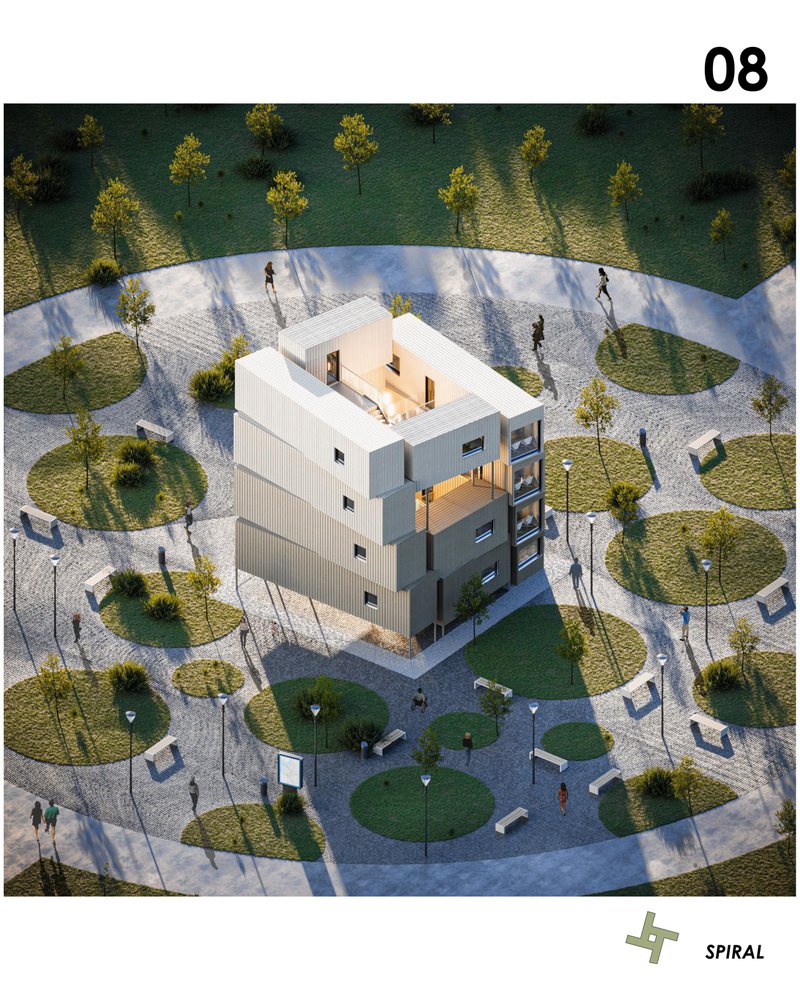
Fig: 3 3D View
Description: „ … millions of living creatures ...” (József, Attila: Ode)
--------------------
Honorable Mention: GeCon
By: Gelareh Saneyi, Nahal Doosti, Donya Rahbari & Amir Mohammd Azizz
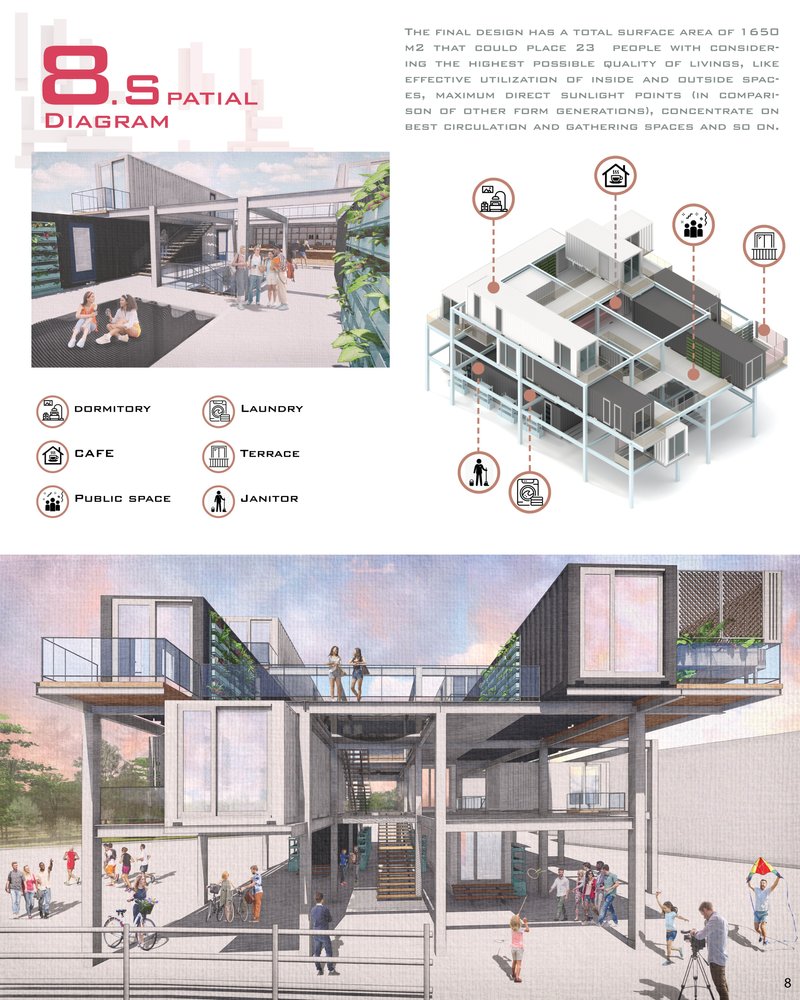
Fig: 4 Spatial Diagram
Description: This project has employed a generative design method to generate thousands of alternatives for the dormitory building in a short time and to take advantage of computational design methods to approach the most efficient way to organize the container modules for the purpose of enhancing the quality of life on the basis of maximum area and received direct sunlight.
--------------------
Honorable Mention: WE_STACK
By: Dorina Mericskai, Elise Vandenbroucke, Arati Sahoo & Andrea Perozo Palencia
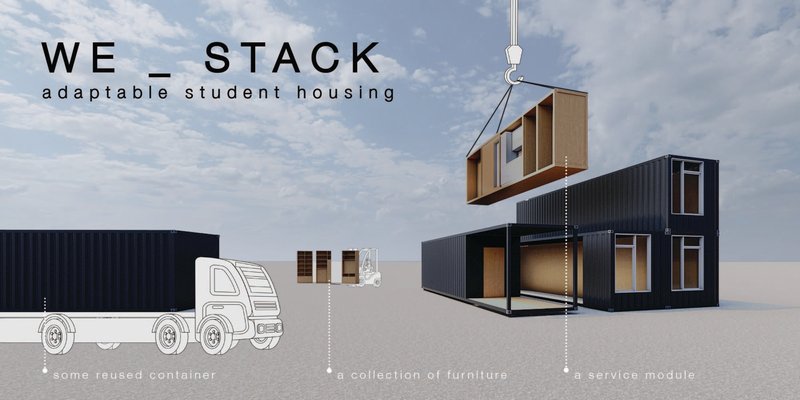
Fig: 5 Cover image
Description: WE_STACK is a modular system to create affordable student housing around the world. Thanks to its modularity on several levels, it can be adapted to any plot, culture and density.
-----------------
Honorable Mention: HABITAT Student Housing
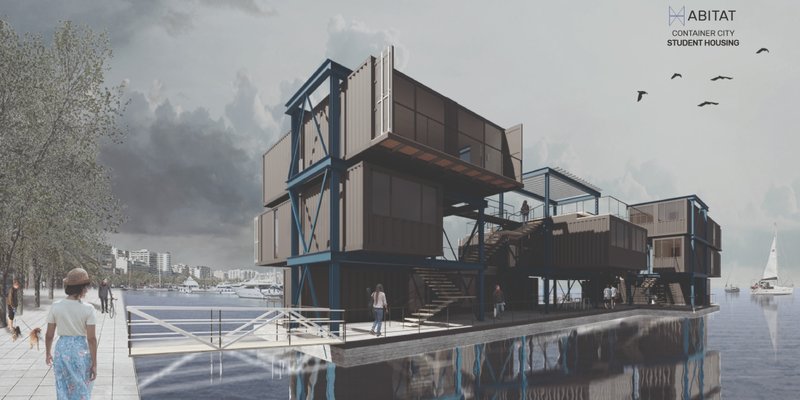
Fig: 6 Cover image
Description: HABITAT proposal is an aesthetically appealing, affordable, sustainable modular style housing proposal that provides a healthy community living space for many individuals including those with accessibility needs on a small footprint of land. The concept could be used in many different settings and would be a positive addition to our living spaces.
--------------------
Honorable Mention: WARTA CAMP - container student housing
By: Jagna Przybylska
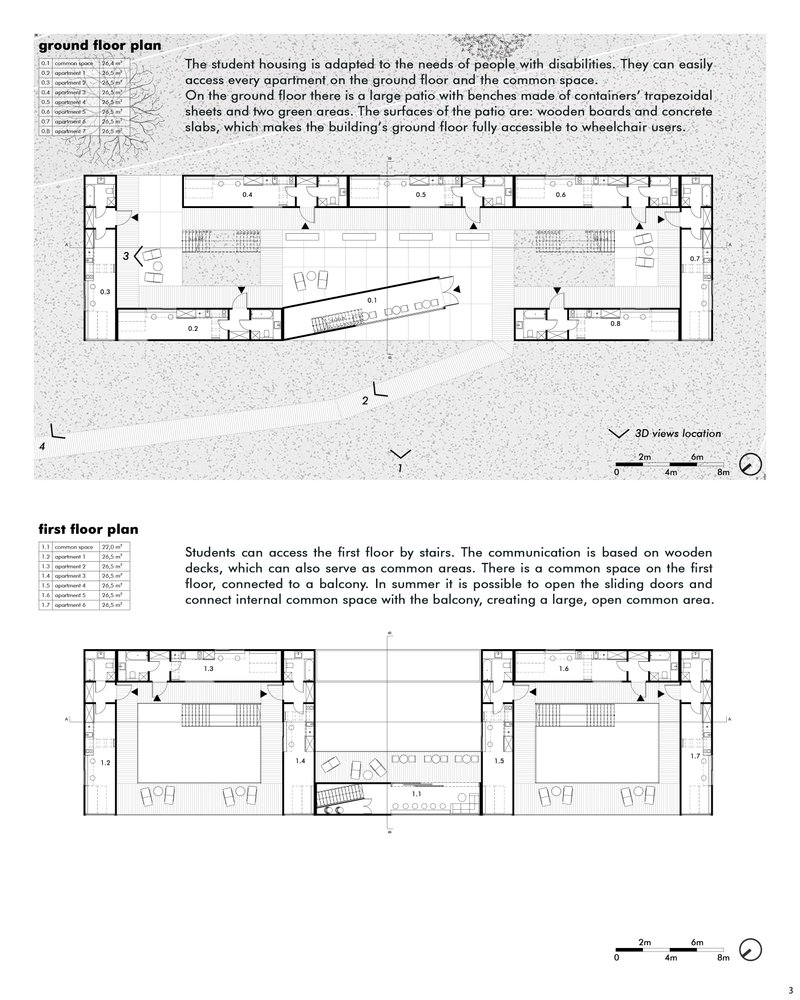
Fig: 7 Floor Plans
Description: The student housing, designed near the Warta riverfront, redefines what student housing can be and responds to the global problem of waste.
--------------------
Honorable Mention: Verzendaccommodatie
By: Antonio Abreu & Phillip Tu
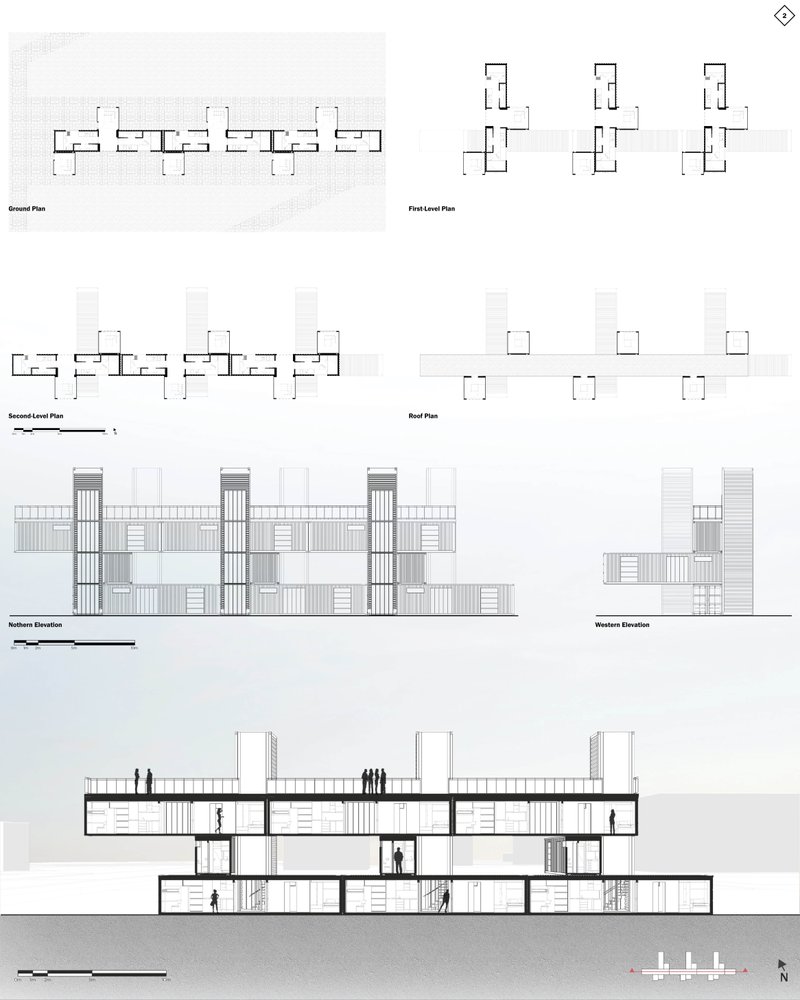
Fig: 8 Elevation Plan
Description: A student housing modular concept for the Amsterdam University College designed from 15 shipping containers arranged effectively.
--------------------
Honorable Mention: CONTAINER CITY
By: Phúc Thái
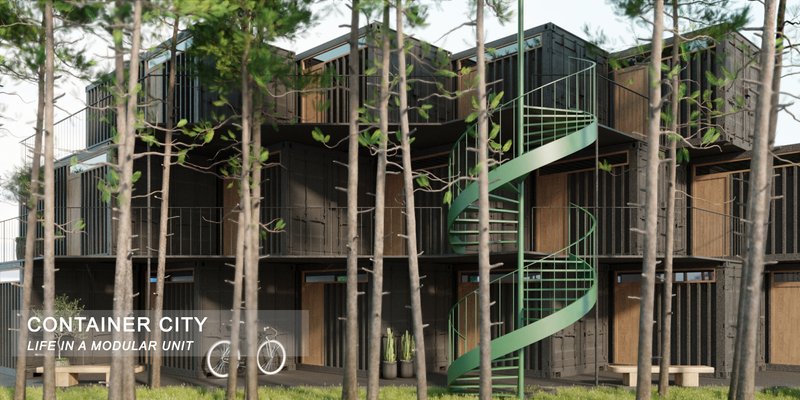
Fig: 9 Cover image
Description: Life in a modular unit.
--------------------
People’s Choice: Futuristic Floating Residents
By: Soheib Rahmani, Kiana Oveisi, Elham Akhgar & Kimia Esmaeili
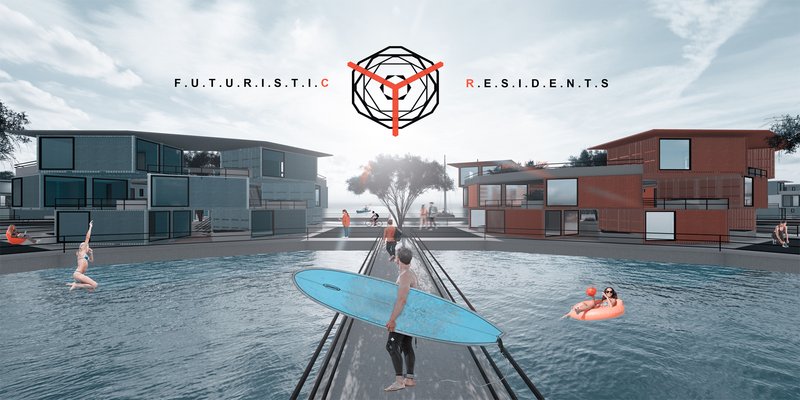
Fig: 10 Cover image
Description: Sea level rise in coastal cities have a negative impact on the lives of residents. Findings support the argument that traditional land reclamation methods are not a practical long-term solution apart from its various disadvantages on the ecosystem. Our approach to solving this problem was to adapt to the environment and use a floating structure against SLR impacts.
--------------------
Institutional Excellence: Band Together
By: Josiane Roy & Nazaré Gaudreault Robalo
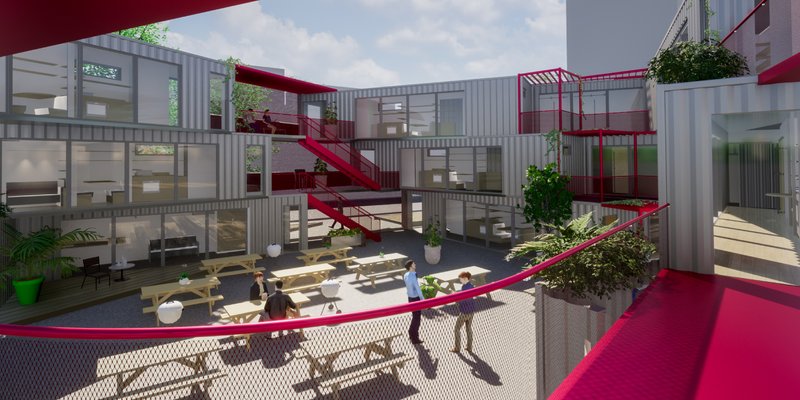
Fig: 11 Cover image
Description: The students’ need for socialization sits at the center of this community-oriented design.
--------------------
Editor’s Choice: IN BETWEEN
By: Sondos Barhumi & Enas Alassi
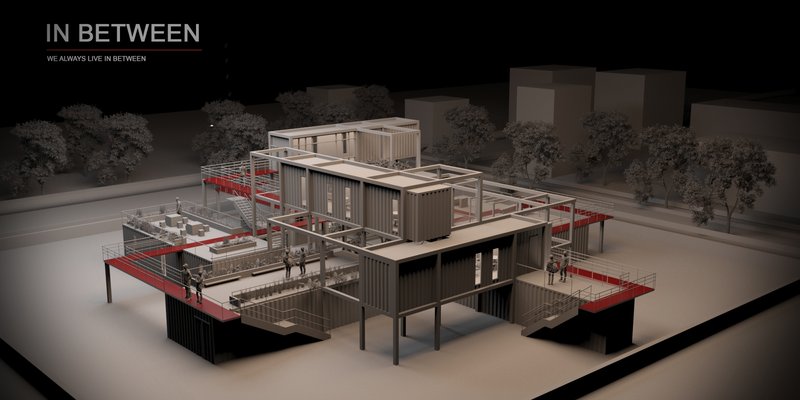
Fig: 12 3D view
Description: Architecture is an ongoing adaptation to the multiple conflicting forces flowing through society. Our project offers an alternative reality where standardization is utilized to create a costume environment that expresses the students' experience of living abroad. And how architecture intervenes to make it less alien and more enjoyable.
--------------------
Editor’s Choice: 01
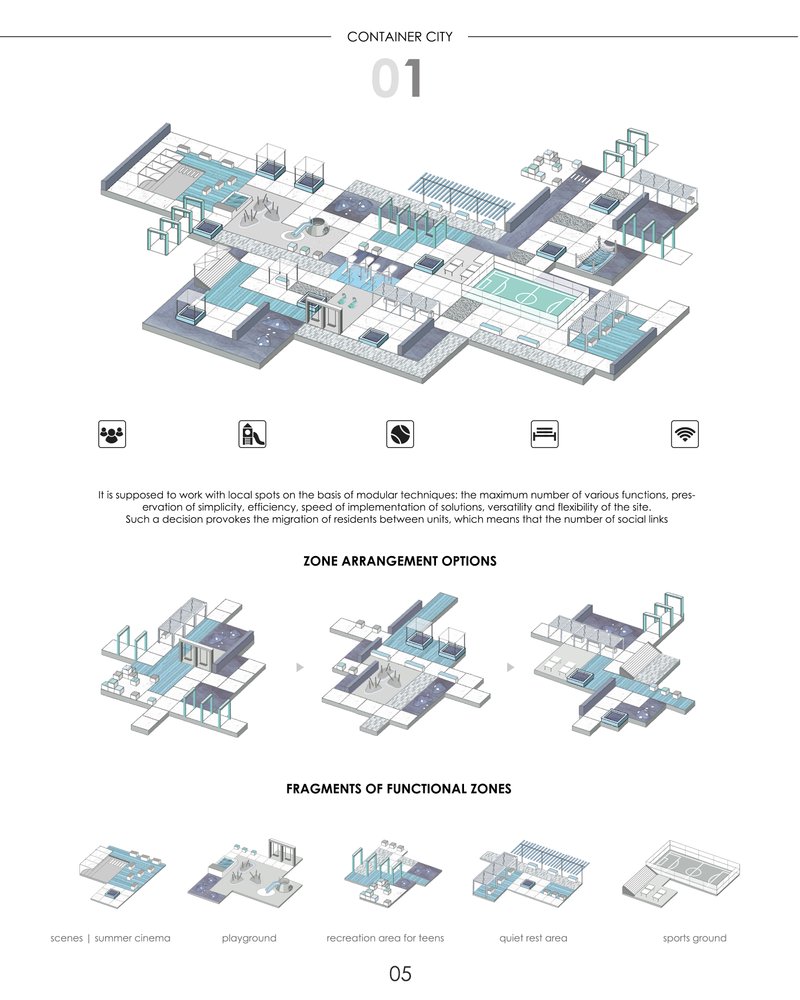
Fig: 13 3D Plan
Description: The main idea of the project is a binary system. The concept is based on the structure of binary code. There are only 0 and 1: 1 - filled structure (residential), 0 - void structure (non-residential). Thanks to the use of the algorithm, the concept uses combinations of modules that form a competent structure of the complex.
--------------------
Editor’s Choice: MOBILE TREEHOUSE
By: Amy Blencoe
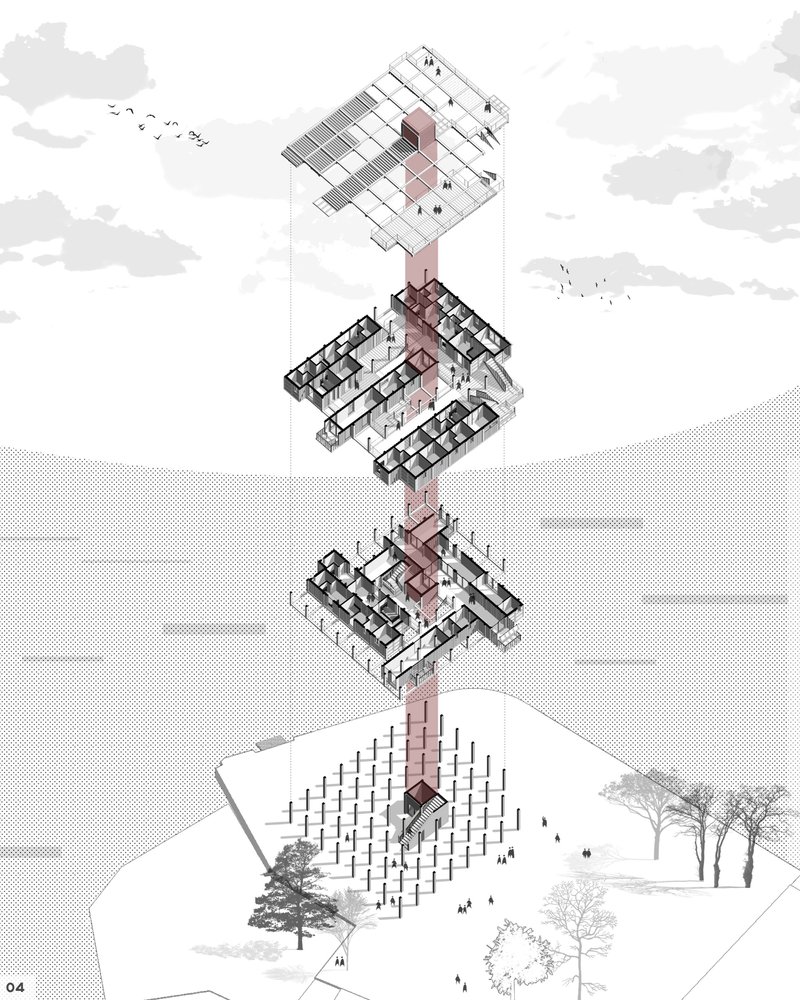
Fig: 14 Multiview Plan
Description: Student accommodation laid out on a structural grid using 15 shipping containers. Designed for city coastal living, and for students who have an interest in water sports activities. The grid can be transported to denser, urban landscapes and expanded through the years.
--------------------
Editor’s Choice: CLUSTAINER
By: 승현 정, SUJIN CHOI & Jiyeon Ryu
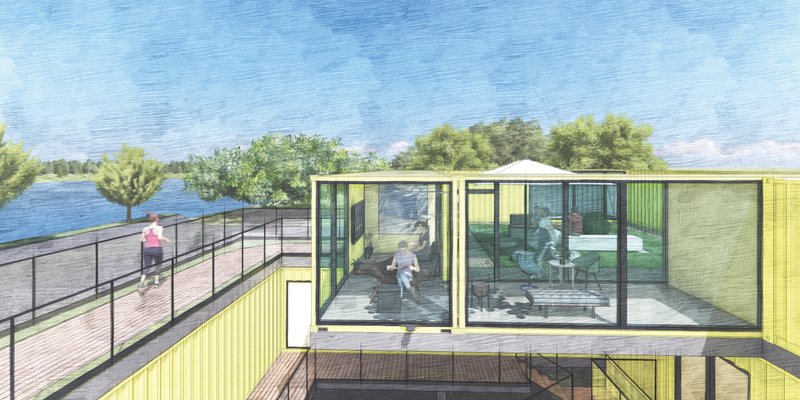
Fig: 15 Cover image
Description: We propose spaces for students' housing by connecting these parking lots with various features of the city. Containers move into the city, combine with parking lots, form clusters and combine with cities.
Follow us on social media: Facebook | Instagram | LinkedIn | Twitter | Youtube
References (3)