DIY Flood-Resilient Architecture for Kerala: A Community-Centered Approach
Empowering Kerala with sustainable flood-resilient architecture built by the community, for the community.


Kerala, known for its vibrant culture and lush landscapes, has faced repeated flooding crises that disrupt lives and displace communities. Instead of imposing ready-made solutions, architects Omar Andrés Campos Rivera and Maria José Castañeda Valbuena proposed an innovative and participatory model: A Do-It-Yourself Flooding Toolbox for Kerala. This project, a People's Choice Award entry of HEAL+, emphasizes flood-resilient architecture that is flexible, sustainable, and community-driven.
Concept: A Toolbox for Resilient Communities
The central idea is simple yet powerful: communities know their environments best. By equipping them with adaptable architectural tools, they can create housing and infrastructure that respond directly to local conditions. This Flood-Resilient Toolbox focuses on:
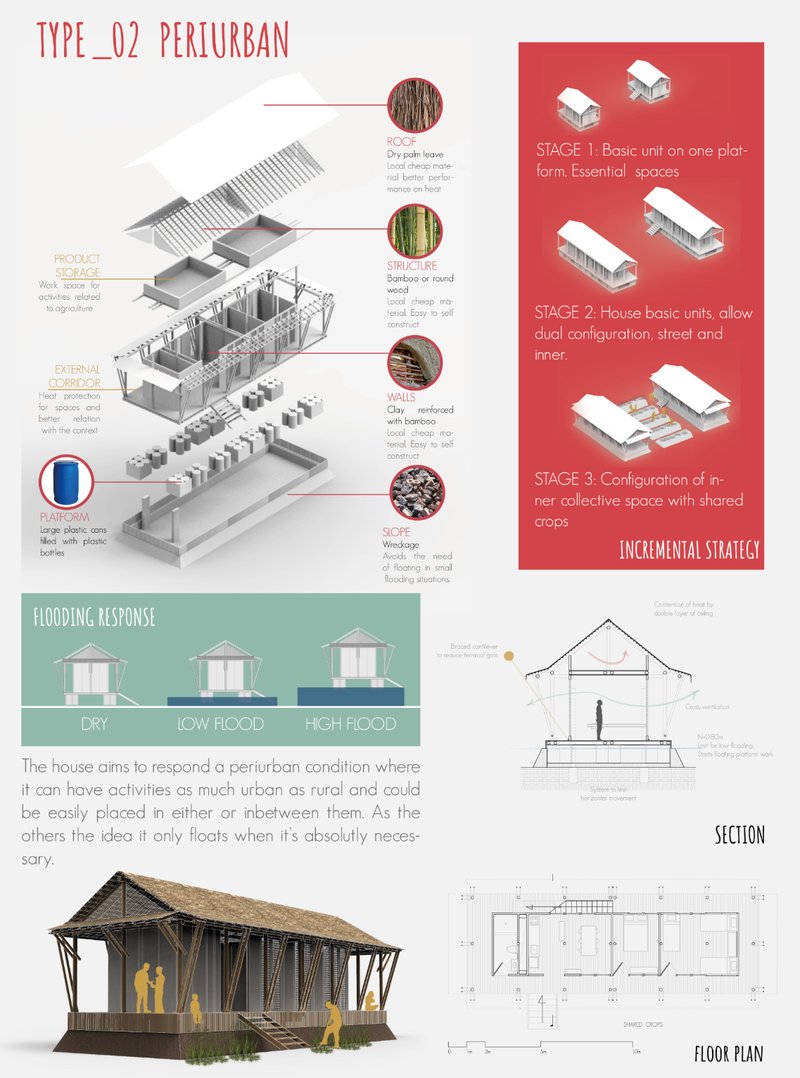
- Self-construction: Communities can build using basic tools without needing specialized labor.
- Affordable local materials: Bamboo, palm leaves, clay, and recycled elements reduce costs and carbon footprint.
- Multiple uses: Modular components serve diverse purposes across urban and rural contexts.
Key Architectural Strategies
The toolbox includes a set of flexible architectural solutions:
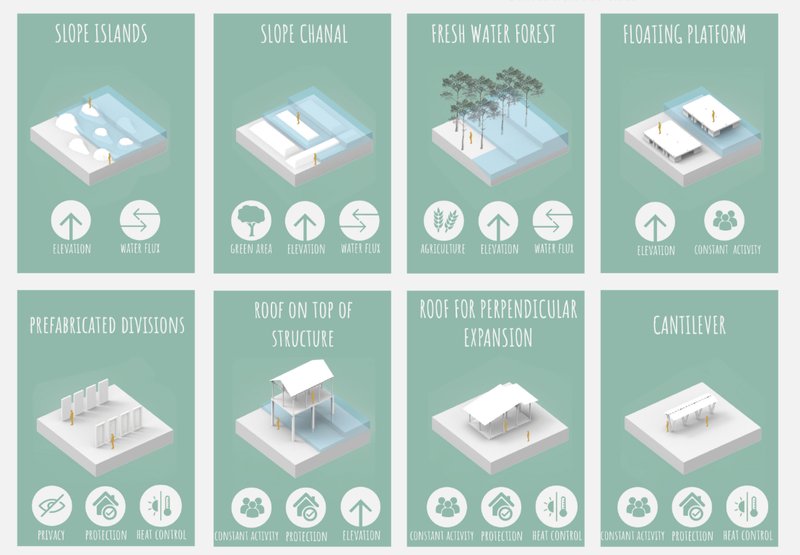
- Slope Islands & Canals: To regulate water flow and manage elevation during floods.
- Freshwater Forests: Green buffers that support agriculture while absorbing excess water.
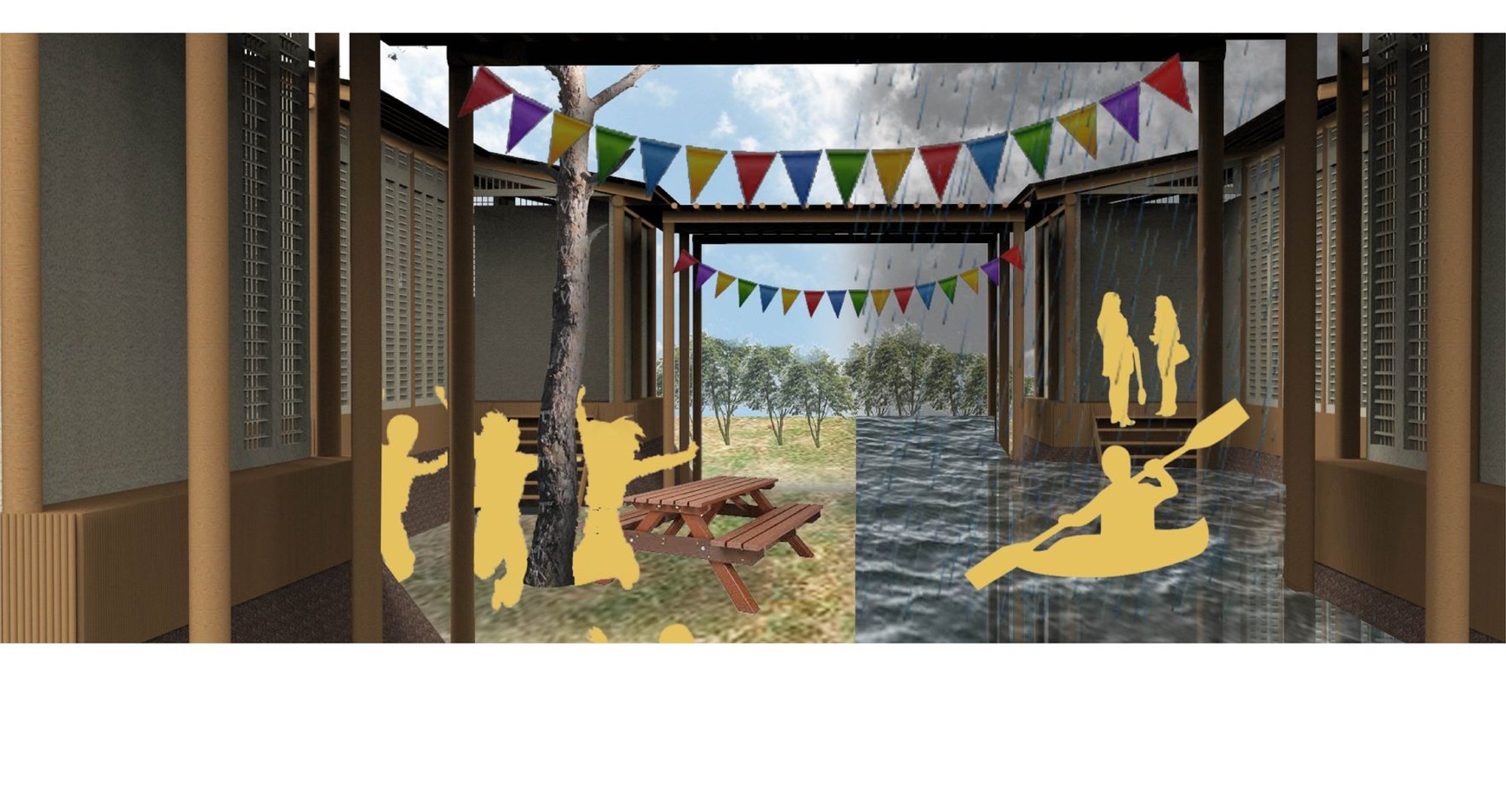
- Floating Platforms: Providing constant activity and safe shelter in high-water scenarios.
- Prefabricated Divisions & Roof Expansions: Ensuring privacy, heat control, and scalability.
- Cantilevered Spaces: Elevating living areas to withstand fluctuating water levels.
These modular elements can be adapted depending on whether the context is urban, peri-urban, or rural.
Urban Resilience Design
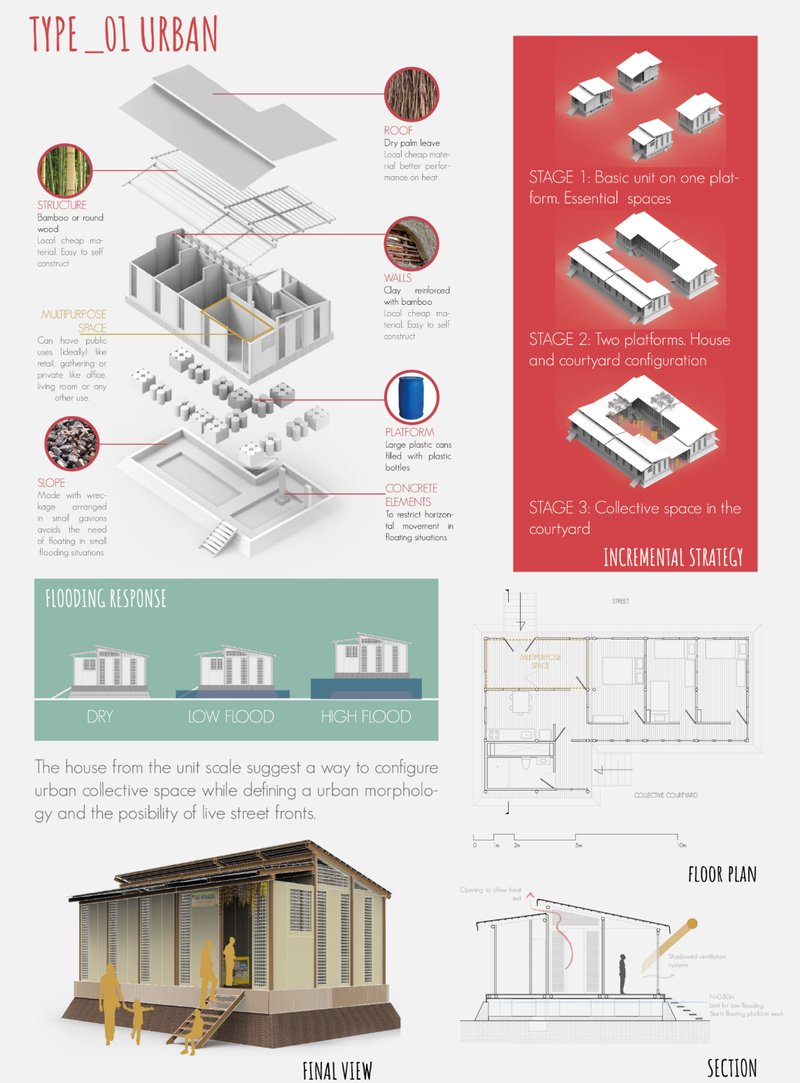
In urban contexts, the toolbox suggests compact housing models that balance essential living spaces with multipurpose community zones. Using clay-reinforced walls, bamboo structures, and dry palm leaf roofing, the homes are eco-friendly and cost-efficient. Incremental construction stages allow residents to expand from a single platform to larger courtyards and collective spaces. These designs not only respond to varying flood levels (dry, low flood, high flood) but also encourage vibrant street life and communal interaction.
Rural Resilience Design
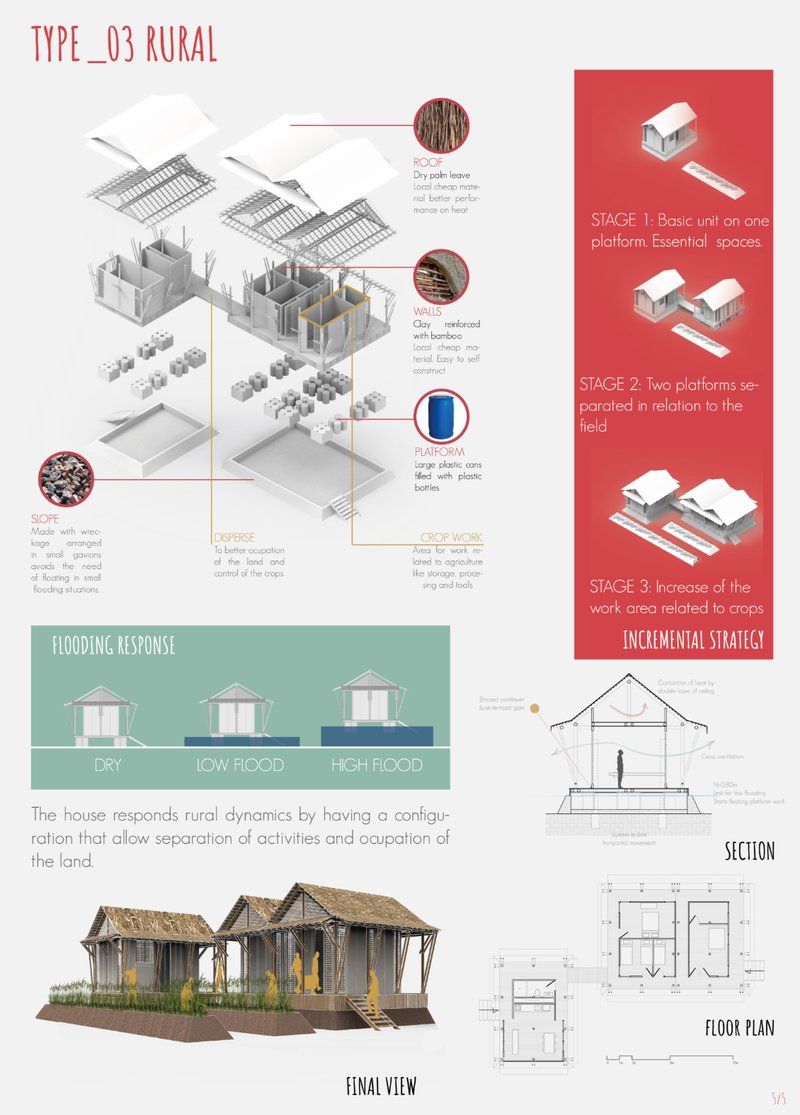
For rural areas, the design emphasizes agricultural integration. Homes are elevated on platforms filled with recycled plastic cans and concrete elements, reducing flood risks while preserving cropland. Incremental strategies allow households to expand their workspaces in response to seasonal demands. This rural model separates living and farming activities, ensuring resilience while enhancing productivity.
Action Plan and Master Plan
The project extends beyond individual housing units to include community-scale planning:
- Action Plan: Establishes a framework for a flood-safe lifestyle without imposing rigid urban forms.
- Master Plan: Encourages clusters of small collective units with strong ties to rivers and natural landscapes.
- Public Buildings: Serve dual purposes as community hubs and emergency flood shelters.
Together, these strategies create sustainable urban and rural morphologies that adapt to both social and ecological needs.
Why This Matters
Kerala’s frequent floods demand innovative approaches to housing and infrastructure. This project demonstrates that flood-resilient architecture is not about costly interventions but about empowering communities with tools to build, adapt, and thrive. By combining local wisdom, sustainable materials, and modular systems, it redefines resilience as both an environmental and social goal.
A Do-It-Yourself Flooding Toolbox for Kerala reimagines disaster response architecture as a participatory and adaptive process. It celebrates local identity, ecological sustainability, and community empowerment, offering a replicable model for other flood-prone regions worldwide.