FoodFlow: A Model for Sustainable Architecture and Urban Farming
FoodFlow integrates sustainable architecture and urban farming to create resilient cities through energy-efficient, community-driven design.


FoodFlow is an innovative project that merges sustainable architecture with urban agriculture to address pressing issues of food security, environmental impact, and community engagement. Designed by Jazmin Kimble, the project demonstrates how future cities can integrate farming modules into the built environment, promoting self-sufficiency and ecological resilience.
Sustainability Goals
At the heart of FoodFlow are the Living Building Challenge and LEED performance standards. The design emphasizes six key sustainability petals:
- Health & Happiness: Spaces optimized for physical and psychological well-being.
- Water: Closed-loop systems with net-positive water through reuse, treatment, and infiltration.
- Place: Pedestrian-friendly environments fostering strong community-nature relationships.
- Materials: Non-toxic, transparent, and socially equitable building resources.
- Energy: Net-positive renewable energy with pollution-free operations.
- Equity & Beauty: Inclusive spaces that celebrate design, justice, and shared human experience.
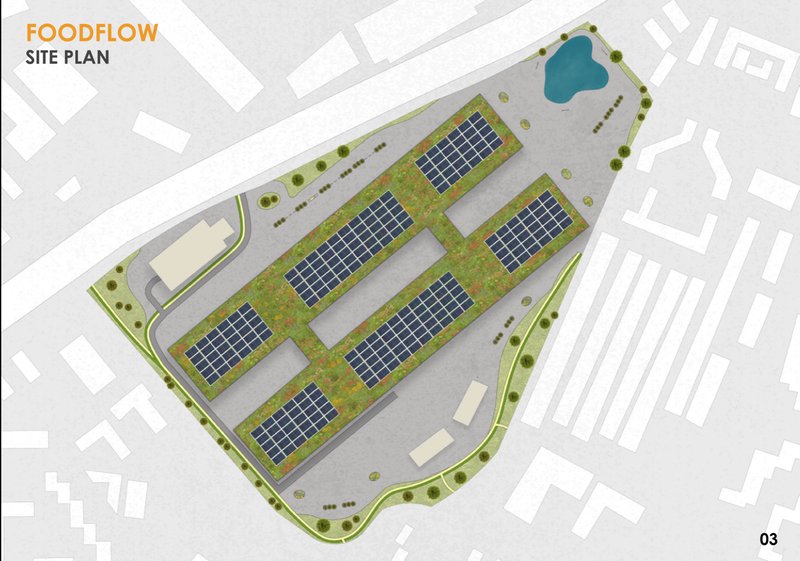
Performance features include solar panels, bioswales, rainwater harvesting, permeable pavements, tree trenches, waste-free systems, and bike-sharing networks, reinforcing the project’s environmental commitment.
FoodFlow Module Design
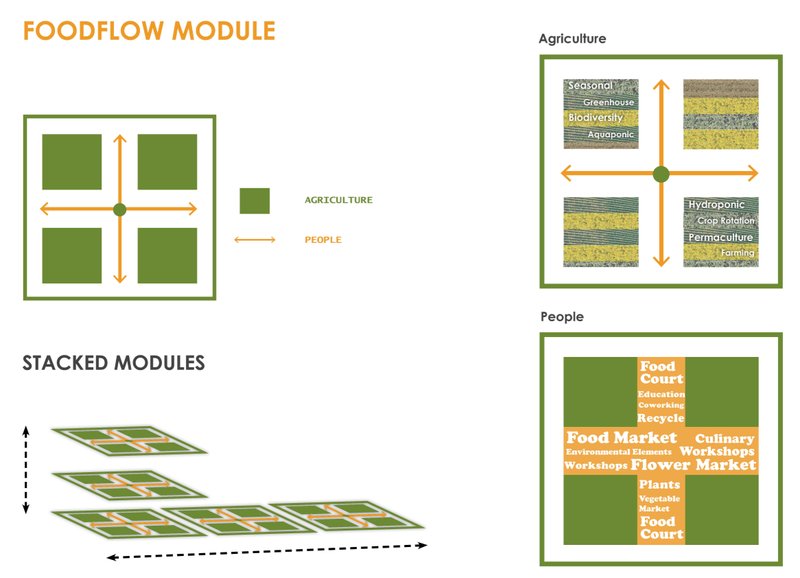
The FoodFlow module forms the structural and agricultural core of the project. These modules integrate agriculture and people in a symbiotic system:
- Agriculture zones: Greenhouses, aquaponics, hydroponics, crop rotation, and permaculture farming.
- People zones: Food markets, flower markets, workshops, co-working spaces, and food courts.
Stacked modular systems allow scalability, ensuring adaptability across different urban densities. By combining agricultural production and human interaction spaces, the architecture supports both food resilience and social vibrancy.
Site Planning
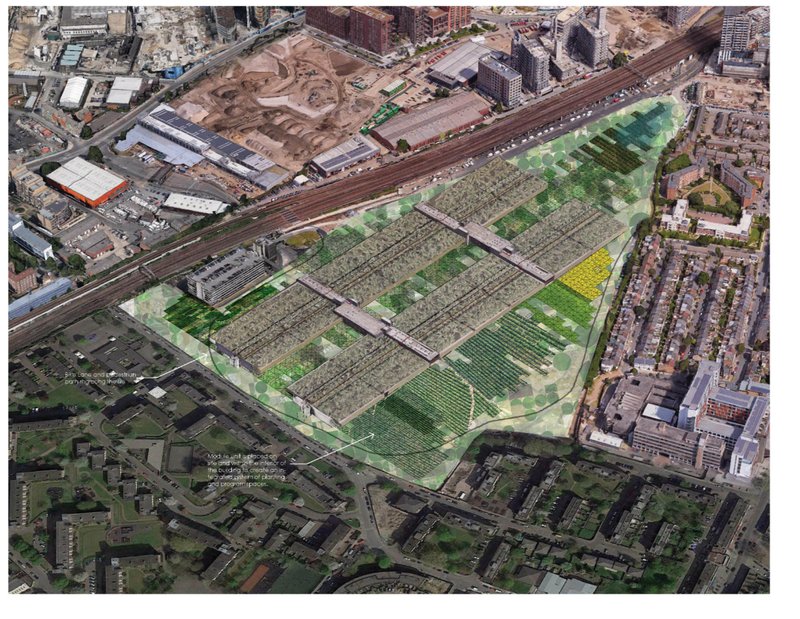
The site plan emphasizes integration with the urban fabric while maximizing renewable resources. Rows of solar-powered modules create a self-sustaining food network that blends into the city grid. Surrounding green corridors, walking paths, and a pond highlight the balance between built infrastructure and ecological systems.
Building Farming Modules
FoodFlow applies farming at multiple scales:
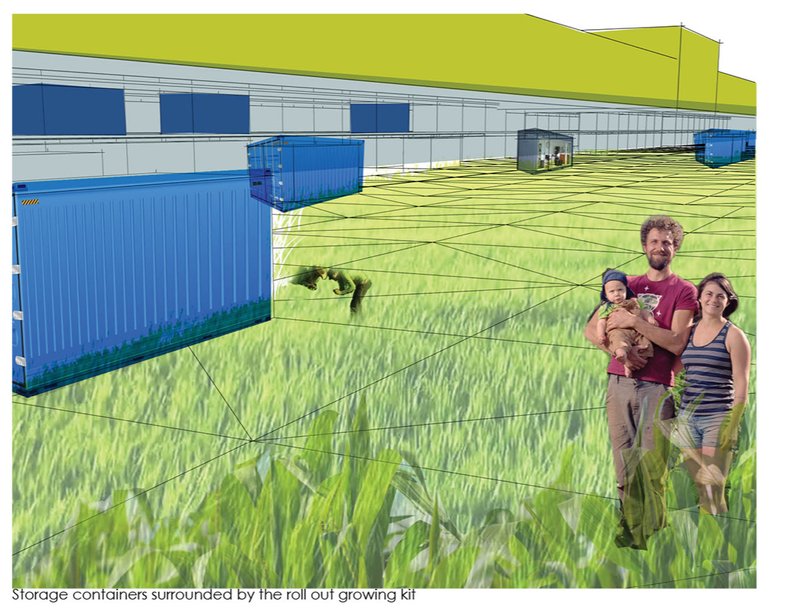
- Backyard scale: Single storage container with soil or hydroponic kits.
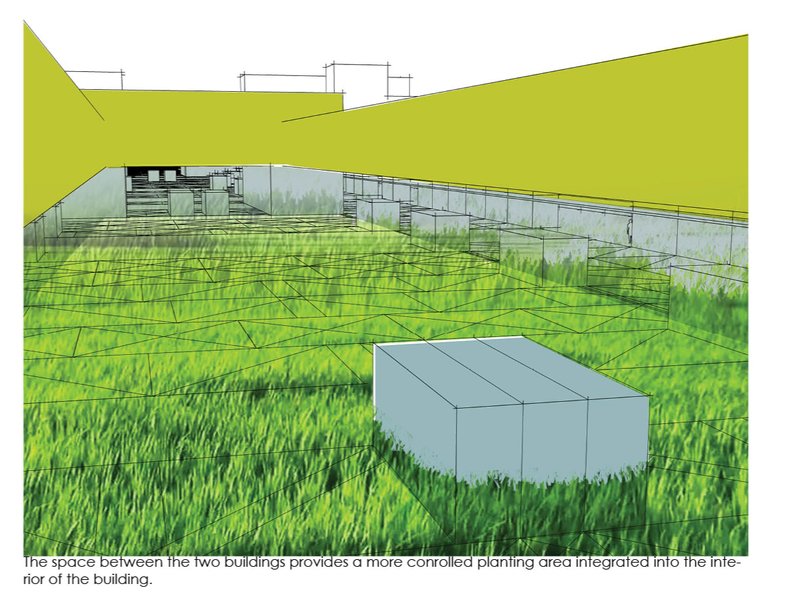
- Shared yards: Two-container modules with expanded growing areas.
- Neighborhood scale: Multi-container systems with integrated public spaces.
- Large community scale: 4–10 container modules stacked with hydroponics, creating expansive vertical farming hubs.
These modular strategies highlight the adaptability of sustainable architecture in responding to both small-scale and citywide food challenges.
Architecture and Community Integration
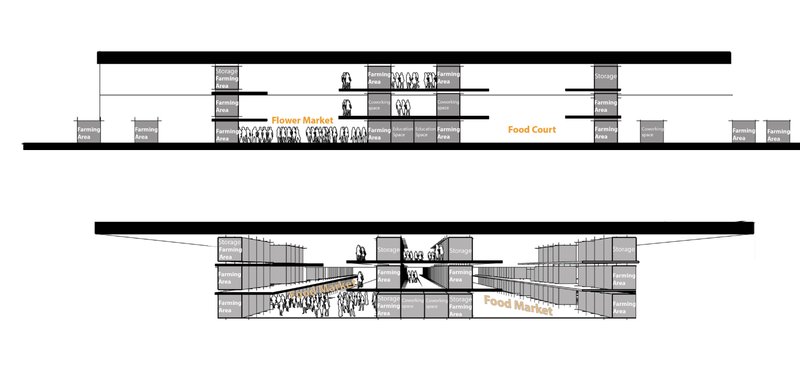
The building sections illustrate the seamless integration of markets, coworking spaces, educational zones, and farming areas. By embedding community functions within the farming modules, FoodFlow redefines architecture as a participatory and interactive urban system.
Glass walls and open-plan farming spaces enhance daylighting, transparency, and user engagement. The architecture moves beyond efficiency—celebrating interaction, sustainability, and inclusivity.
FoodFlow represents a paradigm shift in sustainable architecture by uniting food production, ecological design, and community well-being. Jazmin Kimble’s vision illustrates how future urban landscapes can be transformed into living ecosystems that sustain both people and the planet. This holistic model demonstrates that architecture can be more than shelter—it can be a driver of resilience, equity, and sustainability.

Share your ideas with the world
Write about your design process, research, or opinions. Your voice matters in the architecture community.