
HEAL: Regenerative Housing for Kerala – Resilient Architecture for Flood-Prone Communities
Flood-resilient architecture in Kerala transforms traditional housing into adaptive, regenerative, and community-driven models of resilience.

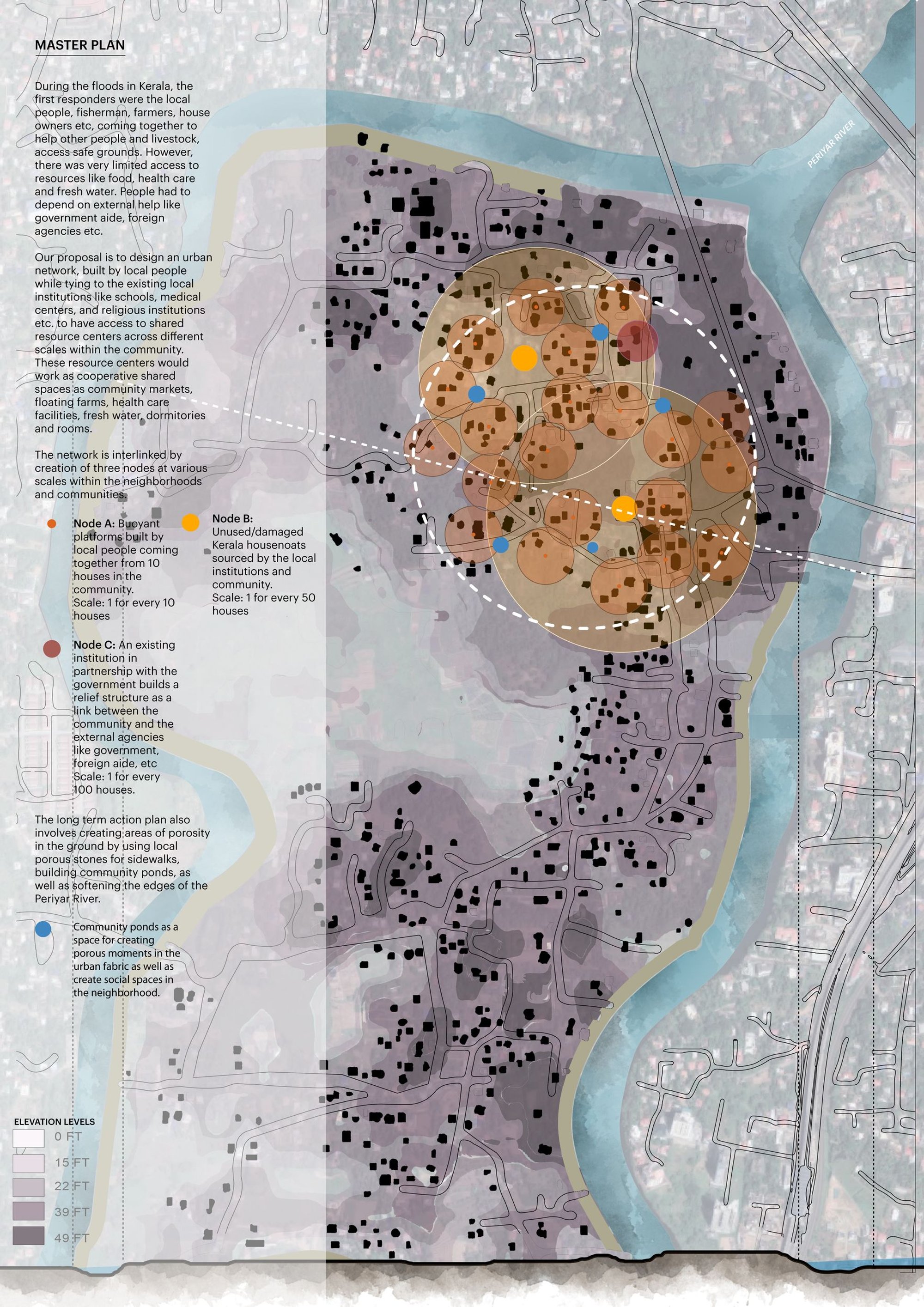
Kerala, with its lush landscapes and waterways, is also one of the most flood-prone regions in India. The recurring floods have not only displaced thousands but also challenged architects, planners, and communities to rethink housing solutions. The project HEAL: Regenerative Housing for Kerala, shortlisted for the HEAL+ competition, offers a visionary approach to flood-resilient architecture. It presents inside-out strategies that focus on community, adaptability, and ecological integration.
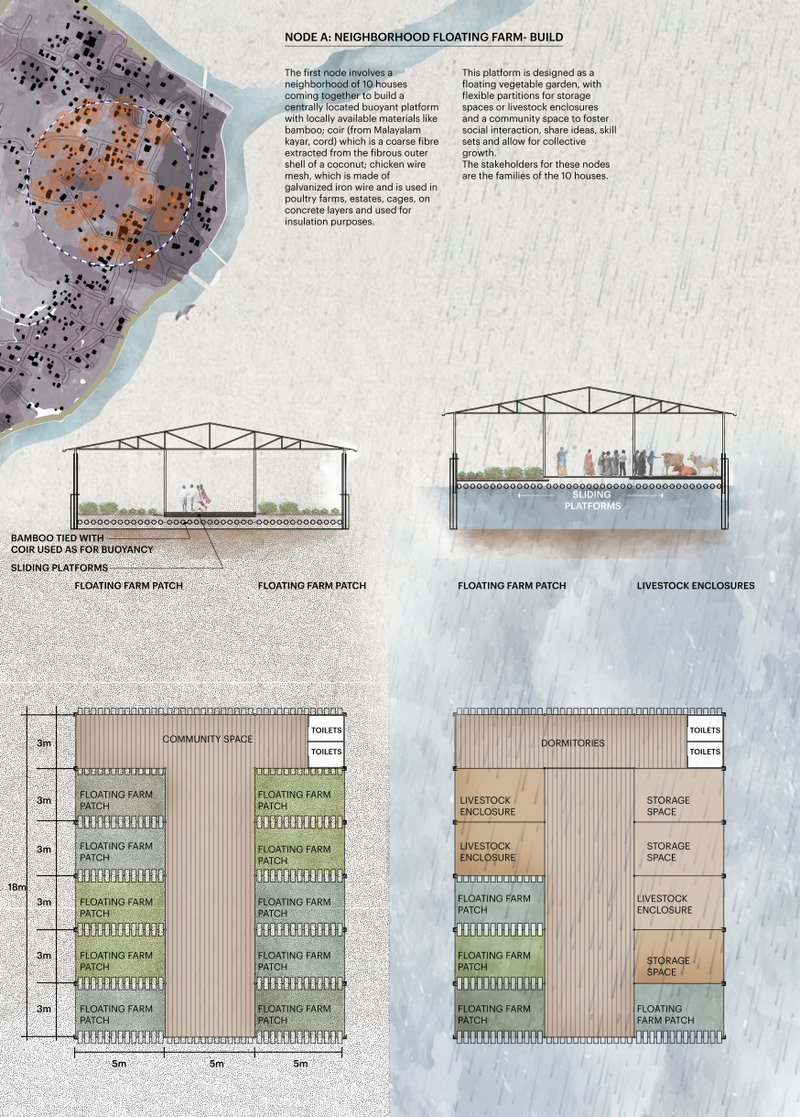
Neighborhood Floating Farm – Building Community Resilience
The first strategy involves creating floating farm platforms built collaboratively by neighborhoods of 10 houses. Using locally available materials such as bamboo and coir, these buoyant platforms double as vegetable gardens, livestock enclosures, and community interaction hubs. The flexible partitions ensure adaptability, while the shared spaces foster collective growth, skills exchange, and sustainable food production. These floating farms act as regenerative architecture that adapts to rising water levels while securing livelihoods.
Kerala Houseboats – Reviving Tradition with Modern Utility
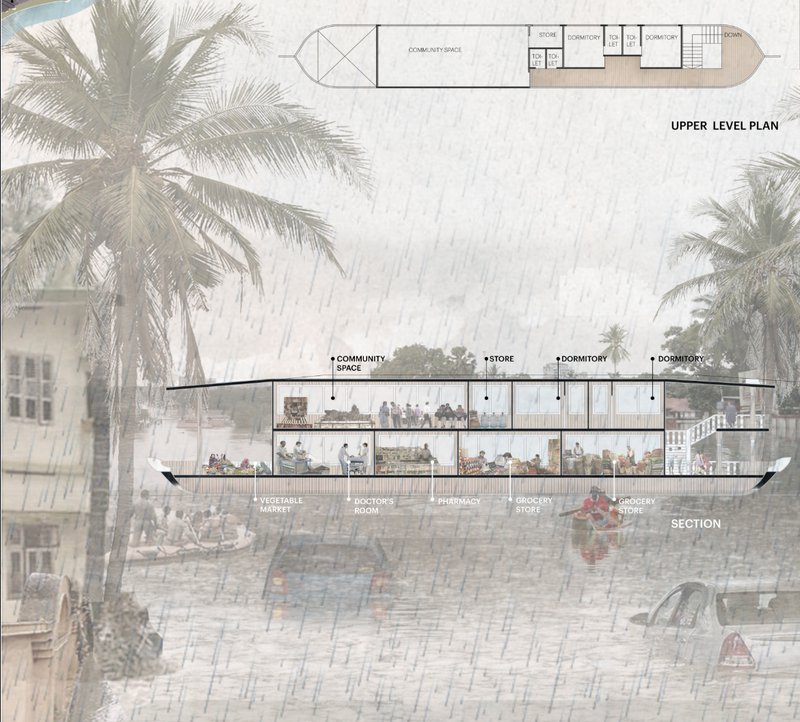
The second strategy draws inspiration from Kerala’s iconic houseboats, once a thriving tourism sector now facing decline. By repurposing unused houseboats, the project proposes transforming them into floating community centers. These reimagined boats integrate grocery stores, pharmacies, doctors’ clinics, and dormitories—ensuring vital services remain accessible even during floods. This adaptive reuse not only preserves cultural heritage but also provides a resilient framework for social infrastructure.
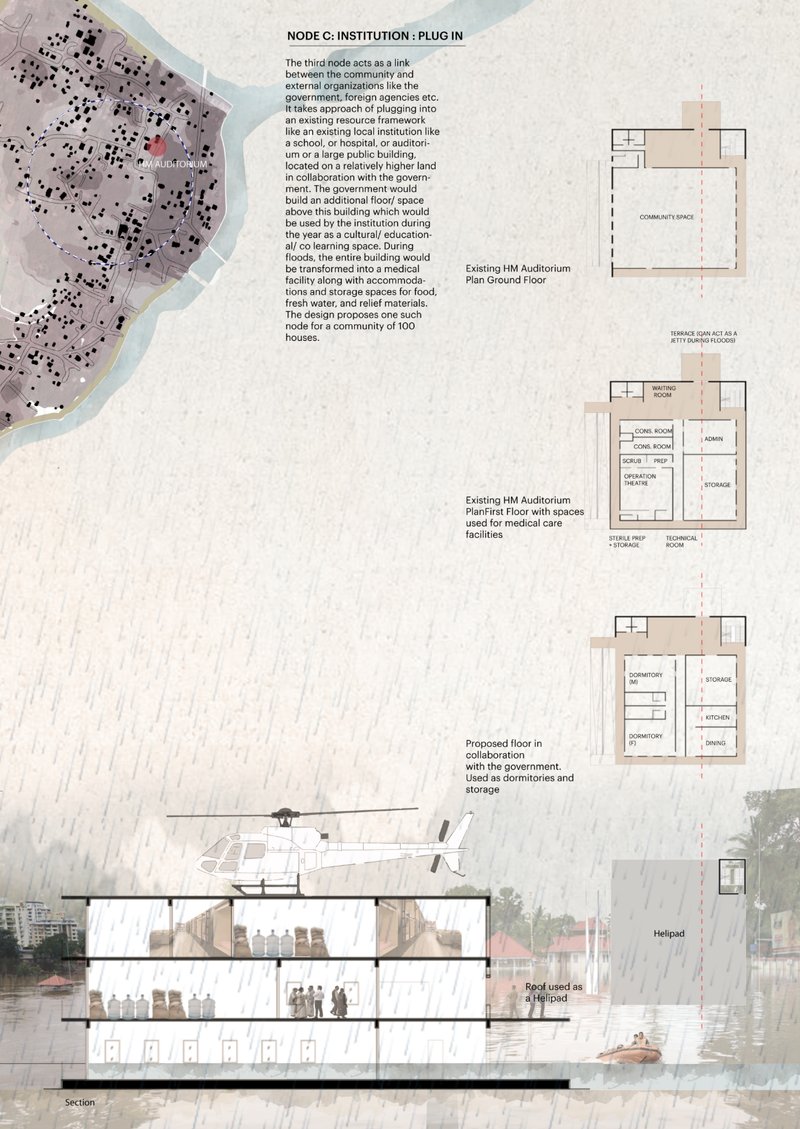
Institutions as Lifelines – Plug-In Architecture
The third node focuses on institutional integration. By plugging into existing schools, hospitals, and auditoriums located on relatively higher ground, the project adds multifunctional extensions. During normal times, these spaces act as classrooms or cultural centers. During floods, they transform into emergency shelters, medical care units, and supply storage facilities. With provisions like helipads and relief material storage, these institutions become crucial lifelines for larger communities.
Softening the Edges – Ecological Urbanism
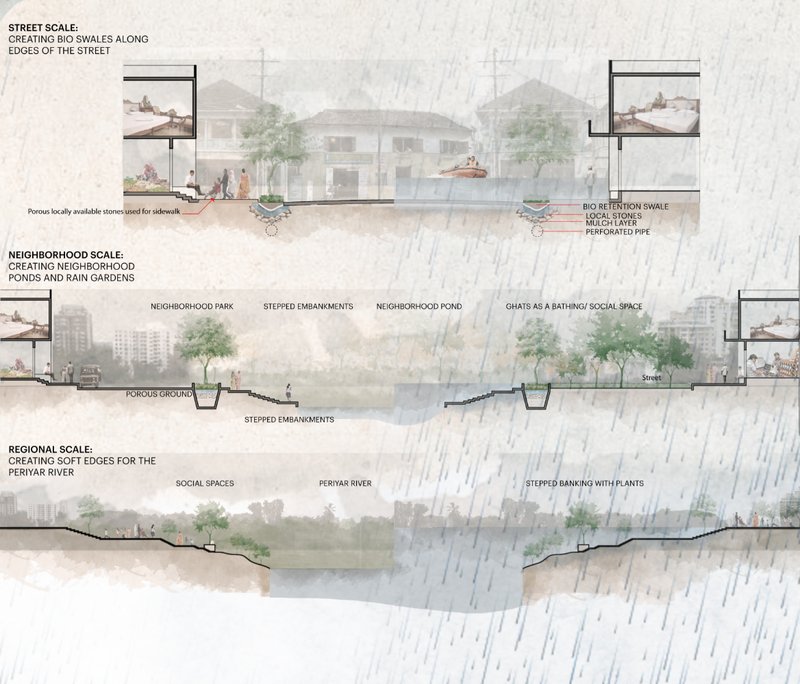
Beyond housing, HEAL emphasizes long-term landscape strategies. By creating rain gardens, bioswales, and stepped embankments, the design integrates water management into the fabric of neighborhoods. At a regional scale, softening the edges of the Periyar River through green buffers, social spaces, and retention ponds reduces flood intensity while fostering ecological regeneration. This approach merges architecture with landscape urbanism, ensuring resilience is built into both infrastructure and nature.
HEAL: Regenerative Housing for Kerala exemplifies how flood-resilient architecture can go beyond protection to foster renewal, adaptability, and empowerment. By combining traditional knowledge, ecological sensitivity, and innovative design, the project envisions a future where communities are not just surviving floods but thriving through them. As a shortlisted entry of HEAL+, it sets a benchmark for sustainable disaster-responsive architecture worldwide.



Popular Articles
Popular articles from the community


Solar Steam: A Climate-Responsive Architecture That Redefines the Monument
A climate-responsive memorial architecture that transforms heat, decay, and time into a living system reflecting humanity’s ecological impact.
Alton Cliff House: A Harmonious Retreat by f2a Architecture in Lake Country, Canada
Alton Cliff House blends corten steel, prefabrication, and sustainable design, creating a luxurious, energy-efficient retreat perched on Canadian cliffs.
Split House: A Compact Urban Home Blending Privacy, Light, and Flexible Living in Japan
Compact Japanese home featuring DOMA space, flexible café potential, passive lighting, privacy zoning, and sustainable urban living design.
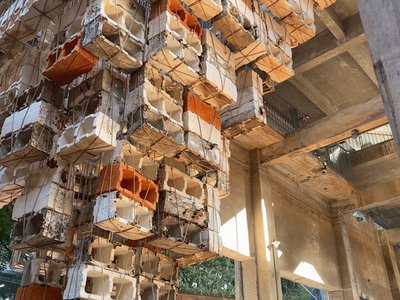
Inverted Architecture Installation by Studio Link-Arc: Exploring the Intersection of Architecture and Living Organisms
Inverted Architecture Installation by Studio Link-Arc blends mycelium, sustainability, inverted design, ecological cycles, and urban adaptive architecture in Shenzhen.


Similar Reads
You might also enjoy these articles

Free Architecture Competitions You Can Enter Right Now
No entry fees, real prizes. Here are the best free architecture competitions open for submissions in 2026.

Top 15 Architecture Competitions to Enter in 2026
From student-friendly idea competitions to prestigious international awards, here are the best architecture competitions open for entries in 2026. Updated regularly.

DIY & Engineering in Computational Design : Enter the BeeGraphy Design Awards
Showcase Your Creativity with Computational Design and Open Source Projects
Innovative Design Solutions: Award-Winning Projects from Recent Architecture Competitions
Exploring award-winning architectural projects shaping the future of design, sustainability, and community.





Comments (0)
Please login or sign up to add comments
No comments yet. Be the first to comment!