
Innovating Eyewear Manufacturing: Park Associati's Design for Luxottica's Digital Factory
Revolutionizing Eyewear Production: How Does Park Associati's Design Transform Luxottica's Digital Factory?

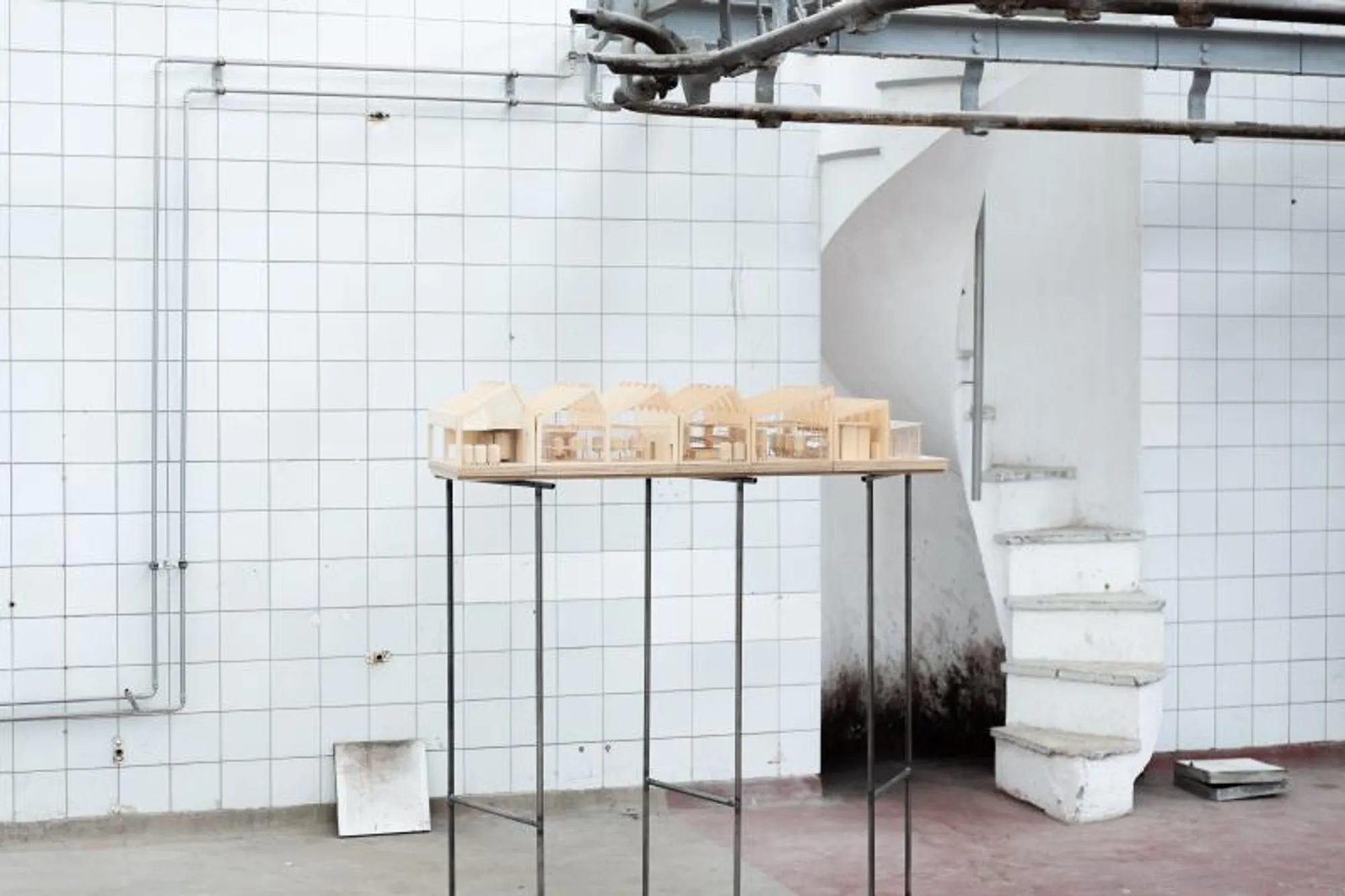
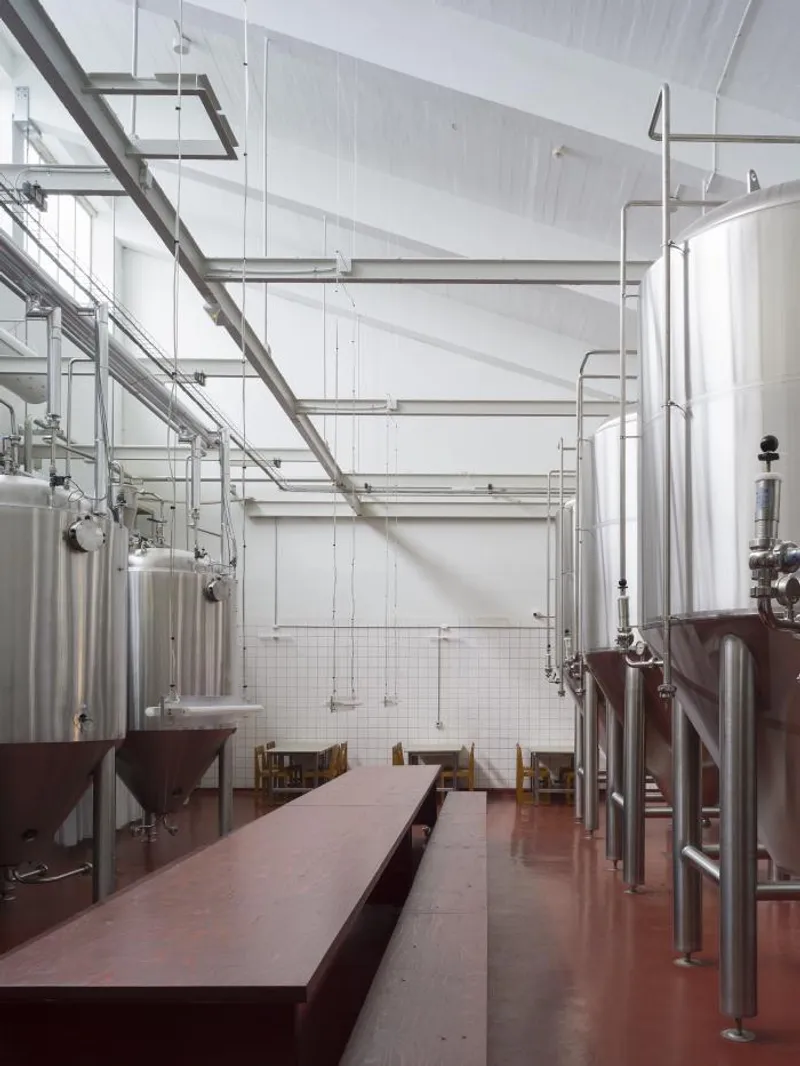
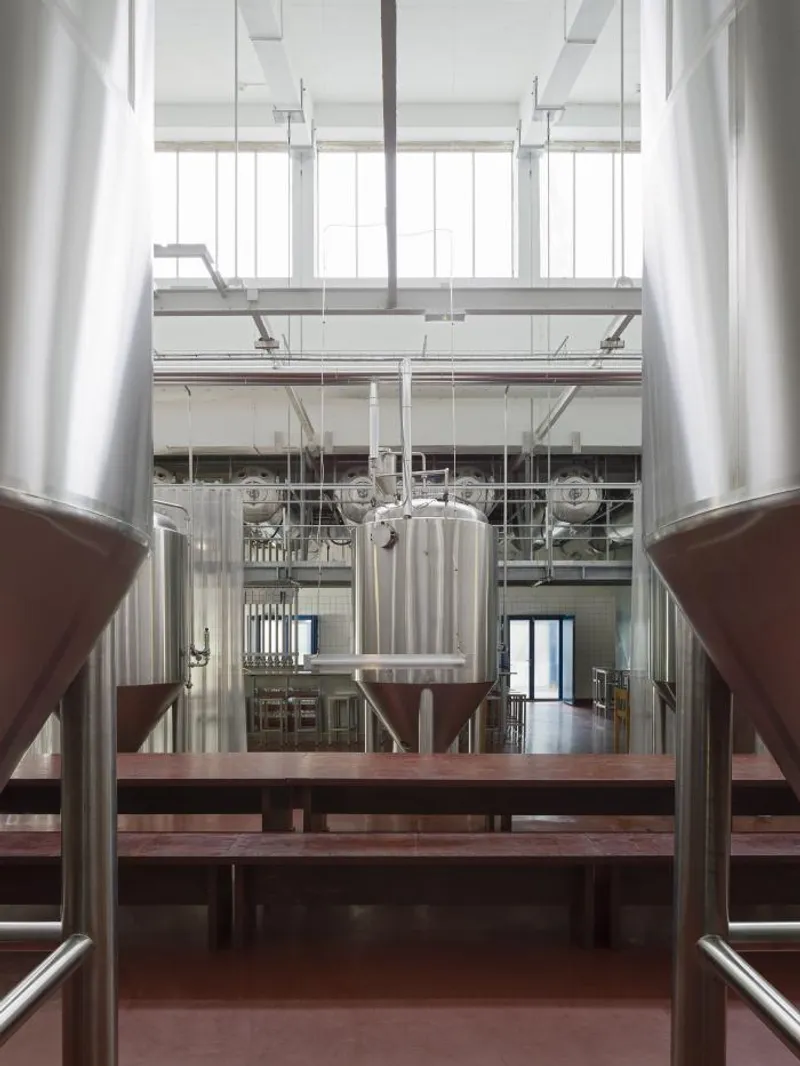
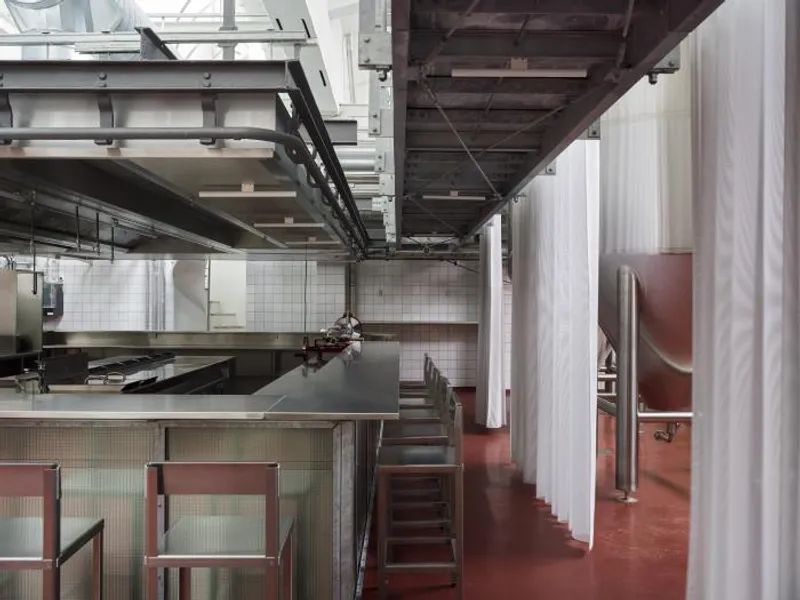
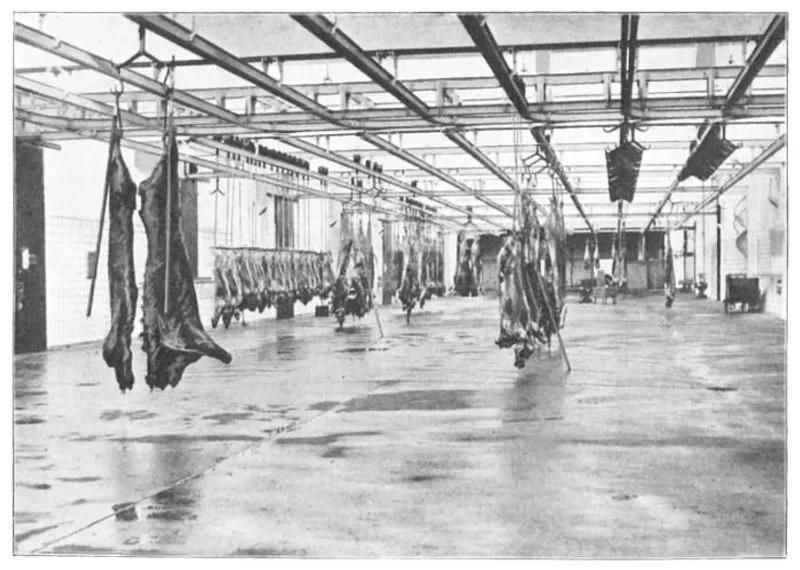
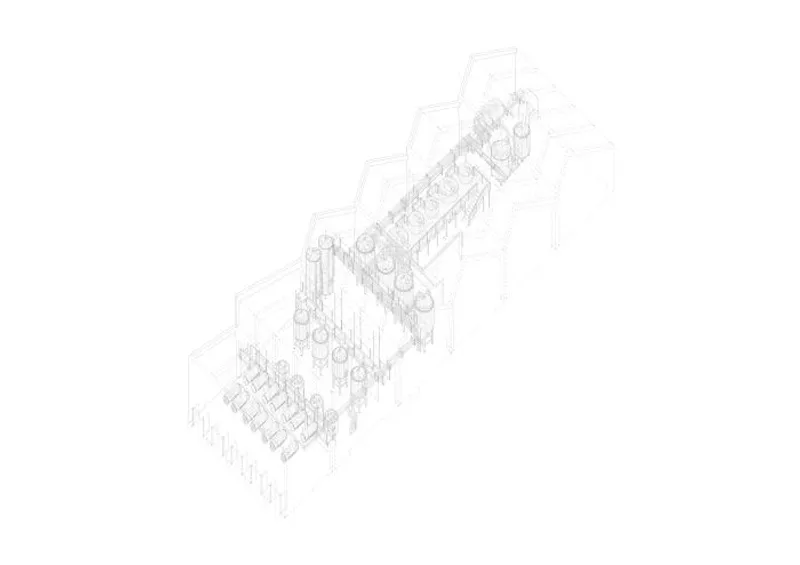
Constructed in 1932 as a modern, large-scale butchery in Copenhagen's meatpacking district, ÅBEN has since 1991 hosted a range of commercial businesses, transforming into a food production facility 2.0. Located within the city, ÅBEN preserves the industrial legacy of the building by inviting the public into the brewing processes, thus blurring the contemporary distinction between public and production. Originally, the space served as a chill hall, where 980 carcasses hung from a robust meat hanging rail system for 12 hours until the caloricity had left their bodies. The rails remain, but the carcasses have been replaced with steel vessels connected by kilometres of exposed piping.
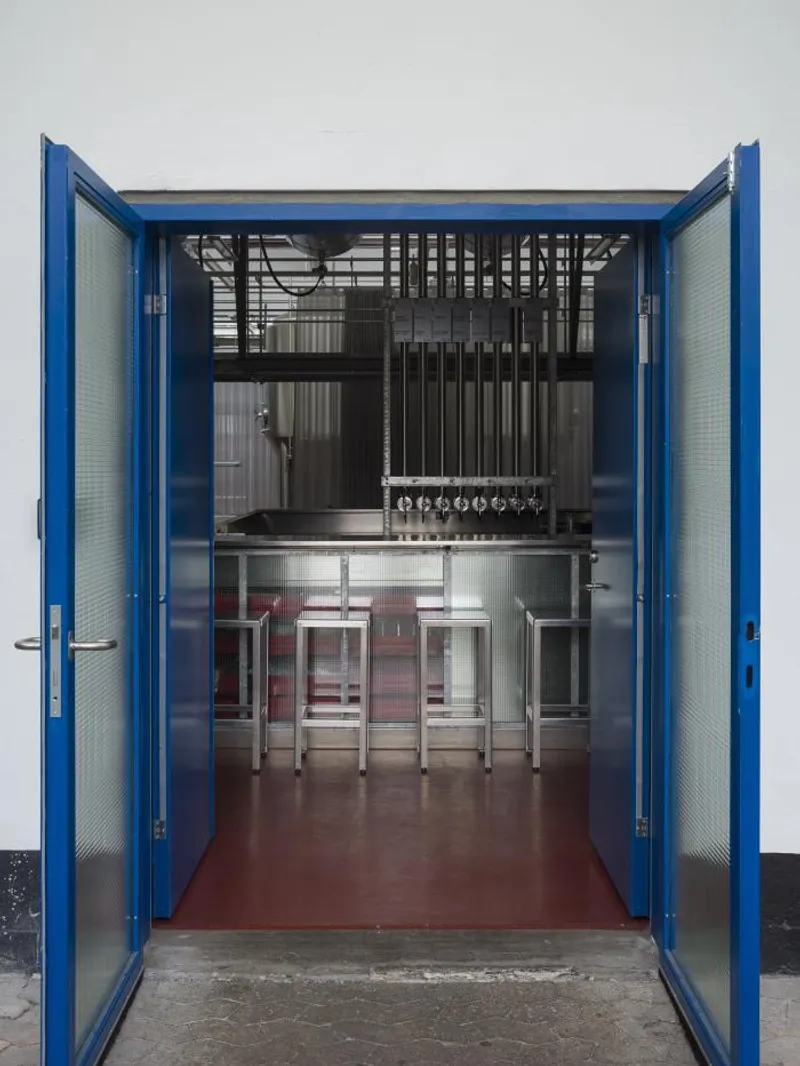
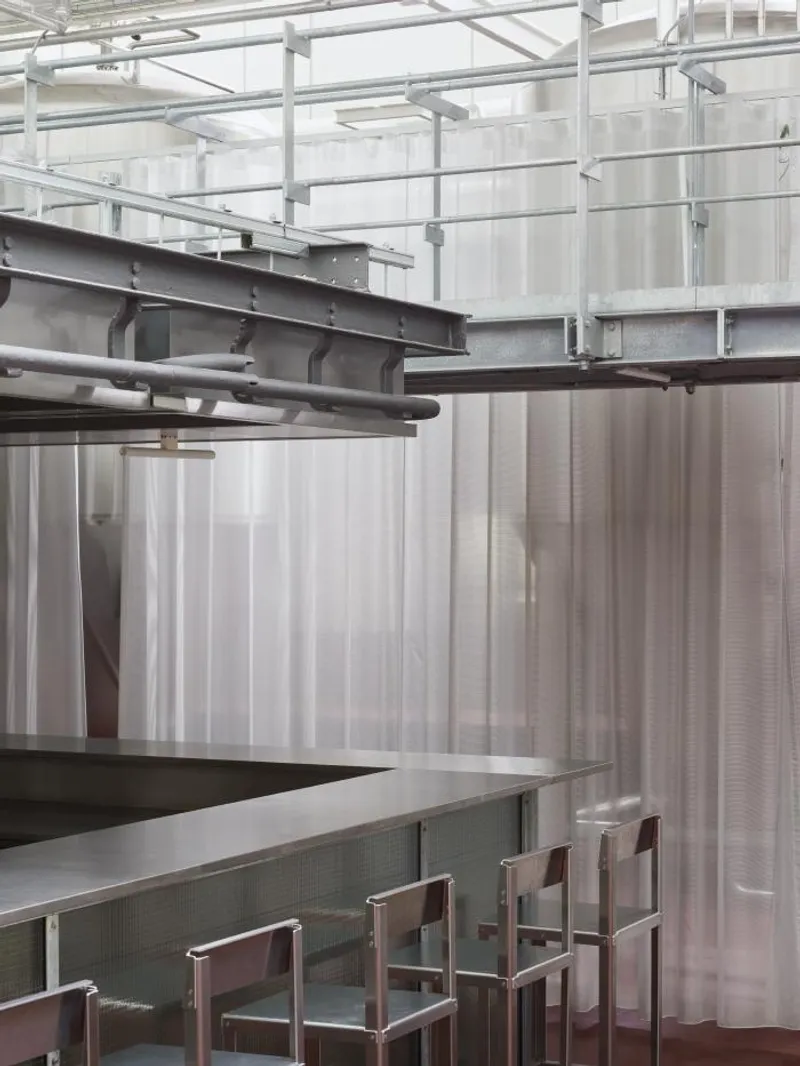
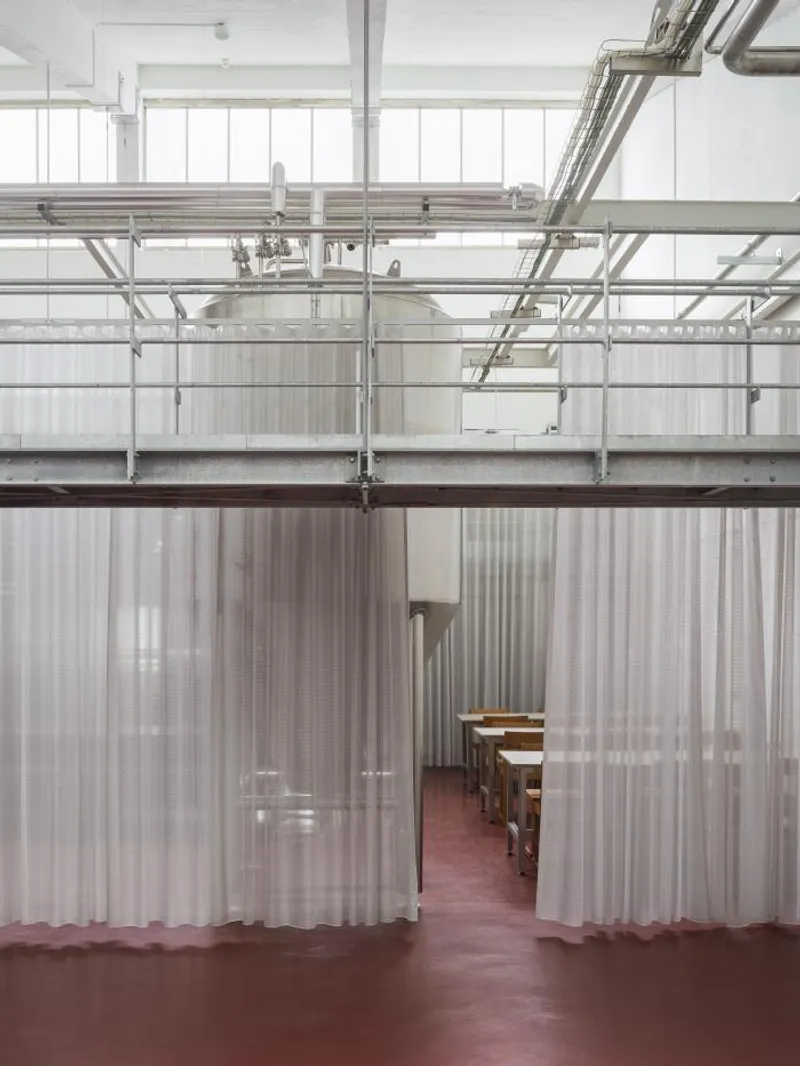
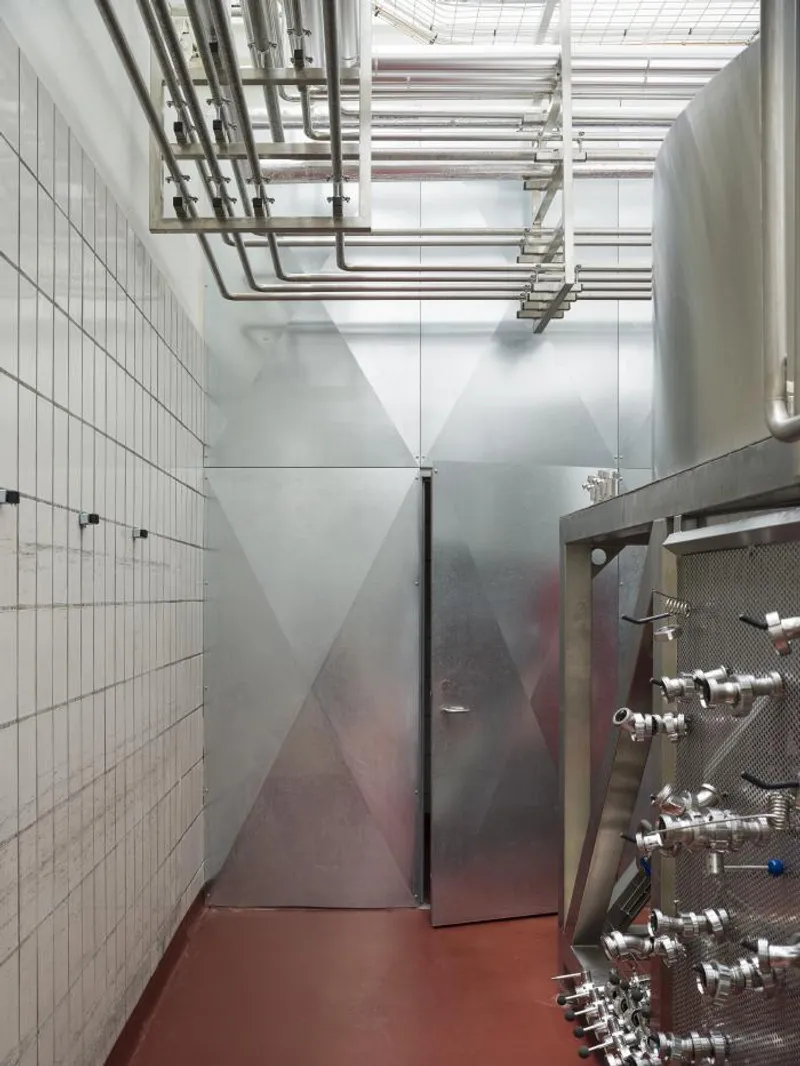
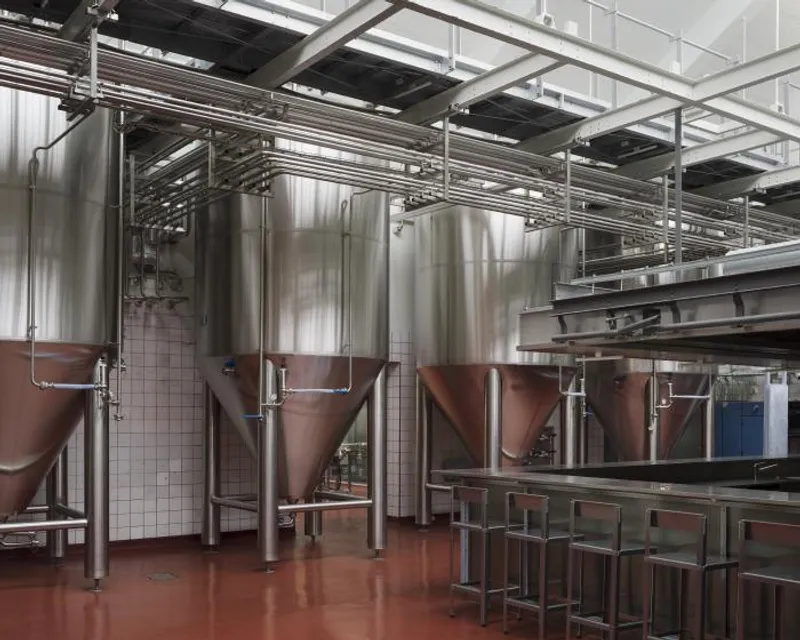
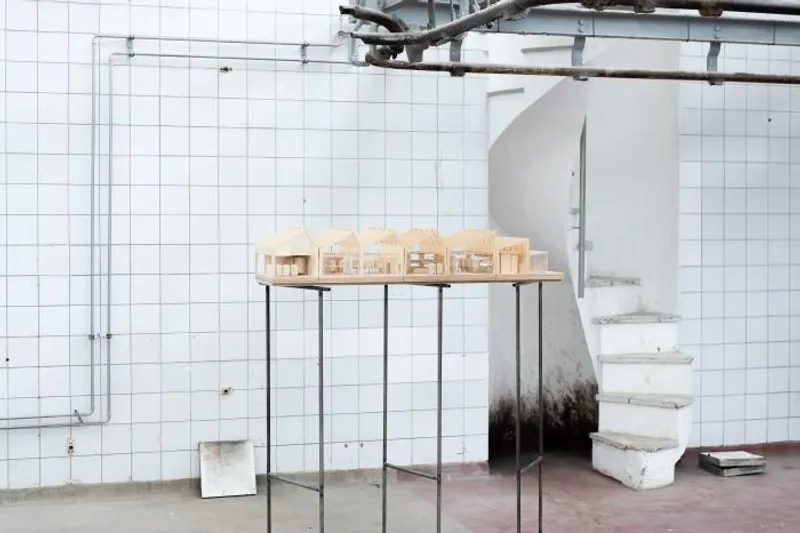
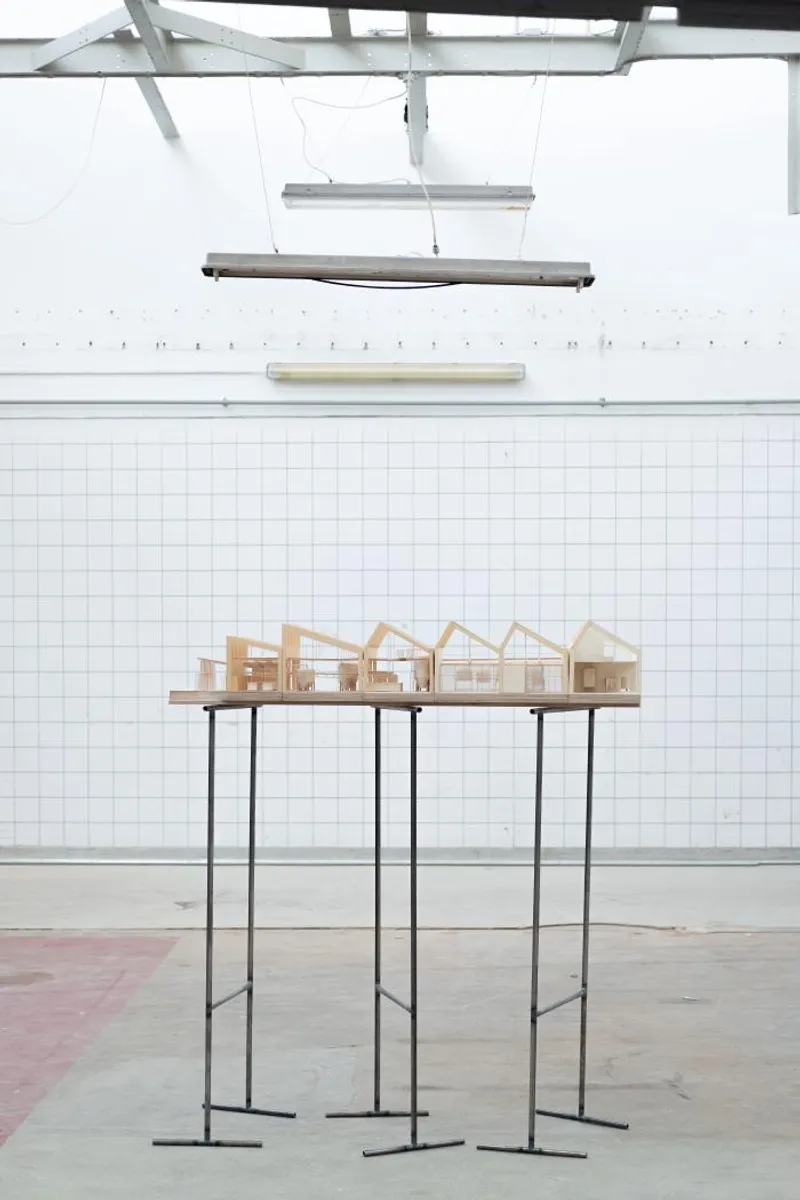
Semitransparent curtains, reminiscent of those found in slaughterhouses, and a low-hanging galvanized steel catwalk for servicing the vessels, as well as conical fermentation tanks, partially divide the public spaces. Positioned within the existing grid of butcher rails, the tanks stand alone on the floor beneath the archetypal factory-like saw-tooth roof, which puts the extended ceiling height on full display, creating a consistent rhythm throughout the spaces. The industrial legacy is made tangible by the brewing apparatus, accompanied by nothing but unfussy furniture and a stripped-down space, acting as a blank canvas that highlights the landscape of technical installations. The qualities of the original hall are emphasized by the positioning of the brewing apparatus, together defining the spatial layout and ambience. At the entrance, there are no skylights and a rather low ceiling, creating an intimate atmosphere that is further compressed by the 14 serving tanks hung horizontally beneath the ceiling. The final publicly accessible space contains nothing more than the largest fermentation tanks, as well as an open kitchen island placed beneath the meat hanging rails. The transformation highlights two interrelated flows. As the beer being produced becomes increasingly sophisticated from back to front of the building, the spaces become exponentially pure and comprehensible as industrial facilities as the guest moves towards the origin of the raw product. This is due to the fact that the project is first and foremost planned according to production principles.
Simultaneously, this project seeks to challenge the traditional notion of a factory, which is solely focused on maximizing productivity. By recognizing each technical installation - which makes up the entire project - as a spatial installation, the project explores the architectural potential of the original food processing facility, as well as modern means of production. The Meatpacking District is one of 25 Danish industrial monuments and is protected, making both the interior and exterior listed. This transformation has left the building even closer to its original state than before. Rather than romanticizing industrial aesthetics, this project strives to streamline production while exposing its inherent architectural qualities.




Popular Articles
Popular articles from the community


The Musturak Paradise: Senior Living Architecture for a Connected Future in Temara, Morocco
The Musturak Paradise reimagines senior living architecture in Temara via private homes, social spaces, culture, community, and shared care.

Hill & Cross Opera: Sculptural Opera House Architecture Shaped by Tallinn’s Landscape and Identity
Hill & Cross Opera reimagines opera house architecture in Tallinn through its sculptural hill, civic plaza, glass wave and a luminous cross.

The Ocean Hive: Sustainable Architecture for a Self-Sufficient Civilization at Sea
The Ocean Hive imagines sustainable architecture at sea, where modular habitats, algae, wave power and ocean waste sustain a growing colony.

Conexión: Biophilic Design Reimagines High-Rise Living in Hong Kong
Conexión reimagines high-rise living in Hong Kong through biophilic design, green facades, shared spaces, daylight, water and nature within.


Similar Reads
You might also enjoy these articles
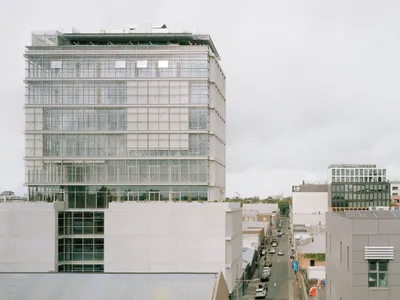
116 Rokeby Building, Collingwood
Sustainable Collingwood office building featuring double-skin façade, natural ventilation, rooftop amenities, and carbon-neutral design focused on wellbeing and longevity.
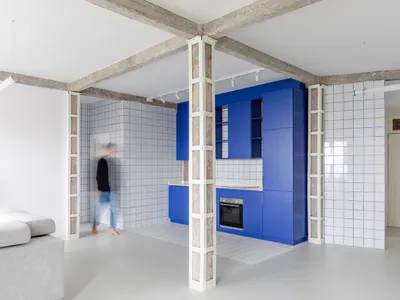
Contemporary Apartment Renovation in Spain: RV House by BIAN Opens Up to the Sea
A minimalist 1930s apartment in Santander is transformed into a flexible, sea-facing home through contemporary Spanish renovation.
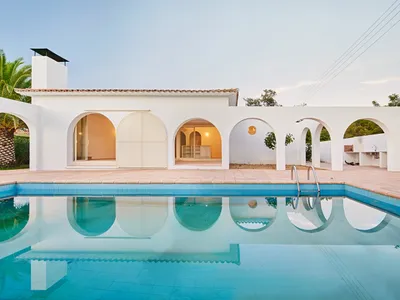
3 Marías House: A Contemporary Mediterranean Courtyard Retreat by Bajet Giramé + Burckhardt
Mediterranean courtyard home blending traditional architecture with modern design, terracotta flooring, flexible interiors, sustainable climate strategies, and garden integration.
NZ10 Apartment by auba studio: Adaptive Reuse in Palma de Mallorca
Adaptive reuse apartment transforms bakery into light-filled home with patios, privacy layers, and wood interiors enhancing urban living experience.


Explore Commercial Buildings Competitions
Discover active competitions in this discipline




Challenge to reimagine the Iron Throne


Photograph architecture without architects


Illustrate the lost glory of Angkor Wat - Render Challenge


Design challenge to reuse E-waste
Comments (1)
Please login or sign up to add comments
Thanks for sharing this useful content, I m looking forward to your future content. Steel doors are durable and secure doors made from steel material, commonly used in commercial and industrial settings. Steel Doors Chennai | Residential Steel Door in Chennai Steel Doors for Home Price | Wholesale Steel Doors in Chennai Metal Doors Chennai | Steel Door Manufacturer from Chennai Stainless Steel Manufacturers in Chennai | Stainless Steel in Chennai Steel Door Shop near me | Best Steel Door Manufacturer in Chennai Steel Doors Price in Coimbatore | Steel Security Doors for Homes Metal Security Doors for Homes | Stainless Steel Doors for House Top Steel Door Manufacturers | Steel Main Doors for Home Metal Door Manufacturers near me | Steel Door Manufacturers in Tamilnadu Stainless Steel Doors for House | Galvanized Steel Door Manufacturers