

Sustainable Market Architecture: Nicolas Bravo Market by AIDIA STUDIO
Nicolas Bravo Market by AIDIA STUDIO showcases sustainable market architecture, integrating biophilic design, passive cooling, and cultural heritage preservation.


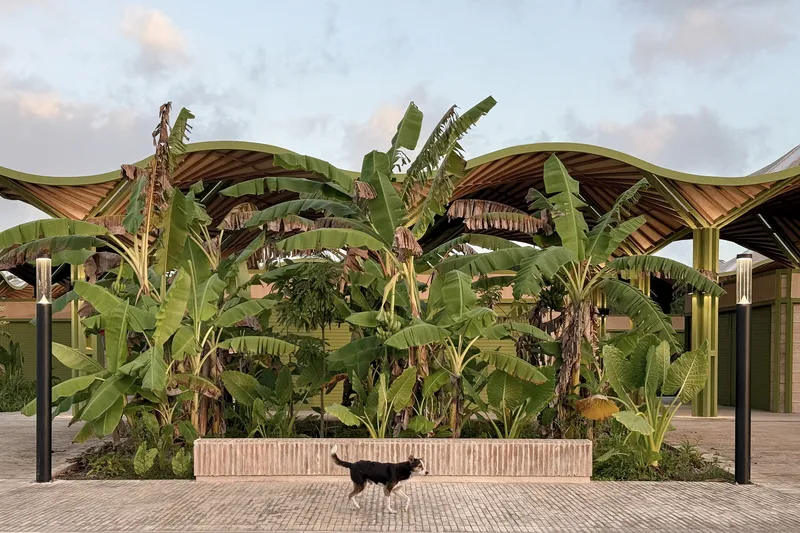
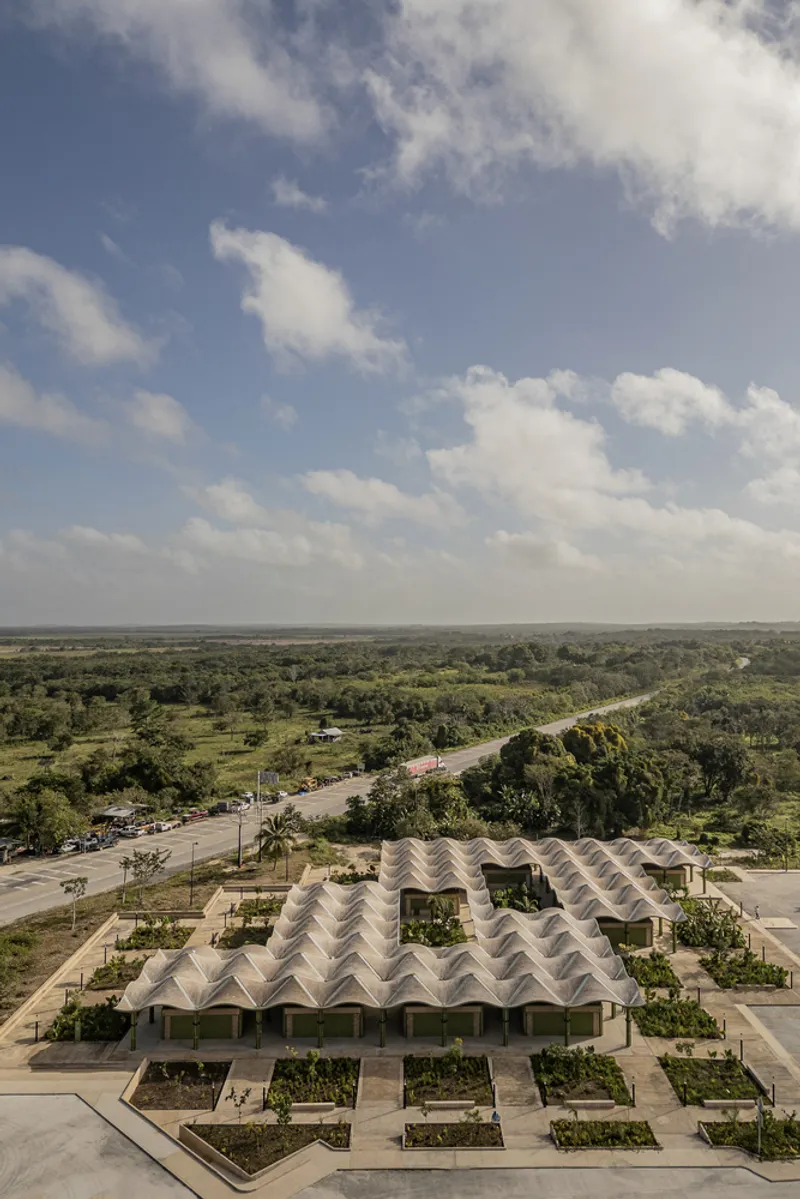
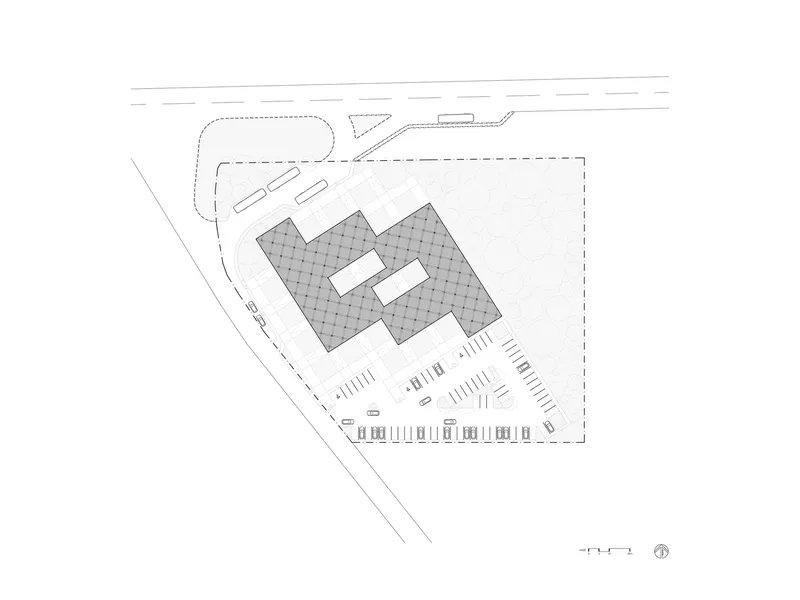
The Nicolas Bravo Market, designed by AIDIA STUDIO, is a landmark project that redefines sustainable market architecture in Mexico. Located in Quintana Roo, this 7,700 m² marketplace serves as both a vibrant commercial hub and a community center, supporting local artisans, farmers, and small businesses.
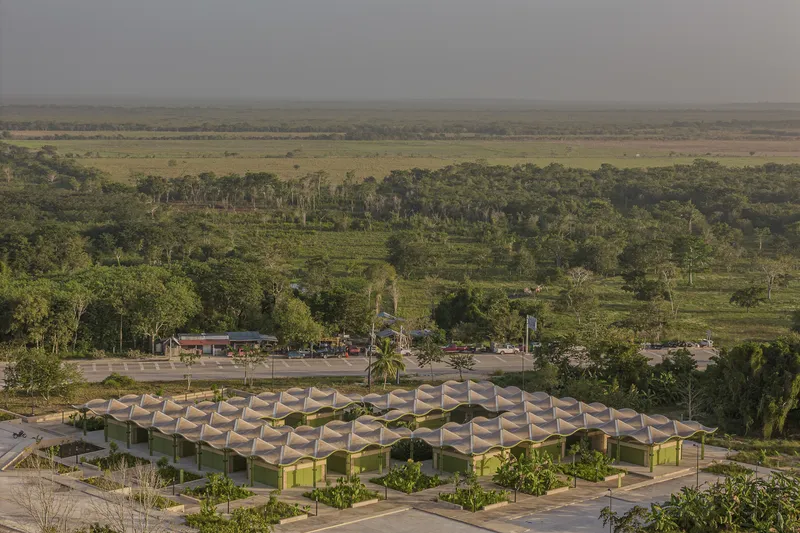
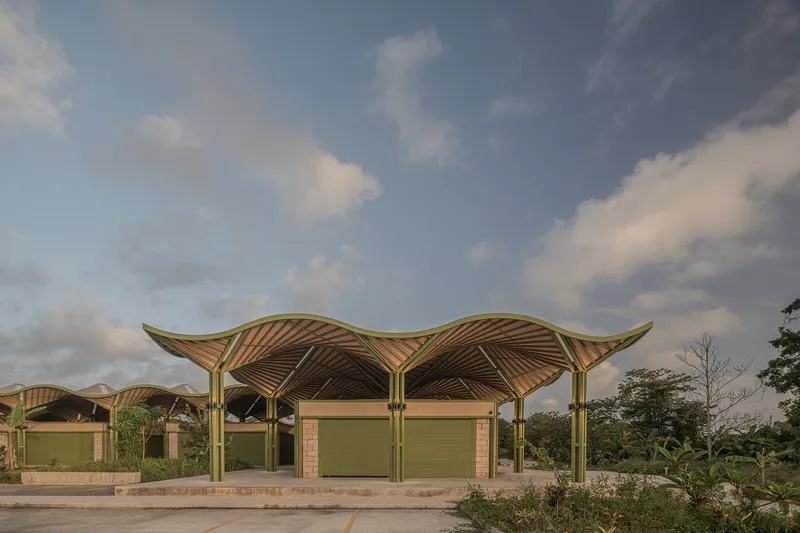
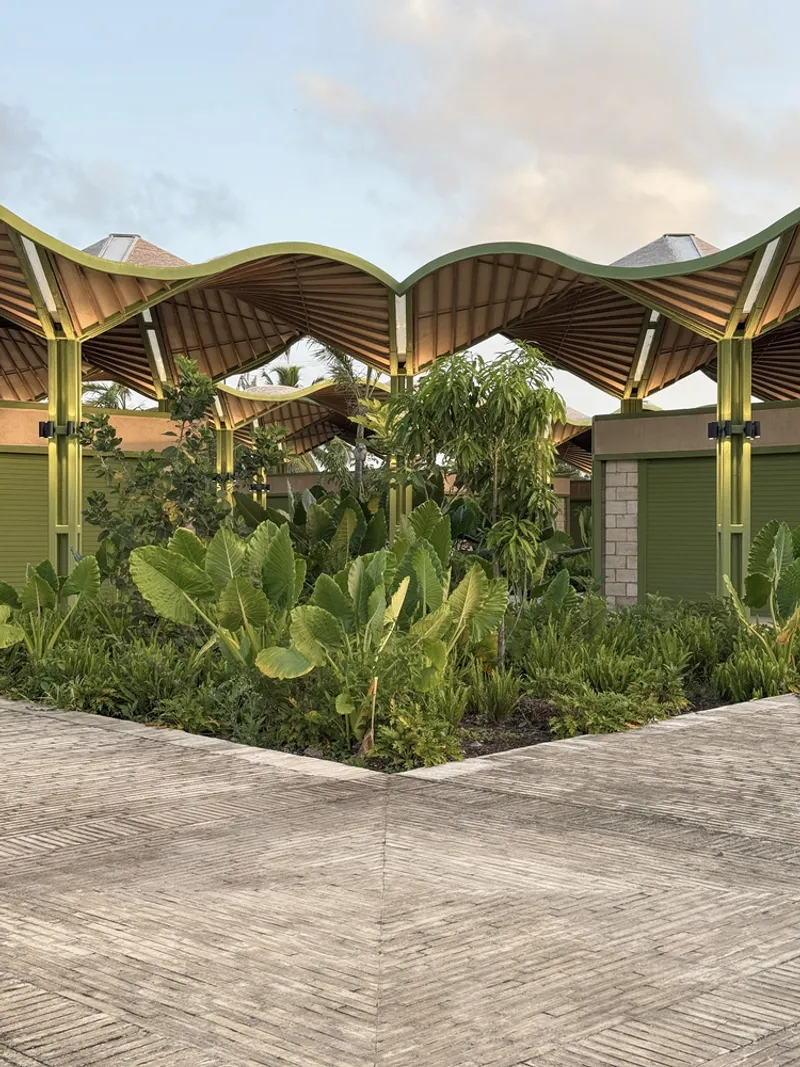
This government-funded initiative was designed to strengthen the local economy by connecting the community with the increasing flow of tourists visiting the Yucatán Peninsula's Mayan archaeological sites. The market integrates a biophilic design philosophy, merging traditional craftsmanship with innovative structural solutions to create a resilient, low-maintenance, and climate-responsive building.
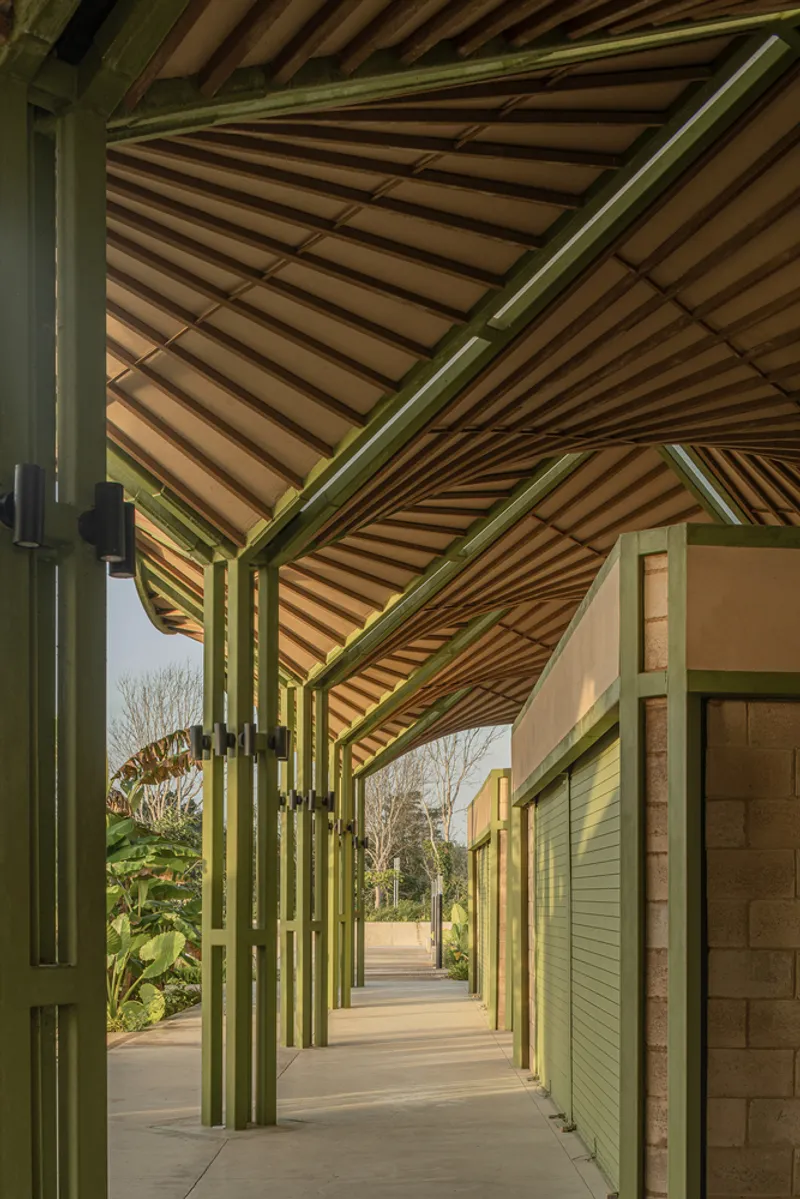
A Fusion of Commerce, Culture, and Community
The Nicolas Bravo Market is not just a space for trade but also a cultural and educational hub. Designed to accommodate 50 market stalls, the structure also hosts workshops, cultural events, and social programs aimed at promoting community well-being.
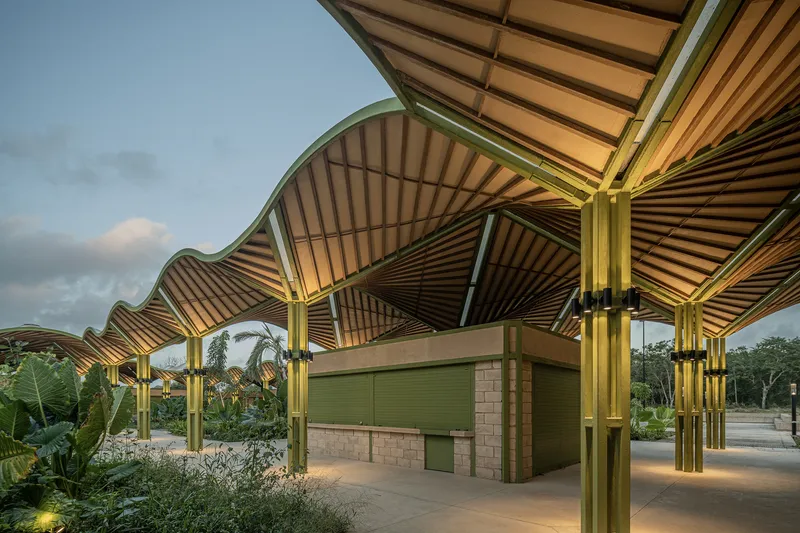
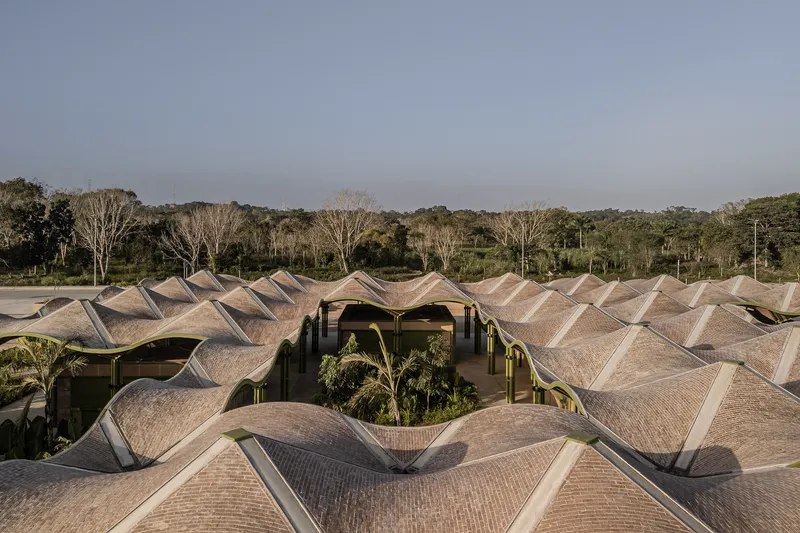
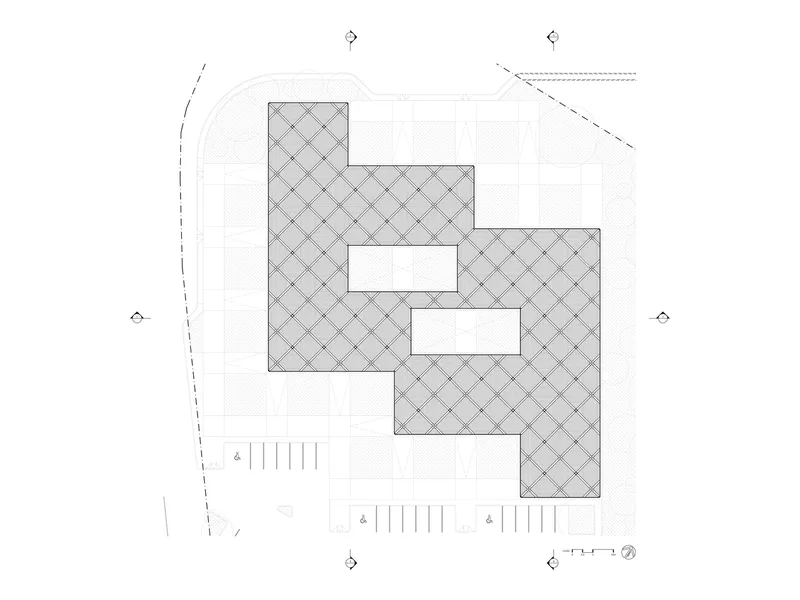
With a population of fewer than 5,000 residents, Nicolas Bravo benefits from this multi-functional space, which celebrates regional identity, heritage, and sustainable construction methods. The market’s layout and roofing system integrate with the surrounding environment, ensuring natural ventilation, passive cooling, and energy efficiency.
Innovative Structural and Material Approach
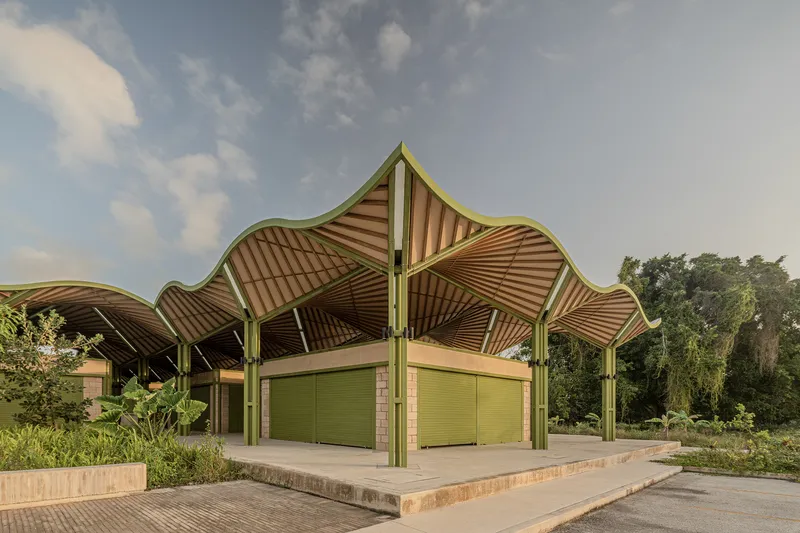
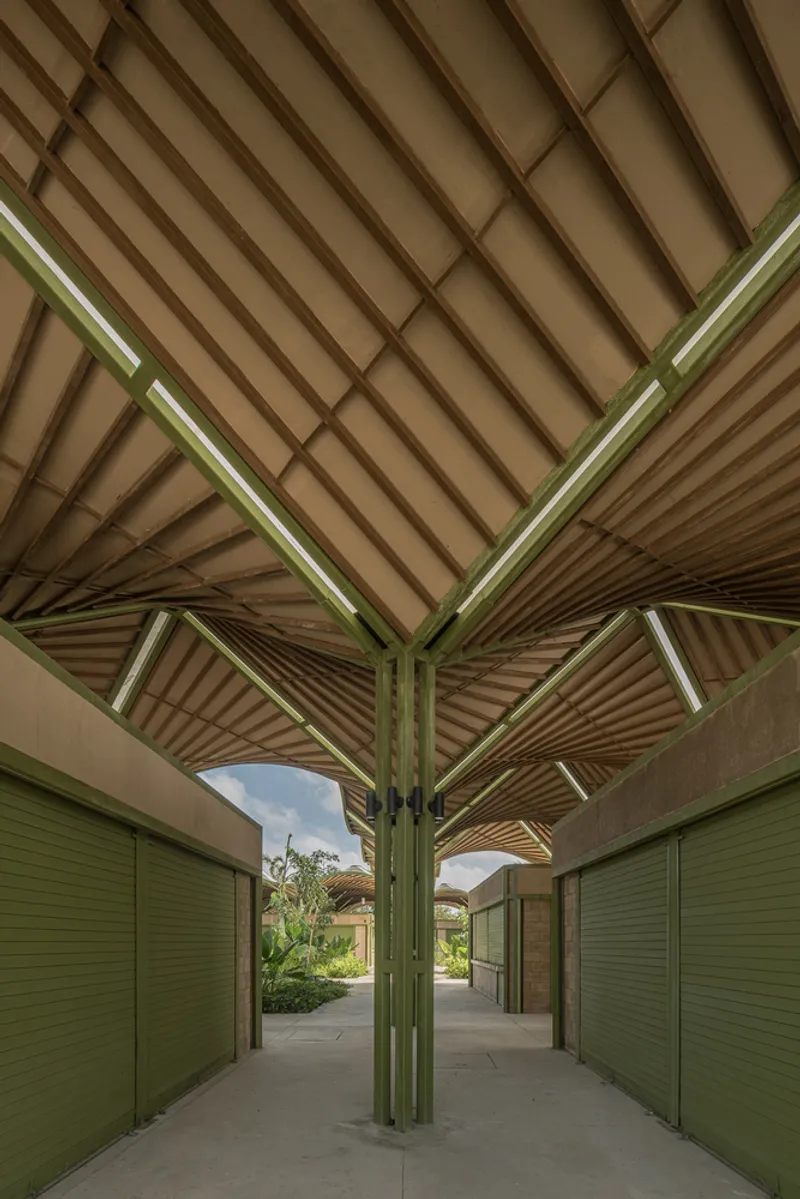
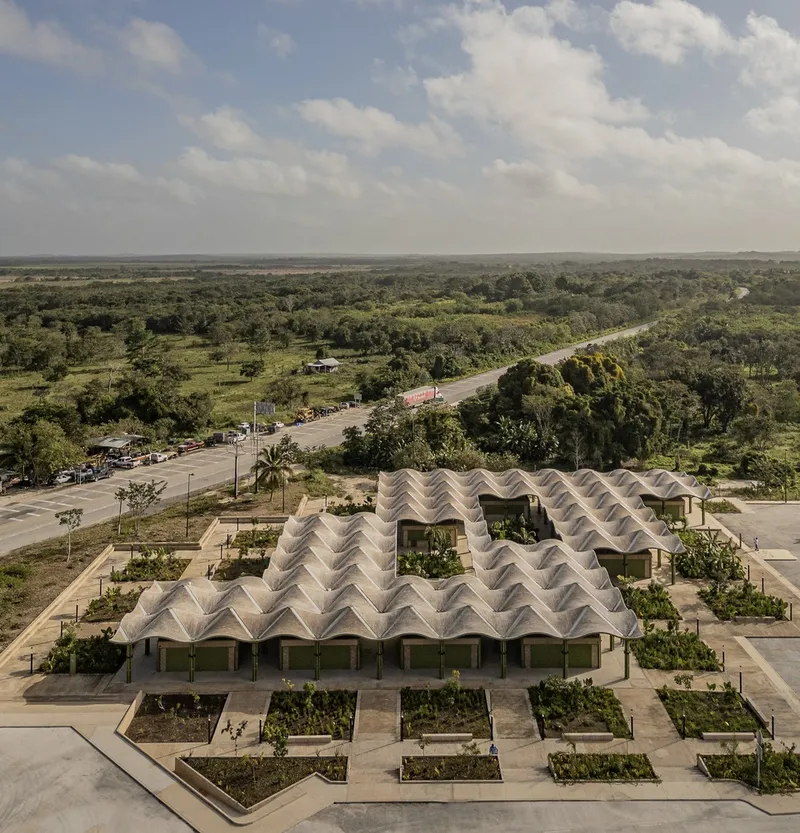
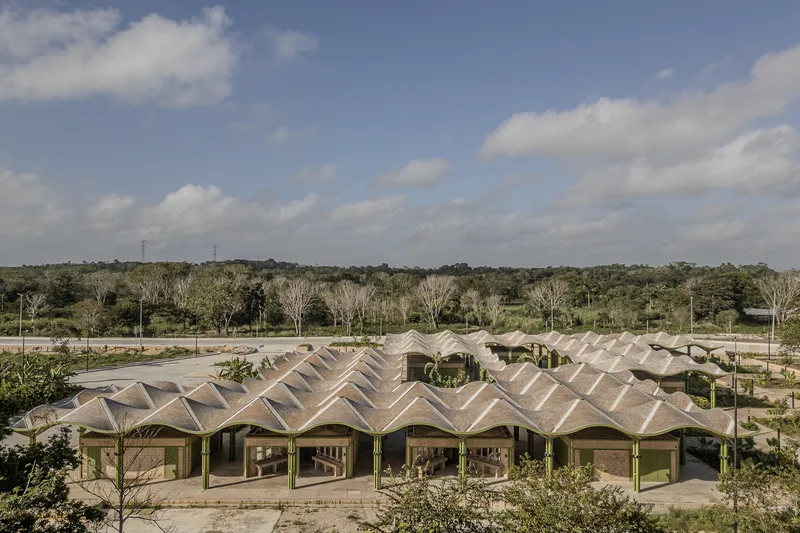
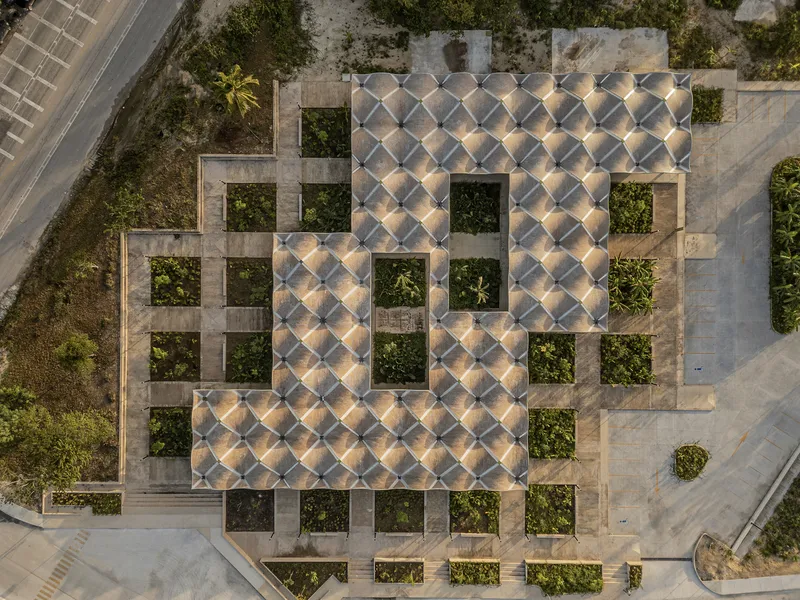
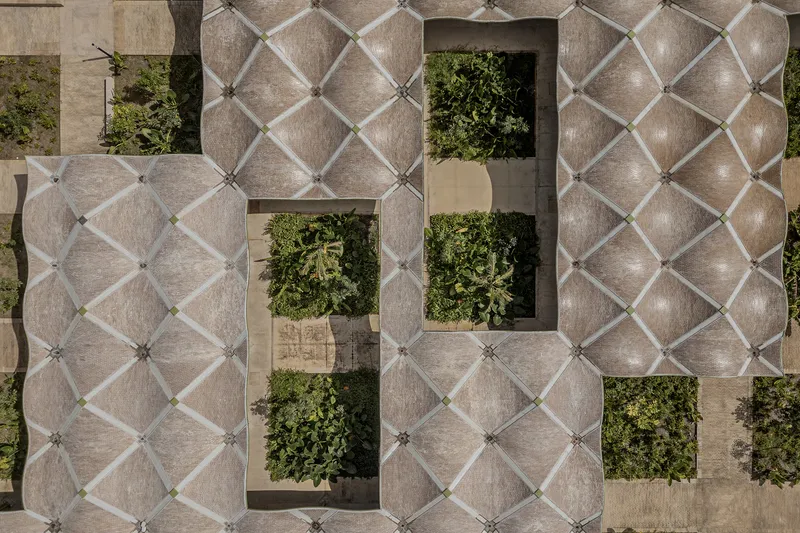
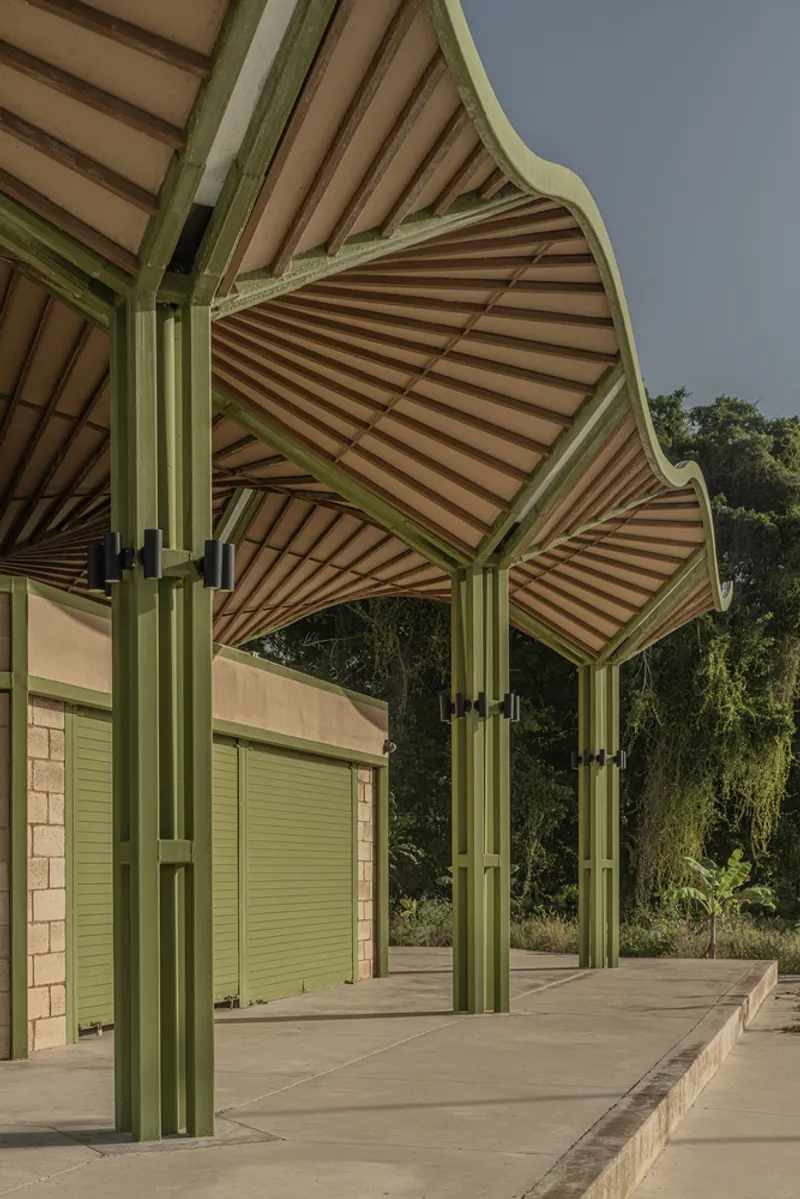
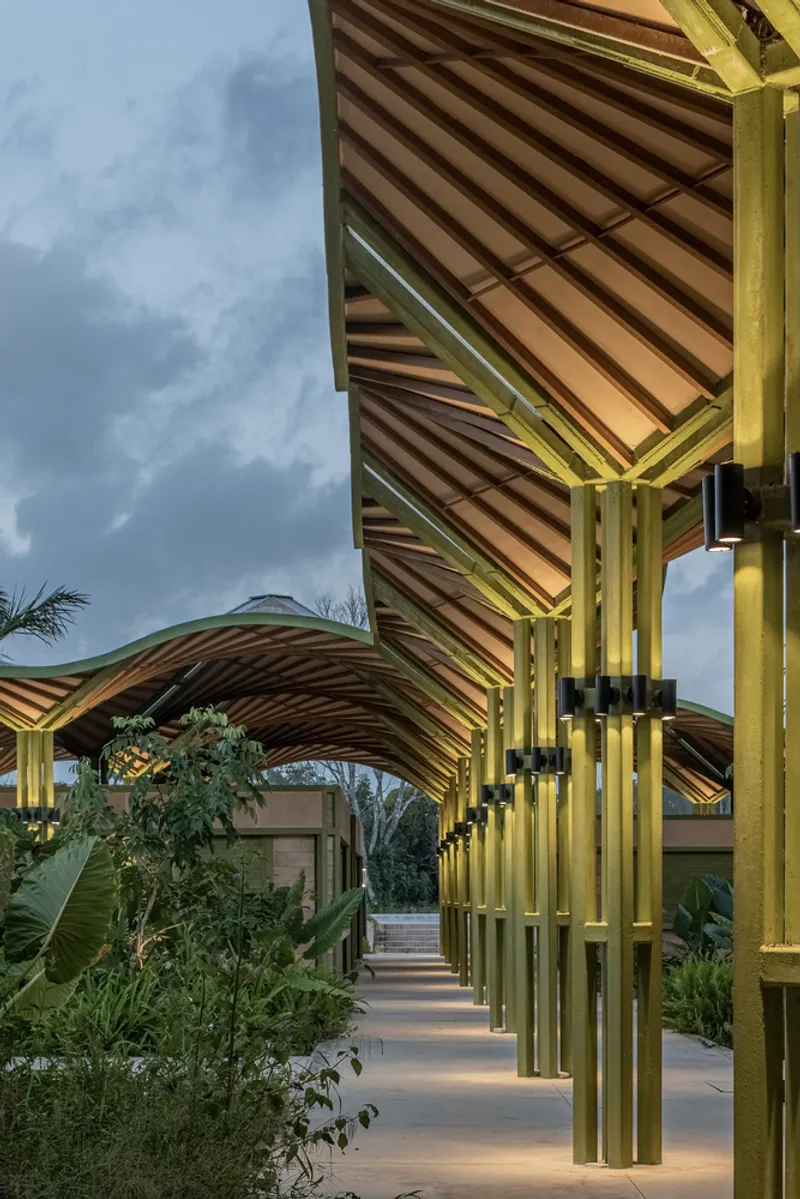
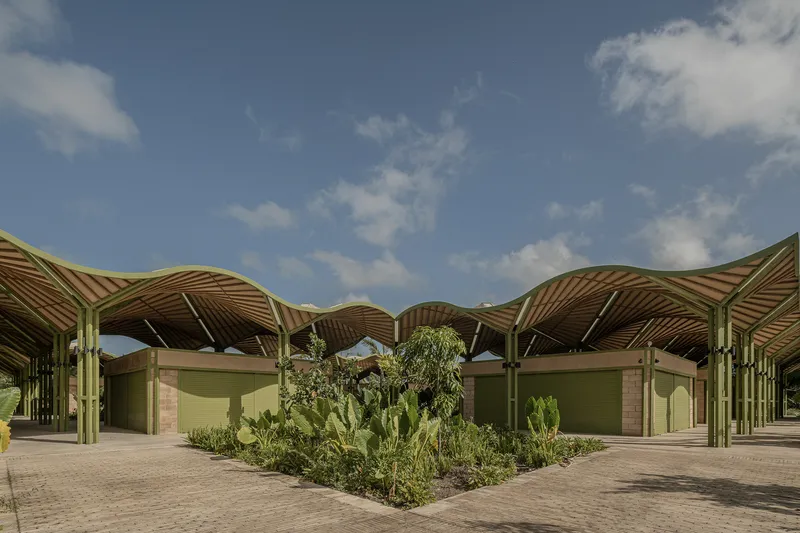
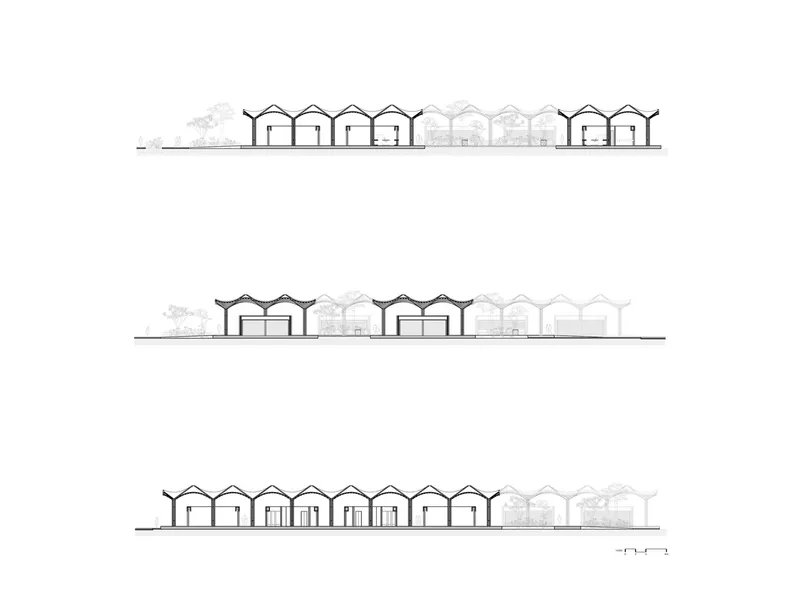
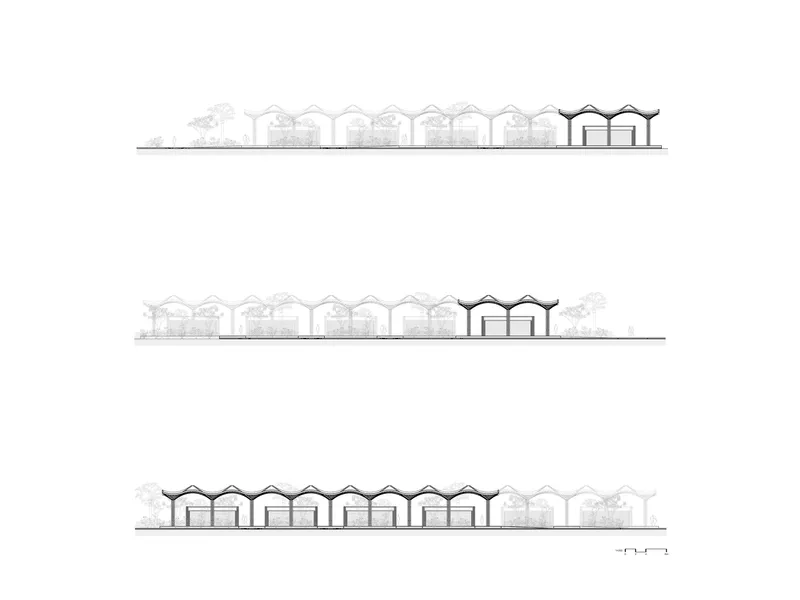
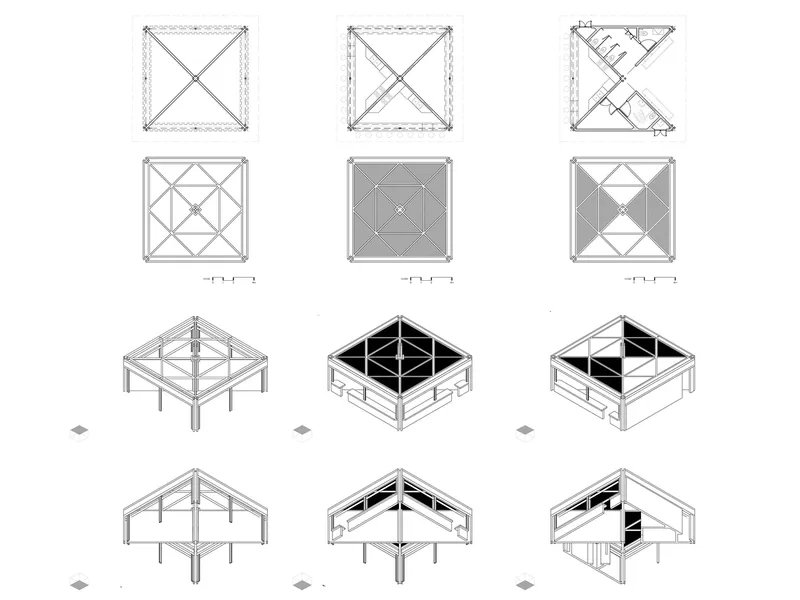
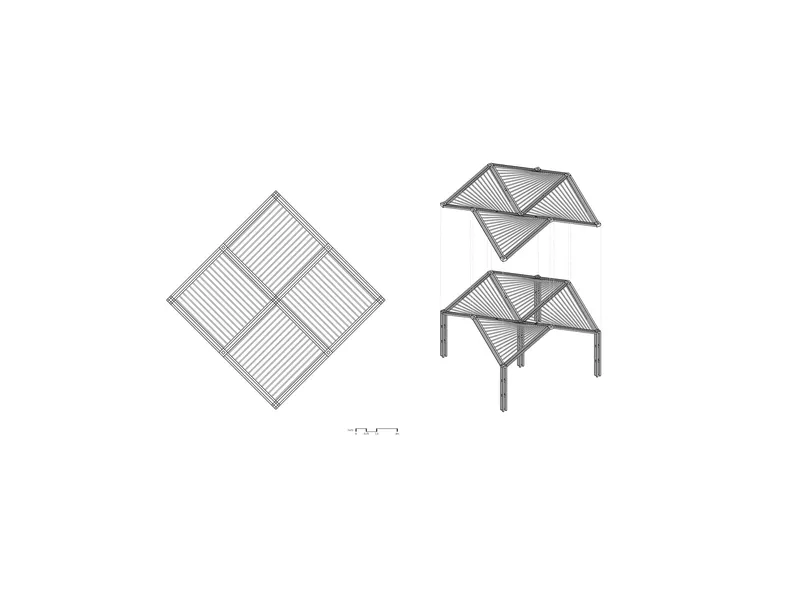
A defining feature of the project is its hyperbolic paraboloid roofing system, composed of inverted umbrella vaults that provide structural integrity and aesthetic fluidity. This dynamic roofing solution not only enhances the market’s visual identity but also optimizes shade, airflow, and rainwater drainage, reinforcing the building’s sustainability.
Constructed using four primary elements, the building emphasizes durability and minimal maintenance. The materials include:
- Lightweight steel framework, ensuring structural flexibility.
- Pigmented reinforced concrete slabs and parapets, adding longevity and weather resistance.
- Colored concrete blocks, providing a visually warm and natural aesthetic.
- Clay bricks, used for roofing and pavement, blending traditional and contemporary techniques.
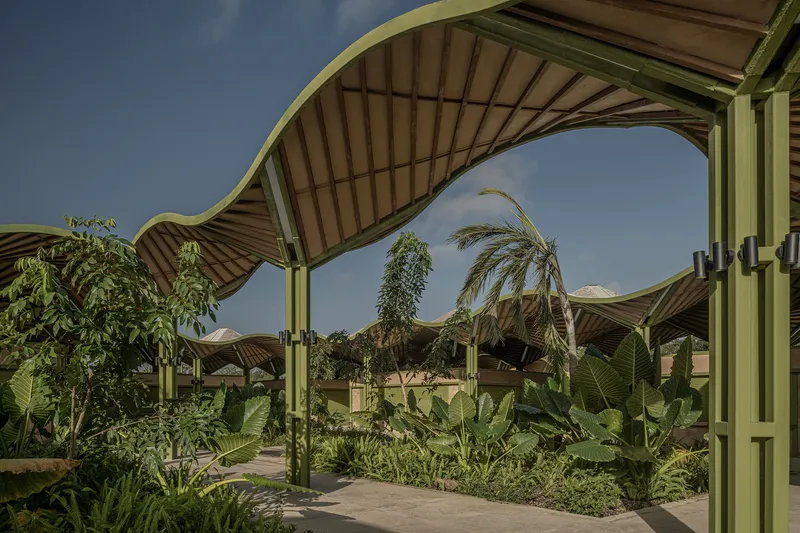
The modular grid system, with an 8m x 8m structural framework, allows for flexible reconfigurations, ensuring adaptability for future needs. The integration of green courtyards within the layout enhances natural ventilation, light diffusion, and social interaction, reflecting a biophilic approach to market architecture.
Climate-Responsive and Resilient Design
The market’s design is centered around sustainability, leveraging passive cooling strategies to counteract Mexico’s tropical climate. The vaulted roof structure acts as a thermal buffer, reducing heat gain while allowing for cross-ventilation, ensuring a comfortable indoor environment without excessive reliance on mechanical cooling.
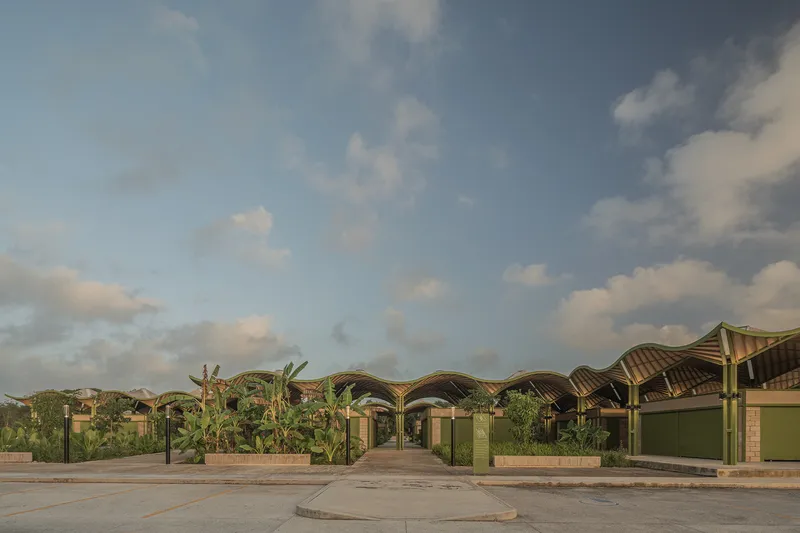
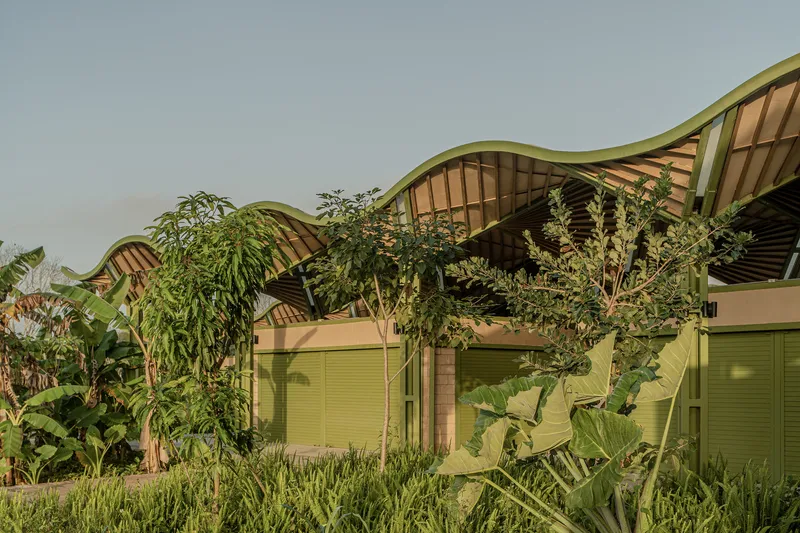
The incorporation of natural materials and porous architectural elements helps regulate temperature and reduce energy consumption, reinforcing eco-conscious construction principles. This climate-responsive design ensures that the market remains a self-sufficient, cost-effective, and community-driven space for years to come.
Integrating Tradition with Contemporary Innovation
AIDIA STUDIO’s approach to sustainable market architecture bridges the gap between vernacular building techniques and modern engineering. The use of clay bricks and concrete blocks references traditional Mexican architecture, while the innovative roofing geometry and structural grid introduce a contemporary edge.
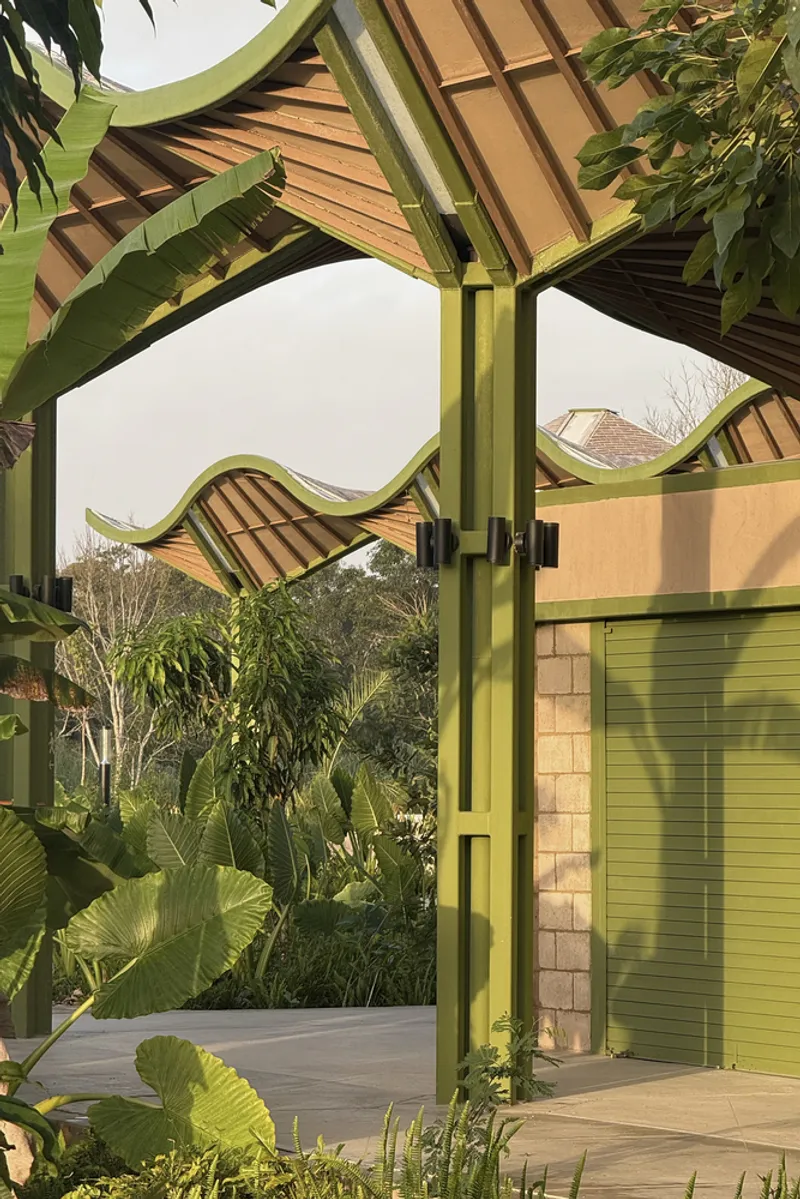
The public marketplace is designed not just as a place of economic exchange but as a social landmark, fostering interactions between locals and visitors, strengthening cultural ties, and preserving regional craftsmanship.
A Model for Future Sustainable Market Architecture
The Nicolas Bravo Market exemplifies how public infrastructure can be designed to support local economies, environmental sustainability, and architectural excellence. By integrating biophilic design, modular construction, and passive cooling strategies, the market serves as a model for future sustainable marketplaces worldwide.
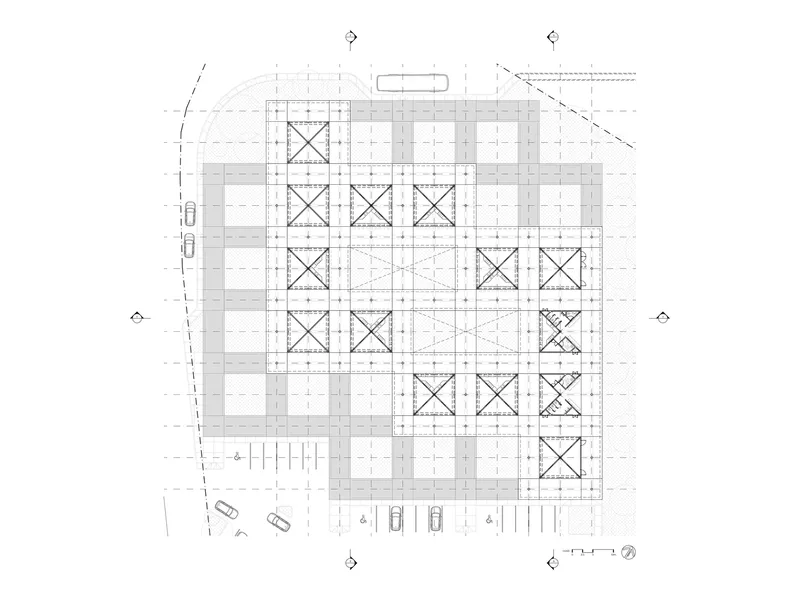
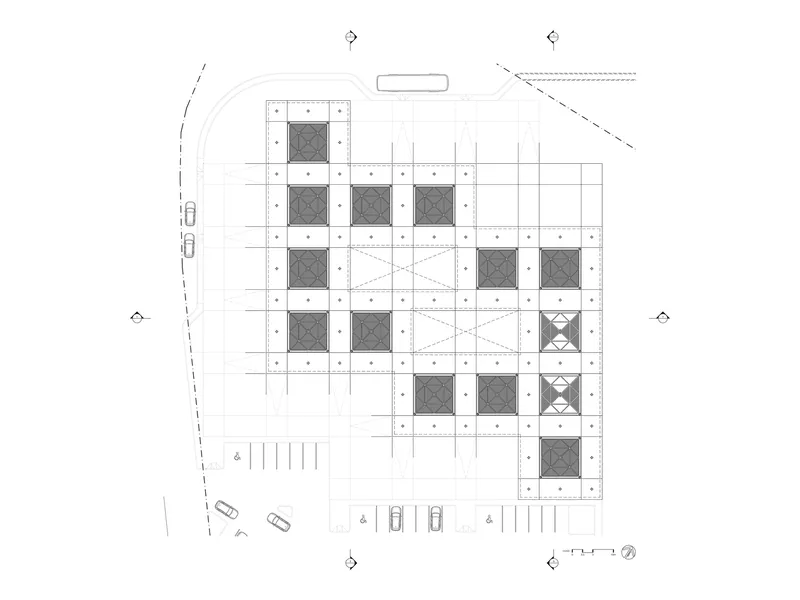
This project highlights the potential of architecture as a tool for economic and social transformation, ensuring that marketplaces remain cultural epicenters that support local heritage, environmental resilience, and sustainable urban development.
The Nicolas Bravo Market by AIDIA STUDIO redefines sustainable market architecture, offering a space that is both functional and environmentally responsible. With its innovative roofing system, climate-adaptive strategies, and integration of local materials, the project stands as a testament to how architecture can drive social and economic empowerment while respecting the natural and cultural landscape.
All photographs are works of Andrés Cedillo


Popular Articles
Popular articles from the community


Cloaked Colonization: A Mobile Underwater Habitat That Moves Like a Fish
Micah Abaya's shortlisted EHC Pacific entry reimagines ocean settlement as a dispersed network of self-sustaining architectural organisms.

The Amber Palace Opera: A Geological Fiction Surfaces on Tallinn's Baltic Waterfront
Pierre Brillard reimagines a Baltic legend as a public landscape, opera house, and waterfront promenade rooted in Tallinn's coastal identity.

Singing Woman: Contemporary Architecture Inspired by Estonia’s Voice and the Sea
Singing Woman turns Estonia’s song culture into flowing opera house architecture, blending public life, landscape, sea, and national memory.
Temporary Home for Dogs: A Reversed Zoo Rethinks Animal Shelter Architecture
In Bucharest, a sinuous corridor and freed landscape flip the logic of containment, designing a shelter that works to make itself unnecessary.

Similar Reads
You might also enjoy these articles


FAMM Arquitectura Organizes Ten Villas Around Courtyards and Jungle in Nosara, Costa Rica
El Molino pairs two elongated volumes with deep overhangs and timber louvers to build a compact coastal community five minutes from the beach.
Oscar Niemeyer's Ibirapuera Park Pavilions Define São Paulo's Cultural Identity in Concrete and Curve
A constellation of modernist volumes set within São Paulo's most important urban park, conceived for the city's 400th anniversary in 1954.
Sanjay Puri Architects Wraps a Jaipur Office Tower in Capsule-Shaped Green Buffers
A nine-level climate-responsive workplace near Jaipur Airport uses stacked planter terraces and aluminium screens to fight 40°C heat.
RHO Converts a Berlin Spree-Side Industrial Courtyard into Enkime's 1,000 m² Agency Headquarters
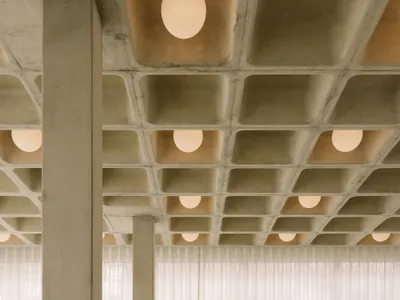
A social media agency's new home in Charlottenburg trades glossy branding for concrete waffle ceilings, glazed tile, and sheer curtains.

Explore Open Air Market Competitions
Discover active competitions in this discipline

Challenge to reimagine the Iron Throne

Photograph architecture without architects

Illustrate the lost glory of Angkor Wat - Render Challenge

Design challenge to reuse E-waste
Comments (0)
Please login or sign up to add comments
No comments yet. Be the first to comment!