
The GATHERING-TIME: Redefining Urban Furniture Design for Campus Spaces
Transforming interstitial voids into vibrant gathering zones through adaptive, sustainable urban furniture design.

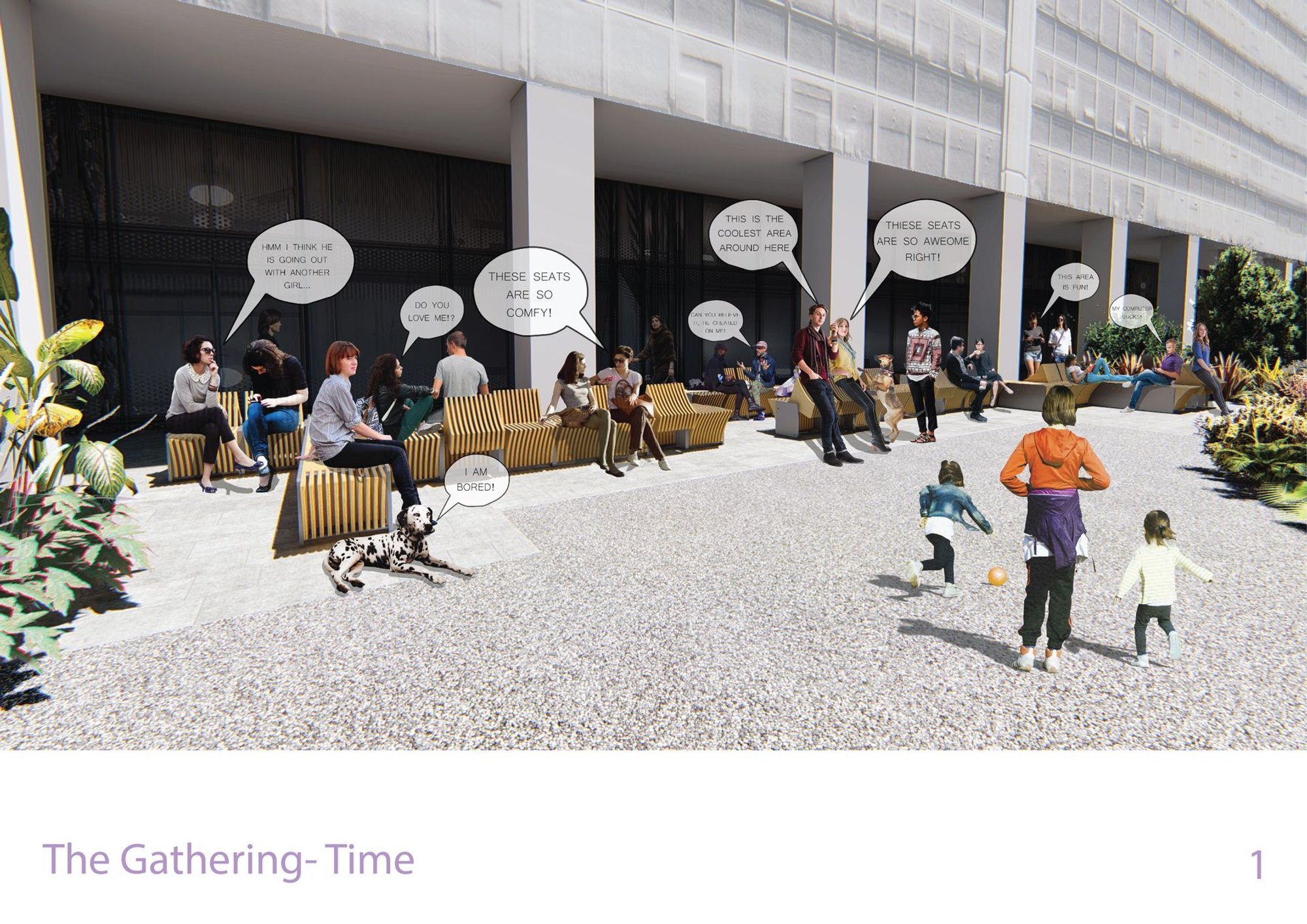
In most urban university campuses, the spaces between buildings – the so-called interstitial voids – often remain underutilized. The GATHERING-TIME reimagines these forgotten pockets as dynamic social hubs through innovative urban furniture design. Conceived by architects Parham Karimi and Pedram Karimi, this proposal transforms the humble campus bench into an adaptable spatial module that nurtures connection, rest, and interaction.
Rather than treating a bench as a fixed object, the design envisions it as a living element within the architectural ecosystem – a structure that flexes and evolves with human activity. The project earned an Honorable Mention in the Urbanscape 2018 competition, where it stood out for its modularity, sustainable material use, and its ability to breathe life into the underused landscapes of the University of Toronto's Saint George Campus.
Design Concept: From Object to Experience
The central idea behind The GATHERING-TIME is to shift the role of a bench from static furniture to a system that responds to human behavior. Each module becomes a micro-space, allowing individuals and groups to inhabit, lean, sit, or gather in diverse configurations. The design encourages spontaneous social interaction, creating an architecture of encounter rather than isolation.
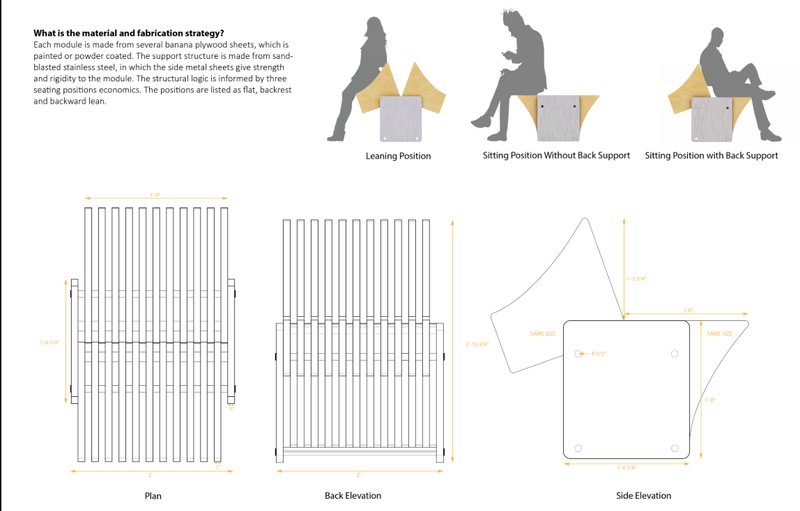
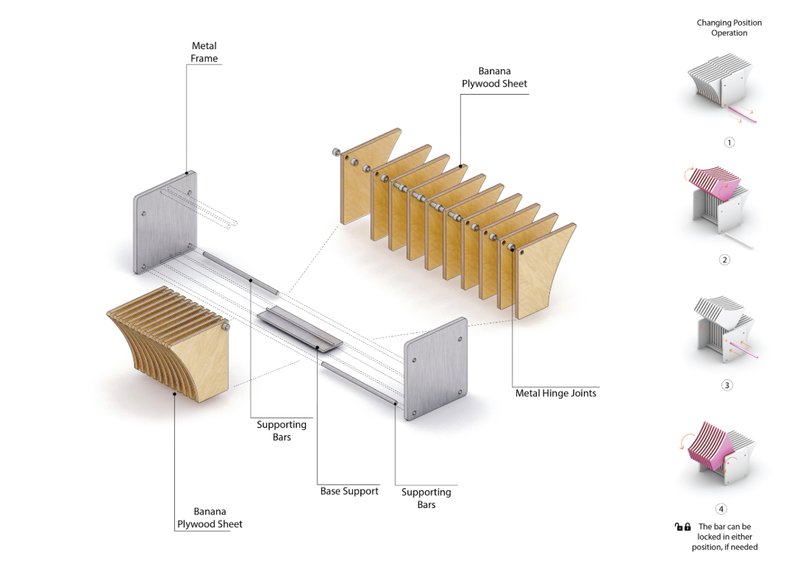
Through its modular geometry, the furniture adapts to multiple positions – leaning, sitting without back support, or sitting with backrest – based on ergonomic comfort. These positions correspond to everyday campus behaviors: a quick break between lectures, a longer group discussion, or moments of solitary rest.
Material and Fabrication: Sustainable Banana Plywood Architecture
At the core of this urban furniture design lies a strong commitment to sustainability. Each module is crafted from several sheets of banana plywood, an eco-friendly composite derived from banana plant trunks. The use of banana wood addresses a pressing environmental challenge: repurposing agricultural waste into functional, high-performance material.
The supporting frame is fabricated from sand-blasted stainless steel, ensuring structural strength and longevity. The interaction between the wooden and metal components provides both visual contrast and functional balance. Metal hinge joints allow the modules to pivot, enabling different seating postures that respond to user needs. The bar connecting each module can even be locked in position for safety and stability.
This blend of architectural detailing and sustainable fabrication reflects a deep understanding of how material behavior informs human experience.
Aggregation Logic: Designing Spaces, Not Just Benches
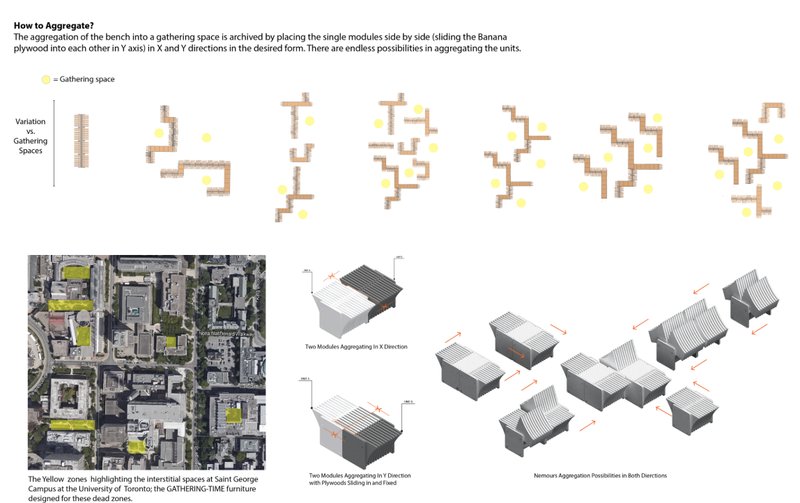
The true ingenuity of The GATHERING-TIME lies in its potential for aggregation. By sliding modules side by side along the X and Y axes, designers can create endless configurations – from linear benches to clusters and enclosed gathering zones. Each composition adapts to site conditions, social activities, and spatial demands.
On the University of Toronto campus, the proposal identifies yellow-highlighted zones within the aerial map – areas often neglected or considered 'dead spaces.' These modules activate those voids, converting circulation corridors, interstitial pathways, and leftover patches into animated micro-arenas of social engagement.
Through parametric aggregation, the system becomes more than furniture; it becomes architectural infrastructure. This flexible scalability allows The GATHERING-TIME to function equally well in bus stops, courtyards, and public corridors.
Functional Scenarios: The Bench as Urban Interface
The designers identify three key spatial scenarios that shape the bench’s behavior:
- Bus Stop Scenario – For short waiting intervals (5–10 minutes), the bench supports leaning and quick rest. It introduces comfort to otherwise transient public areas.
- Interstitial Spaces Scenario – Between buildings, where activity is sparse, the modules create informal gathering areas for leisure, conversation, or quiet reflection.
- Urban Corridor Scenario – Along pathways and edges, the aggregated modules transform monotonous movement routes into interactive and lively environments.
In all cases, The GATHERING-TIME acts as a social catalyst, promoting inclusivity and engagement within the urban fabric.
Banana Wood Sustainability: Material Intelligence in Architecture
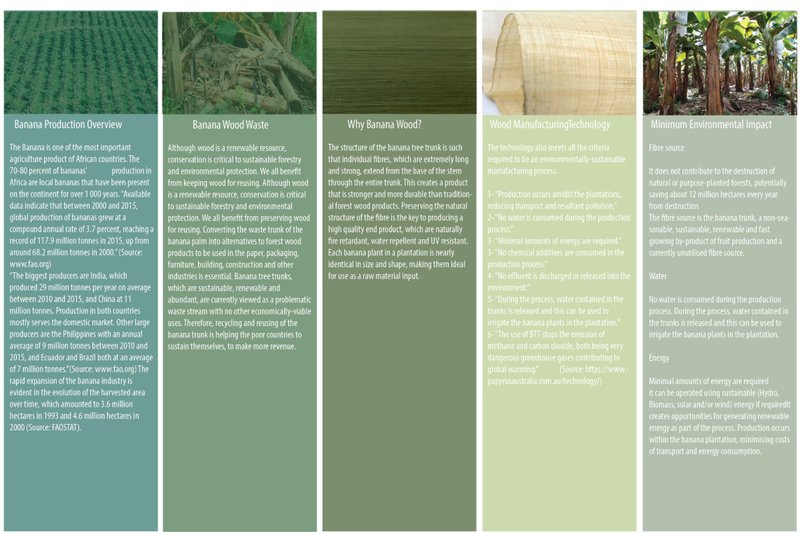
The sustainability narrative of this project is deeply rooted in its choice of material – banana wood. Banana cultivation produces massive amounts of agricultural waste each year, as trunks are discarded after fruiting. Transforming this waste into banana plywood represents a breakthrough in eco-conscious architecture and design.
Key environmental advantages include:
- Renewable Resource: Banana trees regenerate quickly, offering a consistent material source without deforestation.
- Low Carbon Footprint: Manufacturing banana plywood requires minimal energy, water, and chemical inputs.
- Natural Durability: The fibre structure provides water resistance, UV protection, and flame retardance.
- Local Economic Support: Utilizing banana wood can boost local economies by converting agricultural byproducts into valuable construction material.
This approach embodies circular design principles – closing the loop between agriculture and architecture.
Designing Time, Not Just Space
The GATHERING-TIME blurs the boundaries between architecture, furniture, and landscape. It challenges the conventional notion of seating as a passive element by designing for temporal and social adaptability. Users engage with it differently based on time, mood, and context – turning waiting into gathering, and pause into play.
By merging sustainable material innovation with adaptive urban design, Parham and Pedram Karimi present a future-forward interpretation of what public seating can be. Their work doesn’t just provide a place to sit; it redefines how people connect with space, time, and each other.




Popular Articles
Popular articles from the community


Solar Steam: A Climate-Responsive Architecture That Redefines the Monument
A climate-responsive memorial architecture that transforms heat, decay, and time into a living system reflecting humanity’s ecological impact.
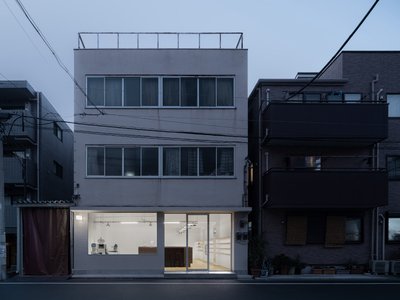
Atelier Macri Concept Store Interior Design by CASE-REAL
Atelier Macri store features a "ko" counter, walnut wood details, cork displays, blending retail, gallery, and seamless customer experiences.
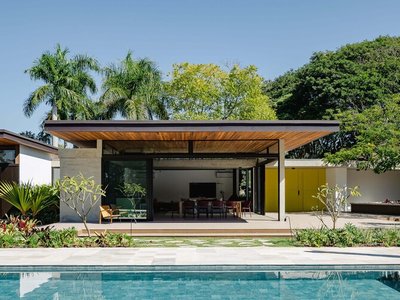
Flamboyant House by Juliana Camargo + Prumo Projetos
Modern Brazilian house integrating existing tree, pool, and volumes with glass, wood, and transitional spaces blending interior, exterior, and landscape seamlessly.
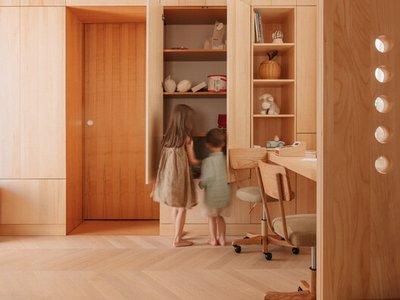
Treehouse Apartment: A Warm Timber Interior Blending Craft, Play, and Contemporary Living
Warm timber apartment with integrated treehouse, combining natural materials, craftsmanship, and playful design to create a flexible, family-oriented living environment.


Similar Reads
You might also enjoy these articles

Top 15 Architecture Competitions to Enter in 2026
From student-friendly idea competitions to prestigious international awards, here are the best architecture competitions open for entries in 2026. Updated regularly.

DIY & Engineering in Computational Design : Enter the BeeGraphy Design Awards
Showcase Your Creativity with Computational Design and Open Source Projects
Innovative Design Solutions: Award-Winning Projects from Recent Architecture Competitions
Exploring award-winning architectural projects shaping the future of design, sustainability, and community.



Explore Product Design Competitions
Discover active competitions in this discipline




The Global Benchmark for Architecture Dissertation Awards


Challenge to merge furniture with learning


Design challenge to equip cities with modern furniture


Competition to design a workstation for architects
Comments (0)
Please login or sign up to add comments
No comments yet. Be the first to comment!