
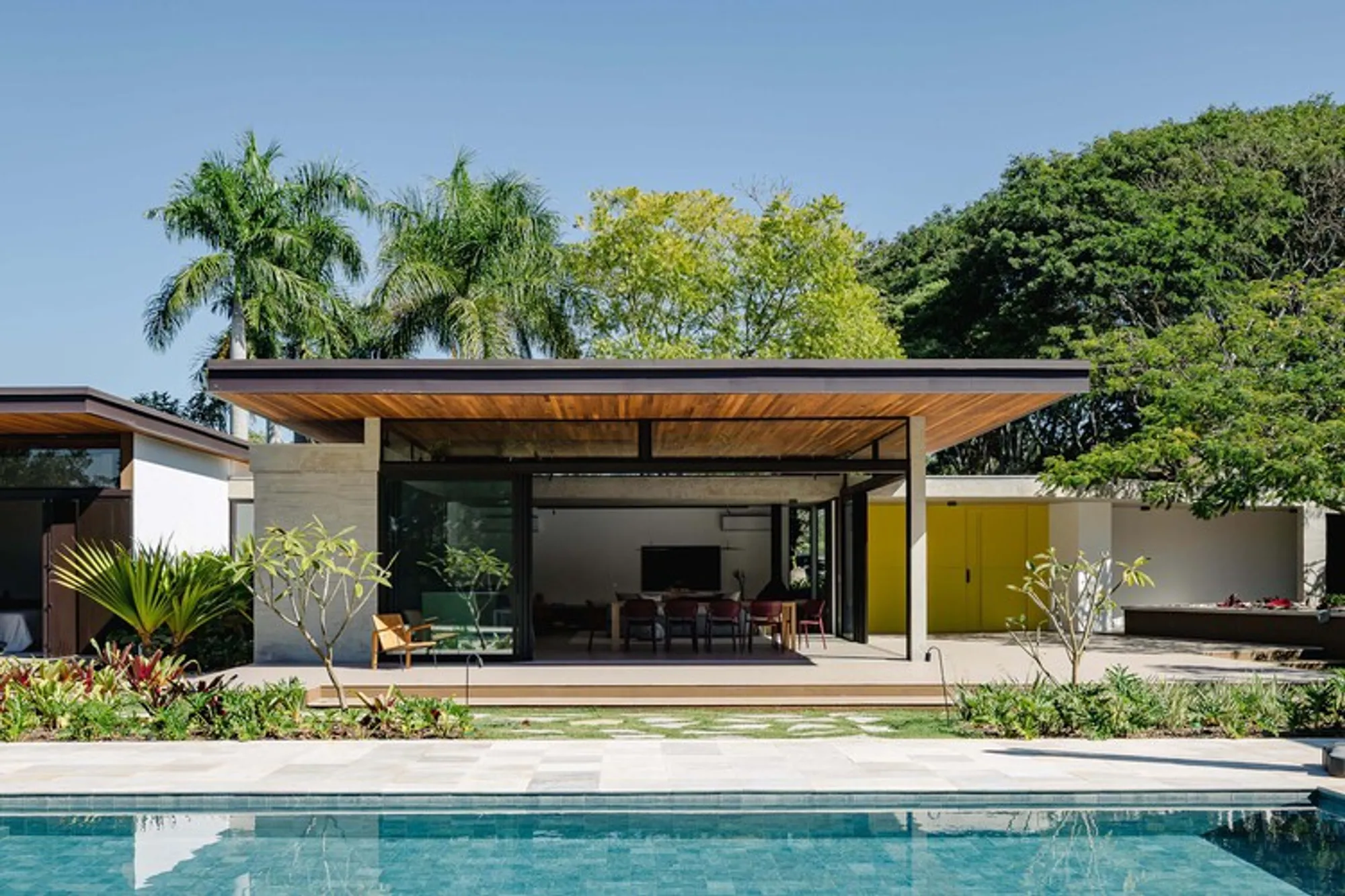
Flamboyant House by Juliana Camargo + Prumo Projetos
Modern Brazilian house integrating existing tree, pool, and volumes with glass, wood, and transitional spaces blending interior, exterior, and landscape seamlessly.


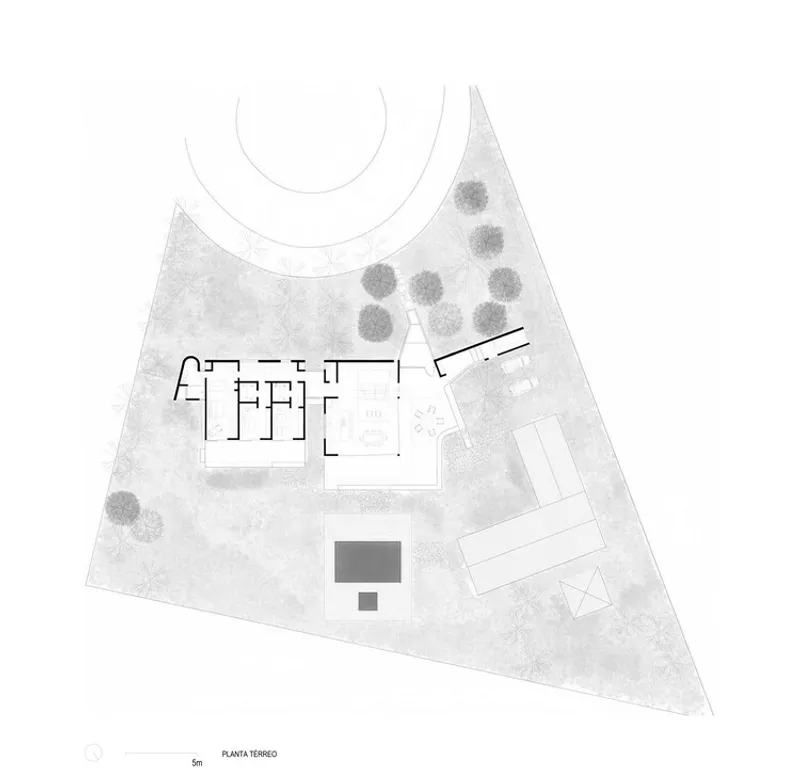
Located in Itu, Brazil, Flamboyant House by Juliana Camargo and Prumo Projetos is a carefully orchestrated architectural response to an already inhabited site. Set within a generous 3,000 m² plot, the design emerges from a deep engagement with three pre-existing elements: an L-shaped structure, a swimming pool, and a mature flamboyant tree. Rather than treating these as constraints, the project embraces them as catalysts, shaping the spatial logic, geometry, and experiential quality of the house.
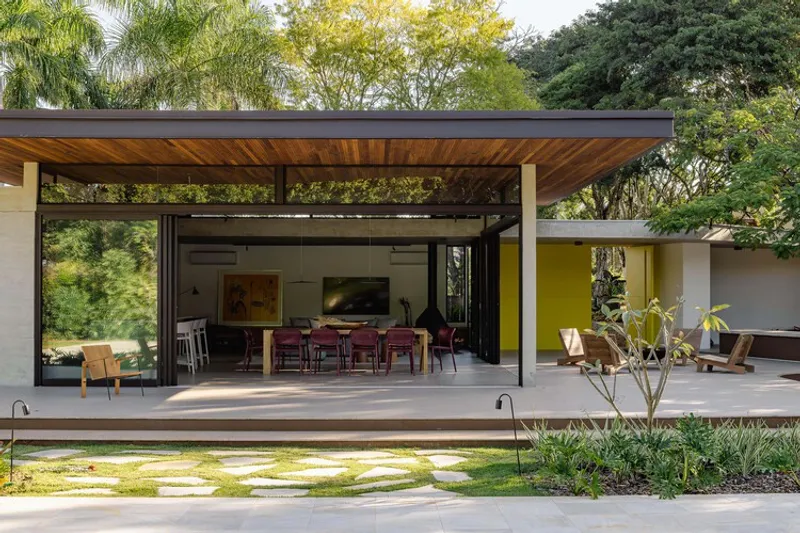
From its inception, the project dissolves the conventional separation between architecture and interior design. Both are conceived as a unified system, working together to articulate spatial continuity, material richness, and a seamless relationship with the landscape. The house is not a singular object but a composition of volumes and layers that negotiate between past and present, built form and natural environment.
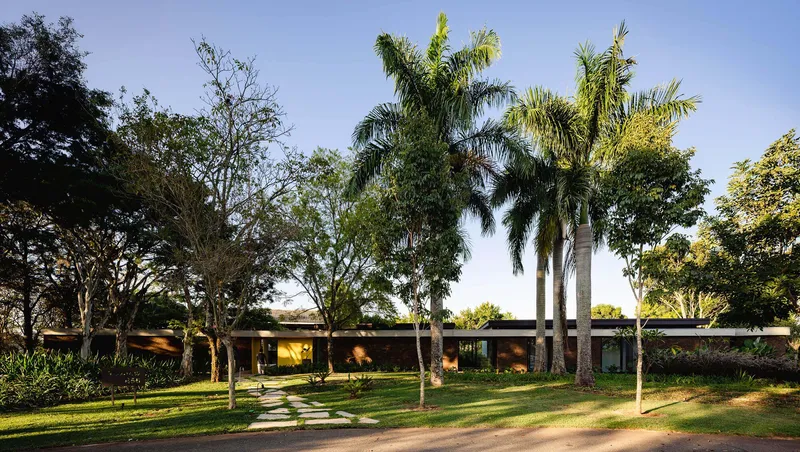
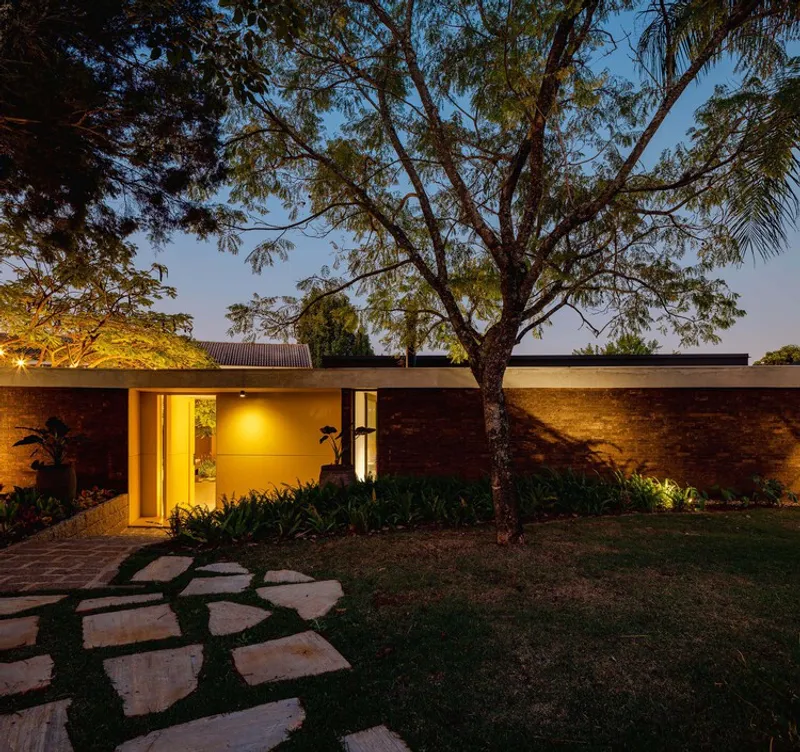
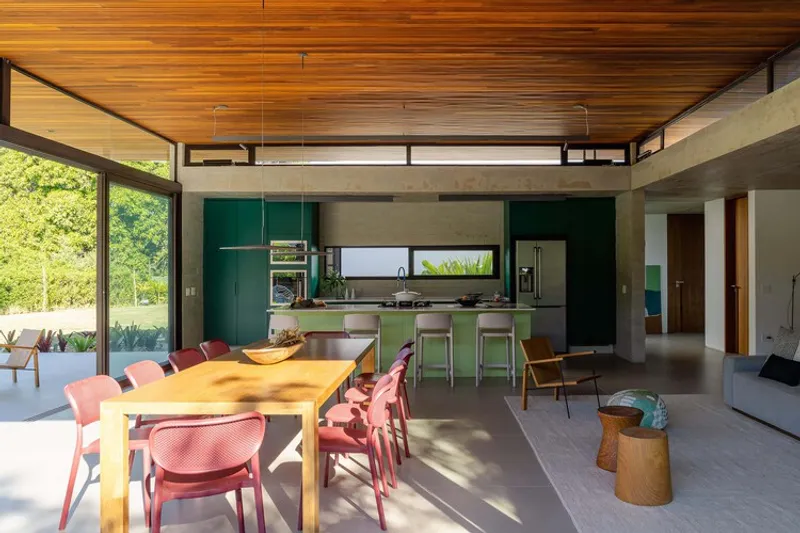
The architectural organization is defined by two primary volumes, each autonomous yet intrinsically connected. The first volume accommodates the social program: living, dining, and kitchen spaces, designed as an open and fluid environment. This volume unfolds toward the exterior, opening generously onto a terrace and the existing swimming pool. Large floor-to-ceiling glass panels dissolve visual and physical boundaries, allowing the garden and outdoor spaces to become an integral part of everyday living.
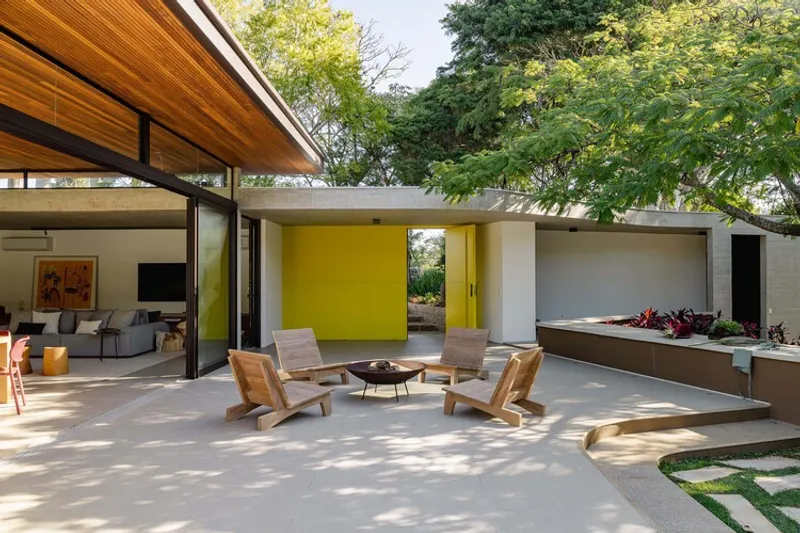
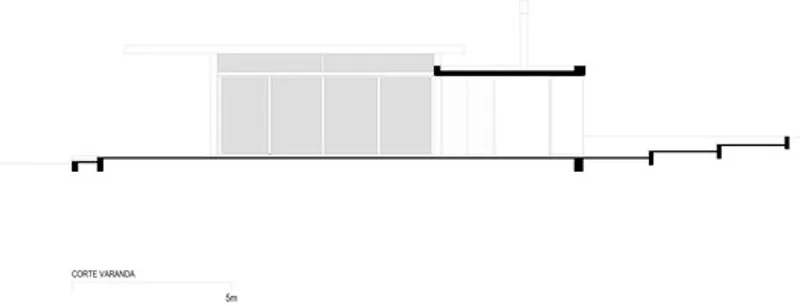
The second volume houses the private program, including three suites designed to prioritize comfort, privacy, and views of the surrounding vegetation. Elevated on a suspended metal structure, both volumes gain a sense of lightness while improving ventilation and natural lighting. This structural strategy enhances environmental performance while reinforcing the architectural clarity of the composition.
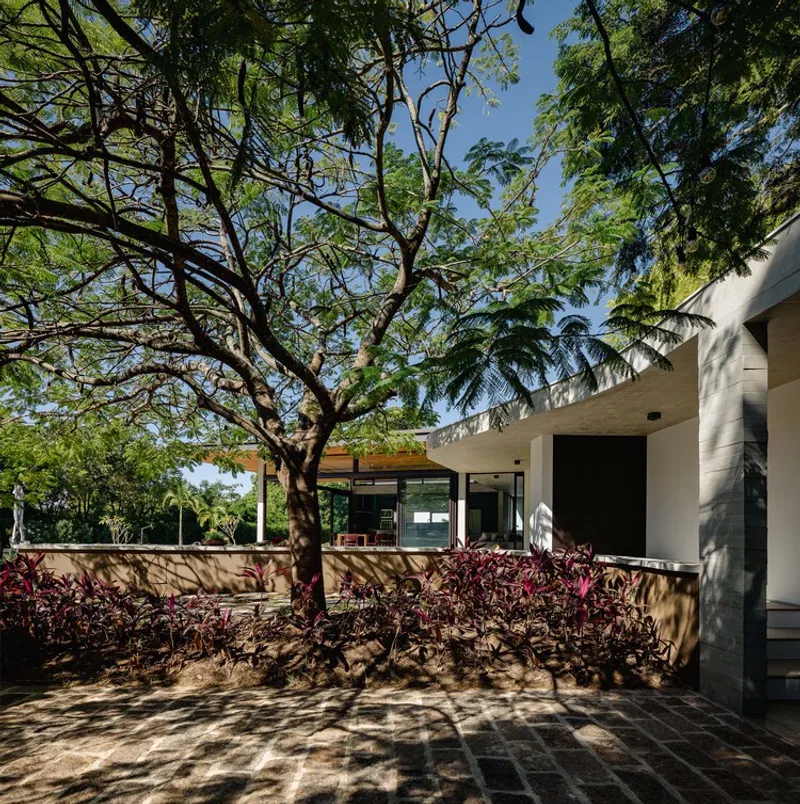
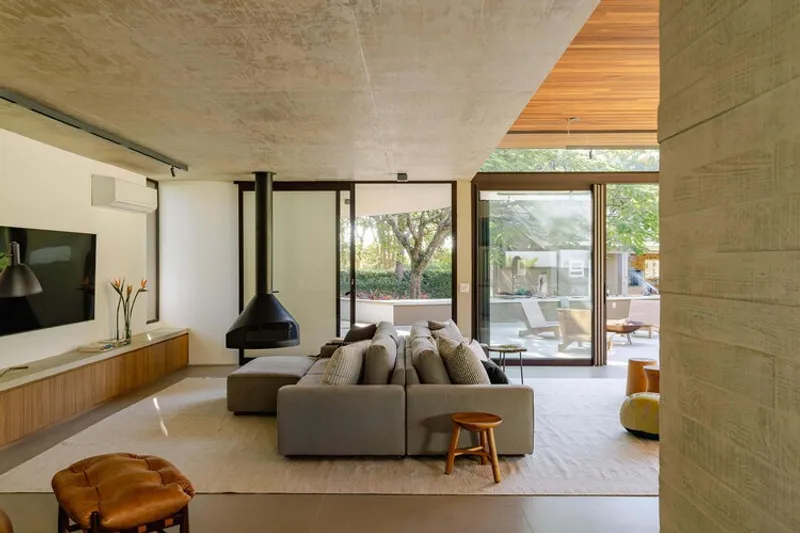
A defining gesture of the project is the expansive horizontal slab that connects these two volumes. More than a circulation element, this plane acts as a transitional threshold, an intermediate space where interior and exterior conditions merge. Beneath it, shaded and permeable areas accommodate informal living functions such as lounges and TV spaces, encouraging everyday occupation and social interaction.
At the heart of this composition lies the flamboyant tree, around which the architecture is carefully arranged. The slab frames this natural element, transforming the shaded area beneath its canopy into an outdoor living room. Here, the garden is no longer a backdrop but an active participant in the spatial experience, reinforcing the project’s sensitivity to climate, context, and human engagement.
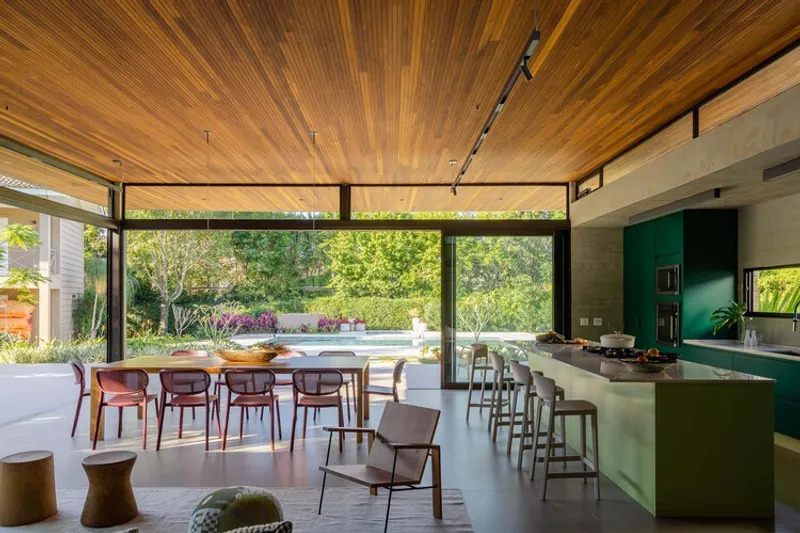
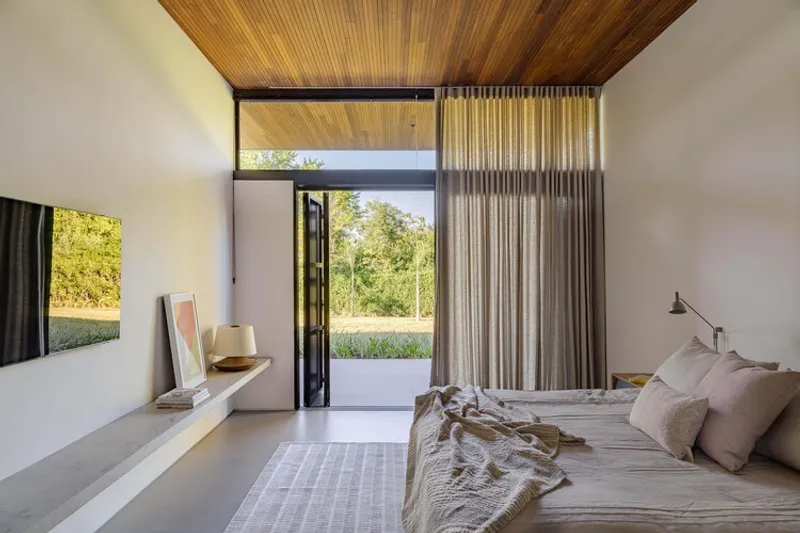
Materiality further strengthens this dialogue. The continuous use of freijó wood across ceilings, furniture, and cabinetry introduces warmth and visual coherence, while exposed metal structures and stone surfaces add contrast and structural clarity. The kitchen becomes a central node within the social volume, where green cabinetry reflects the surrounding vegetation and Paraná marble countertops anchor the space with a sense of permanence.
Color is employed not merely as decoration but as a spatial tool. Shades of green extend the presence of the landscape into the interiors, while bold elements, such as a yellow metal entrance portal, act as visual markers that guide movement and define identity. These chromatic interventions enrich the architectural narrative, creating moments of contrast and orientation.
On the street-facing facade, burnt brick establishes a solid, protective boundary that ensures privacy. In contrast, the inward-facing facades dissolve into transparency, opening the house toward the garden and reinforcing a dual condition of enclosure and openness.
Ultimately, Flamboyant House is an exercise in reconciliation: between new and existing, solid and transparent, architecture and landscape. It proposes a mode of living defined not by rigid boundaries but by fluid relationships, where space is continuously shaped by light, material, and the presence of nature.
All the Photographs are works of Manuel Sá



Popular Articles
Popular articles from the community


Co-Life: Senior Housing Design That Reconnects Older Adults With the City
Co-Life reimagines senior housing design through healing gardens, shared streets, workshops, and a sustainable community across generations.

The Earth Pod: 3D Printed Homes for Resilient Refugee Communities
The Earth Pod reimagines refugee housing through 3D printed homes made from clay, combining resilience, self-sufficiency, and rapid shelter.

Hill & Cross Opera: Sculptural Opera House Architecture Shaped by Tallinn’s Landscape and Identity
Hill & Cross Opera reimagines opera house architecture in Tallinn through its sculptural hill, civic plaza, glass wave and a luminous cross.

The Ocean Hive: Sustainable Architecture for a Self-Sufficient Civilization at Sea
The Ocean Hive imagines sustainable architecture at sea, where modular habitats, algae, wave power and ocean waste sustain a growing colony.


Similar Reads
You might also enjoy these articles

FAMM Arquitectura Organizes Ten Villas Around Courtyards and Jungle in Nosara, Costa Rica
El Molino pairs two elongated volumes with deep overhangs and timber louvers to build a compact coastal community five minutes from the beach.
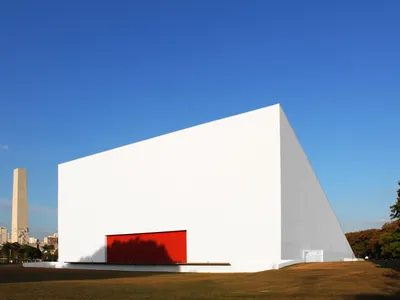
Oscar Niemeyer's Ibirapuera Park Pavilions Define São Paulo's Cultural Identity in Concrete and Curve
A constellation of modernist volumes set within São Paulo's most important urban park, conceived for the city's 400th anniversary in 1954.
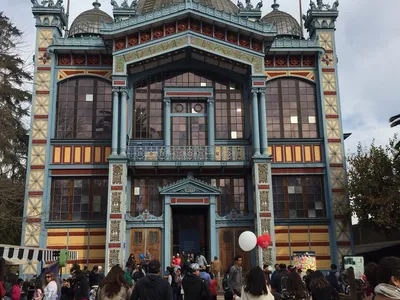
How Henri Picq's 1889 Paris Pavilion Traveled 11,000 Kilometers to Become Santiago's Artequín Museum
A prefabricated iron and glass pavilion built for the Paris Universal Exposition found a second life as a children's art museum in Chile.
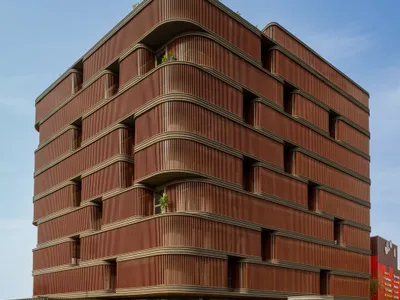
Sanjay Puri Architects Wraps a Jaipur Office Tower in Capsule-Shaped Green Buffers
A nine-level climate-responsive workplace near Jaipur Airport uses stacked planter terraces and aluminium screens to fight 40°C heat.


Explore Architecture Competitions
Discover active competitions in this discipline



Challenge to reimagine the Iron Throne


Photograph architecture without architects


Illustrate the lost glory of Angkor Wat - Render Challenge


Design challenge to reuse E-waste
Comments (0)
Please login or sign up to add comments
No comments yet. Be the first to comment!