
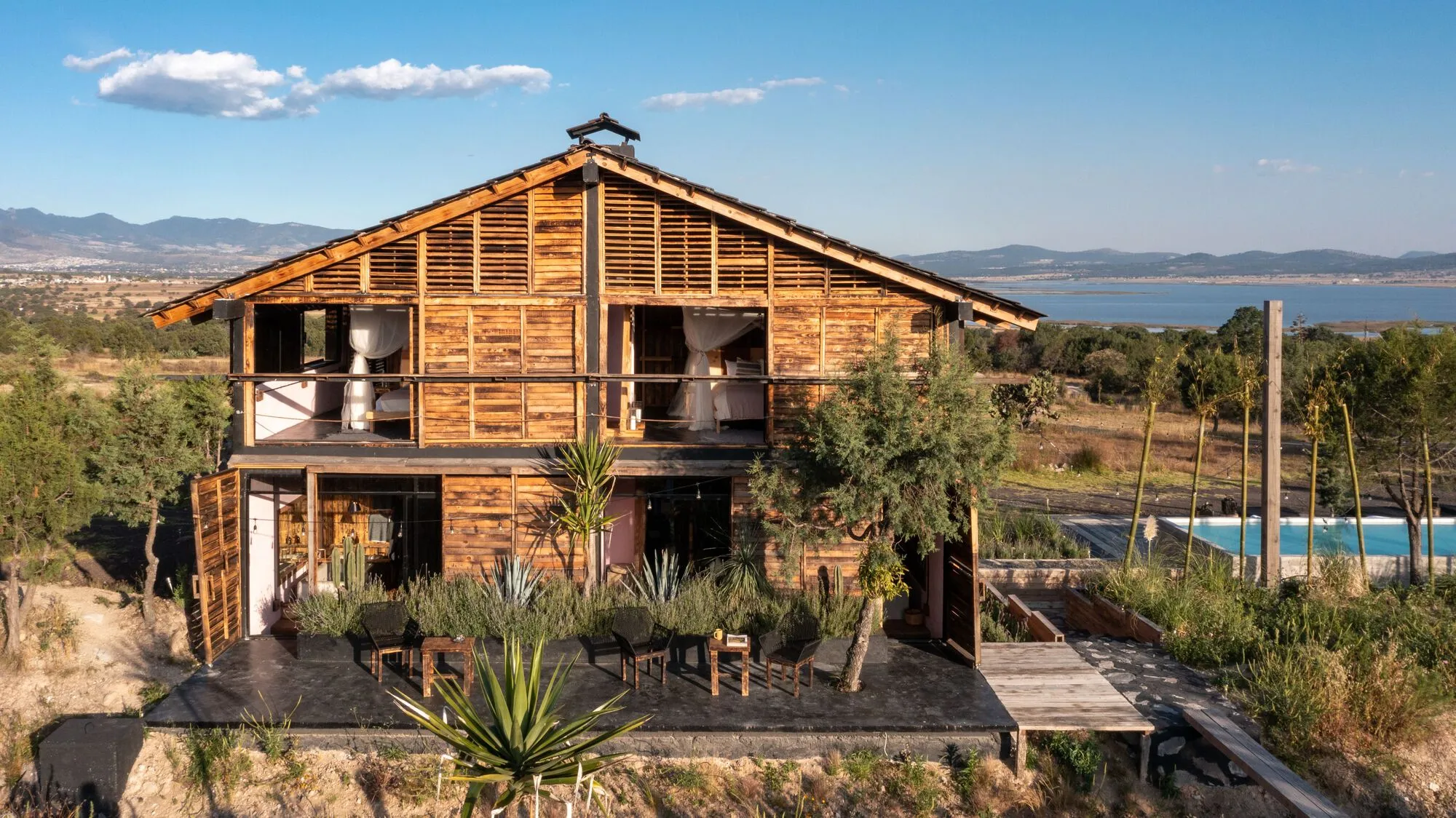
Fausto Terán and Toro Fuse Japanese Craft with Mexican Tradition in a Lakeside Retreat
Nakamura House pairs Shou-Sugi-Ban charred pine with handmade clay tile at the foot of Atlangatepec Lagoon in Mexico.


Two hours from Mexico City, at the edge of Atlangatepec Lagoon with three volcanoes on the horizon, a charred timber volume rises from the semi-desert scrub like a structure that could belong to either hemisphere. Nakamura House, designed by Fausto Terán and Toro, is a 361 square meter retirement retreat that takes seriously the proposition that Japanese and Mexican building cultures share more common ground than you might expect. The result is not pastiche but a genuine synthesis: Shou-Sugi-Ban charred pine meets handmade baked clay tile, Zen spatial discipline meets the warm materiality of rural Mexico.
What makes Nakamura House worth studying is less its aesthetic novelty and more its thesis about cultural parallelism. Samurai philosophy and the rituals of sumo and jiu-jitsu inform the spatial experience here, while the building was constructed entirely by local families using regional materials. The architects found a way to honor two distinct traditions without flattening either one, and the building sits in its landscape with the quiet authority of something that belongs exactly where it is.
A Gabled Volume on Open Ground

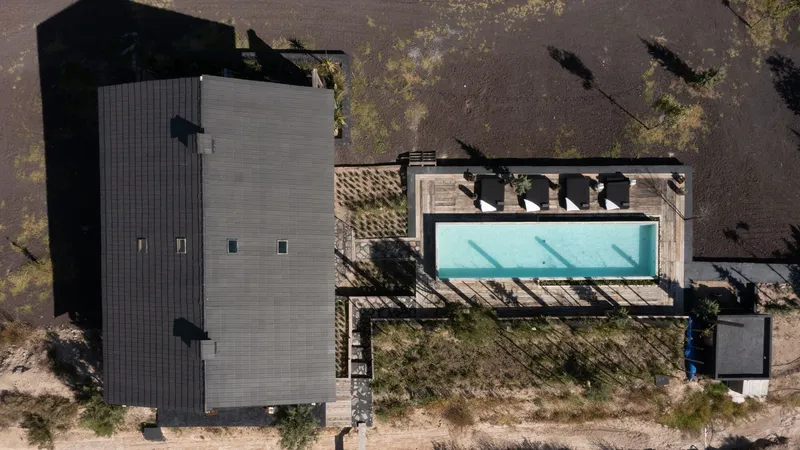

From above, the building reads as a compact rectangular volume capped by corrugated metal roofing, its timber shell dark against the pale, sandy terrain. An adjacent pool deck extends the footprint laterally, connecting the retreat to the broader landscape without sprawling. At dusk, the structure glows from within, the slatted walls becoming lanterns that telegraph warmth across the scrub. The siting is deliberate: the house sits low enough to defer to the lagoon and the volcanic silhouettes beyond, never competing with its panorama.
Charred Pine and the Logic of the Facade
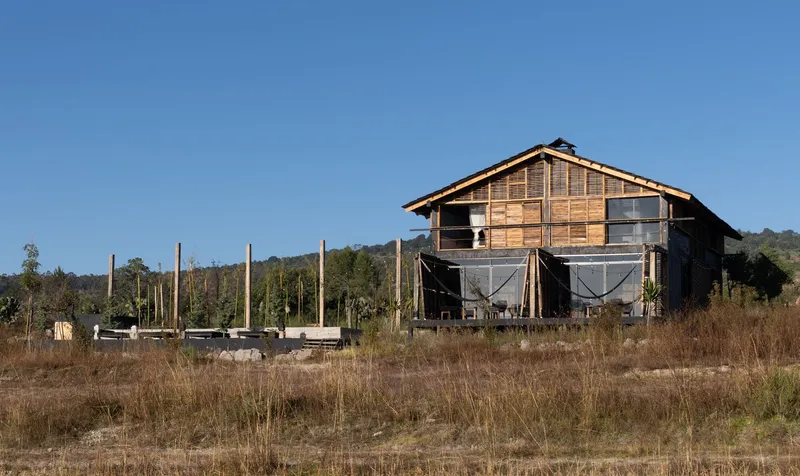

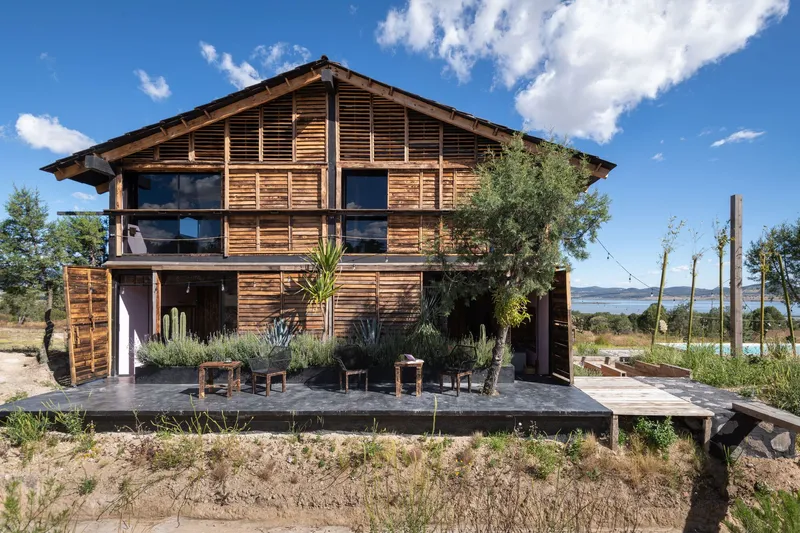
The Shou-Sugi-Ban treatment applied to regional pine is the building's most visible cultural transplant. The technique, which involves charring and curing the wood surface, is traditionally Japanese, but using it on local Mexican timber sources roots it in this specific place. The facades layer horizontal boards, operable shutters, and slatted screens to modulate light and ventilation across the building's multiple faces. The gable end, with its open balcony, is the most Japanese gesture: clean, symmetrical, and deliberately framed.
At the ground level, concrete bands anchor the timber cladding and provide a visual base that reads as both protective and grounding. Weathered sliding doors and planted beds of agaves and native grasses create a transition zone between interior and exterior that is generous without being formal. The facades age well because they were designed to age: charred wood weathers rather than deteriorates, and the corrugated metal roof will patina alongside it.


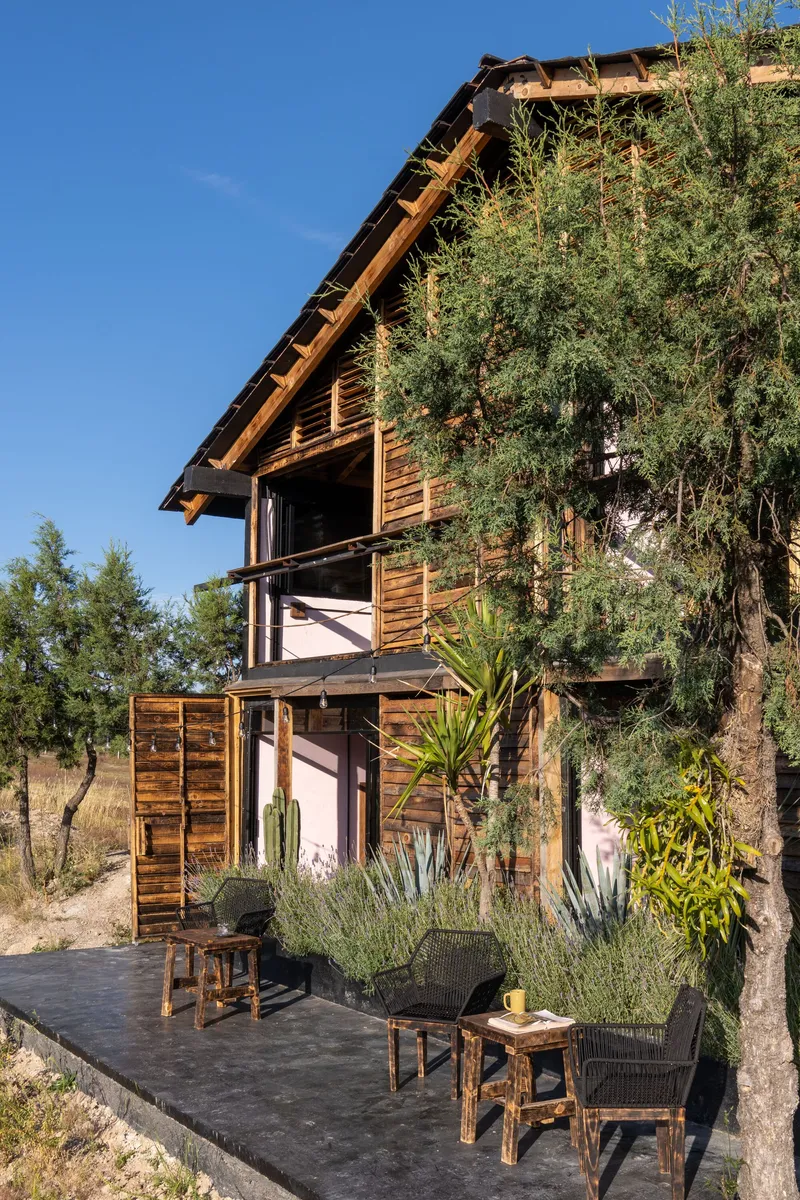
Detail shots reveal the tectonic layering at work. Timber louvers stack above concrete bands, and the varying densities of screen, shutter, and open balcony create a rhythm across the elevation that shifts with time of day. The three-storey facade at dusk, lit from below by agave plantings, demonstrates how the building negotiates the boundary between shelter and spectacle. It is composed enough to photograph well but rough enough to feel honest.
Interior Ritual and Raw Material
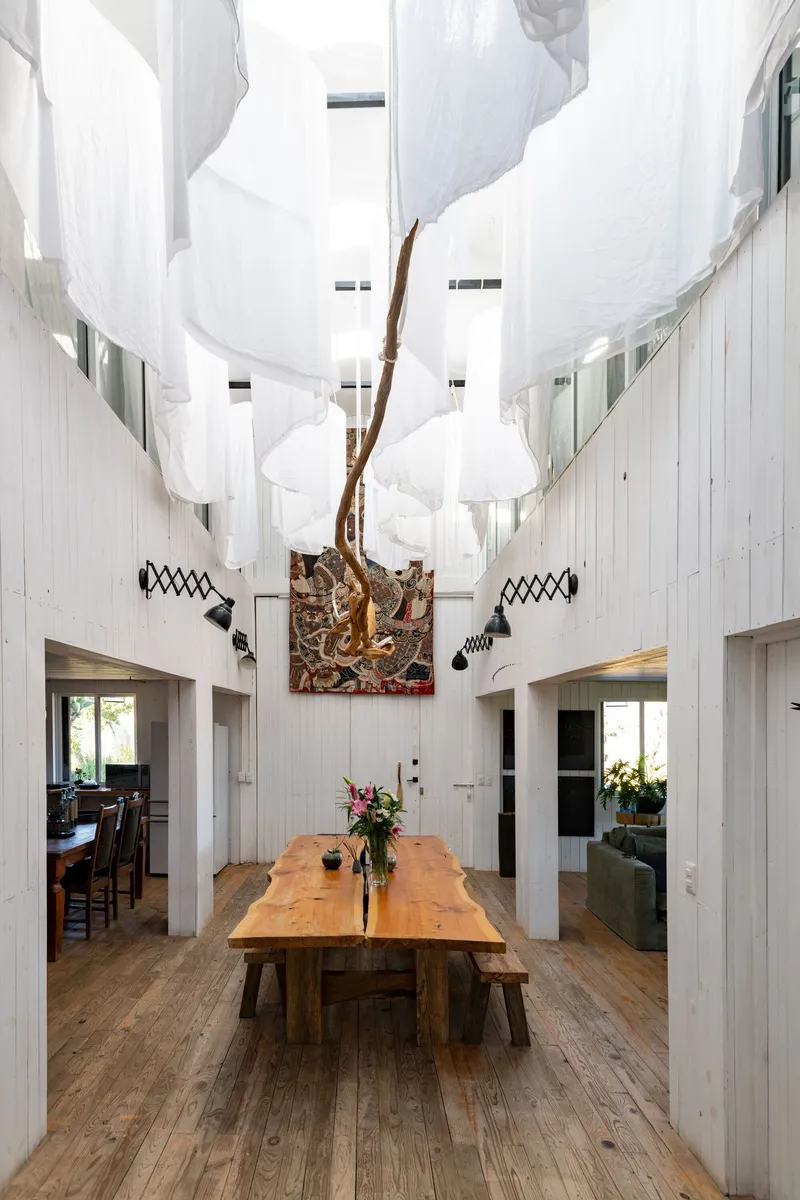
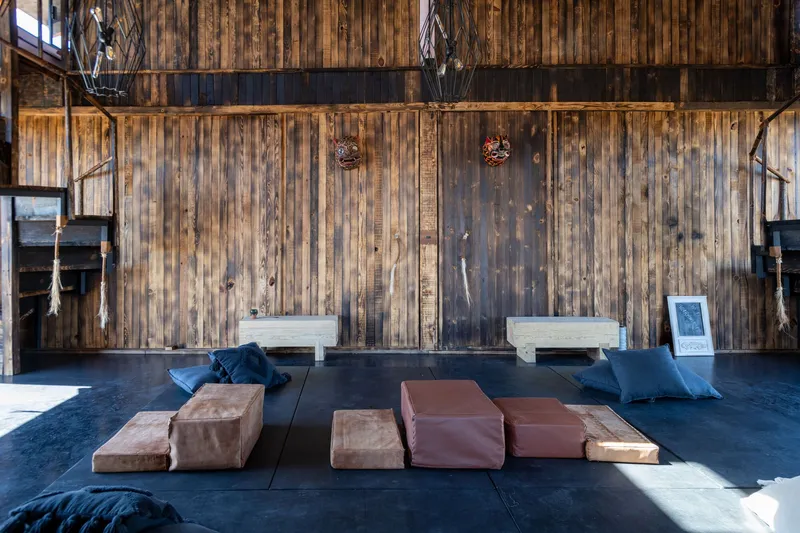

Inside, the cultural dialogue becomes spatial. A double-height dining hall with whitewashed timber walls hosts a carved tree sculpture and a billowing fabric ceiling installation that softens the volume without obscuring its proportions. This is the central communal space, and it operates with the focused intensity of a ceremonial room. Elsewhere, a vertical timber chamber with leather floor cushions and suspended lanterns channels the meditative quality of a Japanese tea room, reinterpreted through a distinctly Mexican material palette.
The live-edge dining table and weathered wood wall hung with plants are less designed than curated. These interiors feel accumulated rather than specified, which suits a retreat rooted in the idea of retirement and contemplation. The pendant lights and hanging greenery introduce softness without sentimentality.
Sleeping and Bathing
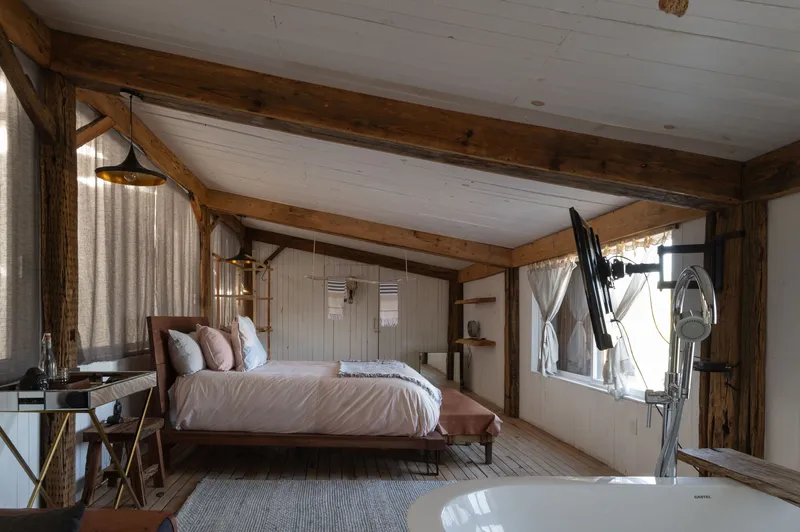

The bedrooms collapse the distinction between sleeping and bathing into a single timber-lined room. A freestanding tub sits beside the bed, exposed beams run overhead, and whitewashed plank ceilings brighten the space without introducing an alien material. It is a deliberate inversion of conventional hotel room hierarchies: the bath is not hidden behind a door but offered as a parallel experience to rest.
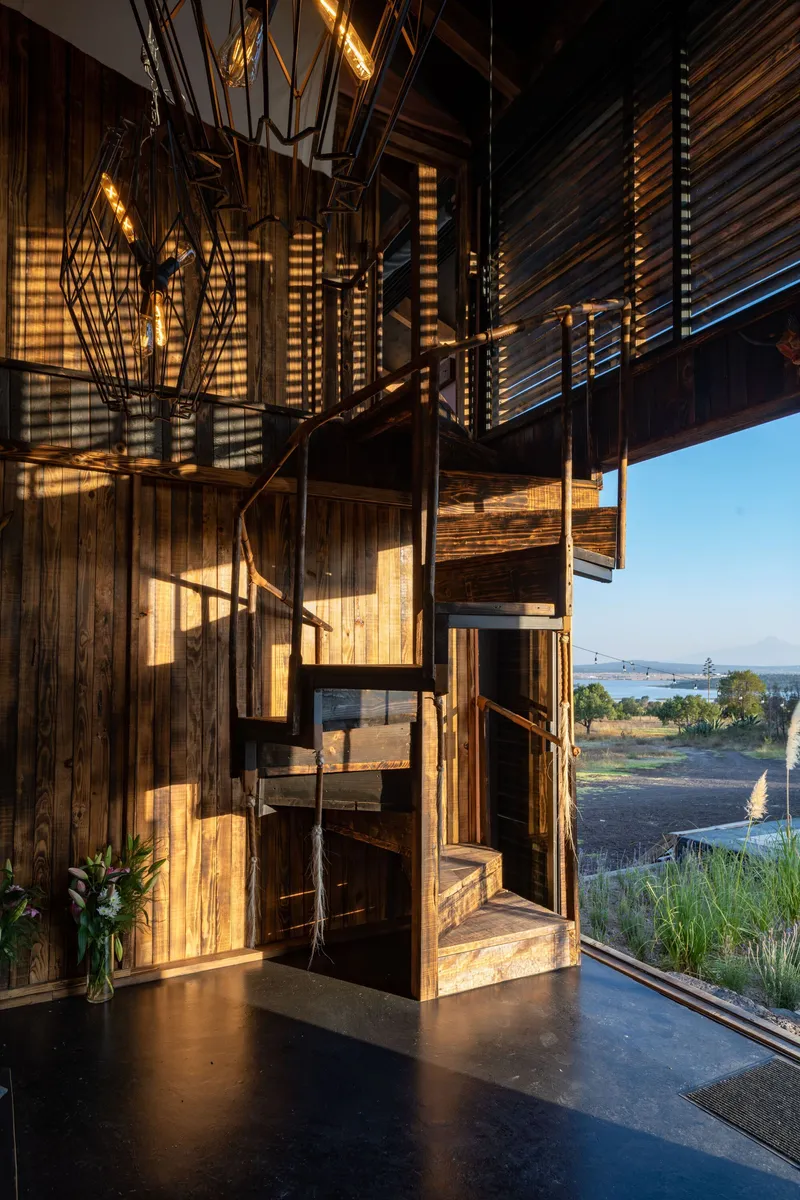
A separate bathroom wraps a white tub in timber paneling, dappled sunlight filtering through a window in a composition that could belong to a ryokan. The steel spiral staircase, with wire-frame pendant lights casting geometric shadows on surrounding walls, provides vertical circulation that doubles as sculptural event. Recycled steel is doing structural work here, but it reads as ornament.
Outdoor Rooms and the Elevated Pool

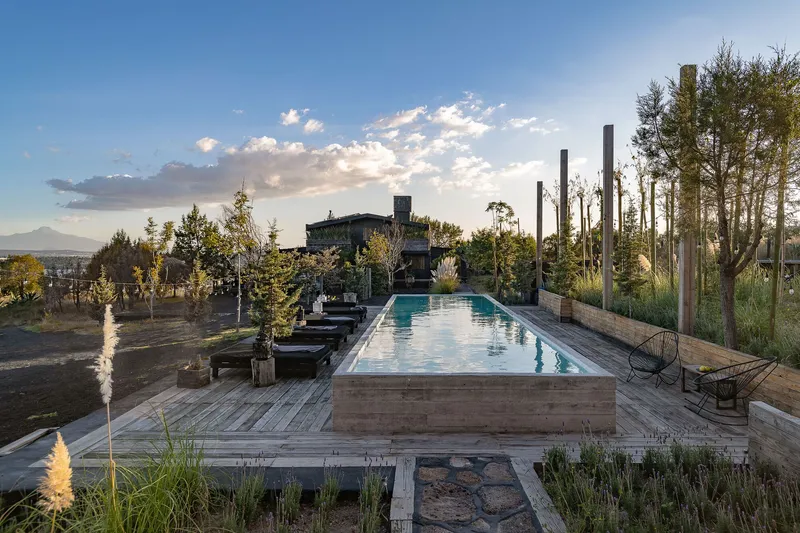

The outdoor spaces are as carefully composed as the interiors. A covered timber deck wraps lounge chairs and a circular plunge pool in hanging vines, producing a shaded room that breathes. The elevated lap pool, supported on steel columns, floats above planted borders at sunset with the confidence of an infinity pool but the restraint of a farmstead water trough. These outdoor rooms extend the programmatic footprint without adding enclosed area, and they make the semi-desert climate legible as an asset rather than a constraint.


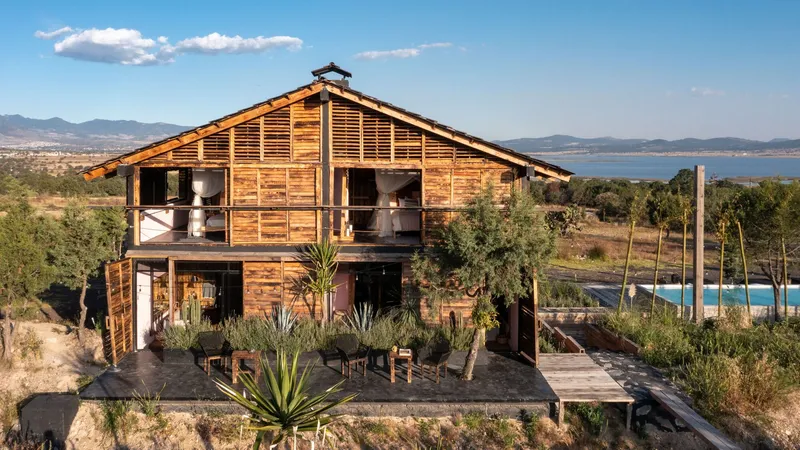
The slatted timber screen structures that frame views of the distant lake and yucca plantings operate as thresholds: they define outdoor space without enclosing it. At twilight, strung lights across the weathered facade shift the building's character from disciplined retreat to something more convivial. The golden hour shot of the louvered upper level and open ground floor terrace captures the building at its most inviting, when the charred timber absorbs the warm light and the boundary between indoors and out dissolves entirely.
Plans and Drawings

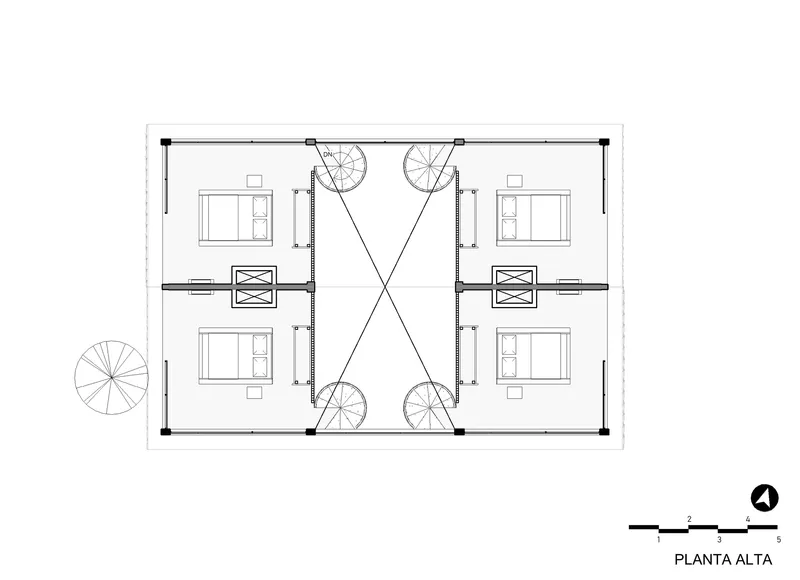
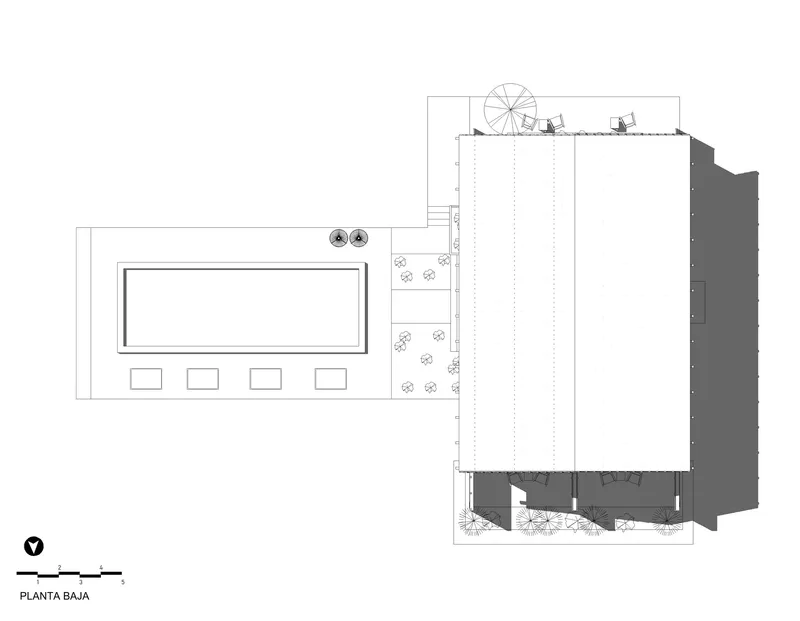
The floor plans reveal a four-corner room arrangement organized around a central courtyard with planted areas, a spatial strategy that owes as much to the Mexican patio house as to Japanese courtyard typologies. On the upper level, diagonal circulation lines and spiral stairs connect the corner rooms, suggesting movement through the building that is neither linear nor circular but exploratory. The site plan shows the main volume with the attached pool structure and a planted buffer zone that mediates between architecture and semi-desert landscape.

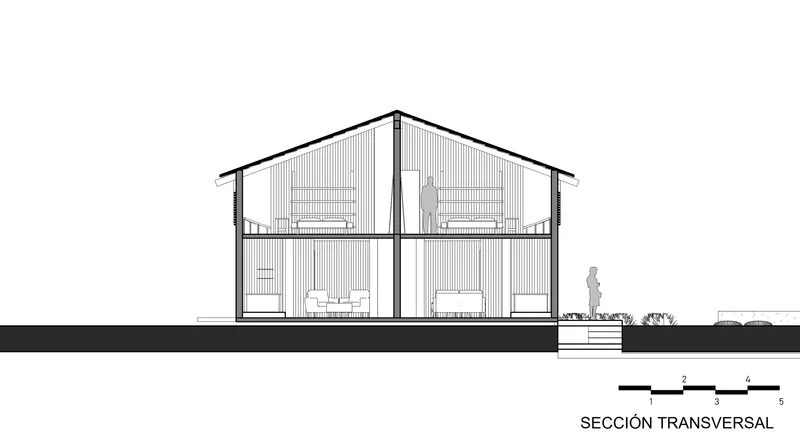
The longitudinal section is the most revealing drawing. Symmetrical volumes flank a central double-height space, and a slatted roof overhead filters light into the core of the building. The transverse section confirms the pitched roof sheltering two-storey interior spaces, with human figures providing scale that makes the building feel intimate rather than imposing. Together, these drawings demonstrate that the cross-cultural thesis is not just material but fundamentally spatial: the courtyard, the pitched roof, and the layered threshold are shared typological DNA between Japan and Mexico.
Why This Project Matters
Nakamura House matters because it is one of the rare projects where cultural cross-pollination is not decorative but structural. The Shou-Sugi-Ban technique applied to regional pine, the courtyard plan shared between two traditions, the meditative interior volumes built by local hands: these are not gestures but commitments. Fausto Terán and Toro have built an argument that cultural specificity and cultural exchange are not opposites, and they have done it with a material honesty that keeps the project grounded.
In a hospitality market saturated with curated aesthetic references to "other" cultures, this retreat stands apart because the synthesis goes deeper than surface. The building was made by its community from its own materials, using a construction technique borrowed from a culture whose spatial values mirror its own. That is not appropriation; it is recognition. And the building, quiet and dark against its volcanic horizon, asks you to sit with that idea for a while.
Nakamura House by Fausto Terán and Toro. Atlangatepec Lagoon, Mexico. 361 m². Completed 2021. Photography by Jaime Navarro.
About the Studio
Share Your Own Work on uni.xyz
If projects like this are the kind of work you want to make, uni.xyz is a place to publish your own, find collaborators, and enter design competitions.




Popular Articles
Popular articles from the community


The Earth Pod: 3D Printed Homes for Resilient Refugee Communities
The Earth Pod reimagines refugee housing through 3D printed homes made from clay, combining resilience, self-sufficiency, and rapid shelter.

EW PARK: Sustainable Architecture Reimagines the Future of Urban Parking
EW PARK reimagines city parking as a modular wooden tower combining automation, solar energy, electric mobility, and adaptable urban design.

Co-Life: Senior Housing Design That Reconnects Older Adults With the City
Co-Life reimagines senior housing design through healing gardens, shared streets, workshops, and a sustainable community across generations.

AL-JANNAH: Sustainable Architecture and Permaculture for Afghan Widows
AL-JANNAH uses sustainable architecture and permaculture to create resilient oasis of housing, learning, work and renewal for Afghan widows.


Similar Reads
You might also enjoy these articles

Bao Huynh Watercolor Atelier: A Serene Art Retreat in Hội An
Bao Huynh Watercolor Atelier in Hội An blends multifunctional art spaces, sustainable design, local materials, and family-friendly living in a serene environment.

Atelier Macri Concept Store Interior Design by CASE-REAL
Atelier Macri store features a "ko" counter, walnut wood details, cork displays, blending retail, gallery, and seamless customer experiences.

Manuel Vargas Izquierdo Stadium and High-Performance Sports Center: Architectural Excellence in Jalpa de Méndez
The Manuel Vargas Izquierdo Stadium blends sustainable design, inclusive sports facilities, and cultural-inspired architecture, revitalizing Jalpa de Méndez’s public spaces.

KAKR Buluh Awar Hall: Revitalizing Community and Ecology Through Bamboo Architecture
Community built bamboo hall revitalizes Buluh Awar village, empowering youth, restoring ecology, celebrating vernacular craftsmanship through sustainable architecture and culture.


Explore Residential Building Competitions
Discover active competitions in this discipline


Challenge to design mud housing for contemporary communities


Challenge to reimagine the Iron Throne


Photograph architecture without architects


Illustrate the lost glory of Angkor Wat - Render Challenge
Comments (0)
Please login or sign up to add comments
No comments yet. Be the first to comment!