
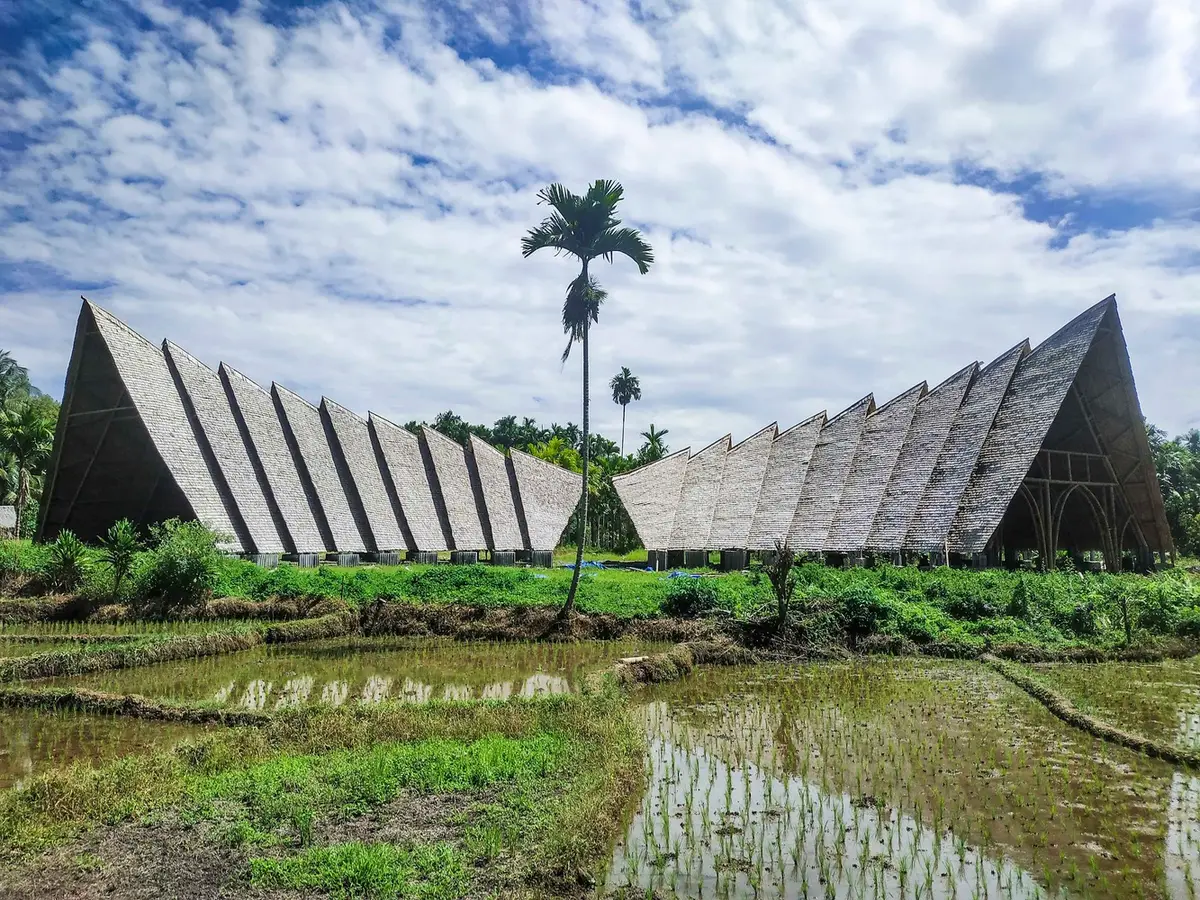
KAKR Buluh Awar Hall: Revitalizing Community and Ecology Through Bamboo Architecture
Community built bamboo hall revitalizes Buluh Awar village, empowering youth, restoring ecology, celebrating vernacular craftsmanship through sustainable architecture and culture.


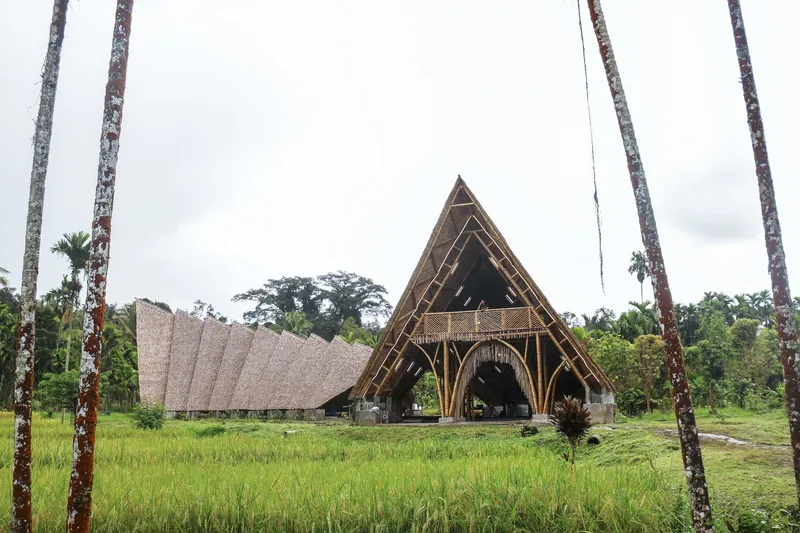
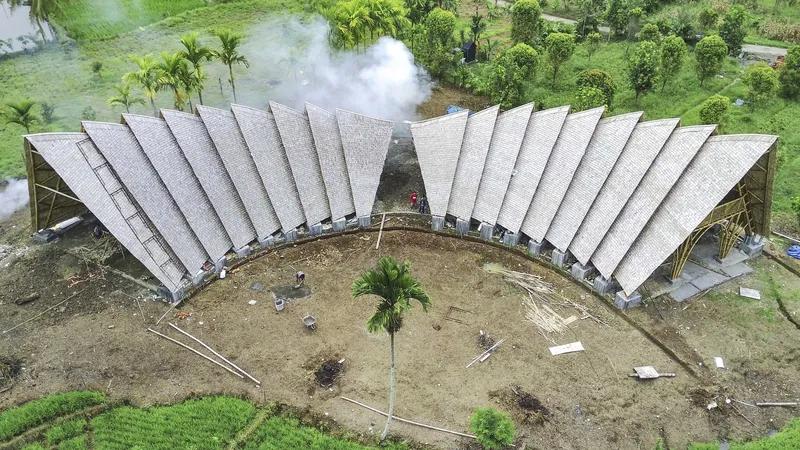
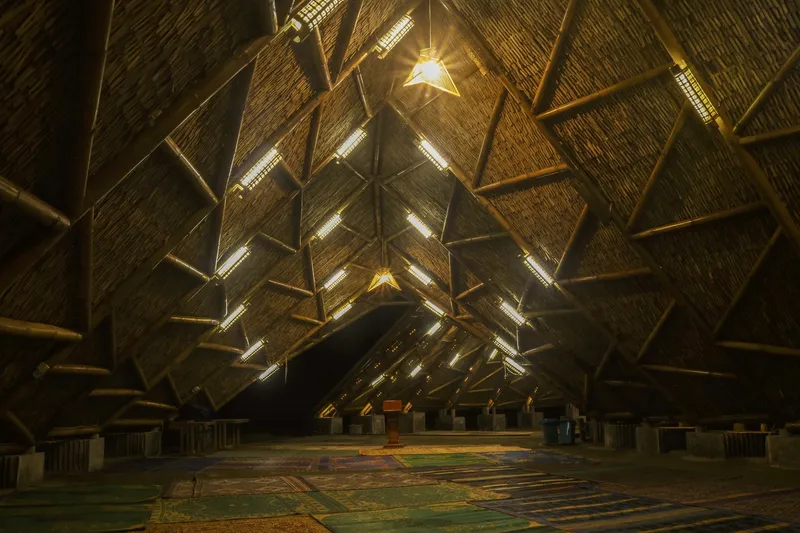
Located in Sibolangit, the KAKR Buluh Awar Hall is a community-driven bamboo architecture project designed by cavatinastudio in collaboration with Brahmawanta Architecteam. Completed in 2022 with a total floor area of 400 square meters, the multifunctional hall forms part of a broader masterplan to revitalize the historic ground zero of the local GBKP church and strengthen social, cultural, and environmental resilience within Buluh Awar village.
Architecture Rooted in Local History and Language
The name Buluh Awar carries layered cultural meaning. Buluh refers to bamboo in the Karonese language, while Awar derives from Awaren, describing the natural perforation at bamboo nodes that allows water to flow, an essential feature for traditional household use. This linguistic foundation directly informs the architectural concept, grounding the building in indigenous knowledge, material wisdom, and environmental logic.
Historically, Buluh Awar village was part of an important salt and trade route used by Perlanja Sira, salt bearers who traveled on foot long before Dutch colonialism. As these trade networks declined, the village faced economic stagnation, deforestation, and the gradual abandonment of bamboo as a valuable construction resource.
Bamboo as a Catalyst for Environmental Recovery
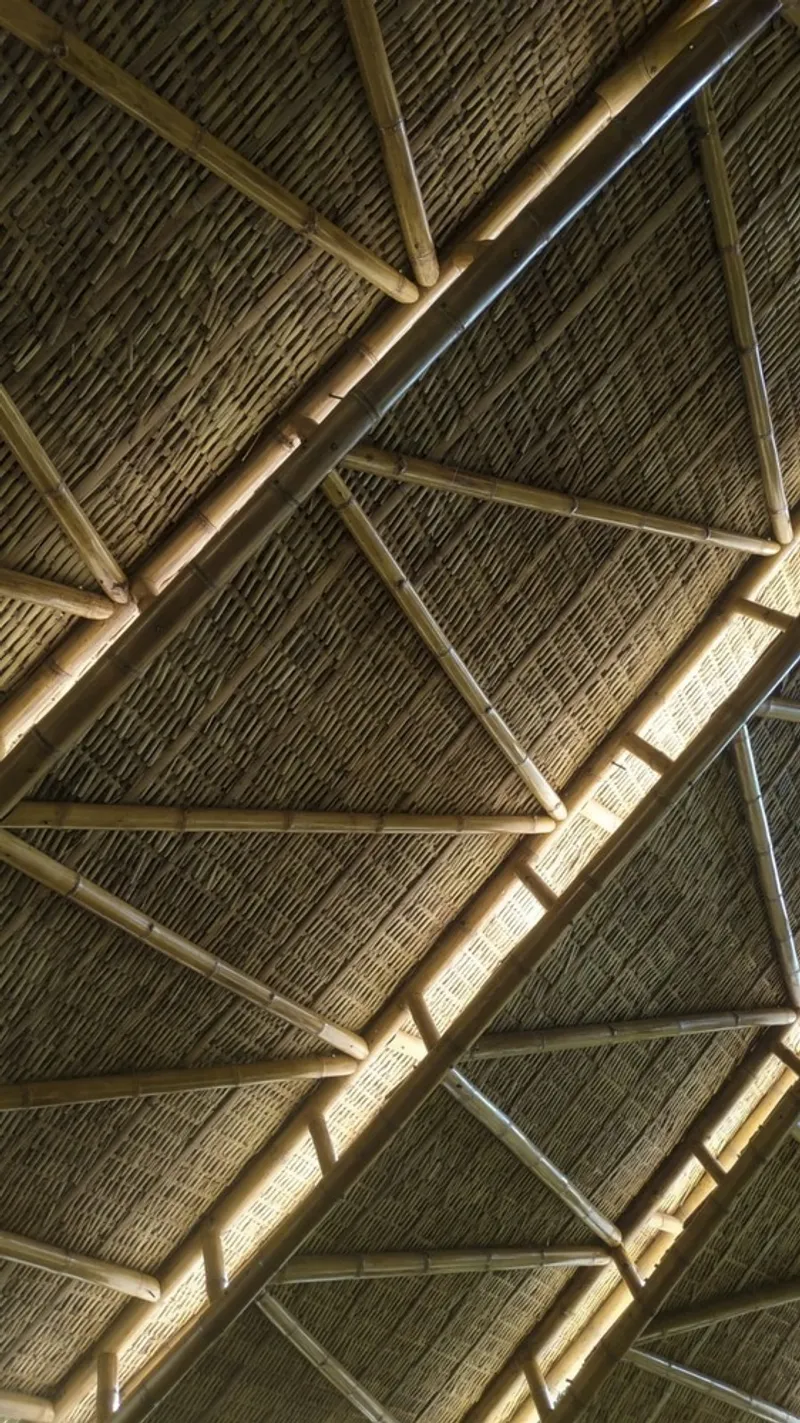
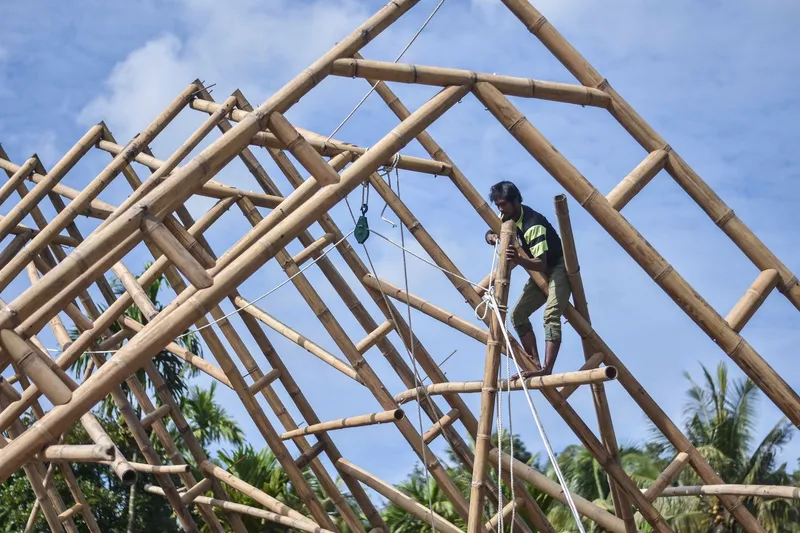
Despite bamboo growing abundantly around the village, it was increasingly burned to clear land for agriculture, contributing to soil instability. In late 2021, excessive deforestation resulted in a significant landslide that cut off the village’s main access road. The KAKR Buluh Awar Hall responds directly to this environmental crisis by repositioning bamboo as a regenerative building material rather than a disposable resource.
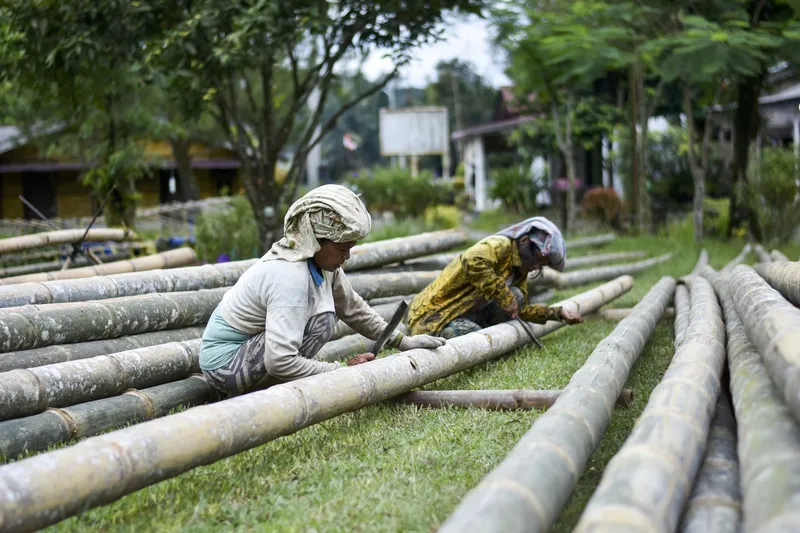
The project intentionally reframes local perceptions, transforming residents from bamboo burners into bamboo preservers. Through hands-on participation, the hall reactivates a once-forgotten bamboo supply and construction chain, demonstrating bamboo’s durability, adaptability, and ecological value.
Community-Led Construction and Skill Empowerment
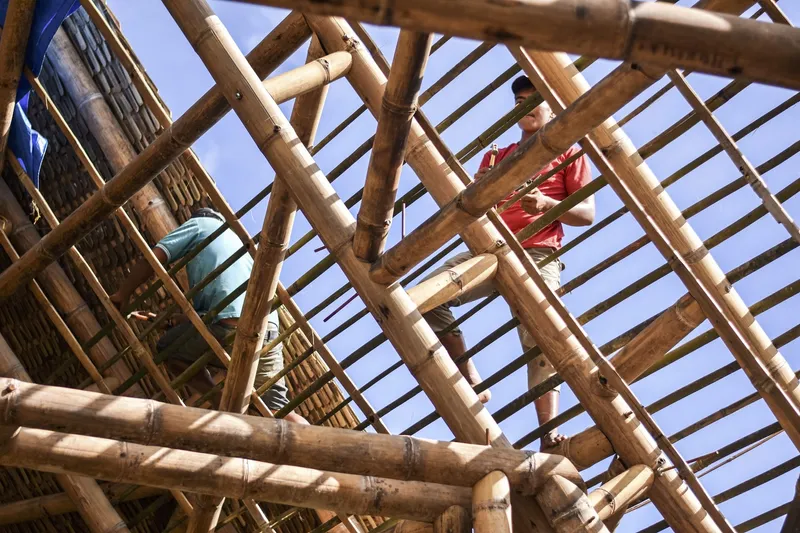
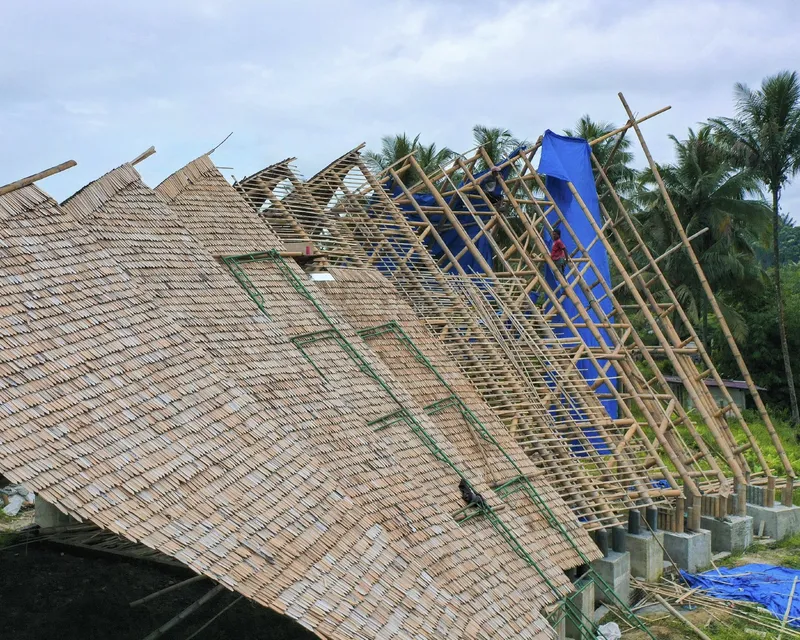
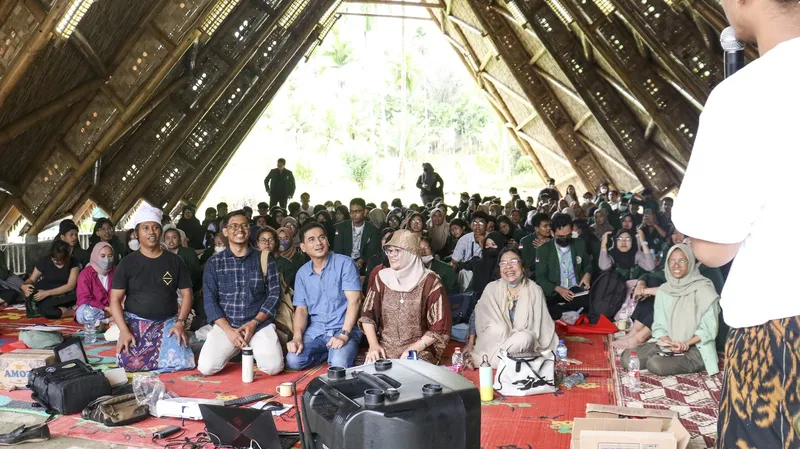
Beyond its architectural form, the bamboo hall functions as a social and educational infrastructure. Initially met with skepticism due to concerns over termites and humidity, the design team conducted extensive community workshops, bamboo treatment demonstrations, and site visits to precedent bamboo buildings in Bali. This process of socialization and trust-building proved critical to the project’s success.
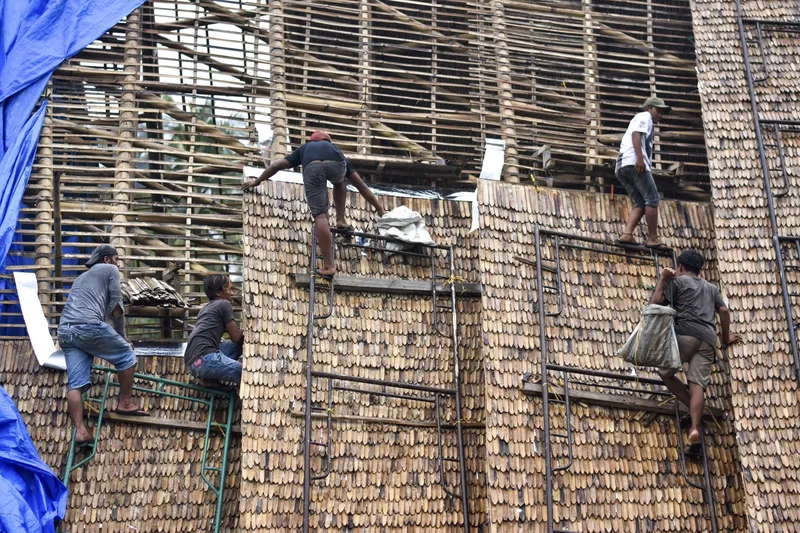
Local villagers were actively involved in harvesting, treating, and assembling the bamboo structure, using the construction phase as a live training platform. As a result, the project not only delivers a community hall but also builds long-term craftsmanship skills, technical knowledge, and alternative income opportunities for residents.

A Multifunctional Space for Youth, Faith, and Gathering
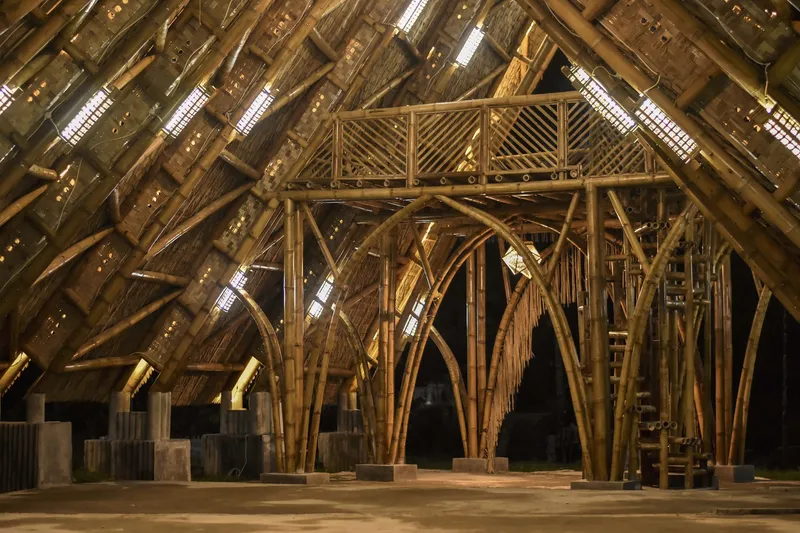
Designed to support children’s and teenagers’ Sunday School activities, the KAKR Buluh Awar Hall also accommodates communal gatherings, workshops, and cultural events. Its open spatial configuration, natural ventilation, and lightweight bamboo structure create a climate-responsive environment suited to the humid tropical context of North Sumatra.
By integrating architecture, education, and ecology, the hall becomes both a physical and symbolic anchor for village revitalization, demonstrating how small-scale, community-focused architecture can generate long-lasting social and environmental impact.
Bamboo Architecture as a Model for Sustainable Rural Development
The KAKR Buluh Awar Hall stands as a compelling example of sustainable architecture in Indonesia, where vernacular materials, participatory design, and ecological awareness intersect. More than a building, it is a process-driven project that reconnects people with place, history, and material culture, offering a replicable model for rural communities facing environmental degradation and economic transition.
All photographs are works of
CR_Franky Parulian Simanjuntak, CR_Christian V.J. Manurung, CR_Ade Lisman Jaya Zai


Popular Articles
Popular articles from the community


GROUP A Strips a 1969 Rotterdam Harbor Headquarters to Its Frame and Wraps It in Timber Louvers
In Rotterdam's M4H harbor district, Ferro Offices reuses a 1969 frame, adds one timber storey and reaches BREEAM-NL Outstanding.

David Macias Steps a Doorless Stone and Plaster House Down a Tropical Colombian Hillside
In the humid hills of Colombia, Threshold House replaces the front door with an open void and terraces its 850 m² down the slope instead of fighting it.

Juan García Correa, John González and Claudia Rueda Sink a Circular Amphitheater into a Manizales Engineering Building
On the La Nubia campus in Manizales, Colombia, the S1 Building folds labs and offices into a hillside of ramped lawns that double as a campus route.

Architekt Andreas Gruber Scatters 23 Dark Timber Chalets Across a South Tyrolean Forest Edge
In Molini di Tures, Amonti Chalets breaks a resort into a hamlet of gabled timber houses, with parking, storage and services pushed into the slope.

Similar Reads
You might also enjoy these articles

Gil Mello Arquitetura Tilts a Single Roof Toward the Waterfalls on a Plateau Above Aiuruoca, Brazil
In Aiuruoca, Minas Gerais, a 200 m² house of local labor and reclaimed poles pairs a low valley veranda with a tall mountain one.

U.GA Architects Wraps an Oval Rooftop Pool in Curved Board-Formed Concrete on Busan's Jeollidan-gil
In Busan's Jeonpo-dong, a 454 m² mixed-use block stacks a neighborhood facility, guest rooms and an oval rooftop pool inside spiraling concrete walls.

Felipe Hess Arquitetos Turns a Blind Stone Wall to the Street and Opens a Brazilian House onto a Courtyard and Canal
A canal-front house in Brazil hides behind painted stone and planting, then opens to an olive-tree courtyard, a reed-ceilinged porch and a curving pool.
David Macias Steps a Doorless Stone and Plaster House Down a Tropical Colombian Hillside
In the humid hills of Colombia, Threshold House replaces the front door with an open void and terraces its 850 m² down the slope instead of fighting it.

Explore Bamboo Construction Competitions
Discover active competitions in this discipline

Challenge to reimagine the Iron Throne

Photograph architecture without architects

Illustrate the lost glory of Angkor Wat - Render Challenge

Design challenge to reuse E-waste
Comments (0)
Please login or sign up to add comments
No comments yet. Be the first to comment!