

Kokaistudios Wraps a Shanghai Retail Podium in Horizontal Louvers That Echo Its Foster + Partners Neighbor
A four-storey glass-roofed gateway links an underground commercial valley to the revitalized north bank of Shanghai's Suzhou River.


Shanghai's Suzhou River has been the subject of intense urban renewal for years, with the local government stitching together its north and south banks through a series of mixed-use developments. On the northeast corner of Suhe MixC World, a sprawling underground commercial center set beneath new green parkland, Kokaistudios has completed a four-storey retail podium that acts as a physical and visual gateway between the subterranean shopping valley and the street-level city. The 6,400-square-meter building sits at the foot of a 42-storey office tower by Foster + Partners, and it had to hold its own while deferring to that crystalline neighbor.
What makes this project worth studying is the way it manages a genuinely tricky site brief. It is not just a retail box. It is a hinge point between underground, ground, and sky, between historical lilong fabric and contemporary glass towers, between a Buddhist temple and a corporate atrium. Lead architect Wei Li responded by designing a symmetrical, horizontally banded volume whose glass-roofed central void pulls daylight down through multiple levels and whose reflective louvers bounce life between the subterranean structure, ground-level greenery, and the city above.
Facade as Dialogue
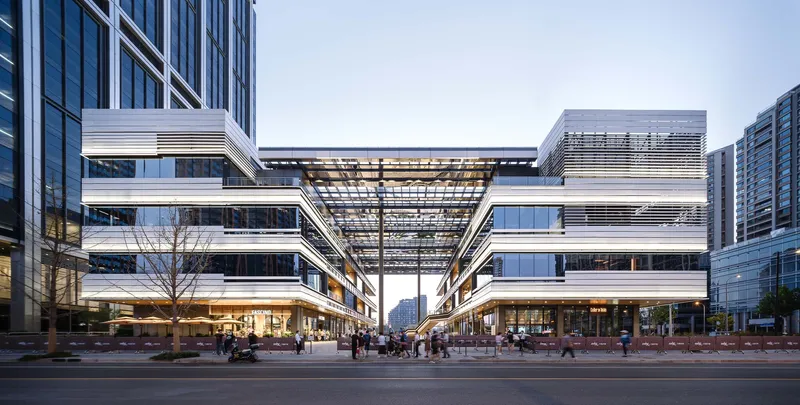

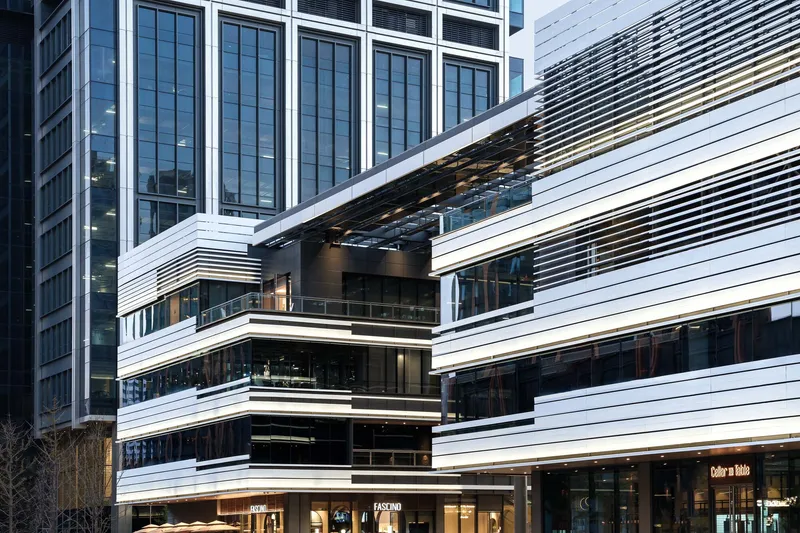
The podium's most immediately legible move is its horizontal fascia wrapping, a deliberate nod to the adjacent Foster + Partners tower. Where the tower reads as a triptych of two office volumes connected by a vertical glass atrium, the podium stretches that language sideways: bands of light-grey aluminum louvers alternate with recessed glazed openings, creating a layered elevation that shifts in transparency as you walk past. At dusk the louvers catch ambient light and the glazing reveals the retail interiors behind, giving the building a lantern quality without resorting to an all-glass curtain wall.
From the street corners, the stacked volumes read as distinct trays, each slightly different in depth and opacity. Planted trees at the base soften what could be a relentlessly horizontal composition. The result is a building that feels civic rather than commercial, a piece of urban furniture scaled to the pedestrian rather than the car.
The Glass-Roofed Void
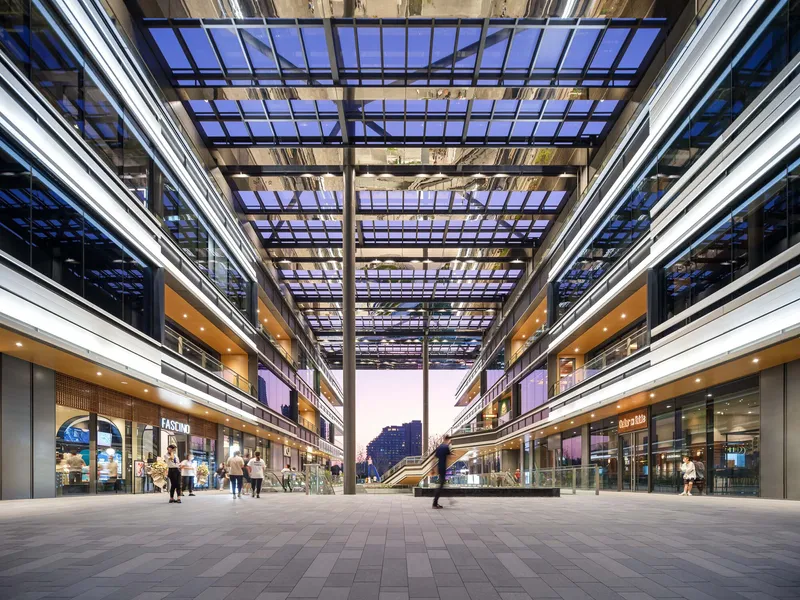
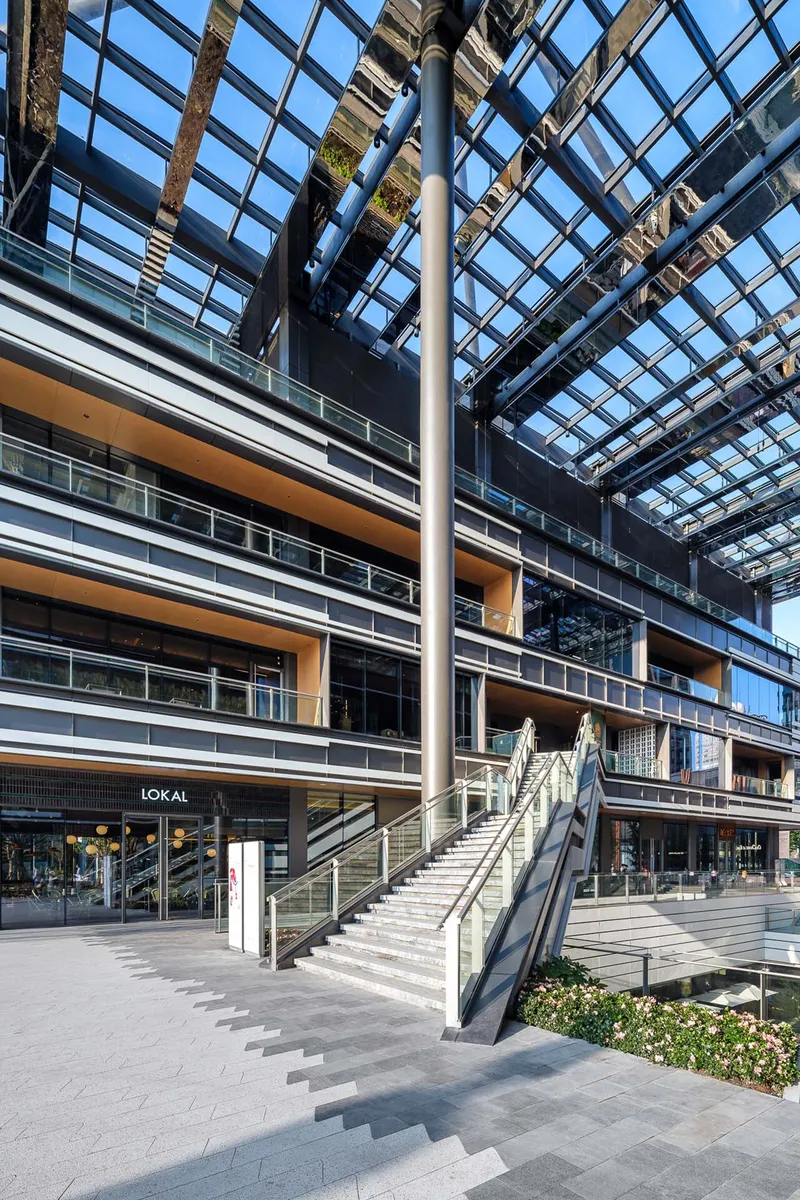
Split the podium down the middle and you find the project's real engine: a glass-roofed void that runs horizontally through the building and extends down to the basement level. Two four-floor structures flank this central spine, which functions as both a light well and a circulation canyon. Lightweight wooden rafters line the ceiling inside the glass canopy, filtering daylight into a warm, diffused glow rather than the harsh glare you might expect from a fully glazed roof in Shanghai's humid summers.
Within this void, staircases and terraces create a section that cascades rather than stacks. Visitors moving between retail levels experience a continuous spatial event rather than a series of disconnected floors. The steel structural grid of the canopy is left exposed overhead, giving the space a quasi-industrial legibility that contrasts with the polished retail storefronts lining either side.
From Underground Valley to Urban Plaza


The sunken plaza on one side of the podium is where the underground commercial valley meets open air. Stone steps descend past a water feature beneath a steel-frame canopy, drawing pedestrians from the street level down into the subterranean retail network. At twilight, this threshold space is particularly effective: the warm glow of the retail interiors below contrasts with the deepening sky above, and the canopy's gridded steel reads as a kind of architectural pergola.
The glass tower of the adjacent office building looms in the background, reinforcing the vertical dimension that the podium deliberately refuses to compete with. Instead of height, Kokaistudios offers porosity. The podium is more about passage than presence, a building you move through on your way somewhere else that nonetheless rewards the act of passing through it.
Lilong Memory in a Contemporary Shell
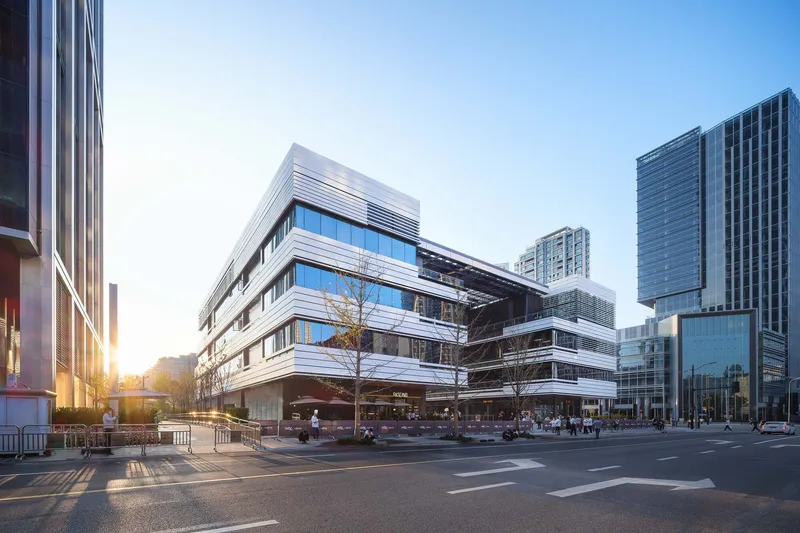
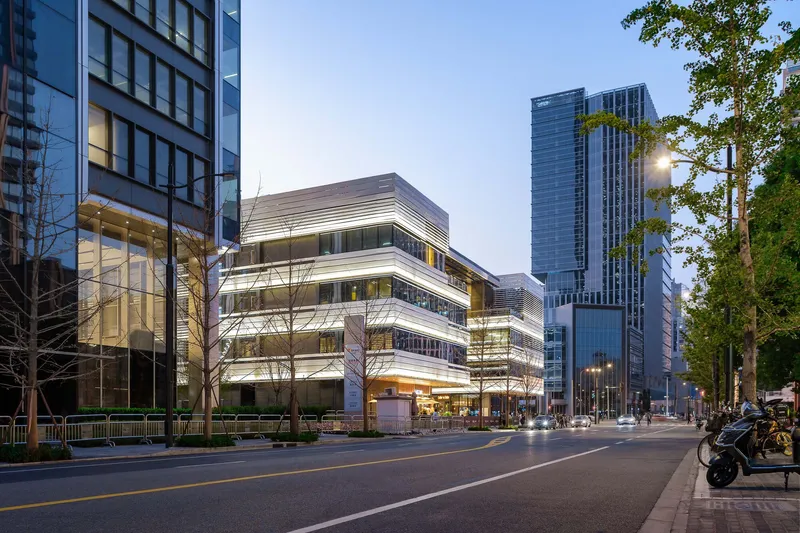
The site's immediate neighbors include Shenyu Li, a restored historical lilong group, and the only official Thean Hou Temple in downtown Shanghai. Both are axially symmetrical, and the podium's own symmetrical form echoes that quality. More subtly, the interior design extracts structural elements from the traditional lilong house: the proportional relationships between solid and void, the rhythm of narrow passages opening onto shared courtyards. You will not mistake this for a heritage building, but the spatial DNA is there if you know where to look.
Reflective louvers on the interior ceiling play a role here too. They mirror the activity of visitors below, creating a dynamic feedback loop between the underground structure, the ground-level greenery, and the city beyond. It is a small detail that elevates the interior from generic retail fitout to something more spatially self-aware.
Street Presence at Two Scales
One of the underrated challenges of podium design is that the building must work at two scales simultaneously: up close, for pedestrians entering the retail at street level, and at a distance, as a plinth for whatever tower rises above. Kokaistudios handles this by keeping the ground floor transparent and active, with recessed glazing that invites entry, while the upper floors present a more opaque, sculptural face to the wider streetscape. The bare trees along the roadway in winter strip the building back to its essential geometry, revealing just how clean the horizontal banding really is.
Plans and Drawings
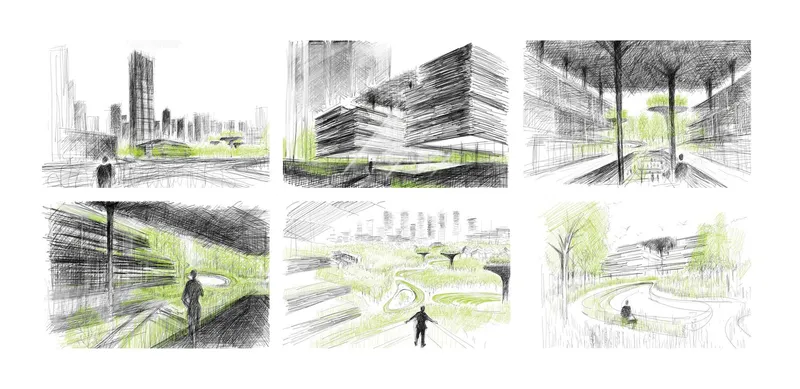
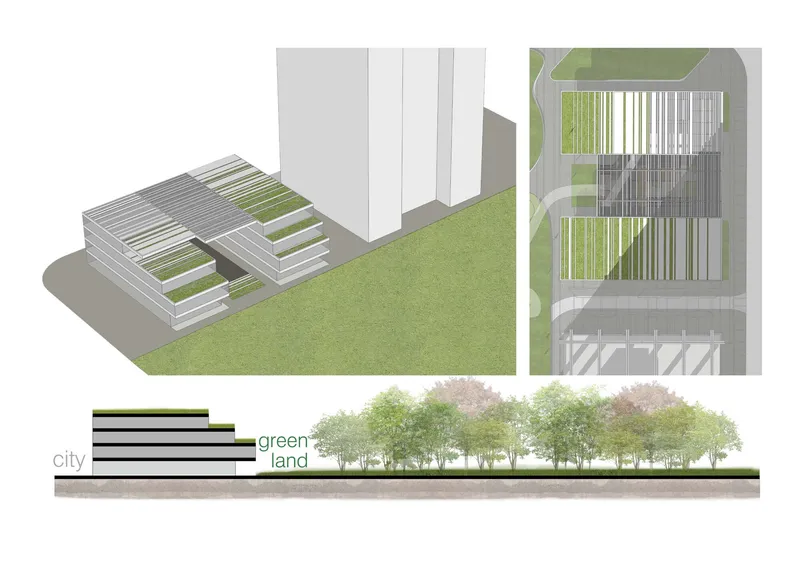

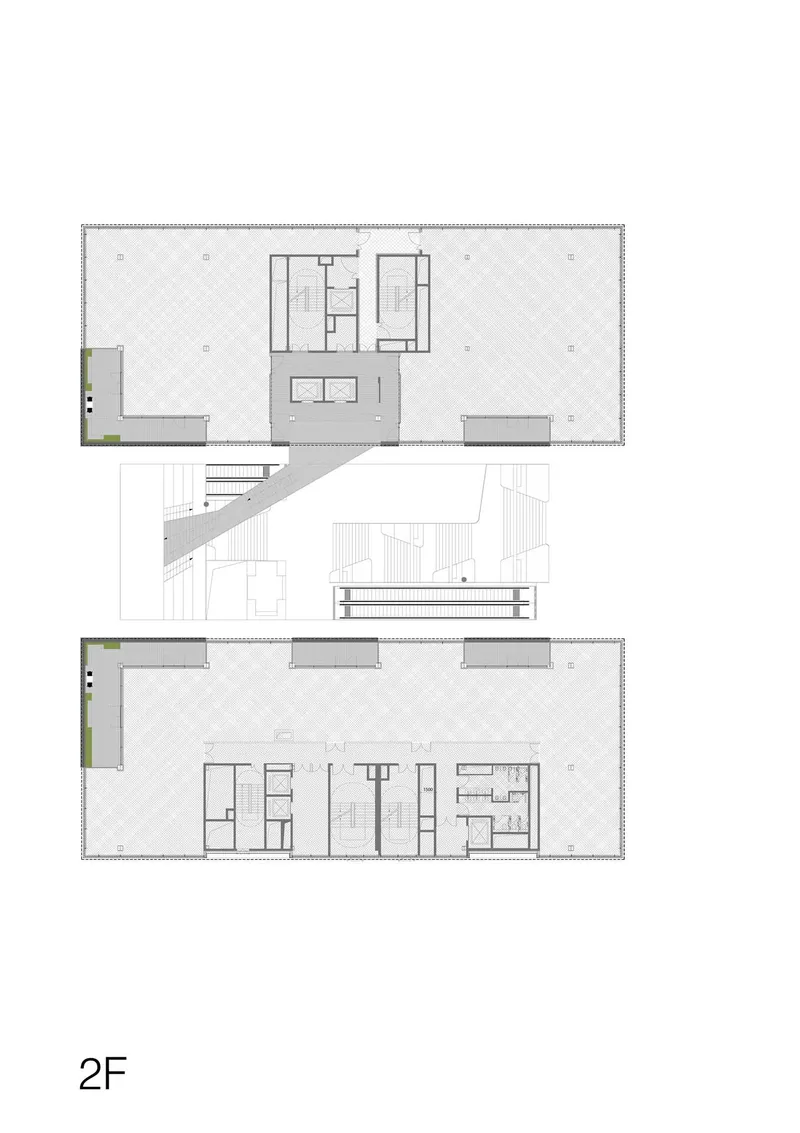
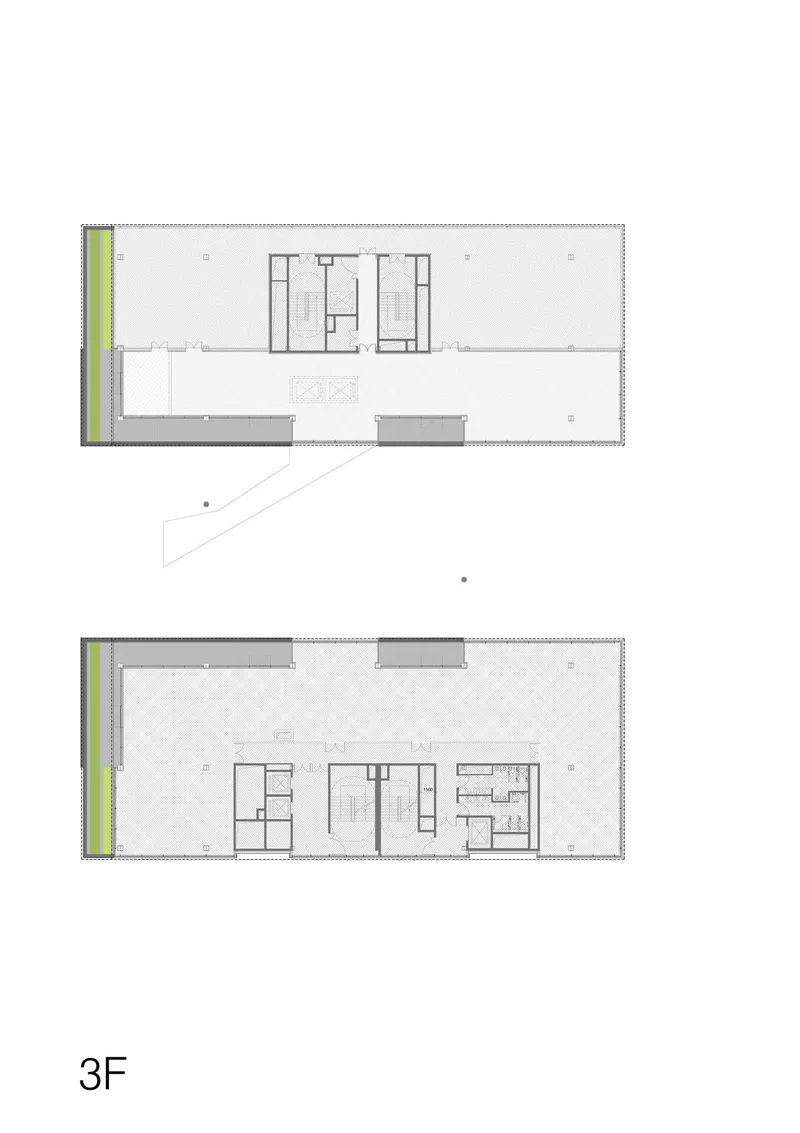
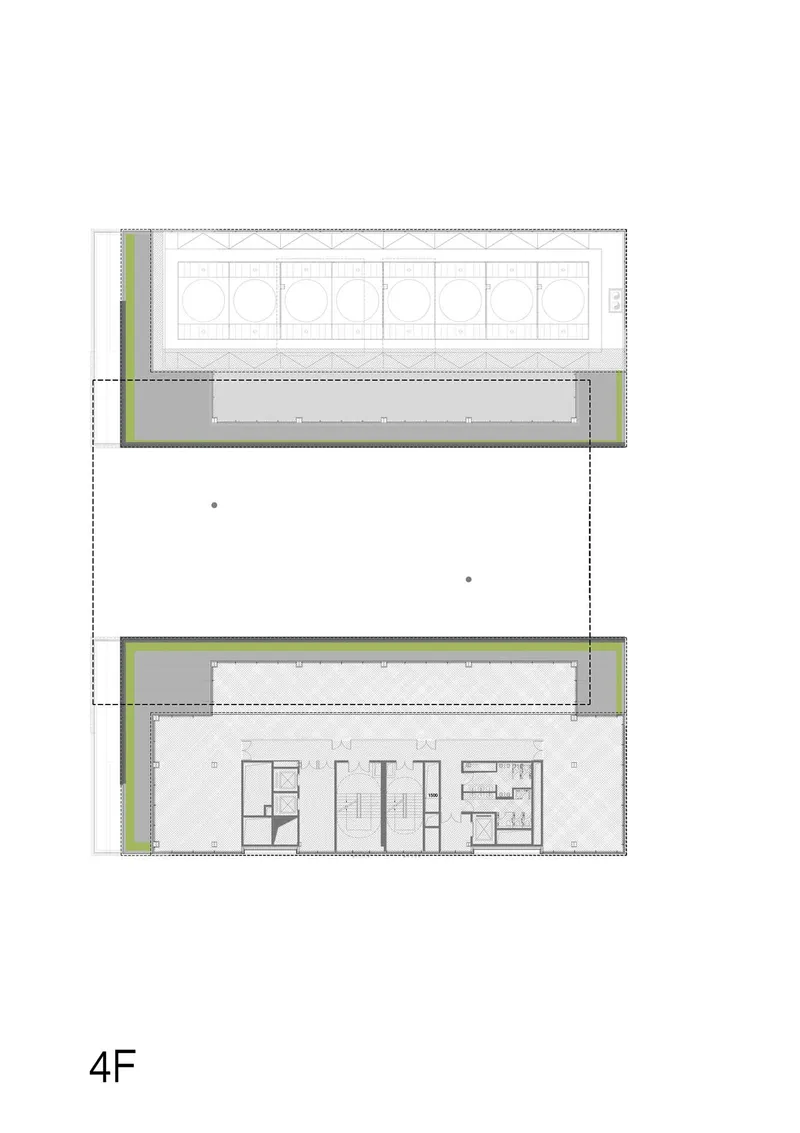
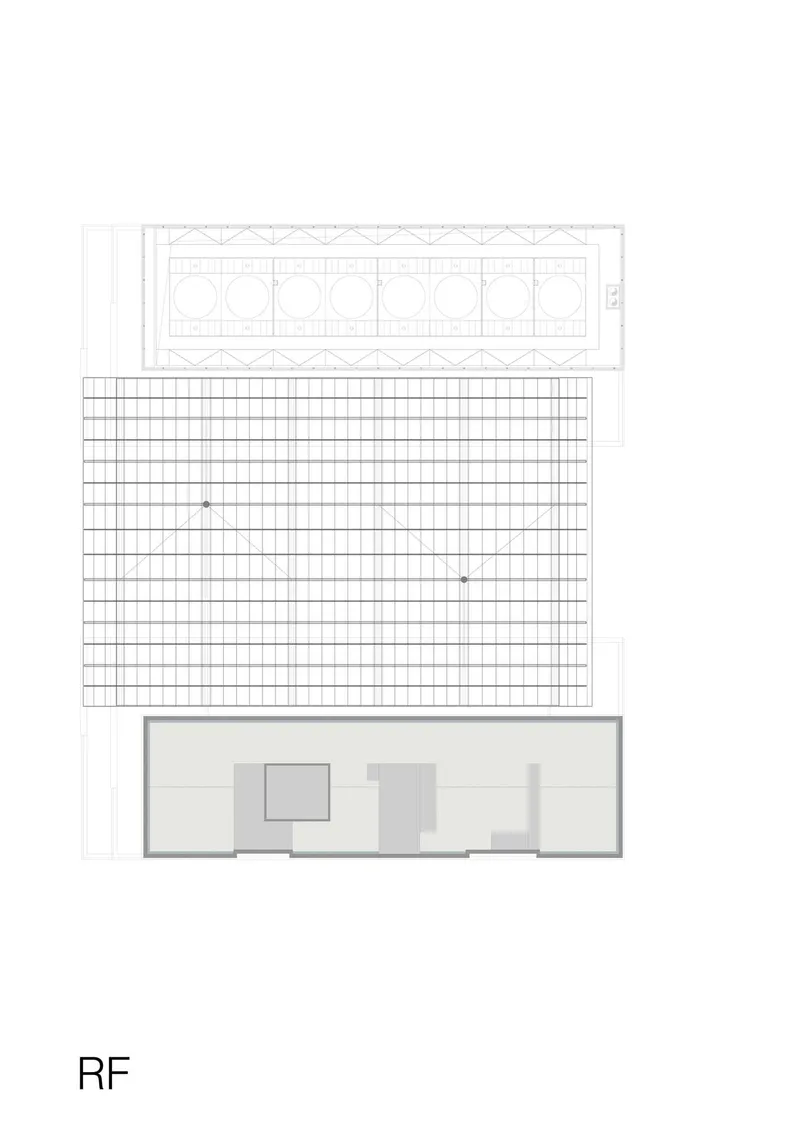
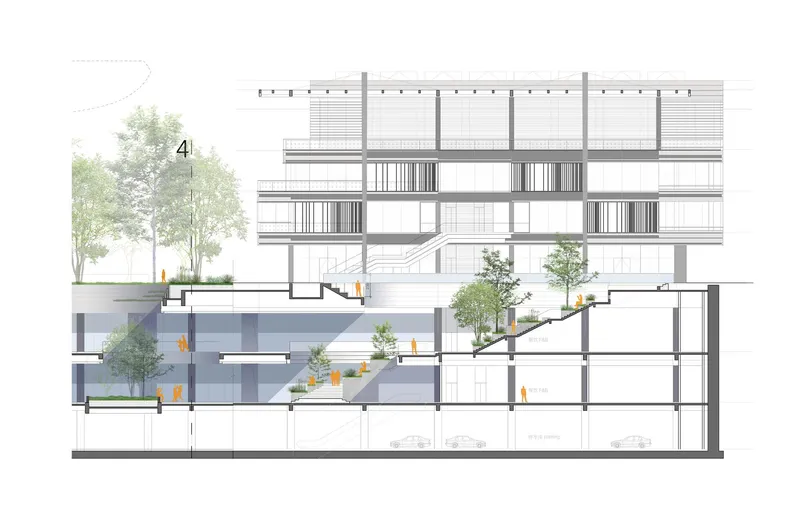
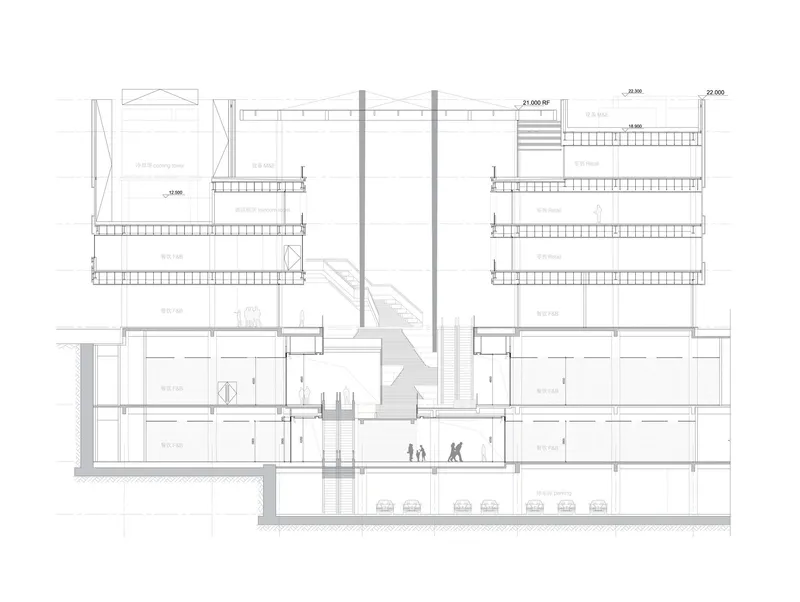
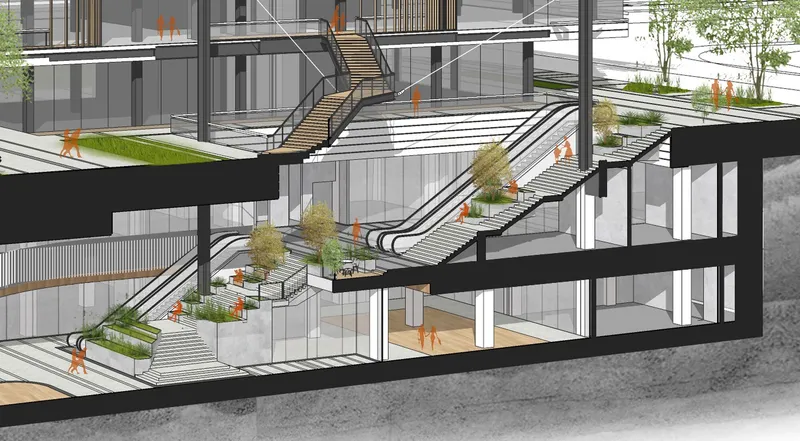
The floor plans reveal two mirrored volumes organized around central service cores, with open, flexible retail floors connected by diagonal staircases. The upper levels step back to create rooftop terraces with planted trees and circular mechanical elements. The sections are the most telling drawings: they show the cascading relationship between levels, with zigzagging stairs knitting together a staggered interior landscape. Planted terraces appear at multiple heights, reinforcing the idea that this building is as much landscape as architecture.
The axonometric drawing makes the integrated green roofs legible, showing tree rows marching across terraced planes in a way that the photographs, taken from street level, cannot fully communicate. The early sketches, too, are worth noting: they show figures inhabiting a landscaped plaza with green planting strips, suggesting that the public realm was a design driver from the outset rather than an afterthought.
Why This Project Matters
Retail podiums are among the most thankless typologies in architecture. They are often designed by one firm while the tower above gets the attention and the headline. Kokaistudios inverts that hierarchy here, not by being loud but by being precise. The horizontal louvers, the glass-roofed void, the careful symmetry with neighboring heritage structures: these are disciplined moves that serve a larger urban strategy. The building is a connector, linking underground retail to street-level parkland to the tower above, and it does so with a spatial generosity that most commercial projects of this scale simply do not bother with.
In the broader context of Shanghai's Suzhou River revitalization, this podium represents a quiet argument for architecture as infrastructure. It is not a monument. It is not an icon. It is a well-made piece of urban tissue that holds together a complicated site brief and makes the transitions between old and new, above and below, public and commercial feel like a single continuous experience. That is harder to achieve than a striking silhouette, and it is ultimately more useful.
Commercial Podium in East Alley of Shanghai Suhe MixC World by Kokaistudios, lead architect Wei Li. Located in Shanghai, China. 6,400 m². Completed in 2022. Photography by Terrence Zhang.
About the Studio
Share Your Own Work on uni.xyz
If projects like this are the kind of work you want to make, uni.xyz is a place to publish your own, find collaborators, and enter design competitions.


Popular Articles
Popular articles from the community

Temporary Home for Dogs: A Reversed Zoo Rethinks Animal Shelter Architecture
In Bucharest, a sinuous corridor and freed landscape flip the logic of containment, designing a shelter that works to make itself unnecessary.
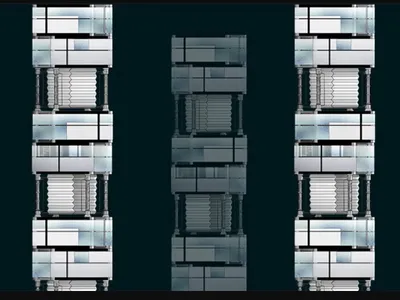
Tsunami Convergenics: Turning Catastrophic Ocean Forces into Underwater Housing Infrastructure
A speculative underwater settlement off the coast of Onagawa, Japan, treats tsunamis and typhoons as energy sources rather than threats.
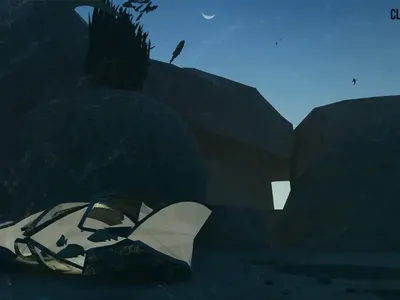
Cloaked Colonization: A Mobile Underwater Habitat That Moves Like a Fish
Micah Abaya's shortlisted EHC Pacific entry reimagines ocean settlement as a dispersed network of self-sustaining architectural organisms.

Opera on the Sea: Driftwood Logic Shapes a Timber Opera House on Estonia's Coast
Trevor Orgill's opera house translates the entangled drift of floating timber into a civic building where wood, water, and music converge.

Similar Reads
You might also enjoy these articles

Pixel Gardens: One Repeated Module Stacked Into a Terraced Social Housing Tower for Famagusta
Salem Bader's shortlisted housing tower builds a vertical neighbourhood from one repeated module, offsetting units to carve terraces, light and air.

Bao Huynh Watercolor Atelier: A Serene Art Retreat in Hội An
Bao Huynh Watercolor Atelier in Hội An blends multifunctional art spaces, sustainable design, local materials, and family-friendly living in a serene environment.

Atelier Macri Concept Store Interior Design by CASE-REAL
Atelier Macri store features a "ko" counter, walnut wood details, cork displays, blending retail, gallery, and seamless customer experiences.

Manuel Vargas Izquierdo Stadium and High-Performance Sports Center: Architectural Excellence in Jalpa de Méndez
The Manuel Vargas Izquierdo Stadium blends sustainable design, inclusive sports facilities, and cultural-inspired architecture, revitalizing Jalpa de Méndez’s public spaces.

Explore Public Plaza Competitions
Discover active competitions in this discipline

Challenge to reimagine the Iron Throne

Photograph architecture without architects

Illustrate the lost glory of Angkor Wat - Render Challenge

Design challenge to reuse E-waste
Comments (0)
Please login or sign up to add comments
No comments yet. Be the first to comment!