
Revival Vernacular Architecture: Rammed Earth Settlements for the Sahara
A modular desert community in Mauritania that fuses passive cooling techniques with earthen construction and local craftsmanship.

What if the most advanced response to extreme heat isn't a technological leap forward but a disciplined return to techniques refined over centuries? In the Sahara Desert of Mauritania, where temperatures regularly crush conventional building logic, a proposal called Revival. Vernacular Architecture. makes the case that adobe, rammed earth, and cob can outperform modern construction assemblies, not through nostalgia, but through thermal mass, passive cooling, and deep community participation.
Designed by Małgorzata Snela and Patrycja Jędra, this shortlisted entry in the EHC - Sahara competition proposes a settlement model that reduces the embodied energy of the building life cycle while restoring autonomy to local populations. The project draws direct inspiration from the work of Hassan Fathy and envisions a new Institute of Earthen Architecture to revive passive house concepts and train local builders in traditional craftsmanship.
Siting a Settlement in the Deep Desert
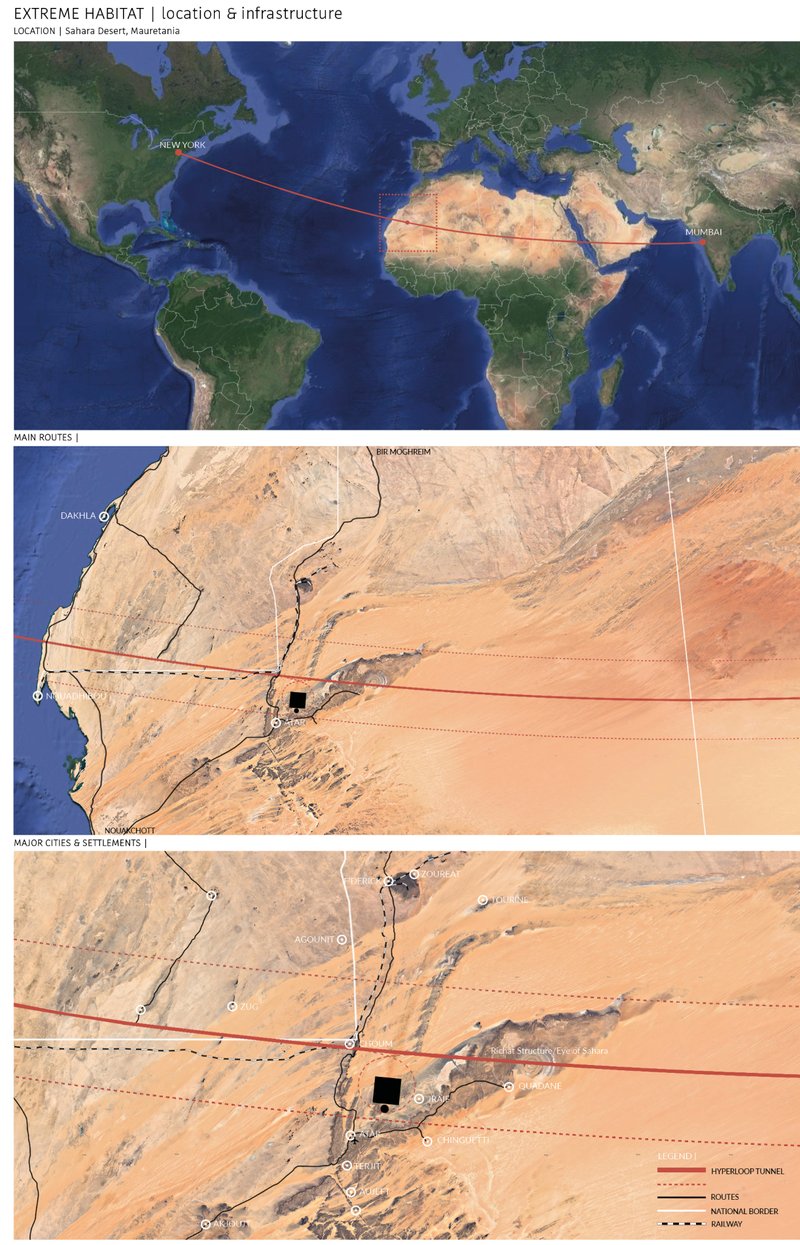
The satellite mapping situates the settlement within Mauritania's vast interior, tracing route lines to distant urban centres. Connectivity is a serious consideration here: the designers propose a hyperloop transportation system to link the community to wider networks, acknowledging that remote desert settlements fail without reliable access to trade, services, and migration. The site itself is chosen for its alignment with traditional caravan routes and prevailing wind patterns, both of which inform the urban layout that follows.
Learning from Towers, Domes, and Ancient Urban Fabric
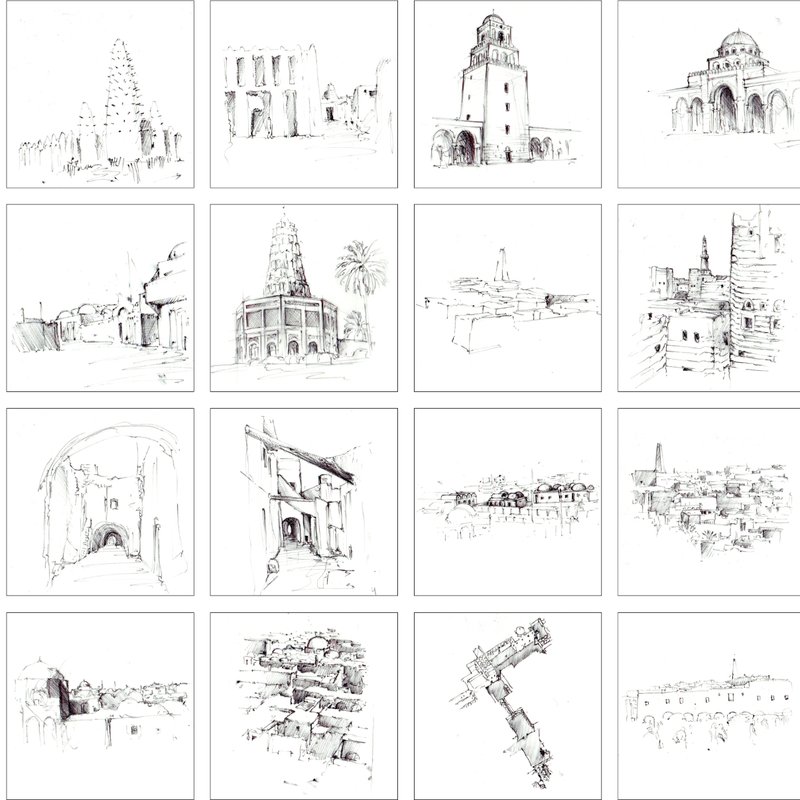
A rich collection of field sketches records the architectural DNA the designers are working with: wind towers, arched passages, domed roofs, and tightly clustered urban settlements. These are not decorative references. Each element performs a measurable environmental function. Towers channel airflow downward into interiors. Domes distribute structural loads while minimizing surface area exposed to direct sun. Narrow streets create shade corridors that reduce ground-level temperatures by several degrees compared to open plazas.
The sketches reveal a careful study of how traditional desert settlements use mass and geometry to mediate between brutal exterior conditions and habitable interior microclimates. Snela and Jędra treat these forms as engineering precedents, not aesthetic motifs, and that distinction shapes every subsequent design decision.
Passive Cooling as Organizational Logic
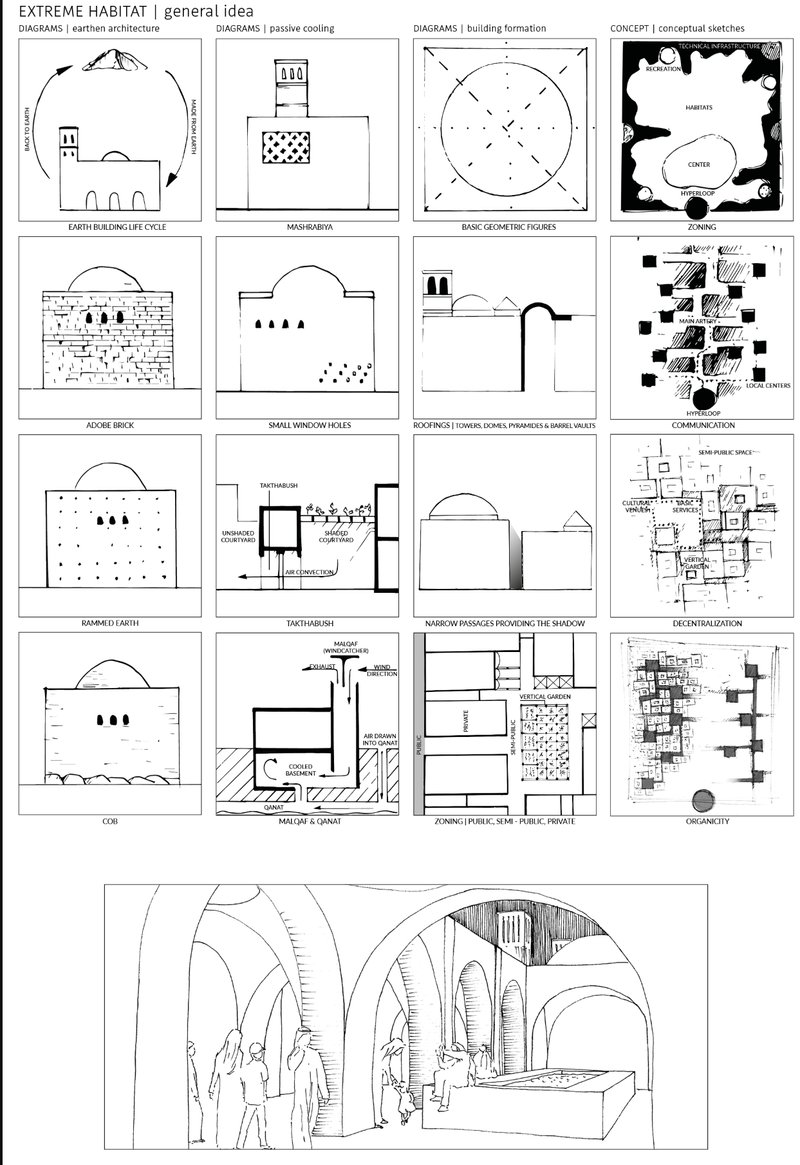
The diagrammatic sheet lays out the settlement's environmental strategies with clarity. Passive cooling techniques including mashrabiya (latticed screens that filter light and promote airflow), takhtabush (covered outdoor sitting areas that exploit stack ventilation), and qanats (underground water channels that cool air before it enters buildings) are integrated into the building fabric rather than applied as afterthoughts. The diagrams also show how building formations are oriented to maximize wind exposure on the windward side while creating sheltered courtyards on the leeward side.
Spatial organization follows a layered zoning strategy: public spaces at the settlement's edges, semi-public zones in transitional corridors, and private domestic space at the deepest point of the plan. This gradient mirrors traditional Islamic urban planning, where privacy increases as one moves inward. Photovoltaic stations and vertical gardens are positioned to serve communal needs, balancing energy generation and food production without disrupting the thermal logic of the settlement.
Modular Dwellings Around Shared Courts
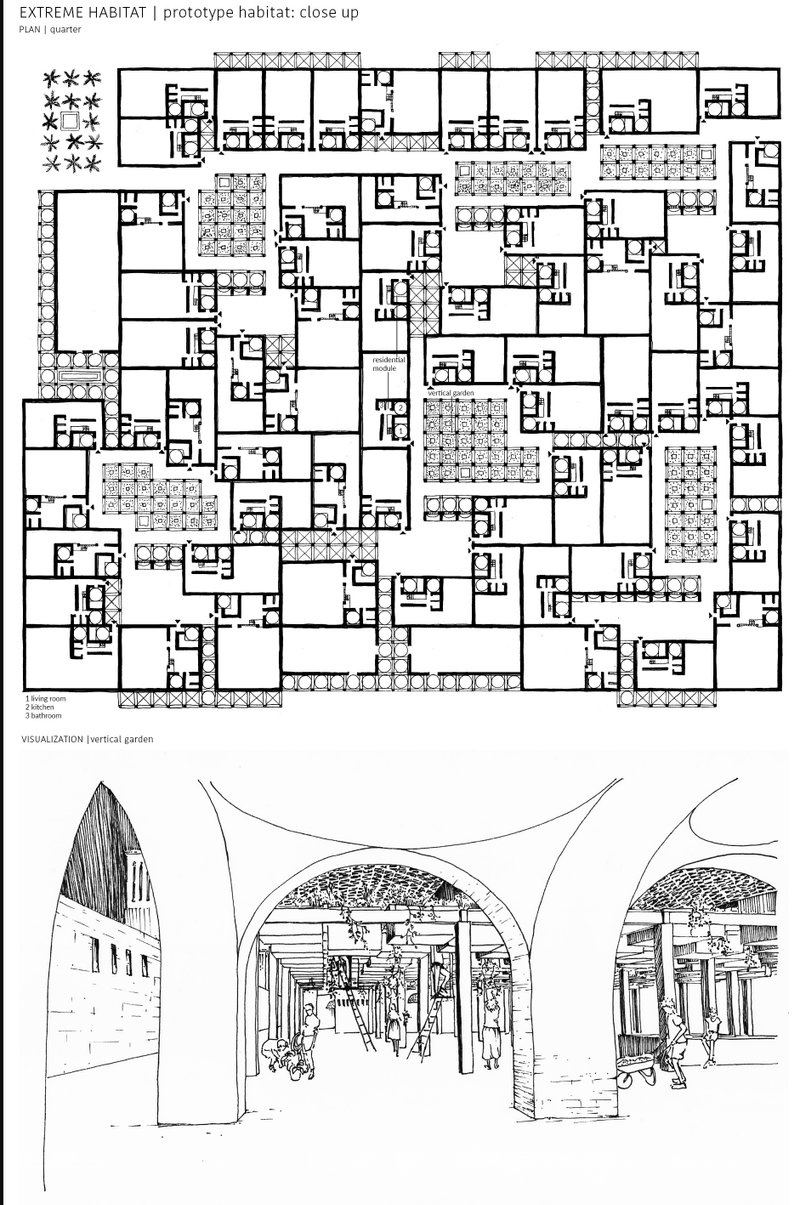
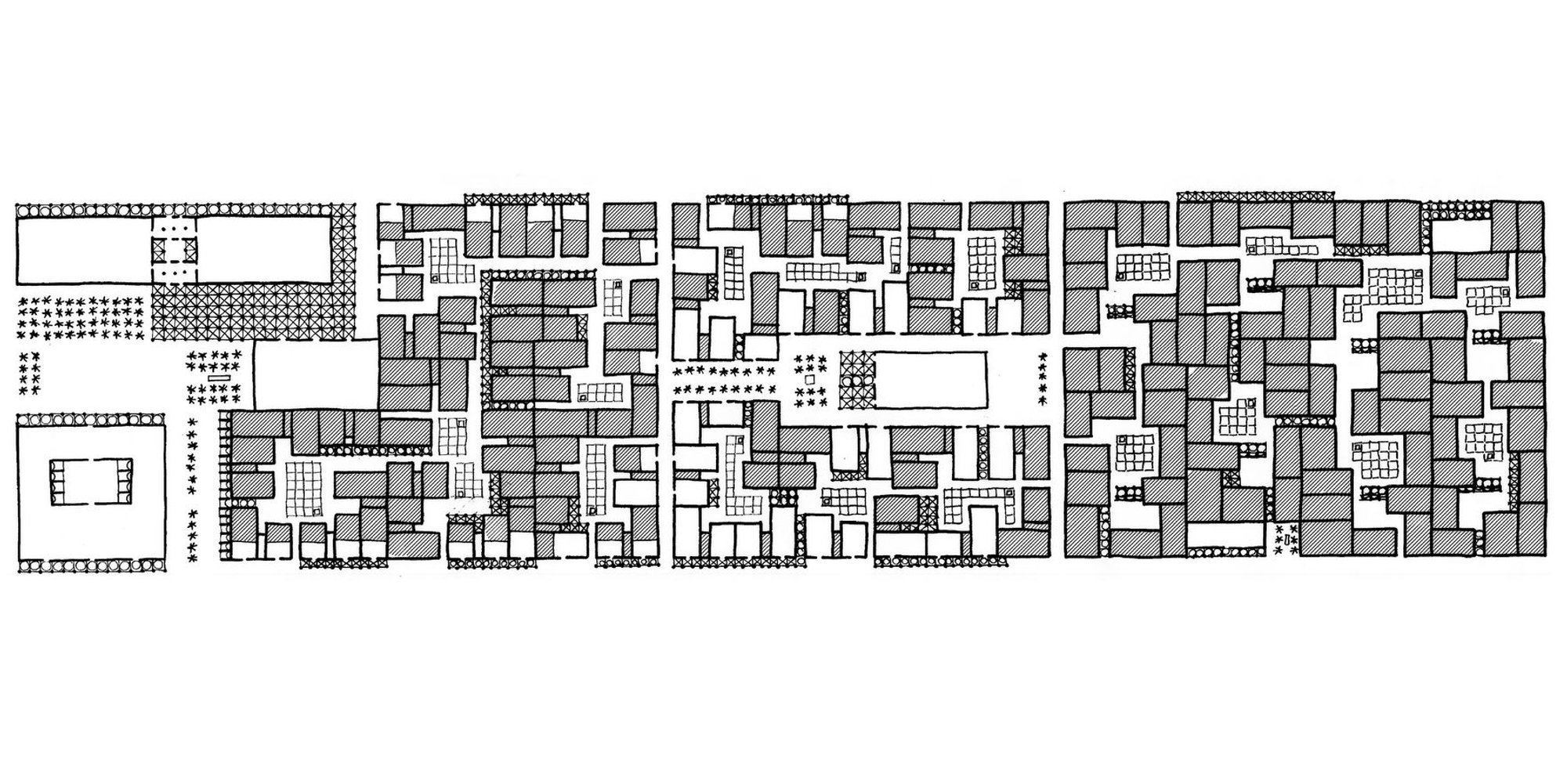
The plan drawing reveals clustered dwelling units organized around shared courtyards, a spatial model that is both socially and thermally intelligent. Each housing module is designed to be expandable, allowing families to add rooms as their needs evolve without disrupting the settlement's overall geometry. The courtyard acts as a thermal buffer: cooler air sinks into it at night and is retained by the surrounding walls during the day, creating a microclimate measurably more comfortable than the surrounding desert.
The perspective sketch of an arched colonnade illustrates how circulation spaces double as shaded social zones. Thick earthen walls, arched openings, and elevated passages create a continuous territory of deep shade. The construction logic is deliberately low-tech and locally reproducible: adobe and cob require no industrial supply chain, no specialized equipment, and no imported expertise. The architecture becomes something communities can build, repair, and extend themselves.
Why This Project Matters
Revival. Vernacular Architecture. is significant because it refuses the premise that extreme environments demand extreme technology. Instead, it demonstrates that the most resilient responses to harsh climates already exist in the traditions of people who have inhabited those climates for generations. The proposed Institute of Earthen Architecture takes this further, suggesting that knowledge transfer and local empowerment are as critical as any material specification.
Snela and Jędra have assembled a proposal that is simultaneously a design, a pedagogy, and a political argument. It insists that sustainable architecture in the Global South should not be parachuted in from elsewhere but grown from the ground, literally and culturally. In a moment when climate adaptation discussions are dominated by high-tech solutions and carbon accounting spreadsheets, this project offers a necessary counterpoint: sometimes the most radical act is remembering what already works.
View the Full Project
About the Designers
Designers: Małgorzata Snela, Patrycja Jędra
Enter a Design Competition on uni.xyz
uni.xyz runs architecture and design competitions year-round that reward proposals with spatial conviction and real site intelligence.
Project credits: Revival. Vernacular Architecture. by Małgorzata Snela, Patrycja Jędra EHC - Sahara (uni.xyz).



Popular Articles
Popular articles from the community

BLDUS Turns a 250-Square-Foot Screened Porch into a Pine Forest Temple in East Hampton
A gabled cedar pavilion mimics the rhythm of surrounding pines, anchoring a 1990s wooded home to its hollow in Long Island.
Constanti Architects Builds a Fortress of Privacy in Nicosia with House 345
A concrete and timber residence in Cyprus reinterprets the traditional introverted courtyard house for a new urban landscape.
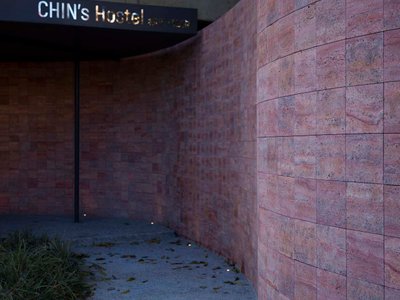
VEIVE Architects Builds a Mountain Hostel That Disappears into a Hangzhou Hillside
On the Huihang Ancient Trail in Xiangjian Village, a shelter of wood, steel, and rammed earth roots itself in the rural landscape.
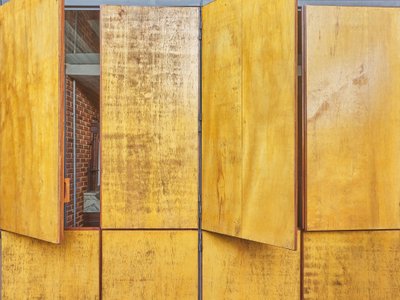
gru.a Builds a 70 m² Timber Shelter That Opens Like a Farm Door in Brazil's Valley of the Vines
In the mountainous region near Rio de Janeiro, a compact retreat uses plywood panels and deep eaves to blur the line between inside and out.
Similar Reads
You might also enjoy these articles
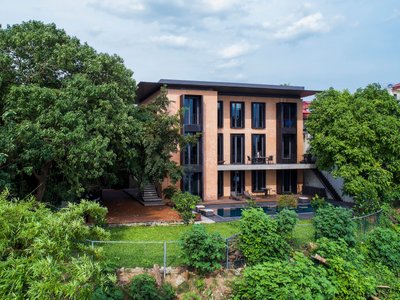
D and P Associates Build a Pi-Shaped House of Rammed Earth Memory on Vietnam's Red River
A 640-square-metre residence in Ngoc Thuy channels the pisé wall traditions of Vietnam's northern highlands into a riverfront family home.
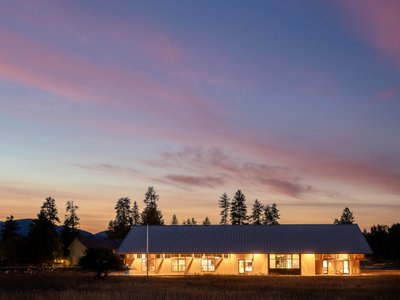
Johnston Architects Reimagines the Methow Valley Hay Barn as a Small-Town Library in Winthrop
A 7,300-square-foot timber library channels the region's agrarian vernacular to serve a rural Washington community of 400 year-round residents.
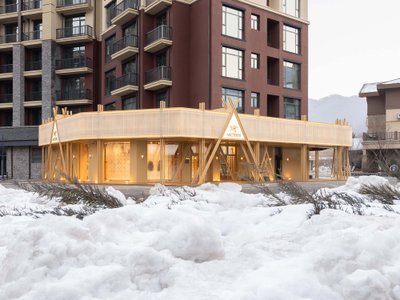
STILL YOUNG Builds a Glowing Campfire in the Snow for ARC'TERYX at a Chinese Ski Resort
A timber-framed pavilion at Beidahu Ski Resort in Jilin wraps warmth and glacier-like resin around outdoor retail.
gru.a Builds a 70 m² Timber Shelter That Opens Like a Farm Door in Brazil's Valley of the Vines
In the mountainous region near Rio de Janeiro, a compact retreat uses plywood panels and deep eaves to blur the line between inside and out.


Explore Transportation Competitions
Discover active competitions in this discipline




The Global Benchmark for Architecture Dissertation Awards


The Global Benchmark for Graduation Excellence

Challenge to design a shop stop sunk in the city
Comments (0)
Please login or sign up to add comments
No comments yet. Be the first to comment!