

Alibaba Xixi Campus Park C: A Landmark in Biophilic Urban Campus Design by ASPECT Studios
A visionary biophilic campus in Hangzhou where nature, architecture, and community merge to redefine sustainable urban design and wellbeing.


Reimagining Corporate Campuses Through Nature-Inspired Design
In the heart of Hangzhou, China, the Alibaba Xixi Campus (Park C) stands as a new benchmark in biophilic urban campus design. Spanning 26 hectares and serving over 30,000 people, this ASPECT Studios-led landscape project redefines the way natural systems and built environments coexist. More than just a workplace, Park C is a living ecosystem that nurtures biodiversity, enhances wellbeing, and supports long-term ecological resilience.
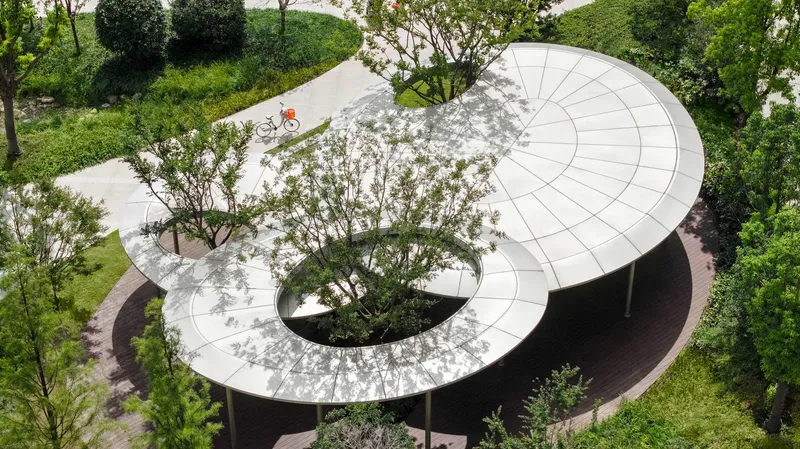
This transformative space demonstrates how modern corporate campuses can evolve into green, immersive environments where architecture, ecology, and human experience merge seamlessly.
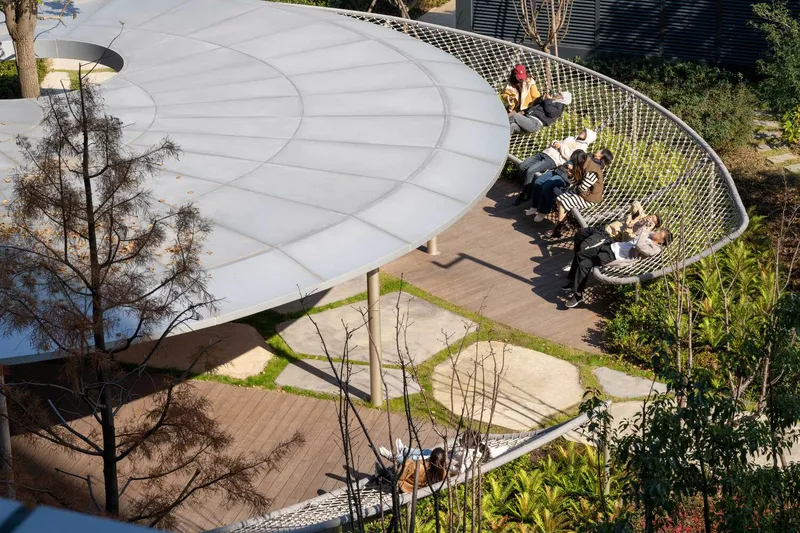
Building Nature on Structure: A Podium-Topped Park
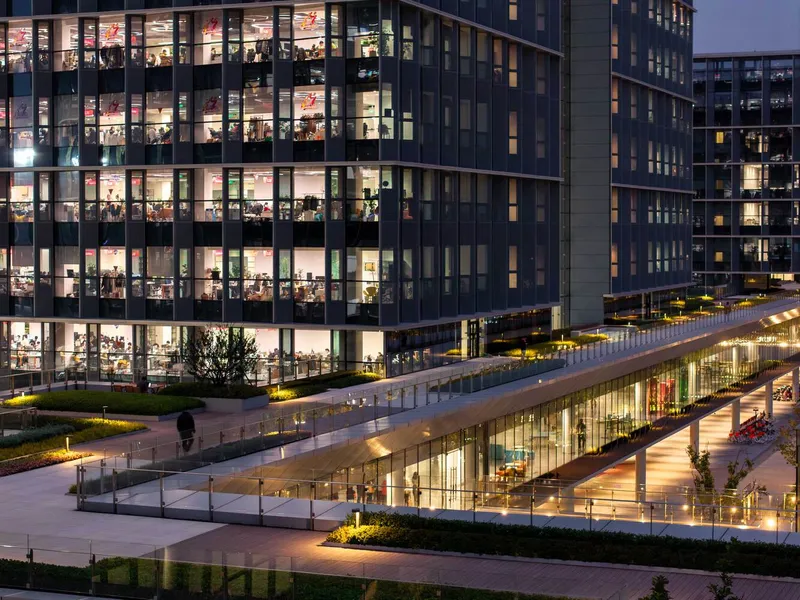
What sets Park C apart is that the entire park is constructed atop a multi-storey podium. This architectural and engineering challenge was transformed into an opportunity to integrate deep ecological thinking into every layer of the project. Optimized soil depth, advanced irrigation systems, and adaptive planting strategies make it possible for lush greenery to thrive several storeys above ground level.
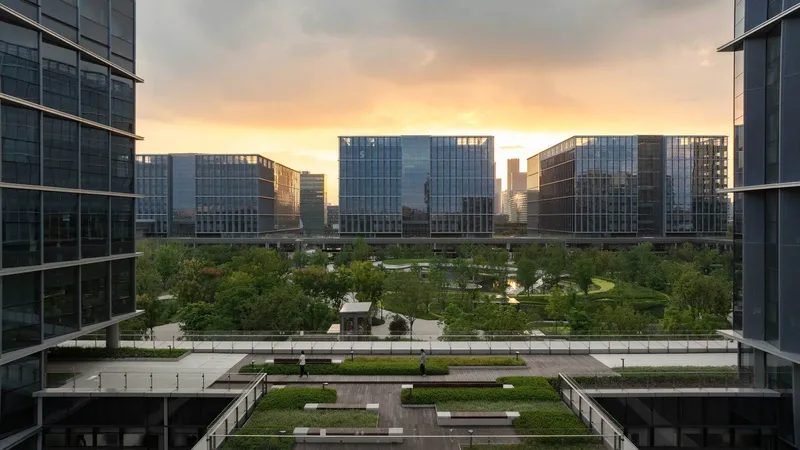
The elevated parkland design allows for expansive green space within a high-density urban fabric, proving that nature doesn't require ground-level to flourish—it needs vision, engineering, and intent.
Water as Design and Infrastructure
At the center of the campus landscape lies a critical design element: water. ASPECT Studios used algorithmic stormwater analysis to craft a biomimetic drainage system. A network of bioswales and stormwater channels flows like veins through the site, guiding rainwater to a central lake. This body of water acts as a stormwater reservoir, irrigation source, and gathering point for the campus community.
Rather than concealing infrastructure, the project celebrates it. Water is integrated visibly and poetically, enriching the landscape while supporting sustainability goals.
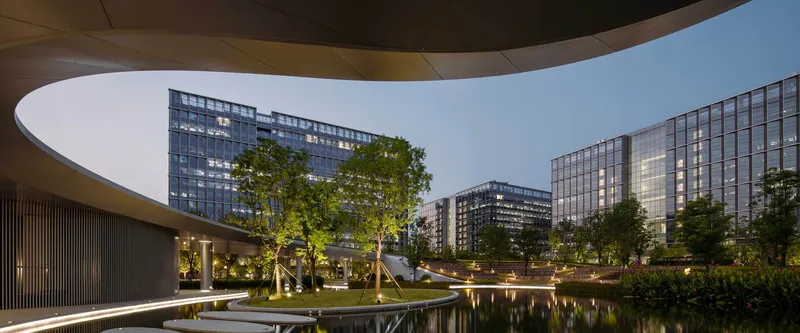
The Lake Pavilion: Community and Ecology in Harmony
Hovering gently over the lake is a sculptural pavilion that invites interaction with both water and one another. This architectural centerpiece blurs the boundary between built and natural elements, offering shaded terraces and views across the water. It’s a space of reflection, congregation, and connection—a physical and symbolic anchor for the campus.
The pavilion and lake create a sense of balance between utility and beauty. While they serve ecological and infrastructural purposes, they also cultivate moments of serenity and community engagement.
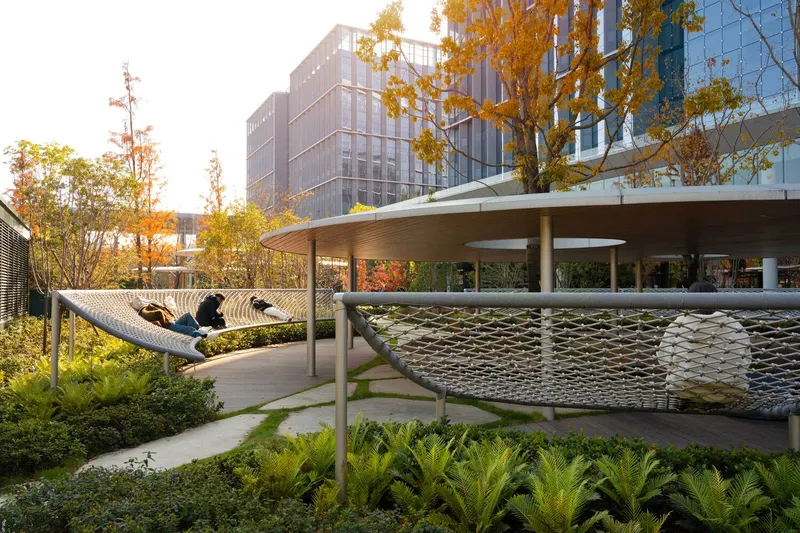
Designing for Human Experience in the Urban Jungle
A defining feature of this biophilic urban campus design is its human-centered planning. ASPECT Studios prioritized accessibility, connectivity, and comfort throughout the landscape. Every trail, canopy, and gathering space was placed using data-driven insights into sun exposure, movement patterns, and population density.
The result is a series of open, inclusive spaces that support diverse needs—from relaxation and quiet focus to collaboration and large-scale events. The inclusion of “halo canopies” across the park provides essential shade while creating a visual rhythm that ties the campus together.
The BioHabiNet Framework: Ecological Intelligence in Practice
ASPECT Studios developed the BioHabiNet concept as a guiding framework for the campus. It integrates three critical pillars: biodiversity (Bio), habitat (Habi), and interconnectivity (Net). This approach goes beyond aesthetics or functionality—it is a systemic strategy to curate living, adaptable ecosystems in dense urban settings.
BioHabiNet creates a layered environment where people and wildlife coexist. It supports pollinators, restores native plant species, and fosters a landscape that is as much about health and harmony as it is about productivity and innovation.
A Vision for Future Urban Landscapes
The Alibaba Xixi Campus (Park C) exemplifies the shift toward workplaces that support not just economic output, but also ecological health and personal wellbeing. This biophilic urban campus design is a replicable model for cities and corporations worldwide that seek to build with nature rather than against it.
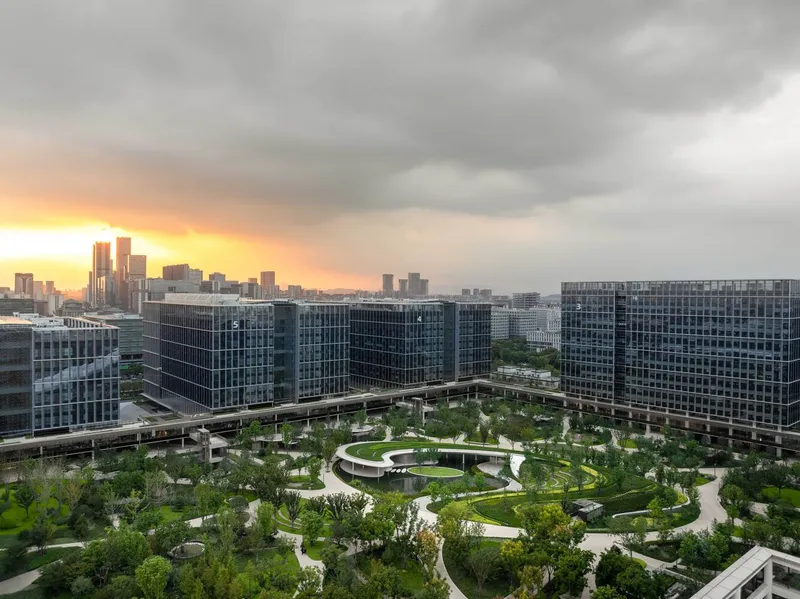
By anchoring design in natural systems, Park C proves that sustainability, resilience, and beauty are not competing priorities—they are the foundation of meaningful urban development. It is a landscape designed not just for today, but for the complex environmental challenges of tomorrow.
All Photographs are works of Wang Wenjie


Popular Articles
Popular articles from the community


U.GA Architects Wraps an Oval Rooftop Pool in Curved Board-Formed Concrete on Busan's Jeollidan-gil
In Busan's Jeonpo-dong, a 454 m² mixed-use block stacks a neighborhood facility, guest rooms and an oval rooftop pool inside spiraling concrete walls.

GROUP A Strips a 1969 Rotterdam Harbor Headquarters to Its Frame and Wraps It in Timber Louvers
In Rotterdam's M4H harbor district, Ferro Offices reuses a 1969 frame, adds one timber storey and reaches BREEAM-NL Outstanding.

LT2A and OPEN Architectes Thread a Brick and Glass High School Through a Wooded Belgian Campus
In Braine-l'Alleud, a 3,000 m² wing for Collège Cardinal Mercier pairs pale brick with a glazed colonnade, deferring to a small chapel and a dense wood.

Architekt Andreas Gruber Scatters 23 Dark Timber Chalets Across a South Tyrolean Forest Edge
In Molini di Tures, Amonti Chalets breaks a resort into a hamlet of gabled timber houses, with parking, storage and services pushed into the slope.

Similar Reads
You might also enjoy these articles

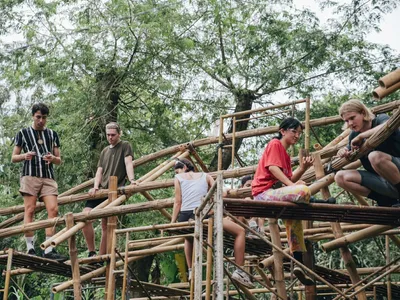
Bamboo Housing Challenge 2026: Design Affordable, Sustainable Homes Using Bamboo
An international design competition by Bamboo U and IBUKU inviting architects and designers to reimagine affordable housing using bamboo — with the winning design built full-scale in Bali.

Computational Design & Education: Beegraphy Design Awards Introduces 7th Category (Featuring Jiyun's Innovative Approach)
Dive into Beegraphy’s 7th Design Awards category, where computational design meets education to create immersive, interactive learning tools, inspired by Jiyun’s work.
From Parametric Lighting to Urban Furniture: Join the 2nd Workshop in Beegraphy’s Computational Design Series
Dive into Cutting-Edge Design Techniques and Practical Applications with Industry Experts

Last Call: Unleash Your Architectural Genius in SHAK's Kindergarten Design Competition
Urgent call for architects to join SHAK's kindergarten design competition before the looming deadline

Explore Campus Competitions
Discover active competitions in this discipline

Challenge to reimagine the Iron Throne

Photograph architecture without architects

Illustrate the lost glory of Angkor Wat - Render Challenge

Design challenge to reuse E-waste
Comments (0)
Please login or sign up to add comments
No comments yet. Be the first to comment!