

Bamboo Housing Challenge 2026: Design Affordable, Sustainable Homes Using Bamboo
An international design competition by Bamboo U and IBUKU inviting architects and designers to reimagine affordable housing using bamboo — with the winning design built full-scale in Bali.


The Bamboo Housing Challenge 2026 is a groundbreaking international design competition organized by Bamboo U and IBUKU, calling on architects, designers, engineers, and students worldwide to rethink affordable housing using bamboo as the primary structural material. With over 1 billion people globally lacking adequate shelter, this competition seeks bold, innovative solutions that harness bamboo's extraordinary properties — its rapid growth, high tensile strength, carbon sequestration capacity, and cultural significance — to create homes that are affordable, sustainable, and beautiful.
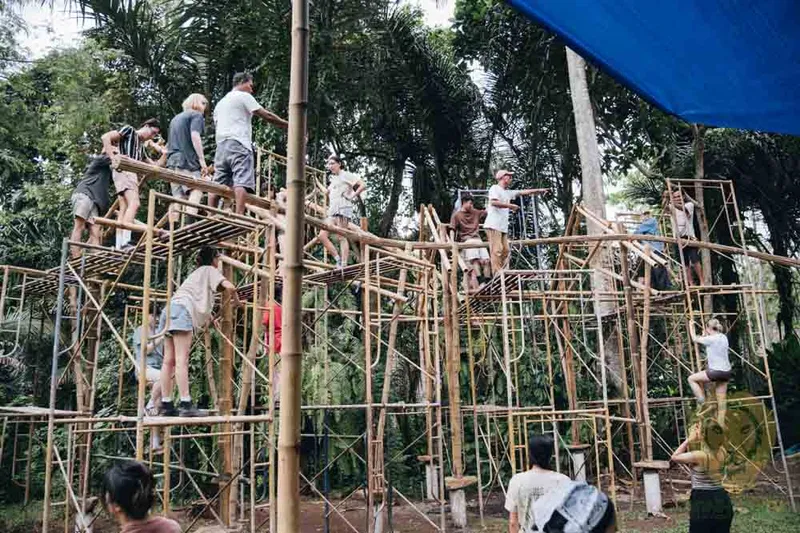
The Brief: Reimagining Affordable Housing
Participants are challenged to design a fully functional, affordable housing unit using bamboo as the primary building material. The designs must address real-world constraints while pushing the boundaries of what bamboo construction can achieve. The designs must be buildable for under $10,000 USD and within 80 sqm. Entries should demonstrate structural integrity, climate responsiveness, scalability, and cultural sensitivity. The competition encourages designs that can be adapted to various tropical and subtropical contexts around the world.
Key design considerations include:
• Affordability — Designs must be economically viable for low-to-middle income communities
• Sustainability — Minimal environmental impact using locally sourced, renewable bamboo
• Structural Innovation — Creative use of bamboo's natural properties for load-bearing, spanning, and enclosure
• Climate Adaptation — Passive cooling, natural ventilation, and resilience to tropical weather conditions
• Scalability — Potential for replication and community-level implementation

Why Bamboo?
Bamboo is one of the most remarkable building materials on the planet. It grows up to 91 cm (35 inches) per day, making it one of the fastest-growing plants in the world. It reaches structural maturity in just 3–5 years, compared to 25–50 years for hardwoods. Bamboo has a higher tensile strength than steel (per unit weight) and can withstand compression forces comparable to concrete. It sequesters carbon at rates 2–6 times higher than equivalent stands of trees, making it a powerful tool in the fight against climate change.
Despite these extraordinary properties, bamboo remains underutilized in modern construction. The Bamboo Housing Challenge aims to change this narrative by demonstrating that bamboo is not just a vernacular or temporary material, but a sophisticated, high-performance building resource capable of producing world-class architecture.
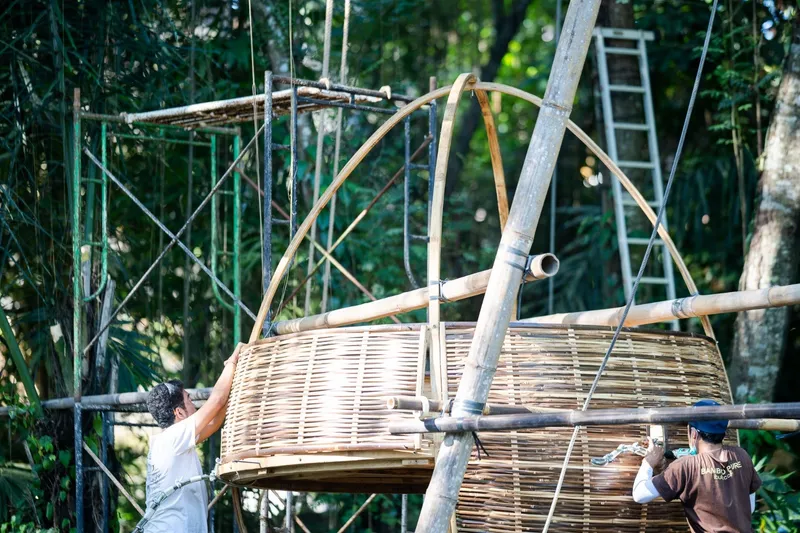
The Jury
The competition is judged by a distinguished panel of experts in bamboo architecture, sustainable design, and housing innovation:
Elora Hardy — Founder and Creative Director of IBUKU, a Bali-based design firm renowned for pushing the boundaries of bamboo architecture. Elora's TED talk on bamboo buildings has inspired millions, and her portfolio includes iconic structures like the Green Village and Green School in Bali. Her work has fundamentally shifted how the world perceives bamboo as a construction material.
Orin Hardy — Co-founder of Bamboo U, an educational initiative based in Bali that teaches sustainable bamboo design and construction. Orin has led dozens of immersive build programs that have trained hundreds of designers and builders from over 60 countries in hands-on bamboo construction techniques.
Luis Felipe Lopez — Co-founder of BASE Bahay, a social enterprise in the Philippines developing affordable, typhoon-resilient bamboo housing for underserved communities. His work combines engineering rigor with social impact, proving that bamboo housing can meet the most demanding structural and safety standards.
Prizes and Opportunities
What sets the Bamboo Housing Challenge apart from other design competitions is its commitment to real-world impact. The winning design will be built as a full-scale prototype in Bali, Indonesia, in collaboration with IBUKU's expert bamboo builders. This is not just a paper competition — it is a launchpad for tangible, built work.
Prizes include:
• 🏆 Winner — Full-scale construction of the winning design in Bali + feature on Bamboo U and IBUKU platforms + cash prize
• 🥈 Runner-up — Media coverage + feature in Bamboo U's global network
• 🏅 Honorable Mentions — Publication and recognition across Bamboo U and IBUKU channels
All contest registrants receive full access to Bamboo U's online course content, valued at $1,097 USD. Shortlisted entries will receive international exposure through Bamboo U's network of sustainability-focused designers, architects, and builders worldwide.
About the Organizers
Bamboo U is an education platform based in Bali that offers immersive design-build programs focused on bamboo construction. Founded by Orin Hardy, it has trained participants from over 60 countries in sustainable bamboo building techniques. Bamboo U operates from a campus in Sibang, Bali, where participants work directly with bamboo — from harvesting and treatment to joinery and construction.
IBUKU (which means "mother earth" in Indonesian) is a pioneering bamboo architecture and design firm founded by Elora Hardy. Based in Bali, IBUKU has designed and built some of the world's most celebrated bamboo structures, including homes, schools, resorts, and community buildings. Their work demonstrates that bamboo can create spaces of extraordinary beauty and structural sophistication.

How to Participate
The competition is open to architects, designers, engineers, students, and interdisciplinary teams from around the world. Both individuals and teams can participate. No prior experience with bamboo is required — the competition welcomes fresh perspectives from all design disciplines.
Key Dates:
• Registration Deadline: Check bamboou.com for latest dates
• Submission Deadline: Visit the official competition page for details
• Results Announcement: Following jury deliberation
Registration: Visit bamboou.com/bamboo-housing-challenge to register and access the full competition brief, submission guidelines, and resource materials.
Join the Bamboo Revolution
The Bamboo Housing Challenge represents a unique opportunity to contribute to solving one of humanity's most pressing challenges — affordable housing — while advancing sustainable construction practices. Whether you are an established architect or a design student, this competition invites you to think differently about materials, methods, and what home means in the 21st century.
Bamboo has been used in construction for thousands of years across Asia, South America, and Africa. Now, with modern engineering knowledge and design innovation, it is poised to become a mainstream building material for the future. The question is not whether bamboo can do it — it is how creatively and effectively we can harness its potential.
Register now at bamboou.com/bamboo-housing-challenge and be part of the movement to build a more sustainable, affordable, and beautiful world — one bamboo home at a time.


Popular Articles
Popular articles from the community


GROUP A Strips a 1969 Rotterdam Harbor Headquarters to Its Frame and Wraps It in Timber Louvers
In Rotterdam's M4H harbor district, Ferro Offices reuses a 1969 frame, adds one timber storey and reaches BREEAM-NL Outstanding.

longwave studio Reorganizes a 112 m² Tainan Apartment Around the Daily Routines of a Family and Two Cats
In Tainan, Taiwan, birch plywood, rust-red furniture and a freestanding plaster wall link arrival, storage, work and family life in one apartment.

U.GA Architects Wraps an Oval Rooftop Pool in Curved Board-Formed Concrete on Busan's Jeollidan-gil
In Busan's Jeonpo-dong, a 454 m² mixed-use block stacks a neighborhood facility, guest rooms and an oval rooftop pool inside spiraling concrete walls.

Cube Design Draws an Ecological Corridor Between Two Shenzhen Hills with the Nankai Building
Beside Shenzhen's container docks, the Nankai Building pairs stacked balconies with a climbing green screen to connect two hillsides across its height.

Similar Reads
You might also enjoy these articles


Rede Arquitetos Turns Circulation into Civic Space at the Educar II SESC School in Fortaleza
In Fortaleza, Brazil, Educar II SESC-CE trades a signature form for mesh screens, yellow thresholds and courtyard walkways built for equatorial heat.
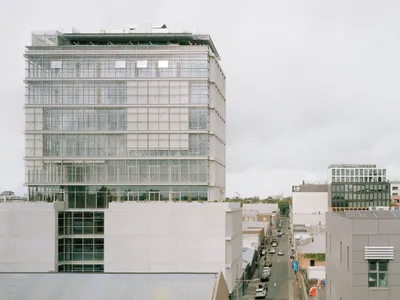
116 Rokeby Building, Collingwood
Sustainable Collingwood office building featuring double-skin façade, natural ventilation, rooftop amenities, and carbon-neutral design focused on wellbeing and longevity.
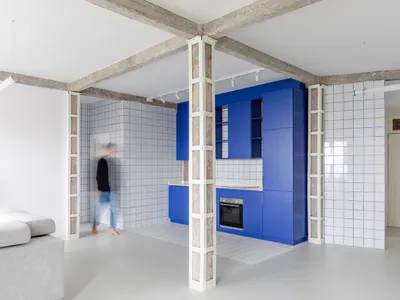
Contemporary Apartment Renovation in Spain: RV House by BIAN Opens Up to the Sea
A minimalist 1930s apartment in Santander is transformed into a flexible, sea-facing home through contemporary Spanish renovation.
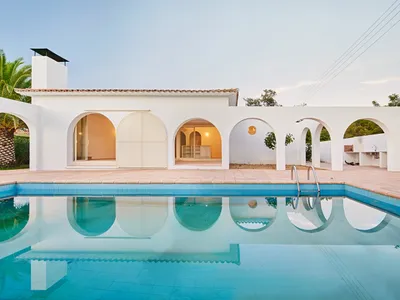
3 Marías House: A Contemporary Mediterranean Courtyard Retreat by Bajet Giramé + Burckhardt
Mediterranean courtyard home blending traditional architecture with modern design, terracotta flooring, flexible interiors, sustainable climate strategies, and garden integration.

Explore Bamboo Construction Competitions
Discover active competitions in this discipline

Challenge to reimagine the Iron Throne

Photograph architecture without architects

Illustrate the lost glory of Angkor Wat - Render Challenge

Design challenge to reuse E-waste
Comments (0)
Please login or sign up to add comments
No comments yet. Be the first to comment!