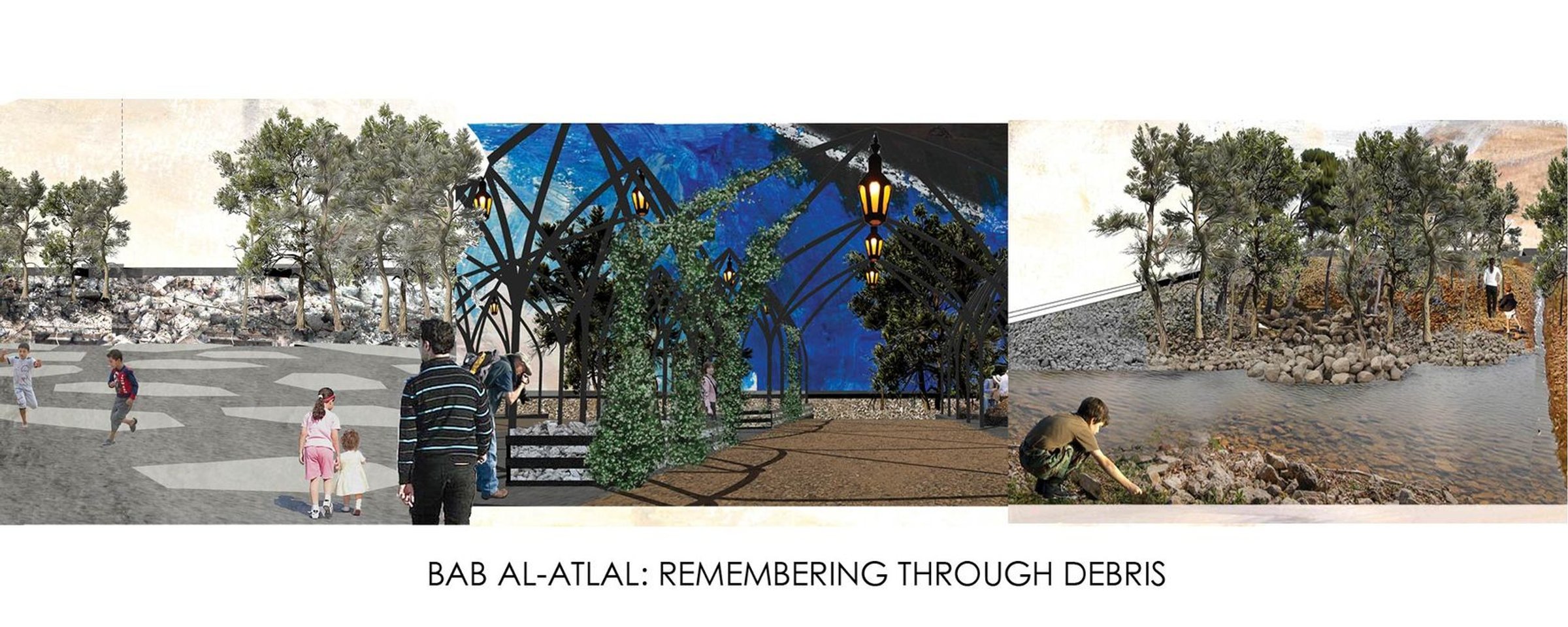
Bab Al-Atlal: Remembering Through Debris
Architecture shaped by memory—transforming war-torn landscapes into spaces of healing, reflection, and post-war regeneration.


Bab Al-Atlal: Remembering Through Debris is a powerful and evocative exploration of post-war architectural regeneration, deeply rooted in the collective memory and cultural resilience of Syria. Situated at the site of the former Grand Serail of Aleppo—a building once central to civic life and authority—this visionary proposal by Sarah Lily Yassine transforms a space of loss into a living public archive. Shortlisted in the 'Memory' competition, the project consciously rejects the idea of restoring the Serail to its former state. Instead, it embraces the physical and emotional fragments left behind, using them as generative material for a new kind of architecture—one that does not erase the past but weaves it into the present and future. Bab Al-Atlal becomes a place of encounter where the architectural landscape is shaped by sorrow, survival, and the shared human need to remember, mourn, and rebuild.
Poetry, Music & Erasure
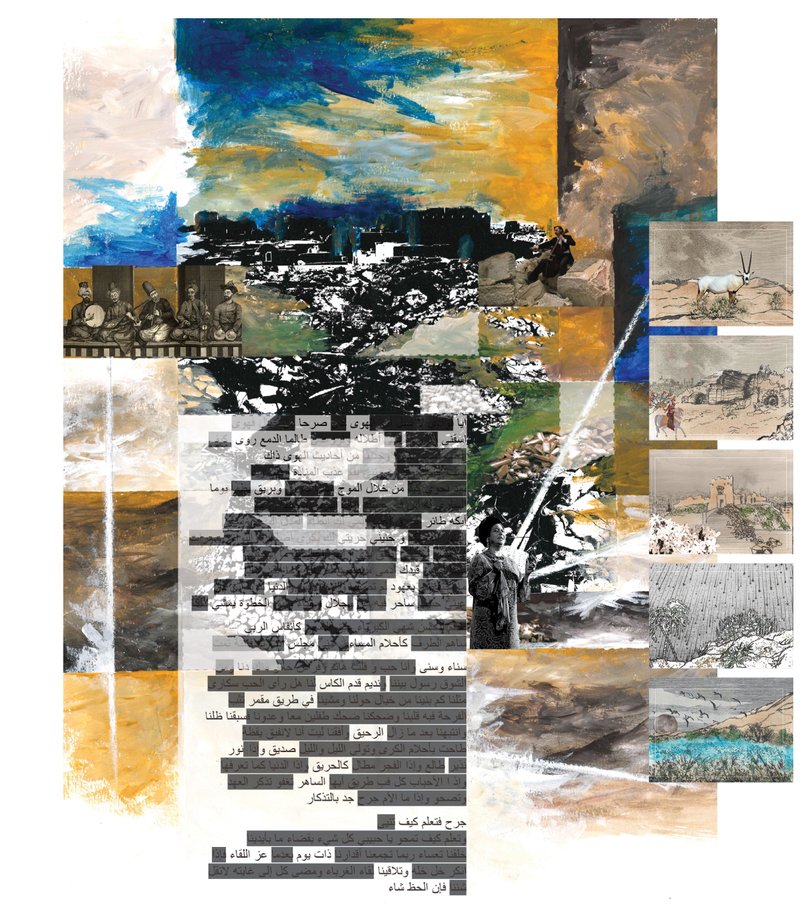
Poetry and music share an intangible yet profound connection with memory. They are mediums through which we express, carry, and reinterpret our experiences. The resonance of a song or verse can evoke entire worlds, even when words fade or meanings shift. This project draws from Ahmad Nagi’s poem “el Atlal,” a work centered on ruins and nostalgia. Through the intentional erasure and redaction of the poem’s text, new meanings emerge—an act that mirrors the fragmented ways we remember and forget. The design adopts this poetic strategy as a spatial practice. Fragments of built form, remnants of history, and scars of war are not masked, but highlighted. Architecture becomes an act of redaction and rewriting—using memory as material. Visitors engage not with polished surfaces, but with layered, incomplete, and emotionally charged spaces that prompt reflection and reinterpretation. The site transforms into a medium of healing, storytelling, and communal reckoning, where music, poetry, and space converge in a dialogue across time.
Memory, Landscape & Architecture
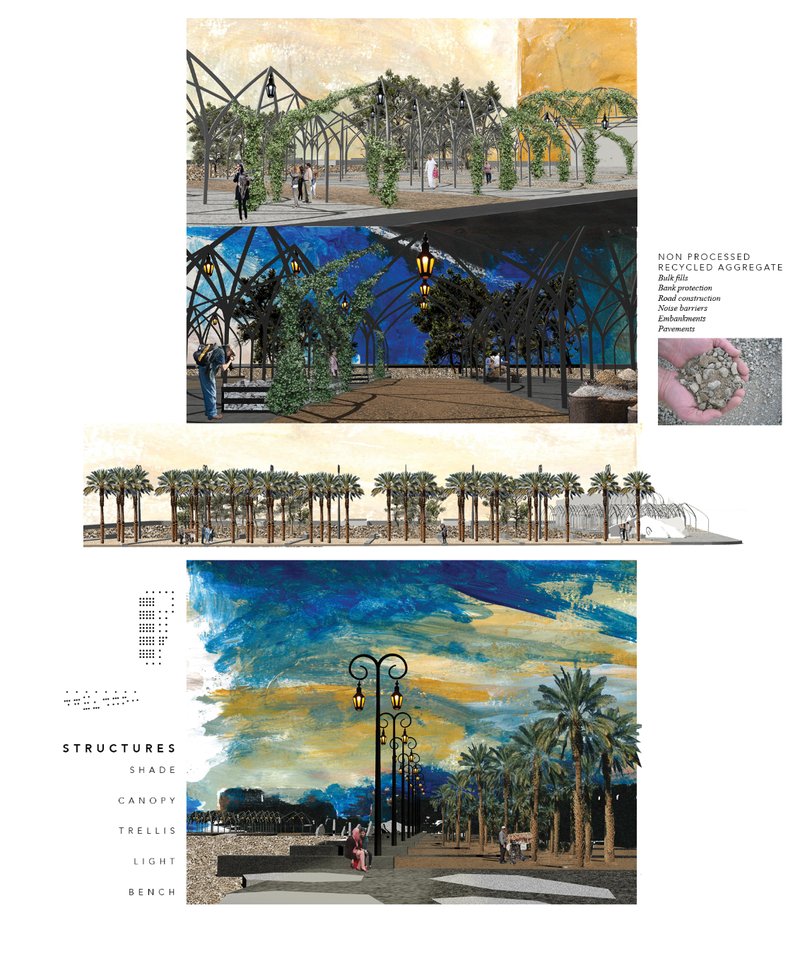
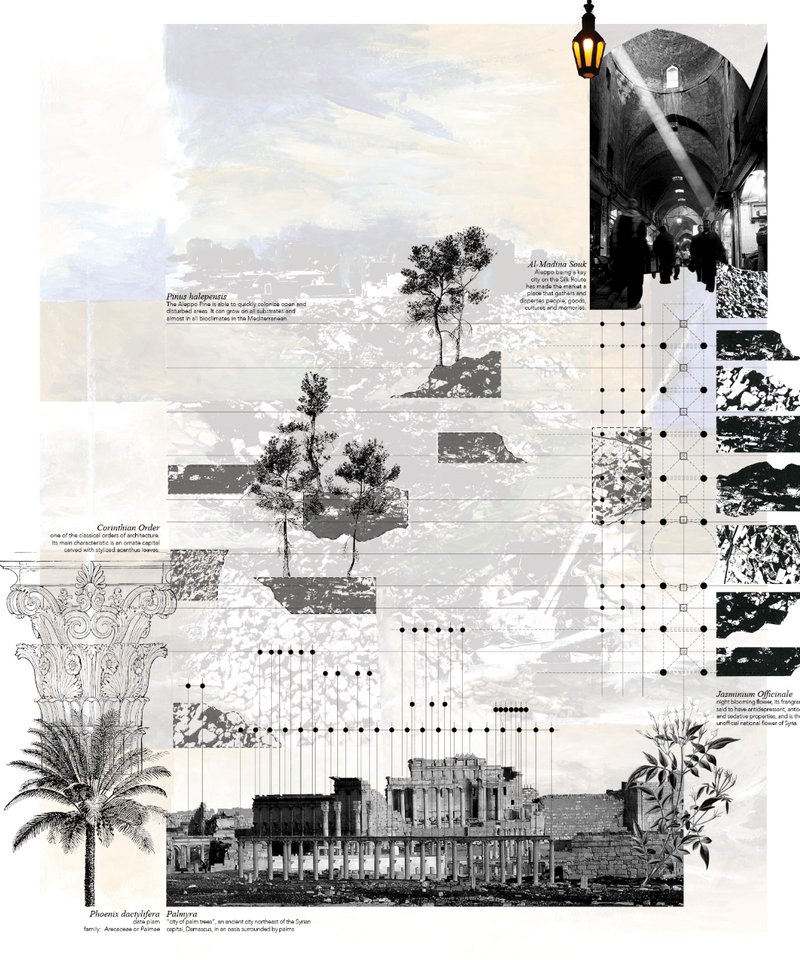
Architecture has long been vulnerable to the violence of war, often becoming both a literal and symbolic casualty. Iconic buildings and cultural landmarks are targeted not just for their physical presence, but for what they represent—identity, continuity, and pride. In contrast, landscapes endure. Their ability to regenerate through cycles of growth and decay makes them powerful symbols of resilience. This project bridges the ephemerality of architecture and the persistence of landscape by designing spaces that interweave the two. It proposes hybrid architectural typologies that emerge organically from the land—domes and colonnades rise amidst palm trees, arches blend into trellised gardens, and light posts become part of the forest canopy. These elements do not dominate the terrain; they coexist with it, allowing nature to infiltrate and animate the ruins. In doing so, the project crafts a spatial language that is rooted in place yet adaptable across generations—a testament to continuity without replication.
Memory & Material Transformation
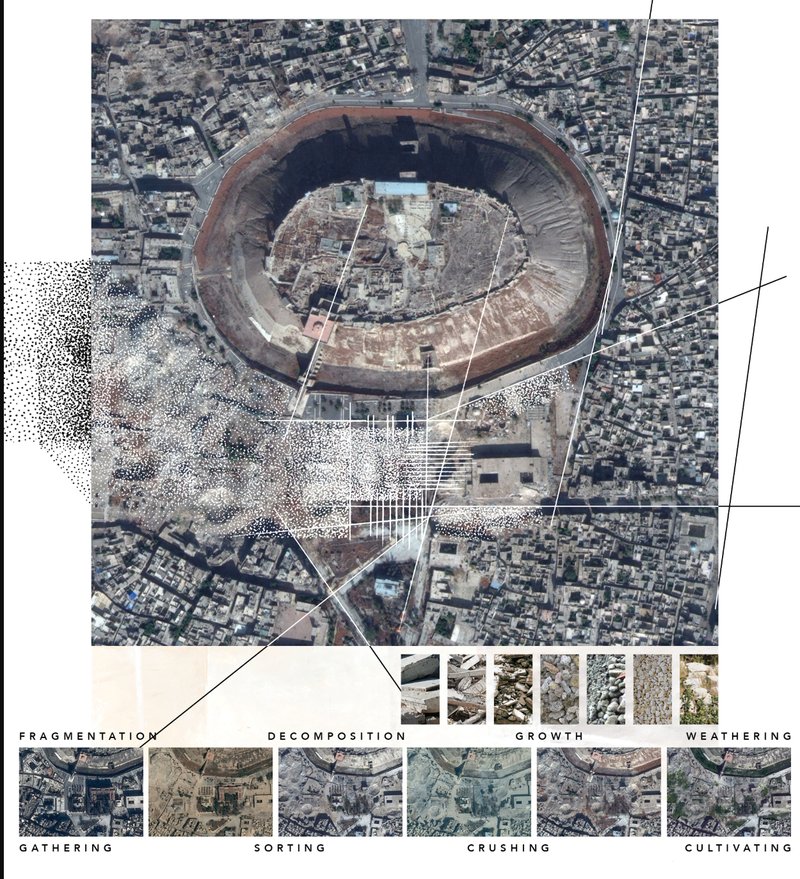
Debris, often seen as the unwanted byproduct of war, becomes central to the architectural narrative of Bab Al-Atlal. Rather than removing it, the design treats debris as a potent material—one that carries the sediment of trauma, displacement, and resilience. The project proposes an active transformation process: debris is sorted, fragmented, decomposed, crushed, and eventually cultivated into new spatial forms. These processes unfold across temporal layers—some immediate, others unfolding over years. This adaptive reuse is not merely technical but symbolic. It embodies a shift from passive ruin to purposeful renewal. Through plazas made from crushed stone, benches cast from old concrete, and paths paved with reclaimed rubble, memory is literally and figuratively embedded into the site. Spaces such as the memory market, performance platforms, and cultivated fields emerge from this material alchemy, demonstrating how ruin can regenerate community, identity, and public space.
Debris Platforms
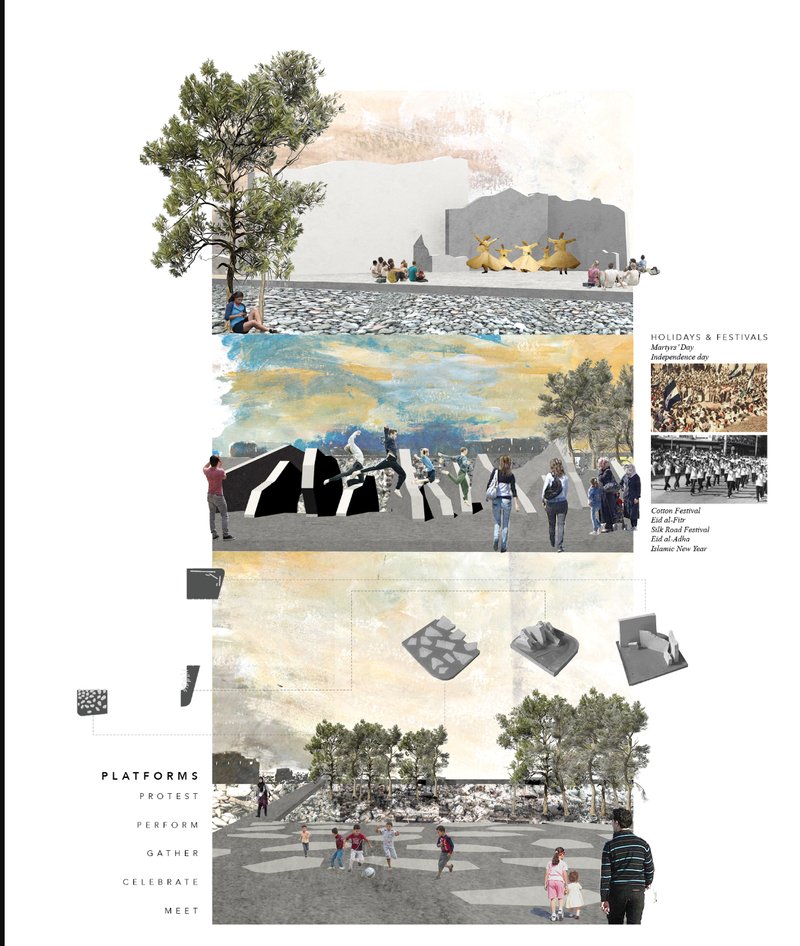
Scattered across three strategic corners of the site, debris platforms are sculpted stages of memory. Each platform is created from concrete-cast rubble and configured according to its spatial and cultural context. The southwestern platform opens into a public plaza designed for celebration, conversation, and peaceful assembly. It offers a communal void where people can dance, march, or simply gather. The northeastern platform, by contrast, is oriented for performances, featuring screens and vertical debris surfaces that serve as both backdrop and canvas. Artists and performers animate the space, transforming remnants of destruction into instruments of expression. In the southeast, the debris forms sculptural totems—silent witnesses that speak through presence rather than form. These platforms serve multiple roles: spaces of protest, celebration, artistic activation, and shared remembrance. Each is a unique response to the question: how can the architectural reuse of debris support emotional and civic restoration?
Memory Market & Colonnade
Under a canopy of recycled steel and cascading vines, the memory market is a shaded refuge where daily life and historical reflection intermingle. The structure draws inspiration from traditional Middle Eastern colonnades, but reinvents them with contemporary materials and ecological interventions. Analog photography printed on watercolor paper, copper leaf accents, and botanical illustrations create an ambiance that blurs the boundaries between documentation and imagination. Here, visitors experience a sensory journey—light filtered through leaves, the scent of plants growing in reclaimed soil, and the soft murmur of people moving through space. It is a poetic forest reconstructed in architectural form. Trellises guide movement, benches invite pause, and light posts trace memory across the ground. The colonnade does not seek to imitate nature but collaborates with it to create an immersive, healing environment that honors what was lost while nurturing new social interactions.
Debris Field
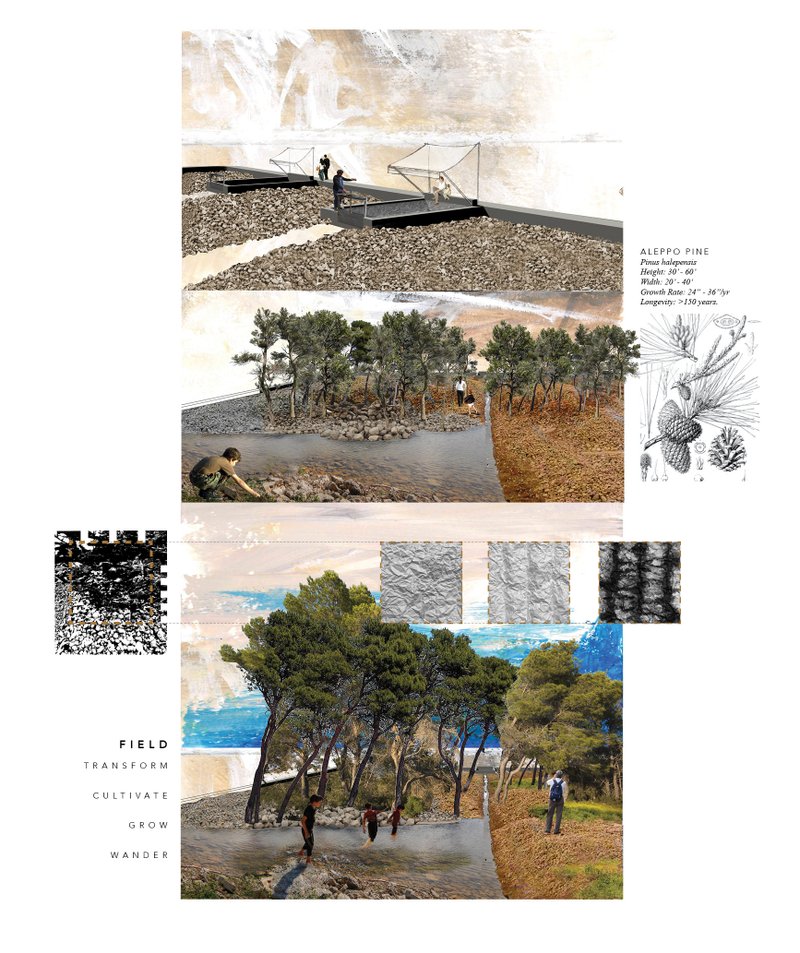
At the very core of Bab Al-Atlal lies the debris field—a cultivated terrain that reimagines agricultural practices as metaphors for memory work. The field is furrowed, irrigated, and slowly transformed by human hands and natural cycles. Inspired by the techniques of tilling and seeding, this space converts pulverized debris into fertile soil. In time, the field blossoms into a grove of Aleppo pines, a species known for its resilience and longevity in the harsh Syrian climate. These trees become living markers of endurance and rebirth. The debris field is not a static monument but an evolving ecosystem, one that visitors can walk through, touch, and contribute to. It is a landscape in flux, where absence gives way to growth, and silence becomes layered with footsteps and conversation. Through this long-term transformation, the field shifts from a space of mourning to one of meditation, education, and environmental healing.
Bab Al-Atlal stands not as a finished solution, but as an open-ended inquiry: How can post-war architectural regeneration confront the trauma of the past without erasing it? How can the fragments of destruction become blueprints for collective healing? This project shows that architecture, when grounded in memory and material truth, can become a resilient framework for cultural continuity. It reveals that even from the ruins of violence, new forms of life—spatial, ecological, and emotional—can emerge.