

Camel Step Coffee Roasters Shop in Hail by Faris Alosaimi
Historic Hail coffee roastery blending local granite, crushed red stone floors, warm wood interiors, biophilic courtyard atmosphere, and cozy fireplace design.


The Camel Step Coffee Roasters Shop in Hail, designed by Faris Alosaimi, is a 325 m² specialty coffee destination completed in 2024. This thoughtfully renovated historic building merges contemporary coffee shop interiors with authentic regional materials, creating a warm and immersive architectural experience.
Positioned within a structure rich in cultural memory, the project carefully balances heritage preservation, adaptive reuse architecture, and modern retail design, establishing Camel Step as a landmark for specialty coffee culture in Saudi Arabia.
Historic Renovation and Adaptive Reuse Strategy
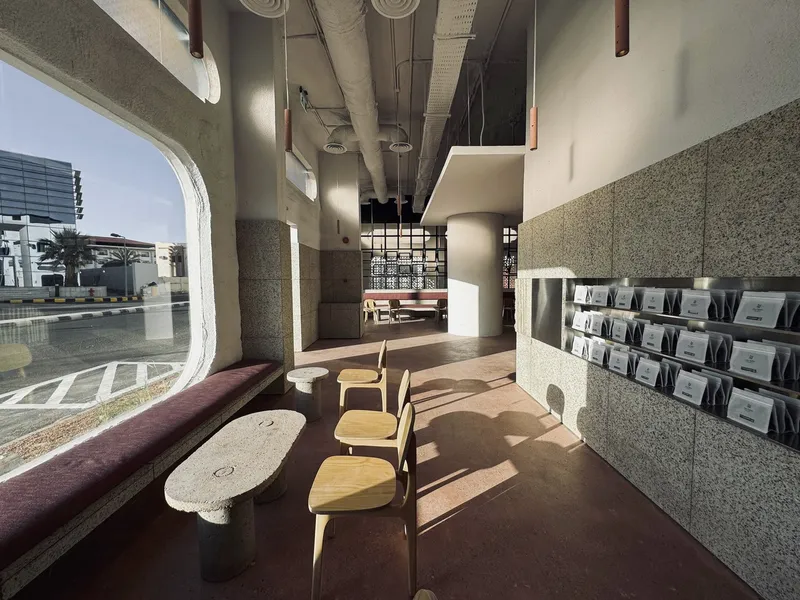
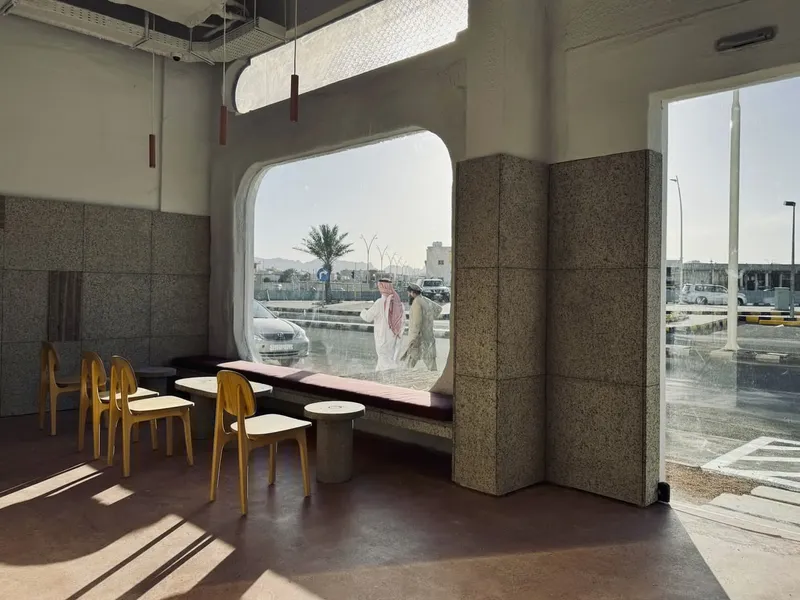
The project demonstrates a sensitive architectural renovation approach that respects the original character of the historic building while introducing modern spatial clarity. Rather than overpowering the structure, the design amplifies its existing architectural language through restrained interventions and material honesty.
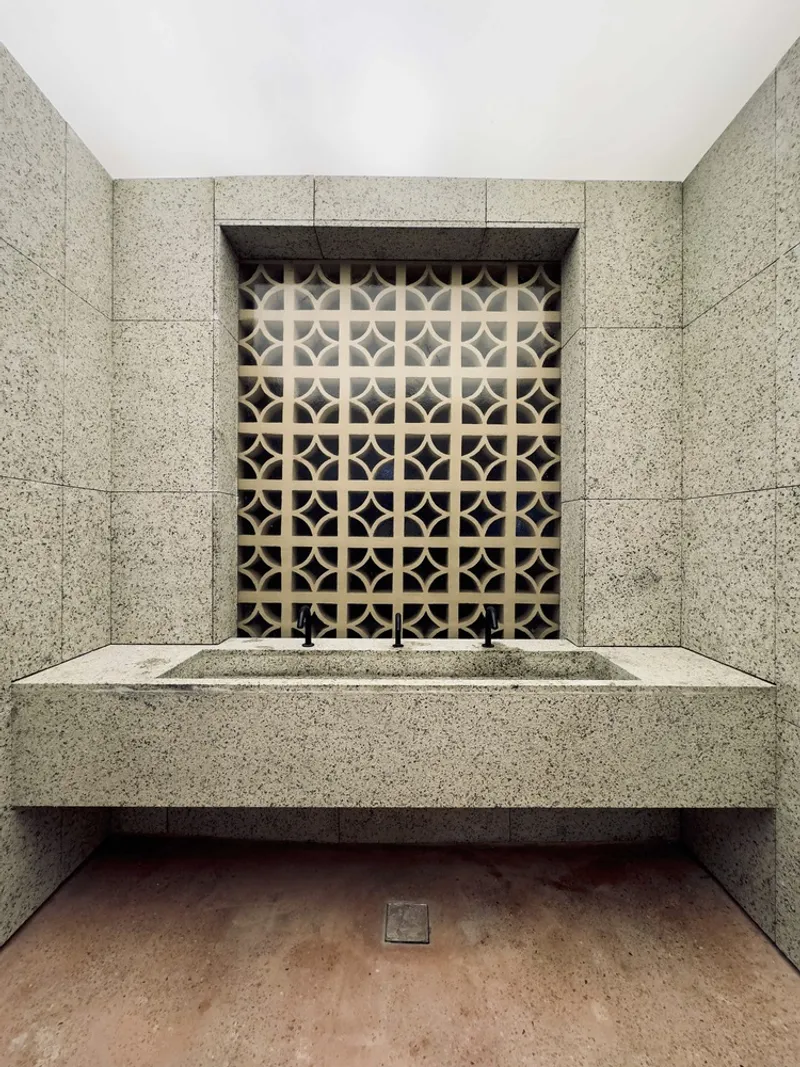
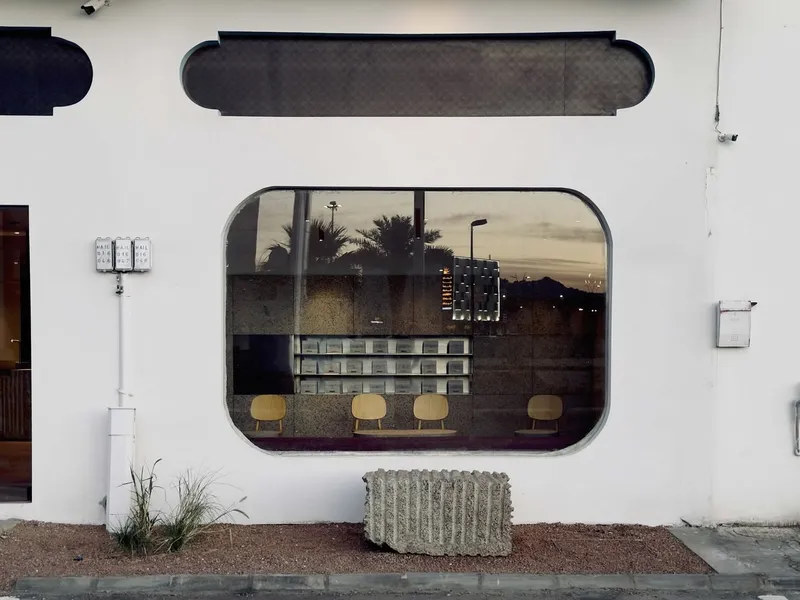
Natural granite stone sourced directly from the Hail region becomes the defining material element. Used across interior walls and key architectural features, it reinforces local identity while grounding the space in its geographical context. This material continuity strengthens the narrative of regional architecture and contextual design in Saudi Arabia.


Local Materials and Textured Flooring Design
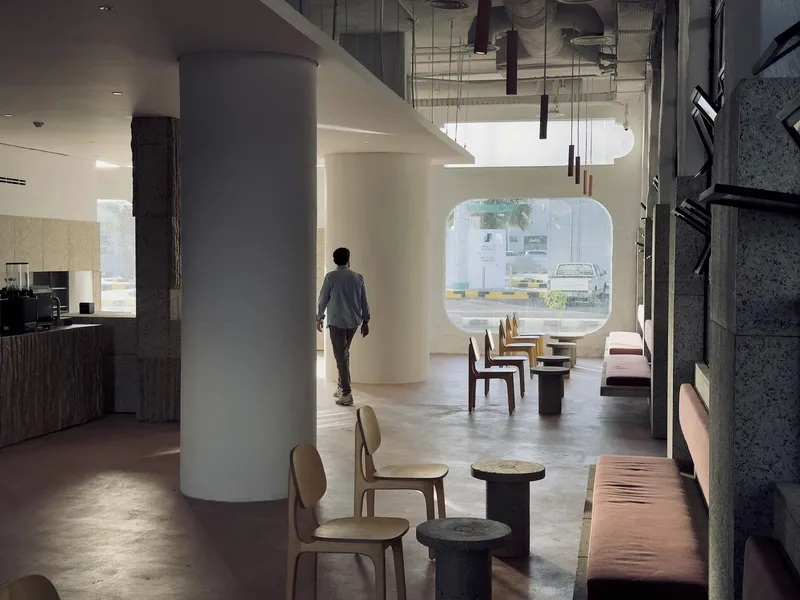
One of the most distinctive architectural features is the flooring system. The polished concrete floors incorporate crushed red granite mixed into the concrete matrix, creating a subtle red hue that enriches the interior atmosphere.
This detail does more than enhance aesthetics, it expresses material authenticity and craftsmanship. The tactile quality of the surface reflects a broader design philosophy focused on natural materials, sustainable sourcing, and sensory interior experiences.
The integration of local stone not only reduces material transport impact but also anchors the coffee roastery within its regional landscape.


Warm Minimalism in Coffee Shop Interiors
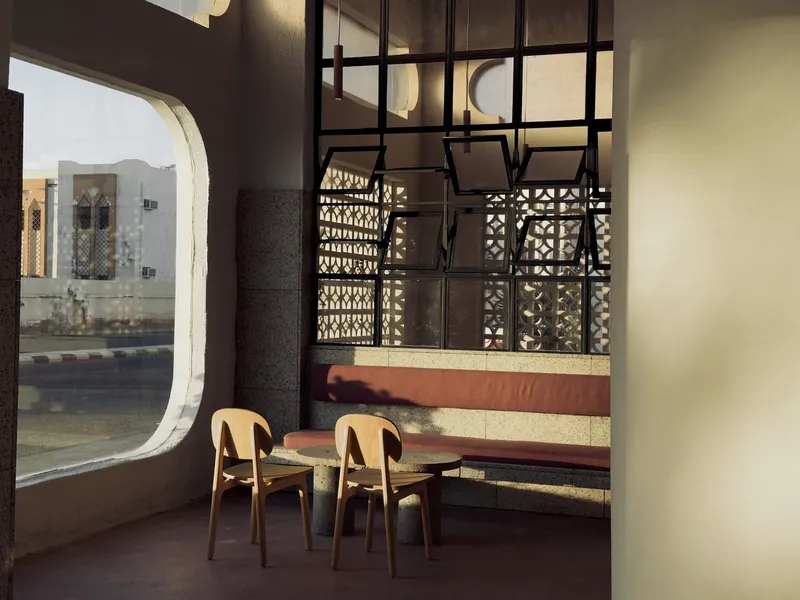
The interior design embraces a concept of warm minimalism. Wooden chairs and tables in light tones soften the stone-clad walls, while neutral finishes create visual harmony. Large windows flood the space with natural daylight, reinforcing openness and transparency, key elements in contemporary café design.
Red-upholstered sofas introduce subtle contrast and provide intimate seating zones near the windows. This layered seating arrangement supports diverse user experiences, from social gatherings to quiet coffee moments.
The architectural language remains simple yet intentional, prioritizing human scale, comfort, and material coherence.

Indoor-Outdoor Spatial Experience
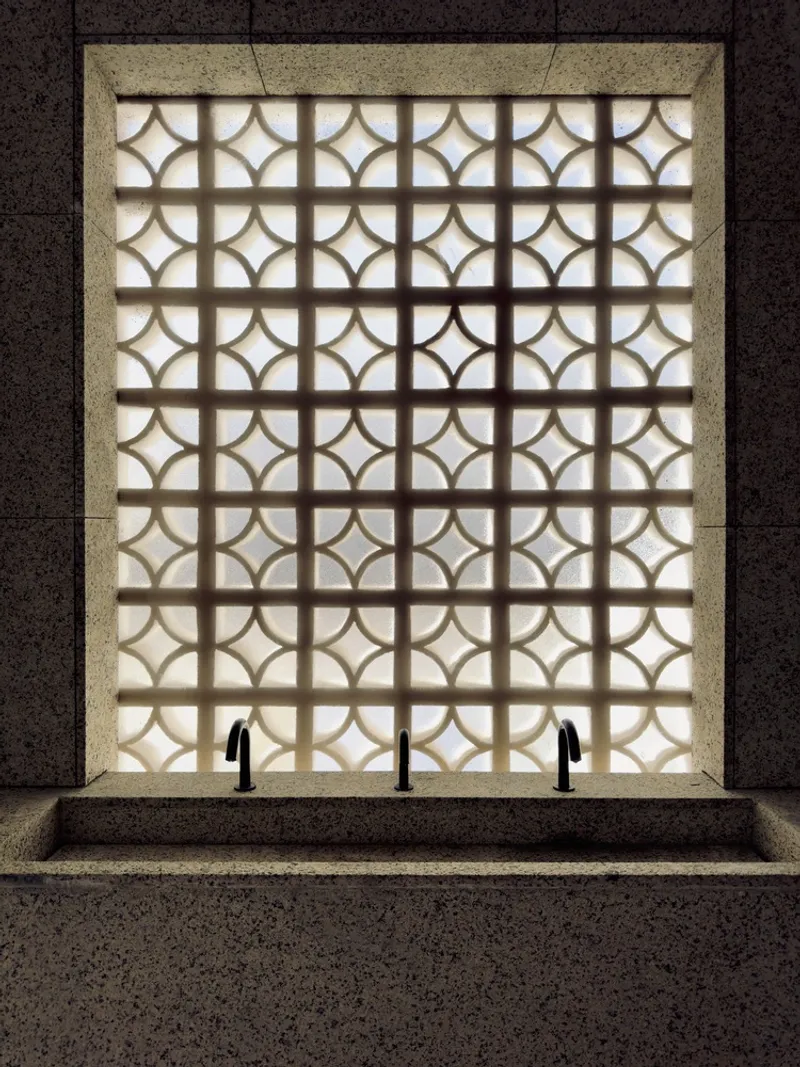
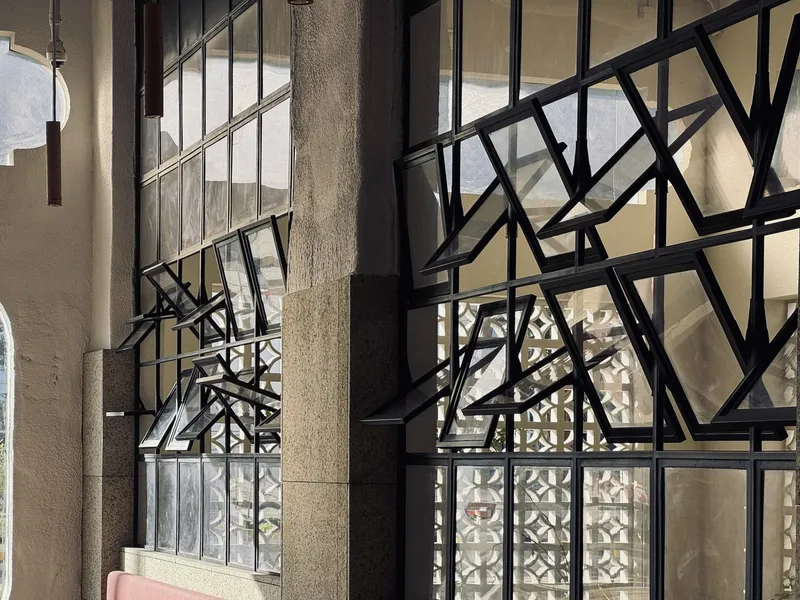
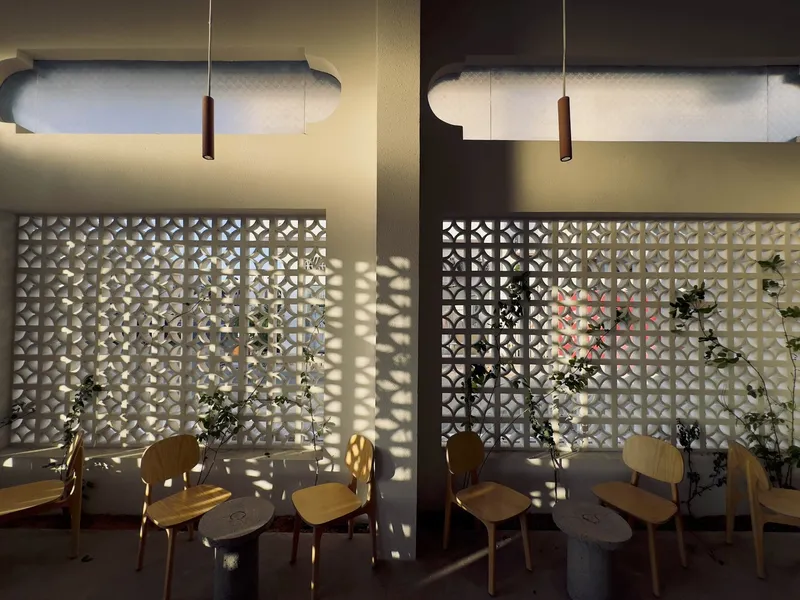
A unique section of the roastery is designed to evoke an outdoor courtyard atmosphere. Decorative lattice elements filter light and air into the space, while climbing plants introduce biophilic design principles.
Concrete tables and simple wooden seating enhance the rustic ambiance, creating a transitional zone between interior and exterior environments. This spatial strategy fosters a connection to nature, aligning with contemporary trends in biophilic coffee shop architecture and experiential retail design.

The Granite Fireplace as Social Anchor
At the heart of the space stands a large stone fireplace constructed from locally sourced granite. Beyond its functional role, the fireplace operates as a social and visual anchor.
It introduces warmth during cooler seasons while reinforcing the narrative of authenticity and regional craftsmanship. The textured stone mass contrasts elegantly with the lighter furniture, creating spatial depth and intimacy within the open-plan layout.
Architectural Atmosphere and User Experience
Camel Step Coffee Roasters Shop delivers more than specialty coffee: it offers an architectural atmosphere defined by warmth, simplicity, and local identity. The combination of stone, wood, filtered light, and natural textures cultivates a setting that feels both contemporary and deeply rooted in Saudi heritage.
Visitors experience openness through expansive windows and airy interiors, while intimate seating clusters and the fireplace create cozy moments of retreat. The project exemplifies how coffee shop architecture in Saudi Arabia can successfully merge cultural continuity with modern design innovation.

Project Details
Architect: Faris Alosaimi Location: Hail Area: 325 m² Year: 2024 Photography: Mansor Alsofi

Conclusion: A Model for Contemporary Regional Coffee Architecture
Camel Step Coffee Roasters Shop stands as a refined example of adaptive reuse, regional material integration, and experiential café design. Through the strategic use of Hail’s natural granite, crushed red stone flooring, warm wooden furnishings, and biophilic elements, the project achieves a seamless dialogue between tradition and modernity.
It is a benchmark for specialty coffee shop design, sustainable interior architecture, and heritage renovation in the Middle East, demonstrating how contemporary retail spaces can remain deeply connected to place.

All photographs are works of
Mansor Alsofi


Popular Articles
Popular articles from the community


Juan García Correa, John González and Claudia Rueda Sink a Circular Amphitheater into a Manizales Engineering Building
On the La Nubia campus in Manizales, Colombia, the S1 Building folds labs and offices into a hillside of ramped lawns that double as a campus route.

U.GA Architects Wraps an Oval Rooftop Pool in Curved Board-Formed Concrete on Busan's Jeollidan-gil
In Busan's Jeonpo-dong, a 454 m² mixed-use block stacks a neighborhood facility, guest rooms and an oval rooftop pool inside spiraling concrete walls.

LT2A and OPEN Architectes Thread a Brick and Glass High School Through a Wooded Belgian Campus
In Braine-l'Alleud, a 3,000 m² wing for Collège Cardinal Mercier pairs pale brick with a glazed colonnade, deferring to a small chapel and a dense wood.

Cube Design Draws an Ecological Corridor Between Two Shenzhen Hills with the Nankai Building
Beside Shenzhen's container docks, the Nankai Building pairs stacked balconies with a climbing green screen to connect two hillsides across its height.

Similar Reads
You might also enjoy these articles

Gil Mello Arquitetura Tilts a Single Roof Toward the Waterfalls on a Plateau Above Aiuruoca, Brazil
In Aiuruoca, Minas Gerais, a 200 m² house of local labor and reclaimed poles pairs a low valley veranda with a tall mountain one.
U.GA Architects Wraps an Oval Rooftop Pool in Curved Board-Formed Concrete on Busan's Jeollidan-gil
In Busan's Jeonpo-dong, a 454 m² mixed-use block stacks a neighborhood facility, guest rooms and an oval rooftop pool inside spiraling concrete walls.

Felipe Hess Arquitetos Turns a Blind Stone Wall to the Street and Opens a Brazilian House onto a Courtyard and Canal
A canal-front house in Brazil hides behind painted stone and planting, then opens to an olive-tree courtyard, a reed-ceilinged porch and a curving pool.

David Macias Steps a Doorless Stone and Plaster House Down a Tropical Colombian Hillside
In the humid hills of Colombia, Threshold House replaces the front door with an open void and terraces its 850 m² down the slope instead of fighting it.

Explore Architecture Competitions
Discover active competitions in this discipline

Challenge to reimagine the Iron Throne

Photograph architecture without architects

VR headsets Storefront design competition

Illustrate the lost glory of Angkor Wat - Render Challenge
Comments (0)
Please login or sign up to add comments
No comments yet. Be the first to comment!