
Connecting Paris: Adaptive Reuse Architecture as a Catalyst for Collective Urban Life
Adaptive reuse architecture transforms Paris’ forgotten railways into a modular, community-driven public space that evolves with its users.


Project by Christopher Chen
Shortlisted Entry, Salut Paris
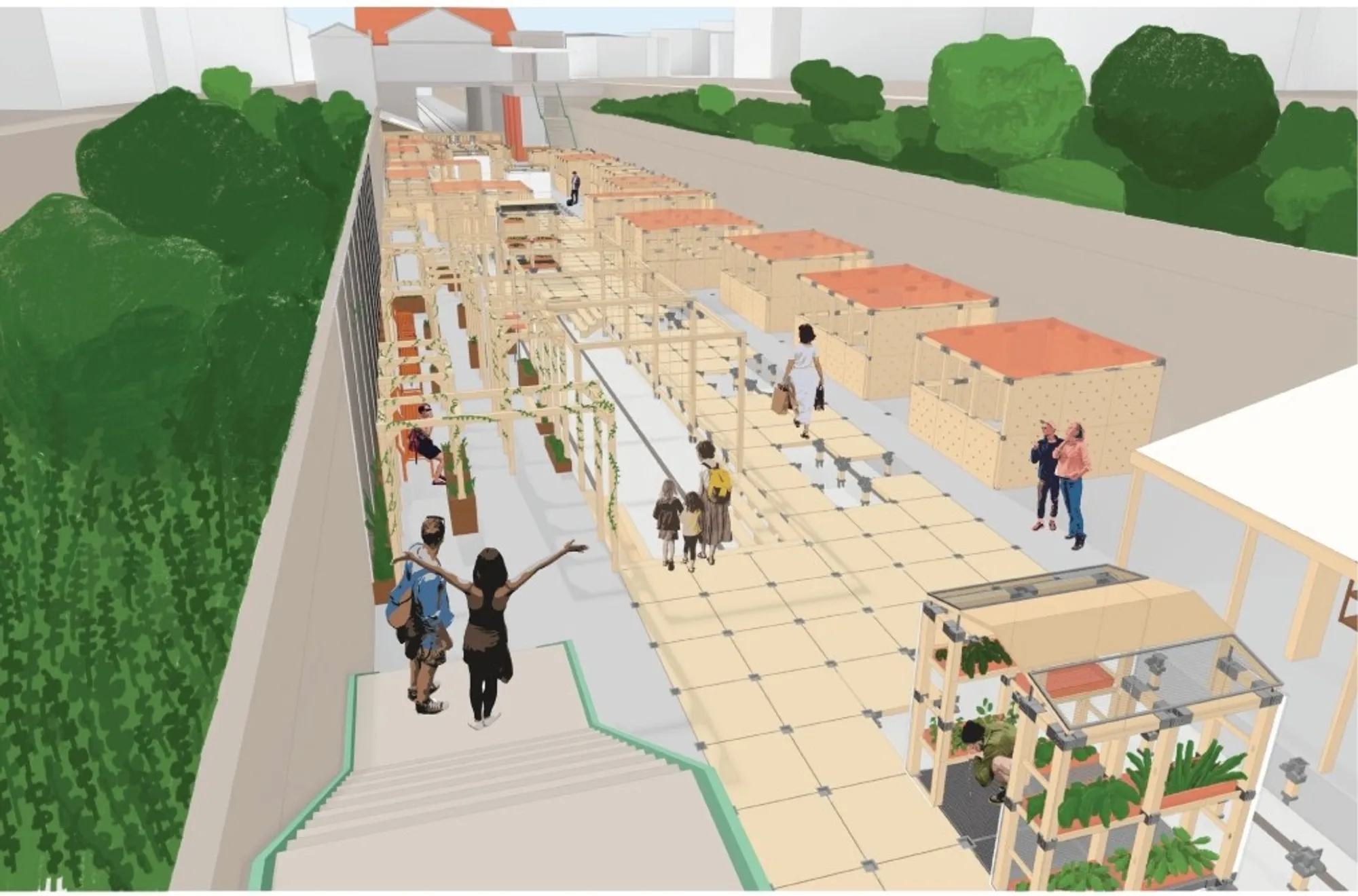
In contemporary urban discourse, adaptive reuse architecture has emerged as one of the most effective strategies for revitalizing abandoned infrastructure. Connecting Paris positions itself within this paradigm, transforming the dormant railway corridors of Paris into a dynamic, user-driven public space.
Rather than imposing a fixed architectural solution, the project introduces a flexible system that allows the space to continuously evolve. It reframes architecture not as a static object, but as an enabling framework shaped by its users.
Concept: Architecture of the Collective
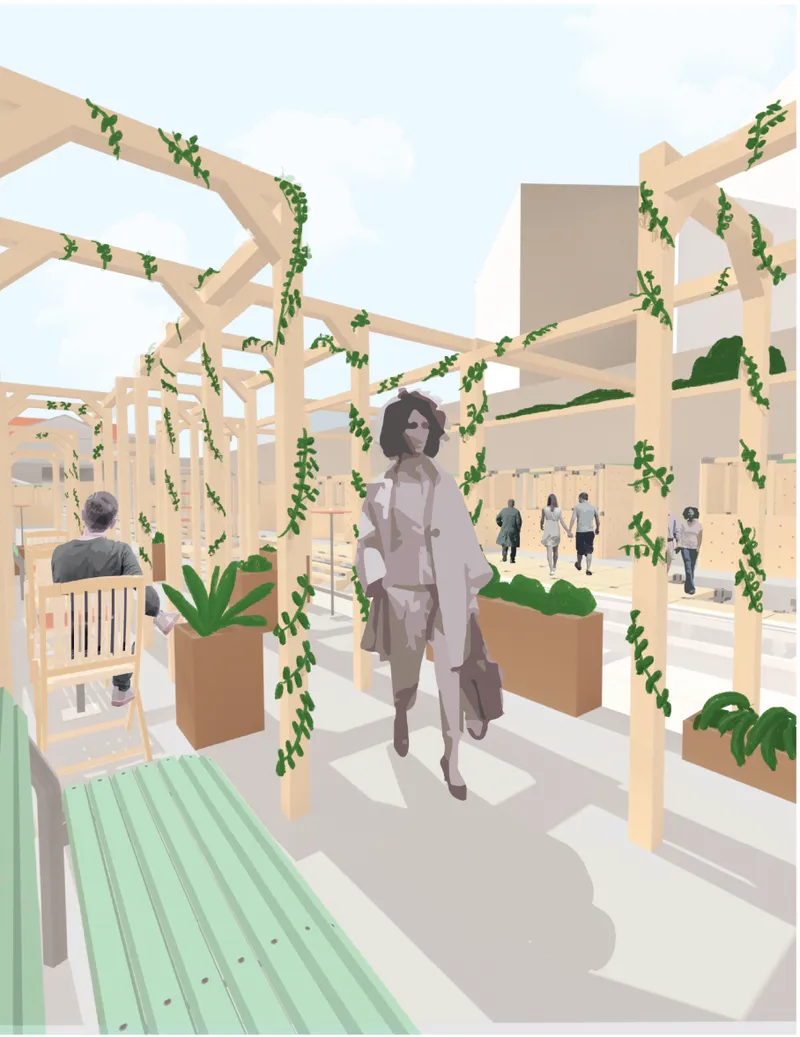
At the core of the project lies the idea of "architecture of the collective." The design acknowledges that while architecture can guide behavior, it is ultimately the users who define how space is occupied and experienced.
The proposal introduces a modular system where market stalls, communal zones, and circulation paths are not rigidly predetermined. Instead, they are configured and reconfigured by residents, vendors, and visitors. This approach ensures that the space remains inclusive, adaptable, and responsive to real-time needs.
Key conceptual drivers include:
- Openness to all users
- Flexibility in spatial organization
- Continuous adaptation over time
- Encouragement of social interaction
Site Strategy: Revitalizing the Petite Ceinture
The project engages with the historic railway infrastructure of Paris, particularly the Petite Ceinture. This site, once a vital urban artery, now exists as an underutilized linear void.
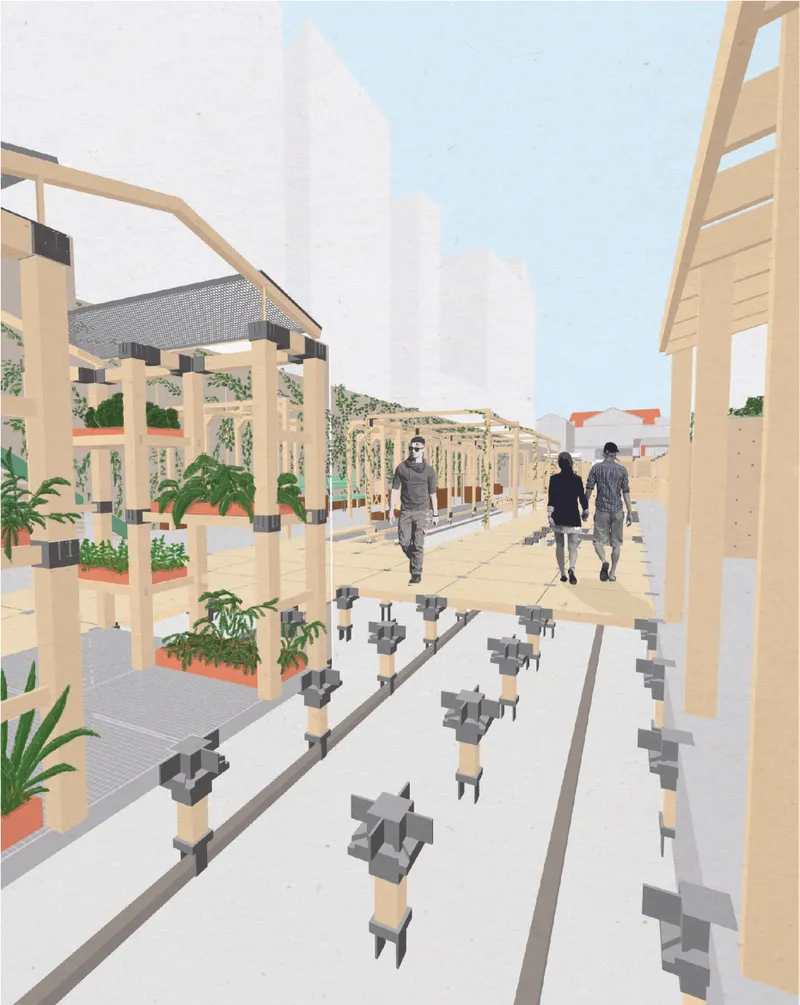
Through adaptive reuse architecture, the design reactivates this space by layering new functions over the existing tracks while preserving their historical identity. Instead of erasing the past, the intervention works with it, allowing traces of the railway to remain legible within the new urban experience.
The site is organized into distinct zones:
- Administrative and entry areas
- Modular stall zones
- Greenhouse and planting areas
- Flexible congregation spaces
Modular System: A Kit-of-Parts Approach
A defining feature of Connecting Paris is its kit-of-parts system, which enables users to assemble and customize their own stalls.
Each stall is composed of standardized components:
- Columns and beams
- Connection units
- Wall panels and doors
- Roof systems
- Platform bases
This system allows for multiple configurations, typically ranging from 2x2 to 3x3 units. Vendors can select and assemble components based on their specific needs, creating a highly personalized yet structurally coherent marketplace.
The assembly process is designed to be intuitive, ensuring accessibility for non-expert users while maintaining architectural integrity.
Flexibility and Change: Designing for Evolution
Unlike conventional market designs, this project embraces change as a core principle. The layout of stalls is not fixed; instead, it is expected to evolve over time.
The design anticipates:
- Monthly reconfiguration cycles
- Seasonal adjustments
- User-driven spatial modifications
This temporal flexibility ensures that the space remains relevant and engaging, adapting to shifting patterns of use and community needs.
Cutouts and Voids: Programmatic Ambiguity
Strategically placed cutouts within the platform introduce areas of programmatic ambiguity. These voids are intentionally left undefined, allowing users to appropriate them for various functions.
Potential uses include:
- Informal seating areas
- Performance spaces
- Social gathering zones
- Urban gardening patches
By resisting over-programming, the design encourages spontaneous activity and fosters a sense of ownership among users.
Green Integration: Softening the Urban Fabric
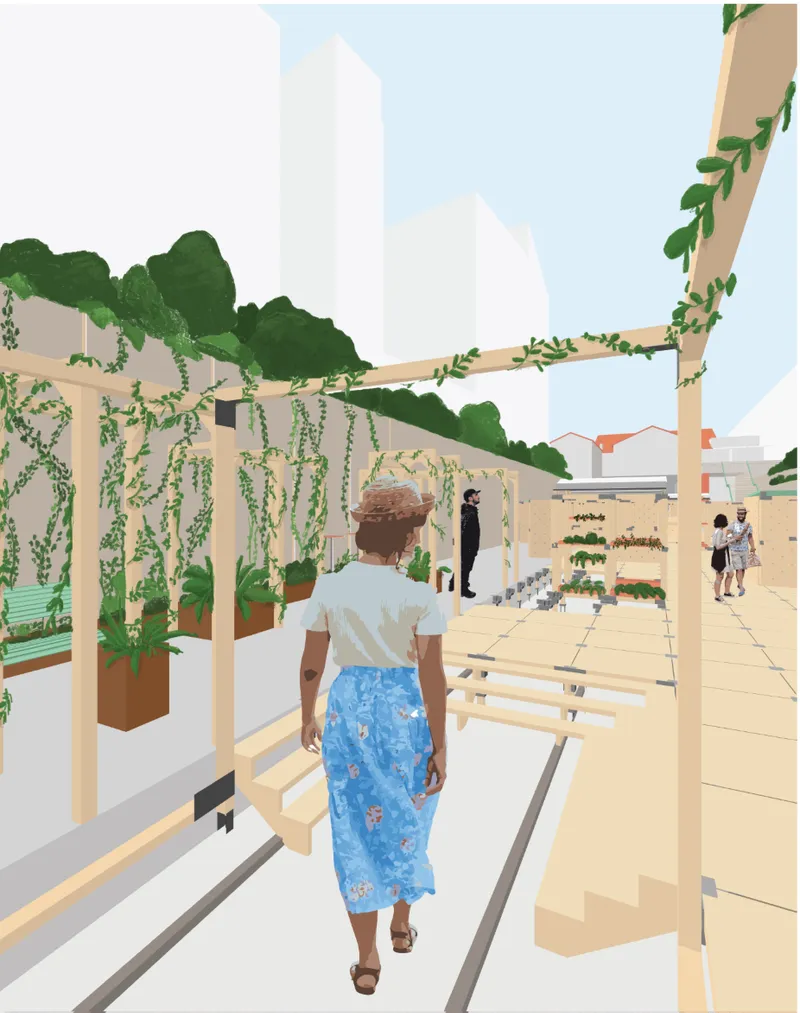
The project incorporates greenhouse structures and planting systems that weave vegetation throughout the site. These elements serve both environmental and social purposes:
- Enhancing microclimatic conditions
- Introducing seasonal variation
- Encouraging community participation in urban agriculture
The integration of greenery transforms the industrial character of the railway into a more humane and inviting environment.
Circulation and Experience
Movement through the site is carefully orchestrated to balance flow and interaction. Linear pathways follow the existing tracks, while cross-connections and gathering nodes create opportunities for pause and engagement.
The spatial experience alternates between:
- Open circulation corridors
- Dense market clusters
- Intimate seating pockets
This layered sequencing ensures a rich and varied user journey.
Rules and Constraints: Structured Freedom
To maintain coherence within flexibility, the project introduces a set of guidelines:
- Minimum stall size: 2x2 units
- Maximum stall size: 2x5 or 3x3 units
- All structures must remain elevated above the rails
These rules provide a framework within which users can operate freely, balancing order with creativity.
Social Impact: A Platform for Urban Participation
Connecting Paris extends beyond architectural intervention; it acts as a social infrastructure. By enabling users to shape their environment, the project fosters:
- Community engagement
- Local entrepreneurship
- Cultural exchange
It transforms an abandoned site into a vibrant, participatory landscape where architecture becomes a medium for collective expression.
Connecting Paris exemplifies how adaptive reuse architecture can move beyond preservation to become a framework for future urban life. By prioritizing flexibility, modularity, and user agency, the project redefines the relationship between architecture and its users.
Rather than delivering a finished object, it offers an evolving system: one that grows, adapts, and transforms alongside the community it serves.
In doing so, it presents a compelling vision for the future of public space in dense urban environments.




Popular Articles
Popular articles from the community


The Musturak Paradise: Senior Living Architecture for a Connected Future in Temara, Morocco
The Musturak Paradise reimagines senior living architecture in Temara via private homes, social spaces, culture, community, and shared care.

The Earth Pod: 3D Printed Homes for Resilient Refugee Communities
The Earth Pod reimagines refugee housing through 3D printed homes made from clay, combining resilience, self-sufficiency, and rapid shelter.

Co-Life: Senior Housing Design That Reconnects Older Adults With the City
Co-Life reimagines senior housing design through healing gardens, shared streets, workshops, and a sustainable community across generations.

Conexión: Biophilic Design Reimagines High-Rise Living in Hong Kong
Conexión reimagines high-rise living in Hong Kong through biophilic design, green facades, shared spaces, daylight, water and nature within.


Similar Reads
You might also enjoy these articles

Eco Chapel: A Green Architecture Pavilion Designed in Symbiosis with the Forest
Eco Chapel uses green architecture to weave prayer, learning and reuse into a forest pavilion shaped by modular hexagonal canopies for life.
Kaffeebühnen: Coffee Shop Architecture Designed as a Civic Stage Between Vienna’s City and Park
Kaffeebühnen turns coffee shop architecture into a civic stage, linking Vienna’s park edge, urban life, warm timber yards, and coffee craft.
Healing Façade: Sustainable Architecture for Reforestation, Community, and Sacred Ecology in Ethiopia
Healing Façade reimagines sustainable architecture as a living wall that restores soil, catches water and renews Ethiopia's forest churches.


Urban Forest: A Vertical Ecosystem for 5,000 Workers in Singapore's Changi Business Park
Radially stacked pods and layered green decks turn a 7-acre plot into 47 acres of ecological workspace projected for 2040.


Comments (0)
Please login or sign up to add comments
No comments yet. Be the first to comment!