Verzendaccommodatie
Amsterdam University College, Netherlands


What was the concept behind the project?
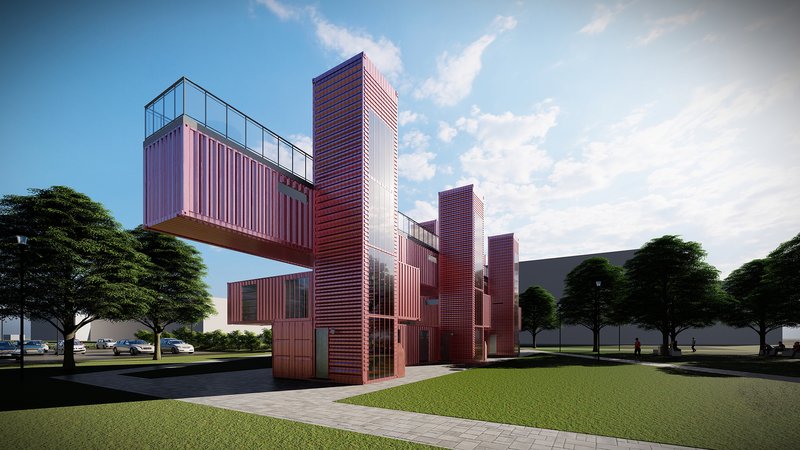
The design is made up of 5 containers with 2 cores and 3 stacked student spaces and placed together in a row creating a large unit together. Having units connected creates openings for social interaction between students through the roof or ground floor with cantilever creating the sense of indoor and outdoor space.
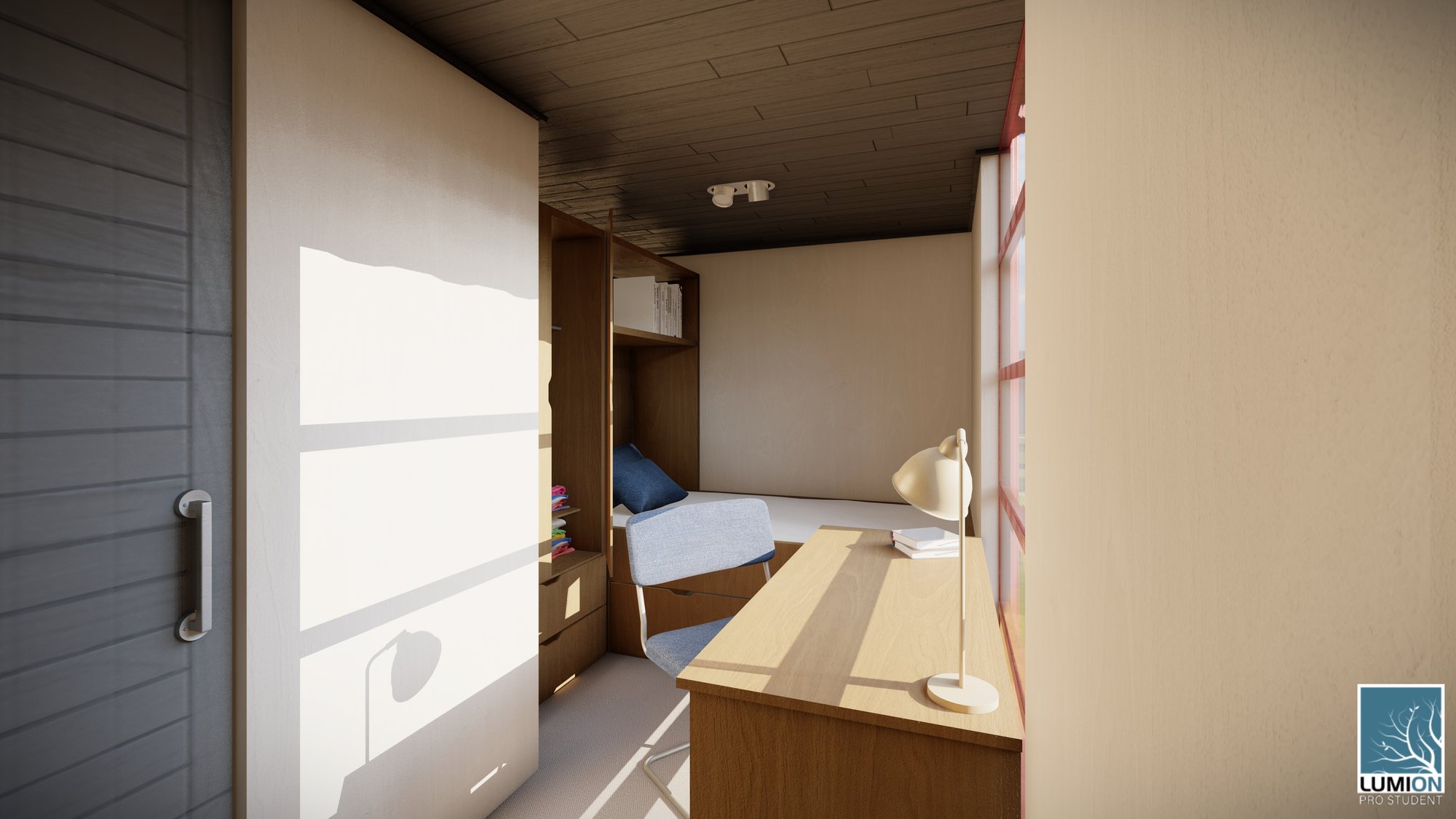
The modular design encourages each student space to have its own privacy with its own room within half of the container but breaks into social spaces once outside. This idea came from the trend of COVID-19 pandemic to create isolated spaces which influence the volume in each room by having only the essentials yet the feeling of large spaces.
This composition allows the building to sit and adapt in different environments while being efficient with the materials usage.
What was the intent behind the organization of elements across various levels (Architectural, Site, Urban)?
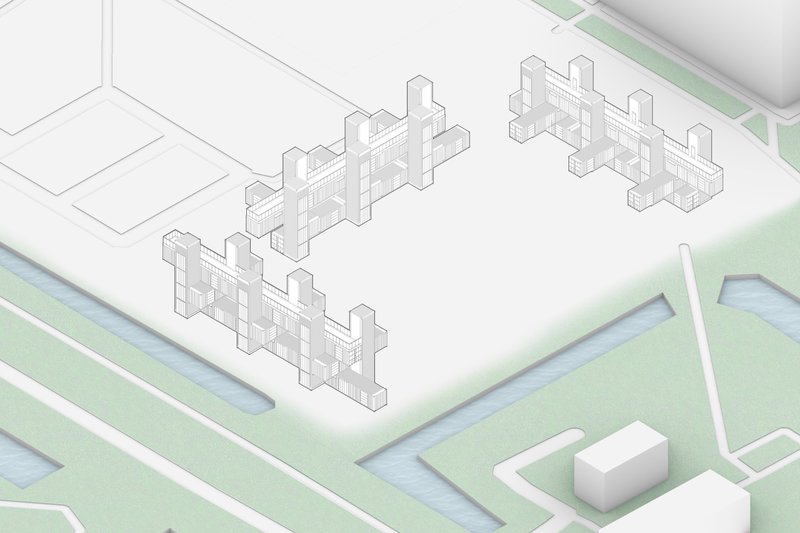
Each unit is able to connect or separate through the modular connection making it a versatile building which can increase the social space by creating a courtyard through the composition if needed.
One of the major design points is the vertical cores which help create circulation to upper floors such as the rooftop garden. Additionally, the core serves another purpose of being services which help create more spaces within the rooms.
A chosen site is located in the Netherlands, Amsterdam, Science Park that provides flat terrain with plenty of view points. With the open terrain it influences the design and allows large windows to view 2 directions over the parks and river side while providing light even within the core.
How many iterations were tried to arrive at the final outcome?
There were many initial designs but only three were chosen and to be developed further. While development design was constructed, interior must fulfill the required area for each function within the arrangement. This narrows down to a final design that has all the essentials functions and effective layout. In addition, one design element was added is vertical containers to provide circulation to upper floors to increase the density.
Which methods of design investigation?
Before the design phase, we selected the site in order to gain more understanding with the environment in order to replicate a scenario. This provided various layouts for the containers within the site and being able to modify the exterior to follow interior layout such as sunlight, viewpoint and accessibility.
How was the programme condensed into the final?
Within 15 containers there are 9 containers used for their own rooms with bathroom and kitchen while the 6 are used for stairs and services to create accessibility and security.
The 9 containers are stacked together in 3 a row but with the first floor twisted 90 degrees which cantilevers on one side. With the core each connected to certain floors depending on the side of the core but everyone is able access the rooftop while structurally supporting the cantilever containers.
With the cores placed accordingly it is able to gain a viewpoint over the park and river from both sides of the housing units with a small bathroom window to provide natural ventilation.
What/How were the materials chosen?
The exterior material is kept the same with addition of colouring to match with the surrounding context. This prevents any extra material used within the construction that increases the cost and time. However, the only major change within the facada is windows being placed according to the floor plan.
The interior material is mainly using local sourced wood like plywood to reduce the amount of carbon footprint while providing lighter interior. By using wood it can be adaptable to the new environment and it can be changed. On the other hand, the core uses dark steel for stairs to create an industrial aesthetic while maintaining structural support.
The roofing contains additional materials like water proof membrane and a water system to maintain greenery while removing excess water.
How was a specific objective attempted to be met?
The containers are used efficiently and kept for structure and facade to decrease the carbon footprint while using lighter materials within rooms. The interior was thoroughly researched and improved to accommodate only essential spaces within the small housing units to make quality of living. Additionally, by only using local source material and customs fit equipment to create a sense of large space within each container.
With the core rising over the rooftop it provides a social space which people can interact with each other while keeping privacy in its own units.
What is the expansion plan of the project?
From the proposed design, it would expand through either combination of adding more container units or adding a whole module.
By adding a whole new module it would allow to create central courtyard space from the compositions, meaning new social spaces, building connections from other units and interaction within a social environment. On the other hand the design can be extended to create larger student housing units increasing the length to fit in narrow spaces without sacrificing open spaces.
How will the project transform with the passing time? Etc.
Over time the container will need maintenance to keep lasting as well as rooftop garden with vegetation. The paint is able to be changed to another colour matching the different surrounding context.
The major change will be adding more proposed designs into the site creating new central spaces and communities within the process or expanding to meet the demands of student housing spaces.