DOT: Revolutionizing Lunar Architecture for Human Expansion
Exploring DOT's innovative lunar architecture for sustainable human expansion and habitation on the Moon.


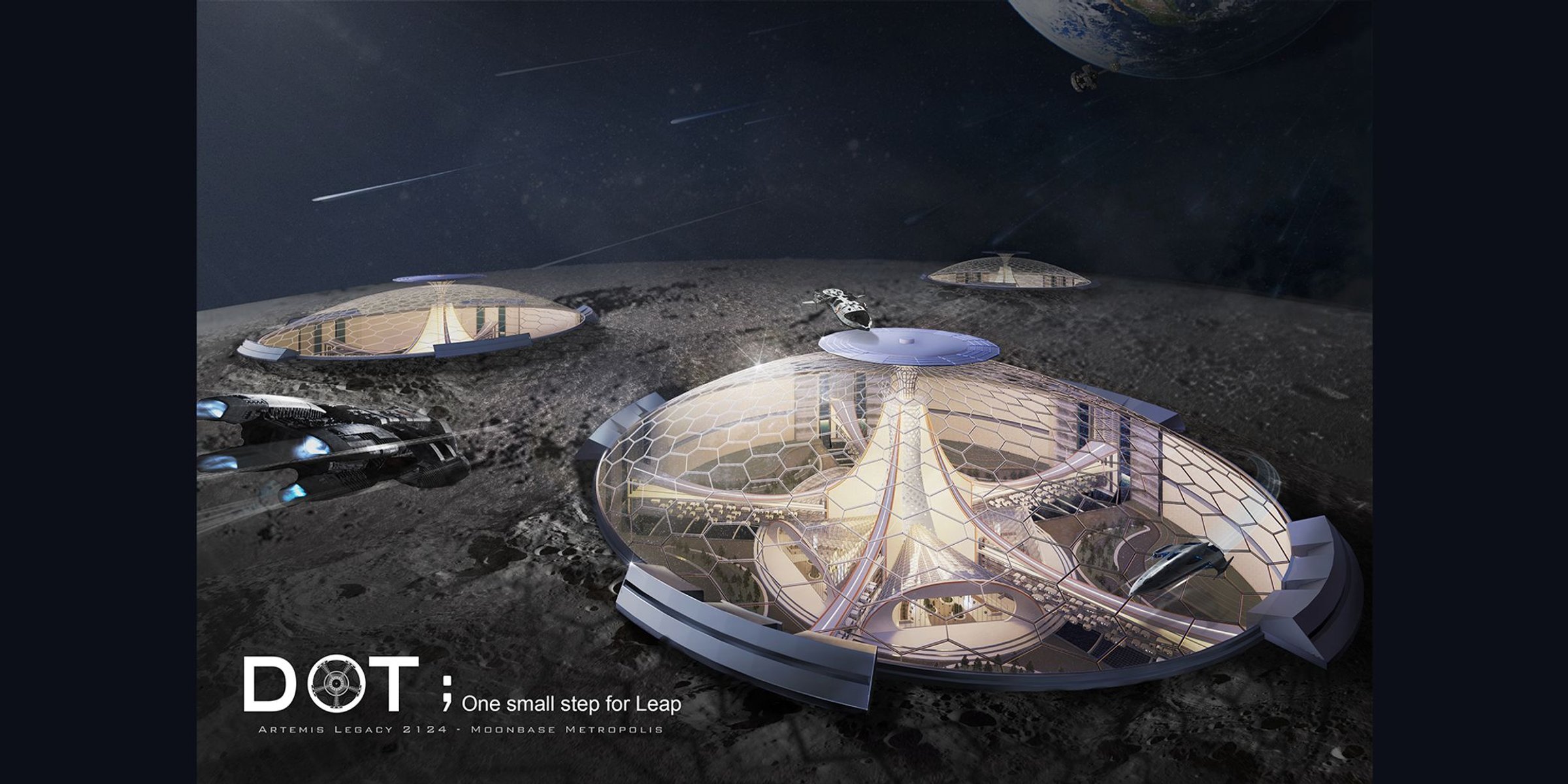
In 2124, a pioneering architectural project named DOT aims to redefine the boundaries of human habitation by establishing a sustainable moon base. This visionary concept, designed by Jiwon Min, 강민 조, 선빈 김, and 구 서문, was the Editor's Choice entry in the Moon Base 2124 Competition. Leveraging the concept of a rhizome, the project envisions interconnected complexes that facilitate humanity's seamless expansion into space.
Concept and Philosophy
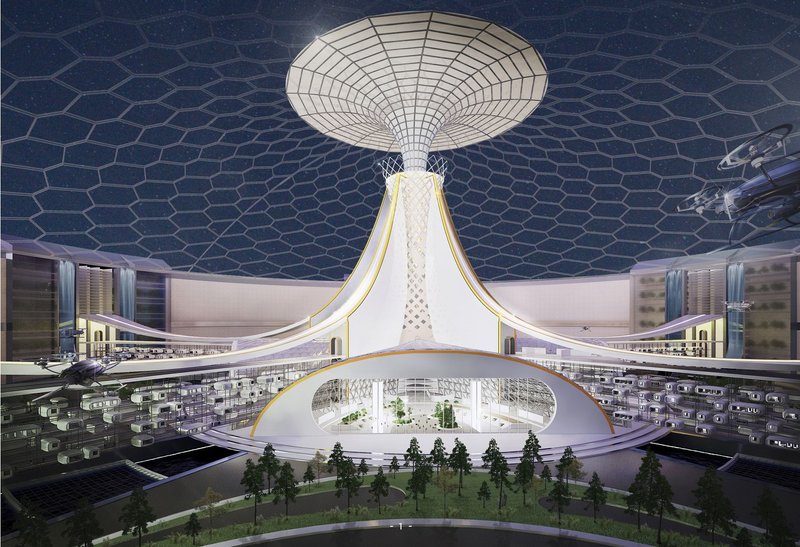
The rhizome is a philosophical term used to describe the relations and connectivity of things. Unlike traditional hierarchical structures, a rhizome forms assemblages—a gathering and grouping of things without a specific order. This concept is fundamental to DOT's design, where the relationship between the main tower and side buildings, as well as among various complexes, is horizontal and non-hierarchical. This interconnected network suggests endless possibilities for human expansion as more complexes like DOT are established.
Site Selection and Adaptation
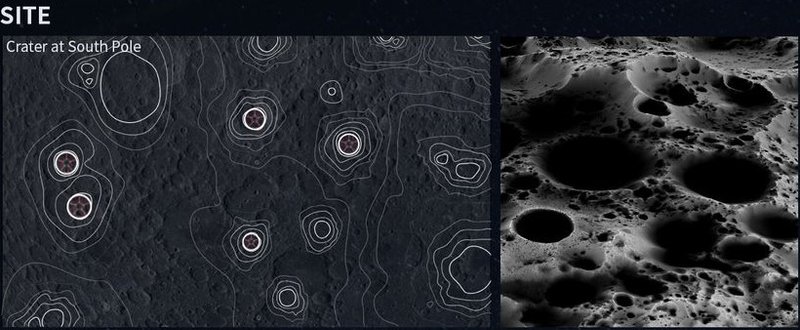
DOT's site is strategically located in a crater at the Moon's South Pole. This location offers several advantages, including protection from harmful substances in the soil and the ability to create a stable and secure space for human habitation. By utilizing craters formed by natural collisions, DOT can provide a more resilient environment less affected by ground disasters. The architecture within the crater can be tailored to its specific dimensions, ensuring a flexible and adaptable design.
Architectural Innovation: The Rhizome Network
The rhizome network operates beneath the surface, forming a foundation for interconnected structures. This approach mirrors the natural growth of plants, where roots, trunks, and branches work together to distribute resources and support growth. DOT's architectural model promotes sustainability, scalability, and systematic planning, serving as a springboard for faster growth and development.
Background and Need for Expansion
As technology and science advance, the resources available on Earth are becoming increasingly limited. The rapid pace of artificial development and resource procurement often do not align, necessitating new challenges and leaps for humanity's continuous growth. DOT addresses these challenges by presenting a model for sustainable and scalable human expansion beyond Earth. This project aims to alleviate conflicts and environmental issues associated with densely populated communities by providing a new standard for human civilization.
Process and Implementation
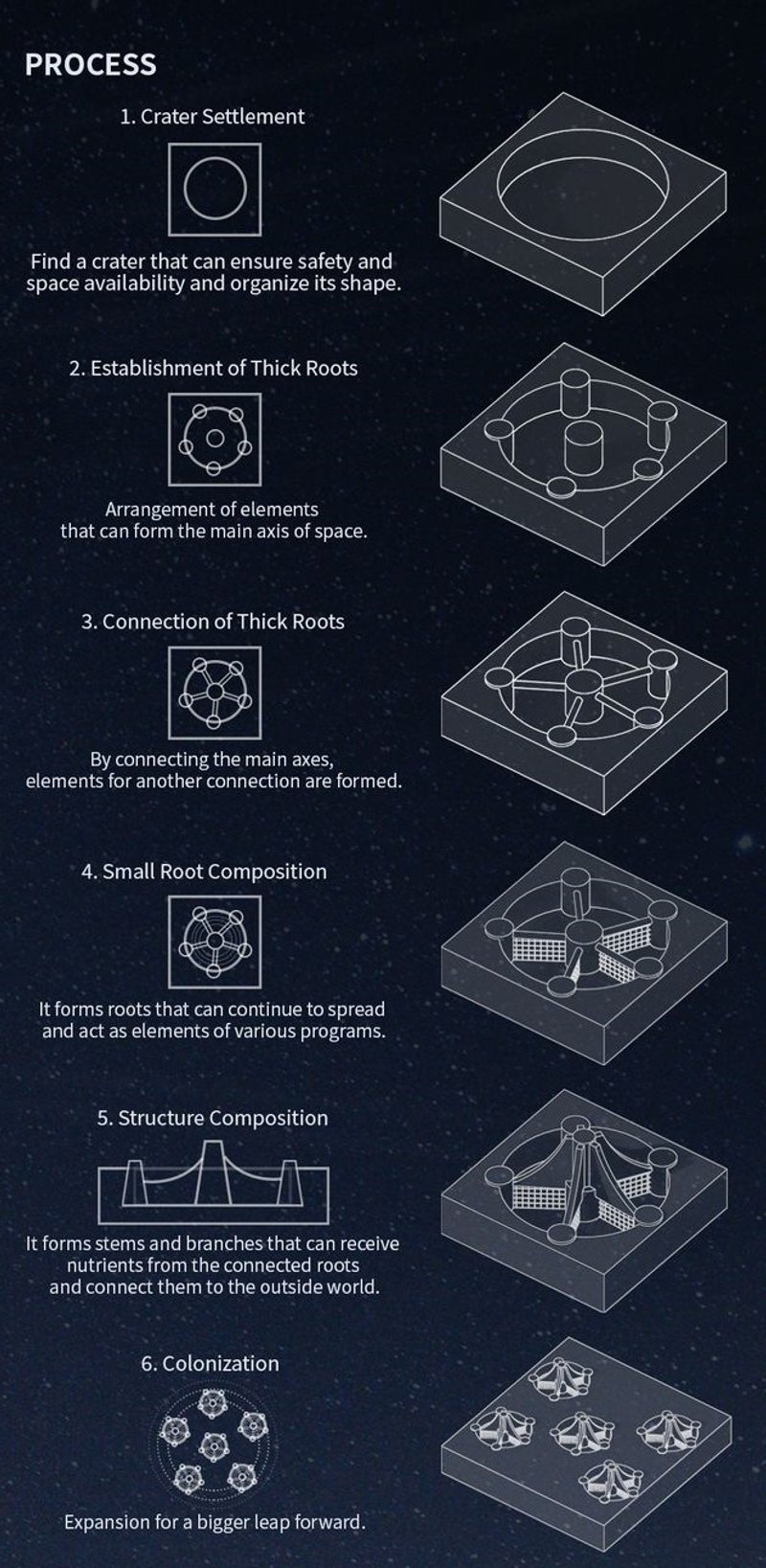
DOT's implementation follows a detailed process:
Crater Settlement: Identifying and organizing a safe and suitable crater for construction.
Establishment of Thick Roots: Arranging elements to form the main structural axis.
Connection of Thick Roots: Linking main axes to form additional connections.
Small Root Composition: Developing roots that support various programs.
Structure Composition: Creating stems and branches that connect to the outside world..
Colonization: Expanding the structure for larger-scale habitation.
Floor Plans and Programming
The project includes various floor plans tailored to specific needs:
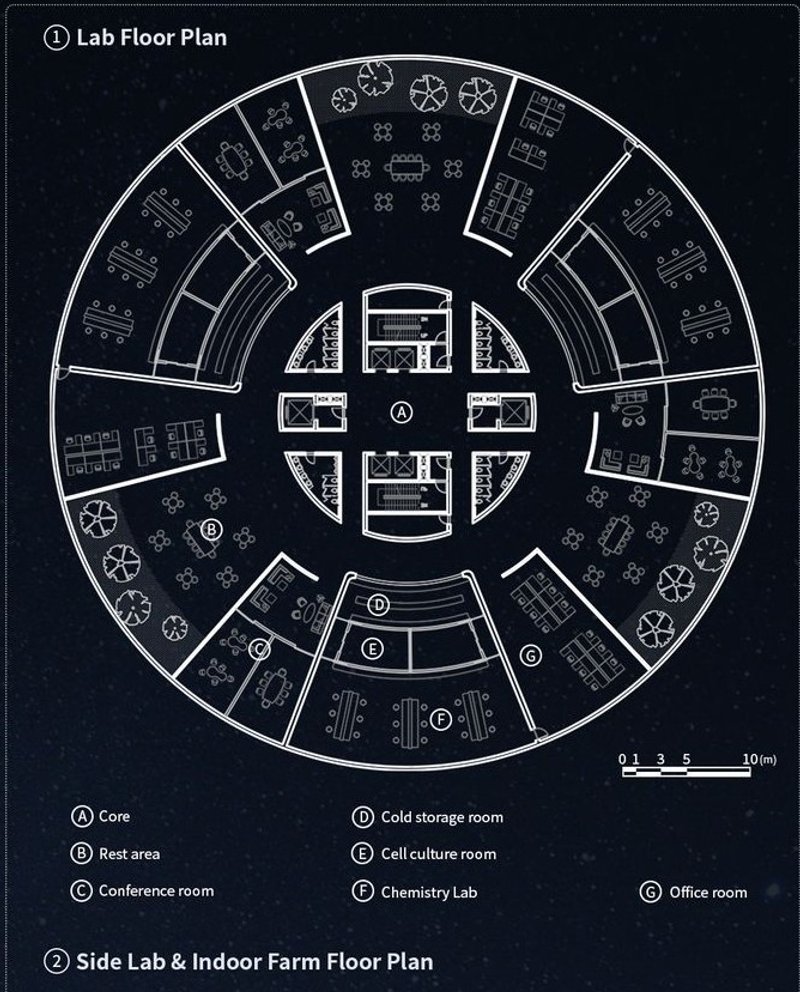
Lab Floor Plan: Core facilities, cold storage, cell culture rooms, chemistry labs, and office spaces.
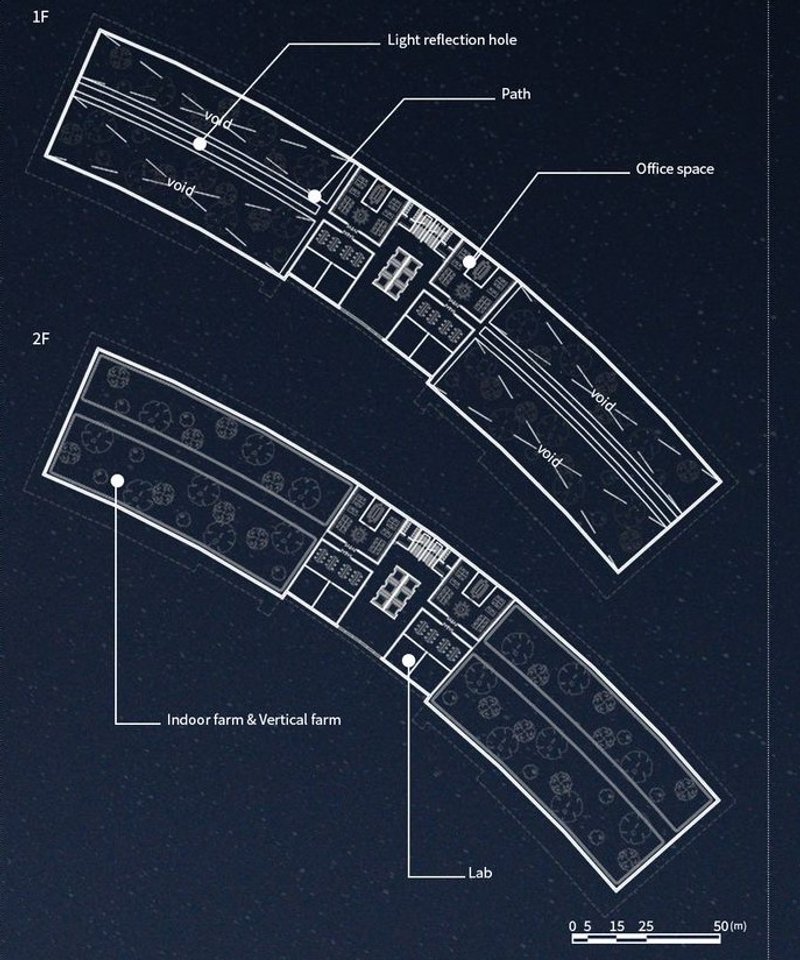
Side Lab & Indoor Farm Floor Plan: Light reflection holes, office spaces, indoor farms, and vertical farms.
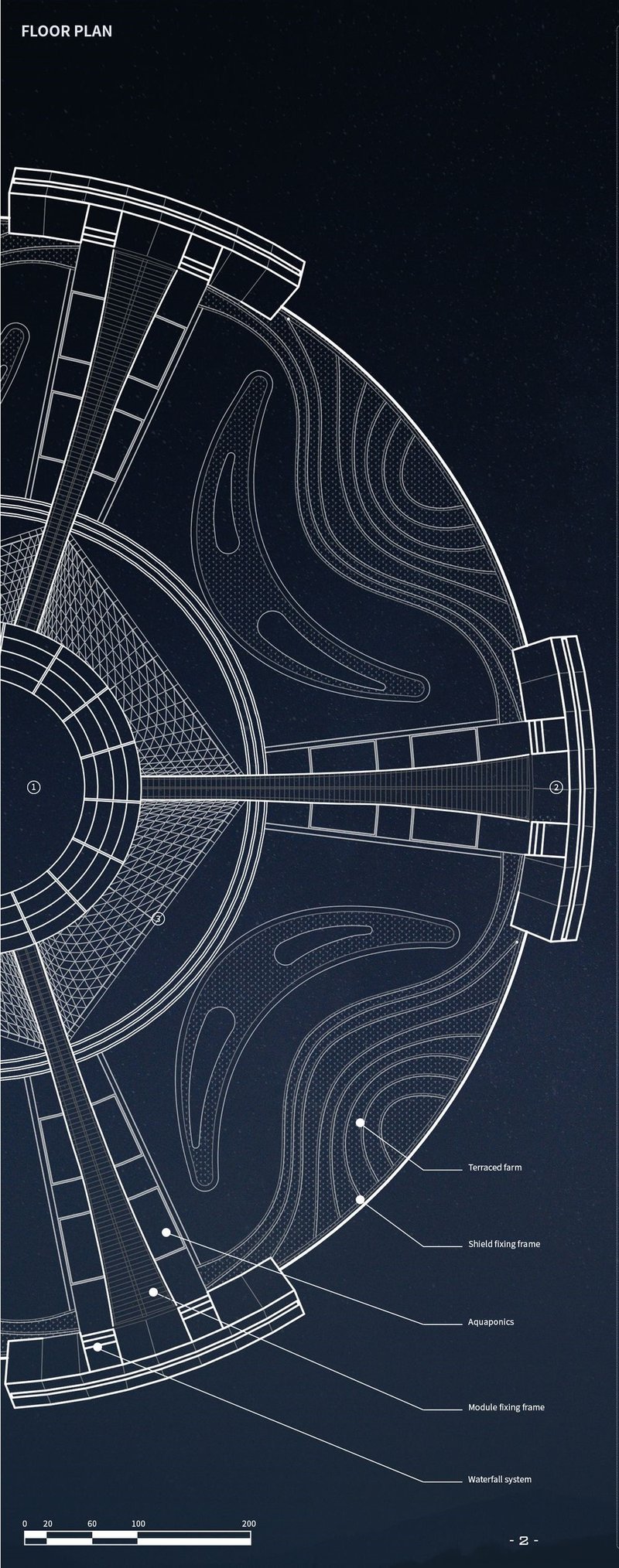
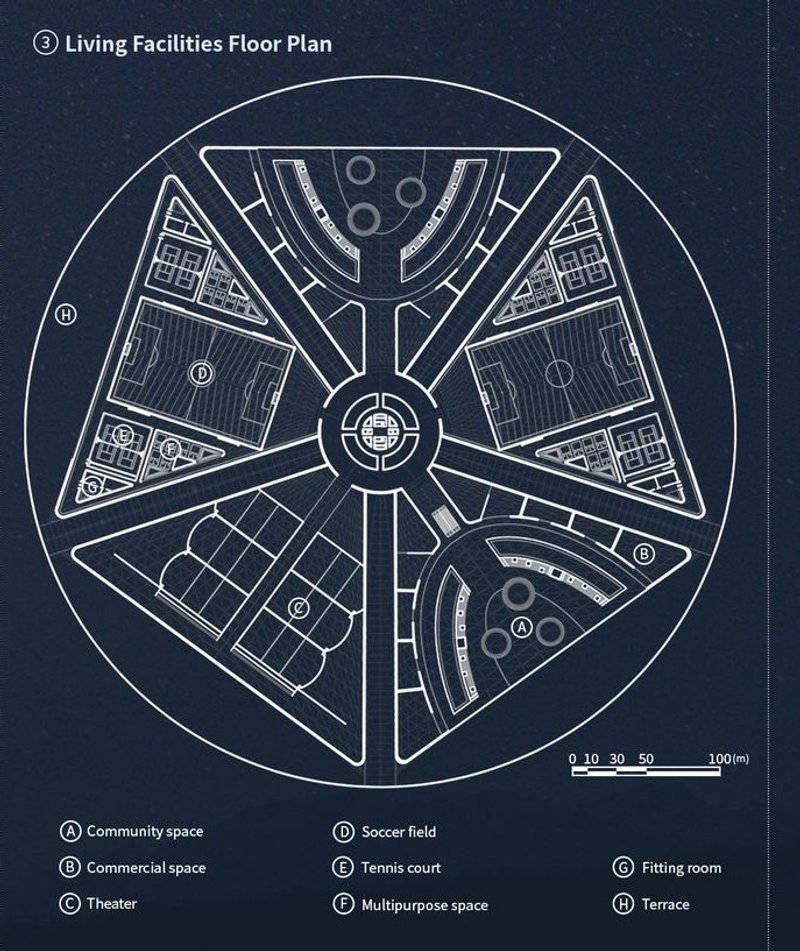
Living Facilities Floor Plan: Terraced farms, aquaponics systems, commercial spaces, sports facilities, theaters, and multipurpose spaces.
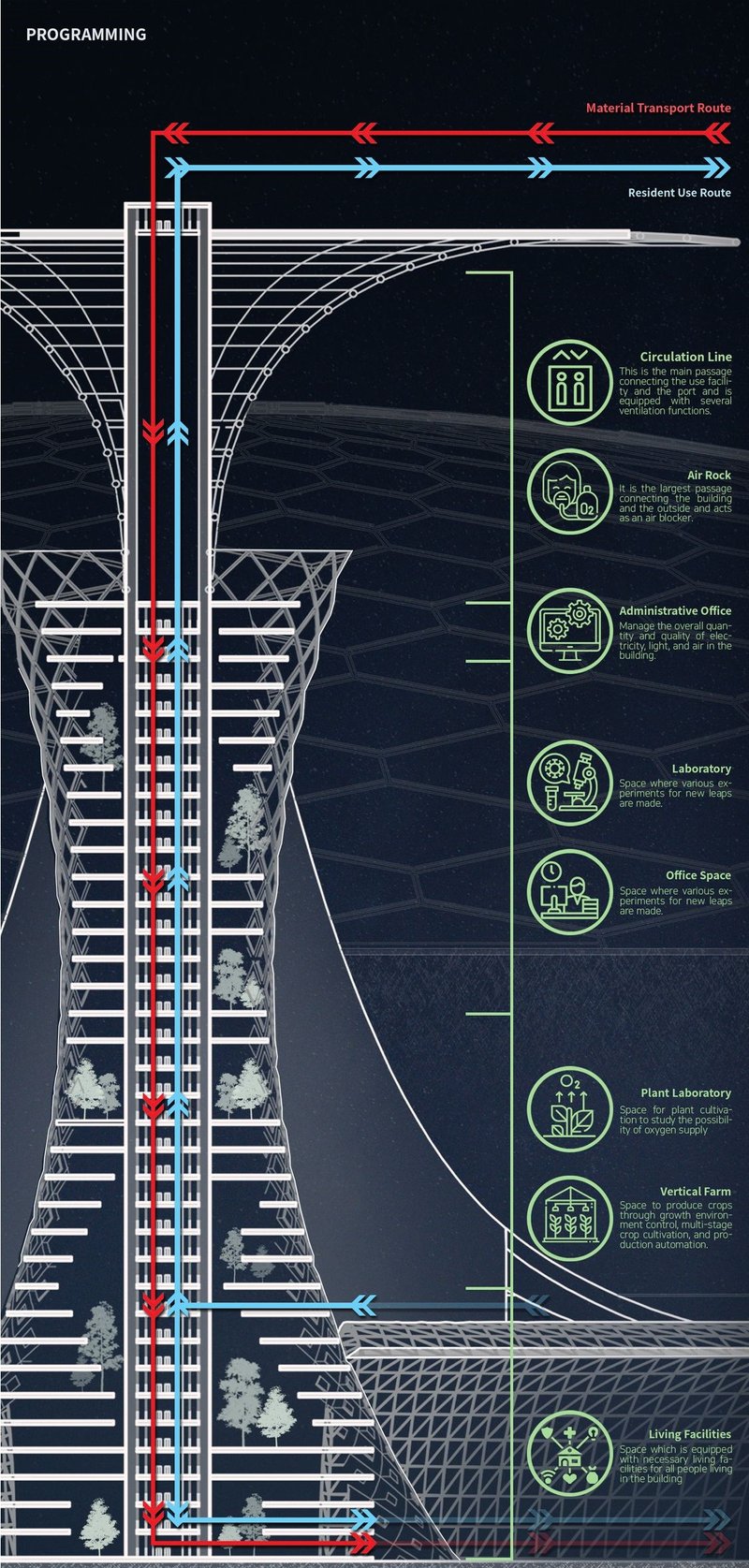
Programming and Functional Spaces
DOT's functional spaces are designed to support various activities:
Station: Manages all incoming and outgoing spacecraft, equipped with hazardous material detection and protection systems.
Circulation Line: Main passage connecting use facilities and ports, equipped with ventilation functions.
Air Rock: Largest passage connecting the building and the outside.
Administrative Office: Manages electricity, light, and air quality within the building..
Laboratories: Conducts studies to advance civilization in space, addressing energy, resource depletion, and technological development.
Office Spaces: Hosts experiments and research for new developments.
Complex Spaces: Includes sports, commercial, and cultural facilities for resident leisure and convenience.
Plant Laboratories and Vertical Farms: Ensure a steady supply of oxygen and food, utilizing advanced farming techniques.
Residential Structure and Mobility
DOT's residential structures are designed for flexibility and adaptability. Modules are fitted into a frame that allows for movement, ensuring efficient use of space. The residential facilities can accommodate varying populations and are connected to the main tower and side buildings via transportation systems, ensuring seamless mobility for residents.
Building Management and Sustainability
The Building Management Center (BMC) offers several benefits, including energy-saving, fault detection, and building defense. It manages smart farms, HVAC, and other systems to ensure optimal functionality. The circulated system within the building purifies and supplies resources like air and water, utilizing advanced treatment processes to ensure sustainability.
Utilizing Moon Materials
DOT leverages the Moon's natural resources for survival. Regolith, a material found on the Moon, can be converted into air and metals through electrolysis. Glass beads trapped in lunar soils can be heated to extract water, ensuring a steady supply of essential resources for inhabitants.
Advanced Farming Techniques
Vertical farming using reflecting mirrors and smart farming techniques are integral to DOT's design. These methods ensure the efficient growth of crops using both natural and artificial light, supporting the colony's food supply.
Energy Efficiency and Climate Control
DOT employs advanced technologies to enhance energy efficiency and climate control. Low-emissivity coatings, transparent photovoltaic cells, and electrochromic glass control heat transfer and block harmful UV light. A cooling and heating box system regulates temperatures, ensuring a comfortable living environment.