

Embracing Tradition in Modernity: Exploring Vernacular Architecture Design at Tribhuvana Office
Exploring the Tribhuvana Office's blend of vernacular architecture with modern design in Ahmedabad by d6thD studio.


Vernacular Architecture Design
Vernacular architecture design, a term that evokes the essence of localized, culturally rooted building practices, has found a contemporary canvas at the Tribhuvana Office by d6thD design studio. Located in the serene village of Khanderaopura near Ahmedabad, Gujarat, this project exemplifies the harmonious blend of tradition and innovation, serving as a testament to the enduring relevance of vernacular principles in today's architectural discourse.

The Philosophy Behind Tribhuvana Office
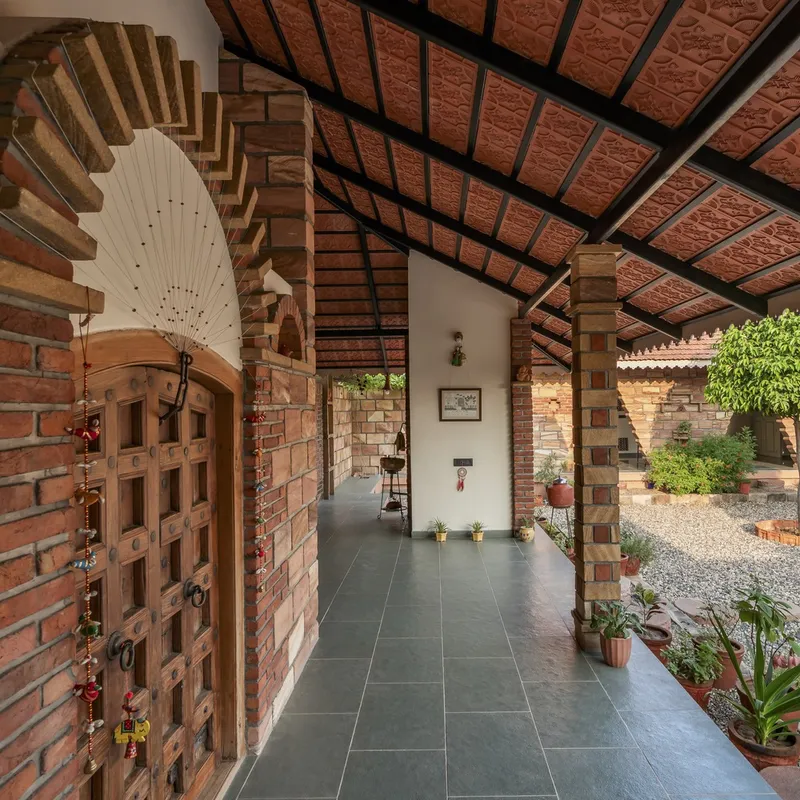
The design philosophy of Tribhuvana Office is deeply influenced by the concept of "The Art of Building Responsibly," a principle that advocates for architecture that is in harmony with its environment, culture, and history. Inspired by Alain de Botton's "Architecture of Happiness," the project emphasizes the profound impact of our physical surroundings on our emotions and well-being. By weaving traditional architectural elements with modern design practices, the Tribhuvana Office stands as a beacon of how spaces can seamlessly blend with their surroundings, promoting a sense of contentment and well-being among its users.

Architectural Details and Design Approach
Integration with Nature and Tradition
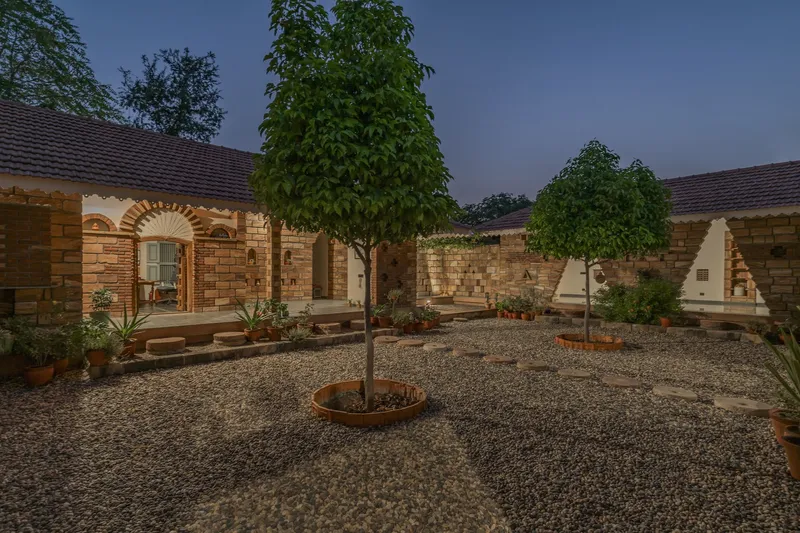
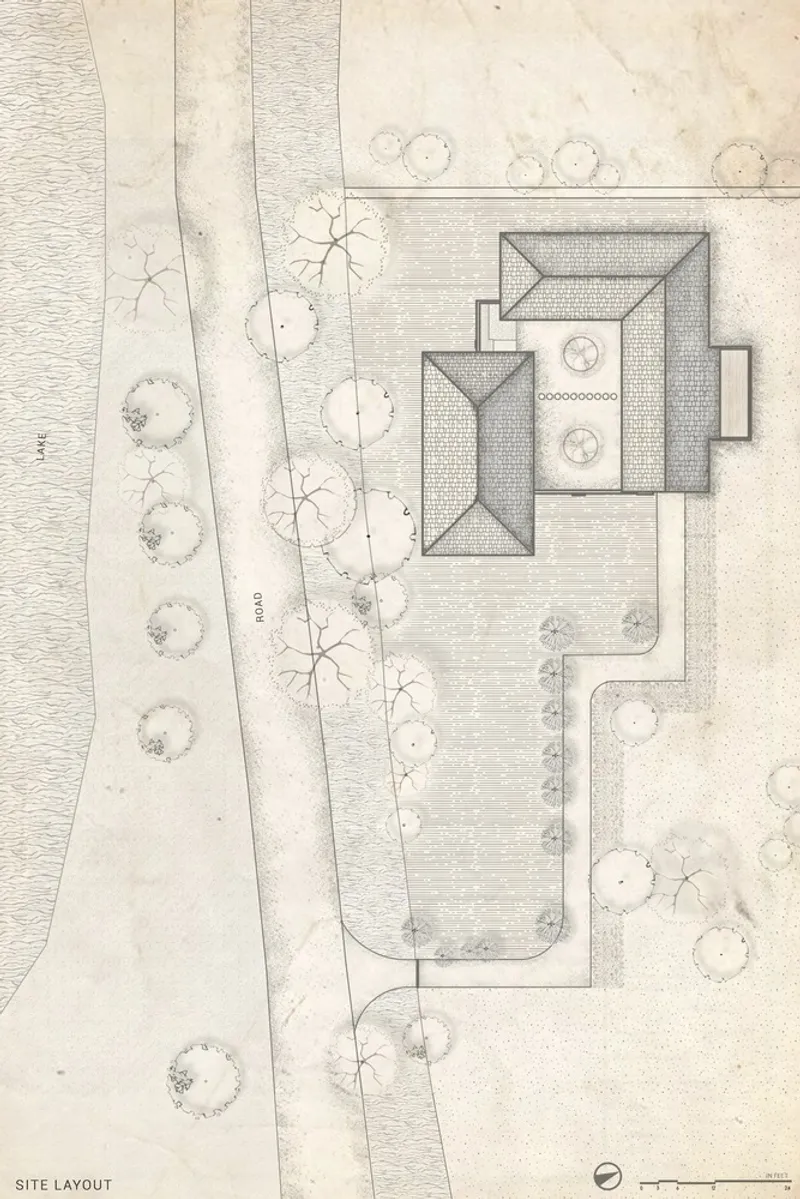
At the heart of Tribhuvana Office's design is its integration with the natural and cultural fabric of its rural setting. The office is designed as a space that not only fosters creativity but also invites a renewed connection with nature and tradition. Its location within a farm, alongside ongoing farming activities and near an expansive lake, informs its orientation and design, ensuring that the building group exists in symbiosis with its environment.
Spatial Dynamics and Material Palette
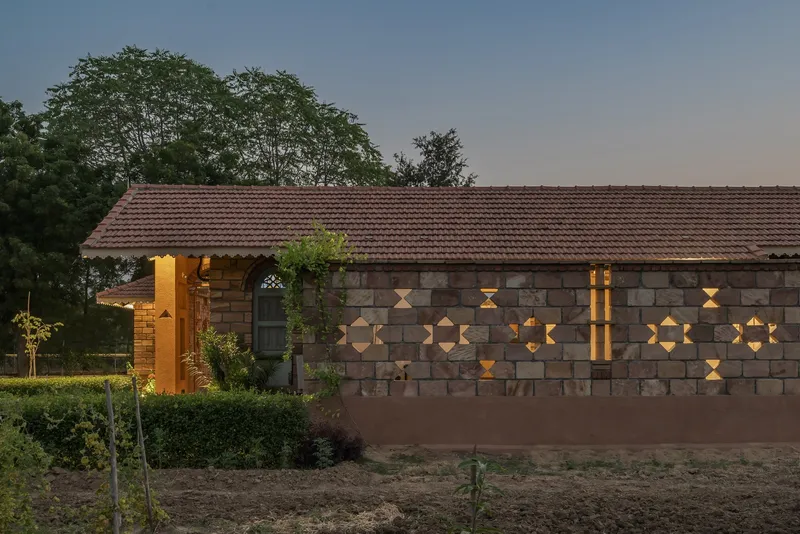
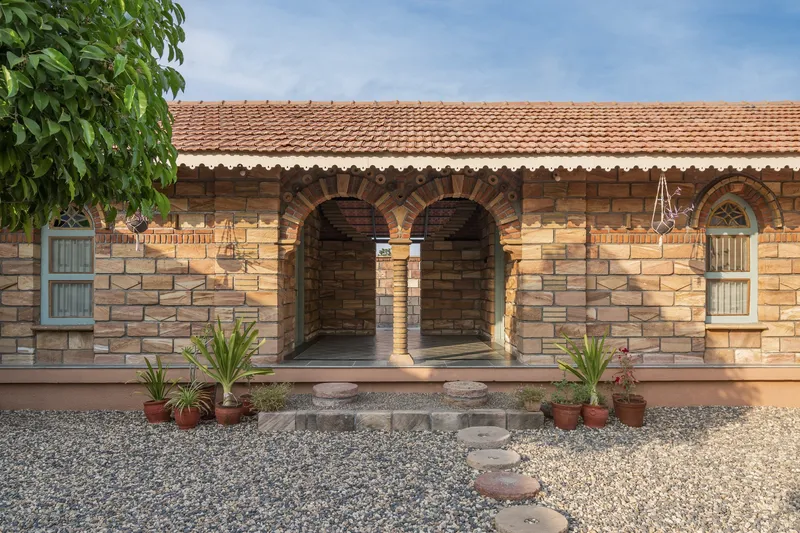
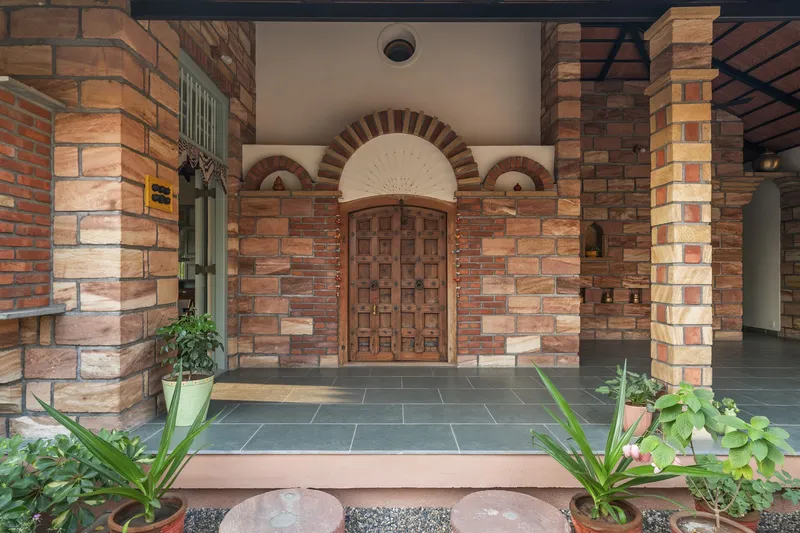
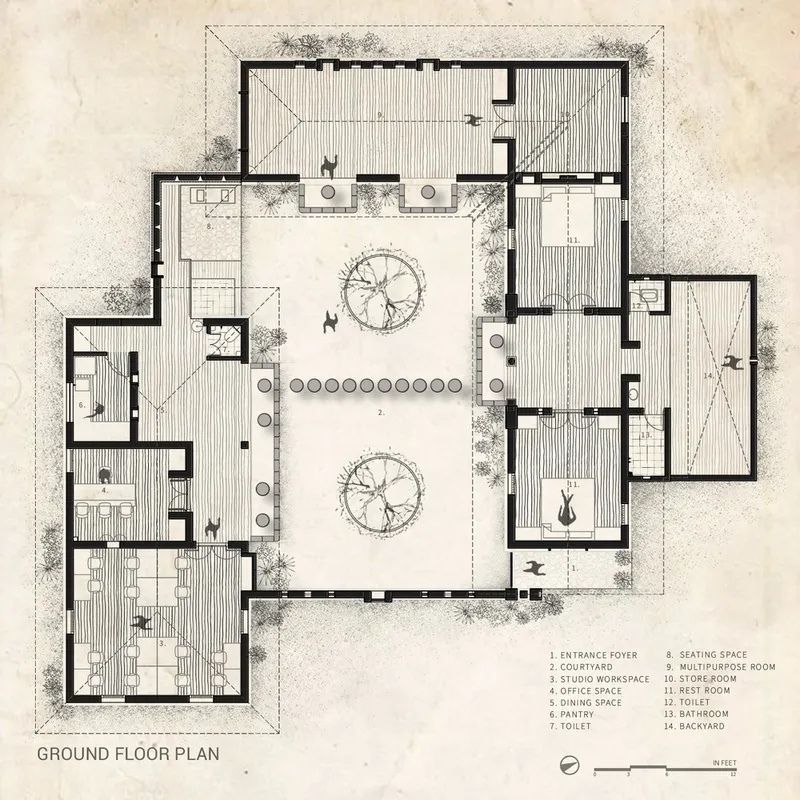
The architectural narrative of Tribhuvana is articulated through its spatial dynamics, characterized by a captivating journey from the entrance corridor to the courtyard at the building's core. This courtyard, framed by guardian trees, serves as a verdant sanctuary that connects the indoors with the outdoors. The use of local stone, bricks, and terracotta tiles across diverse functions and walls creates a unified character, emphasizing the project's commitment to climate responsiveness and sustainability.
Climate-Conscious Design
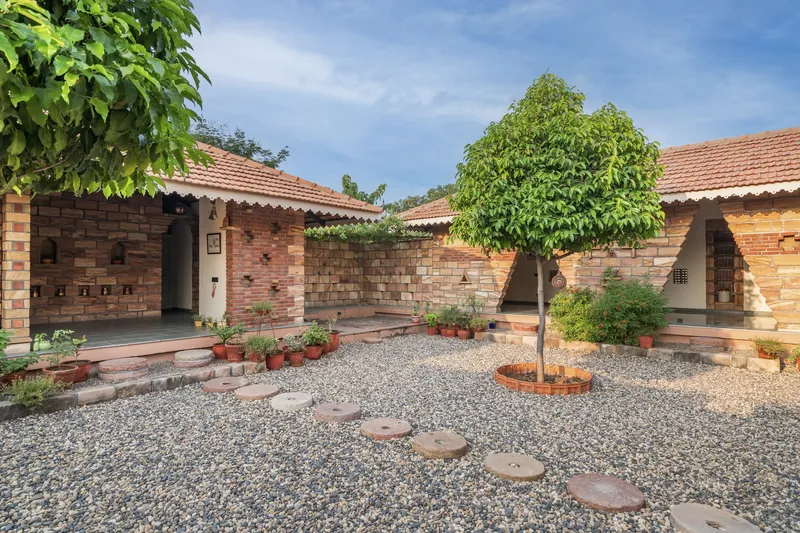
A climate-conscious design approach is evident in the studio and residence blocks' north-south alignment, which combats heat gain, and the multipurpose hall's versatility. The design also features carefully curated smaller openings and the incorporation of traditional elements like terracotta jalis and recycled materials, showcasing a thoughtful balance between control, openness, and environmental sensitivity.
Celebrating Local Crafts and Sustainability
The project's dedication to sustainability extends beyond its architectural design to the incorporation of local crafts and techniques. By engaging local artisans and utilizing repurposed materials, the Tribhuvana Office not only reduces costs but also celebrates the region's heritage and craftsmanship. This approach not only dignifies and empowers craftsmen but also infuses the building process with a sense of human spirit and heritage.
A Model for Future Architecture
The Tribhuvana Office by d6thD design studio stands as a paradigm of how vernacular architecture design can be reinterpreted and applied in contemporary settings. It showcases the potential of architecture to bridge the gap between tradition and modernity, creating spaces that are not only aesthetically pleasing and functional but also deeply rooted in their cultural and environmental context. As we move forward, projects like Tribhuvana Office serve as a reminder of the importance of building responsibly, emphasizing the need for architecture that respects its heritage while embracing the challenges and opportunities of the present.
By focusing on vernacular architecture design, we can continue to craft spaces that reflect the essence of their surroundings, promoting well-being, sustainability, and a deeper connection to our cultural roots.
All photographs are work of Inclined Studio


Popular Articles
Popular articles from the community


Cube Design Draws an Ecological Corridor Between Two Shenzhen Hills with the Nankai Building
Beside Shenzhen's container docks, the Nankai Building pairs stacked balconies with a climbing green screen to connect two hillsides across its height.

longwave studio Reorganizes a 112 m² Tainan Apartment Around the Daily Routines of a Family and Two Cats
In Tainan, Taiwan, birch plywood, rust-red furniture and a freestanding plaster wall link arrival, storage, work and family life in one apartment.

Architekt Andreas Gruber Scatters 23 Dark Timber Chalets Across a South Tyrolean Forest Edge
In Molini di Tures, Amonti Chalets breaks a resort into a hamlet of gabled timber houses, with parking, storage and services pushed into the slope.

Juan García Correa, John González and Claudia Rueda Sink a Circular Amphitheater into a Manizales Engineering Building
On the La Nubia campus in Manizales, Colombia, the S1 Building folds labs and offices into a hillside of ramped lawns that double as a campus route.

Similar Reads
You might also enjoy these articles

Gil Mello Arquitetura Tilts a Single Roof Toward the Waterfalls on a Plateau Above Aiuruoca, Brazil
In Aiuruoca, Minas Gerais, a 200 m² house of local labor and reclaimed poles pairs a low valley veranda with a tall mountain one.

U.GA Architects Wraps an Oval Rooftop Pool in Curved Board-Formed Concrete on Busan's Jeollidan-gil
In Busan's Jeonpo-dong, a 454 m² mixed-use block stacks a neighborhood facility, guest rooms and an oval rooftop pool inside spiraling concrete walls.

Felipe Hess Arquitetos Turns a Blind Stone Wall to the Street and Opens a Brazilian House onto a Courtyard and Canal
A canal-front house in Brazil hides behind painted stone and planting, then opens to an olive-tree courtyard, a reed-ceilinged porch and a curving pool.

David Macias Steps a Doorless Stone and Plaster House Down a Tropical Colombian Hillside
In the humid hills of Colombia, Threshold House replaces the front door with an open void and terraces its 850 m² down the slope instead of fighting it.

Explore Vernacular Architecture Competitions
Discover active competitions in this discipline

Challenge to reimagine the Iron Throne

Photograph architecture without architects

Illustrate the lost glory of Angkor Wat - Render Challenge

Design challenge to reuse E-waste
Comments (0)
Please login or sign up to add comments
No comments yet. Be the first to comment!