



Office Building
Commercial and institutional buildings designed for office work, from corporate towers to converted industrial spaces.
An office is a space where a group of people work to help realize the goals and purposes of an organization. The word "office" can also refer to a position within an organization with attached duties (officer, officeholder, official). It may be just one single room equipped with minimal facilities, or could be divided into individual offices separated from each other by walls or partitions.
An office is also a cultural phenomenon: going from a small office such as a personal workstation located in the corner of a small business of extremely small size (see a way to work remotely), all the way to and including massive buildings dedicated entirely to one company.
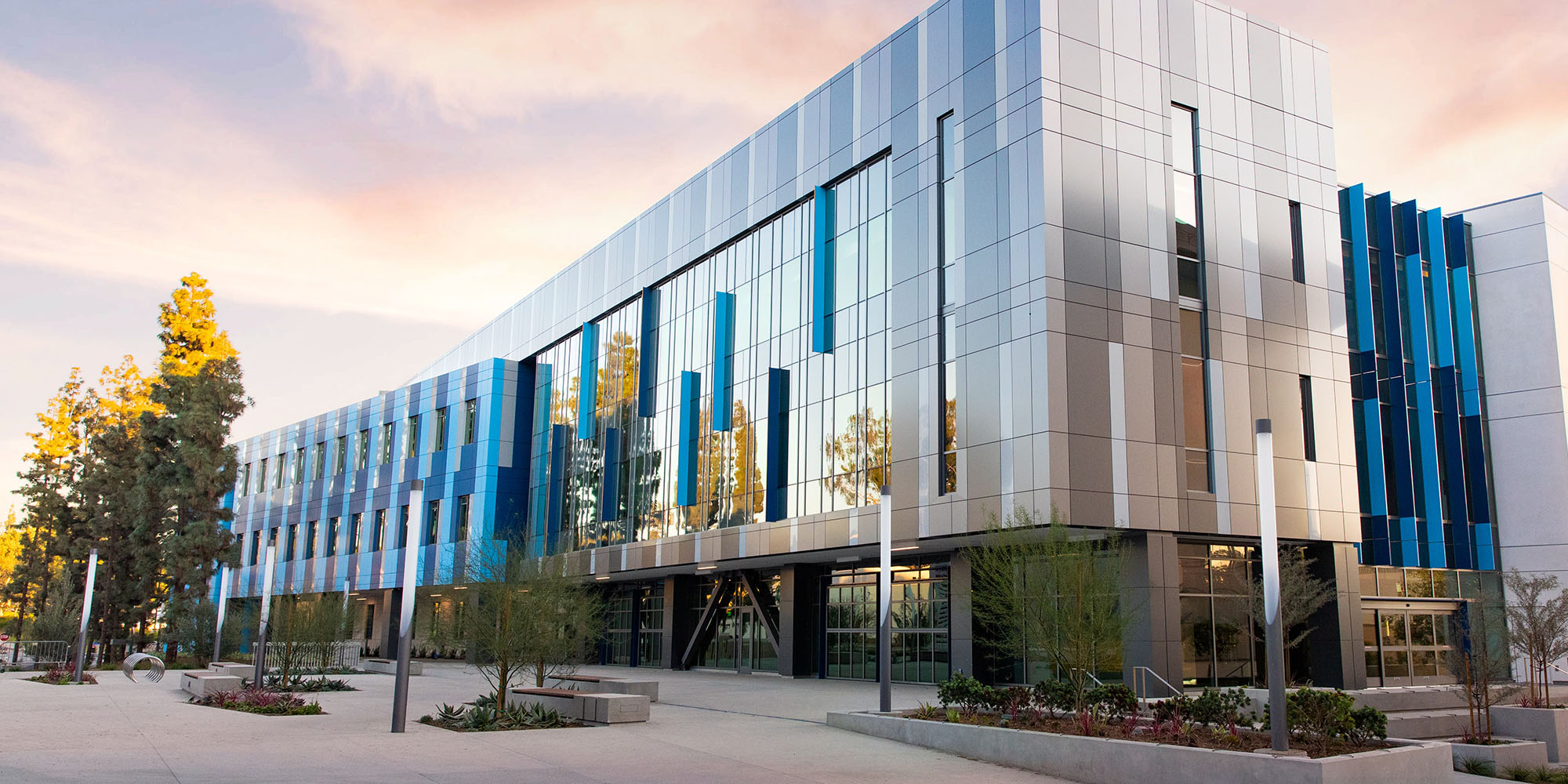
Img 1: Offices are often part of the commercial fabric of megacities housing multiple activities of diverse natures.
A typical office environment has no purpose. It's meant to support its occupants in performing their job and that makes it a complete failure. As the average worker spends 85% of the day at the desk, it is only natural that providing an environment suitable for work will increase employee satisfaction and retention. Work spaces in an office are typically used for conventional activities such as reading, writing, computer work, and interactions with coworkers. There are nine generic types of work space (e.g., individual cubicles) that can be found in any organization which focus on different types of communication (and thus different sized groups). In addition to cubicles, one can also find meeting rooms, lounges and other areas designed to handle specialized tasks such as photocopying or filing away files.
Explore current challenges on office architecture hosted by UNI:

Importance of office building design
The office building is a truly ingenious architectural feat that has contributed greatly to the growth of our economy and provided countless jobs for thousands throughout the decades. Over fifty percent of the nation's workforce is employed in an office setting today as compared to less than five percent a hundred years ago. Yet we live in such a rapidly changing world that office buildings are more different than ever before because they're now places where not only work can be done, but also where new talent can be recruited and inspiration can be imbued. The workplace isn't a place you go to get away from your home - it's more like an extension of your own house!
Typically, the life cycle cost distribution for a typical service organization is about 3-4% for facilities, 4% for labor, 1% for furniture and the remaining 90-91% on salaries. The facility portion alone represents the biggest expense on any given service operation. As such, if office space can help cut down on non-value added overhead costs (e.g., maintenance and upkeep), it can have a very dramatic effect on overall productivity of the organization!
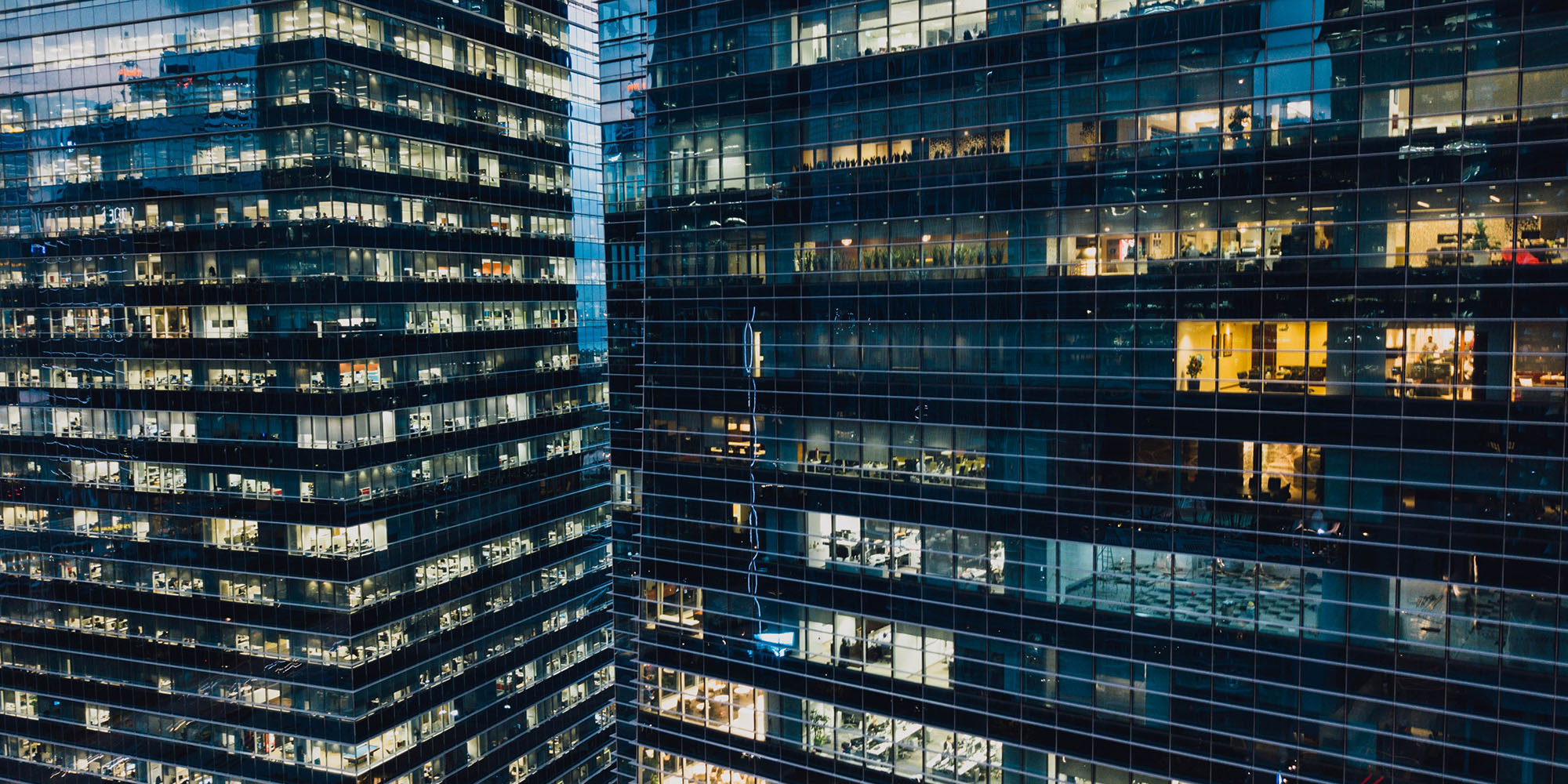
Img 2: The scale of office buildings is often huge with immense infrastructure invested into the built environment.
To accomplish this objective, the office building must benefit from an integrated design approach that focuses on meeting a list of design objectives. Integrated design, high-performance office buildings offer owners and users increased worker satisfaction, improved health, flexibility and enhanced energy and environmental performance. Typically these projects utilize life cycle assessment to optimize initial investments in architectural design, systems selection and building construction.
As any office complex must be built to reflect the tenant's mission, look and image. Making use of modern-day equipment and incorporating green materials and systems should be a high priority on the part of whoever is selecting the professionals involved in building a new office space. This can help reduce energy consumption, thereby putting less strain on C02 emissions and less waste into landfills. Very little should come under scrutiny when it comes to the furniture choices made for open spaces like lobbies or conference rooms that have common outside access points. Special attention should be made to these spaces not only aesthetically but by taking into account how they are created, whether they are able to last longer than a year before needing replacement or upgrades, etc.
Effects of office design on people
You can sense the culture that the designers have built the instant you walk through the door of an office (whether intentionally or unintentionally). A well-designed area has an open, vibrant vibe about it. It encourages people to think freely and work more efficiently. When you use successful office architectural design principles to foster a healthy culture, you improve every facet of your employees' day-to-day interactions.
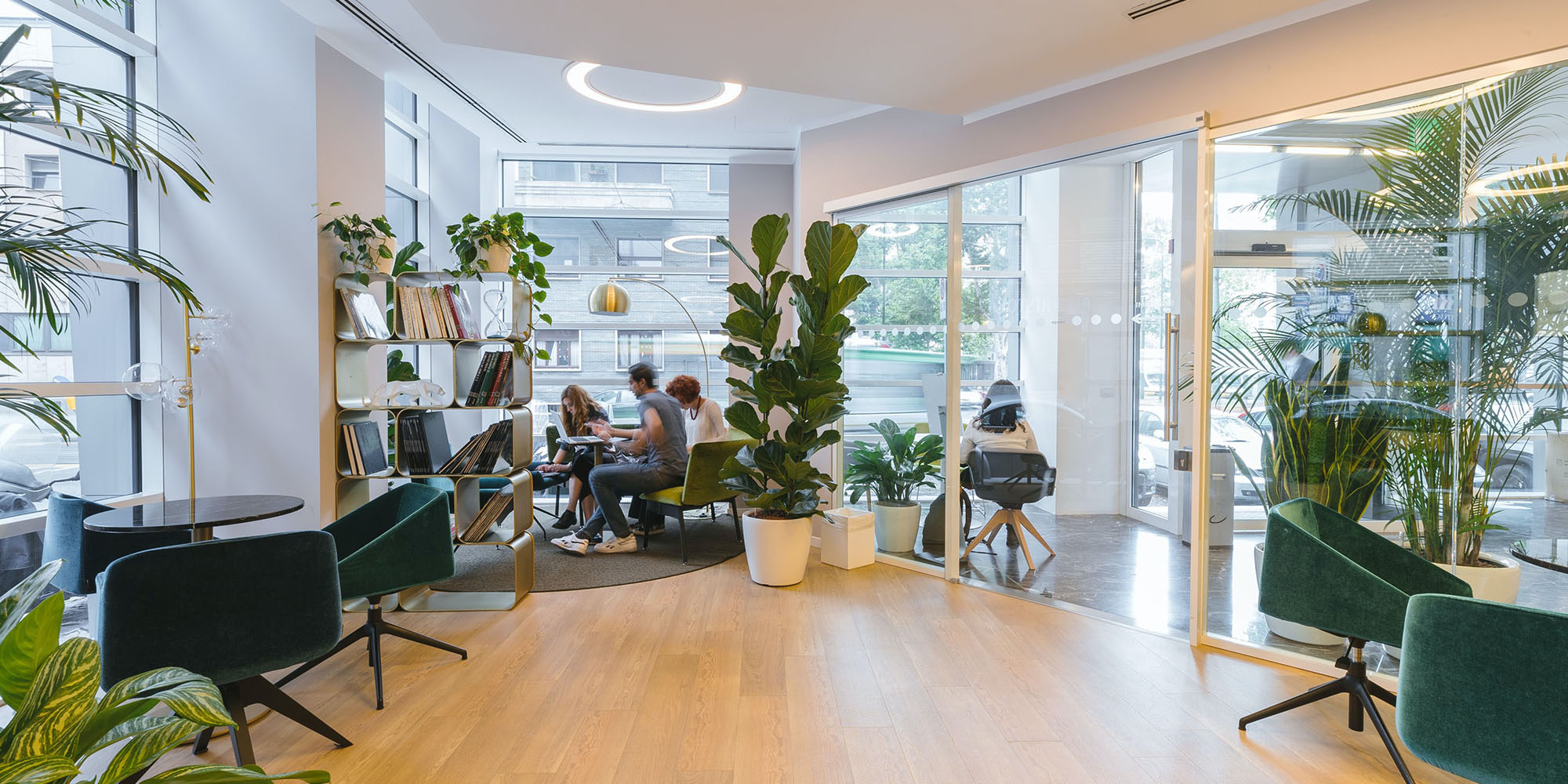
Img 3: Healthy office design is an ongoing trend in workplace design where designers are eattempting to incorporate more guided interventions.
Human behavior is profoundly influenced by workplace design. Every week, employees spend a significant amount of time at work. Their motivation and productivity will soon diminish if they only view the light of their computer screens or the walls of their cubicles for days on end. A poorly constructed office, on the other hand, has the opposite impact. Workers feel confined and disheartened by harsh artificial lighting, hard seats, and dreary cubicles. Poor design can also have a negative impact on the physical well-being of employees. Poor office ergonomics, for example, have been related to chronic discomfort, impairments, and stress.
Humans were created to be outside and to solve problems in groups. Sitting at a desk by yourself for eight hours is not a natural activity. By responding to our innate instincts, better office design influences human behavior. So, while few of us work outside anymore, we may improve the way we do business by establishing an office atmosphere that feels similar.
What makes a good office design?
Make a welcoming and informative reception area. The room is set off by high ceilings and abundant natural light, making it feel open and cheerful. Workers are directed from point A to point B by casual seating, educational signage, and the judicious use of accent colors.
Flexible workstations in clusters allow employees to collaborate more dynamically on projects. All of the workstations will include motorized sit/stand capabilities, ergonomic seating, and a mobile personal storage cabinet that will allow team members to more easily transfer from one team to another to work on different projects over time.
To provide a spatial/visual break and allow for different sorts of cooperation and work, informal meeting places are purposely carved into the open office setting. In the end, people desire the ability to customize their work surroundings. It's natural to want to make your environment work for you. You'll have happier, more productive staff if you make the working setting more flexible and intuitive.
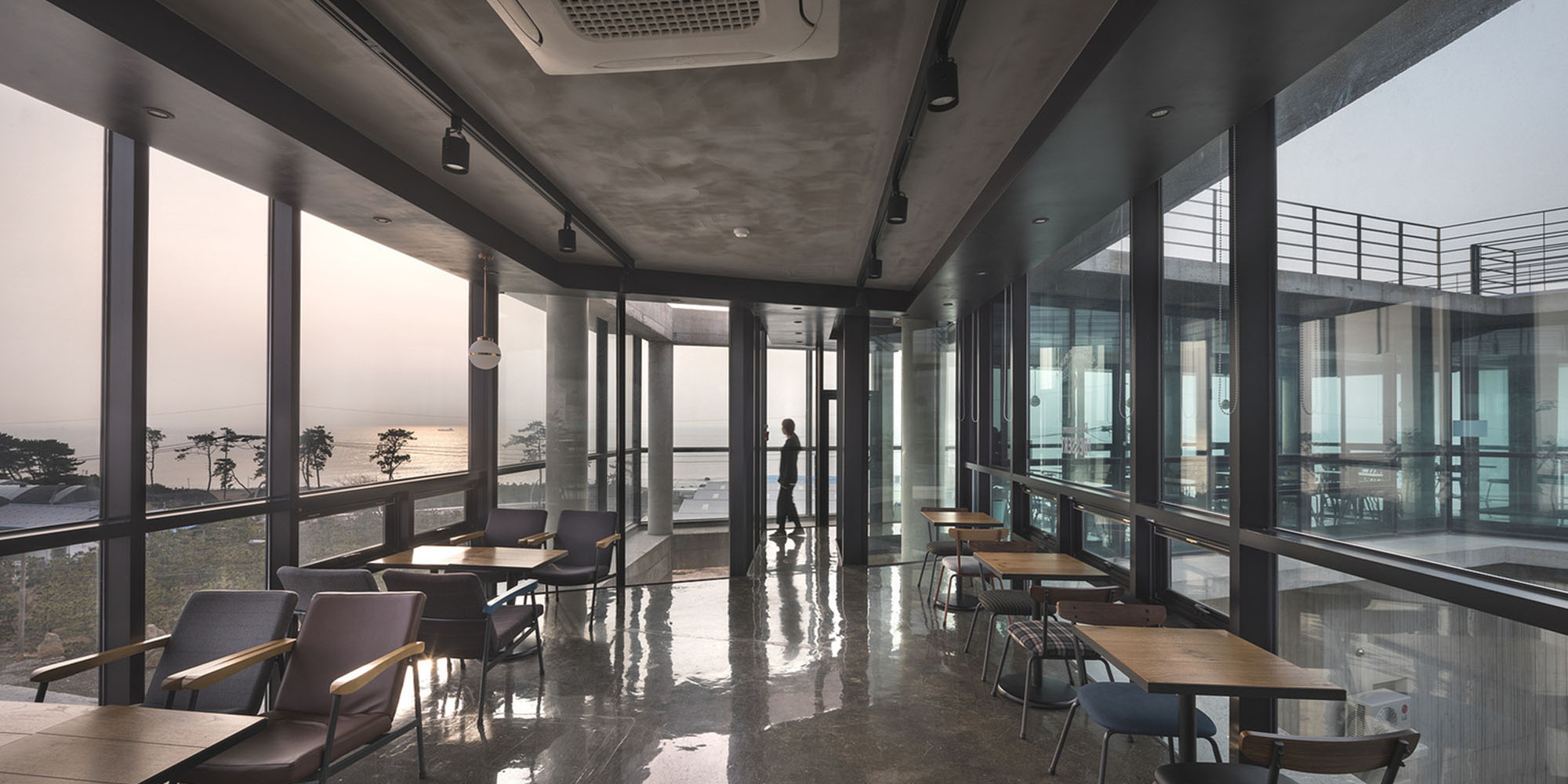
Img 4: The interior of workplace determines the productivity and efficiency of the workforce in any company.
Bringing the outdoors within. The value of natural light cannot be emphasized. Numerous studies have demonstrated that permitting ambient natural light to penetrate deep into the constructed environment has numerous benefits for the building's occupants. Natural light boosts your happiness, your health, and your productivity.
Improved artificial lighting. Workers need to be able to see what they're doing, thus artificial light may be needed to supplement the natural light. It's better to use upward-directed diffused light. It lowers glare on computer screens and gives the impression of sitting under a tree on a sunny day in the workplace.
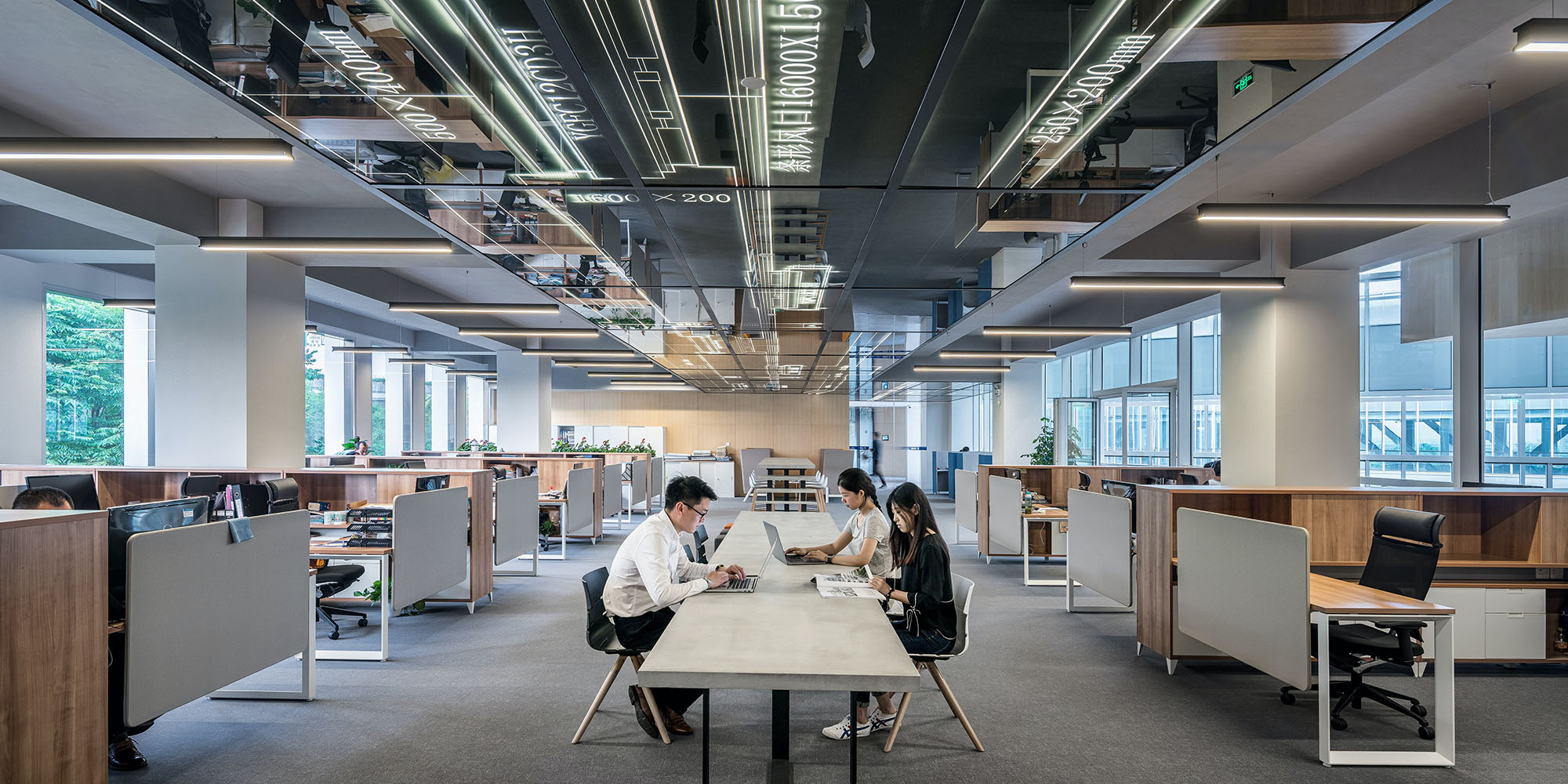
Img 5: Innovative design strategies for both the interior and exterior of the space are being implemented to create co-operative spaces.
A combination of soft collaborative and task seating is used. Because it supports people's backs as they work, task seating is usually rigid. These types of seats are still vital, but in collaborative zones, you should also have softer seats available. Couches or soft modular furniture are perfect for lounge areas and conference rooms. Because these seats are so comfortable, people will instinctively draw to them. Collaboration becomes more likely as a result of this.
Make outdoor chairs and workstations available. Workers sometimes just want to be outside. Seating and tables in the shade provide them with more possibilities for working in a comfortable environment, whether alone or in a group.
Increasing the number of choices. In general, you should give your employees more freedom to move around and customize their work. Not everyone thrives in an open office layout or at a desk. Allowing employees to change their working environments is not only more compassionate, but it also gives them greater control. They can take responsibility for their work and feel that they are an important component of the organization.
Architecture Competitions
Architecture competitions have been a big part of historic construction innovation. For centuries, architecture competitions have helped source the best and most unique designs for projects, spurred community development (think: urban planning), and created huge publicity around new projects.
Competitions are a great way to try out new things, make mistakes and learn from them. They're also a great opportunity for portfolio building because everything you submit gets contextualized based on where it ranks against everyone else's work. And perhaps most importantly, they give you extra insight into what the judges see in your submitted work as well as how they don't see it - which is yet another fantastic way to improve your designs in unexpected ways!
Some of the competitions for office building design being hosted all over the world are Office design challenge by Bee Breeders, A' Design Award in Architecture, Building, and Structure and so on.
Explore projects of office architecture published on UNI website:

UNI Design Competitions
UNI is a global network of architects and designers who are solving some of the most challenging problems around the globe. UNI brings together the world's largest pool of design challenges that are curated by the finest architecture academicians and professionals globally. With over 200,000+ registered members, UNI brings academia and professional spheres of architecture together through a unique knowledge sharing web platform.
Since 2017, UNI has hosted more than 200+ architecture competitions for various idea level to realization level briefs. In the past, UNI has helped 50+ organizations, universities, and government bodies to use our platform to generate architecture and design solutions through competitions.
There are many competitions hosted by UNI on our website for office building design disciplines such as Breaking Work 4.0, Breaking work and so on.
Discover other competitions: https://uni.xyz/competitions




Popular projects
View all 72 projects











Latest journals
View all 724 journals

The Layercake: An Amsterdam Building Stacked From the Habits of Plantage and Oost
A raised volume frees the ground for an urban cave, then stacks gallery, lecture hall, workspace and a green roof facing a canal and a windmill.


Gustavo Penna Wraps an Accounting Firm's Corner Headquarters in Lagoa da Prata with 12 Kilometers of Brise-Soleil
In Lagoa da Prata, Minas Gerais, a prestressed concrete office tower sheds most of its columns and filters daylight through a continuous slatted skin.

Office Canopy of Architecture Retrofits a Tiled Shaoxing Block into an Open-Source Community Commune
In Shangyu's old city centre, a 4,416 m² renovation stacks a library, canteen, shops and kiosks into one porous public building.

ODA Raises a 155-Metre Tower from the Courtyard of Rotterdam's Historic Post Office
In central Rotterdam, ODA's POST tower rebuilds a 1920s post office's arches as a porous, balconied frame climbing 155 metres above a national monument.


