FLOW: A Biophilic Architecture Vision for Sustainable Living in Boa Vista
An eco-village that redefines sustainable living through biophilic architecture, harmonizing human well-being with nature’s flow.


The project FLOW by Meva Coşkunyürek envisions a new paradigm of biophilic architecture that blends natural systems, emotional wellness, and architectural form. Designed for Boa Vista, this eco-village reinterprets how humans can coexist with nature — not as separate entities but as continuous, flowing landscapes of life, interaction, and renewal.
Inspired by the biophilia hypothesis, FLOW recognizes the intrinsic human need to connect with nature. It establishes a spatial and social model that nurtures both community and individuality through fluid topographies, natural forms, and restorative design strategies.
Concept: The Hollow as Human Refuge
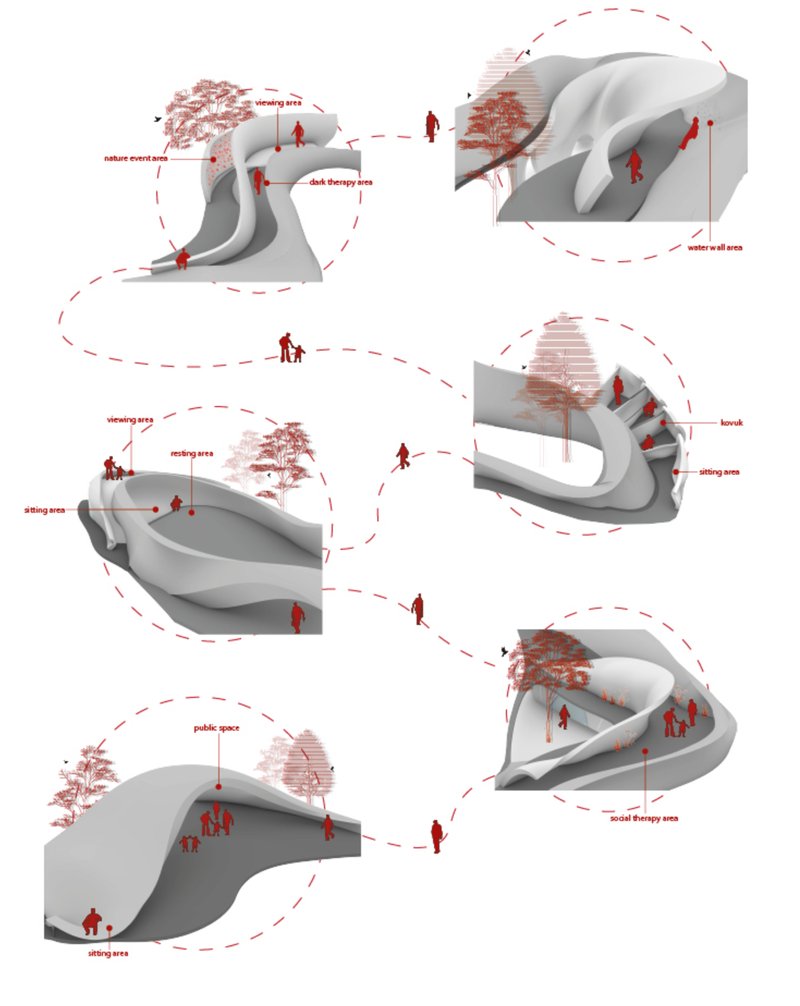
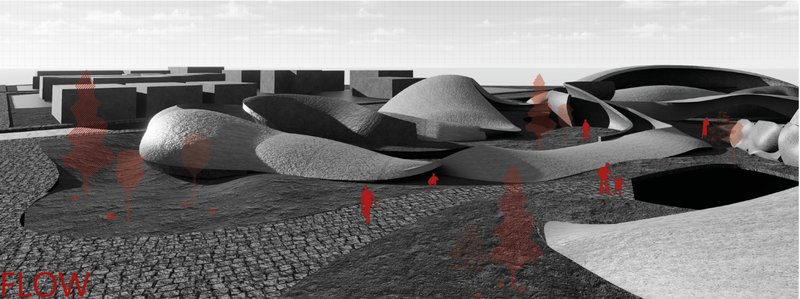
At the heart of FLOW lies the concept of the hollow — a spatial metaphor for safety, comfort, and reconnection. The design interprets the hollow as an architectural embrace, responding to the innate human desire for refuge. These organic depressions within the terrain not only provide physical shelter but also act as emotional sanctuaries, fostering serenity and mindfulness.
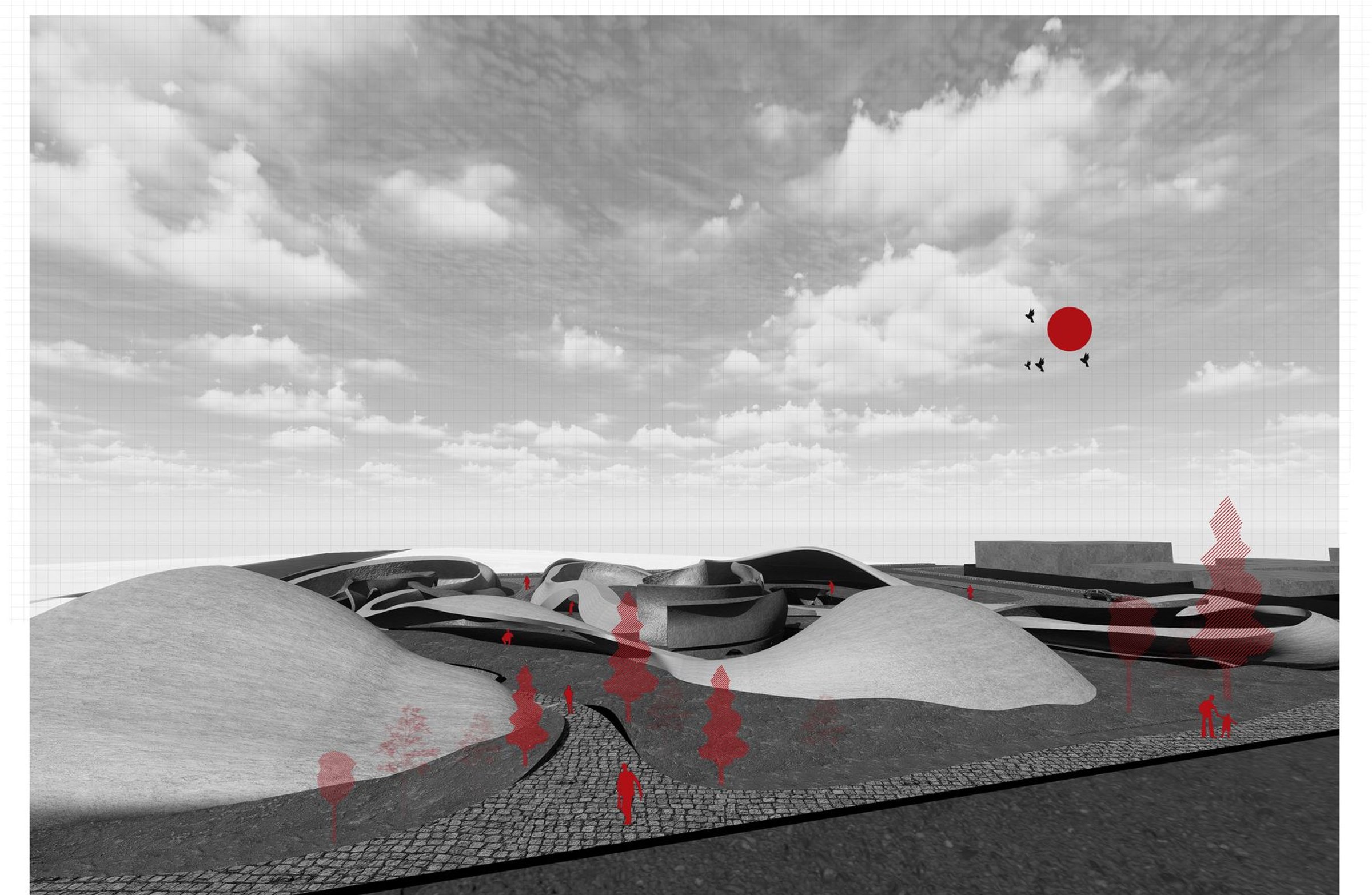
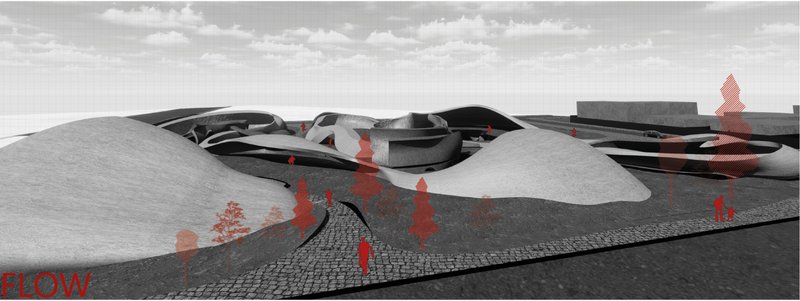
The eco-village landscape flows as a seamless continuum of ridges and valleys, inviting users to explore, pause, and rediscover their relationship with the earth. Each curve and fold embodies the philosophy that architecture can be both habitat and healing ground.
Design Strategy: Flowing Between Ecology and Culture
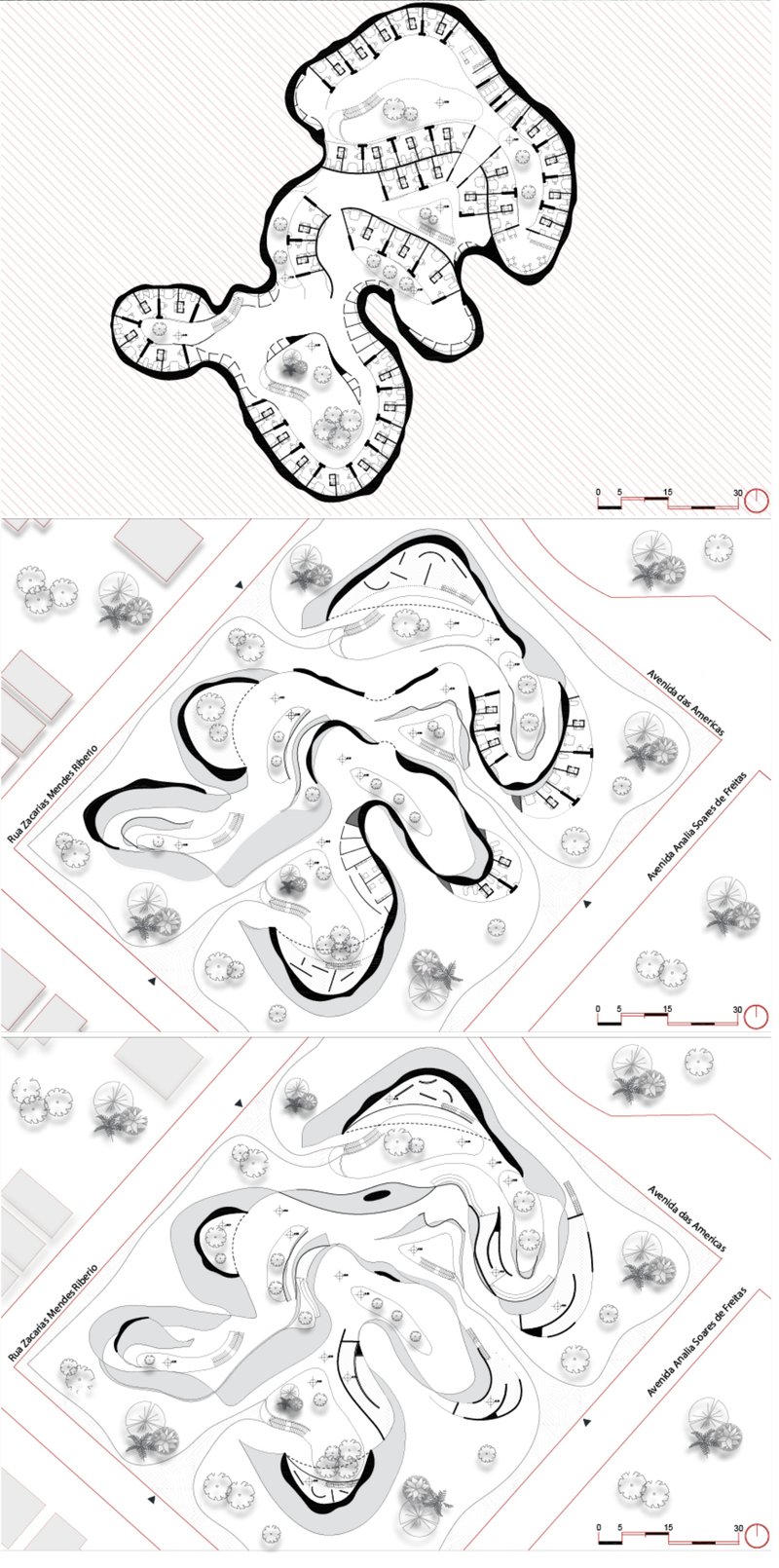
The site layout mirrors Boa Vista’s natural landforms and hydrological patterns, integrating architectural massing with the topography. Instead of imposing rigid boundaries, the project adopts fluid continuity, merging indoor and outdoor environments. The biophilic design principles are evident in every detail — from porous pathways and shaded hollows to natural ventilation and landscape-integrated spaces.
Key elements of the master plan include:
- Ecological Axis: connecting the built environment to the surrounding vegetation and hydrological flows.
- Community Loops: fostering interaction among residents, artisans, and visitors.
- Healing Corridors: dedicated zones where nature and architecture overlap to support physical and emotional rejuvenation.
Human-Centered Sustainability
The eco-village promotes sustainability not as a technical goal but as a lived philosophy. Drawing inspiration from Ibn Sina’s philosophy of health, the design perceives well-being as an integration of physical, psychological, and environmental balance. Residents engage in ecological farming, art, and research — creating a self-sustaining community rooted in shared values and mutual care.
This symbiotic model of living challenges modern urban segregation. Instead, it nurtures collective well-being by embedding daily life within the cycles of nature — emphasizing coexistence over consumption.
Architectural Expression: The Fluid Morphology
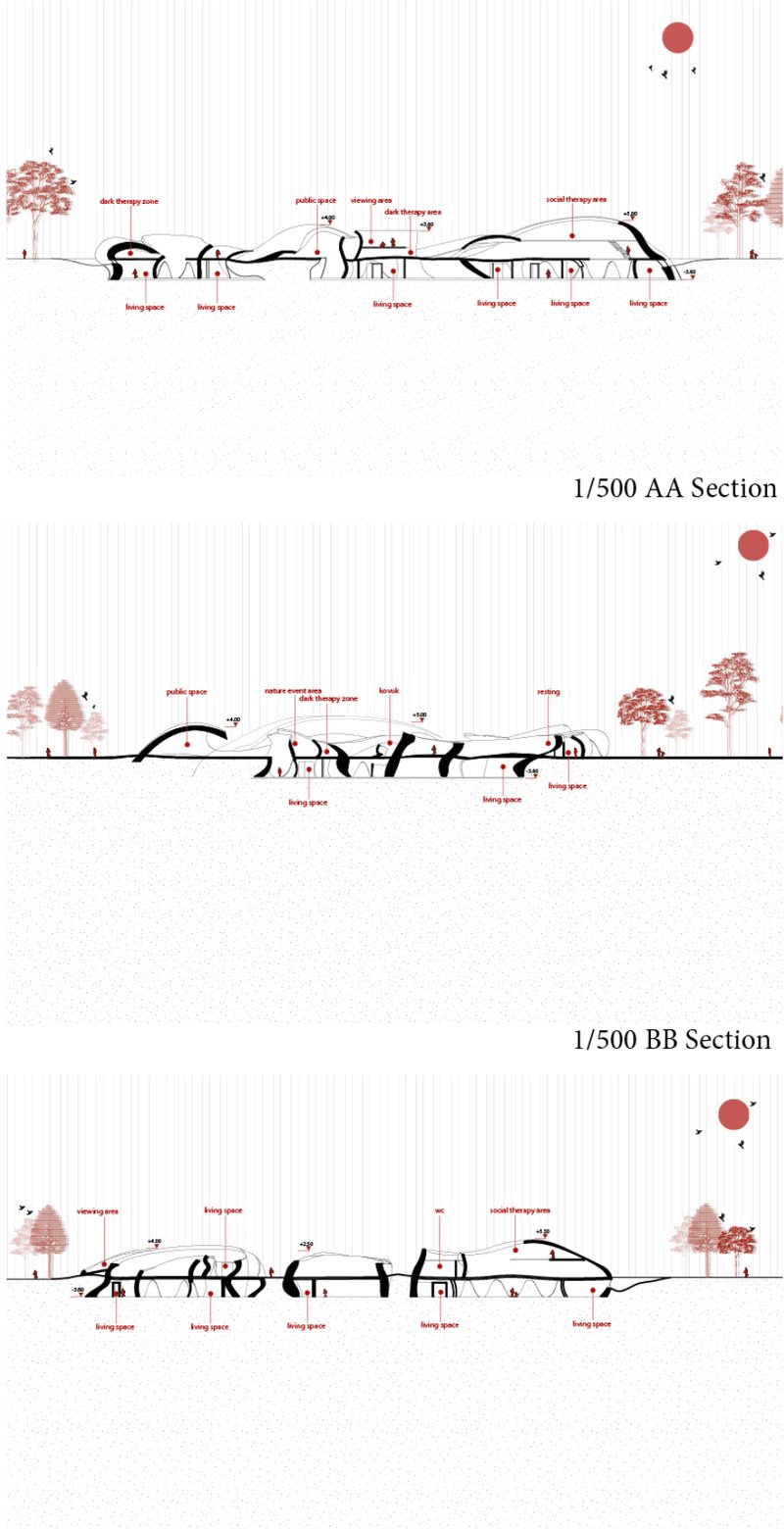
The form development of FLOW arises from continuous topographic gestures, where built spaces gently rise from and recede into the earth. The use of organic curves, local materials, and natural textures reinforces its biophilic character. Public and private zones transition seamlessly — forming pathways that mimic natural flows of wind and water. In plan and section, the architecture resembles a living organism, with interconnected spaces that breathe and adapt.
Each structure supports a dialogue between landscape and architecture, creating immersive experiences of movement, shade, and discovery.
Reimagining Future Eco-Villages
FLOW is more than an architectural project — it is a manifesto for biophilic living. By embedding human life within the natural continuum, it redefines sustainability as an emotional, social, and environmental equilibrium. Through its flowing geometry and ecological sensitivity, the project exemplifies how biophilic architecture can guide humanity toward a more harmonious future — one that listens to the rhythms of the earth.
Project: FLOW By: Meva Coşkunyürek
*Shortlisted Entry of the “Live Green” Competition