
Ginsen Nishi Shimbashi Building by Nikken Sekkei: Innovative Office Architecture in Tokyo
Ginsen Nishi Shimbashi Building by Nikken Sekkei integrates traditional Japanese eaves, sustainable wood design, and functional office spaces within Tokyo’s vibrant urban landscape.


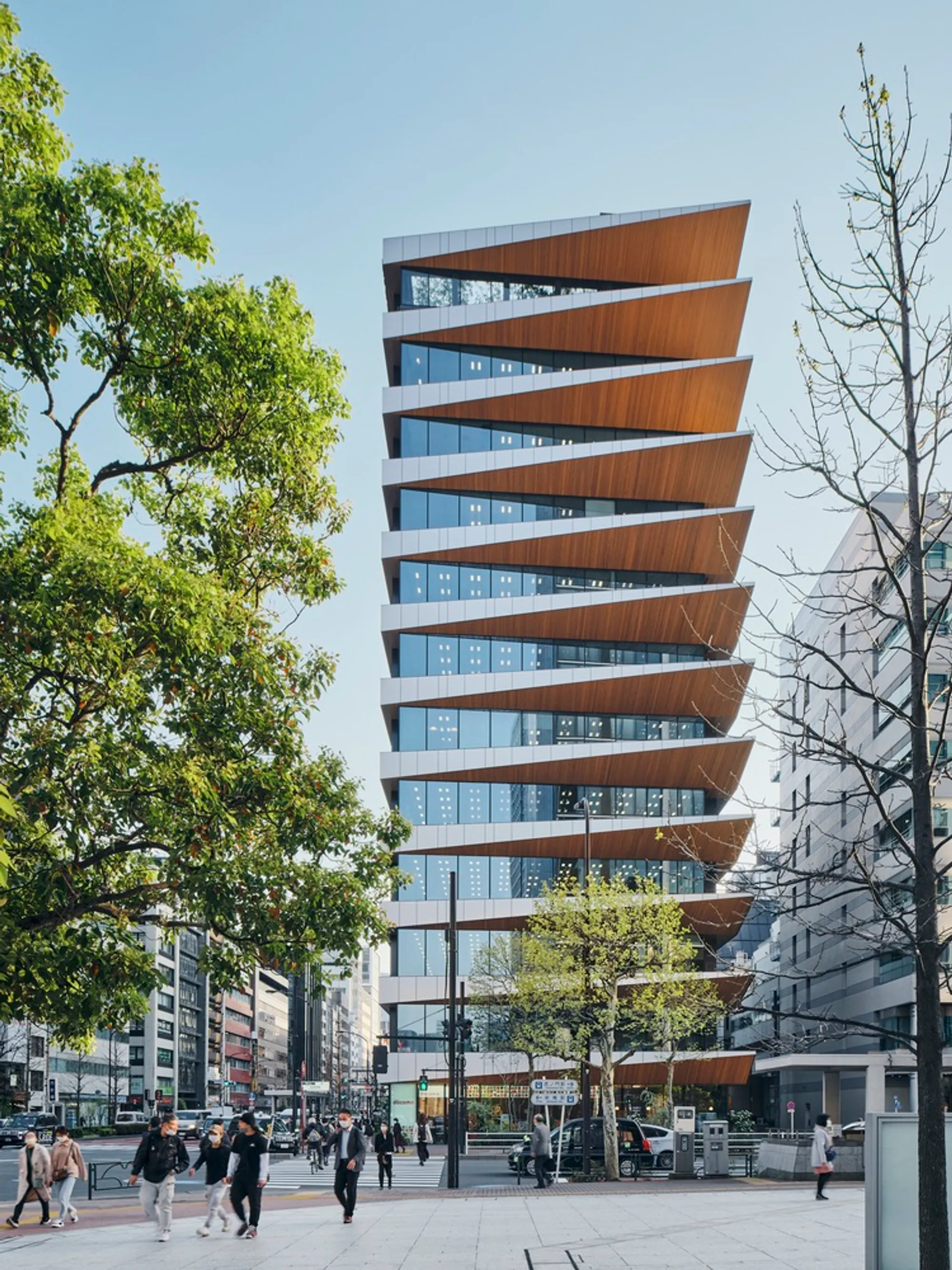
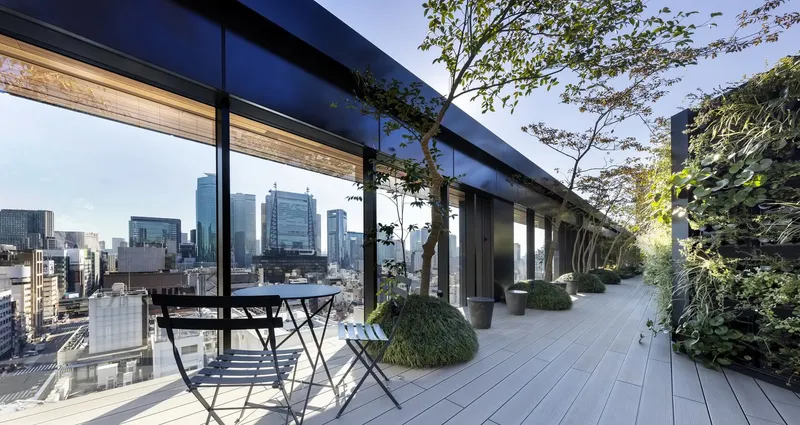
Located in the heart of Minato City, Tokyo, the Ginsen Nishi Shimbashi Building is a striking example of contemporary office architecture that blends traditional Japanese elements with modern design. Designed by Nikken Sekkei and completed in 2022, this 868 m² office building sits above a subway station at the intersection connecting Otemachi to Hibiya Street. Its elevated position offers panoramic views of Tokyo’s high-rise skyline, extending to the inner moat beyond Hibiya Park.

Design Philosophy: Symbolism, Rationality, and Urban Enrichment
The design of the Ginsen Nishi Shimbashi Building revolves around three core principles:
- Symbolic Significance – Serving as the flagship building for the Ginsen brand, it represents identity and prestige.
- Rationality for Tenants – Optimized office spaces ensure functionality and comfort for modern work environments.
- Urban Enrichment – As a mid-scale office building, it enhances the cityscape without relying on large-scale urban interventions.
To express these ideas, the architects drew inspiration from traditional Japanese residential architecture, particularly the use of eaves and verandas. This approach transforms a typical office building into a layered, symbolic structure that engages with the surrounding urban fabric.
Interaction with Urban Space
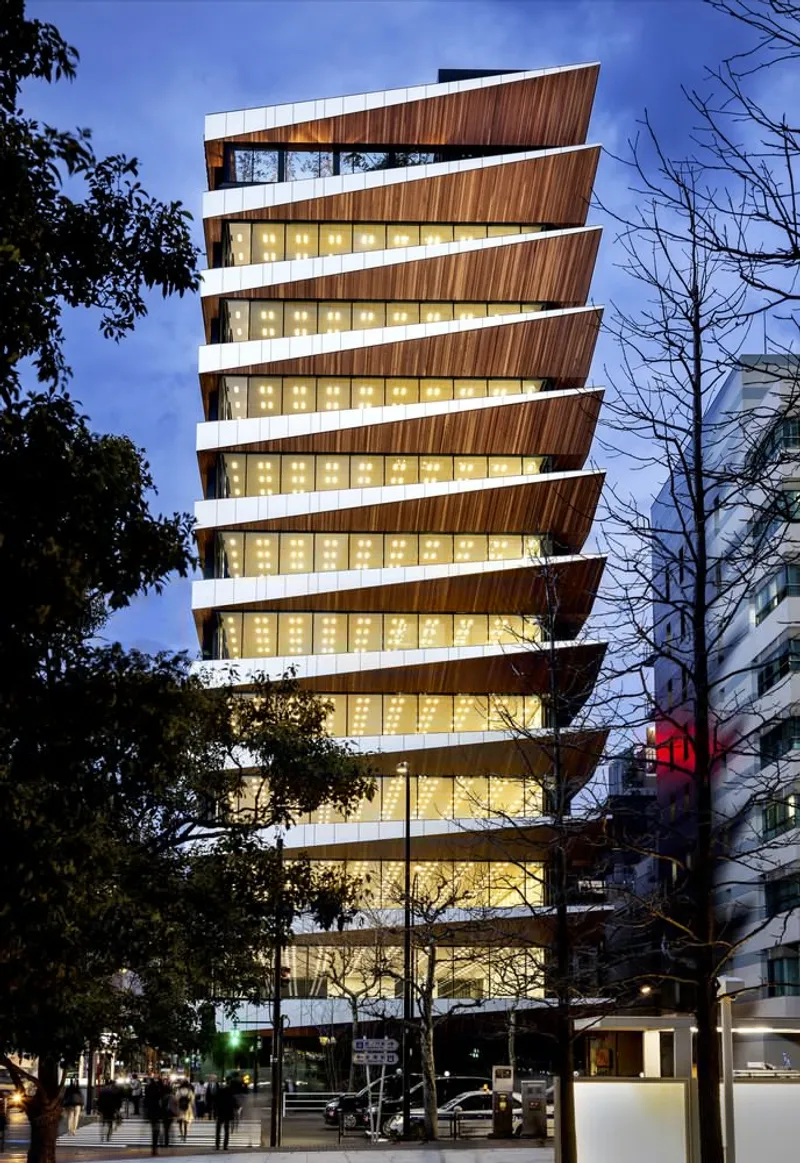
The conceptual site extends from Hibiya Park to Otemachi, forming a dynamic interaction between the building and Tokyo’s cityscape. Twelve angled eaves frame pillar-free office rooms, creating depth and a sense of continuity with the sky. This design elevates the building’s facade from mere decoration to urban fabric, offering a visual landmark at the busy intersection.
The interplay of overhanging eaves and veranda-like extensions softens the boundary between office interiors and the bustling street outside, making the building both inviting and functional. The careful layering also introduces a symbolic resonance, highlighting the building as a cultural and architectural beacon in the city.

Sustainable and User-Centric Workplace
The building’s interior layout focuses on environmental performance and occupant well-being. The Human Core (elevators and restrooms) is strategically positioned on the south side, while the MEP Core sits on the west, minimizing heat gain from the southwest façade. Full-height windows on the north and east facades provide abundant daylight and city views, complemented by extended eaves that create shaded, comfortable workspaces.
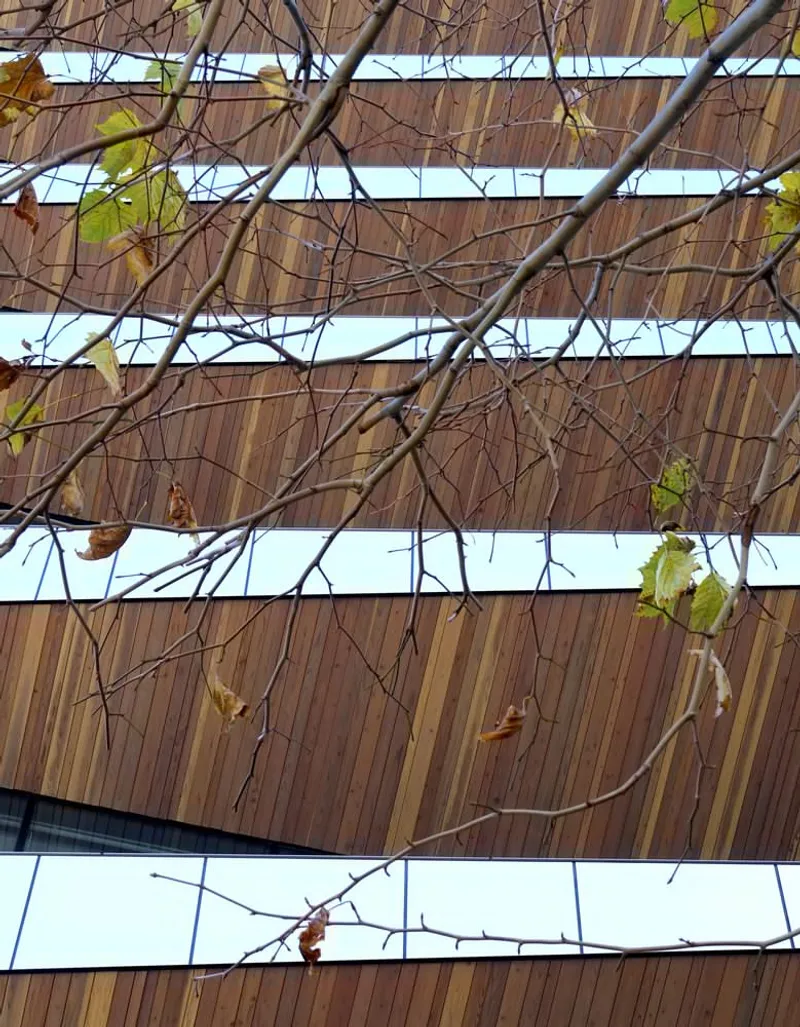
In line with the Minato Model administrative framework, the eaves feature non-homogenous wood, contributing to carbon capture and creating a psychological buffer from urban noise. This sustainable approach simultaneously enhances the commercial appeal of the office spaces.
Safety, Flexibility, and Functionality
Although the building does not include legally mandated evacuation corridors, its floor plan ensures safety without dead ends. Outdoor maintenance corridors connect the MEP core to northern office rooms, supporting operational efficiency. This thoughtful design positions the Ginsen Nishi Shimbashi Building as a prototype for modern tenant offices, demonstrating how mid-scale buildings can interact meaningfully with urban spaces and the environment.
The Ginsen Nishi Shimbashi Building showcases Nikken Sekkei’s mastery in blending tradition, sustainability, and modern office functionality. Its elegant wooden eaves, veranda-inspired extensions, and urban integration create a landmark office building that resonates with Tokyo’s vibrant cityscape. By reimagining tenant offices as active participants in the urban environment, this project sets a new standard for future office architecture in dense metropolitan areas.
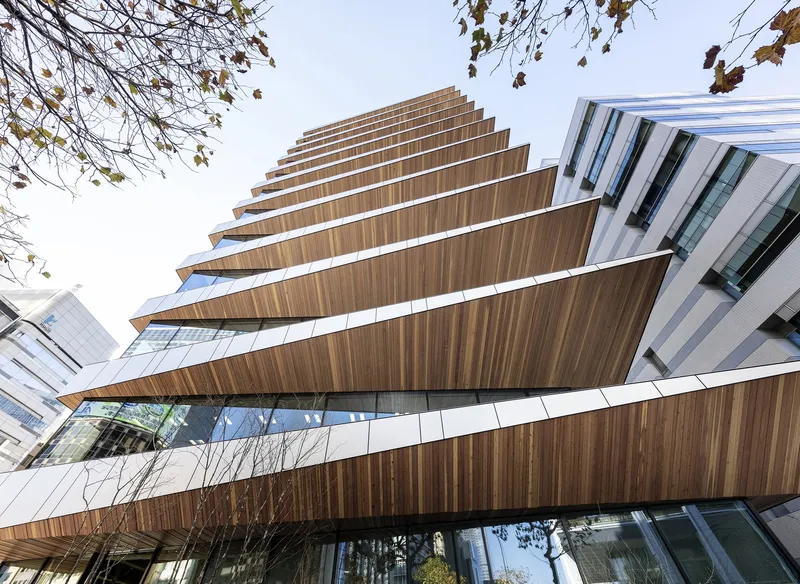
All photographs are works of
Gankohsha, Kenya Chiba, Nikken Sekkei



Popular Articles
Popular articles from the community


Riyadh For All: Intergenerational Urban Design for Active Aging in Rabat
Riyadh For All reimagines urban design in Rabat with intergenerational co-living, adaptive courtyards, and Moroccan cultural exchange today.

Hill & Cross Opera: Sculptural Opera House Architecture Shaped by Tallinn’s Landscape and Identity
Hill & Cross Opera reimagines opera house architecture in Tallinn through its sculptural hill, civic plaza, glass wave and a luminous cross.

The Earth Pod: 3D Printed Homes for Resilient Refugee Communities
The Earth Pod reimagines refugee housing through 3D printed homes made from clay, combining resilience, self-sufficiency, and rapid shelter.

Conexión: Biophilic Design Reimagines High-Rise Living in Hong Kong
Conexión reimagines high-rise living in Hong Kong through biophilic design, green facades, shared spaces, daylight, water and nature within.


Similar Reads
You might also enjoy these articles

FAMM Arquitectura Organizes Ten Villas Around Courtyards and Jungle in Nosara, Costa Rica
El Molino pairs two elongated volumes with deep overhangs and timber louvers to build a compact coastal community five minutes from the beach.
Oscar Niemeyer's Ibirapuera Park Pavilions Define São Paulo's Cultural Identity in Concrete and Curve
A constellation of modernist volumes set within São Paulo's most important urban park, conceived for the city's 400th anniversary in 1954.
How Henri Picq's 1889 Paris Pavilion Traveled 11,000 Kilometers to Become Santiago's Artequín Museum
A prefabricated iron and glass pavilion built for the Paris Universal Exposition found a second life as a children's art museum in Chile.
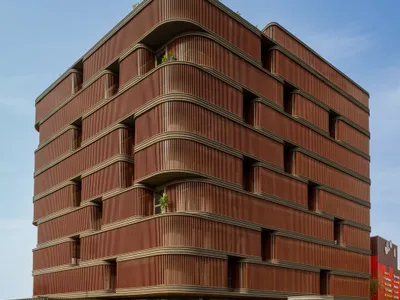
Sanjay Puri Architects Wraps a Jaipur Office Tower in Capsule-Shaped Green Buffers
A nine-level climate-responsive workplace near Jaipur Airport uses stacked planter terraces and aluminium screens to fight 40°C heat.


Explore Commercial Buildings Competitions
Discover active competitions in this discipline



Challenge to reimagine the Iron Throne


Photograph architecture without architects


Illustrate the lost glory of Angkor Wat - Render Challenge


Design challenge to reuse E-waste
Comments (0)
Please login or sign up to add comments
No comments yet. Be the first to comment!