
GJ House by Alventosa Morell Arquitectes: A Modular Brick House Design for Sustainable Living in Catalonia
A sustainable modular brick house in Catalonia combining passive design, flexibility, and strong indoor-outdoor connections.


A Site-Specific, Flexible Home Rooted in Modularity and Thermal Efficiency
Located in the serene foothills of Matadepera, Spain, the GJ House by Alventosa Morell Arquitectes exemplifies how thoughtful modular brick house design can respond sensitively to both context and climate. Designed for a young couple building their first home on a 600m² south-facing plot, the house emphasizes spatial flexibility, sustainable construction, and a deep connection to the gardened landscape.
Designing with Context: A Modular Response to Site and Lifestyle
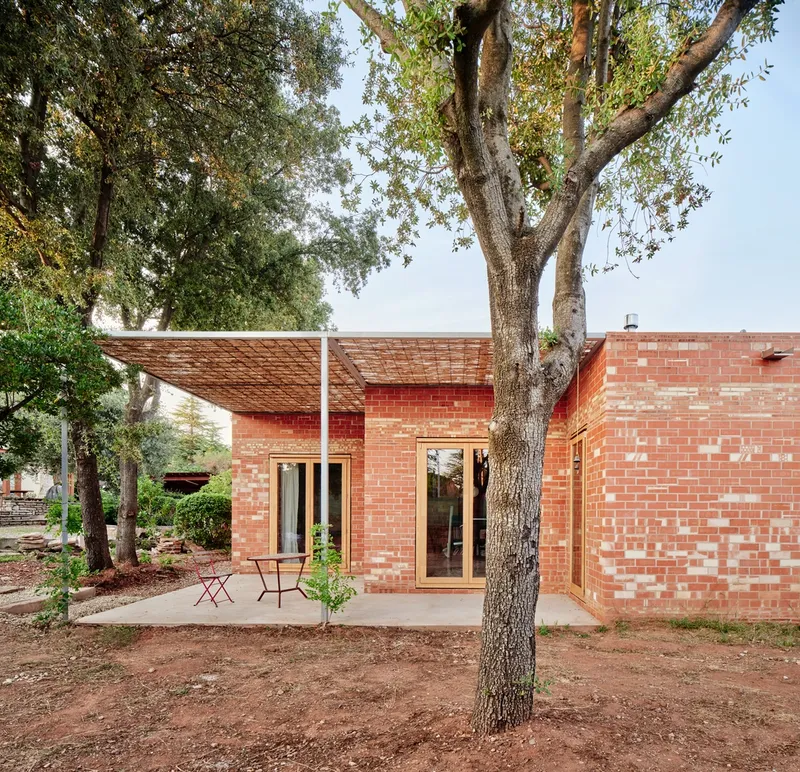
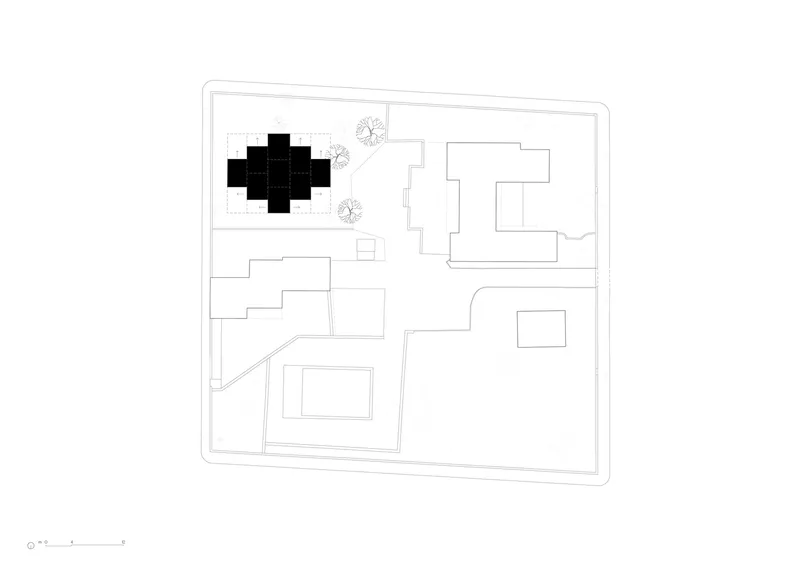
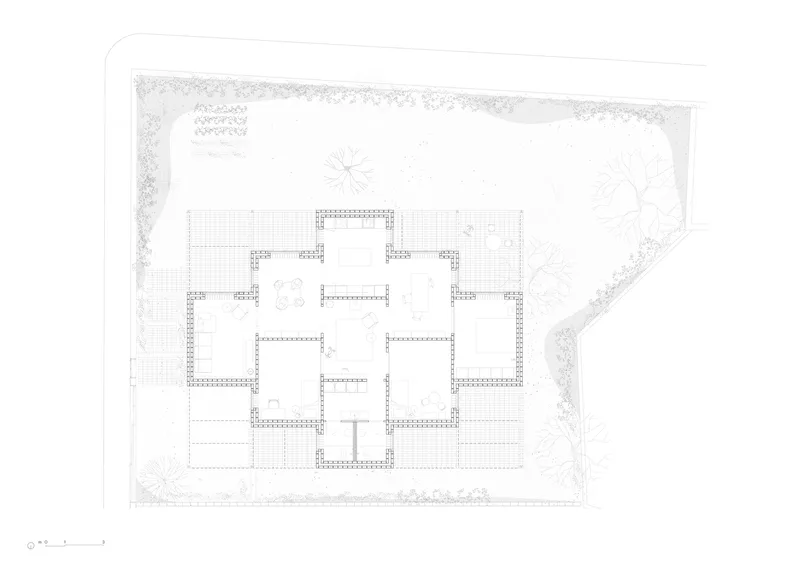
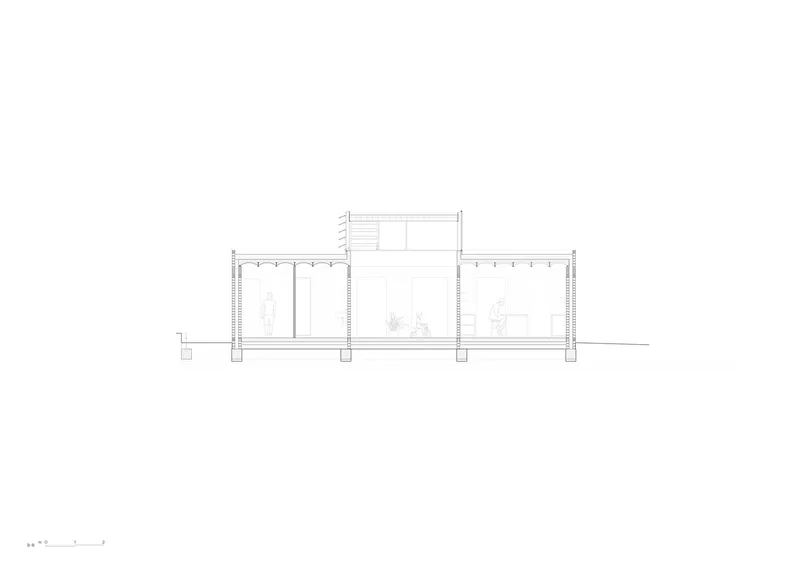
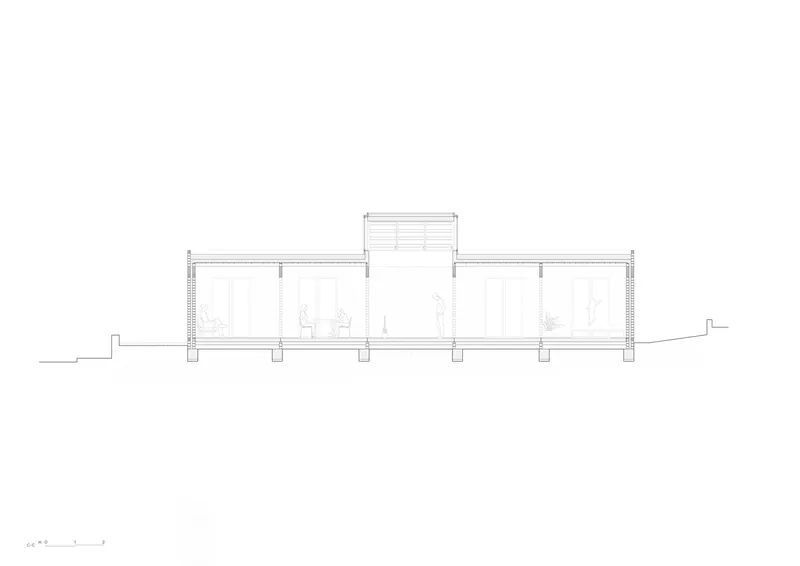
The plot—flat, sunlit, and framed by detached homes—offered an ideal canvas. The architects envisioned a modular layout composed of nine identical structural units arranged along a staggered east-west axis. This configuration was strategic: it preserved the existing trees, optimized solar exposure, and ensured privacy from adjacent buildings while maintaining an open relationship with the surroundings.
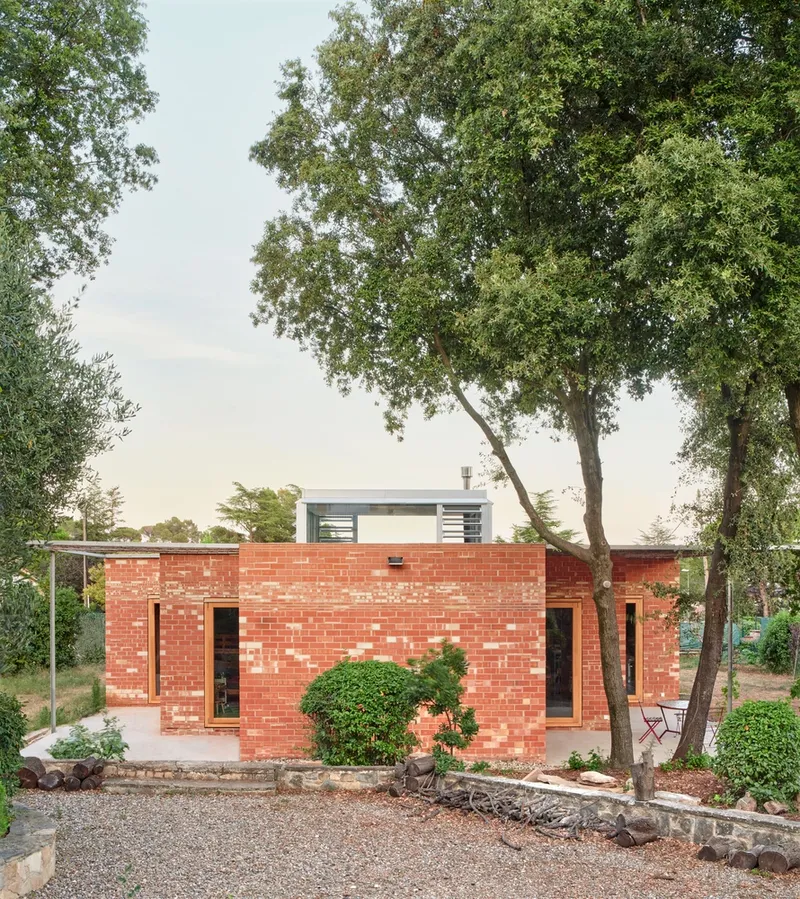
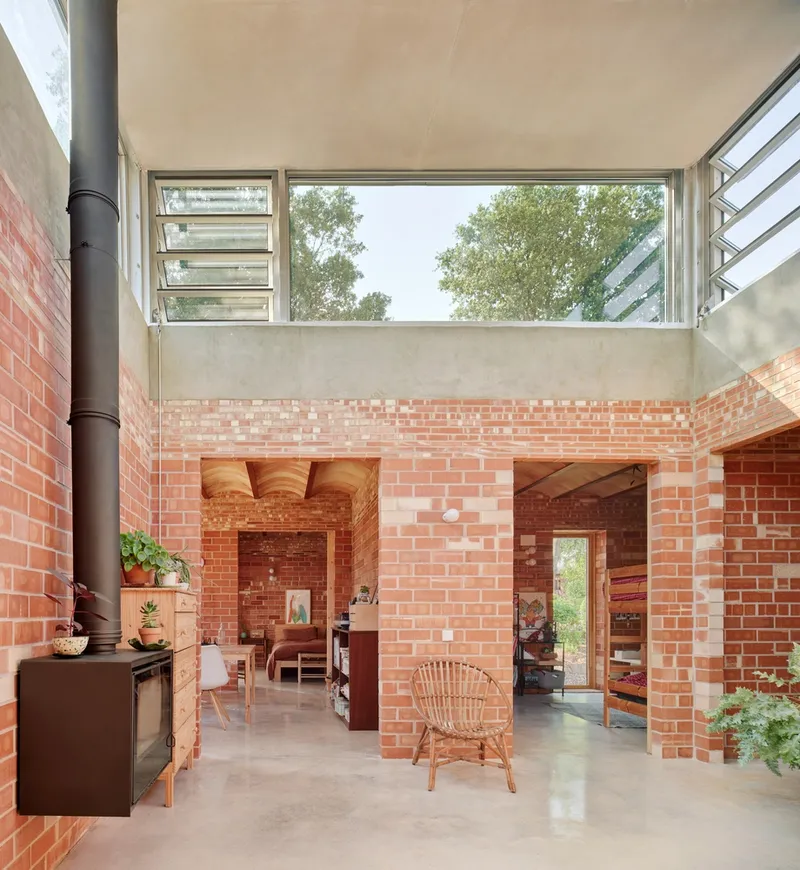
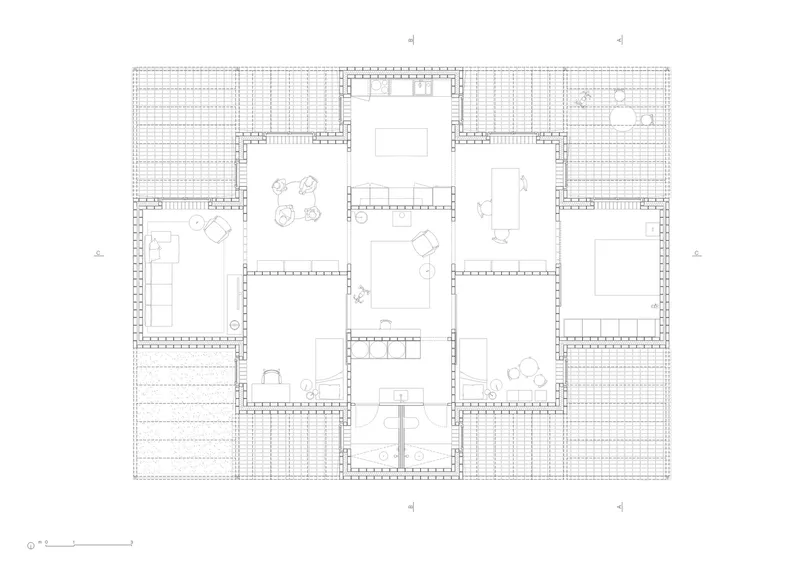
The modular grid wasn’t merely a planning tool—it shaped both function and form. Each module provides the possibility of spatial reorganization. Rooms can be opened up to create continuous communal areas or closed off to support more private functions, addressing both current needs and future adaptability.
Enhancing Living Quality Through Passive Environmental Strategies
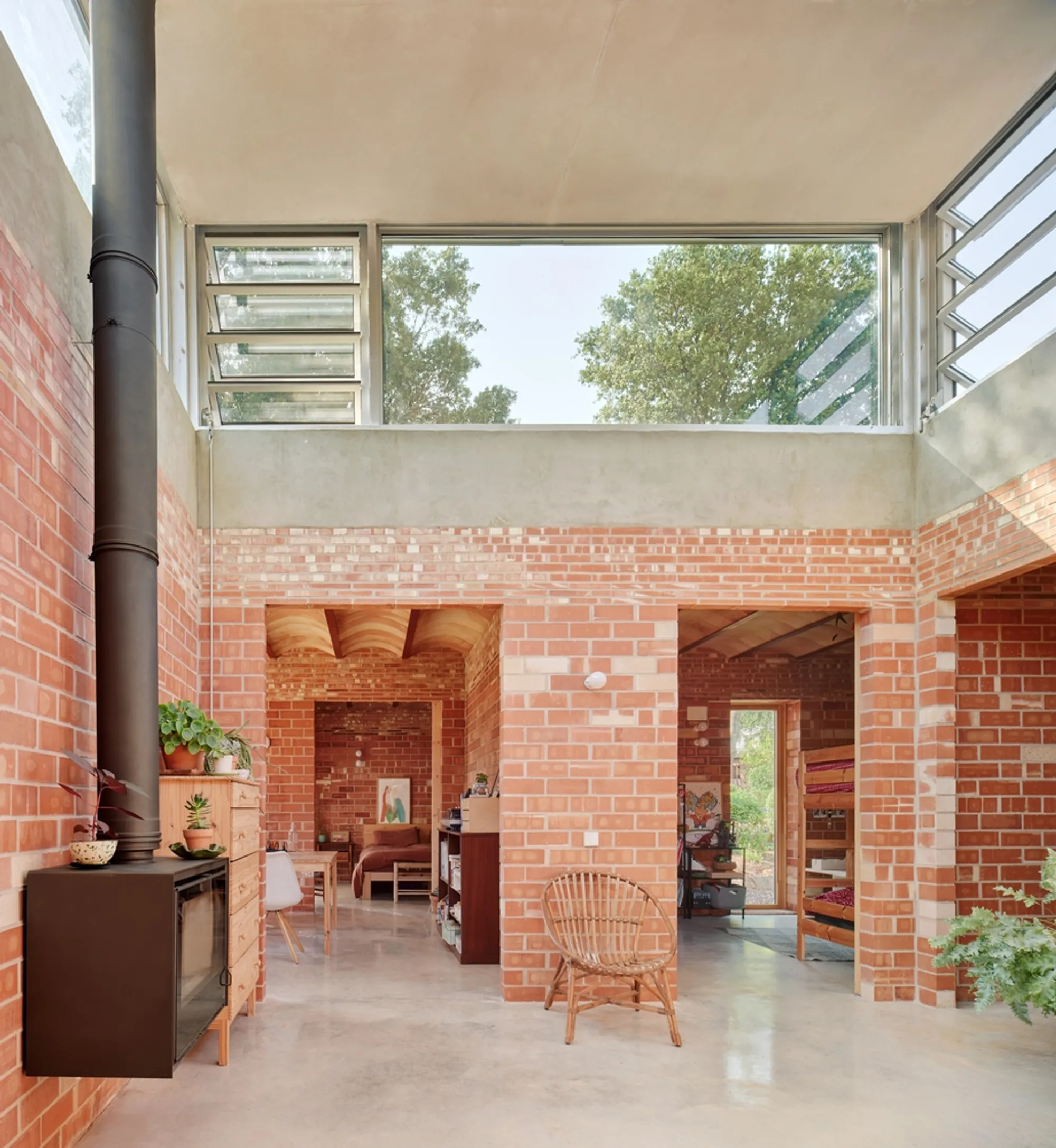
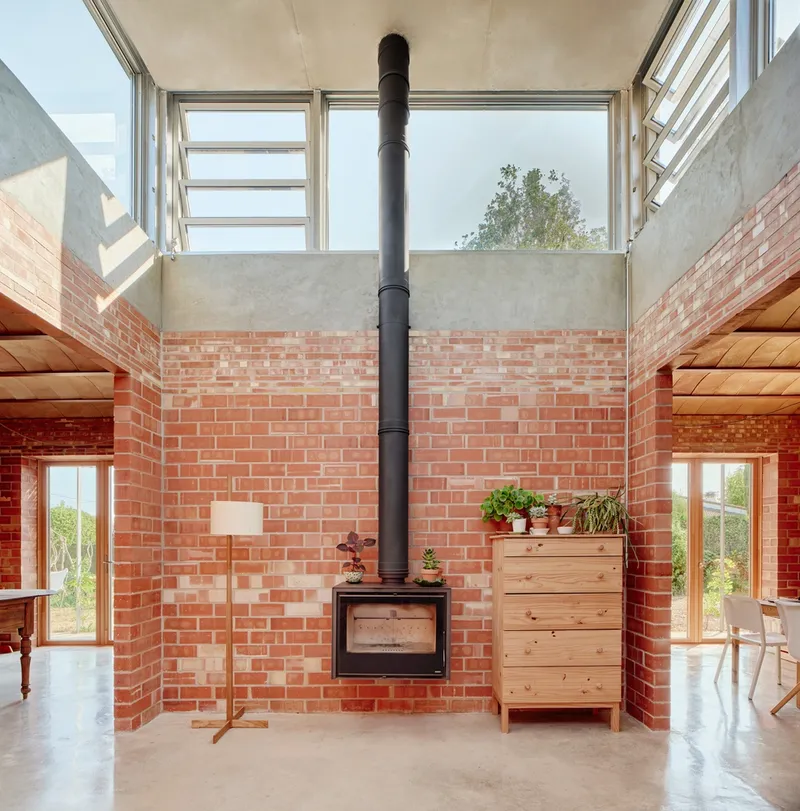
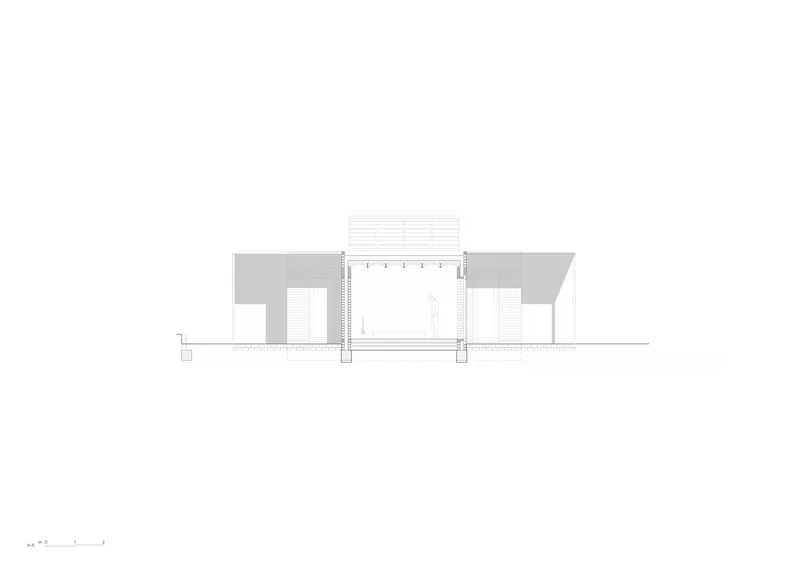
Central to this modular brick house design is environmental performance. The architects elevated the central module to form a clerestory-like space that enhances solar gain during winter months while promoting cross-ventilation in the summer. This approach reduces energy consumption and enhances indoor comfort year-round without mechanical systems.
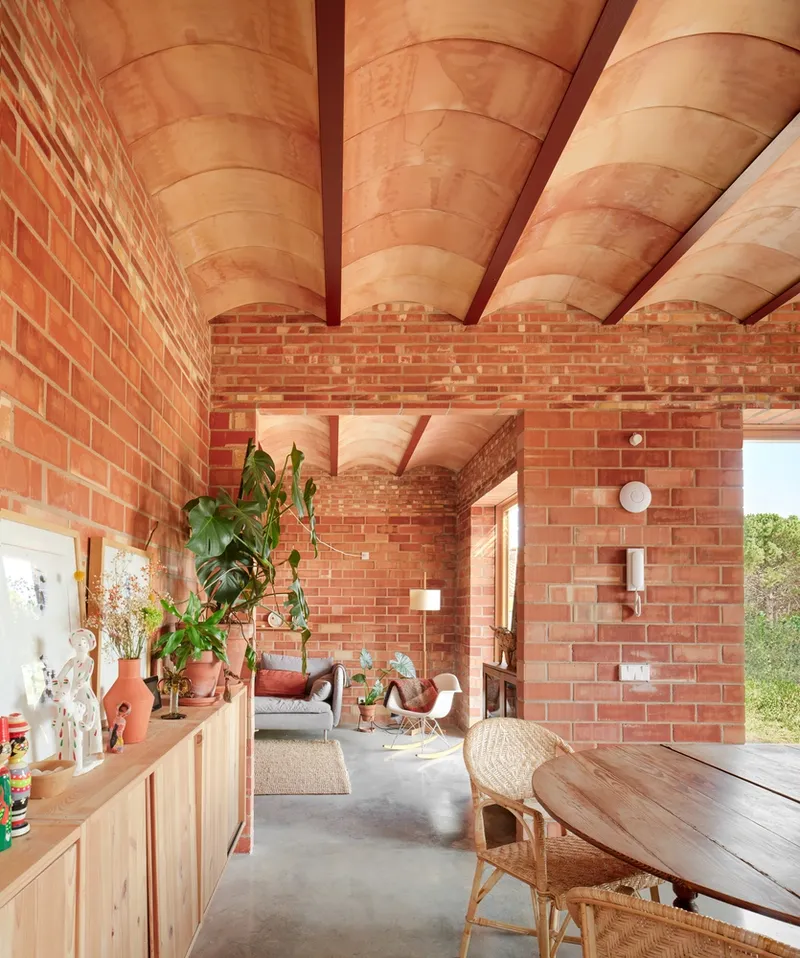
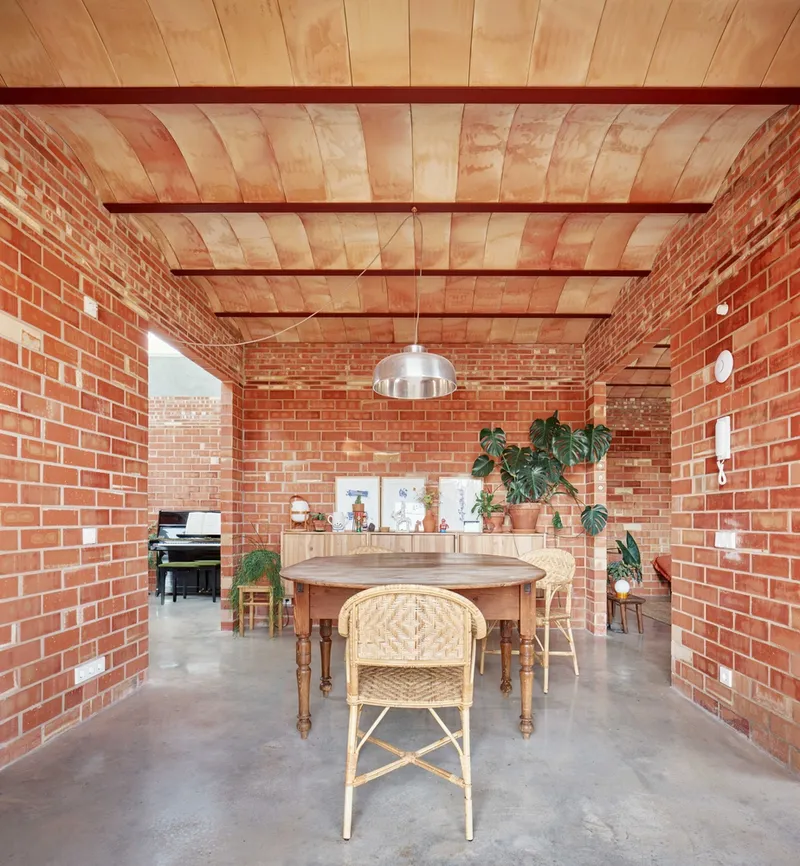
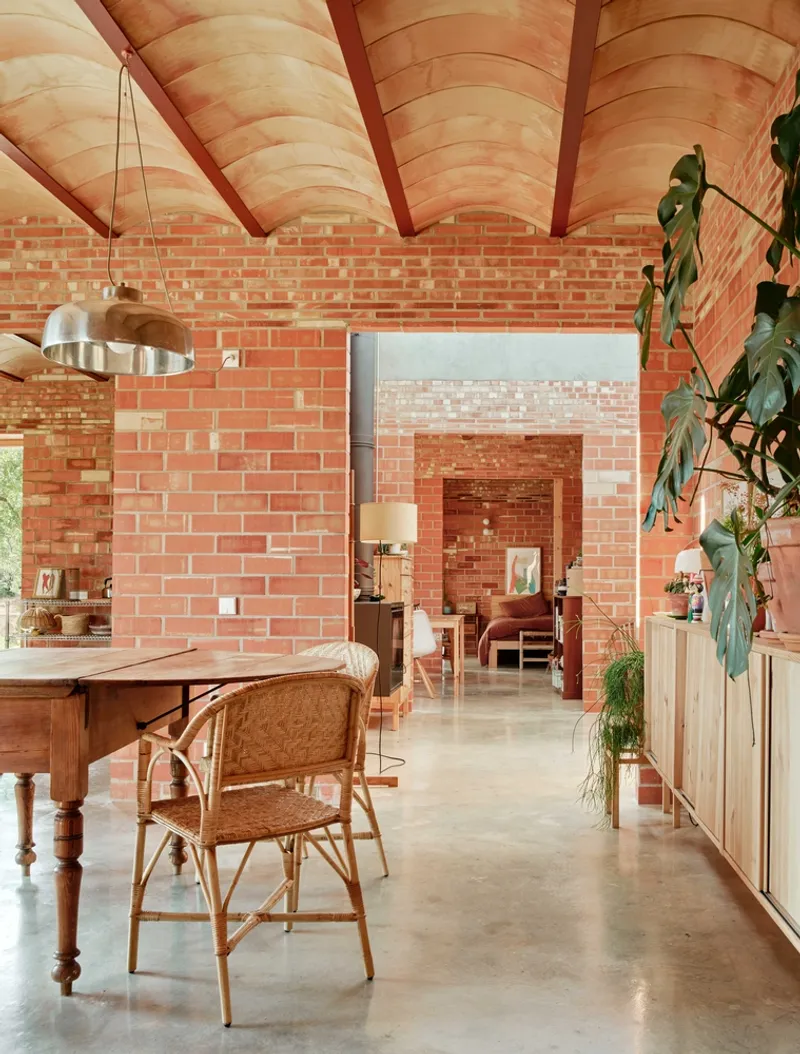
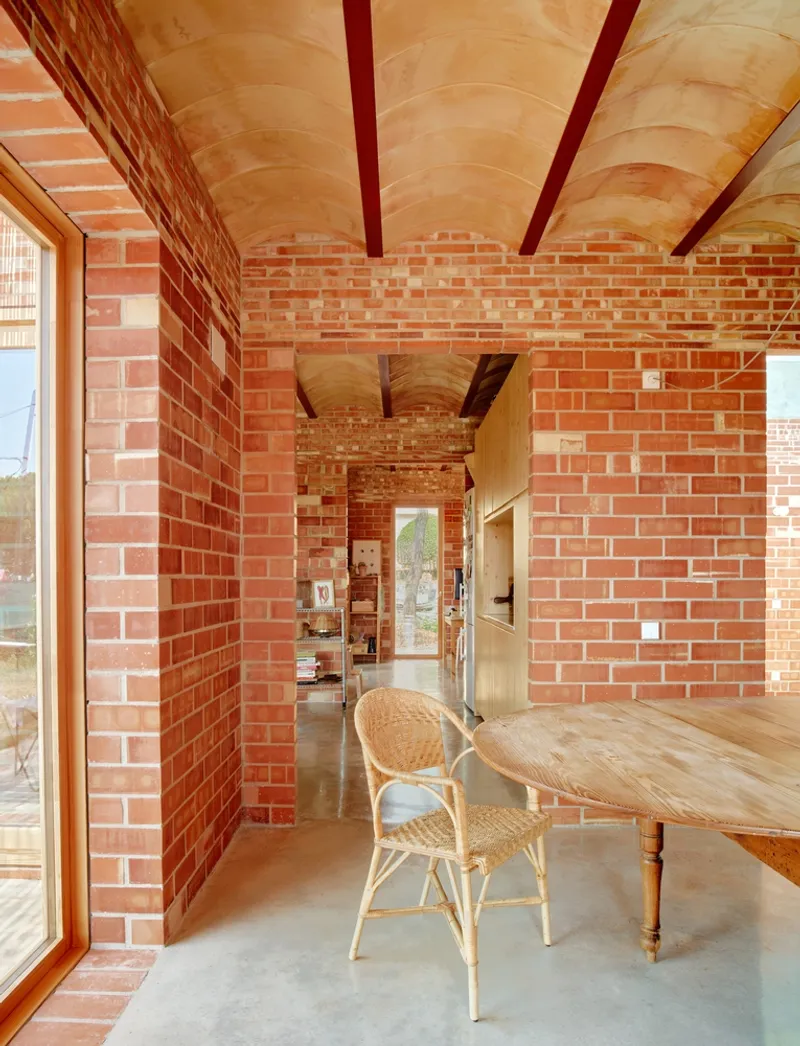
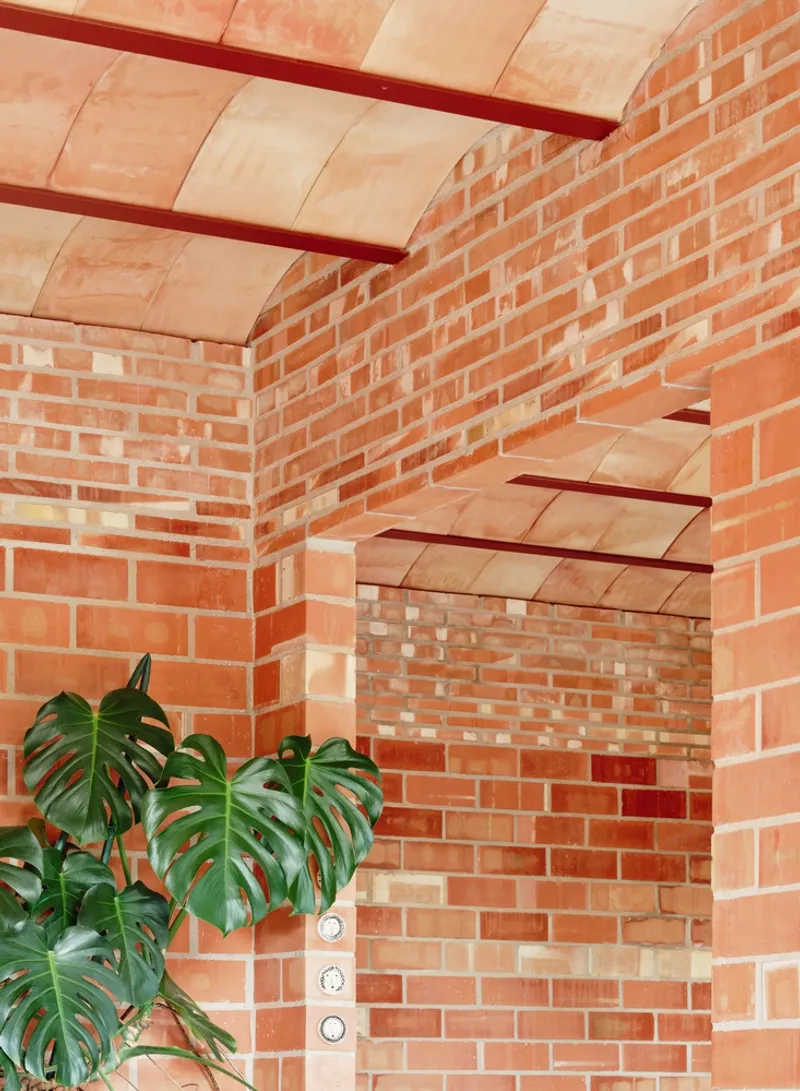
Load-bearing brick walls contribute significantly to the building’s thermal mass, regulating temperature fluctuations naturally. Combined with concrete floors and vaulted ceilings, the material palette is not only visually warm and tactile but also environmentally effective.
Materiality and Spatial Atmosphere: Celebrating Brick and Light
Inside, the house unfolds as a rich play of light and texture. Exposed brick, wooden beams, and concrete surfaces create a warm, grounded interior. Vaulted ceilings enhance spatial generosity, while the staggered layout generates diagonal sightlines, making the compact 143 m² house feel open and interconnected.
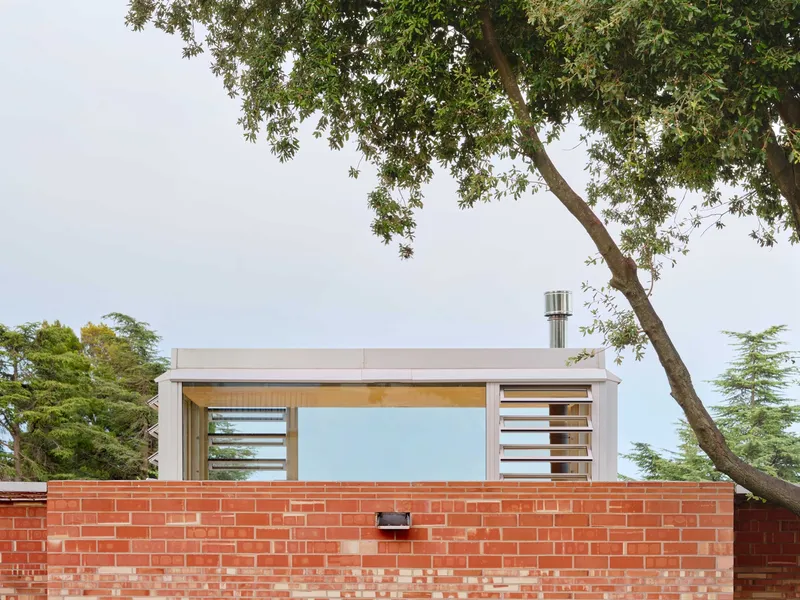
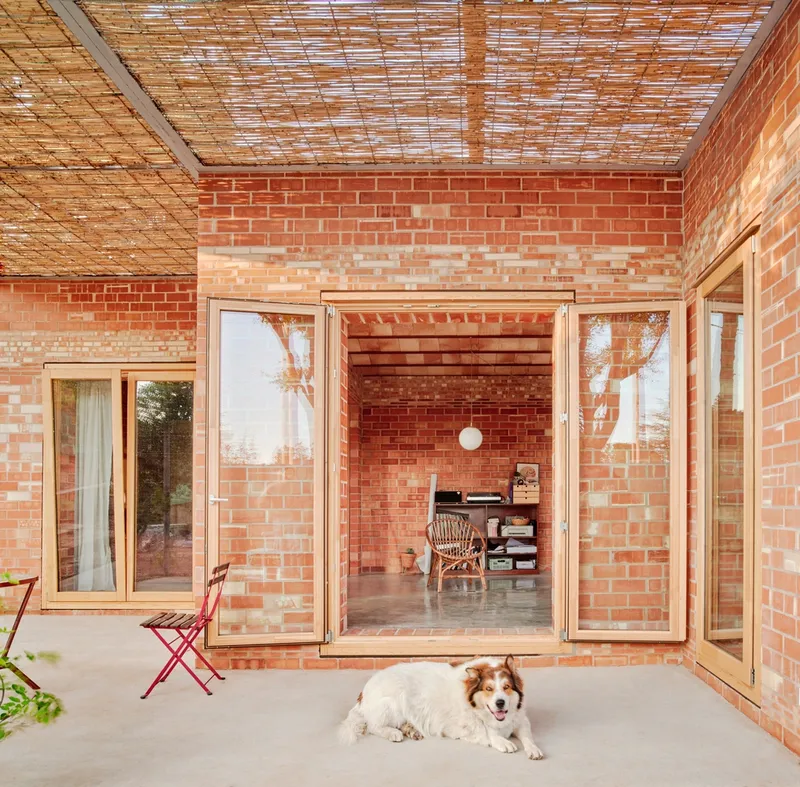
Externally, planted pergolas extend the modular rhythm into the garden, blurring the line between built space and landscape. These structures serve as climatic filters—providing shade in summer, filtering sunlight in winter, and creating outdoor living rooms that enhance the connection to nature.
A Modular Brick House Design Rooted in Future Flexibility
GJ House demonstrates how modularity, when grounded in climate responsiveness and careful site integration, becomes more than a design strategy—it becomes a lifestyle enabler. The architectural rhythm, thermal comfort, and intimate indoor-outdoor relationships together form a robust yet sensitive response to the needs of modern family living.
This home is not just a shelter; it’s an adaptable framework—capable of evolving with its inhabitants while remaining firmly rooted in place. It serves as a compelling model for sustainable, site-conscious architecture in suburban environments.




Popular Articles
Popular articles from the community


Co-Life: Senior Housing Design That Reconnects Older Adults With the City
Co-Life reimagines senior housing design through healing gardens, shared streets, workshops, and a sustainable community across generations.

Co-life: Sustainable Architecture for Age-Friendly Community Living
Co-life reimagines sustainable architecture for seniors through courtyards, rammed earth, shared gardens, and spaces designed for belonging.

Lunar Spiral: Space Architecture Shaped by the Mathematics of the Universe
Lunar Spiral reimagines space architecture through Fibonacci geometry, lunar regolith, levitating habitats, and self-sustaining Moon living.

Riyadh For All: Intergenerational Urban Design for Active Aging in Rabat
Riyadh For All reimagines urban design in Rabat with intergenerational co-living, adaptive courtyards, and Moroccan cultural exchange today.


Similar Reads
You might also enjoy these articles

FAMM Arquitectura Organizes Ten Villas Around Courtyards and Jungle in Nosara, Costa Rica
El Molino pairs two elongated volumes with deep overhangs and timber louvers to build a compact coastal community five minutes from the beach.
Oscar Niemeyer's Ibirapuera Park Pavilions Define São Paulo's Cultural Identity in Concrete and Curve
A constellation of modernist volumes set within São Paulo's most important urban park, conceived for the city's 400th anniversary in 1954.
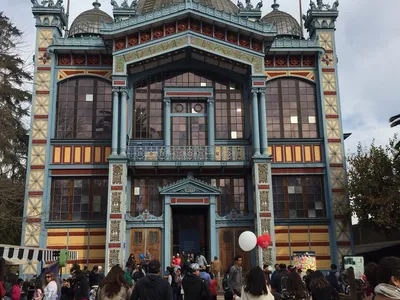
How Henri Picq's 1889 Paris Pavilion Traveled 11,000 Kilometers to Become Santiago's Artequín Museum
A prefabricated iron and glass pavilion built for the Paris Universal Exposition found a second life as a children's art museum in Chile.
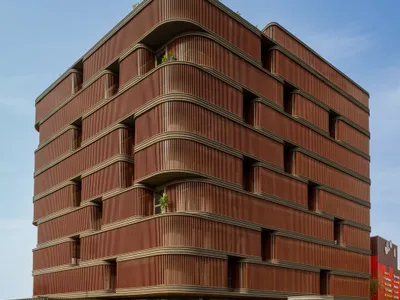
Sanjay Puri Architects Wraps a Jaipur Office Tower in Capsule-Shaped Green Buffers
A nine-level climate-responsive workplace near Jaipur Airport uses stacked planter terraces and aluminium screens to fight 40°C heat.
Explore Exposed Brick Competitions
Discover active competitions in this discipline



Challenge to reimagine the Iron Throne


Photograph architecture without architects


Illustrate the lost glory of Angkor Wat - Render Challenge


Design challenge to reuse E-waste
Comments (0)
Please login or sign up to add comments
No comments yet. Be the first to comment!