

Harbard Close Housing by Reed Watts Architects: A Contemporary Residential Development Redefining Urban Living in London
Contemporary London housing project transforming a neglected site into a connected, community-focused development with sustainable design, shared spaces, and inclusive living.


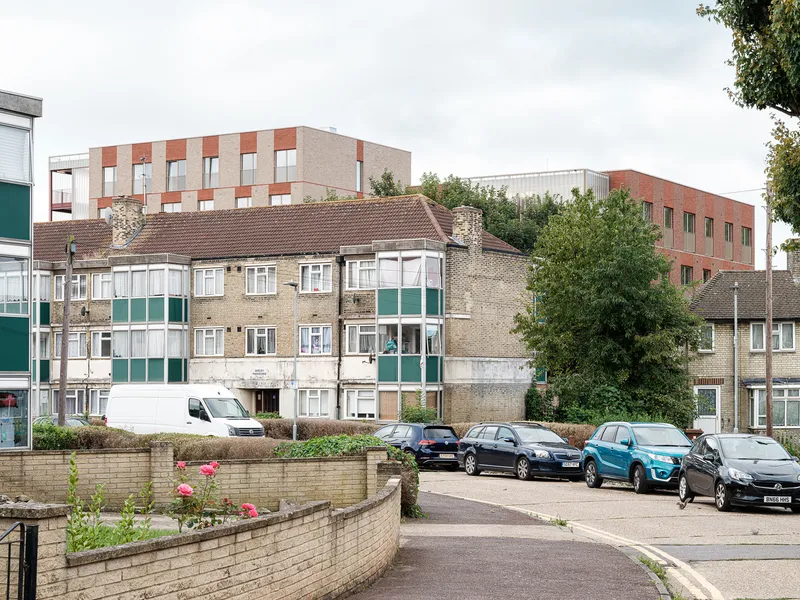
Harbard Close Housing by Reed Watts Architects is a landmark residential architecture project located in Barking, London, United Kingdom. Completed in 2021, this thoughtfully designed housing development transforms a previously underutilized urban site into a vibrant and connected community space. Spanning 4,092 square meters, the project delivers 78 one-bedroom homes tailored primarily for first-time buyers, while integrating accessibility, sustainability, and community-focused design.

Urban Regeneration and Site Strategy
The project site carries historical significance, having once hosted post-war prefabricated homes that were demolished in the 1970s. For decades, the land remained fragmented and without purpose. Reed Watts Architects approached the project as an opportunity for urban regeneration, reintroducing connectivity and spatial clarity.
A key design move was the introduction of a pedestrian route cutting through the site. This pathway reconnects the surrounding residential neighborhood with the open landscapes of the River Roding, redefining movement and accessibility. The masterplan strategically incorporates shared gardens, public open spaces, and accessible parking, ensuring inclusivity and usability for all residents.
Architectural Design and Spatial Configuration
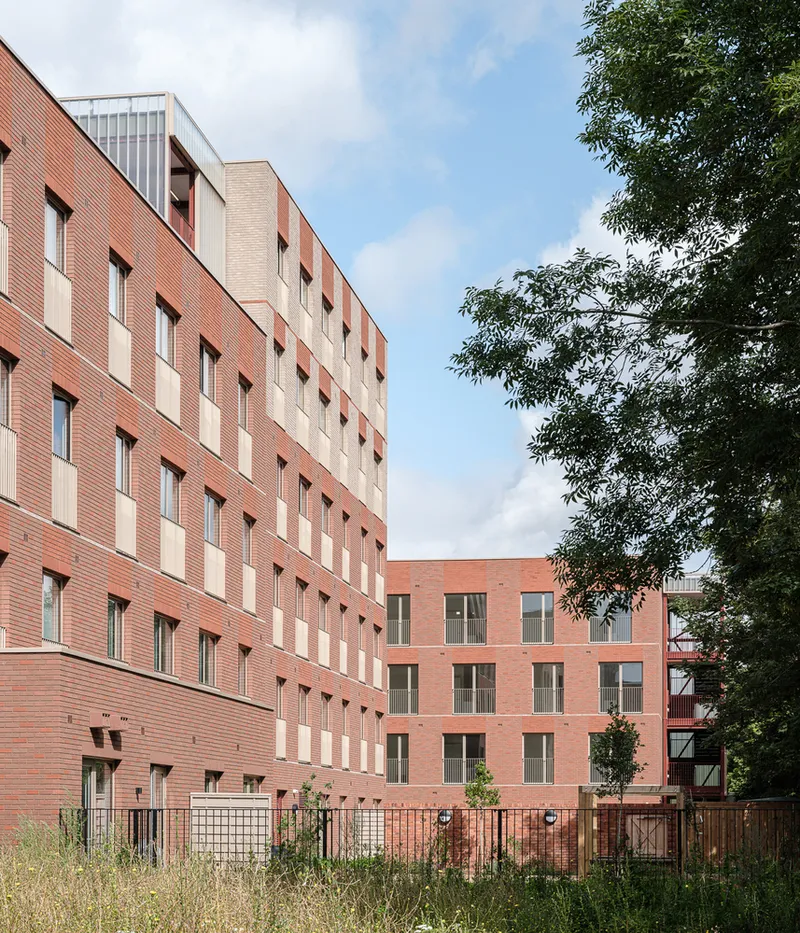
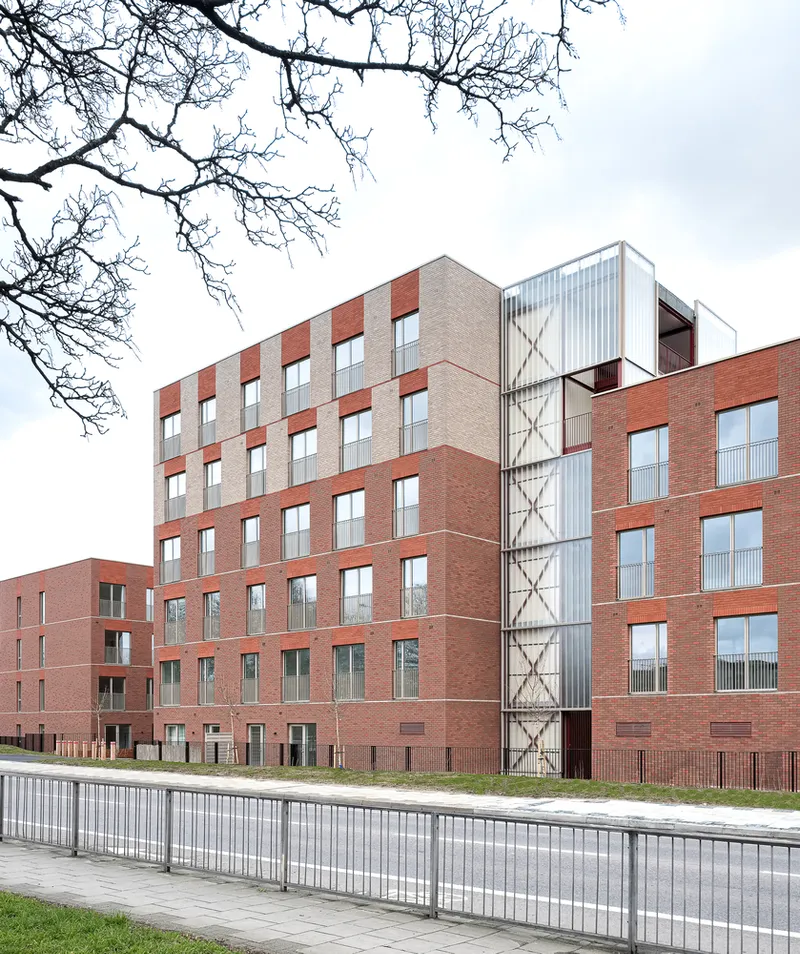
The development consists of two distinct residential blocks, one four-storey and the other six-storey, carefully positioned to enhance spatial relationships. The northern block is oriented at a 90-degree angle to the southern block, forming a sense of enclosure around landscaped communal gardens. This configuration not only creates privacy and shelter but also minimizes the visual and environmental impact on neighboring properties.
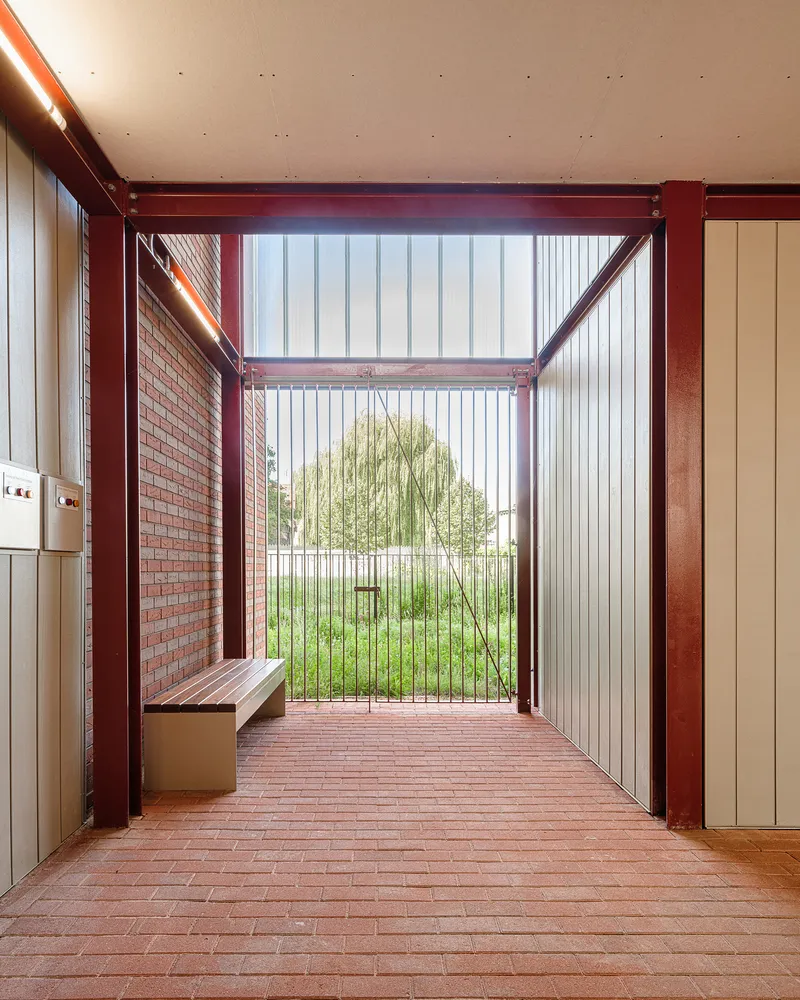
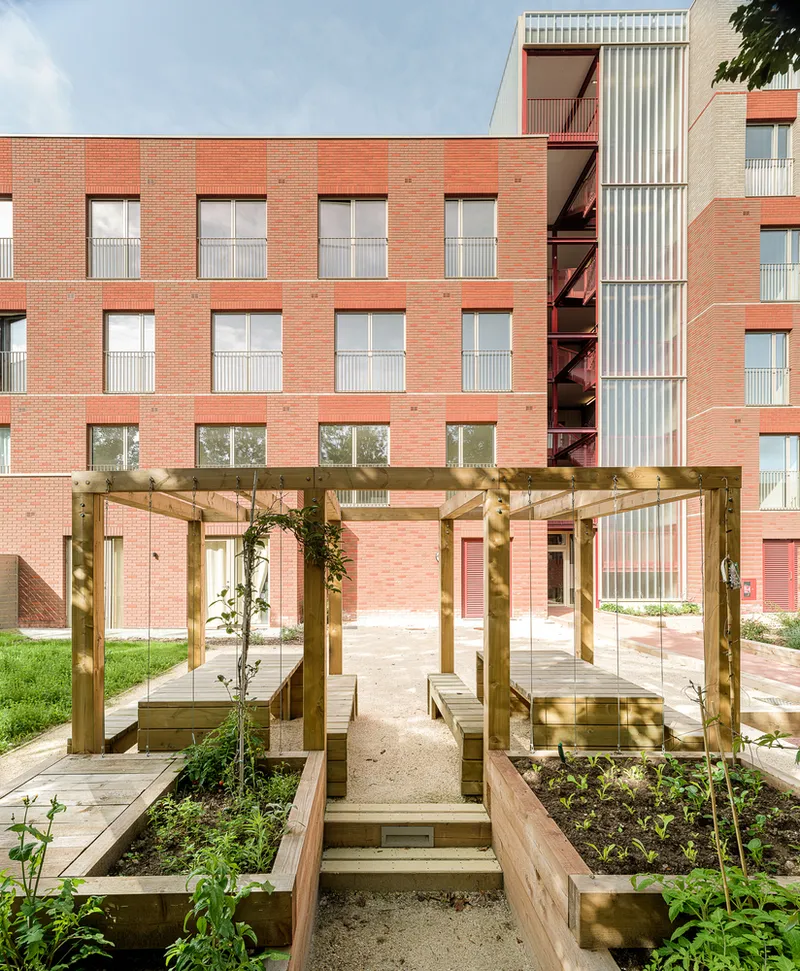
Each building is accessed through its own walled garden, offering residents a transition from public to semi-private spaces. These landscaped zones feature meadow planting, encouraging biodiversity while replacing traditional high-maintenance lawns. Raised allotment beds and seating areas foster social interaction, reinforcing a sense of community among residents.

Community-Centric Living and Shared Amenities
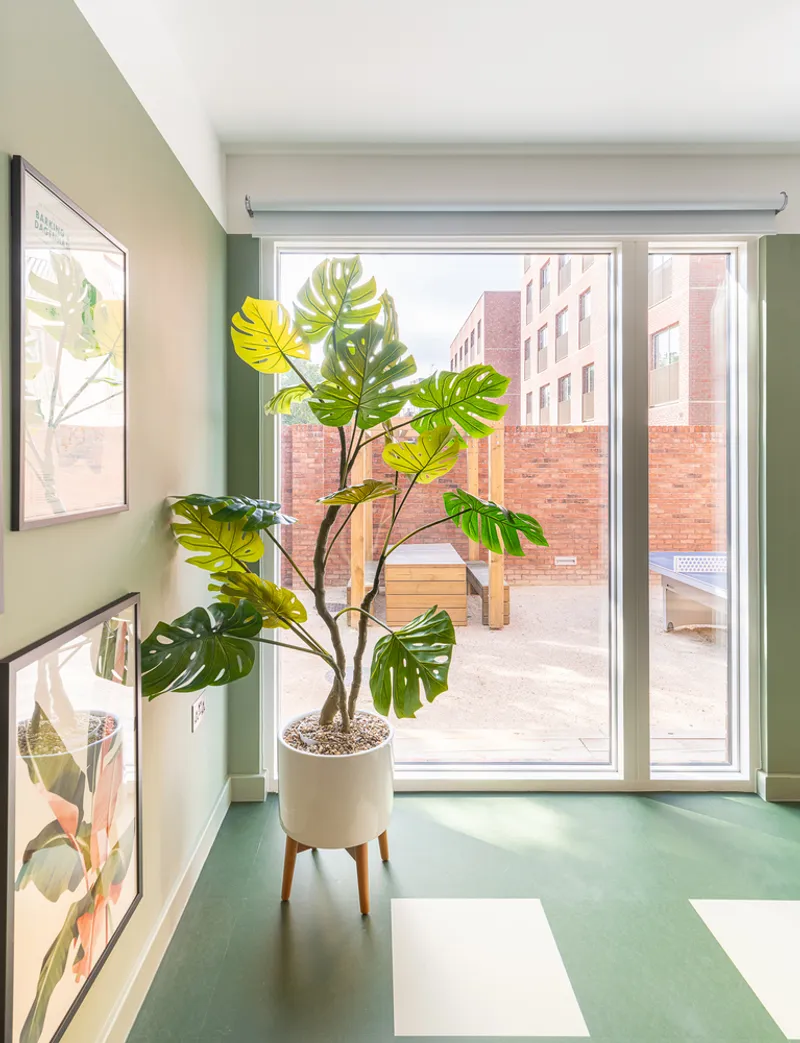
A defining feature of Harbard Close Housing is its emphasis on shared living experiences. Beyond private apartments, the development includes a communal garden room designed for gatherings, workshops, and remote working. This flexible space reflects contemporary lifestyle shifts, particularly the growing need for adaptable work-from-home environments.
The inclusion of two wheelchair-adaptable homes highlights the project’s commitment to inclusive design, ensuring accessibility for diverse user groups.
Construction Techniques and Material Innovation
While initially conceived as a fully prefabricated scheme, the construction strategy evolved during the design process. The final solution employs light-gauge steel frame panels, balancing efficiency, cost-effectiveness, and structural performance.
The façade system features insulated render combined with resin brick slips, offering both thermal performance and aesthetic continuity. This approach required close collaboration between architects, contractors, planners, and manufacturers, demonstrating an integrated design process.
Façade Design and Material Palette
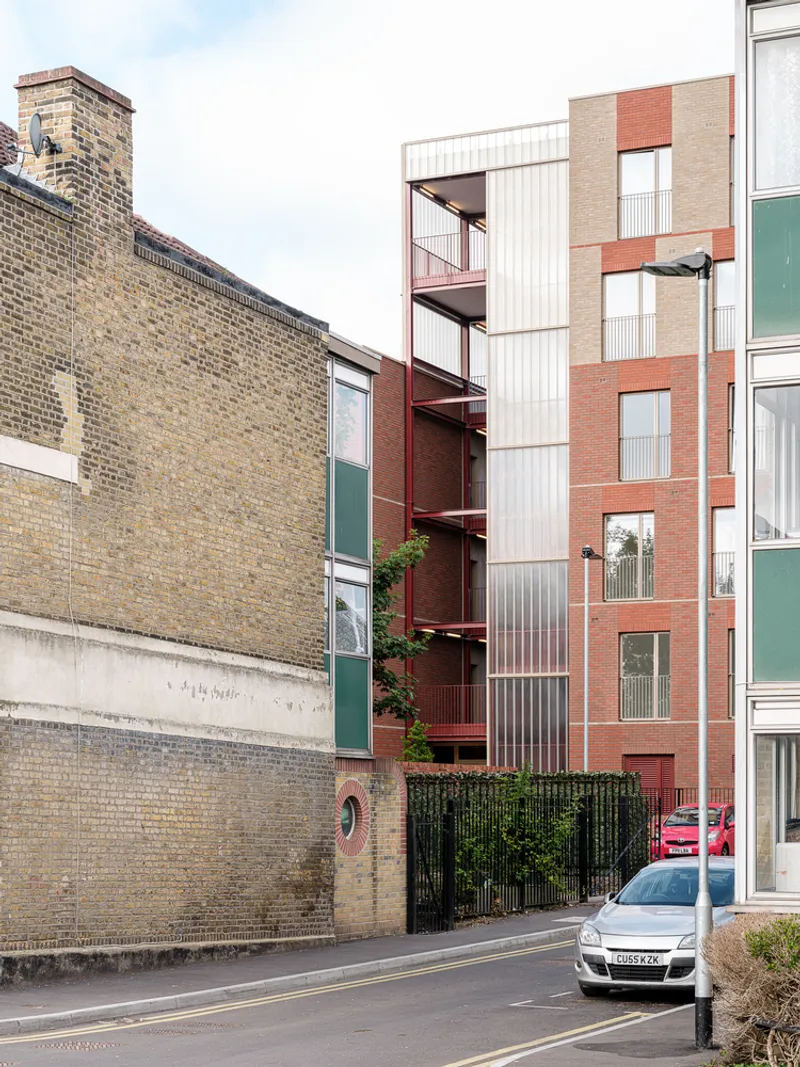
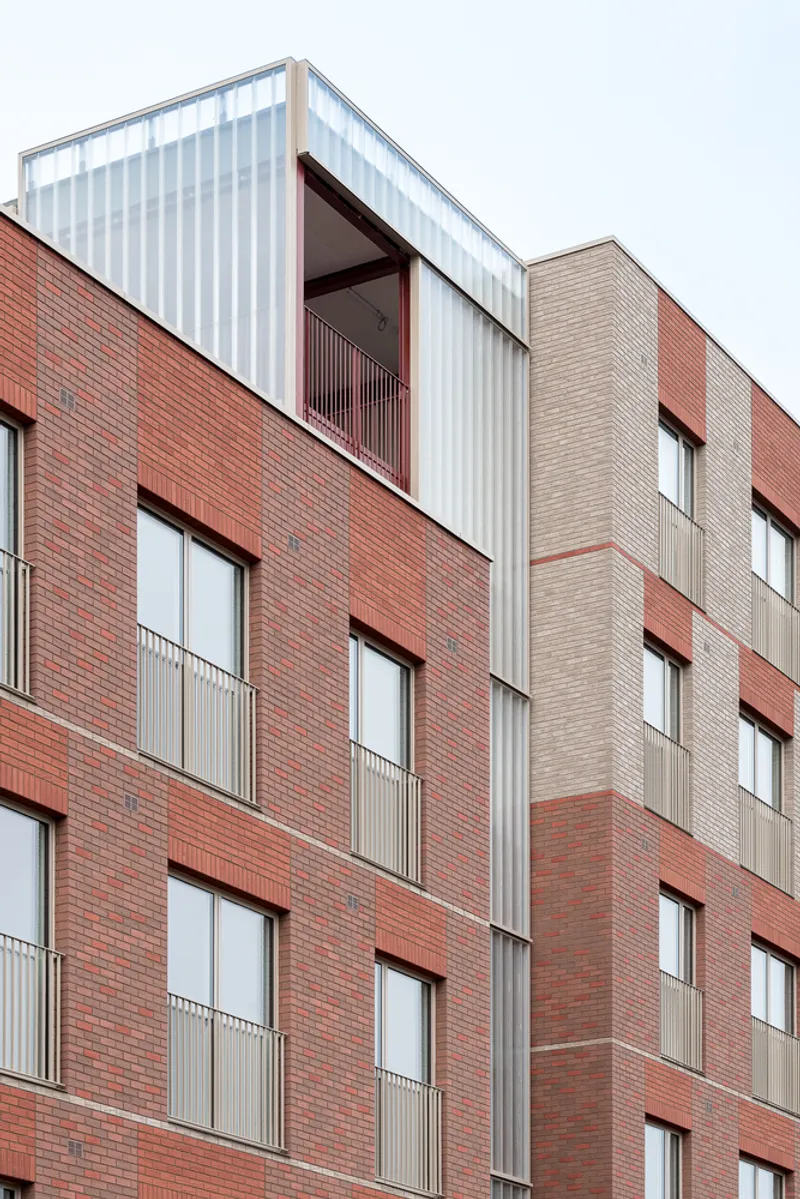
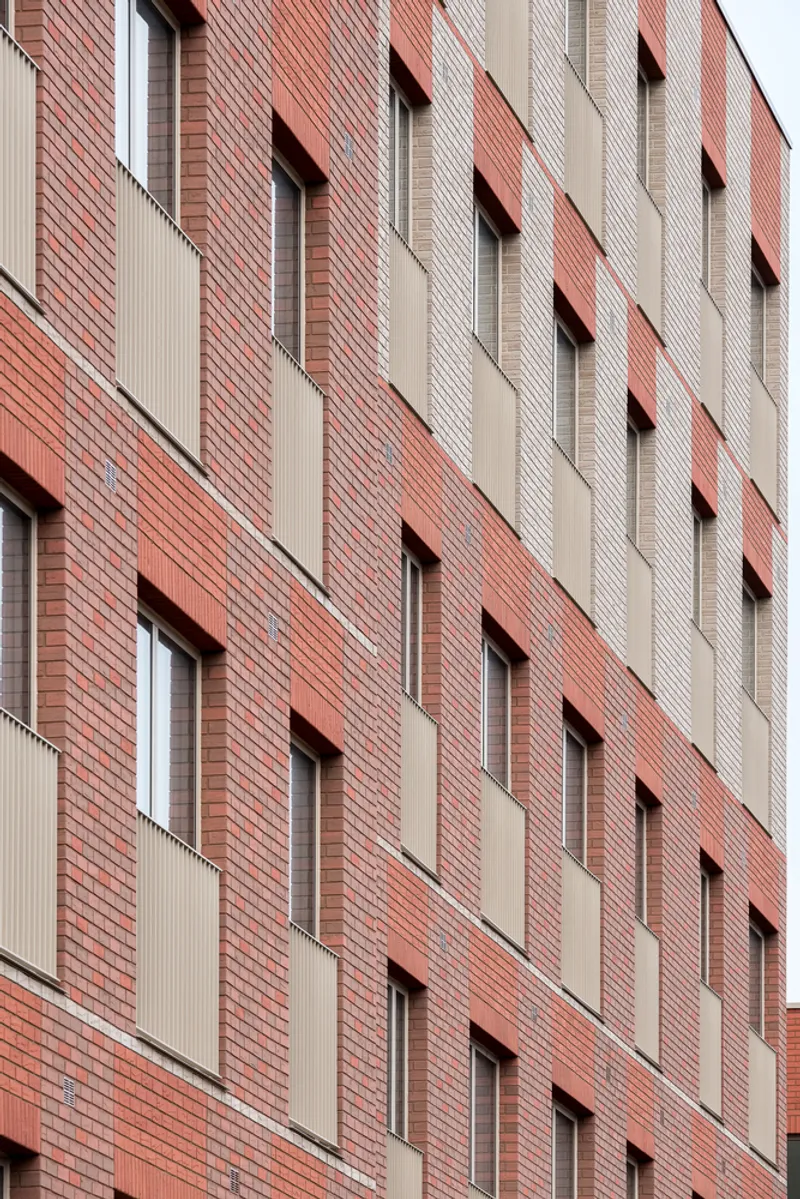
Reed Watts Architects developed a carefully curated color palette inspired by the surrounding urban fabric. Warm terracotta and buff tones reflect the character of neighboring buildings, allowing the development to blend seamlessly into its context.
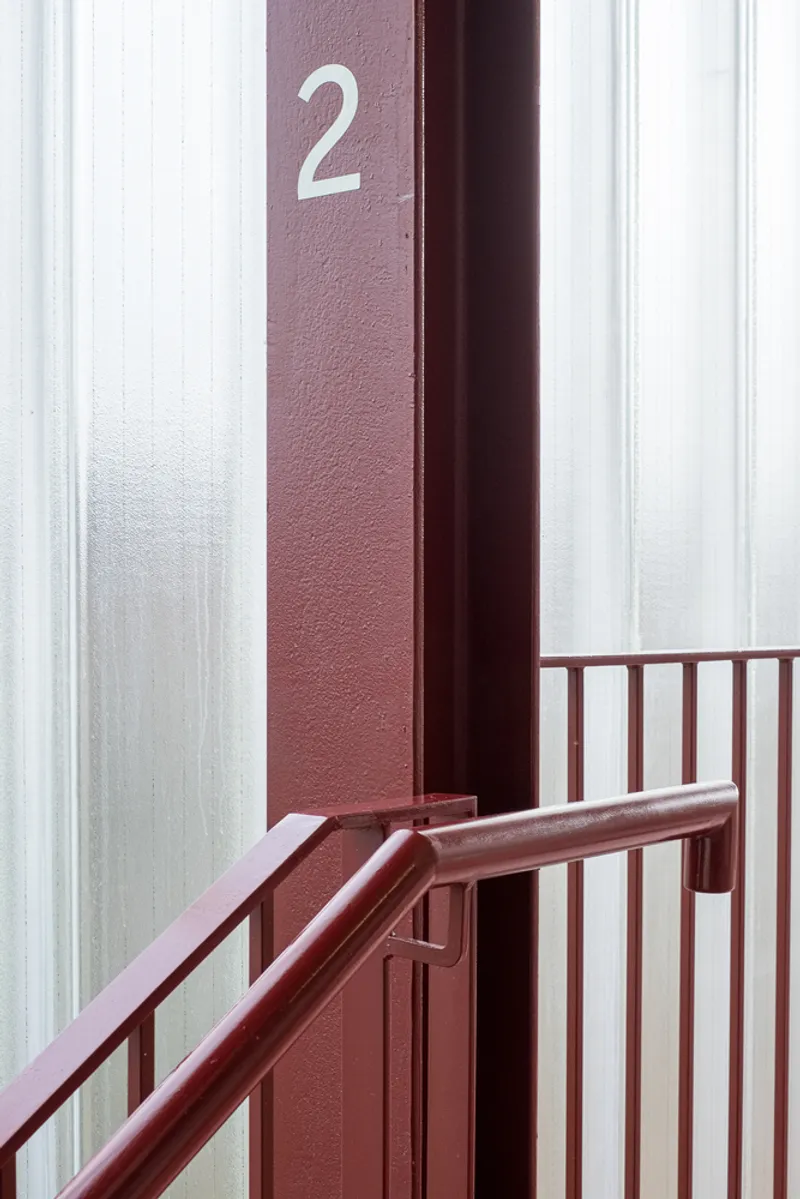
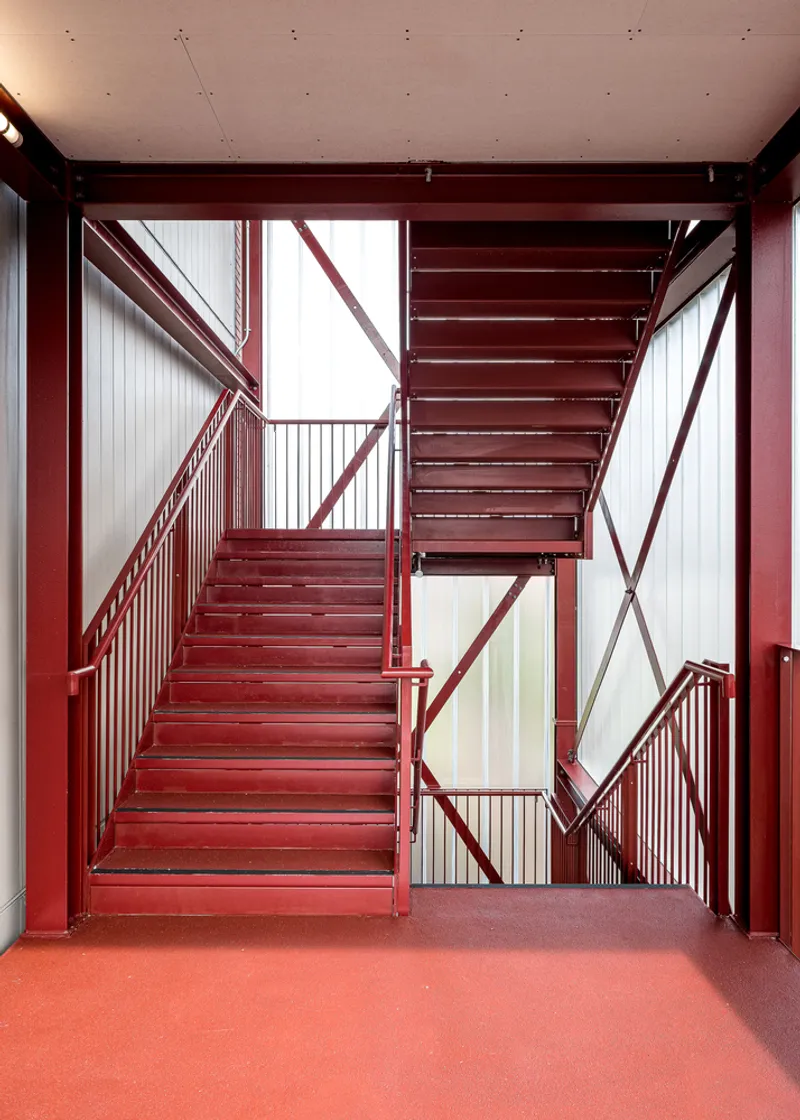
Subtle tonal variations across the façade introduce texture and visual depth, breaking down the scale of the buildings. In contrast, the stair cores are designed as light-filled vertical elements clad in cast glass. Openings within these cores provide residents with visual connections to the landscaped gardens and expansive views across London, enhancing spatial experience and orientation.

Landscape Integration and Environmental Approach
The project prioritizes landscape as a central design element. Meadow planting not only reduces maintenance requirements but also supports local biodiversity. The integration of green spaces within the development promotes well-being, encourages outdoor activity, and strengthens community bonds.
The relationship between built form and landscape is carefully balanced, with architecture framing outdoor spaces while maintaining permeability and openness.
Conclusion: A Model for Contemporary Affordable Housing
Harbard Close Housing stands as a progressive example of contemporary residential architecture in London. By combining thoughtful urban planning, community-driven design, and innovative construction methods, Reed Watts Architects have created a development that addresses both social and spatial challenges.
The project successfully transforms a neglected site into a thriving residential community, offering high-quality, affordable homes while fostering connectivity, inclusivity, and environmental sensitivity.

All photographs are works of
Fred Haworth


Popular Articles
Popular articles from the community


graciastudio Turns a Viewless Tijuana Lot Inward Around a Courtyard of Concrete, Timber and Trees
In Tijuana, Jorge Gracia's GA2 House stacks a timber-clad private floor over exposed concrete and replaces a missing view with a planted interior patio.


Singing Woman: An Opera House That Performs Before the Curtain Rises
Ovidiu Cristian Pavel's conceptual opera house translates Estonia's choral identity into a sculpted waterfront landmark facing the Baltic Sea.

FCC Arquitectura Expands a Portuguese Granite House with a Board-Marked Concrete Wing
In Portugal, JV House pairs a cleaned-up whitewashed and granite dwelling with a timber-shuttered concrete extension, courtyards and a garden pool.

David Ortega Stacks a Two-Story Mexico City Penthouse Around a Steel Stair and a Pergola-Shaded Roof Terrace
In Colonia Roma, a 300 m² penthouse uses oak joinery, a planted steel stair and a slatted roof pergola to make a new-build apartment feel like a house.

Similar Reads
You might also enjoy these articles

Cube Design Draws an Ecological Corridor Between Two Shenzhen Hills with the Nankai Building
Beside Shenzhen's container docks, the Nankai Building pairs stacked balconies with a climbing green screen to connect two hillsides across its height.

Praksis A and Studio Sted Bend a Red Timber Cabin Across the Granite of Norway's Southern Coast
On the southern Norwegian coast, a 105 m² cabin follows the rock on slender posts, pairing red cladding outside with pine, brick and plywood within.
David Ortega Stacks a Two-Story Mexico City Penthouse Around a Steel Stair and a Pergola-Shaded Roof Terrace
In Colonia Roma, a 300 m² penthouse uses oak joinery, a planted steel stair and a slatted roof pergola to make a new-build apartment feel like a house.

PARALELA and LB2 Thread a Public Walkway Through the Base of a Las Condes Residential Tower
In Las Condes, Santiago, the Hamlet Building gives its fenceless ground floor to a 70-metre wooded passage linking two streets and the metro.

Explore Blocs Competitions
Discover active competitions in this discipline

Challenge to design mud housing for contemporary communities

Challenge to reimagine the Iron Throne

Photograph architecture without architects

Illustrate the lost glory of Angkor Wat - Render Challenge
Comments (0)
Please login or sign up to add comments
No comments yet. Be the first to comment!