

House in Town: Historic Maine Residence Reimagined by ElliottArchitects
House in Town by ElliottArchitects renovates a 1849 Maine residence, blending historic charm with modern design, light-filled interiors, and functional barn conversion.


ElliottArchitects has masterfully transformed the historic House in Town, originally built in 1849 by Henry Austin, into a harmonious blend of 19th-century charm and contemporary functionality. The residence, formerly the home of Moses Perkins, embodies the characteristic rural Maine architecture of the era, comprising a main house, an unfinished barn, and a connecting ell. Over the 20th century, previous owners modified the ell’s first-floor kitchen and added an extension to the barn, creating an eclectic yet disjointed layout.


Phase One: Integrating the Barn and Enhancing Outdoor Connection
When new owners acquired the property in 2006, they envisioned functional upgrades while preserving the historic character mandated by the local district. The first renovation phase focused on transforming the underutilized barn into a modern kitchen space and strengthening the home’s connection to the terrace at the rear, a favorite summer gathering spot.


The architects’ approach carefully distinguished the new work from the original 19th-century architecture while respecting its historic essence. A gallery space was introduced on the barn’s second floor, featuring a dramatic vertical opening linking the gallery with the kitchen below. A subtle skylight channels natural daylight into the kitchen island, enhancing the sense of openness. On the street-facing side, steel-framed glass panels are concealed behind sliding wooden doors, revealing themselves only when opened. A newly inserted stair provides seamless vertical circulation across three levels, and at night, the illuminated openings animate the otherwise reserved façade.


Phase Two: Attic Conversion and Modern Expansion
Several years later, Phase Two focused on converting the attic into a functional office and sleeping area. This required creating new vertical circulation and modifying the hall and bathroom below. ElliottArchitects installed a refined steel and wood staircase, connecting the two floors efficiently while infusing the space with natural light via strategically placed skylights.


A large shed dormer was added to expand the attic’s floor area and ceiling height. This design move not only offers panoramic water views but also extends the contemporary architectural language established in Phase One. On the rear façade, modern interventions are most prominent, contrasting yet complementing the historical structure.
Inside, the interiors embrace a clean, modern aesthetic that distills the home’s historical details into elemental forms. Warm wood, natural light, and careful spatial planning ensure that the renovation feels both contemporary and respectful of the property’s heritage. The result is a 21st-century residential renovation that seamlessly integrates modern living requirements while honoring the integrity of a 19th-century Maine home.


Architectural Highlights
- Preservation of historic façade while integrating contemporary interventions
- Barn transformation into a bright, functional kitchen
- Vertical connection between gallery and kitchen using skylight illumination
- Strategic steel and wood stair insertion for efficient circulation
- Attic dormer addition for enhanced space, light, and views
- Harmonious blend of historic materials with clean, modern interior design


All photographs are works of
Trent Bell


Popular Articles
Popular articles from the community

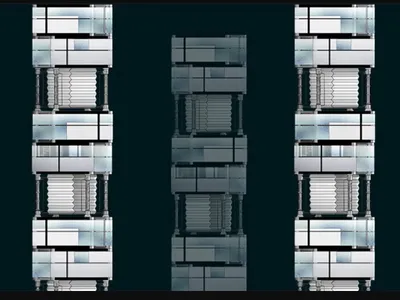
Tsunami Convergenics: Turning Catastrophic Ocean Forces into Underwater Housing Infrastructure
A speculative underwater settlement off the coast of Onagawa, Japan, treats tsunamis and typhoons as energy sources rather than threats.
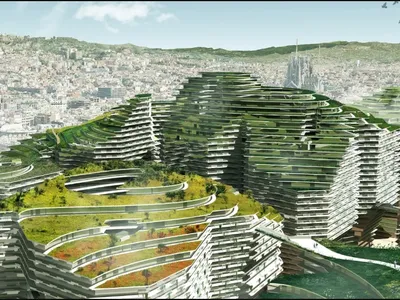
Manzana Morphosis: Stretching Barcelona's Grid into a Living Landscape for 2050
A radical reworking of the Eixample manzana turns density into a tool for generous public space, vertical ecology, and environmental performance.
Faces of the Soviet Avant-Garde: Turning Moscow's Street Names into an Open-Air Museum
A network of sculptural installations across a Moscow residential district transforms forgotten architect names into spatial encounters with cultural memor
Extended Shell: Retrofitting Kolkata's Balconies as Living Urban Thresholds
A modular retrofit system recovers the social and environmental intelligence of Kolkata's historic verandas for contemporary Park Street residents.

Similar Reads
You might also enjoy these articles

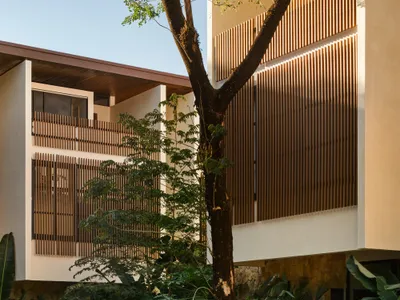
FAMM Arquitectura Organizes Ten Villas Around Courtyards and Jungle in Nosara, Costa Rica
El Molino pairs two elongated volumes with deep overhangs and timber louvers to build a compact coastal community five minutes from the beach.
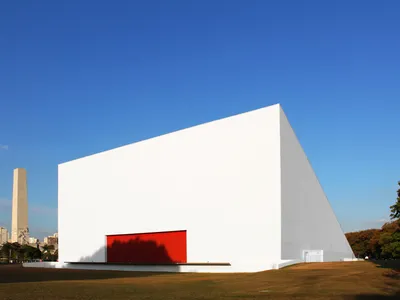
Oscar Niemeyer's Ibirapuera Park Pavilions Define São Paulo's Cultural Identity in Concrete and Curve
A constellation of modernist volumes set within São Paulo's most important urban park, conceived for the city's 400th anniversary in 1954.
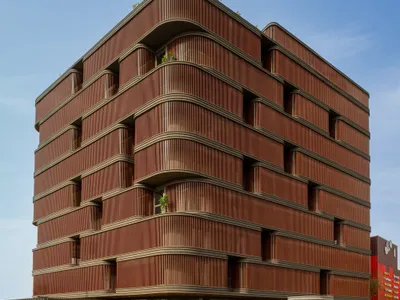
Sanjay Puri Architects Wraps a Jaipur Office Tower in Capsule-Shaped Green Buffers
A nine-level climate-responsive workplace near Jaipur Airport uses stacked planter terraces and aluminium screens to fight 40°C heat.
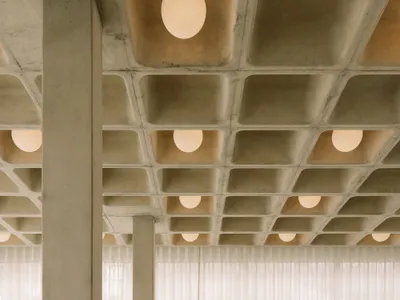
RHO Converts a Berlin Spree-Side Industrial Courtyard into Enkime's 1,000 m² Agency Headquarters
A social media agency's new home in Charlottenburg trades glossy branding for concrete waffle ceilings, glazed tile, and sheer curtains.

Explore Residential Building Competitions
Discover active competitions in this discipline

Challenge to design mud housing for contemporary communities

Challenge to reimagine the Iron Throne

Photograph architecture without architects

Illustrate the lost glory of Angkor Wat - Render Challenge
Comments (0)
Please login or sign up to add comments
No comments yet. Be the first to comment!