

Kalarigram House, Auroville: A Courtyard-Centered Vernacular Residence by Badoloka of Auroville
Courtyard-oriented vernacular house in Auroville blends brick jalis, passive cooling, multifunctional spaces, and raw materials for private communal living experiences.


Located on the quiet outskirts of Auroville, Kalarigram House is a thoughtfully crafted residential project by Badoloka that seamlessly blends traditional Indian vernacular architecture with contemporary spatial living. Designed in 2022 for a Kalari martial arts master, his family, and visiting guests, the house forms part of a larger campus that includes a Kalari training school and a treatment center, demanding a sensitive balance between openness, privacy, and multifunctional use.

Spanning approximately 5,000 square feet, the residence responds directly to its active surroundings. With daily movement from students, practitioners, and visitors, the architects adopted an inward-looking architectural strategy, organizing the house around a central courtyard. This courtyard acts as the spatial and social heart of the home, providing privacy from the exterior while fostering internal connectivity, climatic comfort, and community interaction.
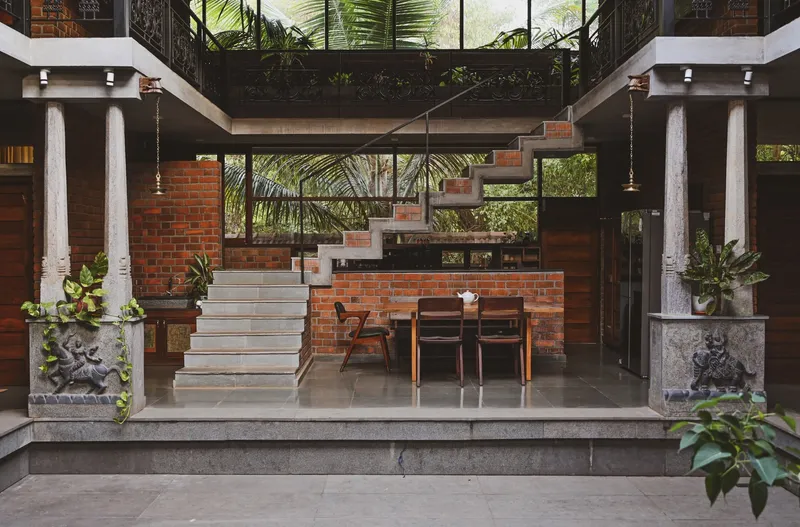
The courtyard-centric plan enables a fluid relationship between indoor and semi-open spaces. Informal living zones surrounding the courtyard adapt effortlessly to a range of uses, from everyday family life to art performances, music sessions, workshops, and communal gatherings. Beyond its social role, the courtyard enhances natural daylighting and passive ventilation, creating a comfortable microclimate suited to Auroville’s warm and humid conditions.

Formally enclosed spaces are intentionally limited to the eight bedrooms, ensuring acoustic and visual privacy. In contrast, the living room, dining area, and kitchenette remain open and interconnected, reinforcing a sense of openness and shared living. Since most heavy cooking activities occur in a separate kitchen block on the campus, the in-house kitchenette supports lighter, everyday use while maintaining spatial continuity.

A defining architectural element of Kalarigram House is its brick jali façade, particularly along the bedroom bay windows. These perforated brick screens filter harsh sunlight, promote cross-ventilation, and ensure privacy from nearby activities. At the same time, they cast dynamic patterns of light and shadow across interior surfaces, enriching the spatial experience. The jalis form the home’s distinctive exterior identity, merging cultural heritage with modern architectural expression.
An informal open terrace crowns the residence, accessible both internally and via an external spiral staircase. Designed as a social platform for evening gatherings, the terrace leads to an attic level sheltered by a traditional clay tile roof. This attic functions as a flexible workshop and gathering space while also acting as a thermal and rain barrier, protecting the bedrooms below from excessive heat and monsoon weather.

Structurally, the house adopts an experimental hybrid system. Traditional stone columns define the courtyard edges, while reinforced concrete beams and slabs provide structural stability. The remaining structure relies on locally sourced load-bearing bricks, originally classified as manufacturing rejects due to their surface irregularities. Rather than concealing these imperfections, the architects embraced them, allowing the exposed brickwork to define the home’s raw, tactile aesthetic. Complemented by exposed cement plaster, cast iron details, and warm wood finishes, the material palette delivers a timeless architectural language rooted in sustainability and locality.
Kalarigram House stands as a compelling example of sustainable residential architecture in India, demonstrating how vernacular materials, passive design strategies, and contemporary living needs can coexist harmoniously. It reflects a deep respect for place, culture, and climate, offering a serene yet dynamic living environment within the vibrant context of Auroville.

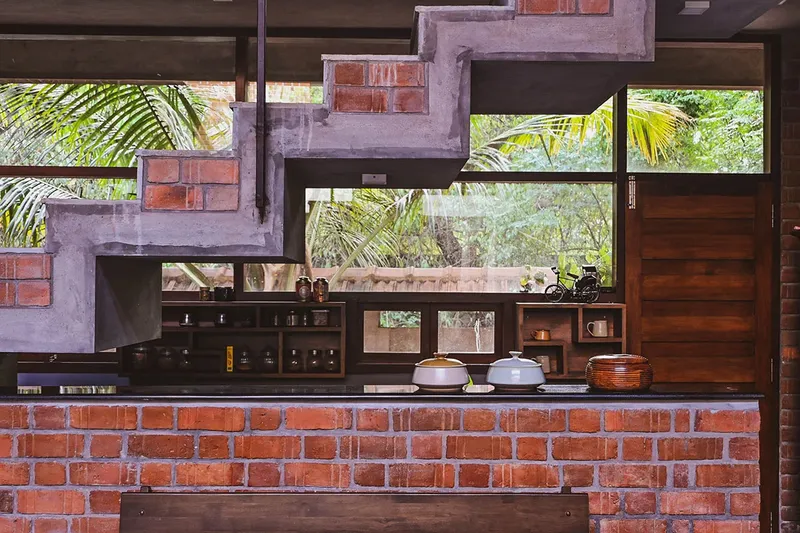
All photographs are works of Studio Frameify


Popular Articles
Popular articles from the community

Opera by the Sea Estonia: Three Shells Dissolving Architecture into Tallinn's Coastline
A winning opera house proposal replaces monumental form with interconnected shells that blur the boundary between building, park and Baltic Sea.
Temporary Home for Dogs: A Reversed Zoo Rethinks Animal Shelter Architecture
In Bucharest, a sinuous corridor and freed landscape flip the logic of containment, designing a shelter that works to make itself unnecessary.
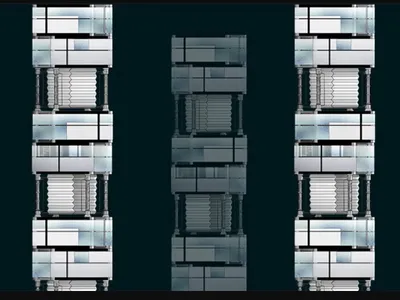
Tsunami Convergenics: Turning Catastrophic Ocean Forces into Underwater Housing Infrastructure
A speculative underwater settlement off the coast of Onagawa, Japan, treats tsunamis and typhoons as energy sources rather than threats.
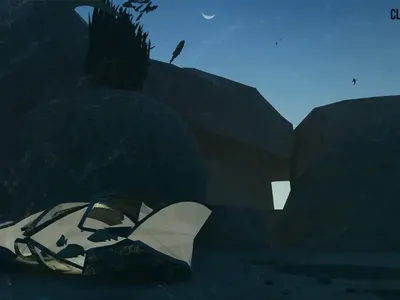
Cloaked Colonization: A Mobile Underwater Habitat That Moves Like a Fish
Micah Abaya's shortlisted EHC Pacific entry reimagines ocean settlement as a dispersed network of self-sustaining architectural organisms.

Similar Reads
You might also enjoy these articles

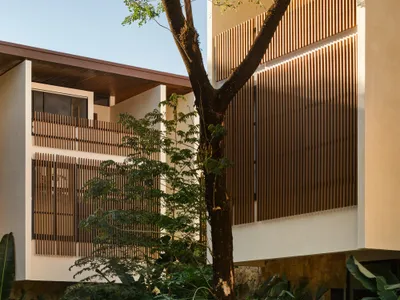
FAMM Arquitectura Organizes Ten Villas Around Courtyards and Jungle in Nosara, Costa Rica
El Molino pairs two elongated volumes with deep overhangs and timber louvers to build a compact coastal community five minutes from the beach.
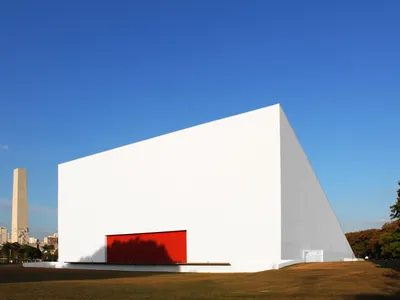
Oscar Niemeyer's Ibirapuera Park Pavilions Define São Paulo's Cultural Identity in Concrete and Curve
A constellation of modernist volumes set within São Paulo's most important urban park, conceived for the city's 400th anniversary in 1954.
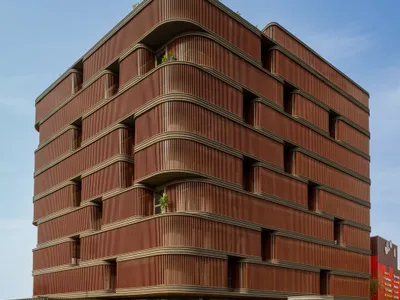
Sanjay Puri Architects Wraps a Jaipur Office Tower in Capsule-Shaped Green Buffers
A nine-level climate-responsive workplace near Jaipur Airport uses stacked planter terraces and aluminium screens to fight 40°C heat.
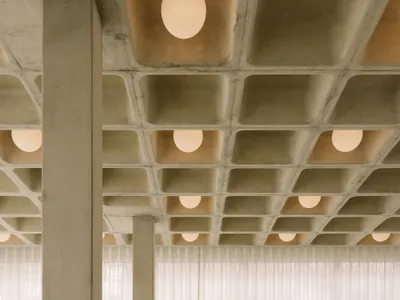
RHO Converts a Berlin Spree-Side Industrial Courtyard into Enkime's 1,000 m² Agency Headquarters
A social media agency's new home in Charlottenburg trades glossy branding for concrete waffle ceilings, glazed tile, and sheer curtains.

Explore Uttarakhand Architecture Competitions
Discover active competitions in this discipline

Challenge to reimagine the Iron Throne

Photograph architecture without architects

Illustrate the lost glory of Angkor Wat - Render Challenge

Design challenge to reuse E-waste
Comments (0)
Please login or sign up to add comments
No comments yet. Be the first to comment!