

Leo Goudvisch Bar in Amsterdam: A Contemporary Interpretation of the Traditional Dutch Bruin Café
Studio Modijefsky designs Leo Goudvisch Bar in Amsterdam, blending traditional Dutch bruin café charm with marble, wood, textiles, and contemporary craftsmanship.


Located in the vibrant neighborhood of Beukenplein in East Amsterdam, the Leo Goudvisch Bar is the latest addition to the well-known Goudvisch family of bars. Designed by Studio Modijefsky, the project seamlessly blends nostalgic Dutch bar culture with contemporary interior design innovation. Spanning approximately 255 square meters, the bar reflects a sophisticated design language that celebrates craftsmanship, material richness, and modern hospitality aesthetics.
The Goudvisch brand has become widely recognized throughout Amsterdam for creating venues that combine the warmth of traditional “bruin cafés”, classic Dutch brown cafés, with a refined modern atmosphere. With Leo, the designers aimed to reinterpret this historic concept while introducing fresh materials, artistic elements, and spatial experiences that resonate with today’s urban culture.
Interior Design Inspired by Architectural Context
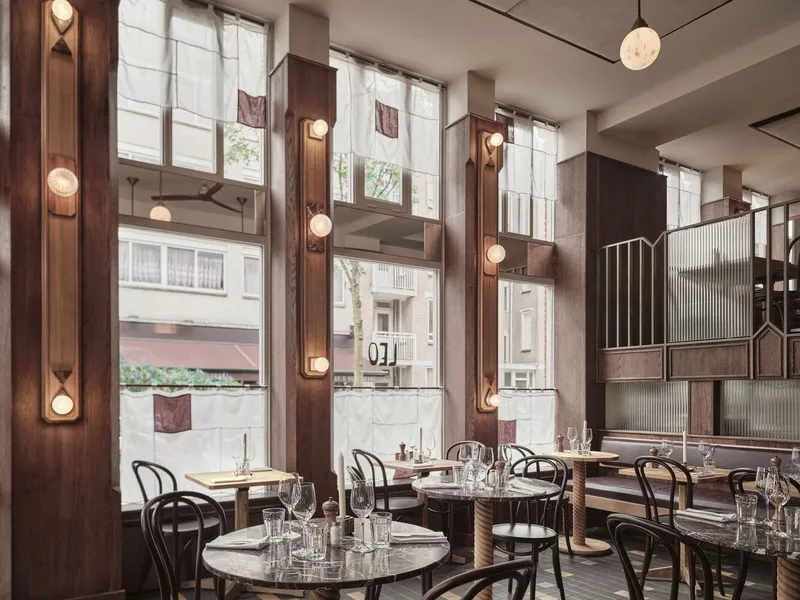
The interior design of Leo Goudvisch Bar establishes a strong dialogue with the surrounding architecture. The design concept takes cues from the chamfered structural details of the building, translating these architectural characteristics into a layered interior environment filled with texture, depth, and color.
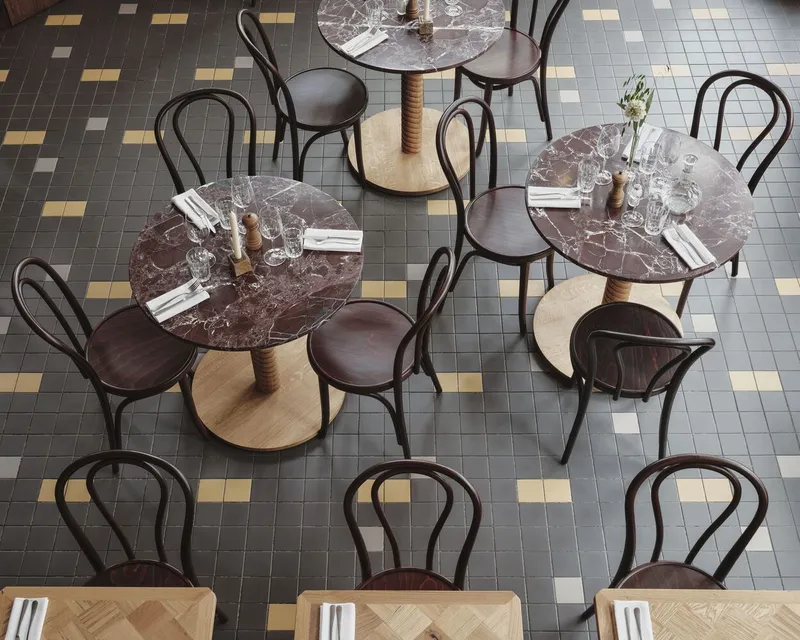
A distinctive palette of soft lavender, plum, and muted grey defines the atmosphere of the space. These hues create a calm yet expressive environment that distinguishes Leo from the darker tones typically associated with traditional brown cafés. Complementing the color palette are walnut-toned wood wall panels and custom oak furniture, which provide warmth and authenticity while maintaining a contemporary visual identity.
The use of wood throughout the bar enhances the sense of intimacy and reinforces the timeless character of the venue. By combining rich materials with subtle color contrasts, Studio Modijefsky created an interior that feels both sophisticated and welcoming, perfectly suited to Amsterdam’s social culture.
Pojagi Plum Curtains and the Fusion of Cultural Craft
One of the most unique elements within the bar’s interior design is the incorporation of Pojagi, a traditional Korean textile art form. Studio Modijefsky introduced Pojagi plum curtains as a central visual feature, bringing a distinctive layer of craftsmanship and cultural storytelling into the space.
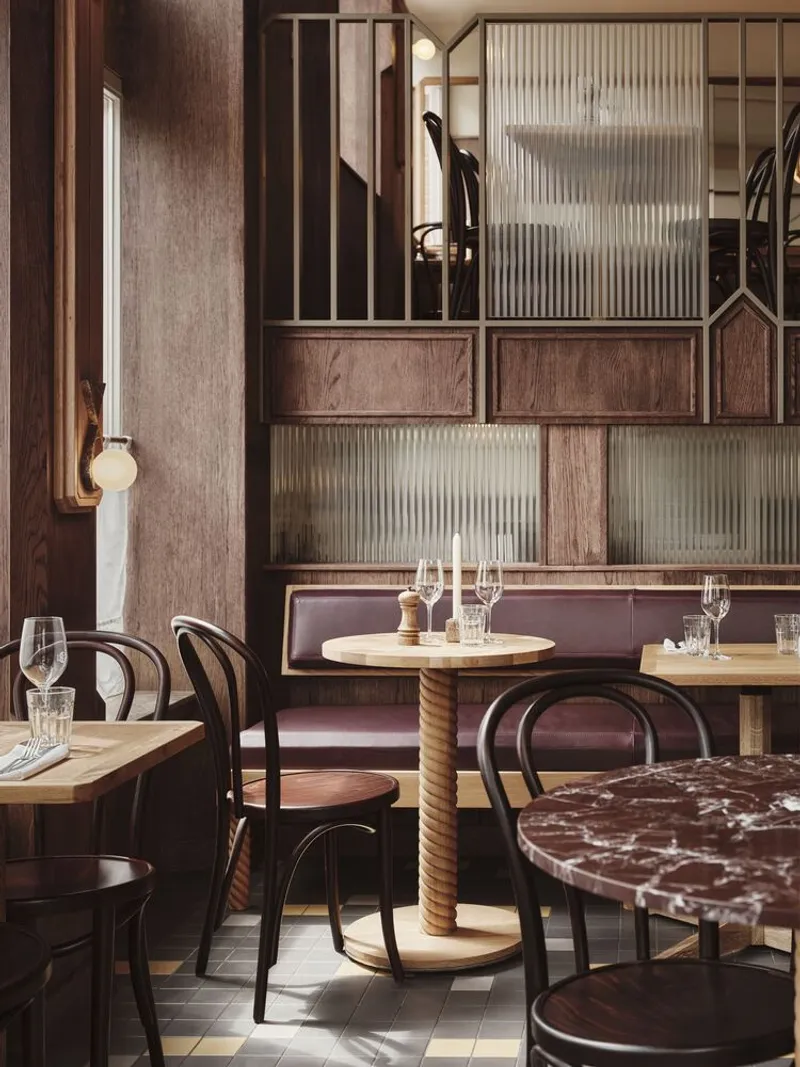
The patchwork technique of Pojagi creates a textured surface that filters light in delicate ways, enhancing the atmospheric qualities of the bar. The plum tones of the curtains extend throughout the interior design, appearing in leather upholstery, marble finishes, and decorative details, ensuring visual continuity across the entire venue.
This thoughtful integration of global craft traditions highlights the studio’s commitment to innovative material experimentation and the celebration of artisanal techniques in contemporary hospitality design.
Marble Bar as the Central Design Feature
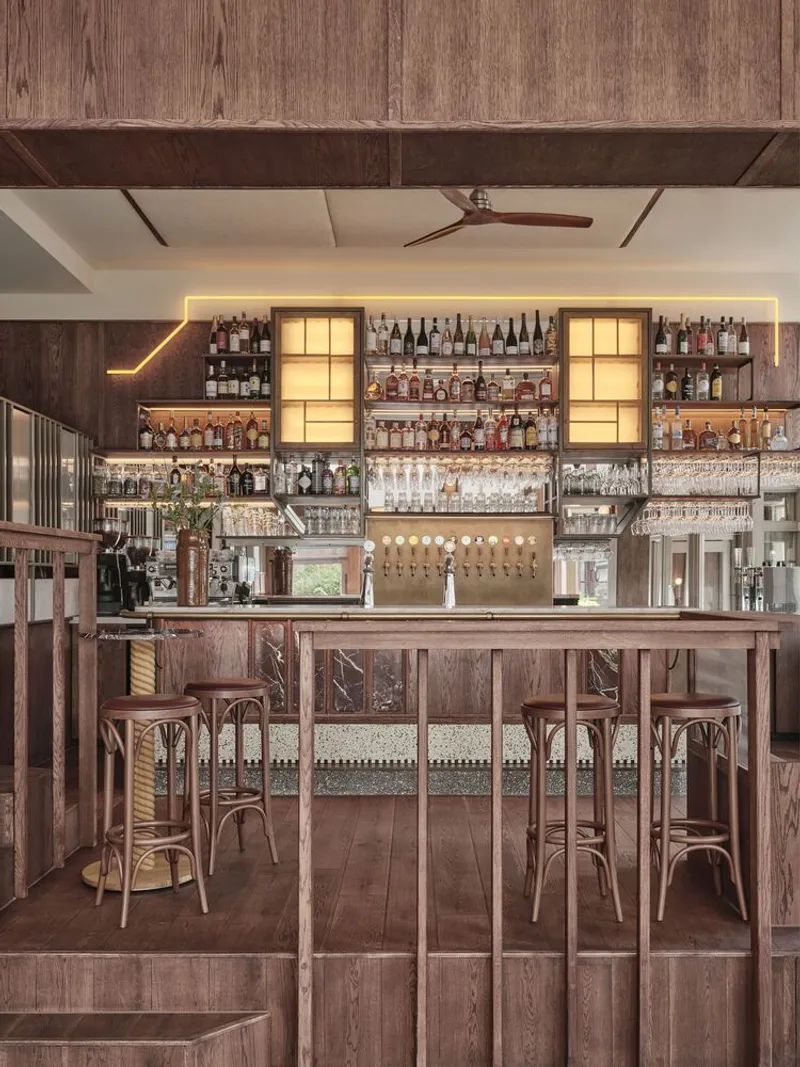
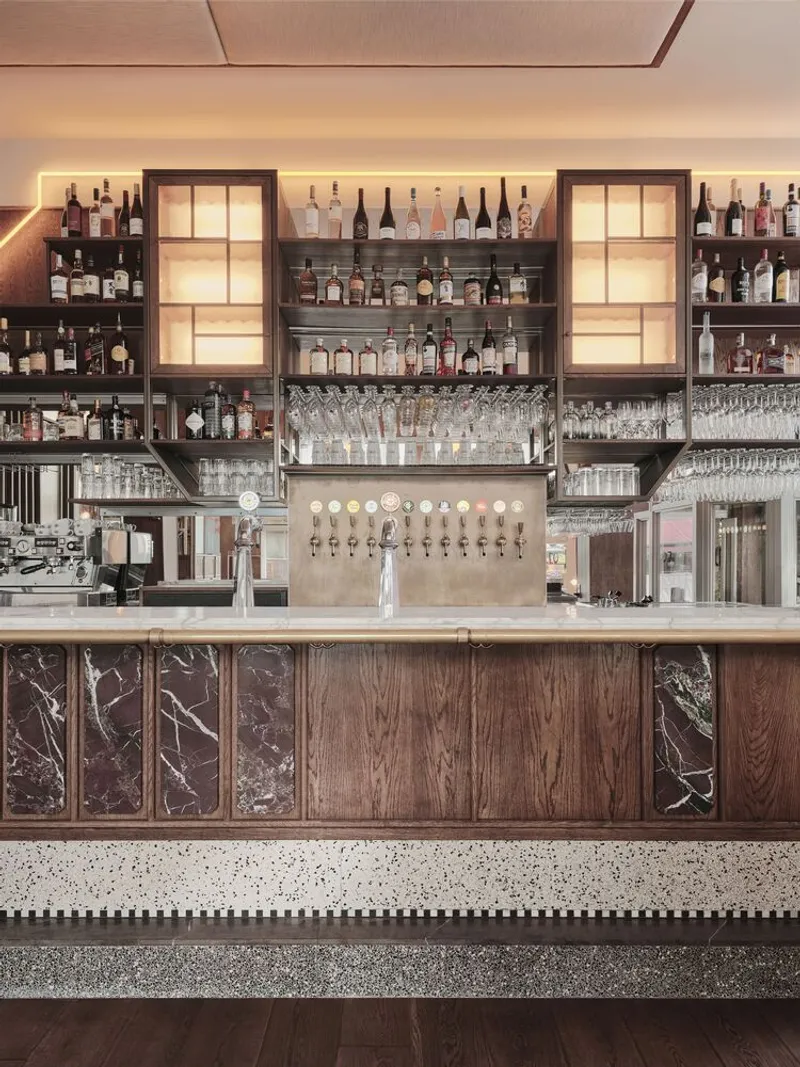
At the heart of Leo Goudvisch Bar stands a striking marble bar that functions as the main focal point of the interior. Crafted from burgundy and white textured marble, the bar introduces a strong visual presence while emphasizing tactile materiality.
The marble surface is complemented by aged brass accents, dark oak wood, and a terrazzo base composed of black and white aggregates, creating a layered composition of luxurious yet durable materials. Positioned on a slightly raised platform, the bar becomes a stage-like centerpiece that draws visitors into the social experience of the venue.
Behind the bar, a robust metal structure frames a wooden backdrop featuring integrated light boxes and a signature Goudvisch neon element. This combination of traditional materials and modern lighting effects enhances the bar’s dynamic energy while maintaining the nostalgic spirit of the brand.
Additional design details enrich the bar experience, including:
- An aged brass board displaying the draft beer menu
- Textured glass cabinets that showcase liquor bottles
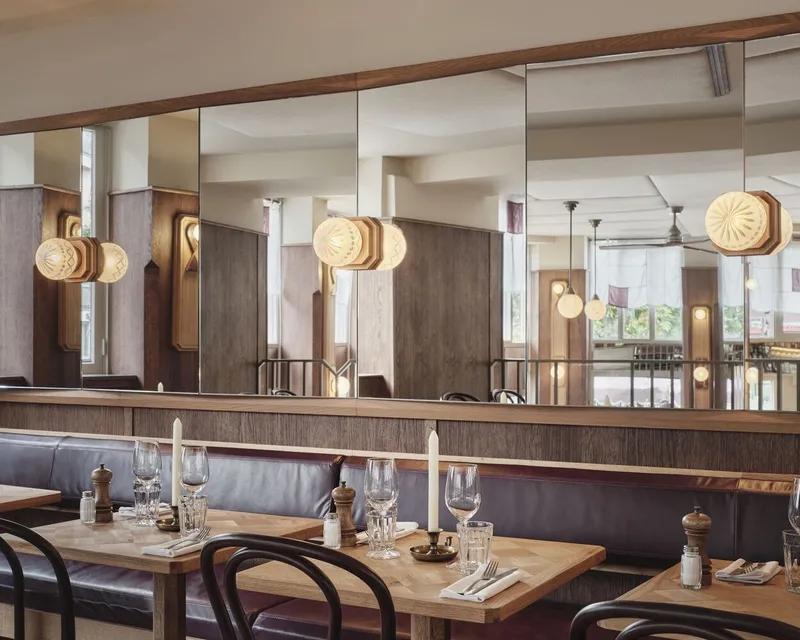
- Mirrored surfaces that amplify the depth and lighting of the space
Together, these elements transform the bar area into a captivating visual and sensory centerpiece.
Curated Craftsmanship and Bespoke Design Elements
Throughout the venue, visitors encounter a series of carefully curated details that reflect the craftsmanship-driven approach of Studio Modijefsky. Each component, from lighting fixtures to furniture pieces, has been thoughtfully designed to contribute to the overall atmosphere.
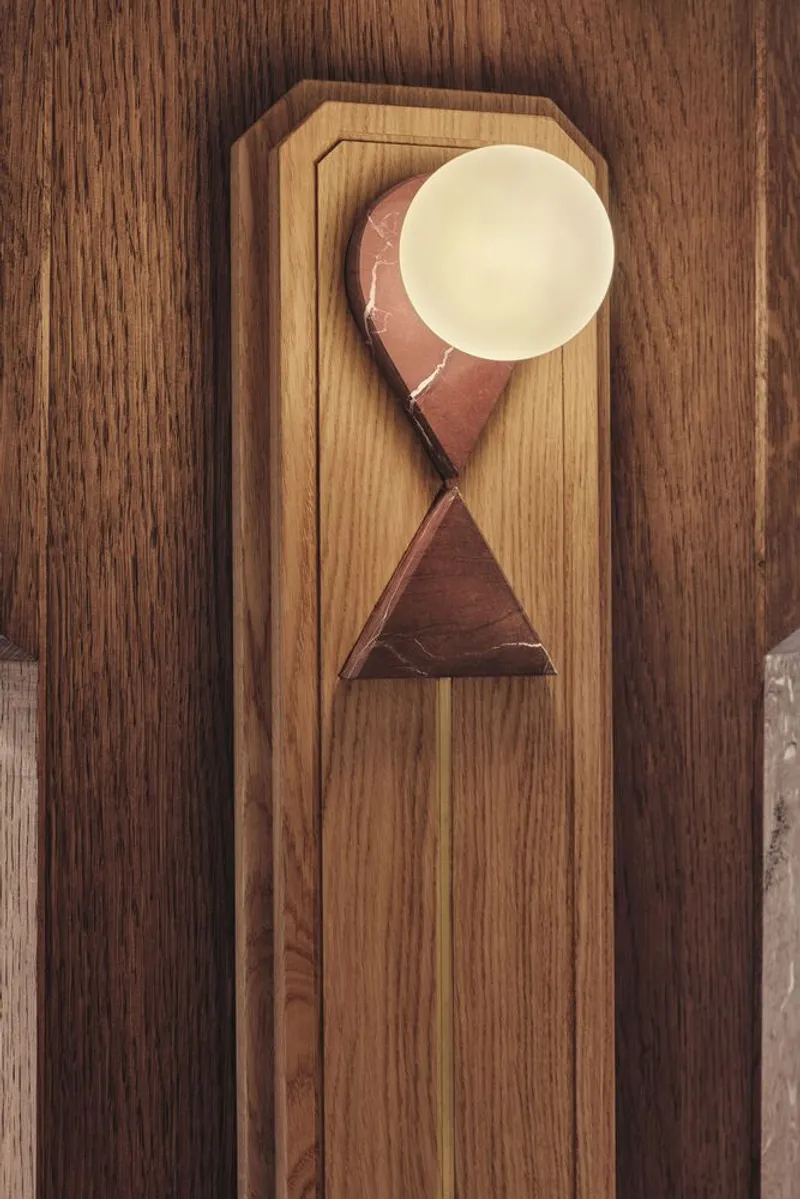
One of the standout design features is the Goudvisch logo, which is subtly integrated into the interior through marble inlays embedded within wooden light ornaments. This detail not only reinforces brand identity but also showcases the studio’s attention to craftsmanship and material precision.
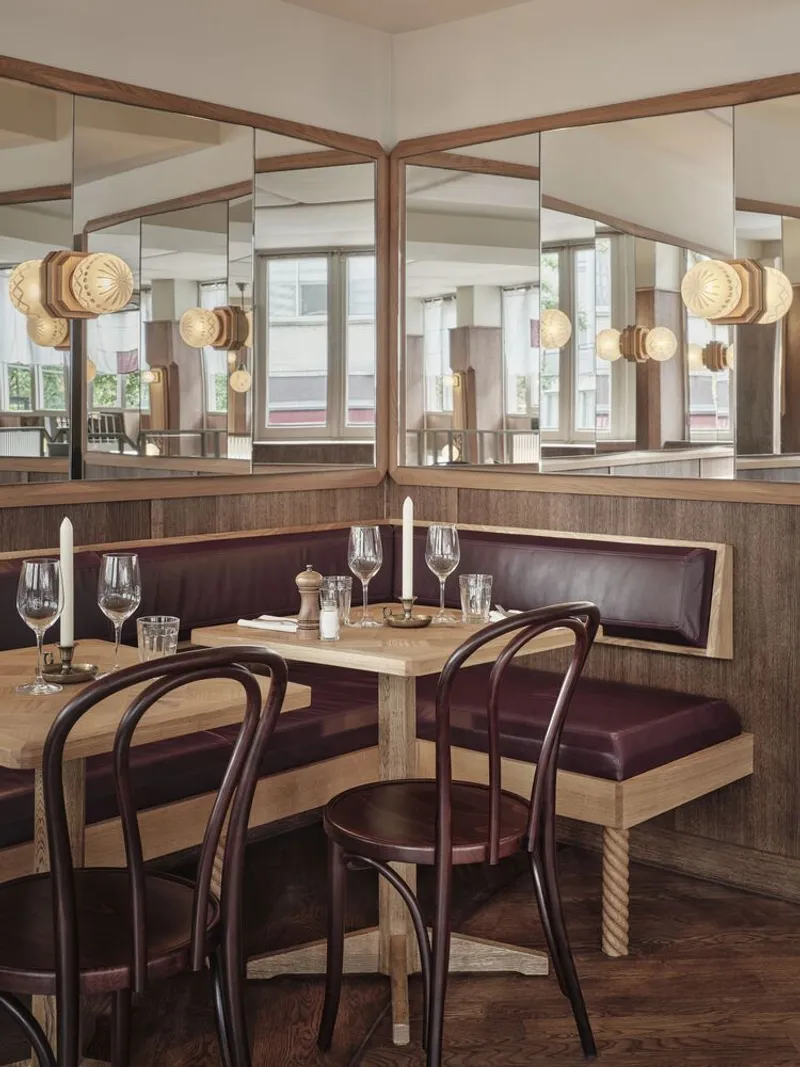
Lighting also plays a key role in shaping the ambiance. The space is illuminated by glass light spheres crafted using traditional etching and cutting techniques, producing soft reflections and subtle visual textures that enhance the intimate setting of the bar.
These handcrafted elements ensure that every corner of the venue communicates a sense of authenticity and artistic quality.
The Mezzanine: An Intimate Social Retreat
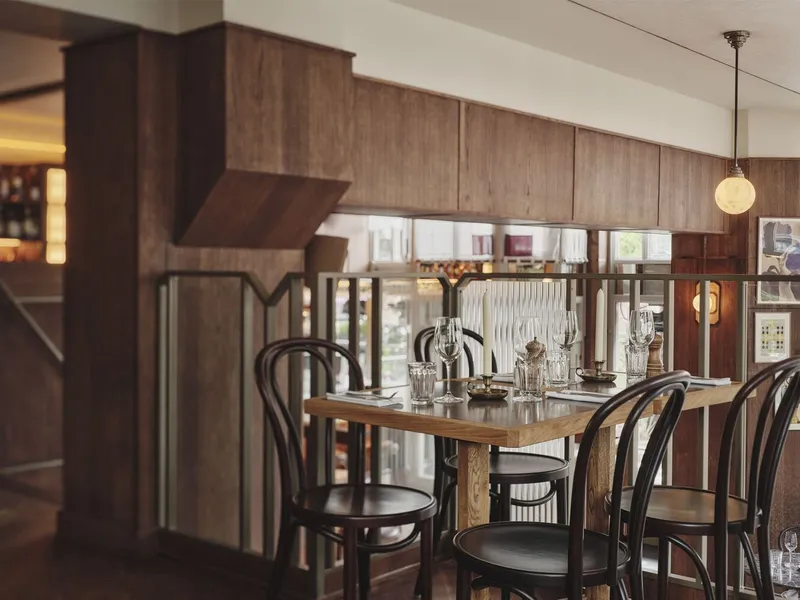
Above the main café floor, a mezzanine level offers a more intimate environment for guests seeking a quieter social experience. This elevated space introduces a different spatial atmosphere while remaining visually connected to the lively bar below.
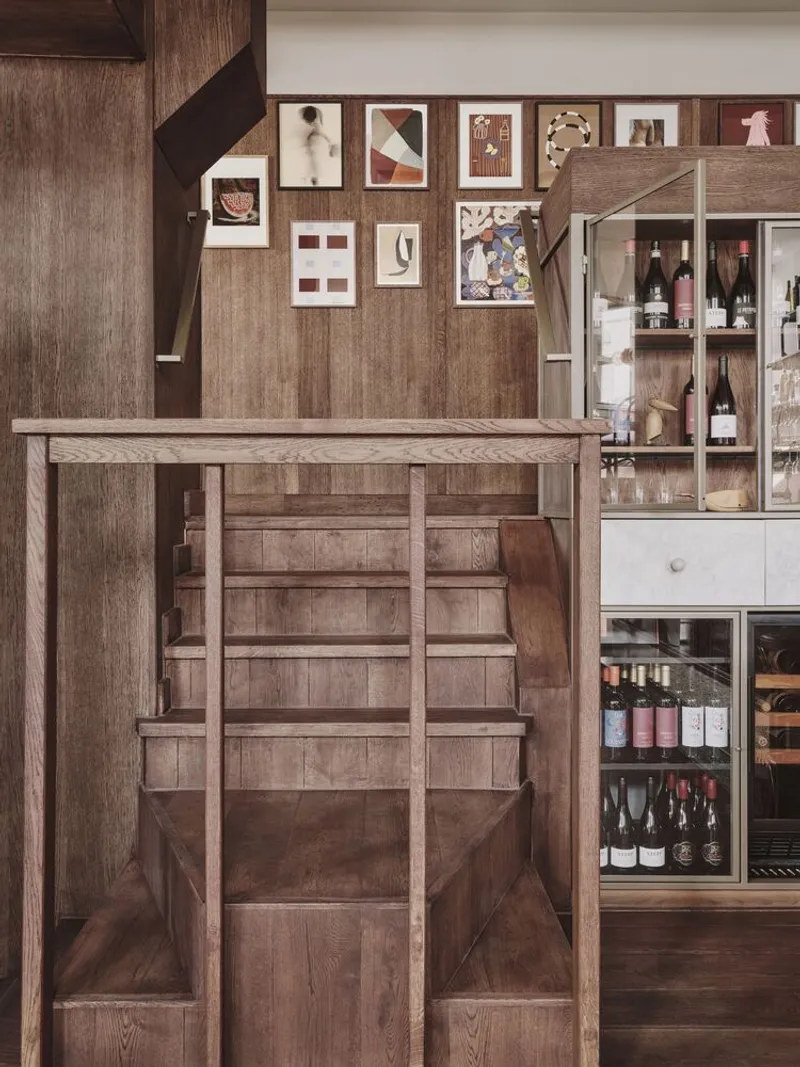
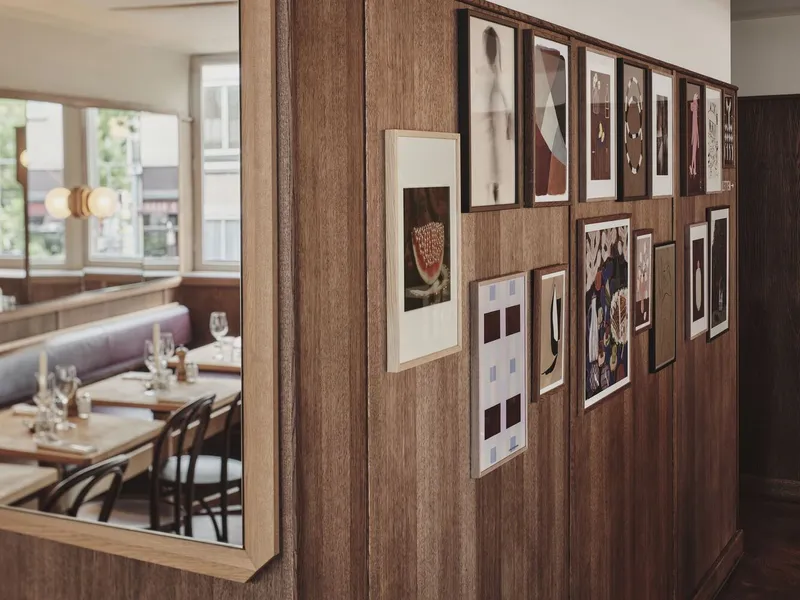
Vintage-style lamps made from finely cut glass cast intricate patterns across mirrored walls and seating areas, creating playful reflections and layered lighting effects. The mezzanine is furnished with custom wooden benches and curated artwork, reinforcing the bar’s identity as a carefully designed cultural gathering space.
From this vantage point, guests can overlook the café floor and observe the sculptural marbled light spheres suspended above the central bar, further strengthening the visual connection between levels.
Outdoor Terrace: Connecting the Bar to the Neighborhood
In addition to its richly designed interior, Leo Goudvisch Bar extends its hospitality experience outdoors through a welcoming terrace. The outdoor area integrates seamlessly with the indoor environment, creating a comfortable setting that encourages social interaction within the neighborhood.
The terrace design features:
- Elegant parasols
- Warm ambient lighting
- Wooden windscreens for comfort and privacy
Together, these elements create a relaxed atmosphere where visitors can enjoy drinks while engaging with the vibrant street life of Beukenplein. This indoor-outdoor relationship reflects Amsterdam’s café culture, where terraces play a vital role in urban social life.
A Contemporary Evolution of Amsterdam’s Brown Café Tradition
Leo Goudvisch Bar represents a thoughtful reinterpretation of the traditional Dutch bruin café. By blending nostalgic elements with contemporary interior architecture, Studio Modijefsky has created a space that honors Amsterdam’s cultural heritage while introducing innovative design ideas.
The project demonstrates how hospitality interiors can evolve by embracing craftsmanship, material experimentation, and spatial storytelling. Through the careful combination of marble, wood, textiles, brass, and glass, the design achieves a rich sensory environment that feels both timeless and modern.
Ultimately, Leo Goudvisch Bar stands as a compelling example of modern bar design in Amsterdam, where tradition meets innovation and craftsmanship shapes the social experience.
All photographs are works of
Maarten Willemstein


Popular Articles
Popular articles from the community

Opera by the Sea Estonia: Three Shells Dissolving Architecture into Tallinn's Coastline
A winning opera house proposal replaces monumental form with interconnected shells that blur the boundary between building, park and Baltic Sea.
Tsunami Convergenics: Turning Catastrophic Ocean Forces into Underwater Housing Infrastructure
A speculative underwater settlement off the coast of Onagawa, Japan, treats tsunamis and typhoons as energy sources rather than threats.

Manzana Morphosis: Stretching Barcelona's Grid into a Living Landscape for 2050
A radical reworking of the Eixample manzana turns density into a tool for generous public space, vertical ecology, and environmental performance.

Faces of the Soviet Avant-Garde: Turning Moscow's Street Names into an Open-Air Museum
A network of sculptural installations across a Moscow residential district transforms forgotten architect names into spatial encounters with cultural memor

Similar Reads
You might also enjoy these articles


FAMM Arquitectura Organizes Ten Villas Around Courtyards and Jungle in Nosara, Costa Rica
El Molino pairs two elongated volumes with deep overhangs and timber louvers to build a compact coastal community five minutes from the beach.

Oscar Niemeyer's Ibirapuera Park Pavilions Define São Paulo's Cultural Identity in Concrete and Curve
A constellation of modernist volumes set within São Paulo's most important urban park, conceived for the city's 400th anniversary in 1954.

Sanjay Puri Architects Wraps a Jaipur Office Tower in Capsule-Shaped Green Buffers
A nine-level climate-responsive workplace near Jaipur Airport uses stacked planter terraces and aluminium screens to fight 40°C heat.
RHO Converts a Berlin Spree-Side Industrial Courtyard into Enkime's 1,000 m² Agency Headquarters
A social media agency's new home in Charlottenburg trades glossy branding for concrete waffle ceilings, glazed tile, and sheer curtains.

Explore Amsterdam Competitions
Discover active competitions in this discipline

Challenge to design luxury tourism on rails

Challenge to reimagine the Iron Throne

Photograph architecture without architects

VR headsets Storefront design competition
Comments (0)
Please login or sign up to add comments
No comments yet. Be the first to comment!