

Lumit Art High School: A Contemporary Cultural Education Hub in Kuopio
Contemporary Finnish performing arts high school featuring flexible theaters, collaborative learning spaces, acoustic design, and community-focused cultural architecture.


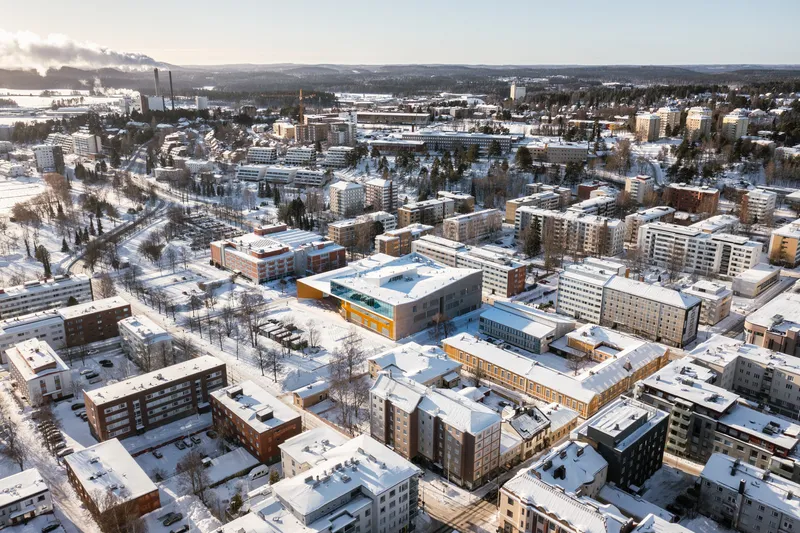
The Lumit Art High School, designed by Lukkaroinen Architects, represents a groundbreaking educational and cultural facility located in Kuopio, Finland. Completed in 2022, the 9,550-square-meter building forms a significant part of the Kuopionlahti waterfront redevelopment, transforming the area into a vibrant cultural district. As the first newly constructed school building in central Kuopio in more than a century, Lumit Art High School redefines the concept of creative education environments by merging architecture, performance spaces, and community engagement.
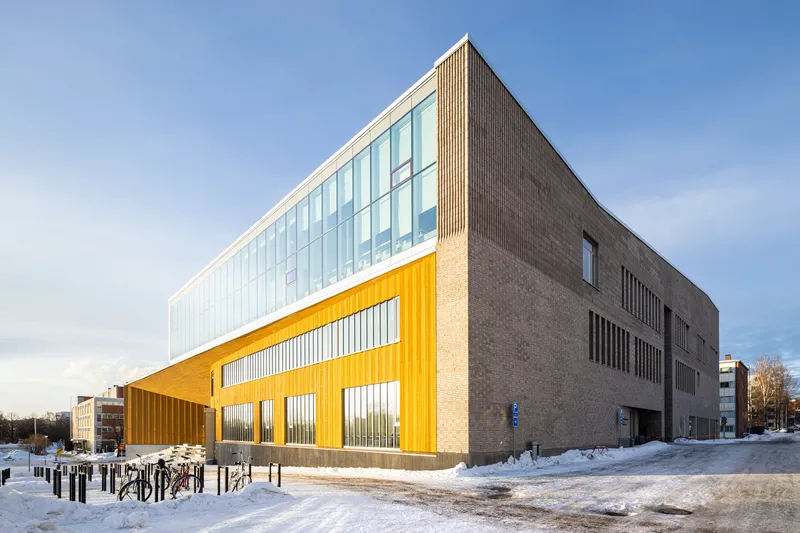
A Specialized Learning Environment for Performing Arts
Lumit Art High School is designed to serve approximately 600 students, focusing on disciplines such as music, dance, theater, and expressive arts. The school functions not only as an academic institution but also as a cultural venue, where performances, exhibitions, and community events regularly take place. The architectural concept emphasizes openness, creativity, and collaboration, enabling students to engage with artistic expression in an inspiring spatial setting.
The design was selected through a public architectural competition in 2017, which sought innovative proposals for the development of the Kuopionlahti cultural waterfront. The goal was to create a facility capable of supporting professional-level performing arts education while also functioning as a public cultural landmark.
Architectural Design and Urban Integration
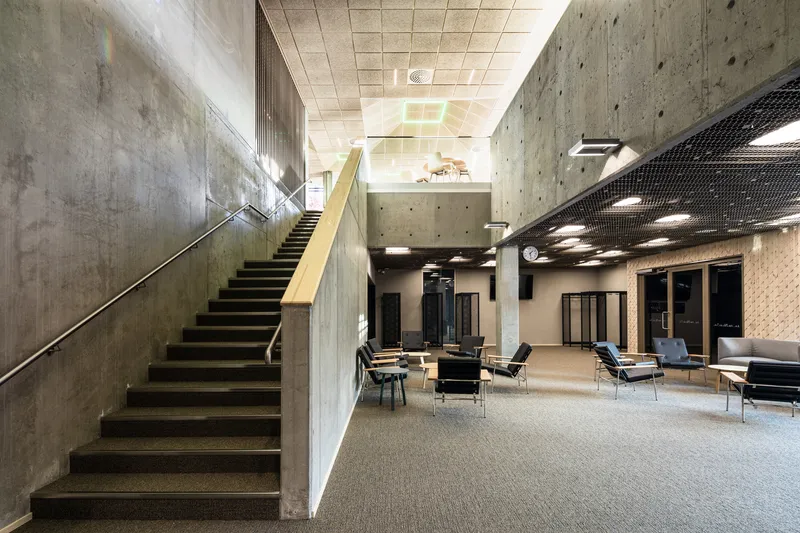
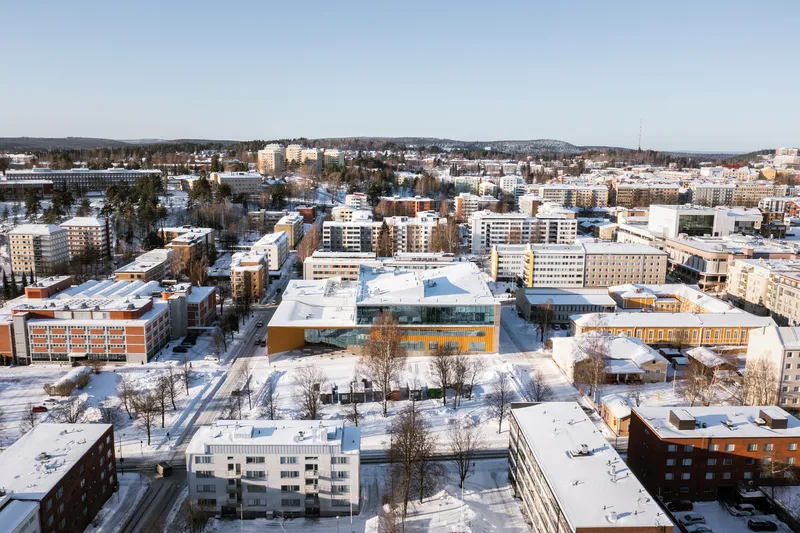
Strategically positioned within the historic Kuopio grid city plan, the building responds carefully to the surrounding urban fabric and nearby waterfront landscape. The architecture balances a strong urban presence with sensitivity to nature and public space.
The building features three main entrances, all leading into a spacious central foyer and lobby areas that act as social hubs for students and visitors. Most public functions: including halls, performance areas, and event spaces, are located at street level, ensuring easy accessibility during performances and public gatherings. This layout encourages interaction between students, educators, and the broader community.
Large windows and visible creative activity within the building allow music rehearsals, dance practices, and artistic activities to become part of the public streetscape, reinforcing the school's role as a dynamic cultural institution.
Innovative Interior Spatial Organization
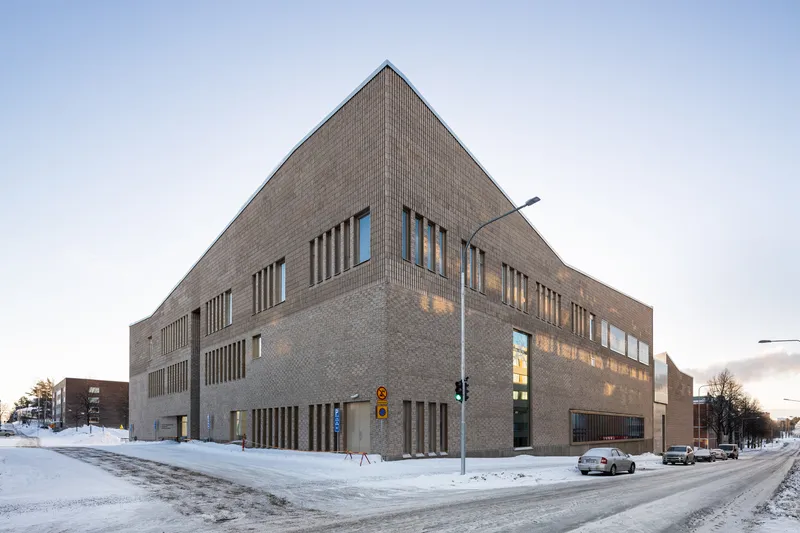
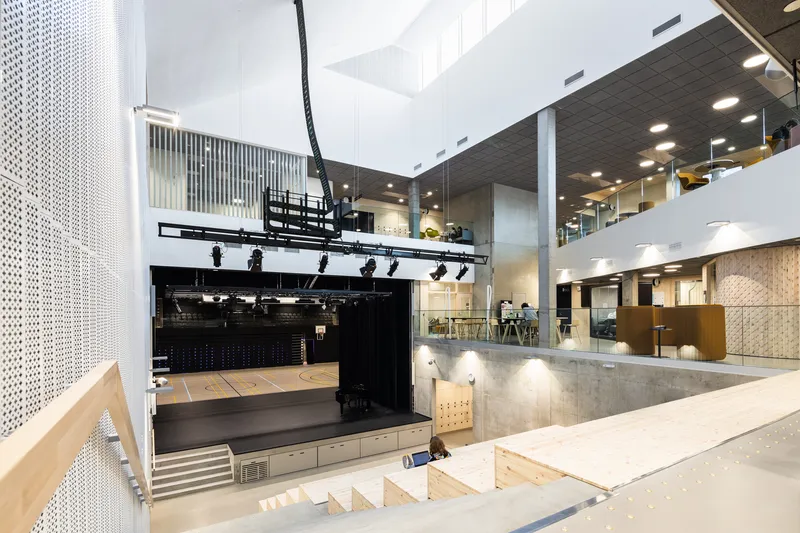
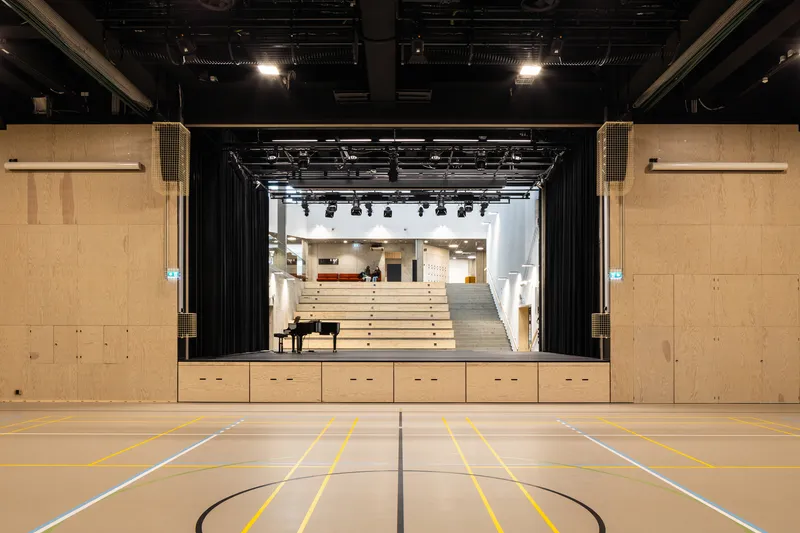
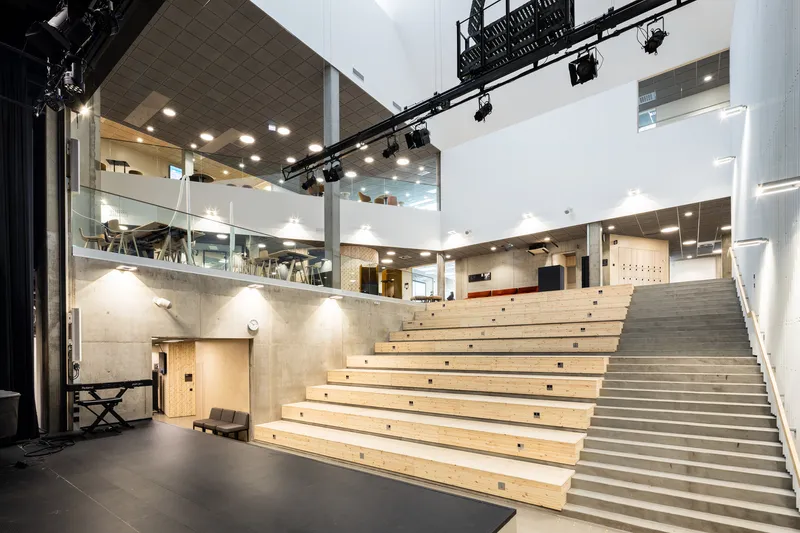
At the core of Lumit’s interior design is a multi-directional performance stage, an adaptable feature that can open simultaneously toward three major spaces: the sports hall, restaurant, and central auditorium. Through sliding wall systems, these spaces can transform into a unified performance venue, accommodating large-scale cultural events and school productions.
The spatial layout follows a layered organizational strategy, where learning environments are arranged around grandstand-style stairs and central lobby spaces. These stairs function not only as circulation elements but also as informal gathering and viewing spaces during performances.
Open learning environments are positioned close to communal areas to encourage collaboration and group activities. Meanwhile, more focused classrooms and specialized spaces are located along the outer edges of the building, allowing students to concentrate on artistic practice in quieter settings.
Advanced Facilities for Artistic Education
The school features a range of specialized facilities that support advanced performing arts education. Among the most distinctive is the Black Box multi-purpose theatre hall, a flexible performance space equipped with professional theatrical technology and carefully designed acoustics.
This Black Box theatre is particularly unique because it is the only performance space of its kind in Finland designed specifically for school use. Alongside it are dedicated music studios, dance halls, rehearsal rooms, and audiovisual facilities, enabling students to train in professional-grade environments.
Extensive attention was given to acoustic design, stage technology, and mechanical theatre systems, ensuring optimal conditions for concerts, theater productions, and multimedia performances.
Material Expression and Architectural Character
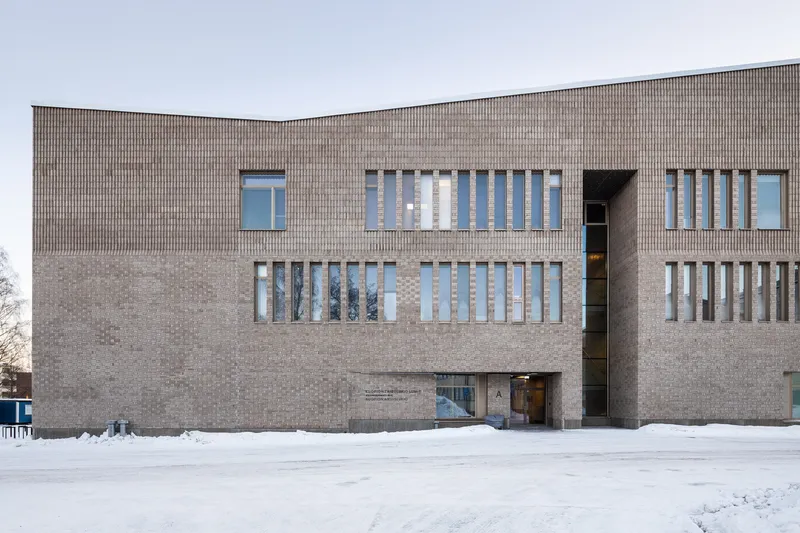
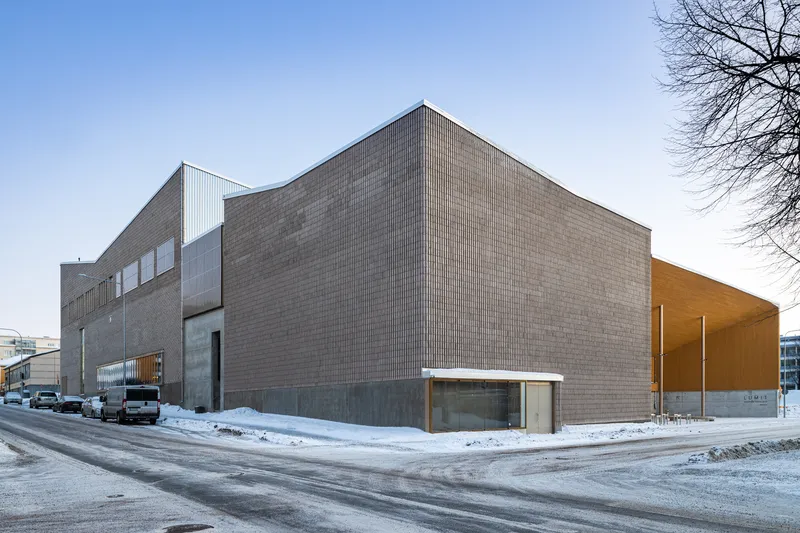
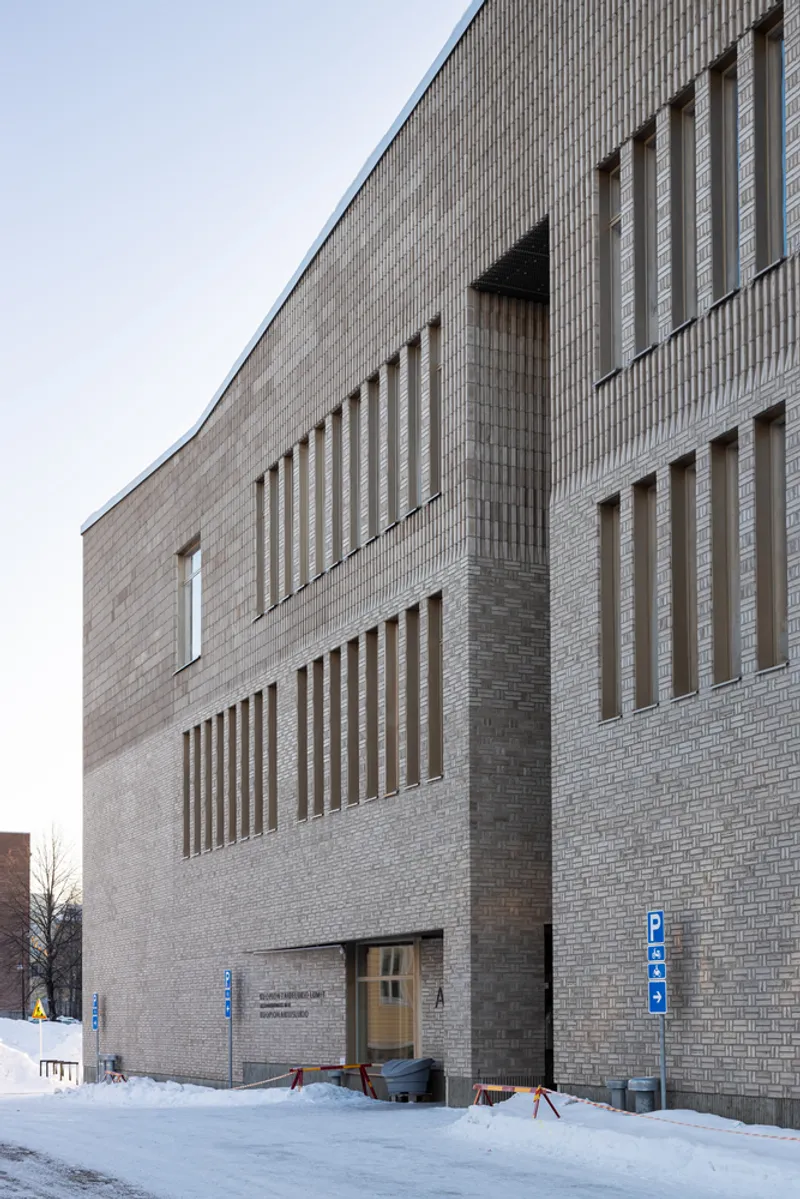
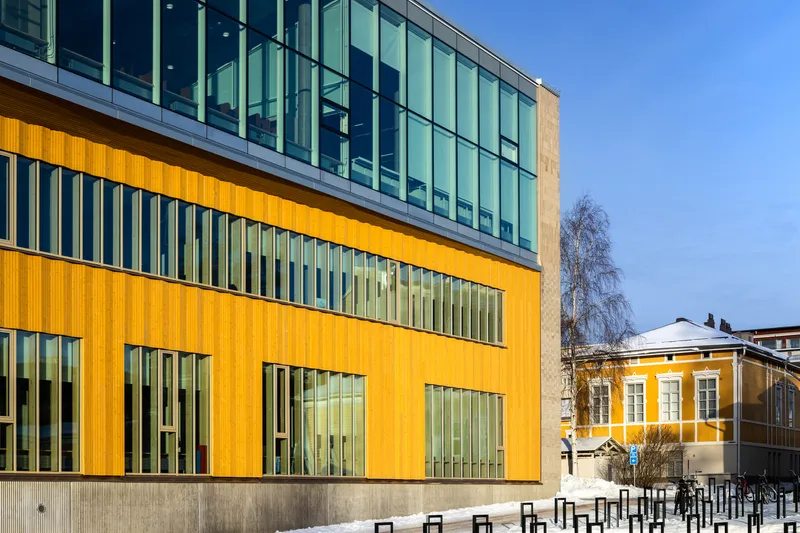
The exterior architecture reflects both urban durability and artistic warmth. The building is primarily clad in light grey brick, forming a calm and understated shell that responds to the surrounding city streets. To introduce visual interest, the brick façade incorporates varied laying patterns, creating subtle textures and rhythm across the surfaces.
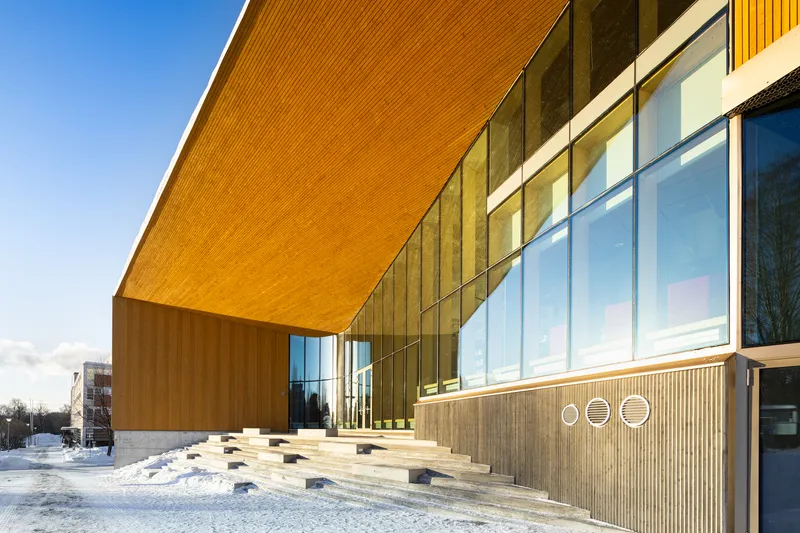
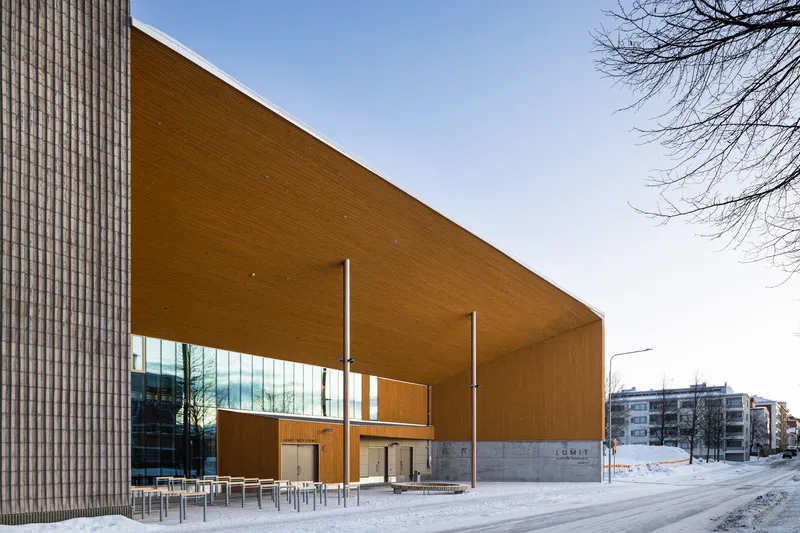
Toward the parks and public spaces, the façade transitions to warm wooden cladding, softening the building’s presence and enhancing its connection with the natural landscape. This contrast between brick and wood emphasizes the balance between urban context and cultural openness.
Large halls with limited windows are carefully integrated within the façade composition, while glazed lobby spaces reveal the interior life of the school to the outside world.
Landscape Integration and Outdoor Learning Spaces
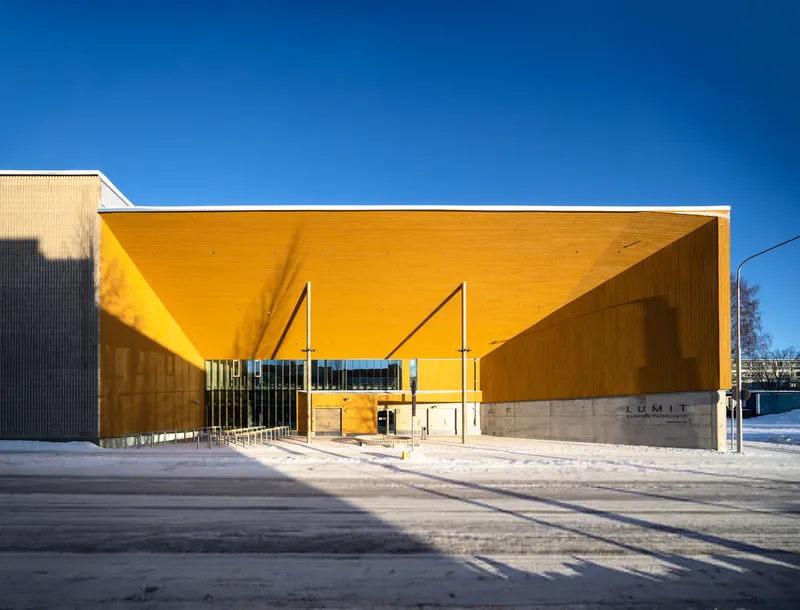
The design also integrates architectural elements that extend learning and performance into outdoor spaces. A prominent staircase beneath a large canopy links interior and exterior areas while serving multiple purposes: an outdoor auditorium, informal gathering space, and open-air classroom.
The canopy protects the building’s glass surfaces from harsh weather and excessive sunlight while providing sheltered outdoor areas for performances and social interaction.
These landscape connections reinforce the idea that Lumit Art High School is not just a building but a dynamic cultural environment where education, performance, and public life intersect.
A Community-Centered Cultural Landmark
Beyond its educational mission, Lumit Art High School operates as a shared cultural hub for the city of Kuopio. The building remains active throughout the day and evening, hosting concerts, theater productions, and community events. The architectural transparency ensures that the creative energy inside the building becomes visible to the surrounding streets and public squares.
This continuous activity creates a sense of openness and belonging, allowing students and the public to engage with art, performance, and cultural learning in a shared environment.
Ultimately, Lumit Art High School demonstrates how innovative educational architecture can support creativity, collaboration, and community participation while shaping the cultural identity of an entire urban district.
All photographs are works of
Aukusti Heinonen


Popular Articles
Popular articles from the community


Tsunami Convergenics: Turning Catastrophic Ocean Forces into Underwater Housing Infrastructure
A speculative underwater settlement off the coast of Onagawa, Japan, treats tsunamis and typhoons as energy sources rather than threats.
Faces of the Soviet Avant-Garde: Turning Moscow's Street Names into an Open-Air Museum
A network of sculptural installations across a Moscow residential district transforms forgotten architect names into spatial encounters with cultural memor
Opera by the Sea Estonia: Three Shells Dissolving Architecture into Tallinn's Coastline
A winning opera house proposal replaces monumental form with interconnected shells that blur the boundary between building, park and Baltic Sea.

Manzana Morphosis: Stretching Barcelona's Grid into a Living Landscape for 2050
A radical reworking of the Eixample manzana turns density into a tool for generous public space, vertical ecology, and environmental performance.

Similar Reads
You might also enjoy these articles

FAMM Arquitectura Organizes Ten Villas Around Courtyards and Jungle in Nosara, Costa Rica
El Molino pairs two elongated volumes with deep overhangs and timber louvers to build a compact coastal community five minutes from the beach.
Oscar Niemeyer's Ibirapuera Park Pavilions Define São Paulo's Cultural Identity in Concrete and Curve
A constellation of modernist volumes set within São Paulo's most important urban park, conceived for the city's 400th anniversary in 1954.
Sanjay Puri Architects Wraps a Jaipur Office Tower in Capsule-Shaped Green Buffers
A nine-level climate-responsive workplace near Jaipur Airport uses stacked planter terraces and aluminium screens to fight 40°C heat.
RHO Converts a Berlin Spree-Side Industrial Courtyard into Enkime's 1,000 m² Agency Headquarters
A social media agency's new home in Charlottenburg trades glossy branding for concrete waffle ceilings, glazed tile, and sheer curtains.

Explore Lumion Competitions
Discover active competitions in this discipline

Challenge to design public laboratory

Challenge to reimagine the Iron Throne

Photograph architecture without architects

Illustrate the lost glory of Angkor Wat - Render Challenge
Comments (0)
Please login or sign up to add comments
No comments yet. Be the first to comment!