
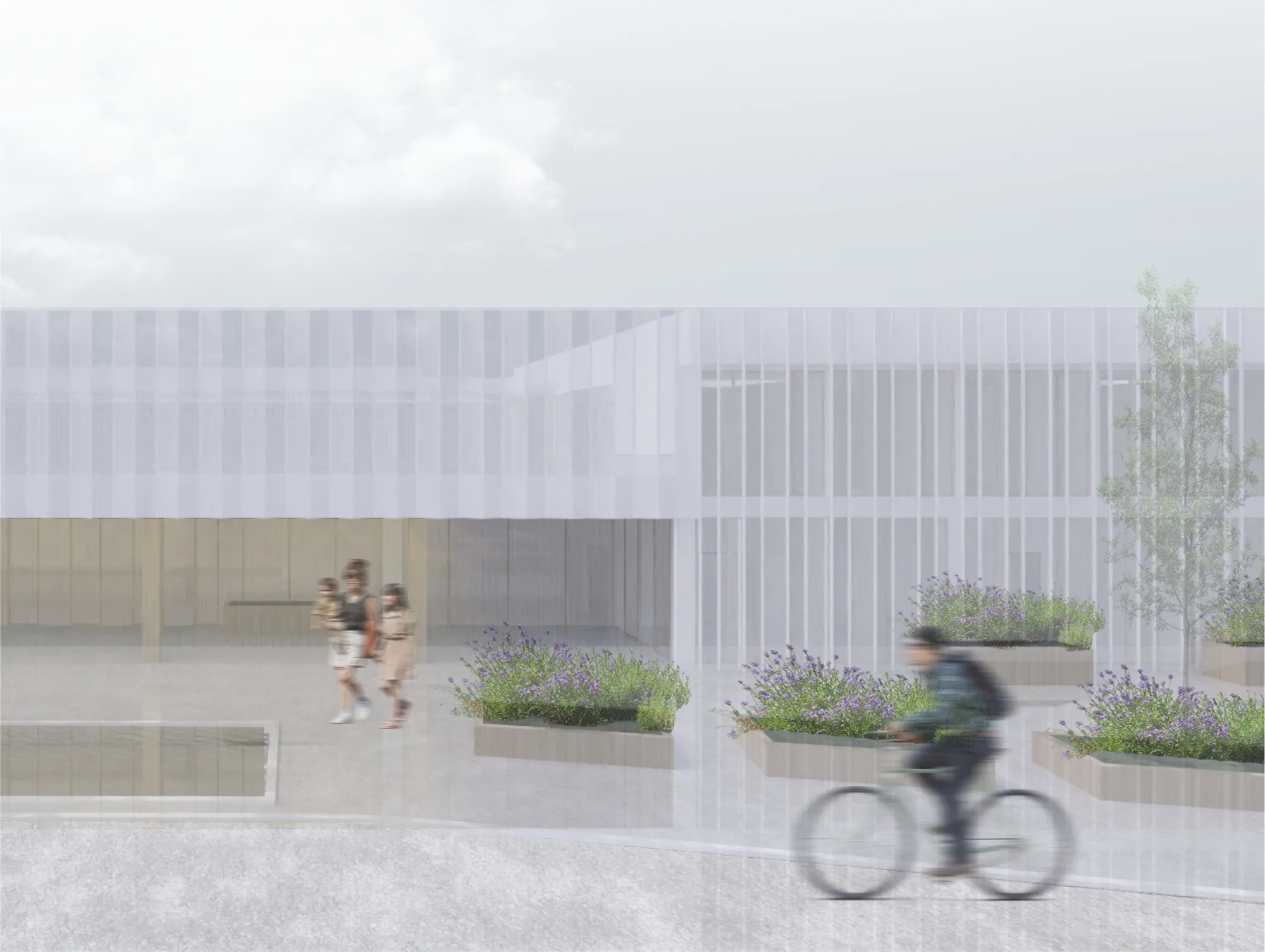
Matched family
No single person is inherently evil, just lonely and unhappy.

These words adequately represent the circumstances of many young delinquents. No children are by nature evil or fantasize of crime. But there is youth that is lost, neglected and left to fend for themselves. Often forced to make difficult decisions and look for a solution outside of the law.
The „Rehabed” competition focuses on creating a temporary residence for the troubled youth. The competition assignment requires creating a Children Resocialization Centre, for minors that have already spent the required time at a correctional facility. The search is for a place, in which the users will feel safe and spread their wings.It is meant to be a space that provides better quality of life, possibilities and security. A space that builds an environment that motivates minors to develop their personalities and basic skills.Minors after spending the required time in the facility will leave it as self-sufficient individuals, ready for the challenges of everyday life. The designed building is to guarantee the possibility of gaining a profession, furthering one’s skills, working through trauma, recovering and building of relationships.
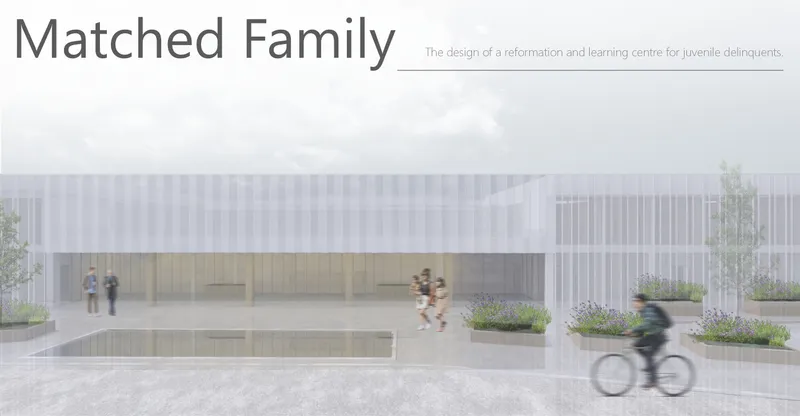

Based on the carried-out analysis we ascertained, that for proper development a young person requires support, intimacy, acceptance and the feeling of belonging. Additionally, because of their age, they value freedom, ability to decide and experiment. In a society this kind of environment is provided by a family and peers. With difficult teenagers, this environment needs to be created by the facility. For this reason, our goal became to provide conditions that mirror as closely as possible those of family life and school life.
SHAPE OF THE BUILDING
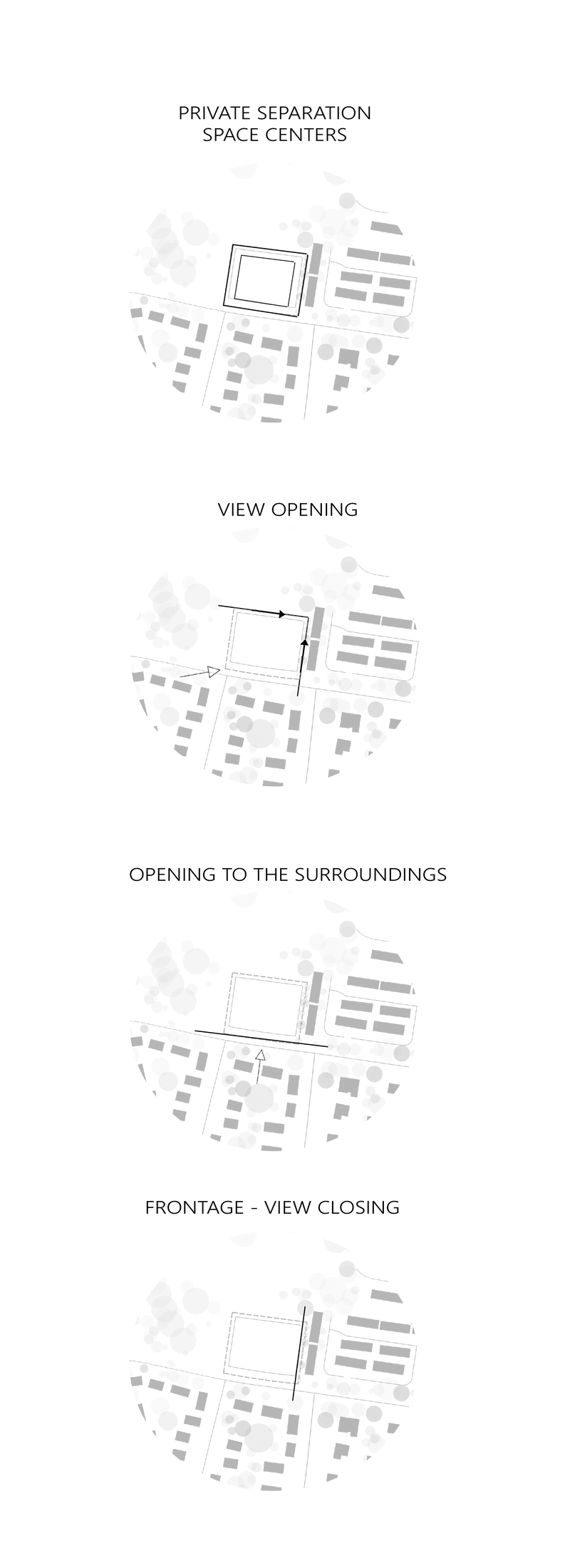
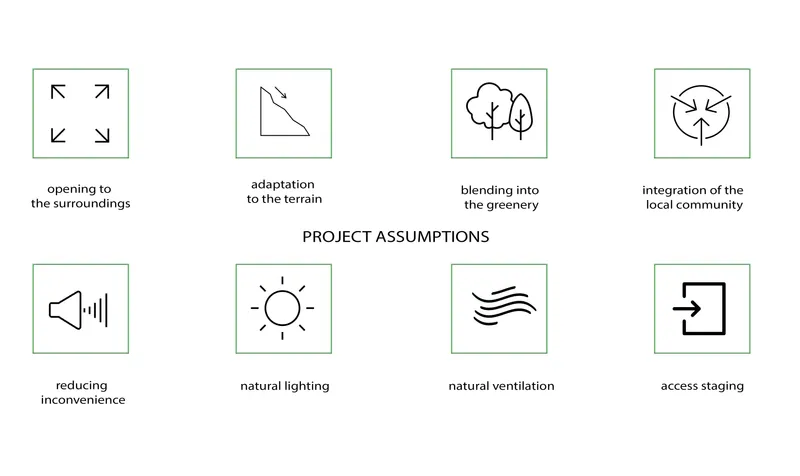
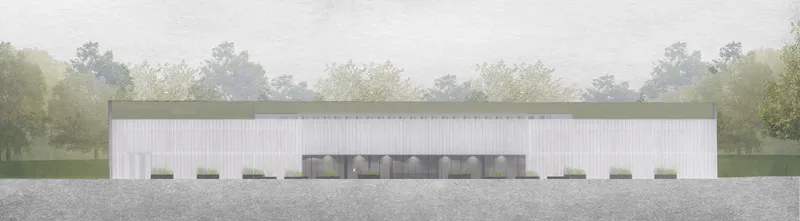
The main assumption was to incorporate the shape of the building in the terrain and blend it into the surrounding landscape. Additionally, very important was to close the east frontage and increase the attractiveness of the opening from the street. Crucial was also opening to the surroundings, welcoming the residents of the neighbourhood to the interior, so that the building is not undesired, and therefore disturbing the peace of the neighbourhood. The residents should feel wanted and supported by the local community, not as inconveniences.For those reasons a shape of differing height and sloping was created, and in its interior a green patio. Children can enjoy the open view from their bedrooms and the noise pollution from the school will be greatly limited.
SHAPING THE SPACE
In accordance with the competition recommendations, we included various spaces:

- Administrative and management spaces
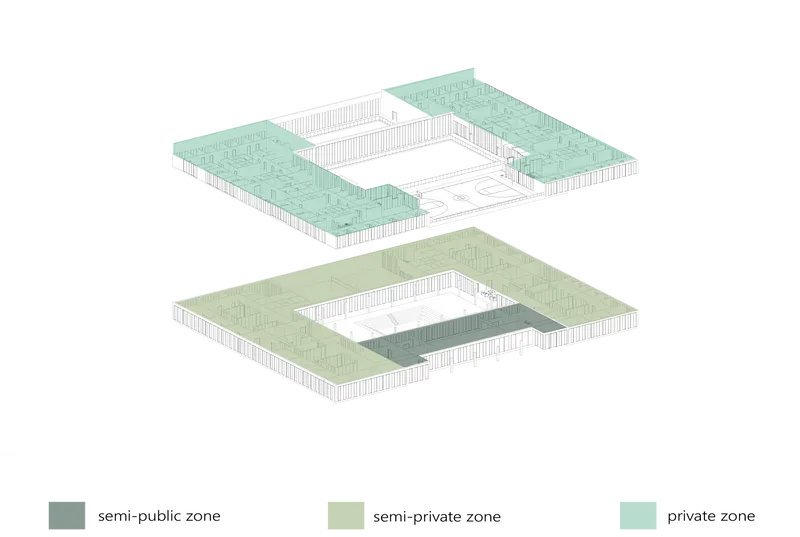
In response to the functional analysis, we decided to separate the building between semi-public space and private space, between those we included checkpoints. Additionally, the complex was completed with gastronomy with a backroom and additional technical and storage rooms.
- Counselling and therapy open/closed spaces
Therapy area is divided in two parts – the accessible part and the inaccessible one – for the parents. It is preceded by a checkpoint. Moreover, a place for medical checkups and isolation rooms were created.
- Workshops/training/learning spaces
The education area was divided into two blocks. One, meant for classrooms, second, for workshop rooms. The project entails classrooms, halls, laboratories and individual study-rooms. The entrance area was enriched with a cafeteria, where teenagers can work and sell things made during the classes.
- Housing spaces

The residential area is located on the first floor. As a private space, it was separated from the others. In accordance with creating a space that is friendly to minors we designed single-person rooms in 8-person blocks (7 children and 1 carer). In each block there is a kitchen annex with a common room (like in a home) and 4 bathrooms (one per 2 people). It is not expected to be separated by gender. Each block is to be a safe space, and time spent within it to simulate this spent with a family. According to research, children should be in various ages and genders, and their relationships should mould similarly to those of siblings.
- Medical and ancillary spaces
Medical areas, apart from those separately assigned, will supplement all other functions in case of emergencies. They will be neighboured by isolation rooms.
- Recreational and meeting spaces
Based on research we introduced many sport activities, such as a gym, exercise hall, fitness hall, a basketball court on the roof and a green patio and gardens. Minors, despite being in a closed facility, should have the opportunity to experience nature and relax.


By creating conditions that simulate growing up in a family, kids can develop in an environment of various activities with the local community and many possibilities to learn about culture with “Community as a ground for learning”.'



Popular Articles
Popular articles from the community


The Ocean Hive: Sustainable Architecture for a Self-Sufficient Civilization at Sea
The Ocean Hive imagines sustainable architecture at sea, where modular habitats, algae, wave power and ocean waste sustain a growing colony.
EW PARK: Sustainable Architecture Reimagines the Future of Urban Parking
EW PARK reimagines city parking as a modular wooden tower combining automation, solar energy, electric mobility, and adaptable urban design.

Riyadh For All: Intergenerational Urban Design for Active Aging in Rabat
Riyadh For All reimagines urban design in Rabat with intergenerational co-living, adaptive courtyards, and Moroccan cultural exchange today.

Co-Life: Senior Housing Design That Reconnects Older Adults With the City
Co-Life reimagines senior housing design through healing gardens, shared streets, workshops, and a sustainable community across generations.


Similar Reads
You might also enjoy these articles
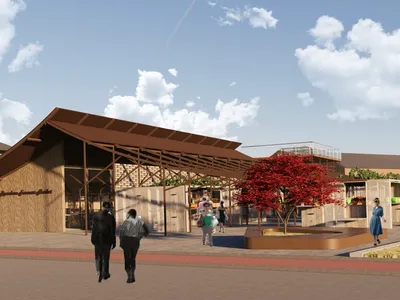
The Rhythm of Seasons
A Farmers' Market Connecting Nature and the City
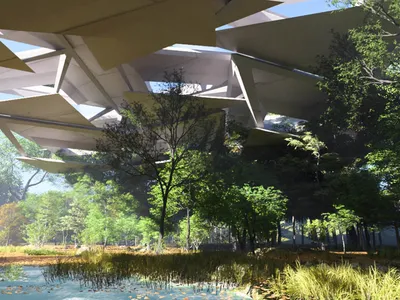

More Than a Building-Designing a Living System
More Than a Building-Designing a Living System
Base Beyond
DESERT COMPOUND ARID: TOURISM OF ABSENCE AND ABUNDANCE

Explore Youth housing Competitions
Discover active competitions in this discipline




Challenge to design public laboratory


Challenge to reimagine the Iron Throne


Photograph architecture without architects


Illustrate the lost glory of Angkor Wat - Render Challenge
Comments (0)
Please login or sign up to add comments
No comments yet. Be the first to comment!