
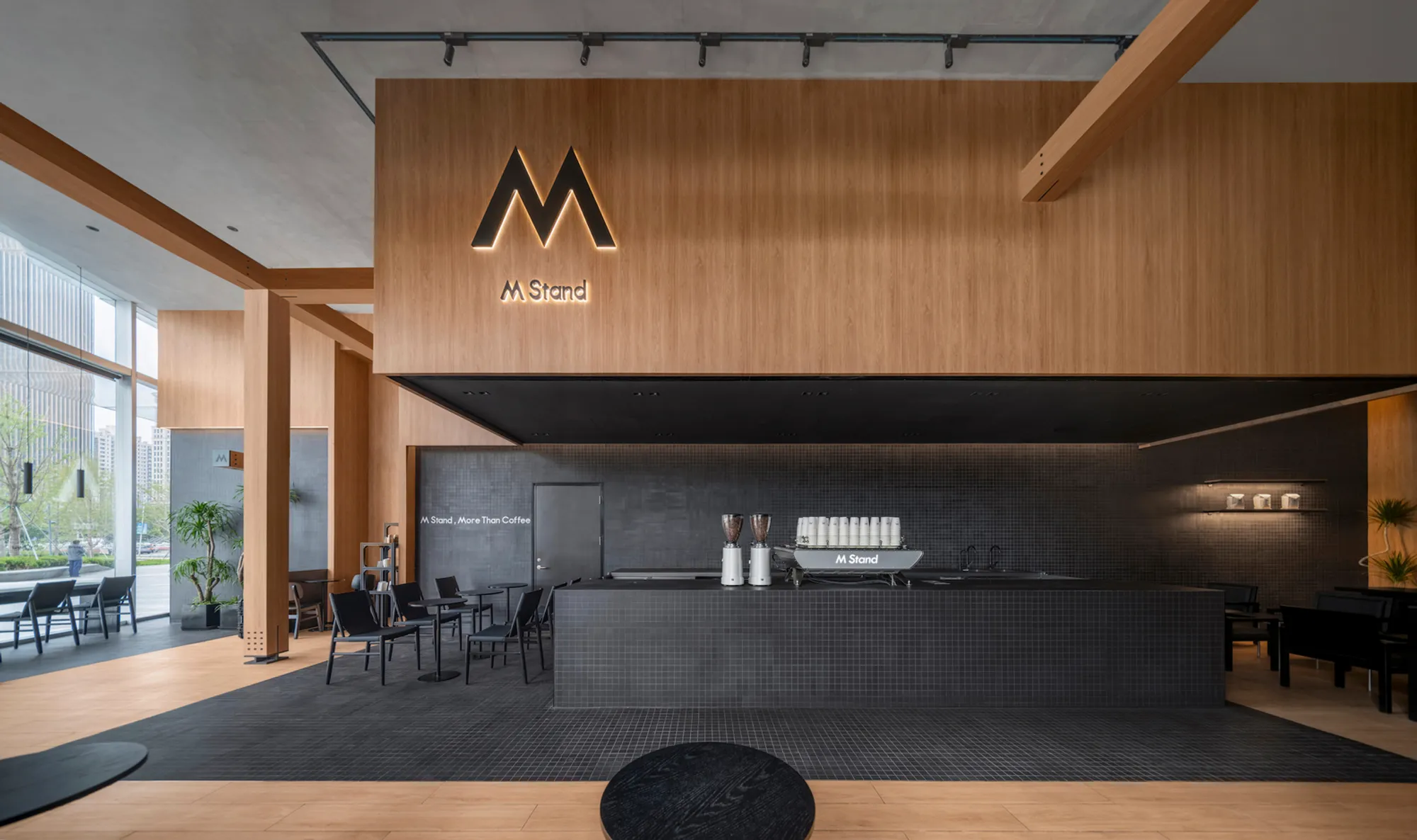
Mstand Coffee Jinan Store by Within-Beyond Studio: A Micro-Urban Coffee Space Inspired by Jinan’s Historic Cityscape
Mstand Coffee Jinan Store transforms Jinan’s urban history into a micro-city interior, blending geometric volumes, wood, concrete, and layered spatial experiences.


The Mstand Coffee Jinan Store, designed by Within-Beyond Studio, is a thoughtfully crafted coffee shop interior located in Jinan, China. Completed in 2023, the project spans 181 square meters and represents the brand’s first store in the historic city. The design concept focuses on creating a spatial narrative that reflects Jinan’s unique urban character, where ancient city walls, traditional alleyways, and modern development coexist.

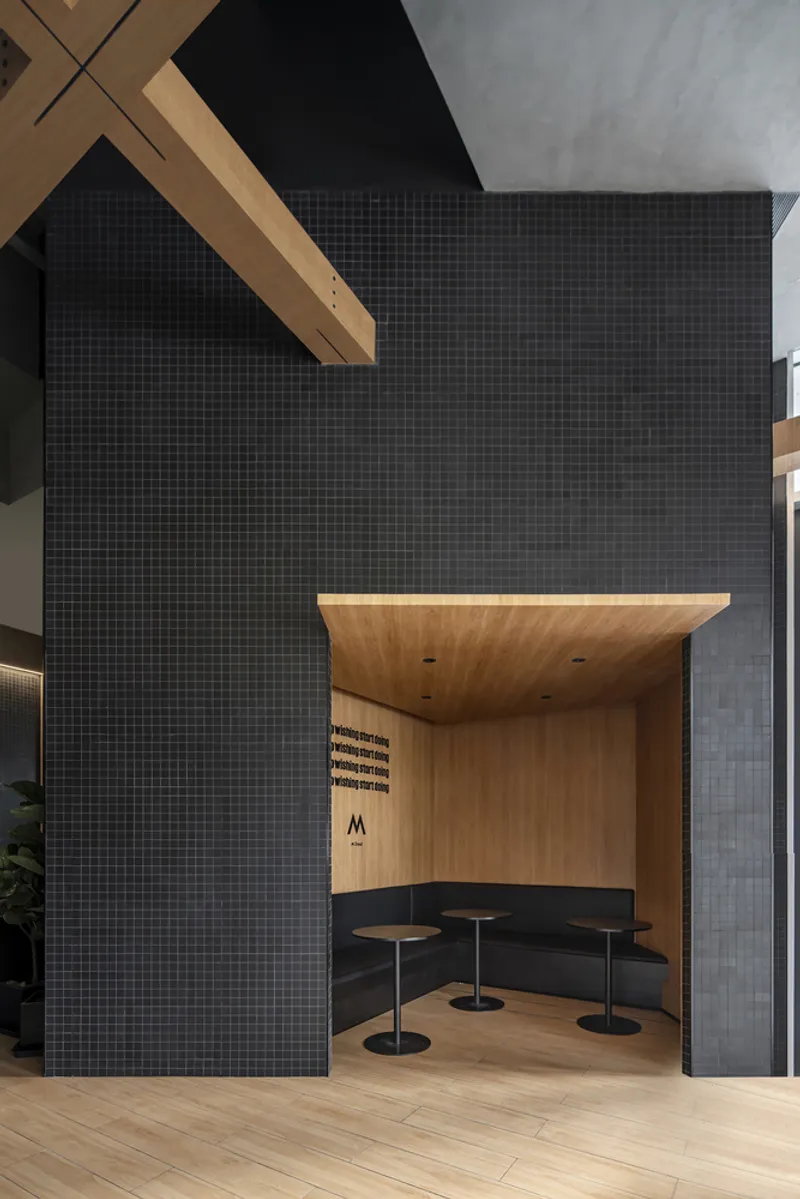
Through a carefully curated architectural language, the project transforms the interior into a micro-urban landscape, allowing visitors to experience the atmosphere of the city within the coffee shop. By blending contemporary design strategies with references to Jinan’s historical urban fabric, the space becomes more than a café, it becomes an architectural interpretation of the city itself.


Urban Inspiration: Translating Jinan’s City Walls and Alleys into Interior Architecture
Jinan is known for its rich historical heritage and evolving urban identity, where centuries-old architecture interacts with modern city life. The design team at Within-Beyond Studio sought to capture this dialogue by translating elements of the city’s walls, streets, and alleyways into spatial forms inside the coffee shop.
Instead of directly replicating these elements, the architects abstracted them into geometric volumes. These shapes appear both suspended in the air and integrated into the floor layout, forming a dynamic composition that guides movement throughout the space.
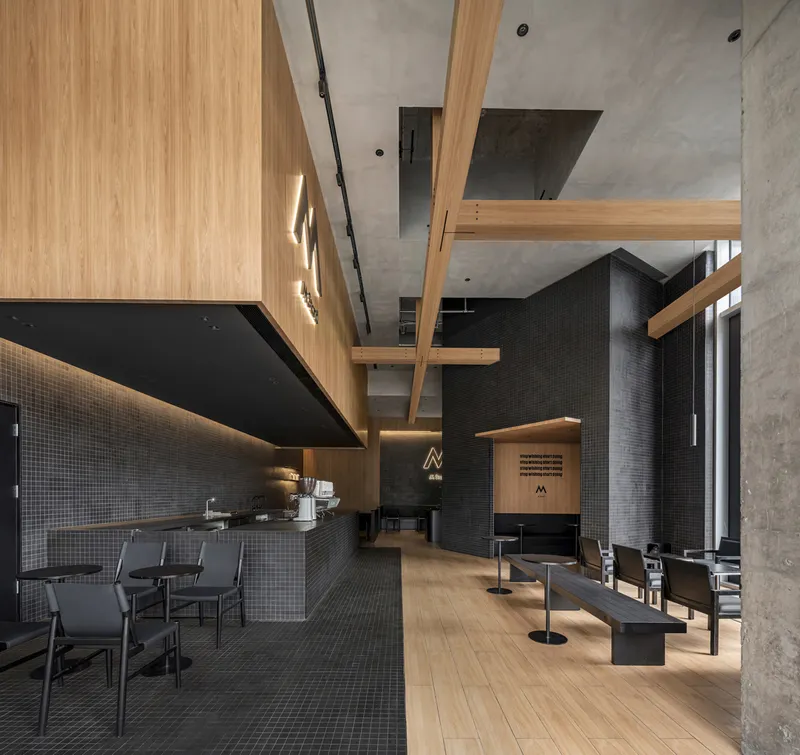
One of the most striking features of the project is the architectural landmark above the bar counter, which acts as a focal point visible from the street. This sculptural structure improves wayfinding within the interior while simultaneously creating a memorable identity for the café. By emphasizing visibility and spatial clarity, the design invites pedestrians to visually engage with the space before even entering.
The result is a coffee shop interior that mirrors the urban complexity of Jinan, where layers of spaces unfold gradually, similar to exploring a network of city streets and courtyards.

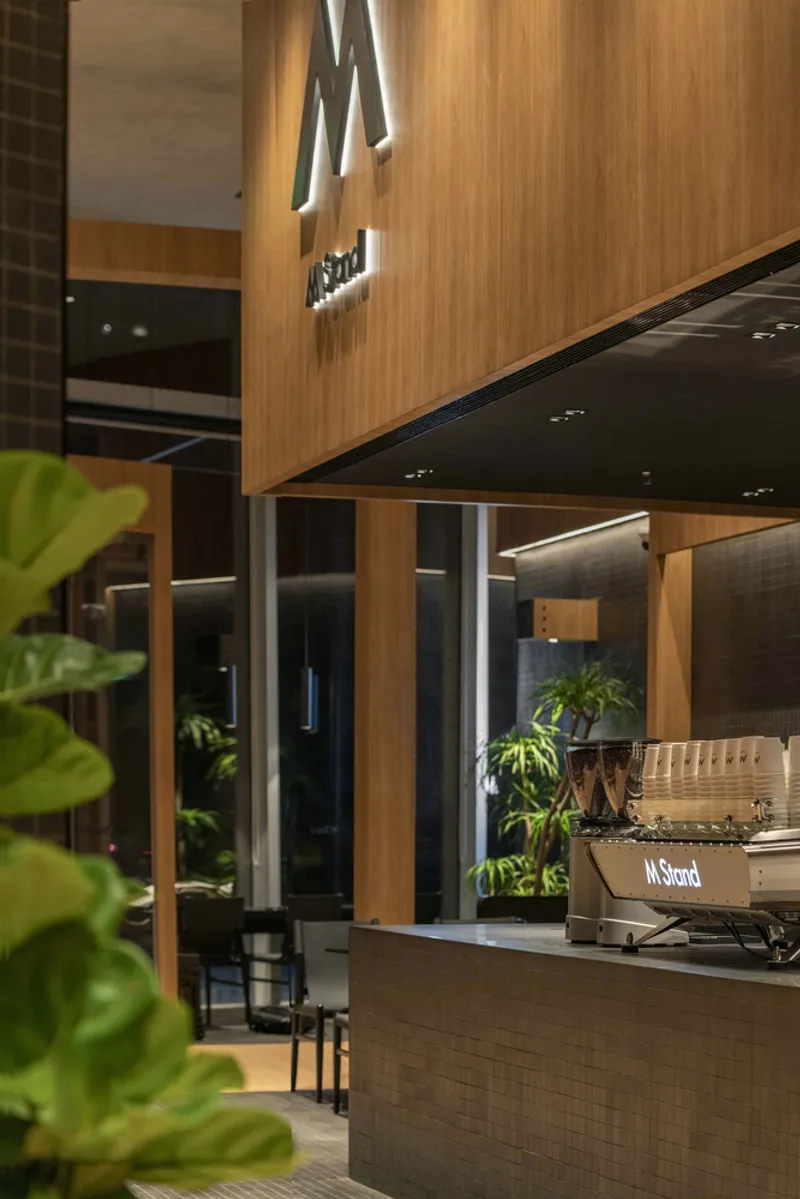
Layered Spatial Strategy and Micro-Urban Experience
To enrich the spatial experience, the architects introduced semi-enclosed volumes resembling small “houses” in the deeper areas of the café. These structures create intimate zones for seating while maintaining visual continuity across the larger interior.
This strategy produces a dynamic balance between open communal areas and private corners, allowing visitors to choose different spatial experiences depending on their needs. Some spaces feel expansive and open, while others offer a sense of shelter and privacy.
The design also explores the figure-ground relationship, a key architectural concept that examines how solid volumes interact with open spaces. By carefully arranging the geometric forms, the designers create a rhythm of expansion and contraction within the café. This interplay enhances the spatial richness and movement, making the interior feel like a miniature cityscape.
As customers move through the space, they experience a sequence of architectural moments: open plazas, narrow passages, and sheltered alcoves, echoing the spatial diversity of Jinan’s urban environment.

Integrating Old and New Architectural Elements
The original building structure played a significant role in shaping the final design. The site features large concrete columns and expansive concrete slabs, typical of industrial or commercial architecture. Rather than concealing these elements, the architects embraced them as a foundation for the design narrative.
To strengthen the existing spatial order, Within-Beyond Studio introduced a new system of beams and columns that complements the original structural grid. This approach creates a layered architectural dialogue between old concrete structures and newly inserted wooden elements.
Floor-to-ceiling wooden columns establish a sense of rhythm and enclosure within the space. Combined with furniture arrangements and greenery, these columns help generate a micro-urban atmosphere, where the café interior resembles a small architectural neighborhood.
The newly introduced wooden beams connect the original concrete columns with the inserted volumes. In several areas, the ceiling is partially opened, revealing the raw concrete slabs above. This deliberate exposure highlights the contrast and harmony between historical structure and contemporary intervention, reinforcing the project’s theme of old and new coexisting within one environment.
Material Palette Reflecting Jinan’s Character
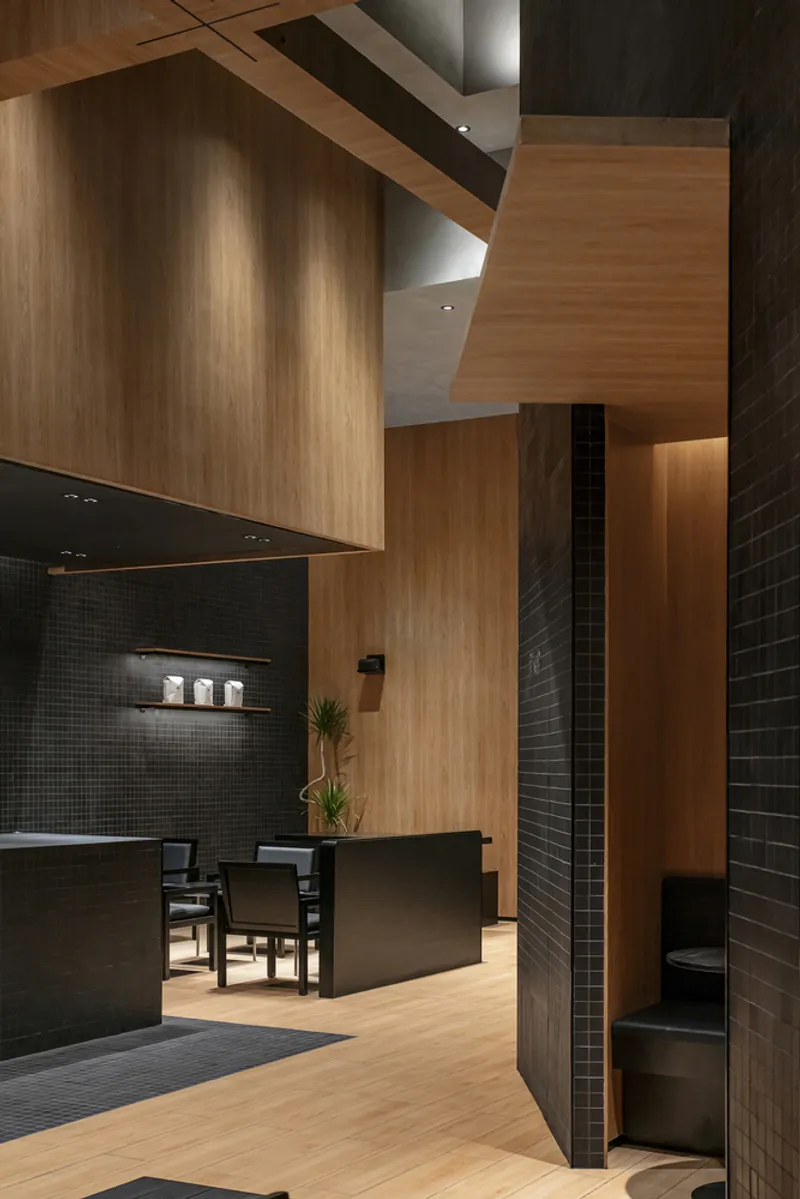
Material selection plays a crucial role in expressing the design concept. The architects chose a palette that reflects Jinan’s calm, steady, and rustic character, combining natural textures with minimalistic finishes.
Key materials used in the project include:
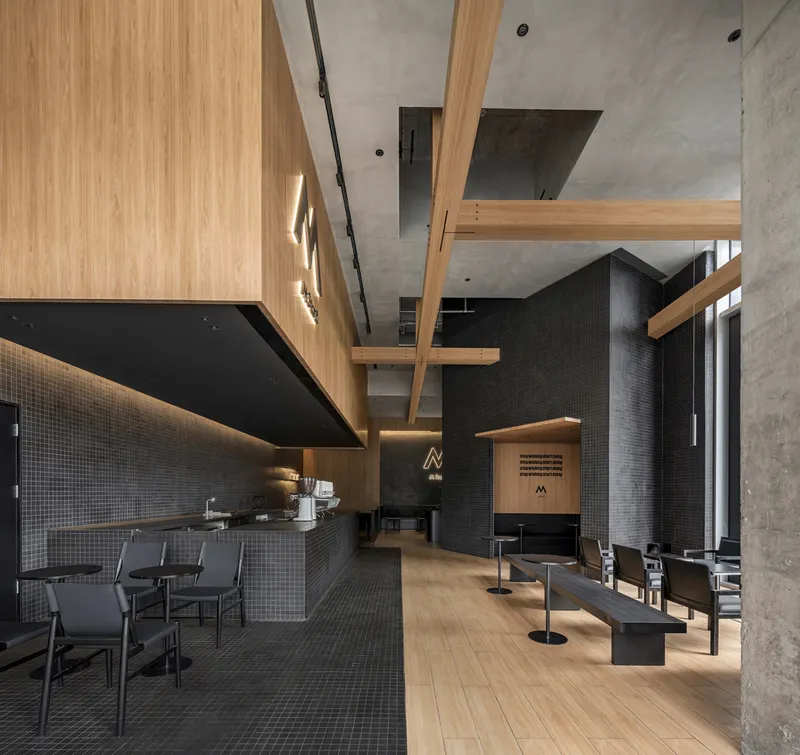
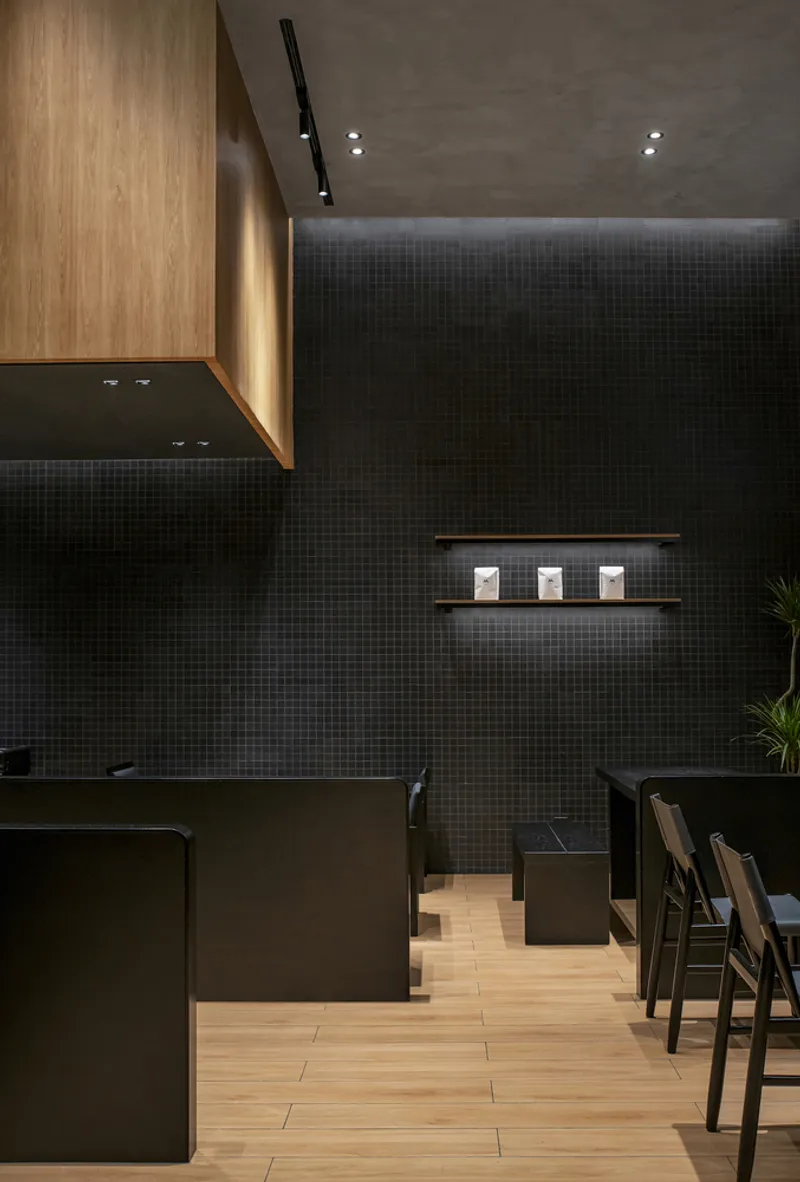
- Black mosaic bricks, providing a restrained and refined texture
- Warm wood surfaces, adding warmth and human scale to the interior
- Raw exposed concrete, preserving the authenticity of the existing building
The dialogue between dark mosaic surfaces and natural wood creates a balanced visual atmosphere, while exposed concrete contributes to a relaxed, industrial aesthetic.
The overall architectural language relies on simple geometric forms, primarily linear and square volumes. These shapes are intentionally easy to read, helping visitors intuitively understand the layout of the space. Together, they construct the idea of an interpretable micro-city, where architecture guides movement and spatial perception.

A Coffee Shop as an Urban Interior Landscape
The Mstand Coffee Jinan Store demonstrates how commercial interior architecture can reflect the identity of its surrounding city. Instead of simply designing a functional café, Within-Beyond Studio created a spatial narrative inspired by Jinan’s historical structure and evolving urban environment.
Through geometric abstraction, layered spaces, and a thoughtful integration of old and new materials, the project transforms a coffee shop into an immersive architectural experience. Visitors not only enjoy coffee but also explore a miniature version of the city’s spatial logic.
This design highlights the growing importance of experiential retail spaces, where architecture plays a key role in shaping brand identity and customer engagement.
By combining urban inspiration, structural honesty, and carefully curated materials, the Mstand Coffee Jinan Store stands as a compelling example of how contemporary interior architecture can reinterpret the cultural and historical context of a place.

All photographs are works of
UK Studio



Popular Articles
Popular articles from the community

EW PARK: Sustainable Architecture Reimagines the Future of Urban Parking
EW PARK reimagines city parking as a modular wooden tower combining automation, solar energy, electric mobility, and adaptable urban design.

The Ocean Hive: Sustainable Architecture for a Self-Sufficient Civilization at Sea
The Ocean Hive imagines sustainable architecture at sea, where modular habitats, algae, wave power and ocean waste sustain a growing colony.

Co-life: Sustainable Architecture for Age-Friendly Community Living
Co-life reimagines sustainable architecture for seniors through courtyards, rammed earth, shared gardens, and spaces designed for belonging.

The Earth Pod: 3D Printed Homes for Resilient Refugee Communities
The Earth Pod reimagines refugee housing through 3D printed homes made from clay, combining resilience, self-sufficiency, and rapid shelter.


Similar Reads
You might also enjoy these articles

FAMM Arquitectura Organizes Ten Villas Around Courtyards and Jungle in Nosara, Costa Rica
El Molino pairs two elongated volumes with deep overhangs and timber louvers to build a compact coastal community five minutes from the beach.
Oscar Niemeyer's Ibirapuera Park Pavilions Define São Paulo's Cultural Identity in Concrete and Curve
A constellation of modernist volumes set within São Paulo's most important urban park, conceived for the city's 400th anniversary in 1954.
How Henri Picq's 1889 Paris Pavilion Traveled 11,000 Kilometers to Become Santiago's Artequín Museum
A prefabricated iron and glass pavilion built for the Paris Universal Exposition found a second life as a children's art museum in Chile.
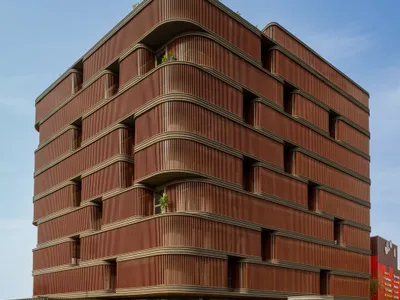
Sanjay Puri Architects Wraps a Jaipur Office Tower in Capsule-Shaped Green Buffers
A nine-level climate-responsive workplace near Jaipur Airport uses stacked planter terraces and aluminium screens to fight 40°C heat.


Explore Interior Design Competitions
Discover active competitions in this discipline


Challenge to design luxury tourism on rails


Challenge to reimagine the Iron Throne


Photograph architecture without architects


VR headsets Storefront design competition
Comments (0)
Please login or sign up to add comments
No comments yet. Be the first to comment!