
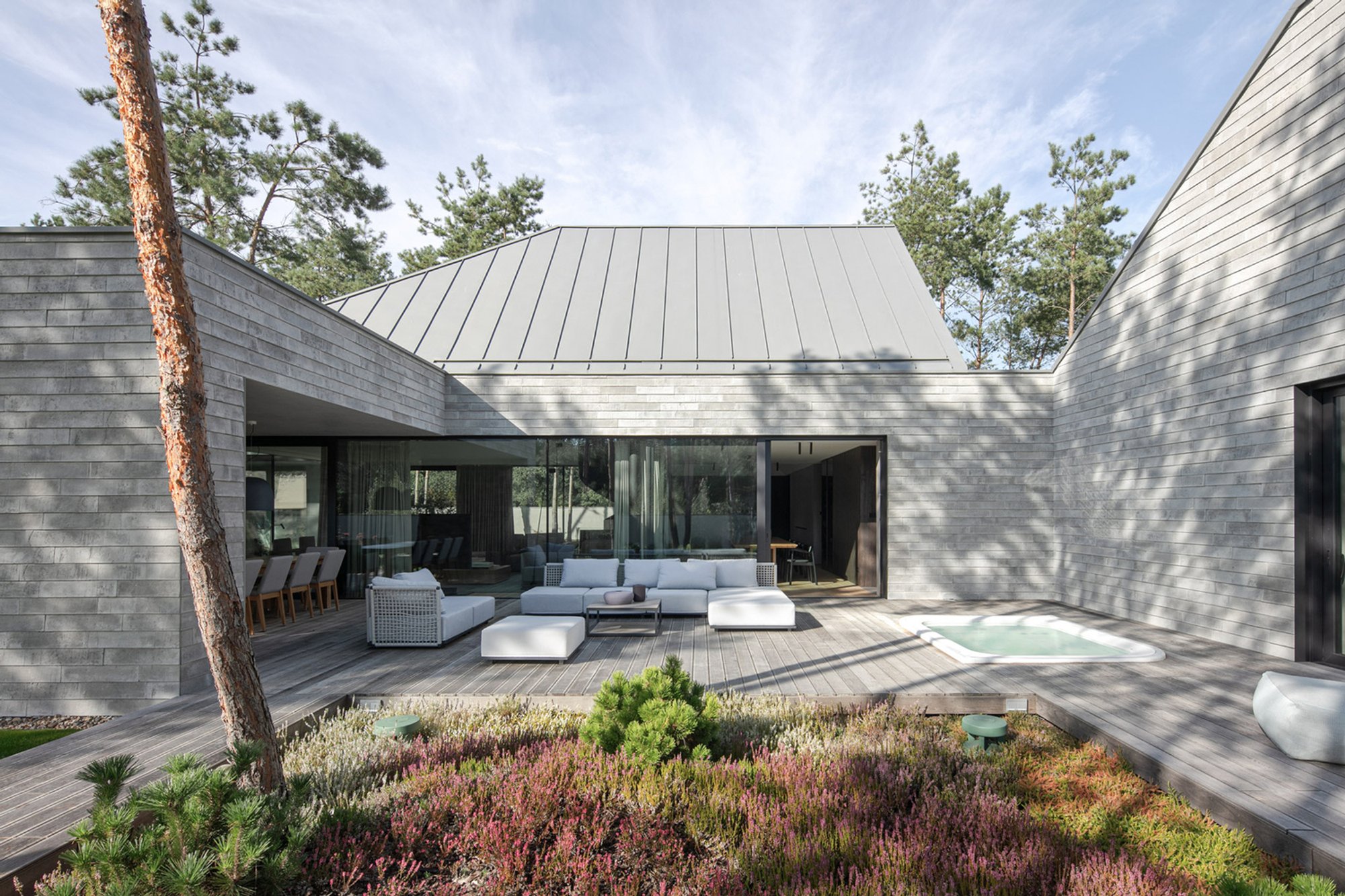
Multi-Unit House by PL.Architekci: A Modern Forest House Design in Poznań
A modern forest house design in Poznań blending modular architecture, natural light, and intimate courtyards to harmonize with towering pine trees.

Modern Forest House Design
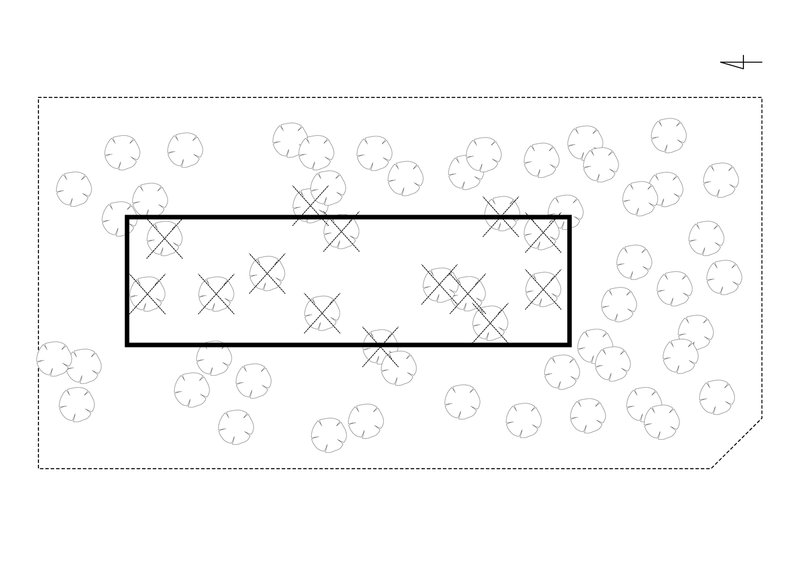
In the heart of Poznań, Poland, PL.Architekci has crafted a modern forest house design that seamlessly merges architecture with nature. Surrounded by towering pine trees, the Multi-Unit House balances expansive living spaces with a deep respect for its wooded surroundings. Designed for a family of five, it combines luxury, comfort, and functional zoning without overpowering the natural landscape.
Client Vision and Functional Program
The homeowners envisioned a generous and versatile living environment. The brief included a spacious living area with a wide sofa, a large dining room for family gatherings, and a kitchen equipped with both an everyday dining space and a secondary “dirty” kitchen. Each child would have a private dressing room and bathroom, while the parents’ suite features a double bedroom, private bathroom, and walk-in wardrobe. Additional spaces include a home office, fitness area with saunas, guest accommodations, a basement wine cellar, and a pickle kitchen — all designed with careful attention to detail and personal heritage pieces, including a salvaged casement window.
Architectural Challenge: Fitting a Large House into a Forest Plot
The design challenge centered on fitting a single-story house with substantial square footage into a dense forest plot without creating a dominating mass. The architects sought ways to introduce abundant natural light despite the shading from tall tree canopies, maintain privacy, and integrate family heirlooms and artwork harmoniously into the interiors.
Modular Design with Asymmetric Gable Roofs
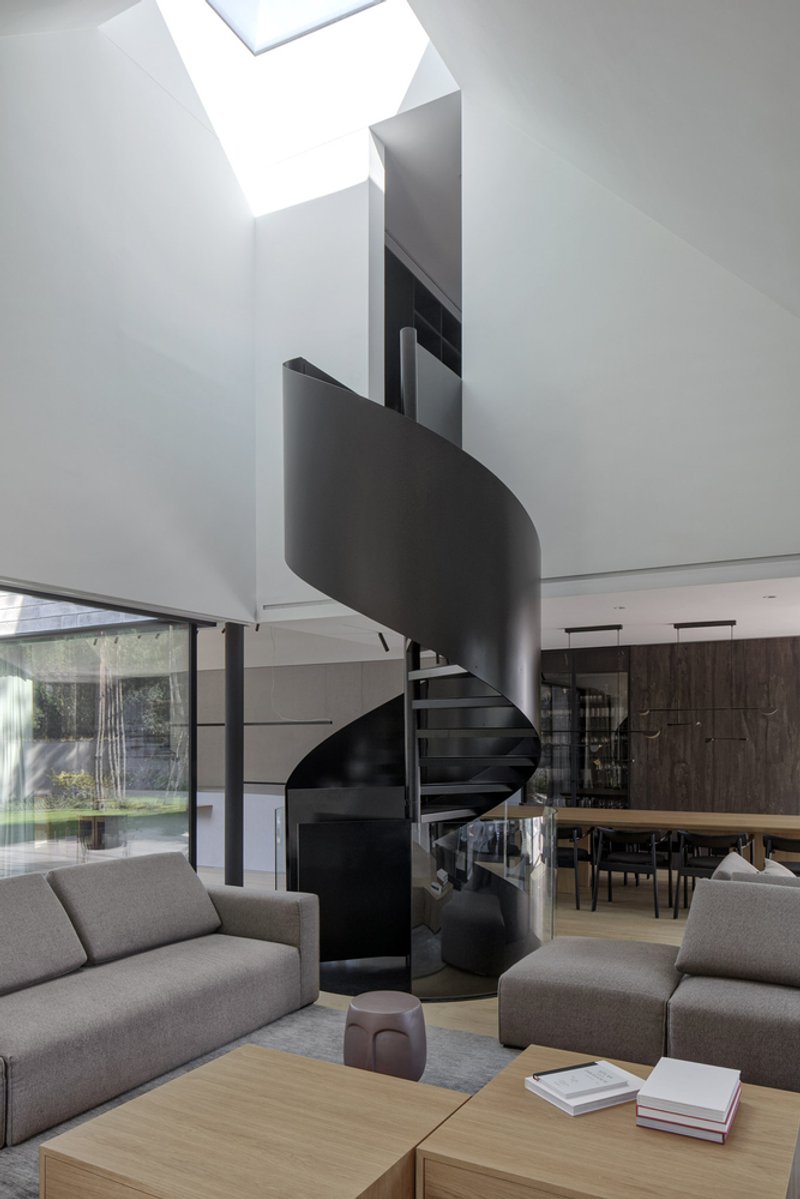
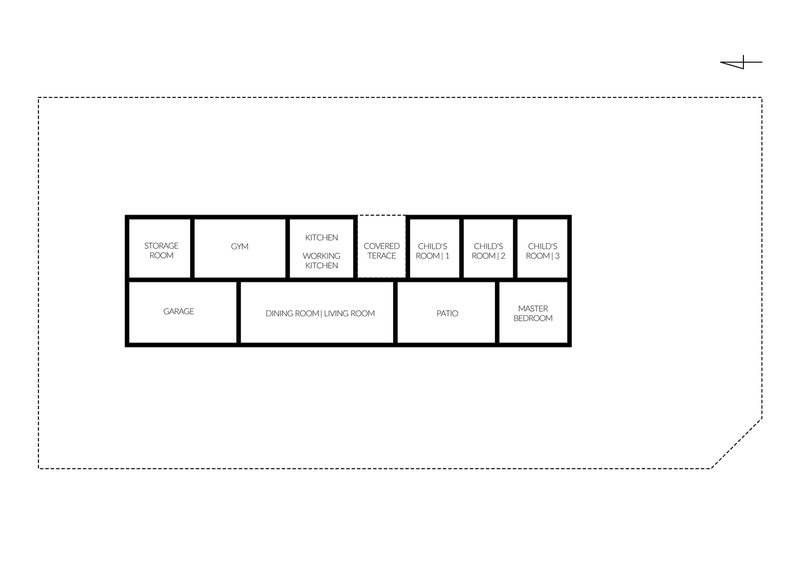
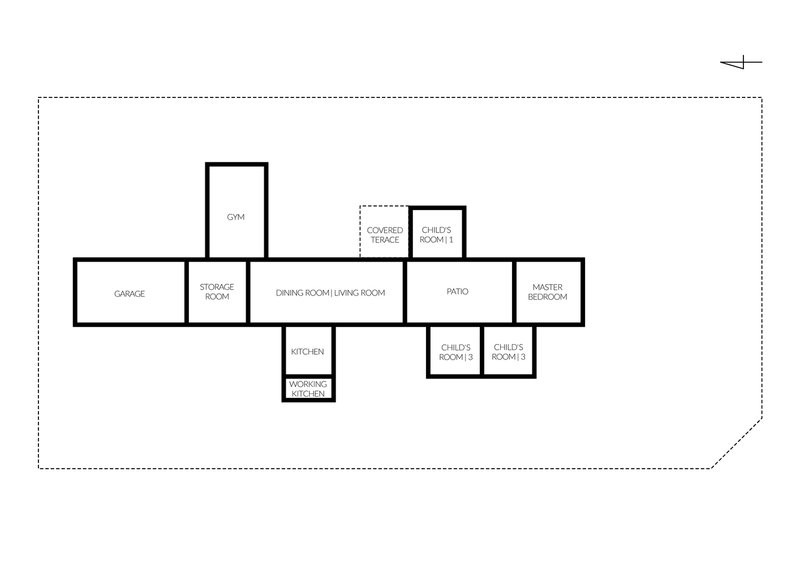
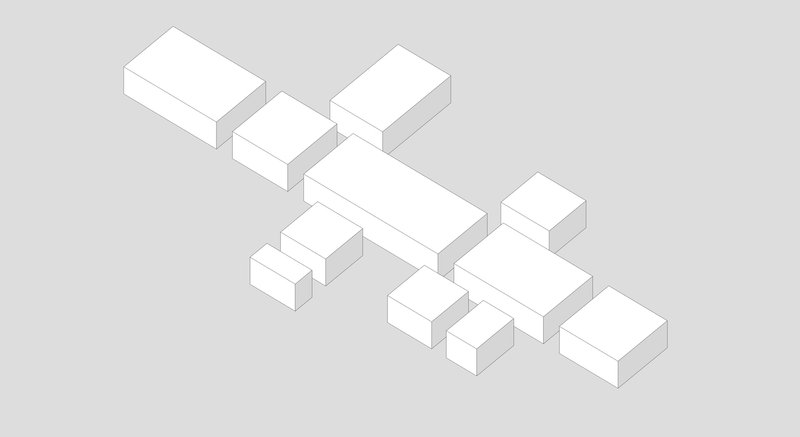
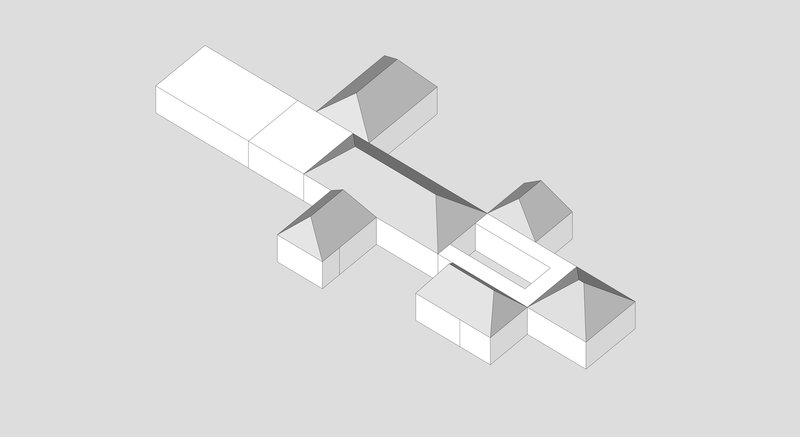
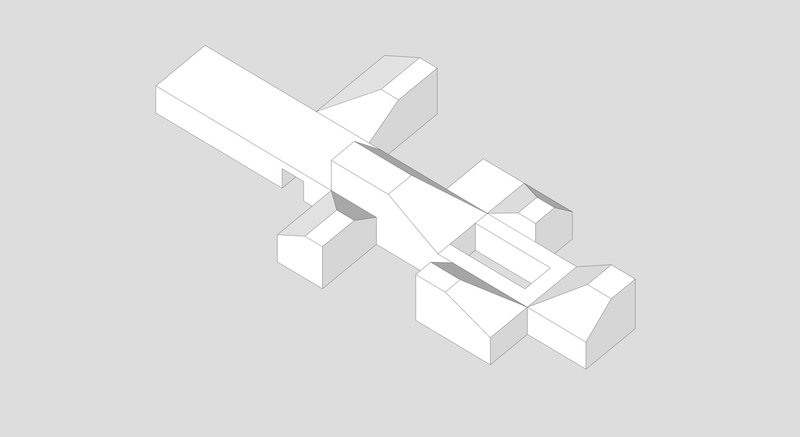
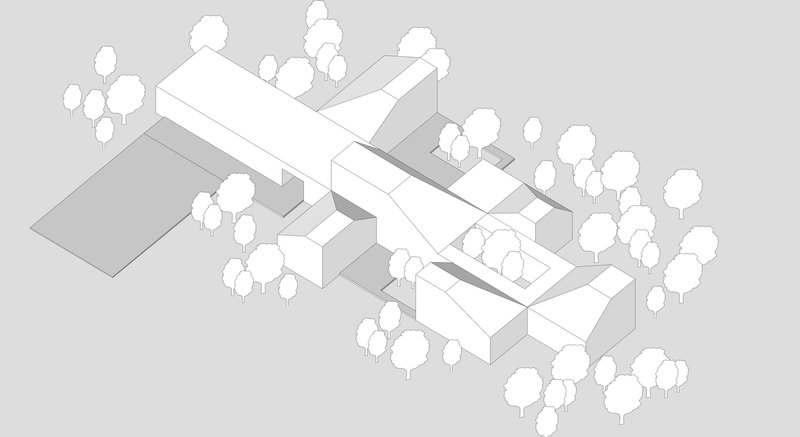
The solution was a composition of interconnected rectangular modules, each dedicated to specific functions. The central core contains the living and dining areas, an internal patio, circulation zones, and a garage. Extending from this nucleus are distinct modules for the kitchen, children’s bedrooms, parents’ suite, and a spa with a guest room. The basement houses the wine cellar and additional kitchen, while the first floor accommodates an office above the living room.
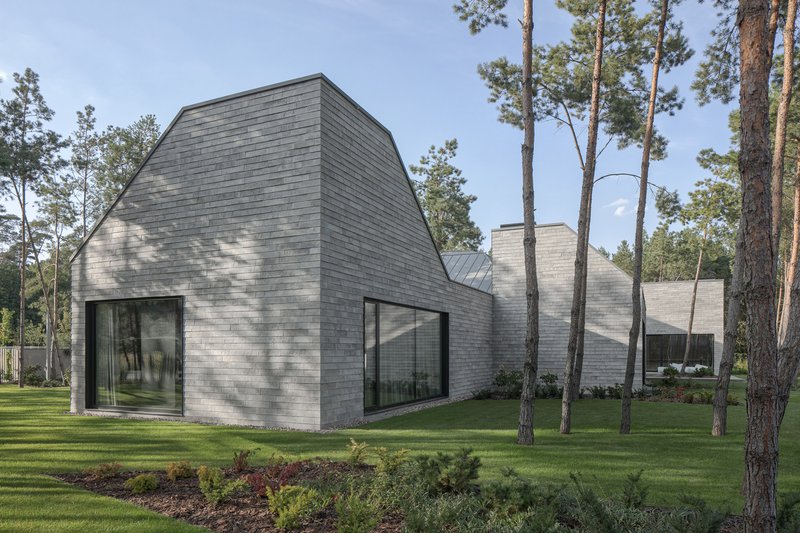
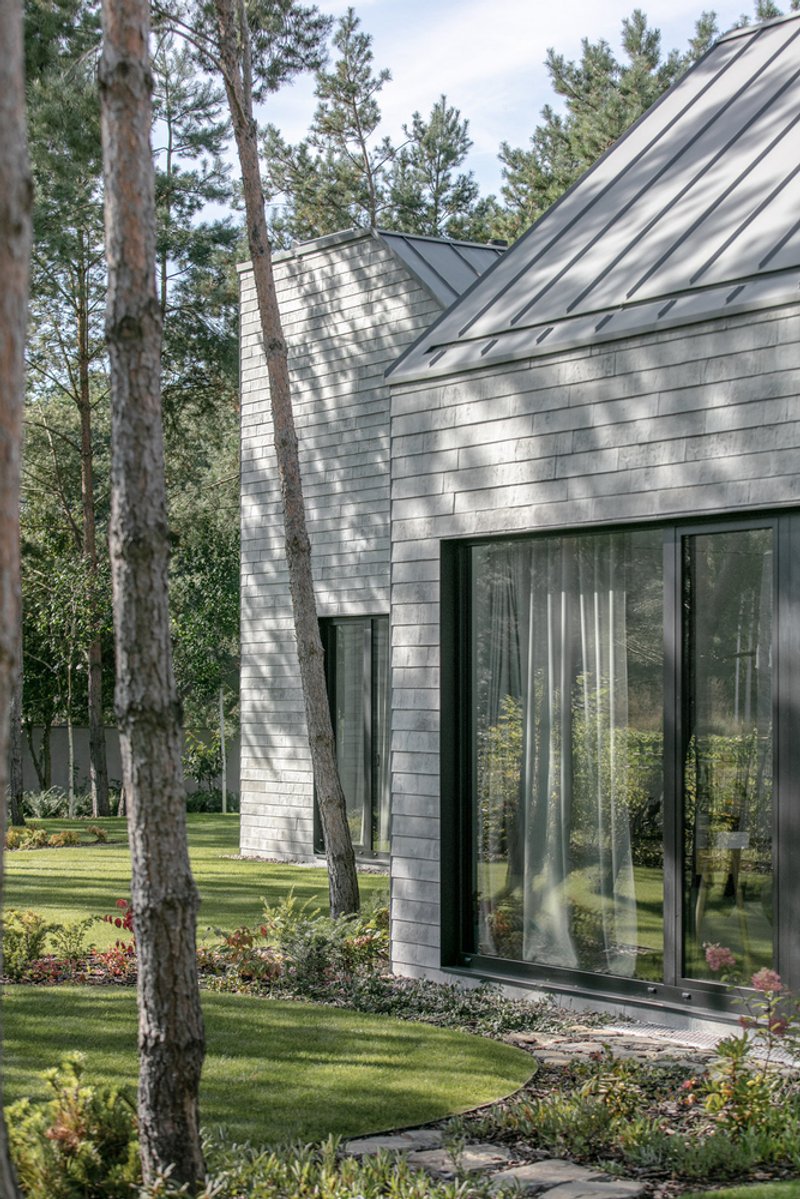
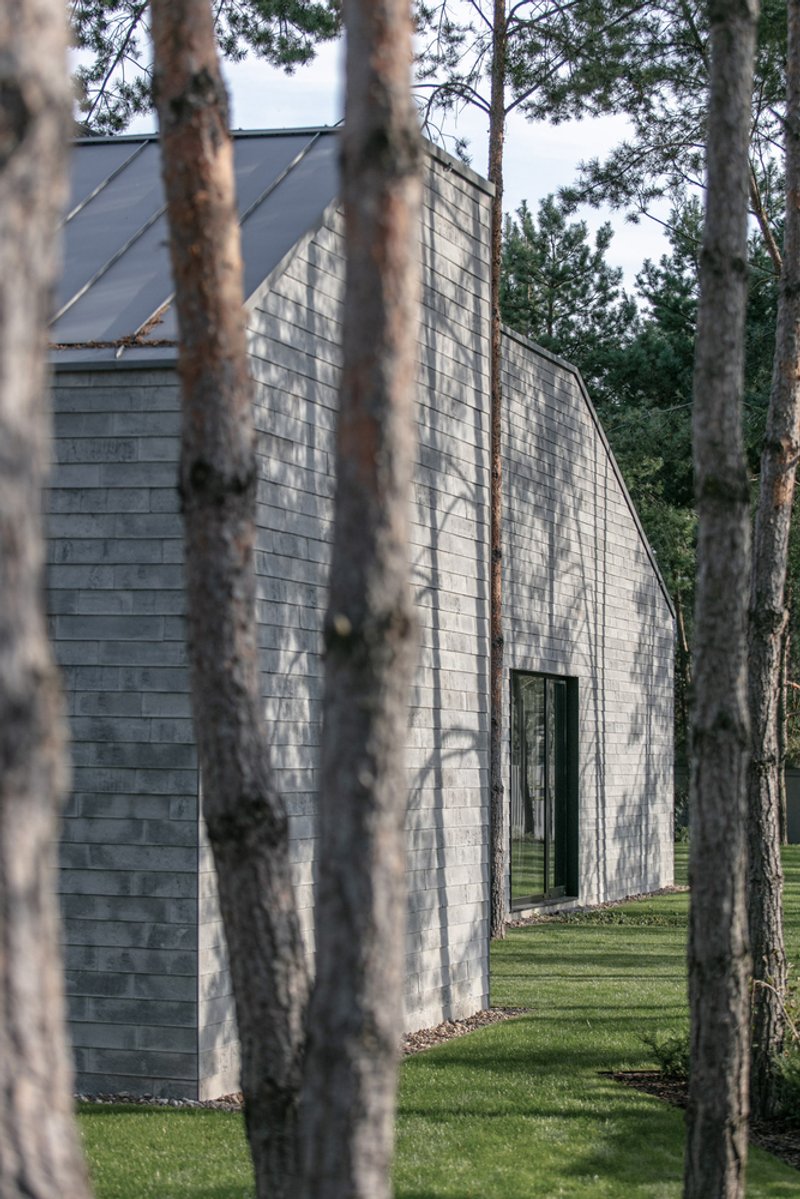
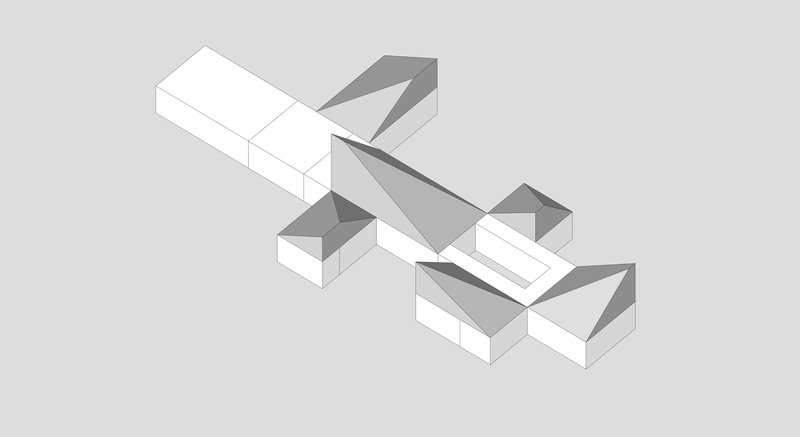
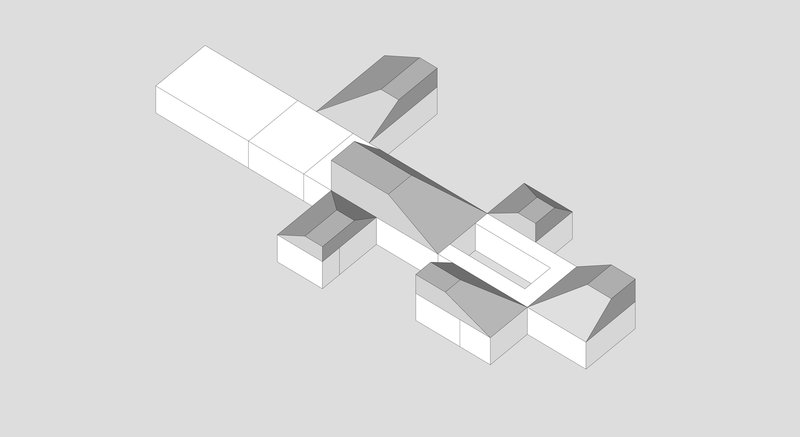
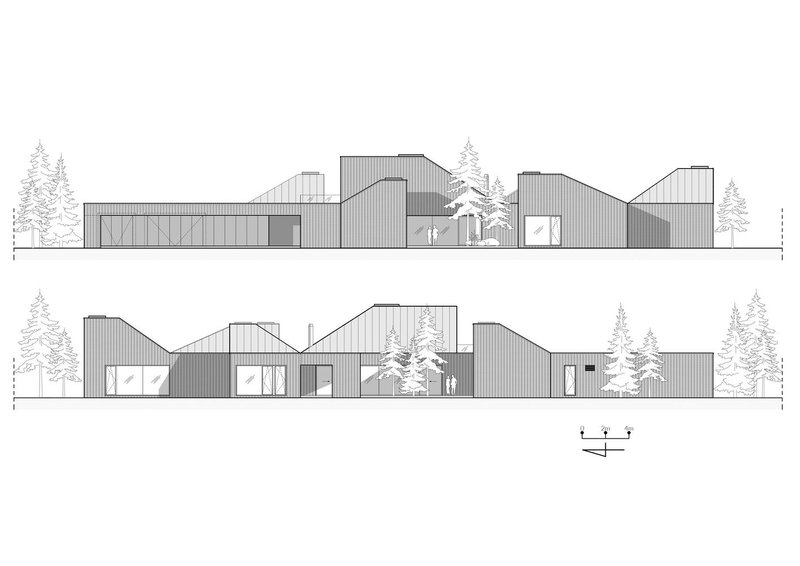
Each module is topped with an asymmetric gable roof — a requirement under local planning regulations — designed to act as a light tube. Skylight windows at the roof’s peak channel daylight into the interiors throughout the day, bypassing the shadow of tree crowns. This strategic roof form also ensures the courtyards remain sunlit, while breaking down the building mass for a more human scale.
Courtyards and Indoor-Outdoor Integration
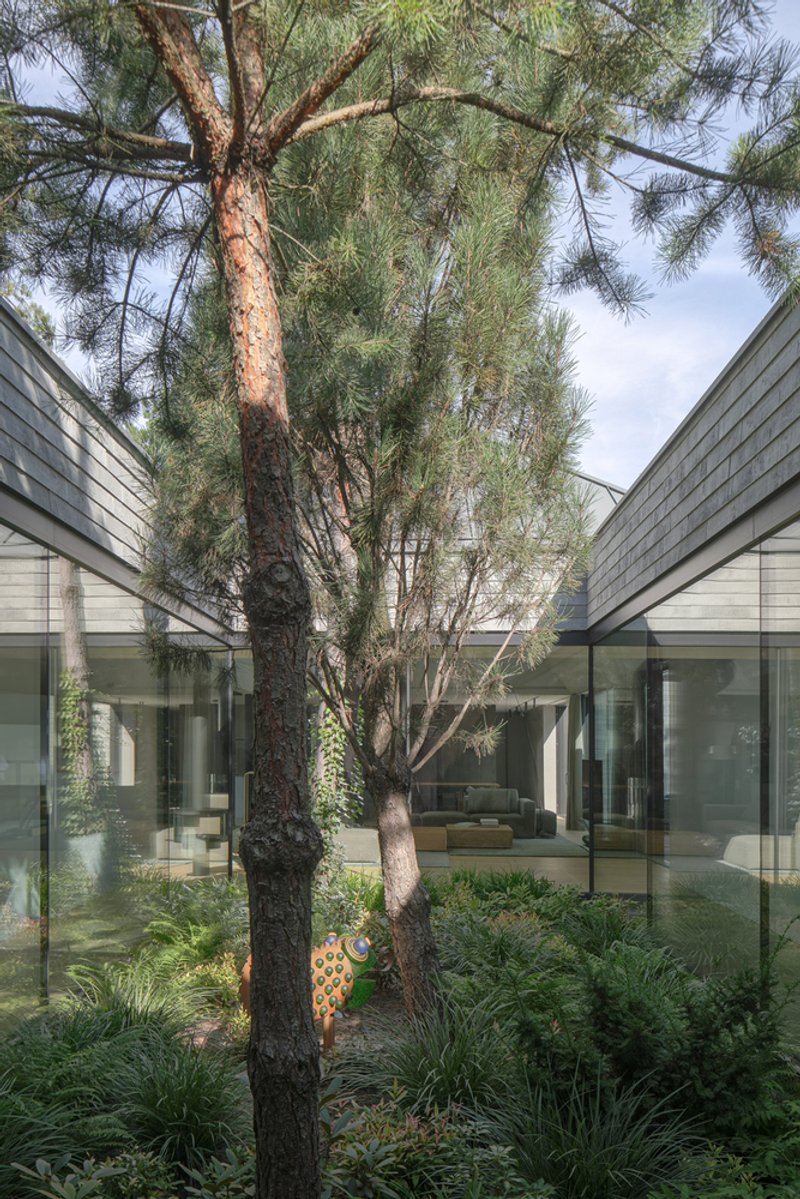
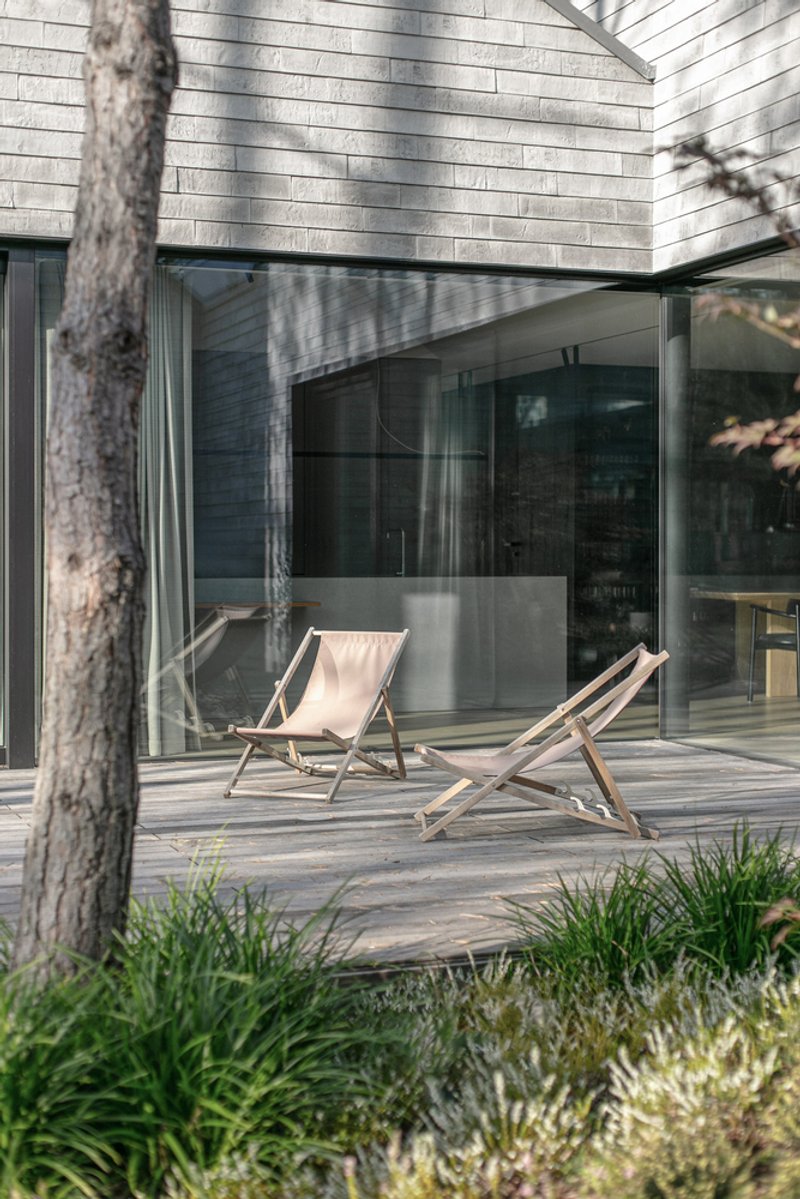
A defining feature of this modern forest house design is its half-courtyards. These spaces, formed between successive modules, provide intimate outdoor areas that connect seamlessly to interior rooms. They enhance privacy, allow for year-round visual connection with nature, and ensure that every part of the house benefits from natural light and ventilation.
Materiality: Concrete Tiles as a Forest Canvas
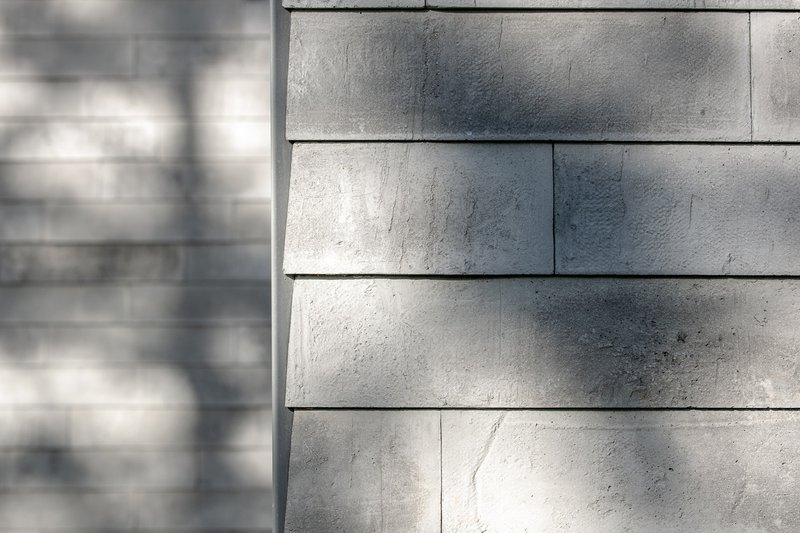
Almost all walls are clad in custom-designed concrete tiles arranged like overlapping scales. This rugged texture not only protects the house against the forest’s demanding climate but also serves as a dynamic backdrop for the shadows cast by surrounding pines. The material choice reinforces the architectural language — strong yet harmonious with the natural context.
A Living Architecture
The Multi-Unit House is more than a residence; it is a living architecture that evolves with the family’s daily rhythm, traditions, seasonal changes, and shifting patterns of light. In this modern forest house design, the building doesn’t simply occupy its plot — it coexists with it, creating a lasting dialogue between architecture and nature.
All photographs are works of Piotr Krajewski




Popular Articles
Popular articles from the community

ONA Threads Four Board-Formed Concrete Cabins Along a 260-Meter-Deep Site in Mendoza
At the edge of Argentina's wine country, a set of curved concrete lodges negotiate a razor-thin parcel between city and mountain.

The Heart of Milano: Slow Fashion Architecture for a New Circular Culture
The Heart of Milano turns slow fashion architecture into a civic landmark where learning, making, sharing, and circular culture meets daily.
GGR Architectes Anchors a New Neighborhood in Frouzins with a Brick and Timber School Complex
A cruciform plan of terracotta brick and exposed wood frames four courtyards for 140 students outside Toulouse, France.
R/URBAN DESIGN OFFICE Carves a Communal Living Room from a Tokyo Corporate Dormitory
In Shinagawa's Oi district, a 35-year-old reinforced concrete tower becomes a 49-unit rental residence with shared spaces that redefine cohabitation.


Similar Reads
You might also enjoy these articles
Noue Studio Organizes a Swiss Restaurant Around a Single Concrete Wall
In Granges-Paccot, Switzerland, a 216-square-meter renovation turns raw materials and a central spine into a legible dining experience.
dua studio Stretches a 3.6-Meter-Wide House Across 24 Meters of Indonesian Garden
In Pesanggrahan, a single diagonal wall organizes an entire domestic program into two slender bands flanked by courtyards and trees.
No10-Architects Builds a Multi-Sensory Coffee Lab Around Preserved Trees in Yunnan
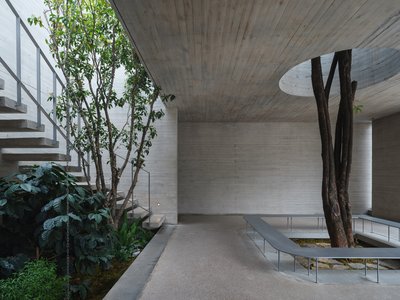
Voiceless Coffee in Baoshan wraps board-formed concrete, timber pavilions, and courtyards around a full-chain coffee experience in 260 square meters.
R/URBAN DESIGN OFFICE Carves a Communal Living Room from a Tokyo Corporate Dormitory
In Shinagawa's Oi district, a 35-year-old reinforced concrete tower becomes a 49-unit rental residence with shared spaces that redefine cohabitation.


Explore Architecture Competitions
Discover active competitions in this discipline




The International Standard for Design Portfolios


The Global Benchmark for Architecture Dissertation Awards


The Global Benchmark for Graduation Excellence


Challenge to reimagine the Iron Throne
Comments (0)
Please login or sign up to add comments
No comments yet. Be the first to comment!