Mycorrhizal Network Home: A Symbiotic Design for Sustainable Living in the Amazon
A groundbreaking architectural project that blends human habitat with the natural environment, creating a harmonious and resilient community.


The Amazon rainforest, a vital ecosystem facing increasing deforestation, inspires a unique architectural project called "Mycorrhizal Network Home" This innovative design, a winning entry in the Greenrich competition created by Junghyun Kim, 영 수, 민지 정, Joongho Lee, tackles the challenge of expanding human living space while preserving the delicate balance of nature. This article delves into the concept, design features, and sustainable approach of this extraordinary project, highlighting its potential to revolutionize our relationship with the environment.
A Symbiotic Design Inspired by Nature
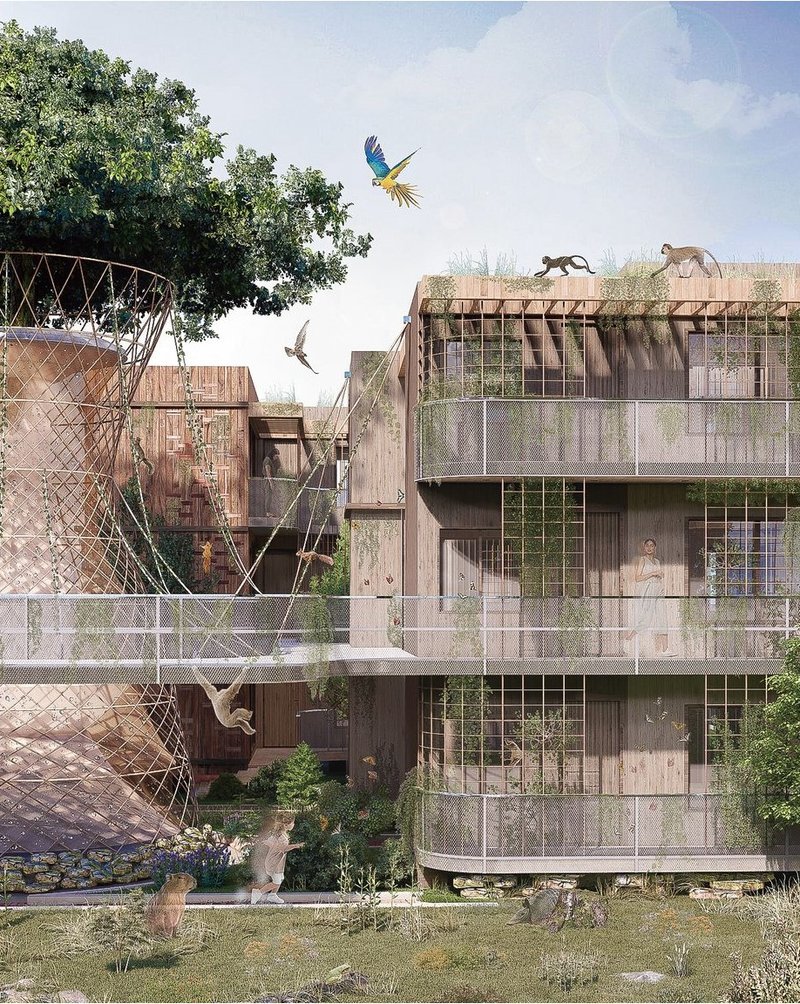
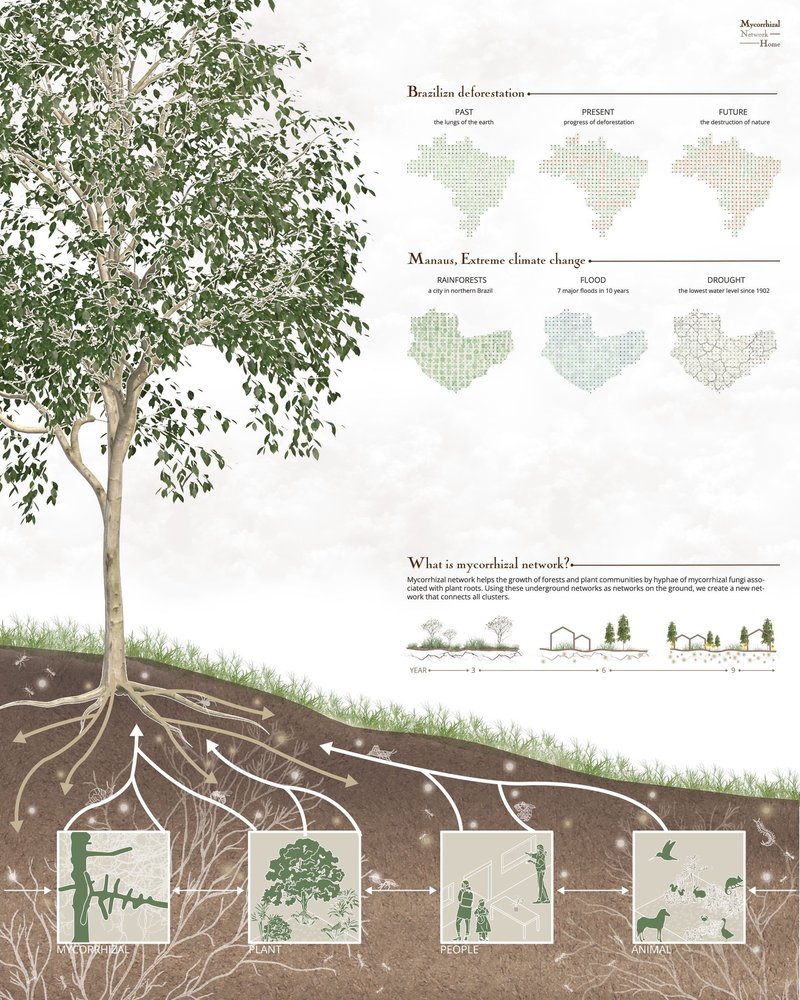
At the heart of the "Mycorrhizal Network Home" lies a profound concept: symbiosis. Drawing inspiration from the intricate web of mycorrhizae, fungi that connect and nourish plants in the forest, the design seeks to create a similar network of interconnected living spaces. It envisions a community where humans, animals, and plants coexist harmoniously, contributing to a thriving ecosystem.
The project begins with a solution to the pressing issue of deforestation, which often arises from the expansion of human settlements. "Mycorrhizal Network Home" presents a sustainable alternative, proposing a residential space where humans can live in harmony with the existing natural environment.
Architectural Features: Bridging Nature and Habitation
The architecture of "Mycorrhizal Network Home" is a testament to thoughtful design and innovative solutions. The project incorporates a series of distinct features that work in synergy to create a cohesive and resilient community:
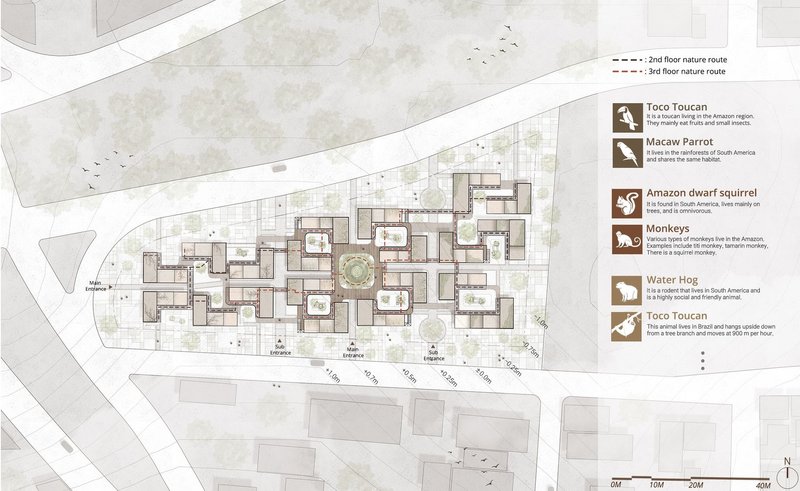
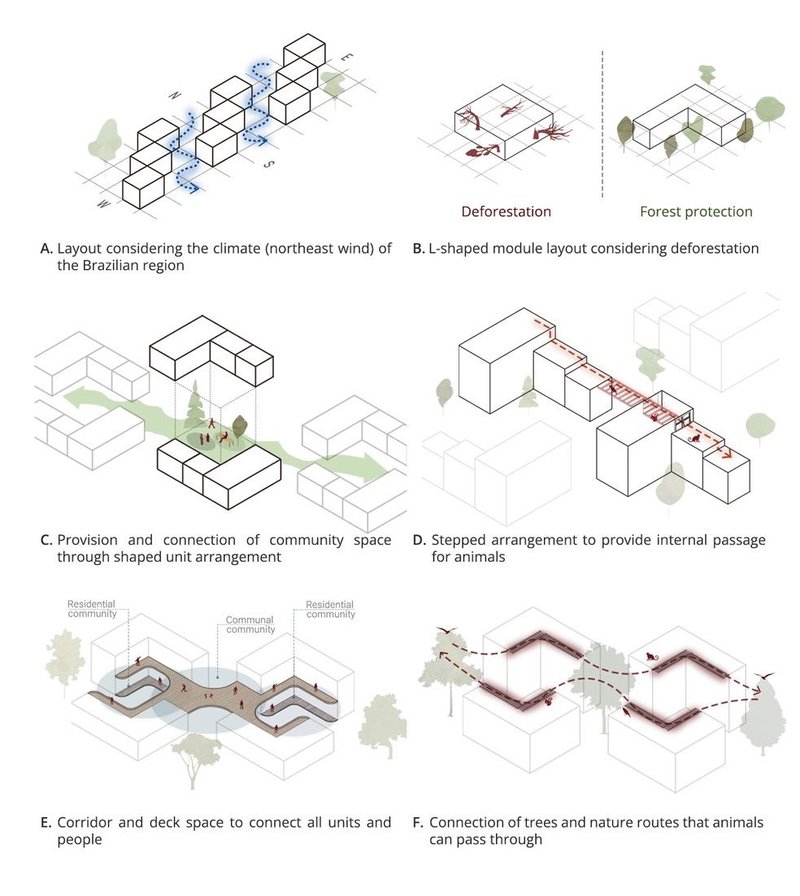
Nature Route: A natural pathway, rising from the ground through the walls, allows for unobstructed movement through the roofs of surrounding trees and brick structures. This pathway becomes a free-flowing connection for animals, connecting them to the broader ecosystem.
Brick Road: Bricks serve not only as building materials but also as ladders for animals to navigate the walls. This design element underscores the project's commitment to creating a space where humans and animals share the environment.
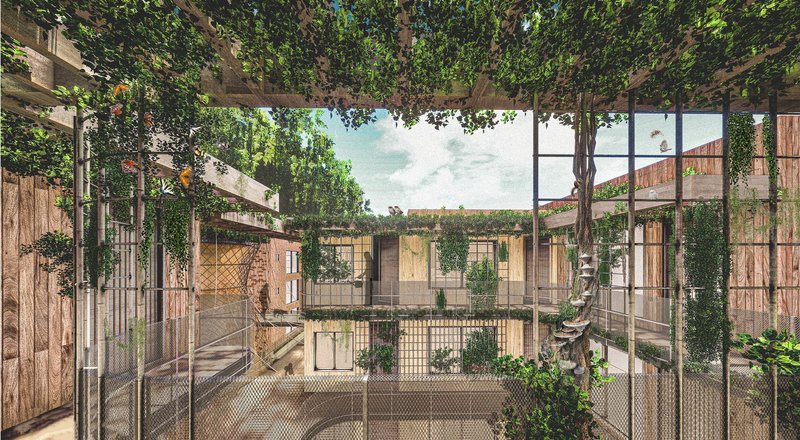
Community Walkway: The walkway, supported by a plant panel, allows residents to access their individual units while providing a sense of privacy and avoiding harsh sunlight.. Plant Customization: Each resident has the freedom to customize the plant panel, adding a personal touch to their home while contributing to the overall greenery.
Mycorrhizal Tower: Located in the center of the community, the tower functions as a hub for microorganism growth. This structure fosters a healthy and vibrant soil environment, contributing to the overall well-being of the ecosystem.
The Layering Concept: Integrating Different Ecosystems
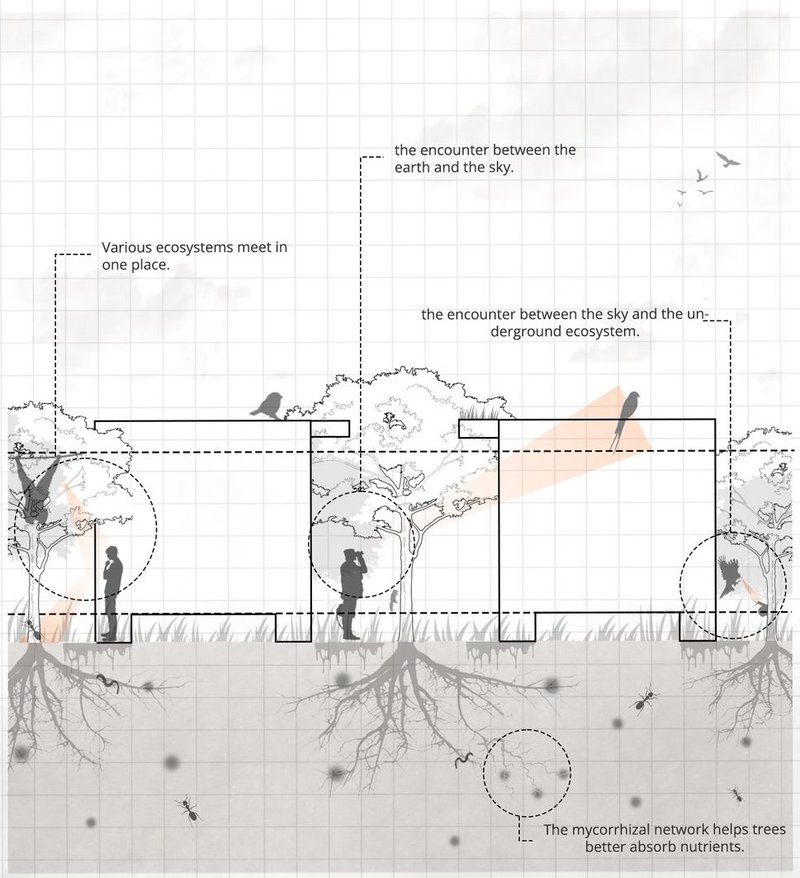
The project's design incorporates a layering concept, carefully separating different ecosystems within the housing units. The top layer, where the buildings are located, facilitates human activities. The middle layer serves as a space for animals to move freely, and the bottom layer encourages the proliferation of microorganisms, contributing to the soil's fertility.
The Expansion Plan: A Sustainable Growth Model
The "Mycorrhizal Network Home" is designed for sustainable expansion, aiming to address the problem of deforestation while increasing human living space. The key elements of the expansion plan include:
Modular Design: The use of modular units allows for adaptable configurations, minimizing waste and enabling cost-efficient construction.
Ecological Integration: The expansion plan emphasizes harmonizing human structures with the surrounding natural environment. New units are carefully positioned to minimize impact on existing trees and vegetation.
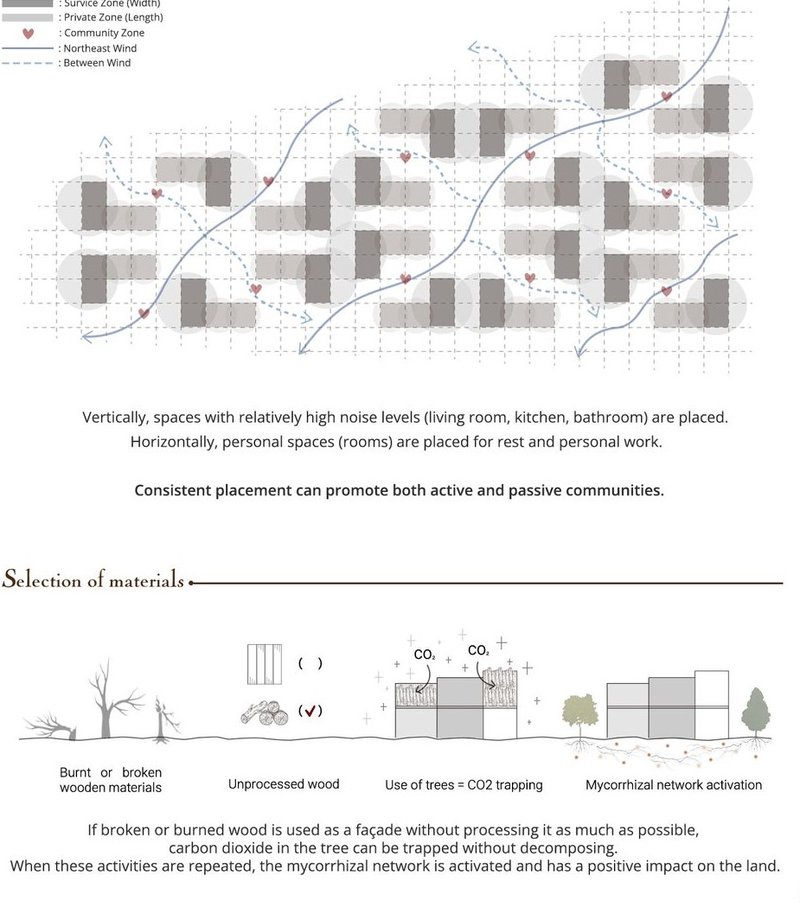
Environmental Sustainability: The project prioritizes the use of locally sourced materials, reducing the carbon footprint and supporting local economies. The incorporation of burned or fallen wood as a building material promotes a circular economy, preventing waste and further deforestation.
Time-Based Transformation: A Vision for the Future
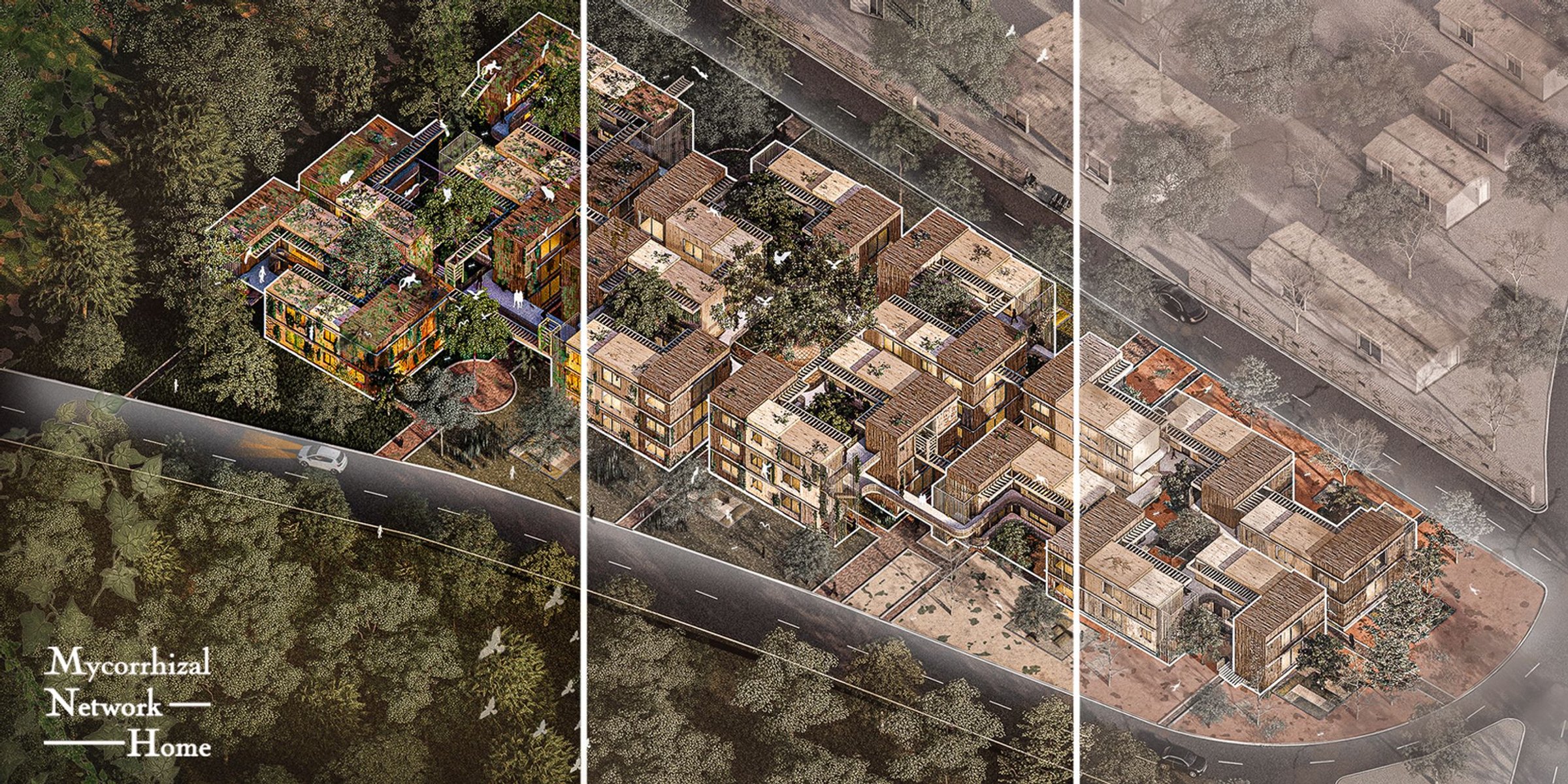
The design envisions a gradual transformation of the site over time, depicting the evolution of the ecosystem through three stages: 3 years, 6 years, and 9 years. These stages illustrate the growth of the natural environment alongside the expansion of the community.
Year 3: The initial stage focuses on establishing a dry environment, emphasizing the challenges of drought in the Amazon region.
Year 6: Planting efforts begin to flourish, gradually integrating greenery into the residential spaces.
Year 9: The project culminates in a thriving ecosystem, where humans, animals, and plants coexist in harmony.
Beyond the Site: A Blueprint for Sustainable Living
"Mycorrhizal Network Home" is not just a unique architectural project but a vision for sustainable living. The design principles and features of the project can be applied to other regions and communities facing similar challenges. The project aims to inspire a shift in our relationship with nature, fostering a future where human settlements coexist harmoniously with the environment.