
Oasis Studio in Ahmedabad: A Landscape-Integrated Architecture Workspace by Studio Saransh
Oasis Studio in Ahmedabad by Studio Saransh features courtyard-focused office blocks, landscaped walkways, and nature-integrated workspaces fostering collaboration, creativity, and calm.


Oasis Studio, designed by Studio Saransh, is a thoughtfully crafted architecture office in Ahmedabad, India, that redefines the traditional workplace environment. Completed in 2023 and spanning 455 square meters, the project embodies a design philosophy where architecture, landscape, and workspace culture intersect to create a calm yet stimulating creative environment.
Rather than constructing a conventional office building, the architects envisioned a campus-like studio environment composed of multiple interconnected structures. This strategy encourages movement, interaction, and a strong connection with nature, allowing architects and designers to experience a workspace that actively nurtures creativity and collaboration.
The project stands as an example of sustainable office architecture, landscape-integrated design, and climate-responsive workplace planning, making it a notable architectural intervention in the evolving urban fabric of Ahmedabad.

Designing a Workspace Inspired by Nature
At the heart of Oasis Studio’s design lies a clear intention: to create a workspace that harmoniously blends architecture with the surrounding landscape. Instead of concentrating the entire office within a single building, the architects divided the program into smaller building blocks arranged around landscaped courtyards.
This approach transforms the studio into a network of interconnected pavilions, creating a dynamic spatial experience where interior and exterior environments merge seamlessly.
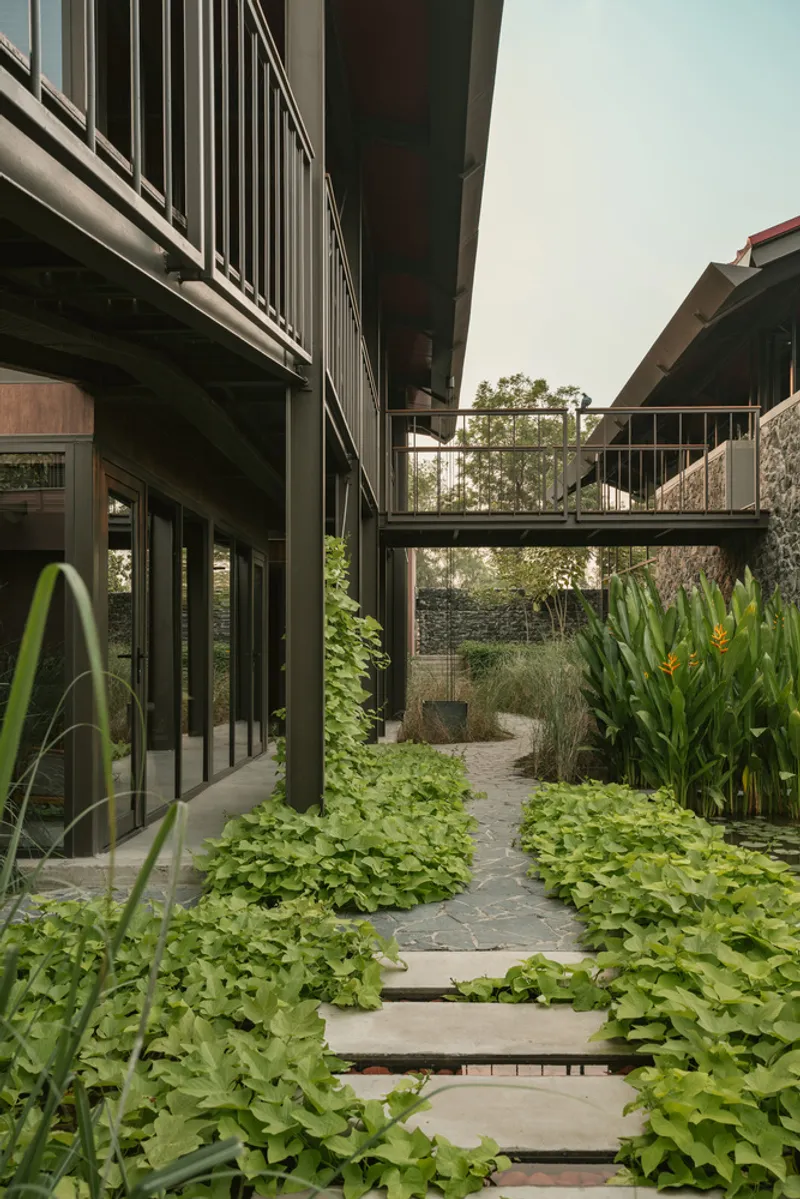
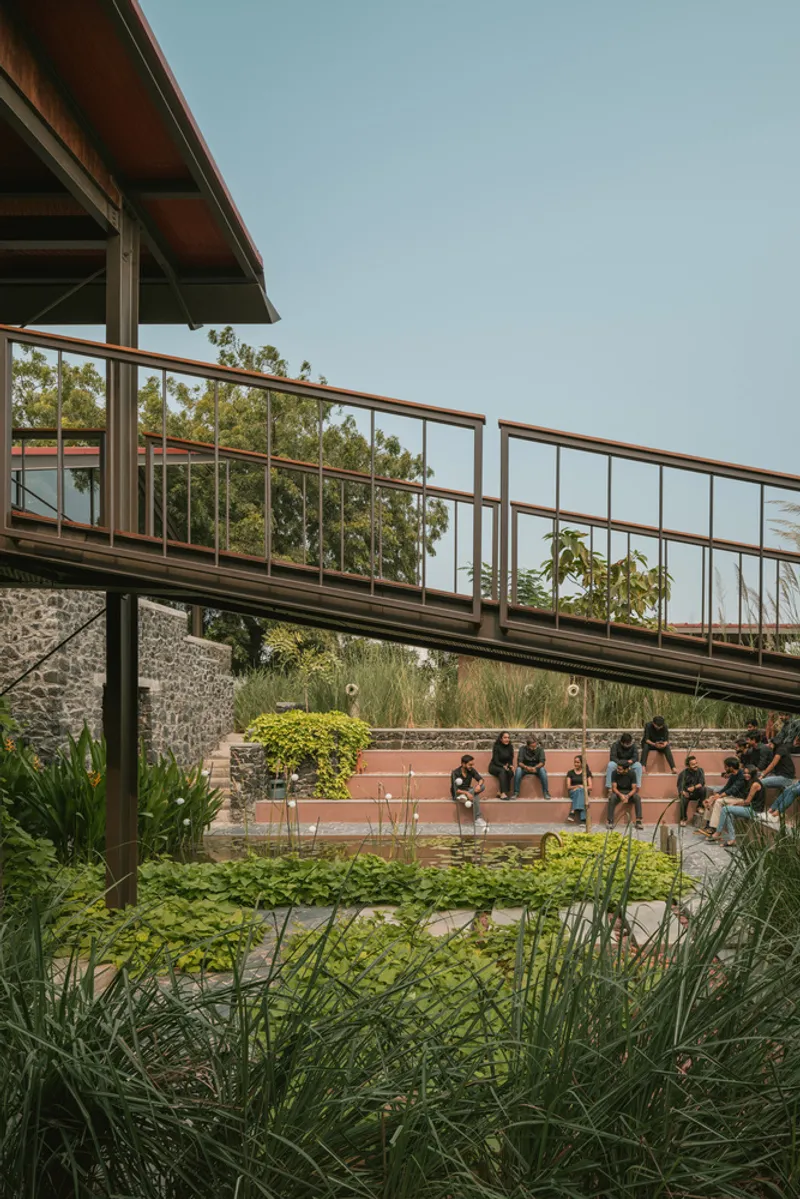
The buildings are linked through open walkways that weave through lush landscape elements, allowing employees to step outdoors frequently throughout the day. These transitions encourage moments of pause, reflection, and casual interaction, reinforcing the idea that creativity thrives in environments where people are not confined to static spaces.
By encouraging movement between buildings and gardens, Oasis Studio becomes more than just a workplace, it becomes a living architectural ecosystem.
Courtyards as the Heart of the Architectural Layout
Courtyards play a crucial role in shaping the spatial and social dynamics of the studio. The project features multiple landscaped courtyards, each designed with a distinct spatial and experiential character.
The central courtyard, framed by five surrounding building blocks, acts as the primary focal point of the complex. This space provides visual connectivity across the studio and naturally becomes a gathering area where team members interact, collaborate, and exchange ideas.
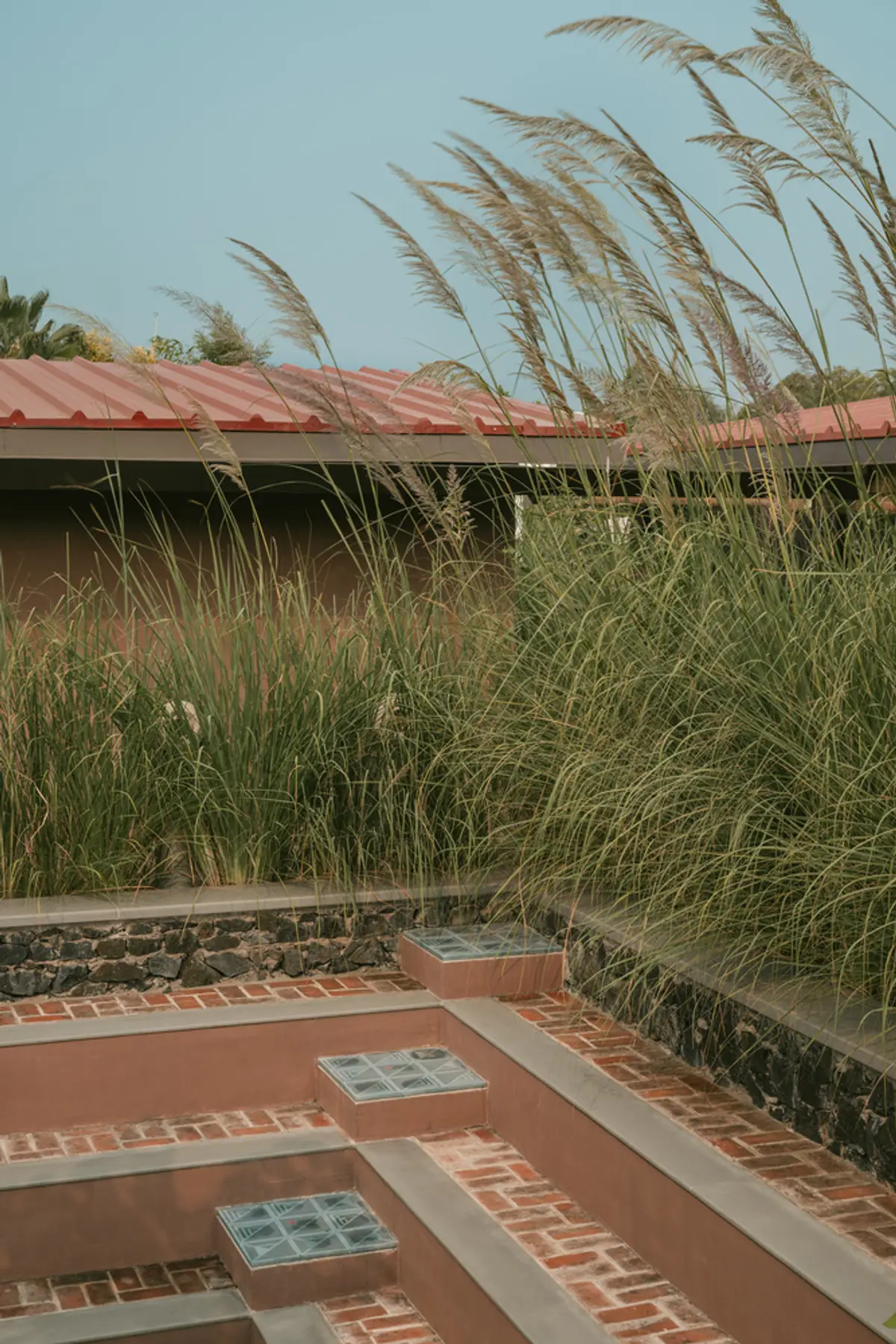
Another courtyard, located near the meeting rooms, is defined by tall lemongrass plantations, creating a quieter and more intimate environment. This landscaped area functions as a spill-out zone where informal meetings and extended discussions can take place in a relaxed outdoor setting.
Through these courtyards, the architects introduce biophilic design principles, ensuring that greenery, natural light, and fresh air are integral components of everyday work life.

Spatial Modulation and Landscape Topography
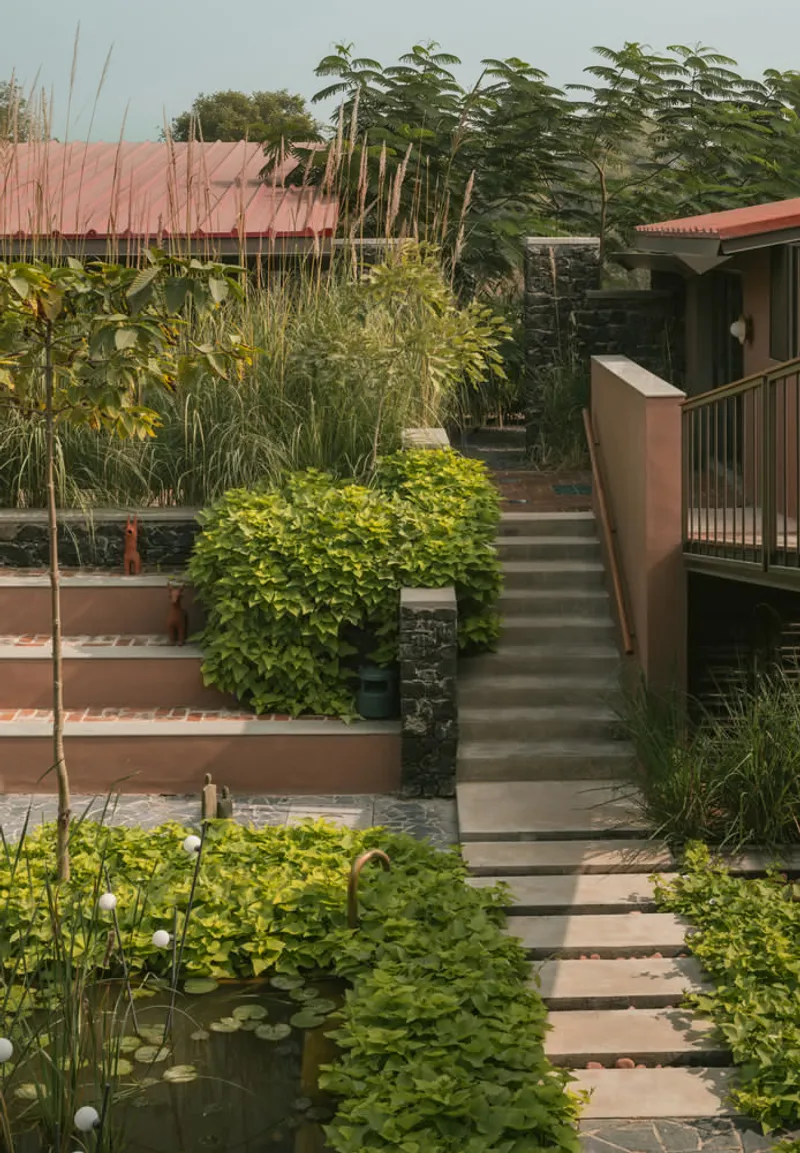
One of the most distinctive features of Oasis Studio is the careful modulation of the site’s terrain. The architects introduced sunken landscape areas across the site to subtly balance the varying heights of the building blocks.
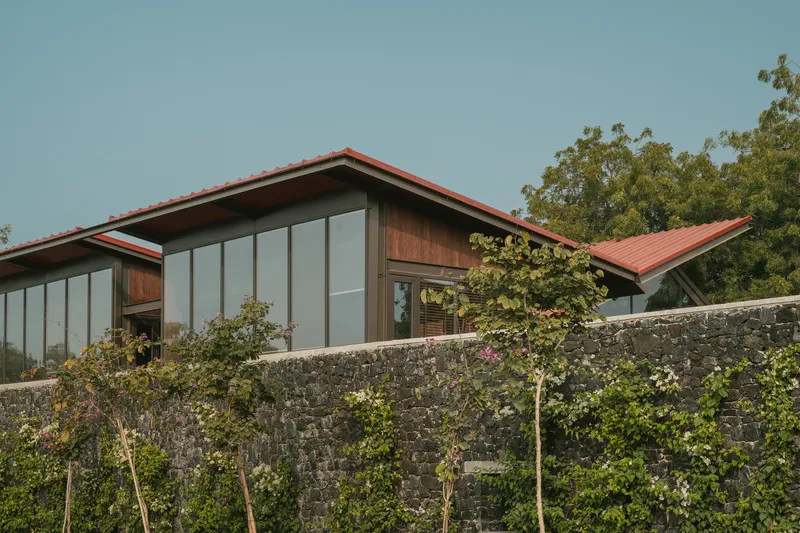
On the western edge of the site, taller building volumes rise prominently, while three smaller structures occupy the eastern side. By lowering portions of the landscape, the design visually enhances the scale of the eastern buildings while softening the transition between structures.
This strategy creates the sensation of descending into a calm architectural retreat, distancing occupants from the busy and chaotic urban surroundings of Ahmedabad.
Rather than being purely aesthetic, this landscape manipulation enhances spatial perception, environmental comfort, and architectural balance, demonstrating how topography can be used as a design tool in contemporary architecture.

Walkways that Encourage Movement and Collaboration
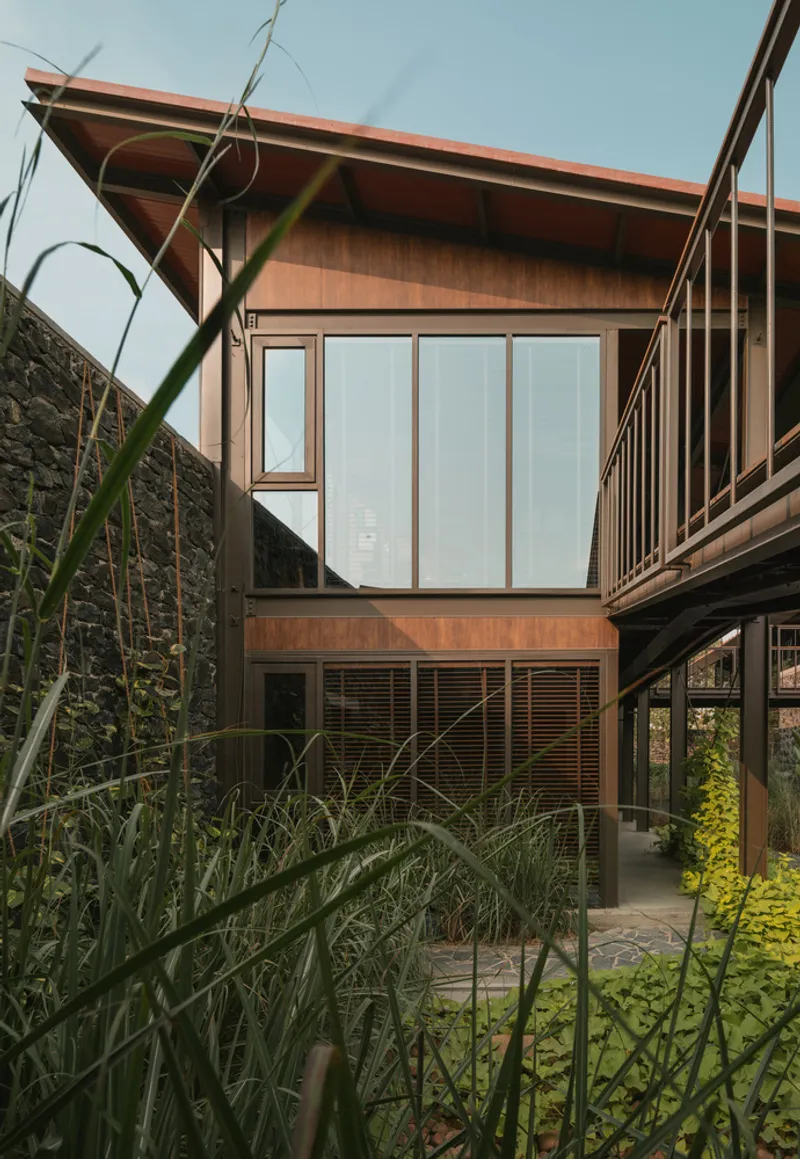
The open walkways connecting the buildings are essential to the project’s spatial identity. These pathways guide users through the landscape while fostering spontaneous interactions among team members.
Unlike conventional office corridors, these walkways operate as social spaces where architects, designers, and visitors naturally cross paths throughout the day.
These moments of accidental encounters can lead to unexpected conversations, quick design discussions, or collaborative brainstorming sessions. In this way, circulation spaces become productive zones of creativity and dialogue.
This design philosophy reflects modern workplace trends where informal interactions often lead to innovation.
Everyday Life Within the Studio Environment
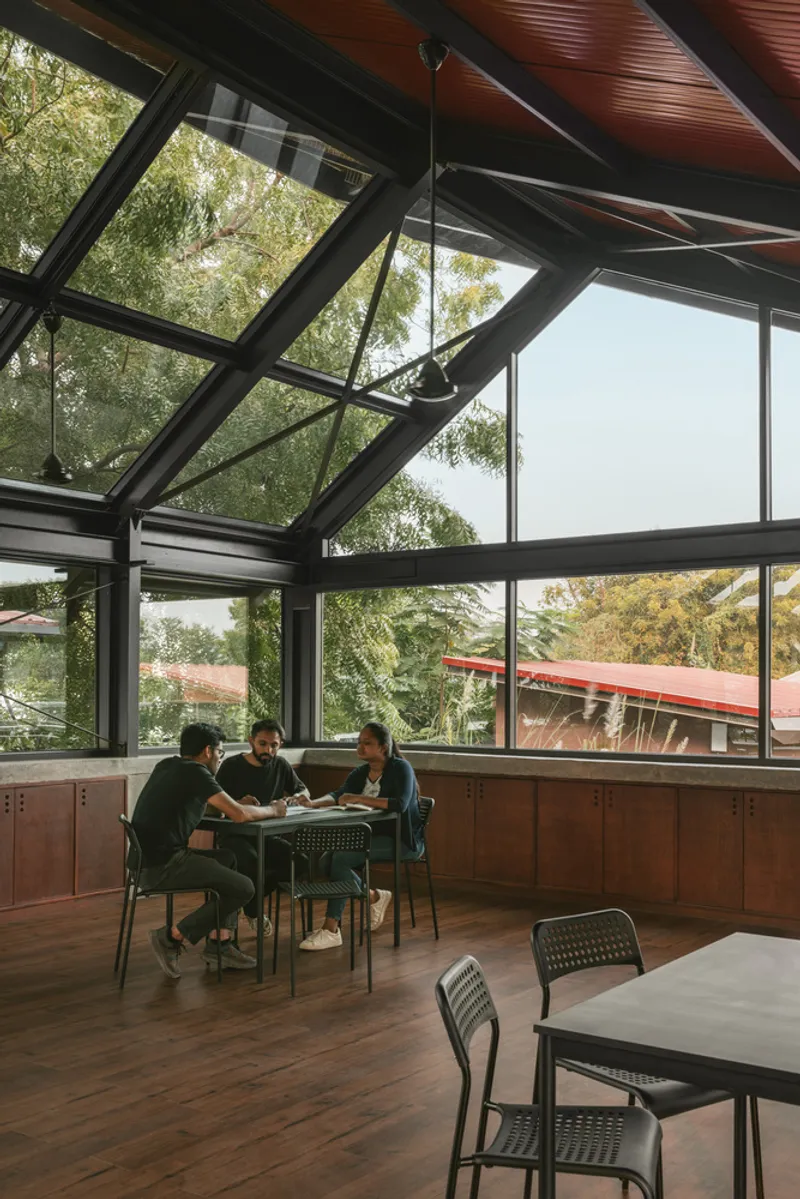
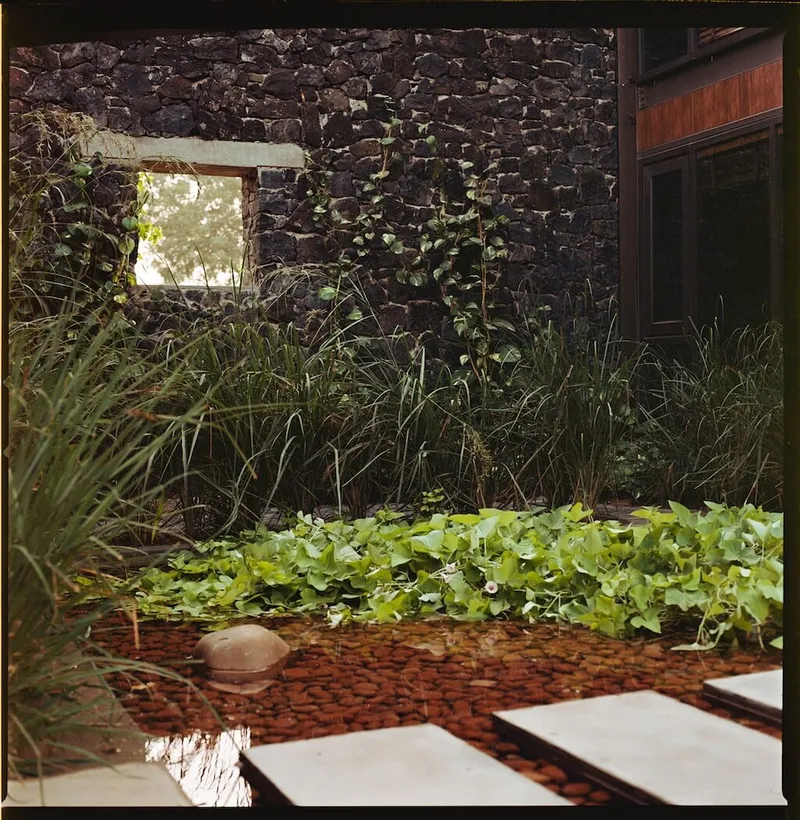
The courtyards and outdoor spaces are continuously activated by the daily life of the studio’s occupants. At any moment, one might see architects sketching outdoors, discussing design ideas over coffee, or taking phone calls amid the greenery.
The landscape also becomes an active participant in the experience of the studio. Small ponds attract birds and wildlife, creating moments where people pause to observe nature, adding layers of calm and inspiration to the work environment.
These subtle interactions reinforce the studio’s identity as a creative oasis within the city.

Interior Architecture and Material Palette
The interior design of Oasis Studio continues the dialogue between architecture and landscape established outdoors. A lightweight metal structural system combined with expansive glazing ensures that interior spaces remain visually connected to the surrounding gardens and courtyards.
This transparency allows natural light to flood the interiors while maintaining continuous visual engagement with greenery.
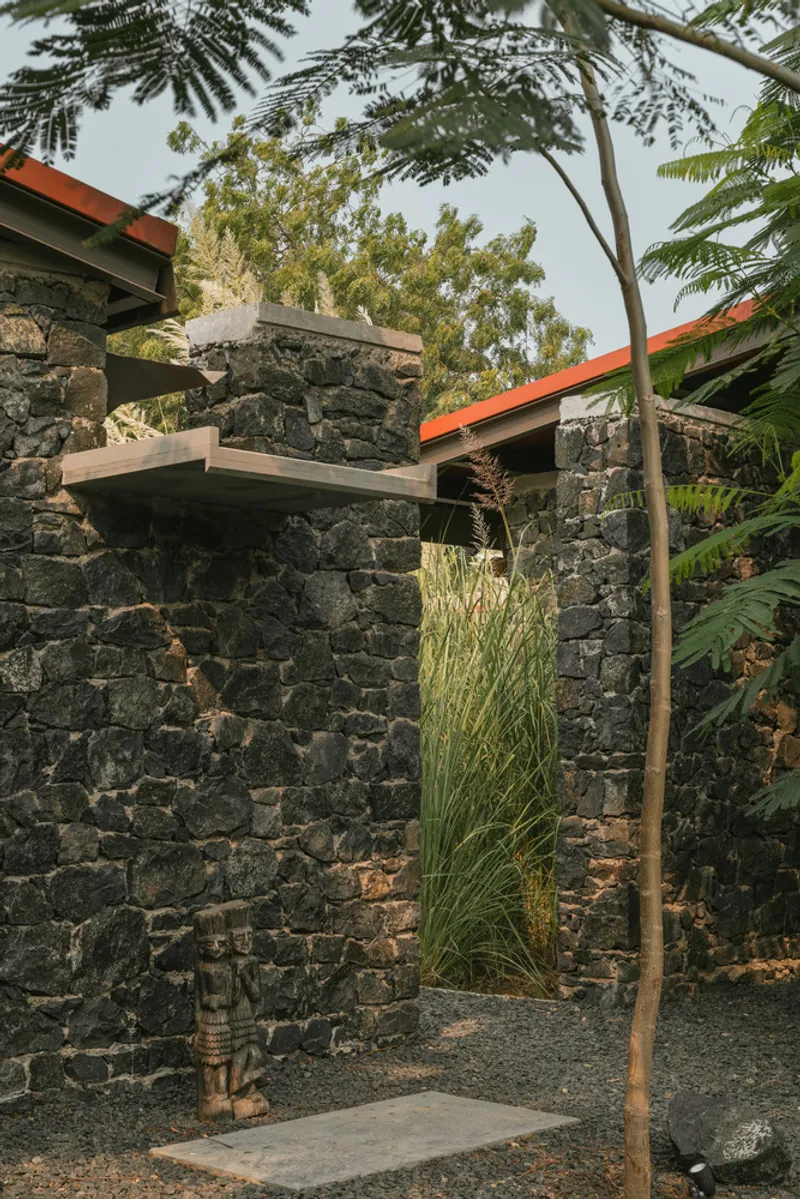
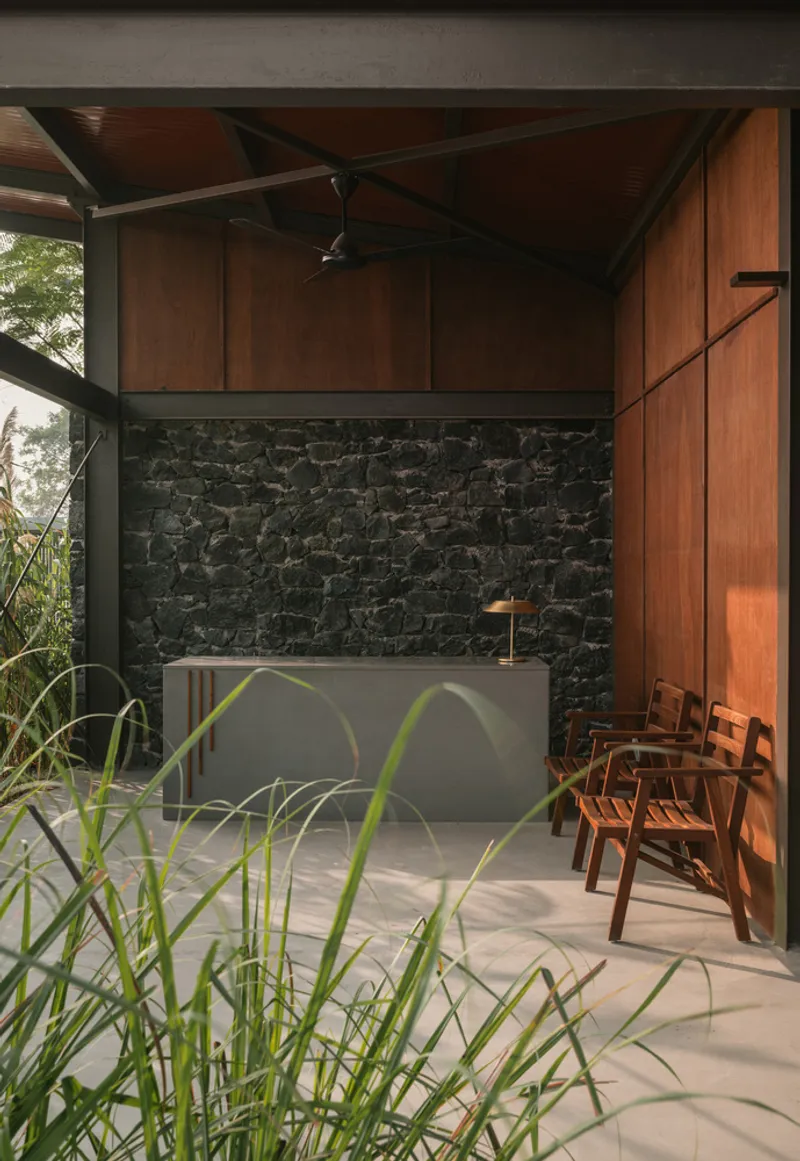
The material palette emphasizes earthy and neutral tones, reinforcing a sense of calm and simplicity. Black stone walls and exposed concrete bands establish a robust architectural base, while gravel surfaces and terracotta brick pathways introduce warmth and texture.
Plastered walls and corrugated roofs further complement the design, creating a balanced contrast between industrial materials and natural elements.
Together, these materials form a cohesive environment where architecture feels grounded in its landscape context.
A Workplace Designed to Inspire Creativity
Oasis Studio represents a progressive approach to workplace design in contemporary architecture. By prioritizing landscape integration, outdoor movement, and social interaction, the project challenges the traditional concept of the enclosed office.
Instead, the studio functions as a creative campus, where architecture, nature, and collaboration coexist seamlessly.
Through its careful spatial planning, material sensitivity, and environmental responsiveness, Oasis Studio demonstrates how architectural workplaces can be designed to nurture creativity, well-being, and community.
In an increasingly dense urban environment, the project stands as a reminder that workplaces can still be calm, inspiring, and deeply connected to nature.
All photographs are works of
Ishita Sitwla | The Fishy Project


Popular Articles
Popular articles from the community


Manzana Morphosis: Stretching Barcelona's Grid into a Living Landscape for 2050
A radical reworking of the Eixample manzana turns density into a tool for generous public space, vertical ecology, and environmental performance.

Singing Woman: Contemporary Architecture Inspired by Estonia’s Voice and the Sea
Singing Woman turns Estonia’s song culture into flowing opera house architecture, blending public life, landscape, sea, and national memory.

Extended Shell: Retrofitting Kolkata's Balconies as Living Urban Thresholds
A modular retrofit system recovers the social and environmental intelligence of Kolkata's historic verandas for contemporary Park Street residents.

Tsunami Convergenics: Turning Catastrophic Ocean Forces into Underwater Housing Infrastructure
A speculative underwater settlement off the coast of Onagawa, Japan, treats tsunamis and typhoons as energy sources rather than threats.

Similar Reads
You might also enjoy these articles

FAMM Arquitectura Organizes Ten Villas Around Courtyards and Jungle in Nosara, Costa Rica
El Molino pairs two elongated volumes with deep overhangs and timber louvers to build a compact coastal community five minutes from the beach.
Oscar Niemeyer's Ibirapuera Park Pavilions Define São Paulo's Cultural Identity in Concrete and Curve
A constellation of modernist volumes set within São Paulo's most important urban park, conceived for the city's 400th anniversary in 1954.
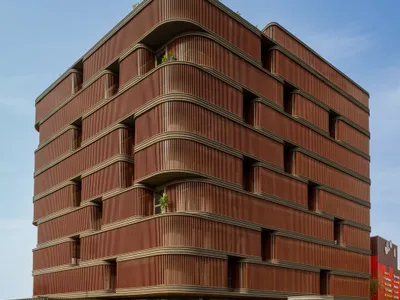
Sanjay Puri Architects Wraps a Jaipur Office Tower in Capsule-Shaped Green Buffers
A nine-level climate-responsive workplace near Jaipur Airport uses stacked planter terraces and aluminium screens to fight 40°C heat.
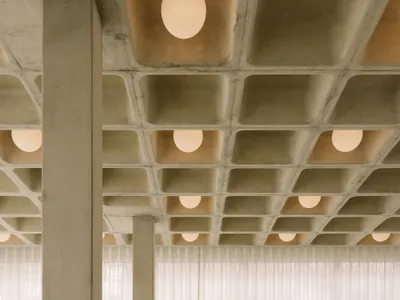
RHO Converts a Berlin Spree-Side Industrial Courtyard into Enkime's 1,000 m² Agency Headquarters
A social media agency's new home in Charlottenburg trades glossy branding for concrete waffle ceilings, glazed tile, and sheer curtains.

Explore Green Oasis Competitions
Discover active competitions in this discipline

Challenge to reimagine the Iron Throne

Photograph architecture without architects

Illustrate the lost glory of Angkor Wat - Render Challenge

Design challenge to reuse E-waste
Comments (0)
Please login or sign up to add comments
No comments yet. Be the first to comment!