

PULO Market by A9A Architects: A Community-Centric Urban Marketplace in Zhengzhou
Community-focused modular market blending timber architecture, mixed-use spaces, and landscape integration, fostering social interaction and vibrant urban lifestyle experiences.


Located in Zhengzhou, China, PULO Market by A9A Architects is a contemporary interpretation of the traditional marketplace, designed to foster community interaction, urban vitality, and social engagement. Spanning approximately 4,200 square meters and completed in 2022, this project responds to the evolving needs of modern urban living by integrating commerce, leisure, and social spaces into a cohesive architectural environment.
The project reflects a growing trend in community-driven architecture, where markets are no longer just transactional spaces but vibrant social hubs that encourage human connection, cultural exchange, and everyday experiences.
Architectural Concept: A Modular Urban Block System
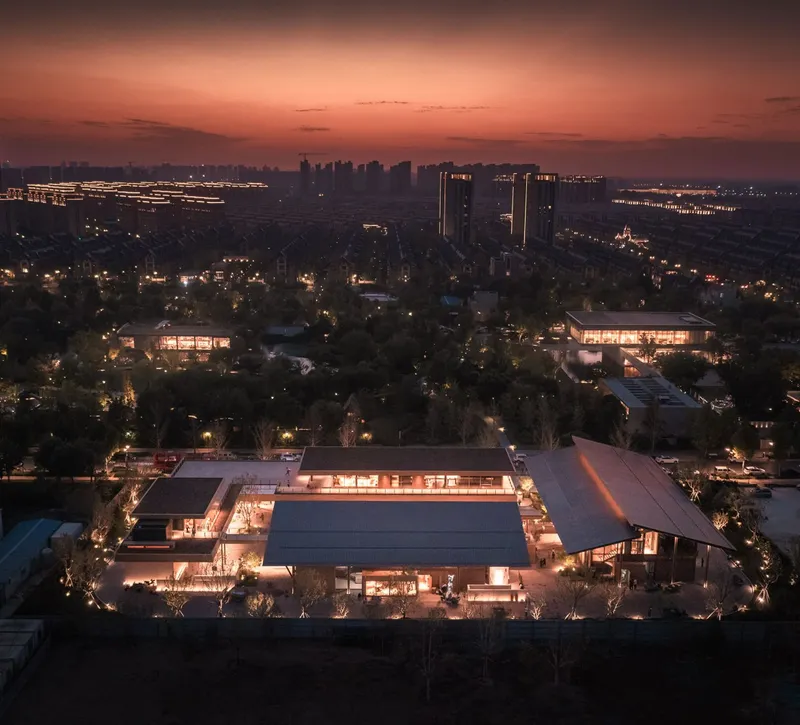
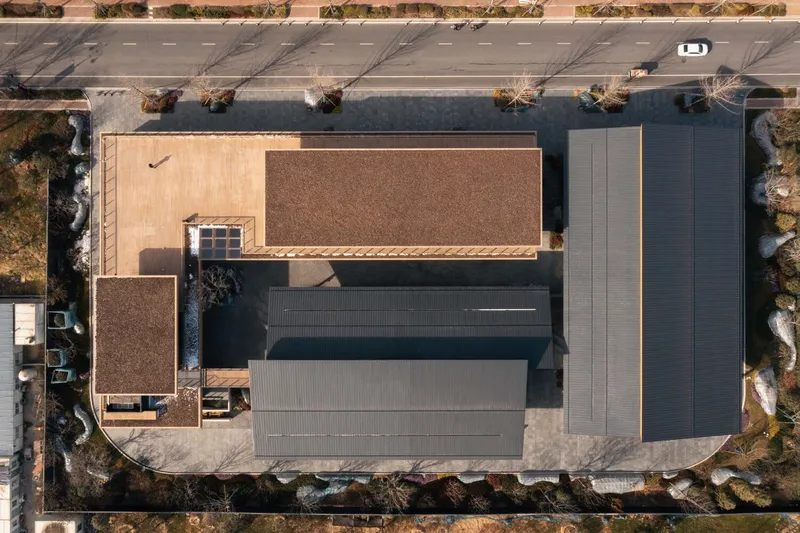
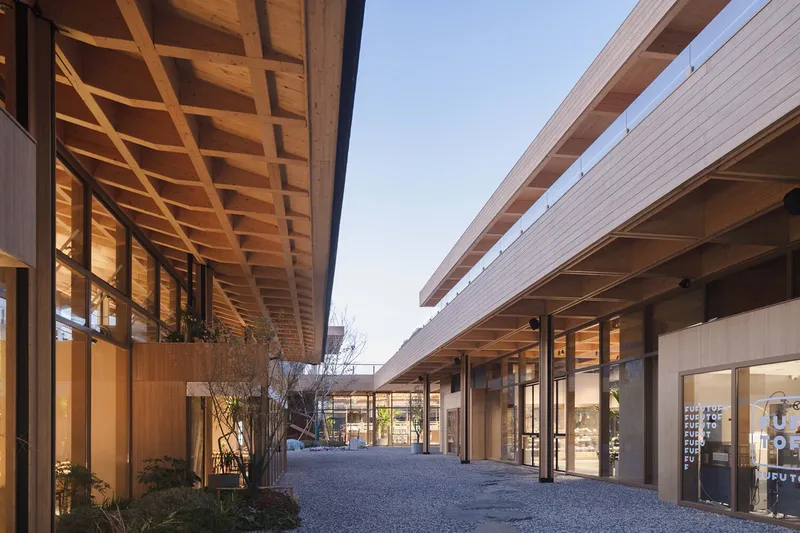
The architectural strategy of PULO Market is rooted in the idea of fragmented volumes forming an interconnected urban fabric. The design consists of three relatively independent blocks, carefully arranged to create an intimate inner street that enhances pedestrian movement and interaction.
This segmented block planning establishes a human-scale environment, reconnecting residential areas with adjacent parkland while forming a central circulation spine. The internal street becomes the heart of the project, acting as both a functional pathway and a social corridor, encouraging spontaneous encounters and community engagement.
Inspired by the prototype of the “box,” the architects developed a modular and flexible spatial system. This allows for adaptability in commercial functions, enabling spaces to evolve based on changing business needs while maintaining a unified architectural language.
Mixed-Use Functionality: Beyond a Traditional Market
PULO Market transcends the conventional notion of a fresh produce market by integrating a wide range of mixed-use programs. Alongside vendors offering vegetables, fruits, and aquatic products, the development includes cafes, restaurants, snack bars, and retail spaces.
This diversity supports a multi-layered urban lifestyle, accommodating daily shopping, social gatherings, dining experiences, and informal business interactions. The design successfully recreates the nostalgic vibrancy of traditional marketplaces, while aligning with contemporary expectations for comfort and convenience.
Material Strategy: Timber and Steel for Warmth and Modernity
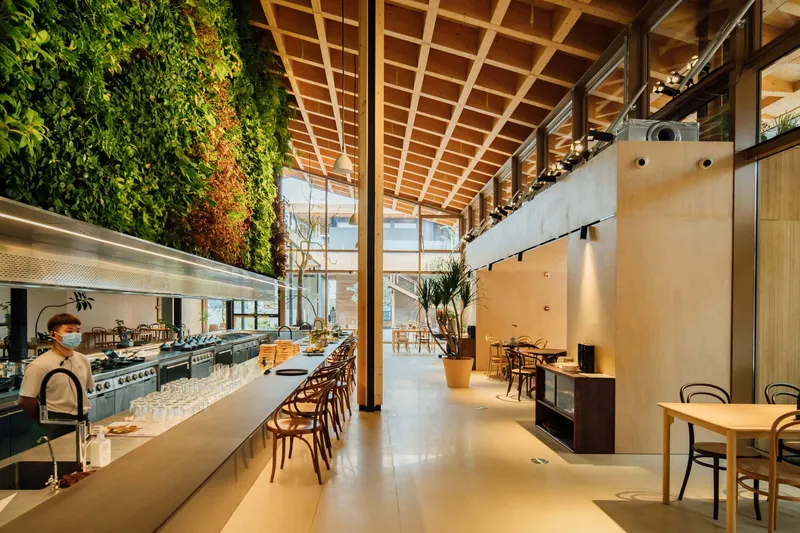
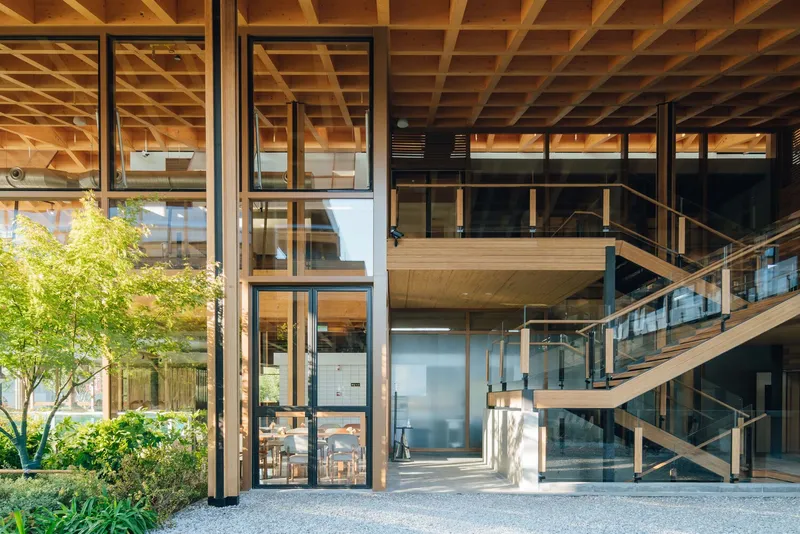
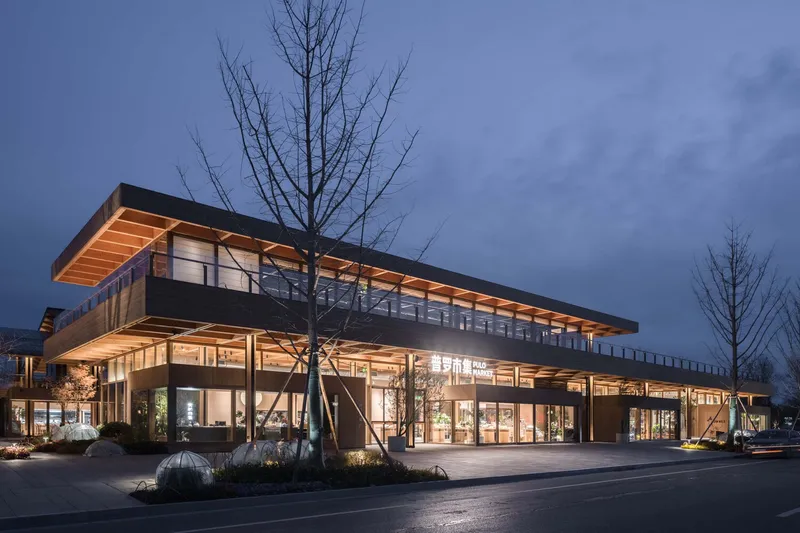
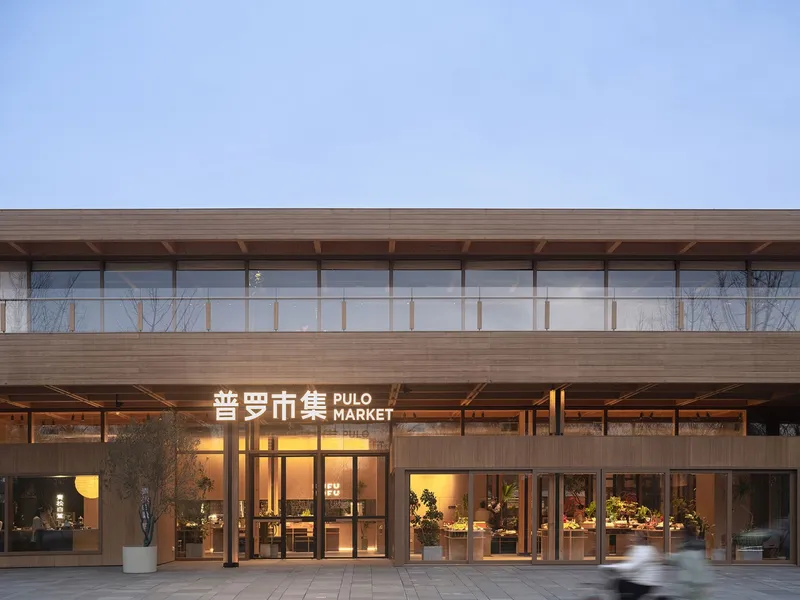
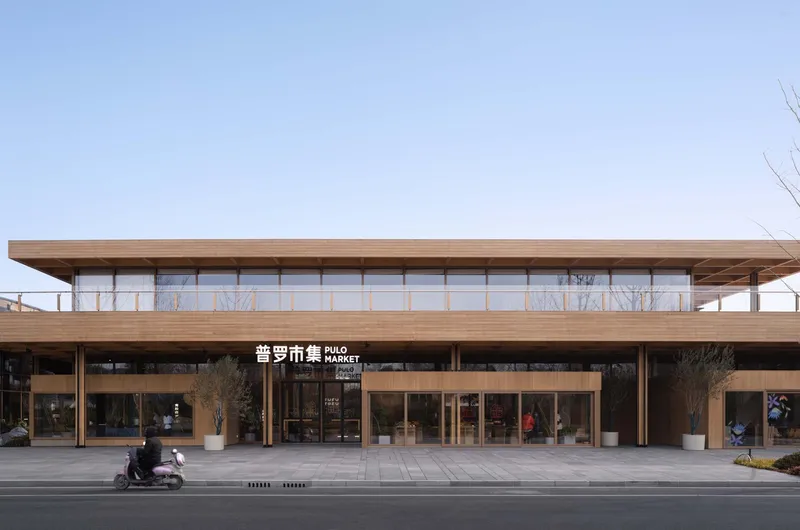
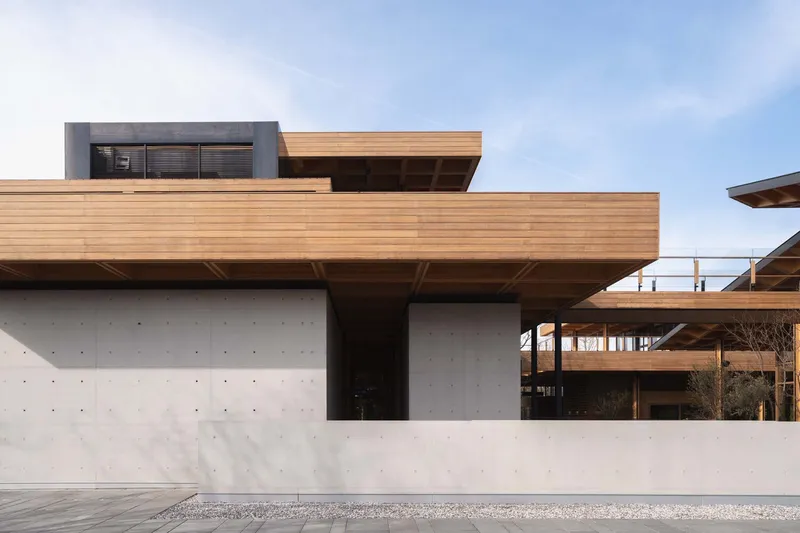
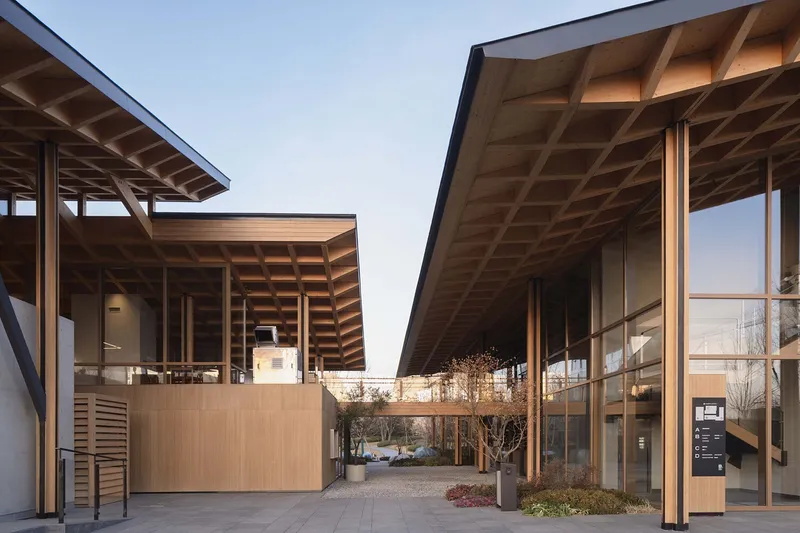
A defining feature of the project is its material palette, which combines natural spruce wood with black steel structural elements. The extensive use of timber introduces warmth and tactility, counteracting the often cold and impersonal nature of urban environments.
The hybrid timber-steel construction system offers both structural efficiency and aesthetic expression. Lightweight yet strong, this system enables flexible spatial configurations and rapid construction. Exposed wooden beams, purlins, and rafters highlight the structural honesty of the design, celebrating craftsmanship and material authenticity.
Additionally, the use of reusable and sustainable wood materials reinforces the project’s commitment to environmentally conscious architecture, aligning with global trends in sustainable and circular construction practices.
Spatial Experience: Dynamic Forms and Visual Connectivity
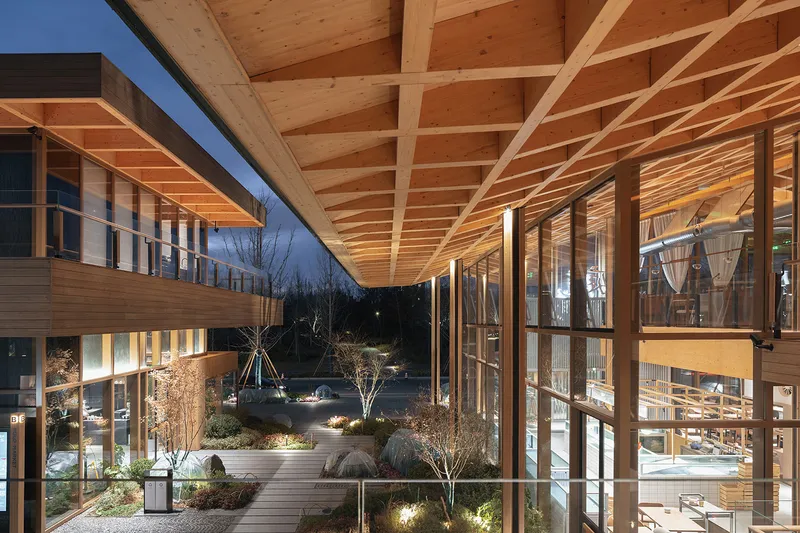
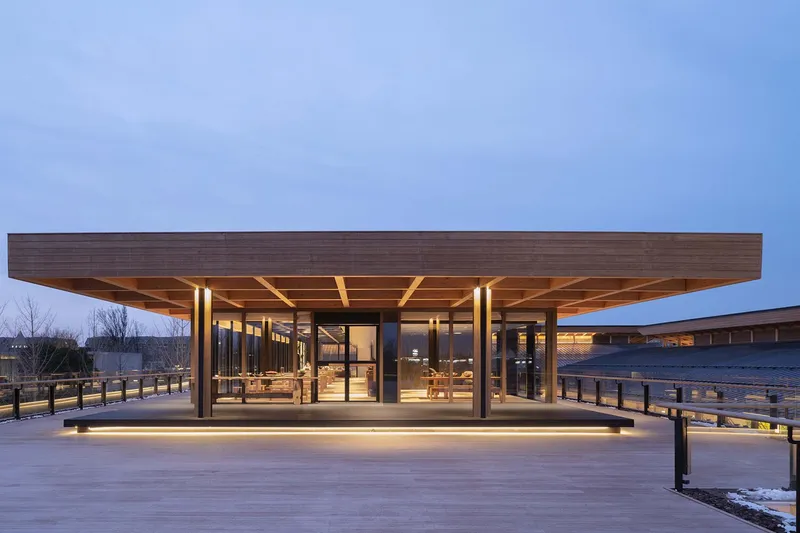
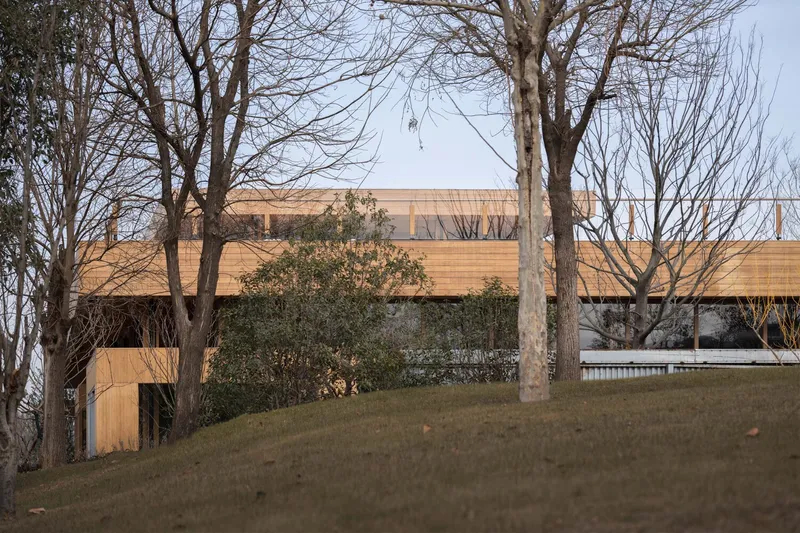
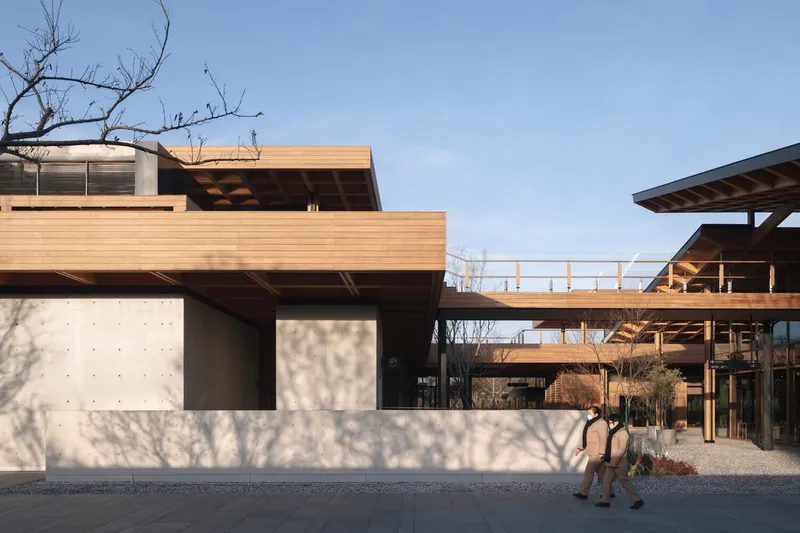
The architectural form of PULO Market is characterized by a combination of sloping and flat roofs, terraces, and partial double-height volumes. These elements create a dynamic skyline and enhance visual connectivity across the site.
Accessible terraces and varied rooflines generate layered spatial experiences, encouraging users to explore different vantage points. The interplay of heights and volumes results in a fluid architectural composition, where interior and exterior spaces seamlessly merge.
Landscape Design: Integrating Nature into Urban Life
The landscape strategy plays a crucial role in dissolving the building mass into its surroundings. By incorporating ginkgo trees and street-level planting, the design establishes a strong visual and ecological connection with the adjacent park.
The differentiation between inner and outer streets is achieved through varied paving materials. The inner streets utilize gravel surfaces, promoting slower movement and enhancing permeability, while the outer streets adopt more structured paving for functional circulation.
This approach reflects principles of rainwater management and ecological design, with permeable materials supporting natural drainage and contributing to a sustainable urban ecosystem.
Strategic planting and “borrowed scenery” techniques extend visual boundaries beyond the site, making the limited space feel expansive and connected to the larger landscape context.
Interior Design: Transparency and Fluid Circulation
The interior spaces of PULO Market emphasize openness, transparency, and visual continuity. Large expanses of glass allow natural light to penetrate deep into the building, creating a bright and inviting atmosphere.
Circulation paths are carefully designed to guide visitors through diverse commercial zones, enhancing the experiential quality of movement. The exposed timber structure continues indoors, reinforcing the architectural identity and providing a cohesive spatial narrative.
Lighting design adopts a subtle and restrained approach, focusing on natural shadows and ambient illumination rather than excessive artificial lighting, thereby enhancing the sensory experience of the space.
Community Lifestyle: Reviving Social Interaction
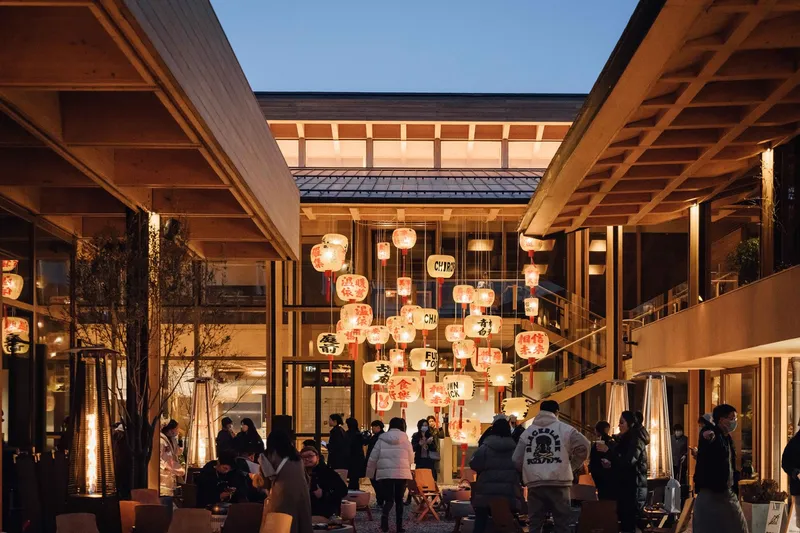
At its core, PULO Market is a celebration of community life and shared experiences. The project reintroduces the warmth of neighborhood interactions, often lost in contemporary urban settings.
Festive elements such as lanterns, seasonal decorations, and public events transform the market into a lively cultural destination. It becomes a place where children, युवाओं, and families come together, fostering a sense of belonging and collective memory.
By blending commerce with culture, the market supports a holistic lifestyle, where everyday activities are enriched by social connection, creativity, and local identity.
Conclusion: A Model for Future Community Markets
PULO Market by A9A Architects stands as a compelling example of innovative market architecture, demonstrating how design can shape social behavior and enhance urban living. Through its modular planning, sustainable materials, and community-focused approach, the project redefines the role of marketplaces in contemporary cities.
It is not merely a place to shop but a dynamic social infrastructure, offering a vision of urban life that is interactive, inclusive, and deeply human-centered.
All photographs are works of
THE IDEAL LAND, Arch-Exist Photography


Popular Articles
Popular articles from the community


Manzana Morphosis: Stretching Barcelona's Grid into a Living Landscape for 2050
A radical reworking of the Eixample manzana turns density into a tool for generous public space, vertical ecology, and environmental performance.

The Amber Palace Opera: A Geological Fiction Surfaces on Tallinn's Baltic Waterfront
Pierre Brillard reimagines a Baltic legend as a public landscape, opera house, and waterfront promenade rooted in Tallinn's coastal identity.

Opera on the Sea: Driftwood Logic Shapes a Timber Opera House on Estonia's Coast
Trevor Orgill's opera house translates the entangled drift of floating timber into a civic building where wood, water, and music converge.
Faces of the Soviet Avant-Garde: Turning Moscow's Street Names into an Open-Air Museum
A network of sculptural installations across a Moscow residential district transforms forgotten architect names into spatial encounters with cultural memor

Similar Reads
You might also enjoy these articles

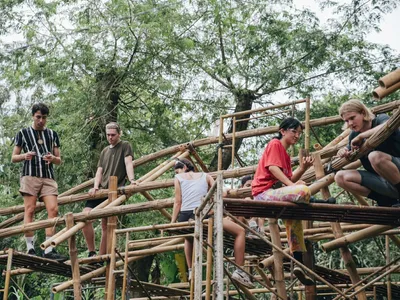
Bamboo Housing Challenge 2026: Design Affordable, Sustainable Homes Using Bamboo
An international design competition by Bamboo U and IBUKU inviting architects and designers to reimagine affordable housing using bamboo — with the winning design built full-scale in Bali.
Computational Design & Education: Beegraphy Design Awards Introduces 7th Category (Featuring Jiyun's Innovative Approach)
Dive into Beegraphy’s 7th Design Awards category, where computational design meets education to create immersive, interactive learning tools, inspired by Jiyun’s work.
From Parametric Lighting to Urban Furniture: Join the 2nd Workshop in Beegraphy’s Computational Design Series
Dive into Cutting-Edge Design Techniques and Practical Applications with Industry Experts

Last Call: Unleash Your Architectural Genius in SHAK's Kindergarten Design Competition
Urgent call for architects to join SHAK's kindergarten design competition before the looming deadline

Explore Community-Driven Architecture Competitions
Discover active competitions in this discipline

Challenge to reimagine the Iron Throne

Photograph architecture without architects

Illustrate the lost glory of Angkor Wat - Render Challenge

Design challenge to reuse E-waste
Comments (0)
Please login or sign up to add comments
No comments yet. Be the first to comment!