
Rottenrow fashion hub
garment recycling pavilion

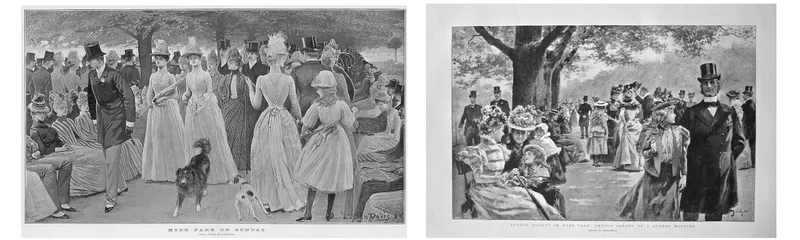
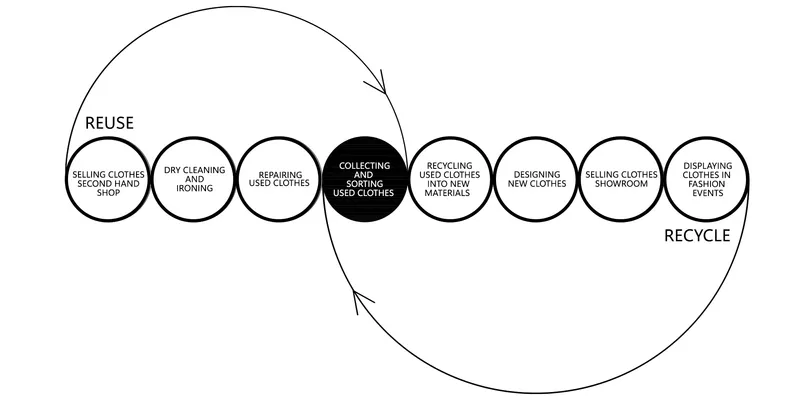
Hyde Park was, throughout the 19th and 20th centuries, the place where the fashionable hour was held, a space where people gathered to see and be seen in their carefully chosen attire. Every day from 17h to 19h, and on Sundays during the church parade, Rotten Row was filled with beautiful dresses, suits, hats, and umbrellas. It was a place to witness the latest fashion trends. The idea is for this tradition, spanning over 200 years, to continue in a pavilion dedicated to fashion in contemporary society. The pavilion represents a continuation of a decades-long fashion tradition, but in line with the modern global issues primarily caused by fast fashion. The goal is to showcase alternative approaches and practices in fashion that not only contribute to reducing the global issue of textile waste but also nurture the quality and uniqueness of fashion pieces. The pavilion's content encompasses the entire life cycle of fashion, starting from collecting used clothing and promoting its reuse, through recycling that transforms old pieces into new materials. It extends to the creative process of crafting designs and educational programs. Everything concludes with the exhibition of clothing through showrooms and fashion shows, showcasing the full spectrum of sustainable practices. This pavilion represents the fashion vision of the future, as it is designed for young designers introducing innovative styles and ideas that will shape the future of fashion and it is a space where practices essential for the future are nurtured.
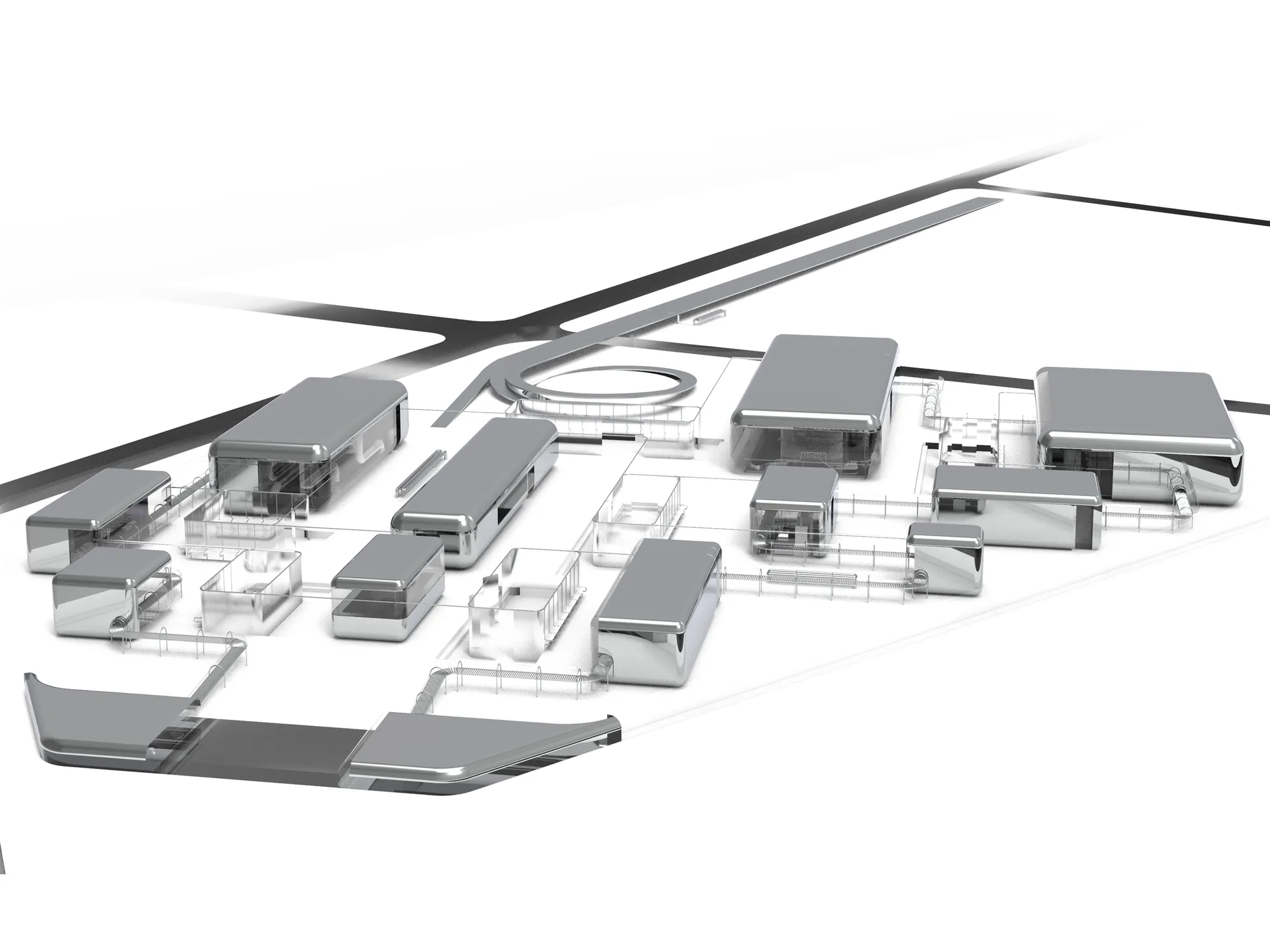
The pavilion is designed as a series of capsules, each dedicated to a key process in the fashion cycle, connected by a conveyor belt that transports products through each of these stages. This dynamic structure enables visitors to visually follow the entire journey of clothing. Between the capsules, exhibition spaces are organized, adaptable to various fashion practices and works of designers dedicated to sustainability. The glass wall surrounding the pavilion offers an interactive opportunity for visitors to contribute to sustainability by depositing their used clothing. Beyond its function as a clothing collection point, this wall serves as visitors first encounter with the pavilion, symbolically introducing them to the pavilion’s theme. The entrance to the pavilion is designed as a passage with a glass floor revealing a mound of collected clothing underneath. This introductory approach not only captures attention but also symbolizes a crucial aspect of sustainability – the concept of reuse, emphasizing the pavilion's commitment to eco-friendly practices. After entering, visitors are not constrained by a predetermined route: on the contrary, they freely choose their paths through the pavilion. Nevertheless, the conveyor belt indicates the chronological sequence of processes. The tour culminates at the fashion runway, which serves as both an event space and, on a daily basis, provides visitors with the sensation of being part of a fashion show. This innovative conclusion enriches the overall experience of sustainable fashion exploration and brings these sustainable fashion practices to a wide public due to its position in a park as popular as Hyde Park. The materialization of the pavilion is predominantly glass and metal. The architectural choice leans towards a somewhat sterile aesthetic, emphasizing the idea that the clothing circulating within the pavilion, as well as the attire worn by visitors, will inject vibrancy and colour into the space. This intentional sterility of the pavilion's materials acts as a canvas, allowing the fashion pieces, crafted from recycled materials, to stand out vividly, creating a dynamic contrast between the sleek, modern architecture and the lively, eco-conscious designs. The juxtaposition elevates the pavilion, transforming it into a vibrant display that seamlessly blends innovation, sustainability, and the storied history of fashion in Hyde Park. The pavilion is poised to host an array of diverse fashion shows, spotlighting garments fashioned by young designers from upcycled materials. Annually, a special event titled "Rotten Row Runway" will take place, dedicated to commemorating the fashion era of the original Fashionable Hour in Hyde Park. This themed runway not only pays homage to the historical tradition but also acts as an extra layer of reverence, inviting visitors to immerse themselves in the charm and nostalgia of those iconic fashion moments.


Popular Articles
Popular articles from the community


Lunar Spiral: Space Architecture Shaped by the Mathematics of the Universe
Lunar Spiral reimagines space architecture through Fibonacci geometry, lunar regolith, levitating habitats, and self-sustaining Moon living.

Hill & Cross Opera: Sculptural Opera House Architecture Shaped by Tallinn’s Landscape and Identity
Hill & Cross Opera reimagines opera house architecture in Tallinn through its sculptural hill, civic plaza, glass wave and a luminous cross.

Co-life: Sustainable Architecture for Age-Friendly Community Living
Co-life reimagines sustainable architecture for seniors through courtyards, rammed earth, shared gardens, and spaces designed for belonging.

The Musturak Paradise: Senior Living Architecture for a Connected Future in Temara, Morocco
The Musturak Paradise reimagines senior living architecture in Temara via private homes, social spaces, culture, community, and shared care.

Similar Reads
You might also enjoy these articles
Lunar Spiral: Space Architecture Shaped by the Mathematics of the Universe
Lunar Spiral reimagines space architecture through Fibonacci geometry, lunar regolith, levitating habitats, and self-sustaining Moon living.
The Main Dream: Modular Architecture for Play, Learning, and Community
A modular playground turns recycled plastic into adaptable spaces where refugee children can play, build, learn, and reconnect.

Play: Fragments of Their World
Familiar architecture becomes modular playground design, creating safe spaces where displaced children can learn, connect, imagine and play.

Wadi Rum Observatory: Desert Architecture Designed for the Night Sky
Wadi Rum Observatory turns desert architecture into a quiet instrument for astronomy, hiding research spaces under Jordan's starlit terrain.

Explore High Fashion Design Competitions
Discover active competitions in this discipline




Challenge to design locus for the upliftment of human rights


Challenge to reimagine the Iron Throne


Photograph architecture without architects


Illustrate the lost glory of Angkor Wat - Render Challenge
Comments (0)
Please login or sign up to add comments
No comments yet. Be the first to comment!