
Santa Maria Educational, Sports and Cultural Complex by Carolina Penna Arquitetos
Adaptive reuse of a 1968 school transforms heritage concrete into a transparent, sustainable educational, sports, and cultural hub fostering inclusive learning.

Architects: Carolina Penna Arquitetos
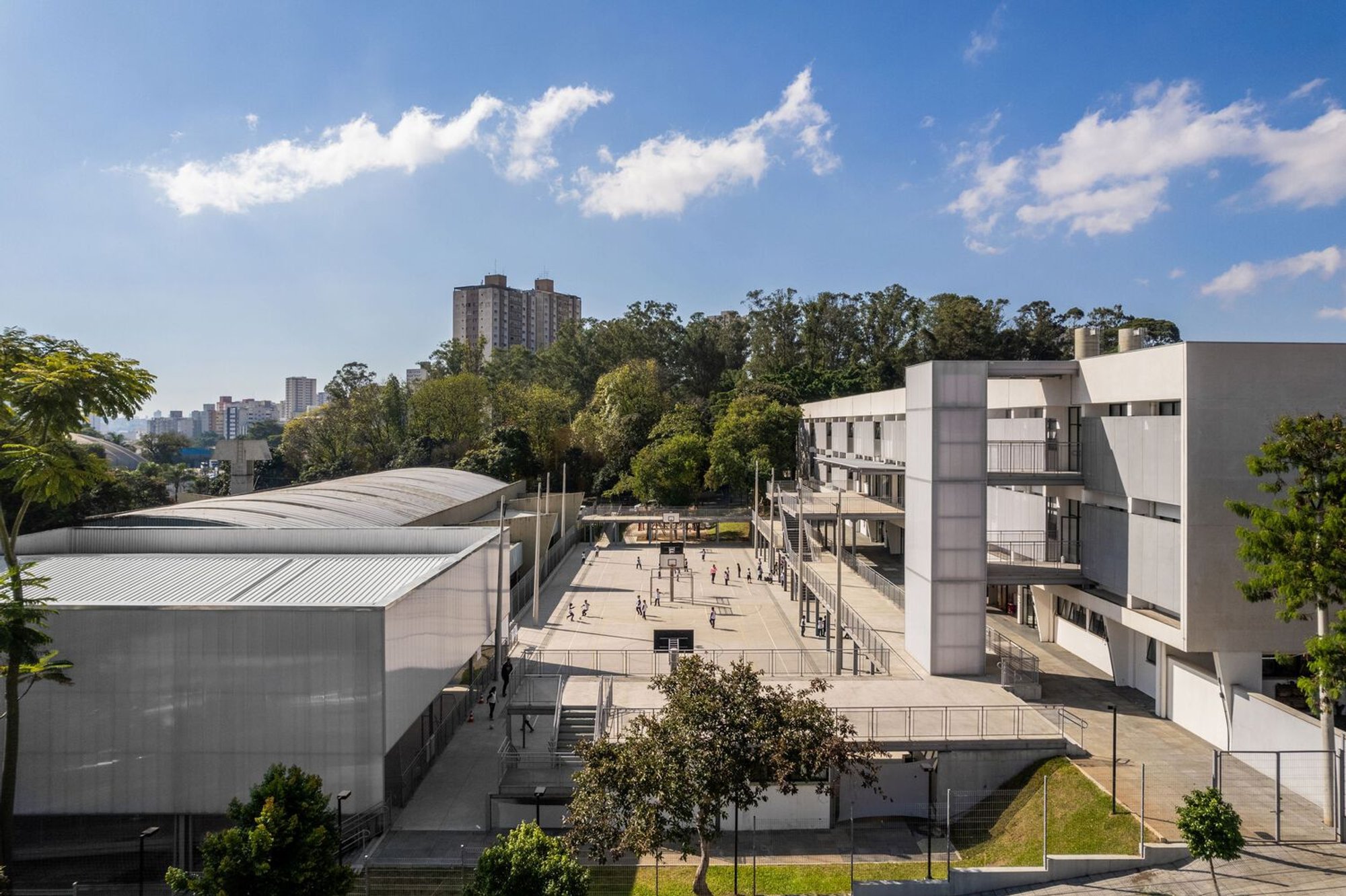
Located in São Caetano do Sul, the Santa Maria Educational, Sports and Cultural Complex is a profound architectural intervention that merges heritage preservation, educational innovation, and sustainable adaptive reuse. Completed in 2022, the project reimagines a historic 1968 structure originally built for the Ginásio Vocacional da Vila de Santa Maria, transforming it into a contemporary public complex for education, sports, and culture while preserving its symbolic and social significance.
Reconstructing Educational and Architectural Narratives
The original Ginásios Vocacionais were part of an ambitious and progressive public education initiative implemented in the State of São Paulo between 1961 and 1970. These schools promoted student-centered, interdisciplinary learning, encouraging critical thinking and engagement with real social contexts. Despite their pedagogical relevance, the program was discontinued during the early years of Brazil’s military dictatorship, leaving behind buildings that embodied both architectural and political memory.
The renovation and expansion of the Santa Maria complex recognizes that preserving architecture is also preserving ideas. Beyond material conservation, the project acts as a cultural and political statement, reaffirming the value of public education, collective memory, and inclusive urban infrastructure. From a sustainability perspective, the decision to retrofit rather than demolish significantly reduces construction waste, conserves resources, and maximizes the use of existing structural systems.
Architectural Strategy: Dialogue Between Past and Present
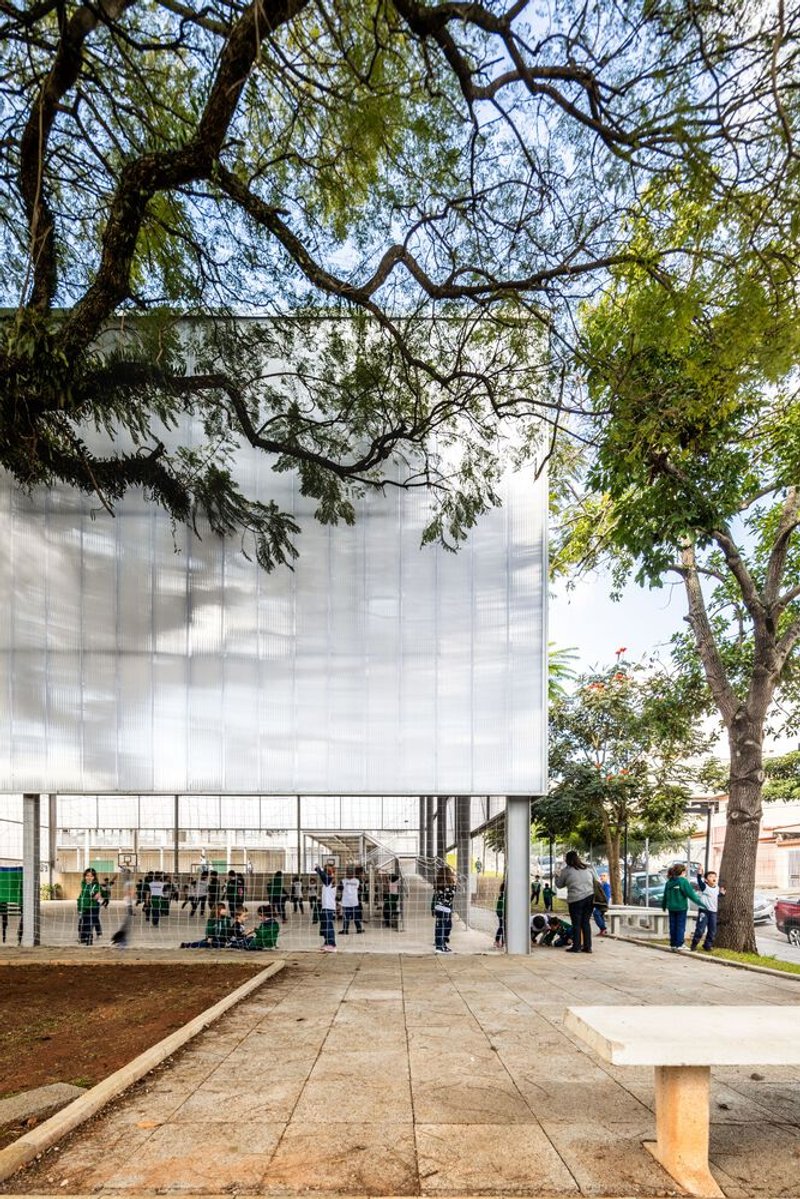
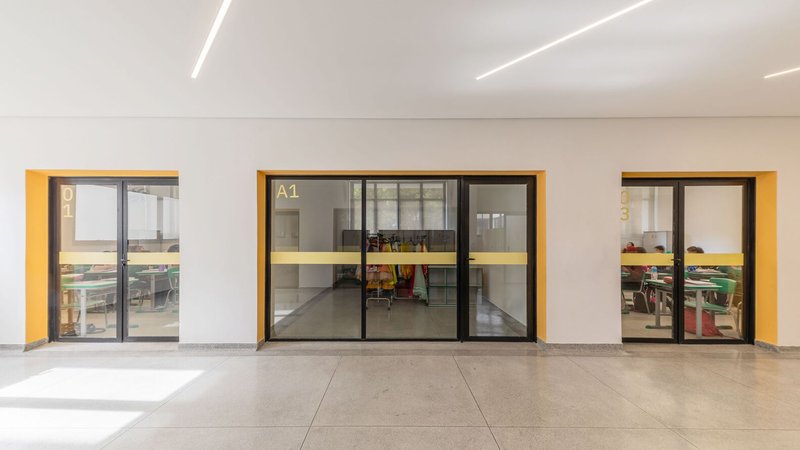
The core architectural concept was to honor the legacy of the original concrete structure while introducing new spatial, technological, and pedagogical requirements. This balance is achieved through a deliberate contrast in materiality. The original exposed concrete volumes remain solid and expressive, while contemporary additions are clearly distinguished through lightweight metal structures, polycarbonate panels, and expansive glass surfaces.
This architectural dialogue avoids mimicry and instead establishes a clear temporal reading, allowing users to understand what was preserved and what was transformed. Transparency becomes both a physical and symbolic device, reinforcing openness, accessibility, and collective use.
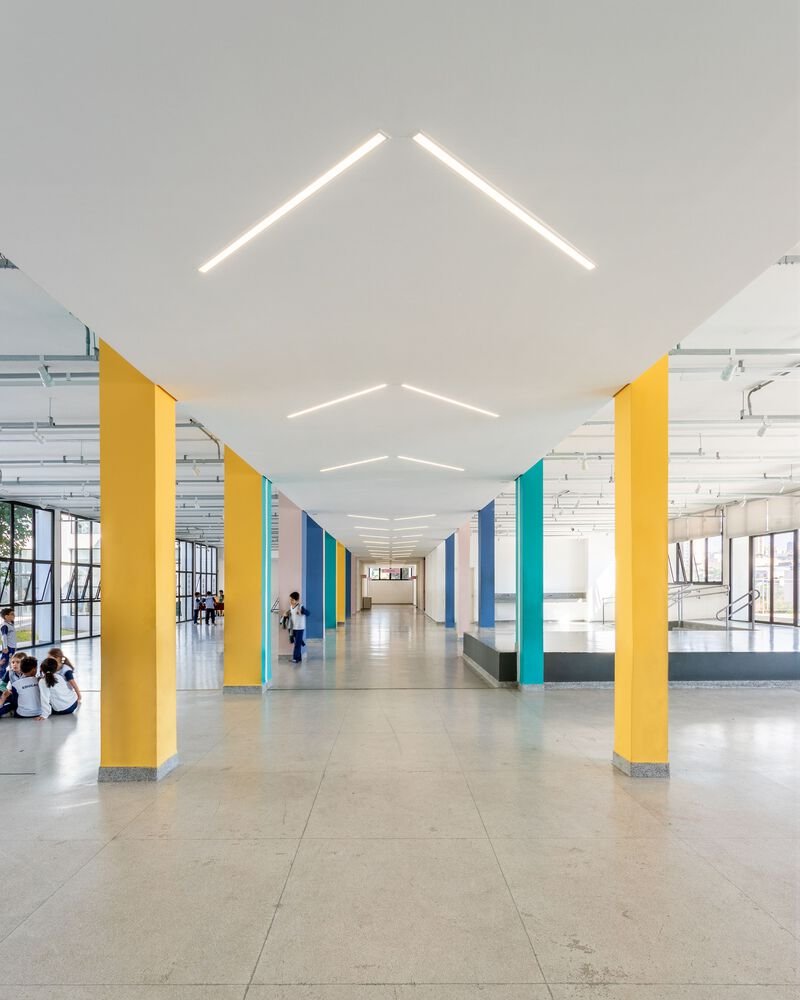
Programmatic Organization and Educational Integration
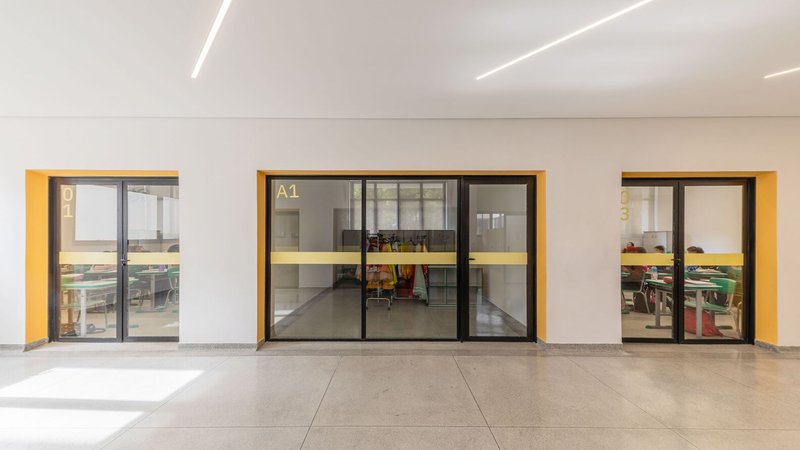
The complex houses two public schools—one dedicated to early childhood education and another to elementary education. Although administratively independent, the architectural layout encourages interaction and shared use of spaces, fostering socialization across age groups. This spatial integration supports the development of empathy, cooperation, creativity, and communication within an inclusive learning environment.
The building’s zoning was carefully reorganized to ensure autonomy without isolation. Shared facilities include sports courts, outdoor play areas, gardens, and cultural spaces, reinforcing the idea of the school as a community hub rather than a closed institution.
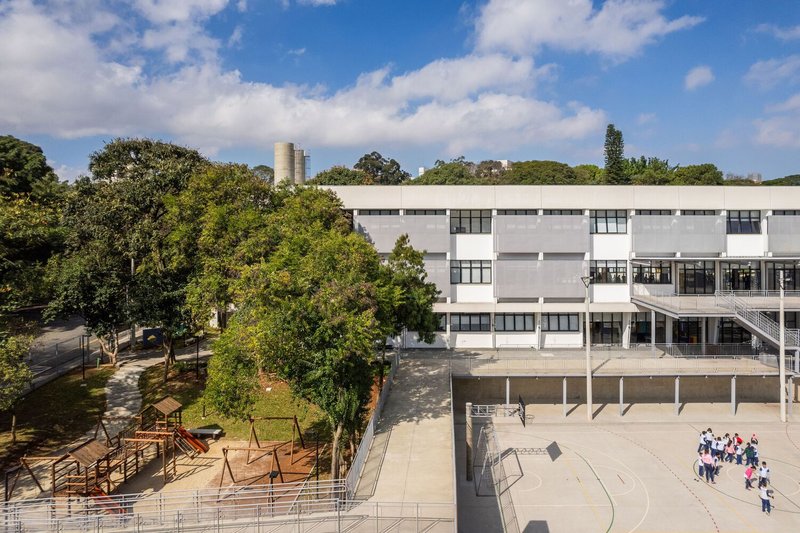
Spatial Distribution and Learning Environments
The architectural layout is structured vertically to respond to functional and pedagogical needs. The ground floor concentrates communal and collective spaces such as the central courtyard, auditorium, library, and dance and music studios, creating an active social core. The upper floor accommodates elementary education classrooms, multipurpose studios, coordination areas, and support spaces designed for flexible learning models. The lower floor is dedicated to early childhood education, offering direct access to green areas and outdoor play spaces that support sensory and experiential learning.
Externally, the landscape design complements the educational program with playgrounds, gardens, a vegetable patch, and three sports courts, one of which was transformed into a covered gymnasium, extending usability throughout the year.
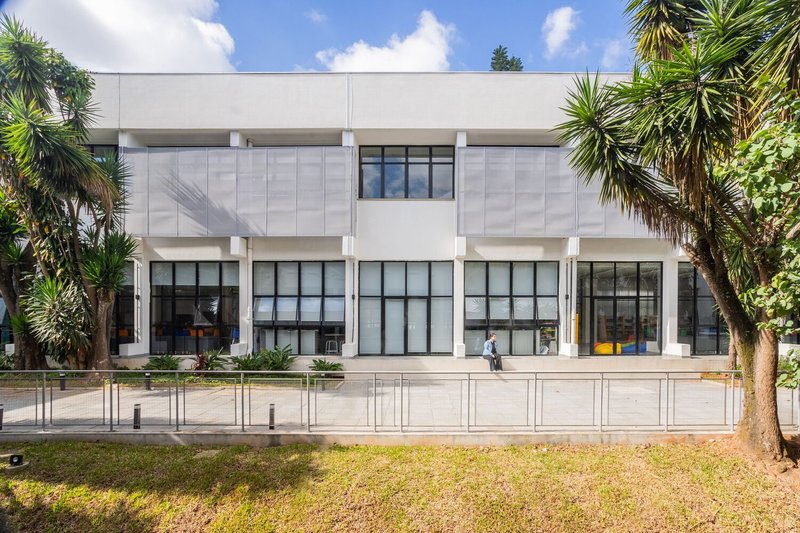
Light, Transparency, and Environmental Quality
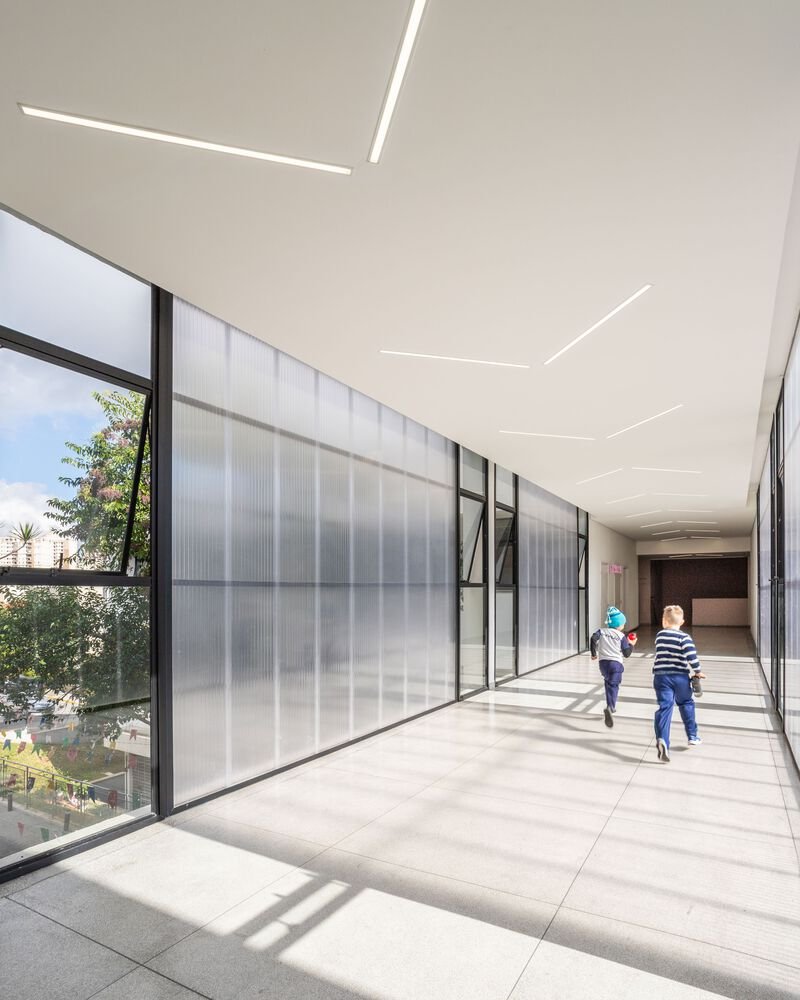
Natural light plays a fundamental role in shaping the interior atmosphere. Zenithal openings along circulation corridors, new floor-to-ceiling glass facades facing courtyards, and transparent walkways significantly improve daylight penetration and visual connectivity. These strategies reduce dependence on artificial lighting while enhancing spatial orientation and comfort.
The increased permeability between interior and exterior spaces reinforces the relationship between architecture, landscape, and daily educational activities, creating a healthy, stimulating, and sustainable learning environment.
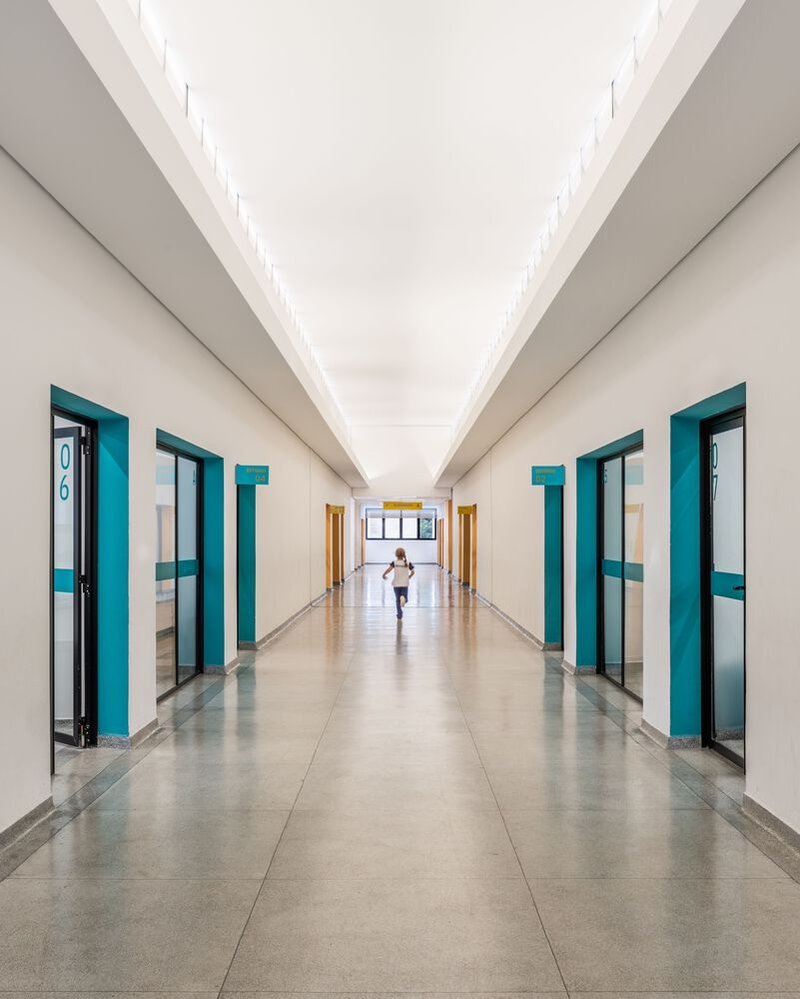
A Contemporary Educational Landmark
The Santa Maria Educational, Sports and Cultural Complex stands as a compelling example of adaptive reuse in educational architecture, demonstrating how historical structures can be reactivated to meet contemporary social demands. By integrating memory, sustainability, and innovative pedagogy, the project transforms a once-silenced legacy into an active civic and educational landmark for future generations.
All photographs are works of Guilherme Pucci



Popular Articles
Popular articles from the community


Solar Steam: A Climate-Responsive Architecture That Redefines the Monument
A climate-responsive memorial architecture that transforms heat, decay, and time into a living system reflecting humanity’s ecological impact.
Alton Cliff House: A Harmonious Retreat by f2a Architecture in Lake Country, Canada
Alton Cliff House blends corten steel, prefabrication, and sustainable design, creating a luxurious, energy-efficient retreat perched on Canadian cliffs.
Atelier Macri Concept Store Interior Design by CASE-REAL
Atelier Macri store features a "ko" counter, walnut wood details, cork displays, blending retail, gallery, and seamless customer experiences.


Similar Reads
You might also enjoy these articles

Free Architecture Competitions You Can Enter Right Now
No entry fees, real prizes. Here are the best free architecture competitions open for submissions in 2026.

Top 15 Architecture Competitions to Enter in 2026
From student-friendly idea competitions to prestigious international awards, here are the best architecture competitions open for entries in 2026. Updated regularly.

DIY & Engineering in Computational Design : Enter the BeeGraphy Design Awards
Showcase Your Creativity with Computational Design and Open Source Projects
Innovative Design Solutions: Award-Winning Projects from Recent Architecture Competitions
Exploring award-winning architectural projects shaping the future of design, sustainability, and community.


Explore Architecture Competitions
Discover active competitions in this discipline




The International Standard for Design Portfolios


The Global Benchmark for Architecture Dissertation Awards


The Global Benchmark for Graduation Excellence


Challenge to design public laboratory
Comments (0)
Please login or sign up to add comments
No comments yet. Be the first to comment!