
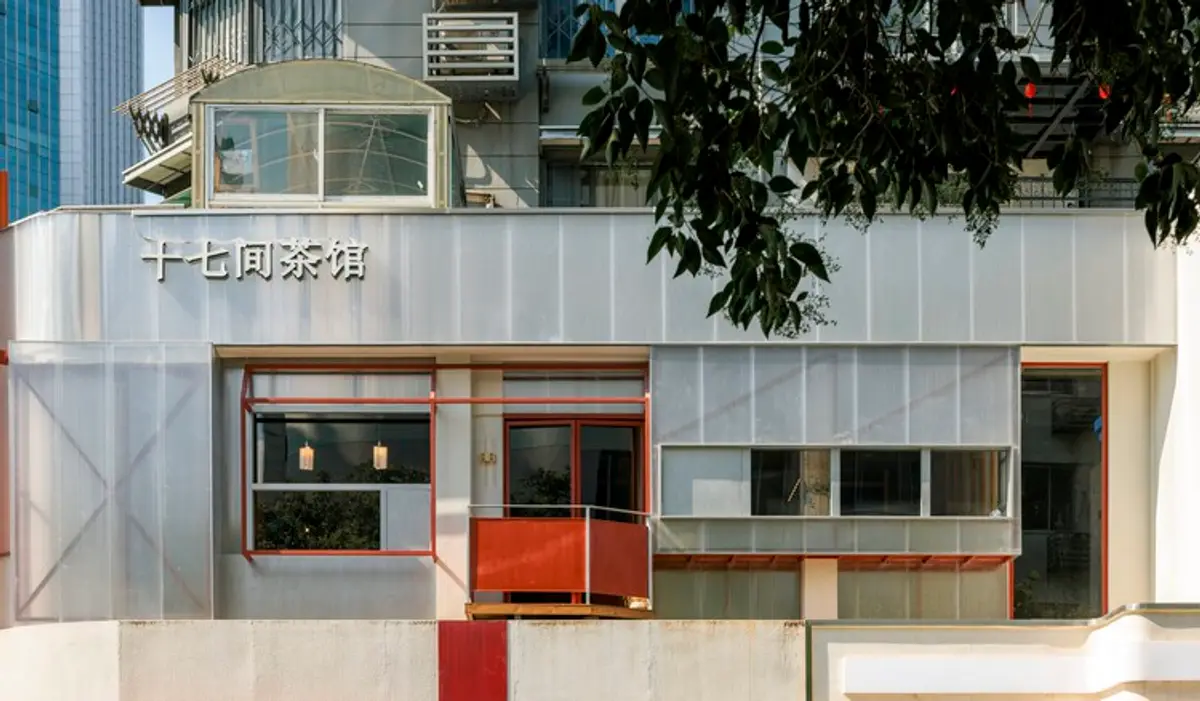
Seventeen TeaHouse: A Layered Urban Retreat Shaped by Light, Movement, and Fragmented Space
Layered teahouse with fragmented spaces, translucent façade, and soft light, creating a hidden urban retreat balancing privacy, movement, and social interaction.


Located on the second floor of a street corner in Nanjing’s Caozhi Alley, the Seventeen TeaHouse by Modum Atelier transforms a hidden and inward-facing site into a dynamic social environment. Positioned between the bustling Xinjiekou commercial district and a quieter residential neighborhood, the project responds to its paradoxical condition, present within the city yet visually concealed from it.
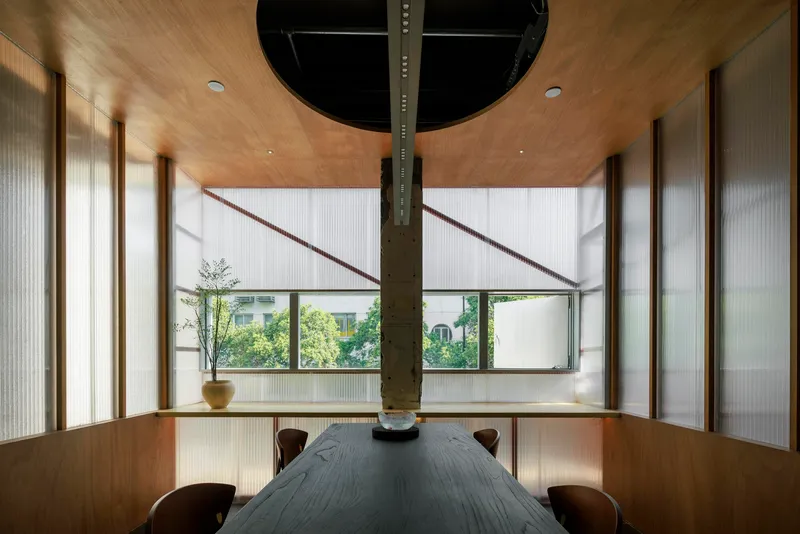
The design embraces this ambiguity by creating a space that balances privacy with openness. Rather than relying on direct visibility, the teahouse reveals itself gradually through atmosphere, movement, and light. It becomes an interior landscape that invites exploration, offering a contemporary interpretation of traditional tea culture as a social and spatial experience.
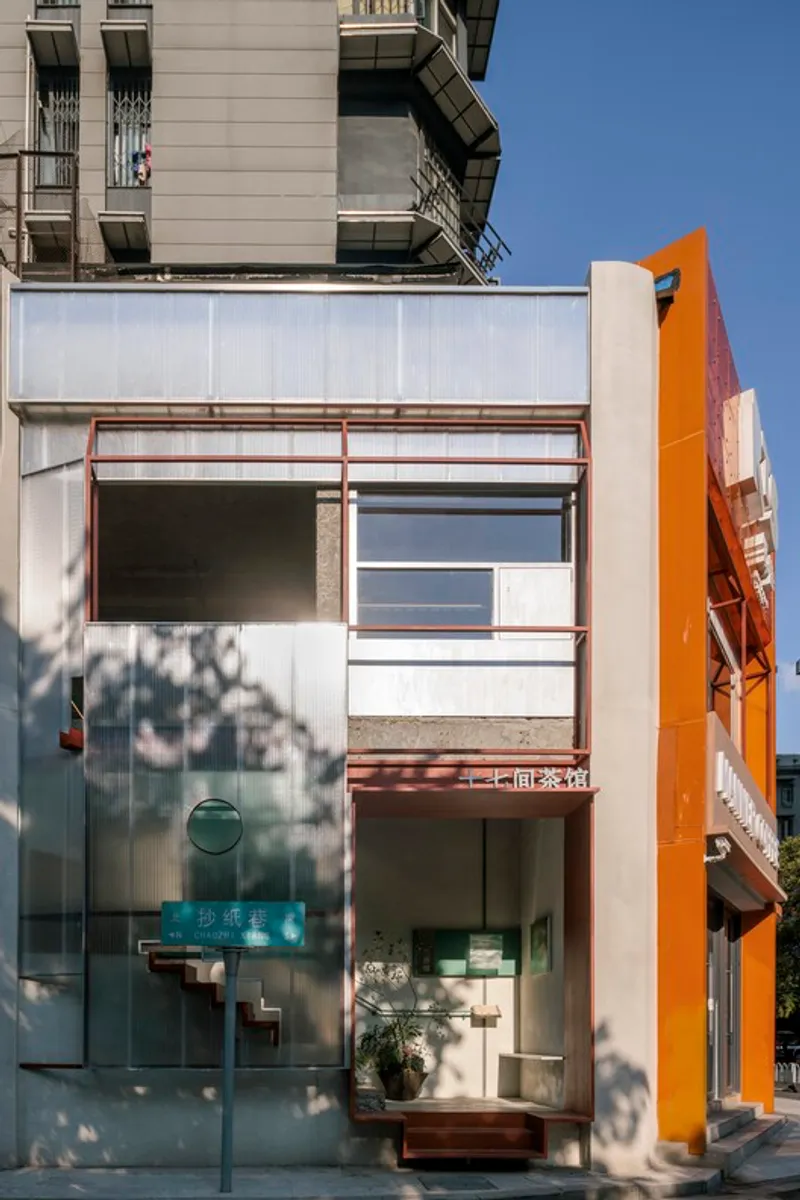
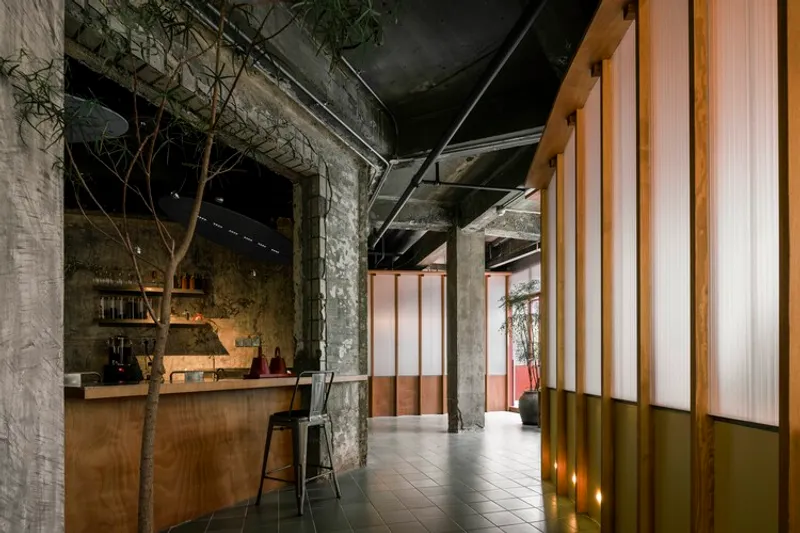
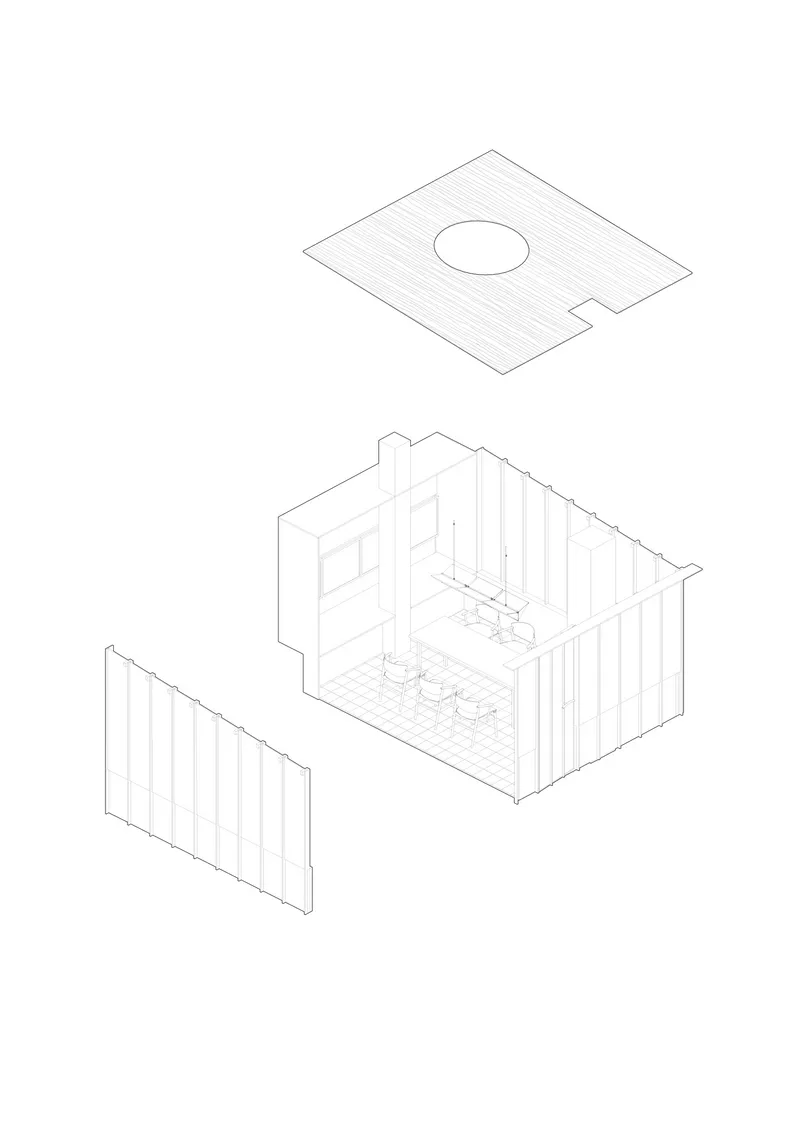
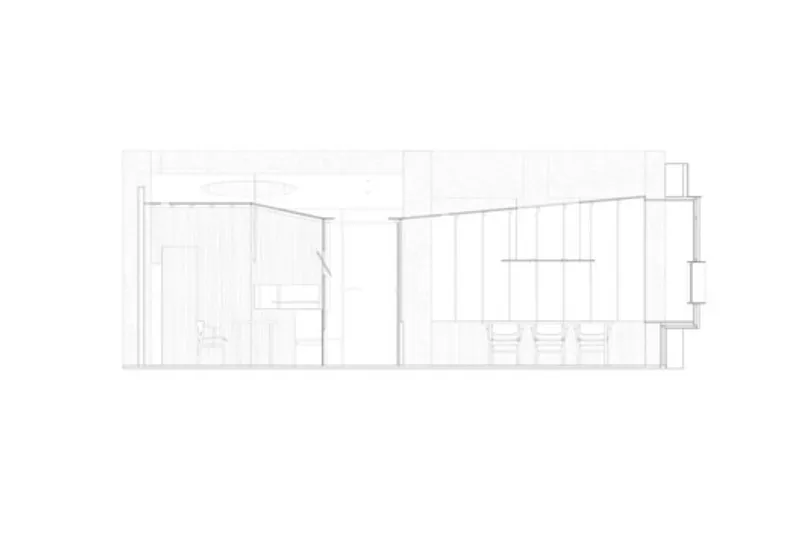
At the conceptual level, the project draws from deconstructivist strategies. The original enclosed volume is fragmented through a process of slicing, perforating, and reassembling. This approach generates a sequence of interconnected spaces, each with its own scale and character. Instead of a single unified room, the interior unfolds as a layered composition of zones that encourage movement and discovery.
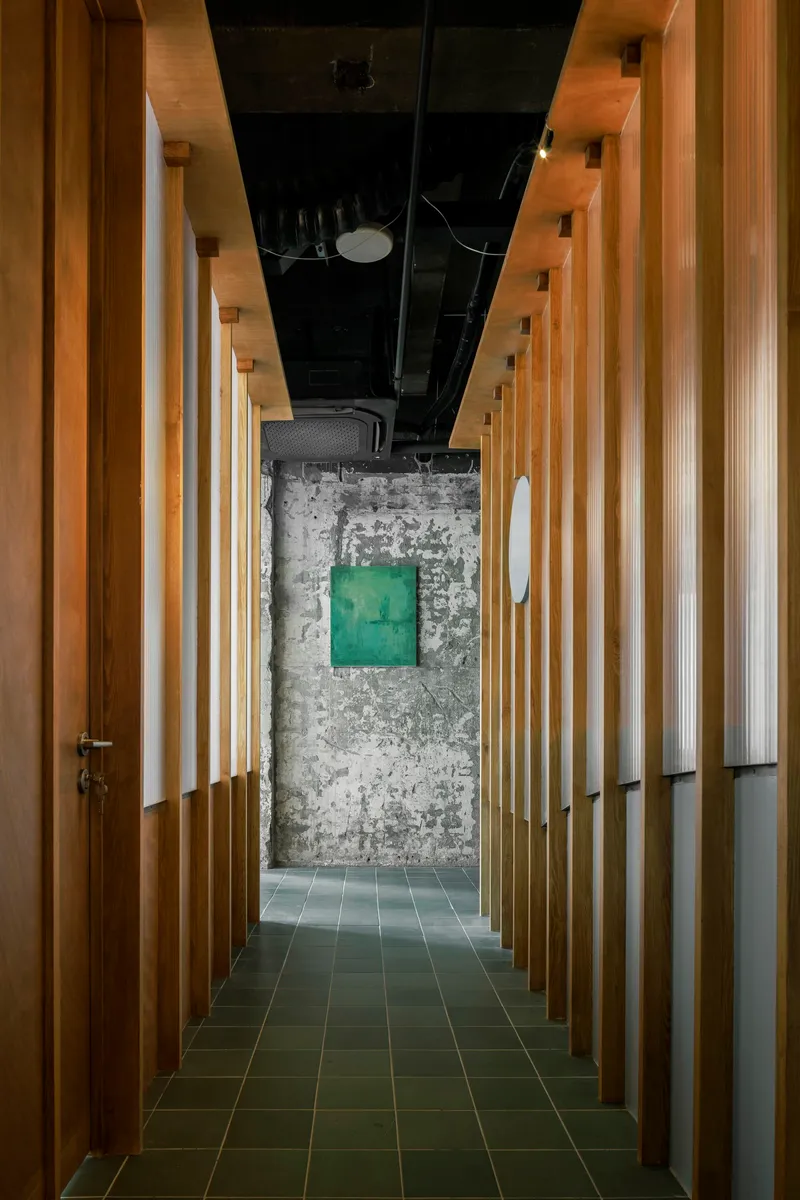
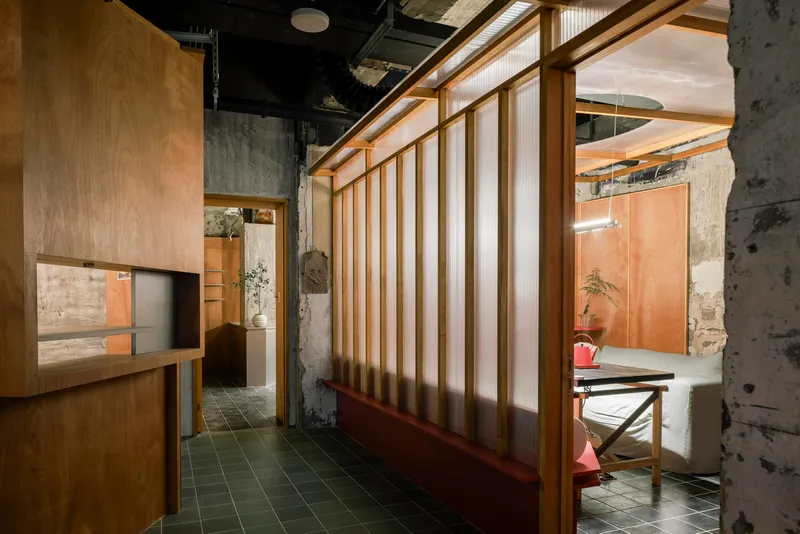
Circulation plays a central role in shaping the experience. Visitors enter through a narrow passage that gradually opens into a central “plaza”, an internal gathering space reminiscent of an urban square. From here, smaller rooms branch out like streets, creating a spatial narrative that mirrors the complexity of the surrounding city.
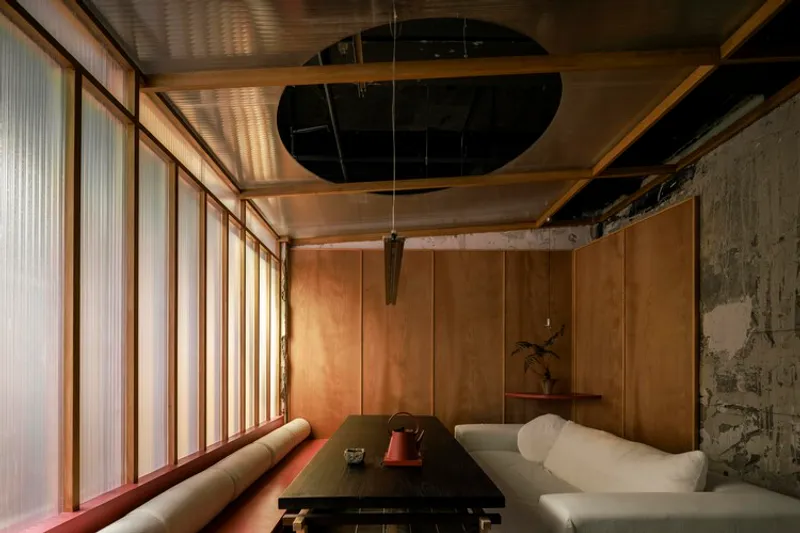
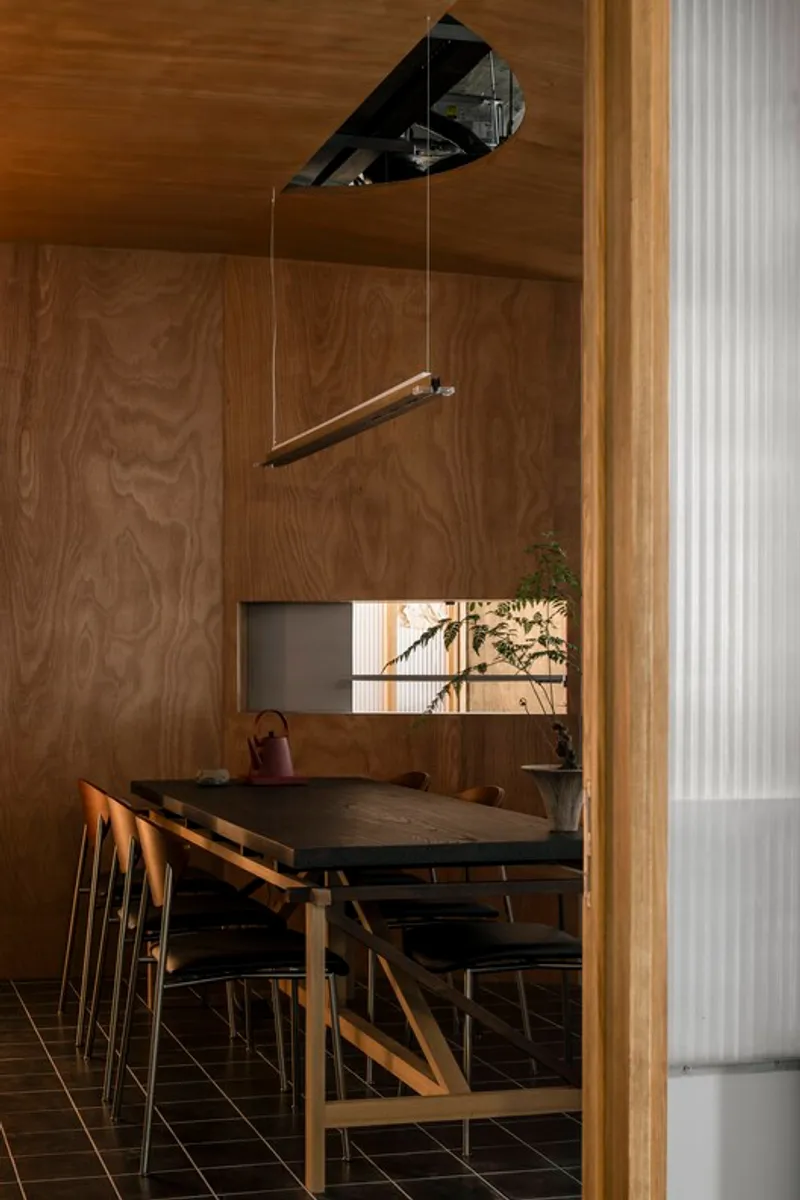
Private rooms are inserted using a nested system, allowing them to exist within the larger volume without completely isolating them. This arrangement maintains a sense of continuity while offering varying degrees of intimacy. The interplay between open and enclosed areas enables different modes of use, from quiet reflection to social interaction.
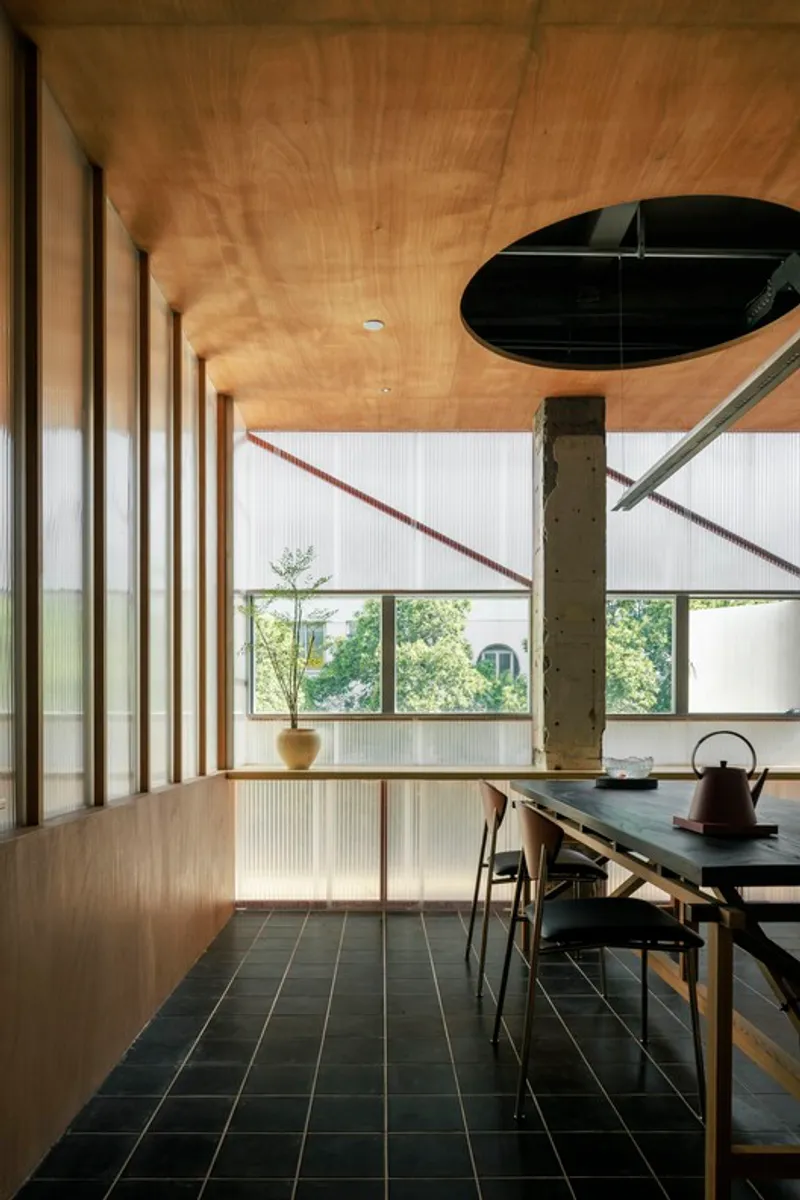
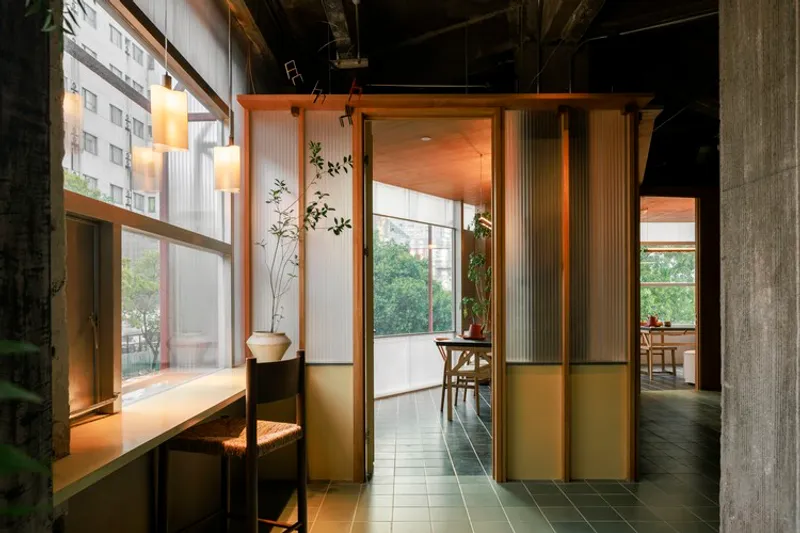
Geometric interventions further define the spatial experience. Circular openings in walls and ceilings soften transitions between spaces, while angular elements such as triangular door details introduce contrast and direction. These shapes guide sightlines and movement, creating a fluid environment where boundaries are suggested rather than fixed.
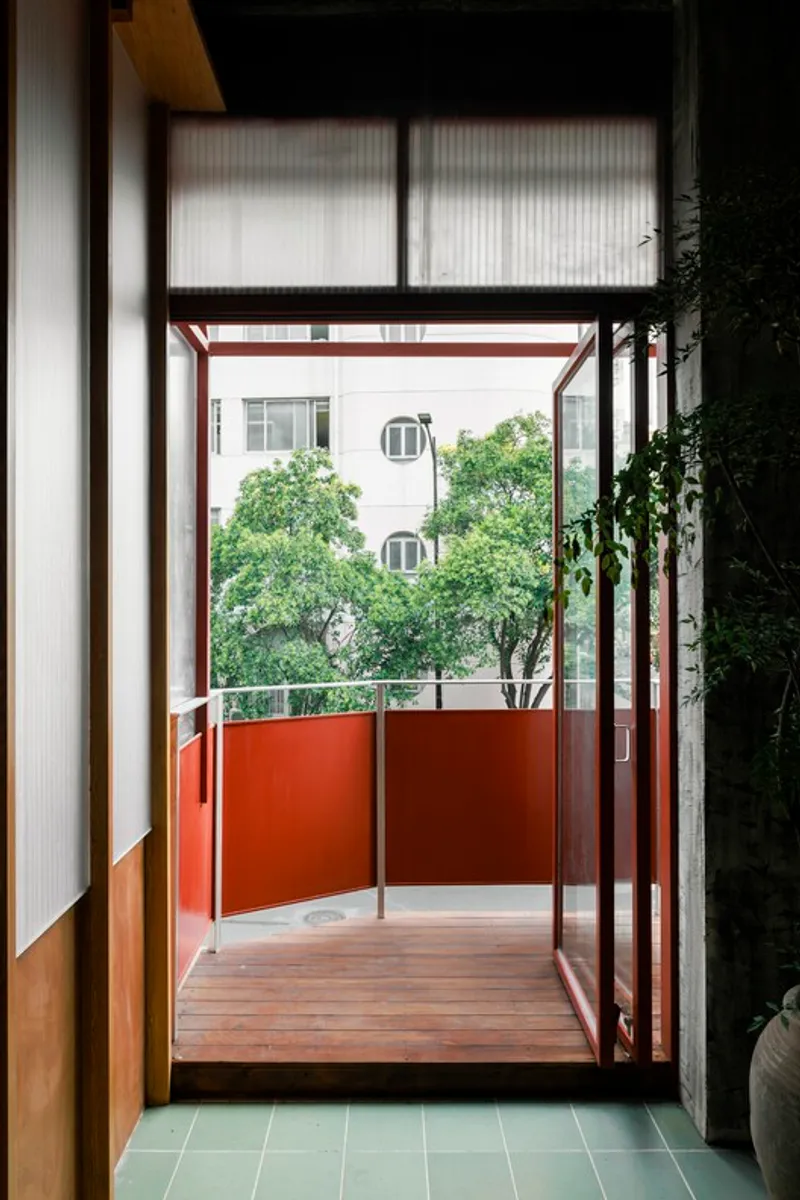
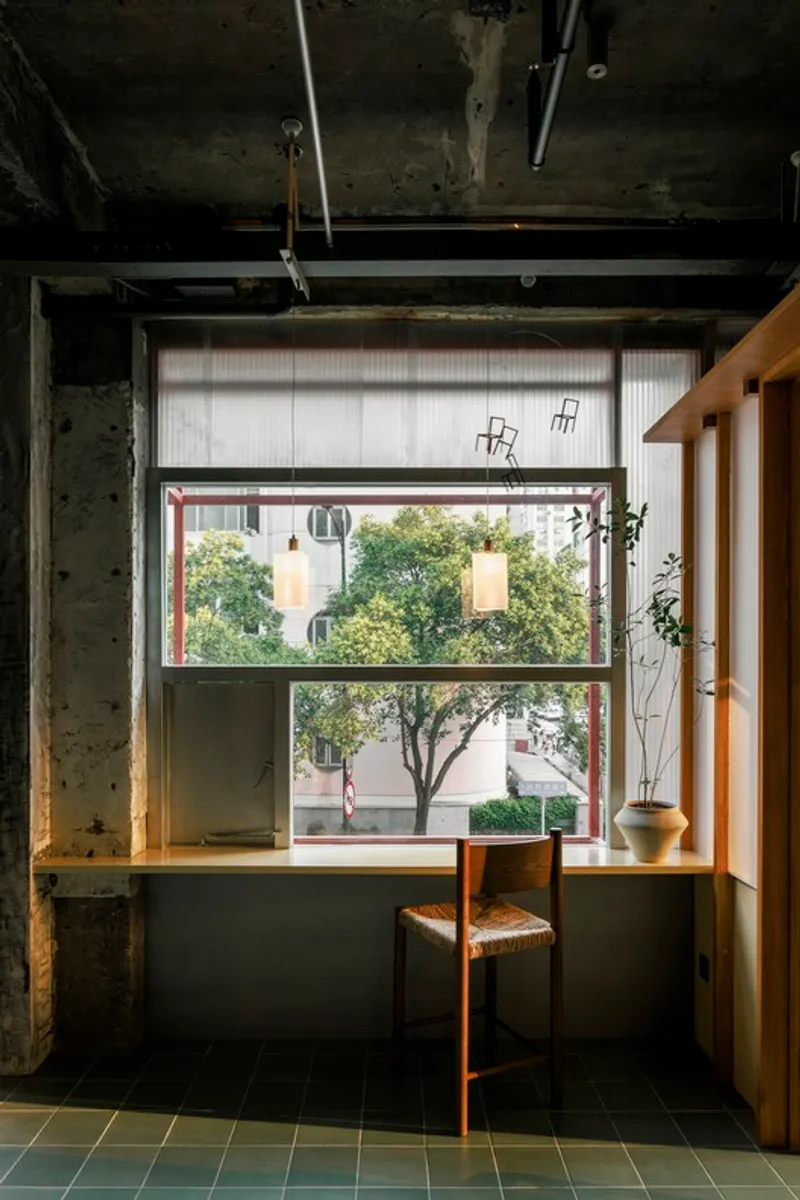
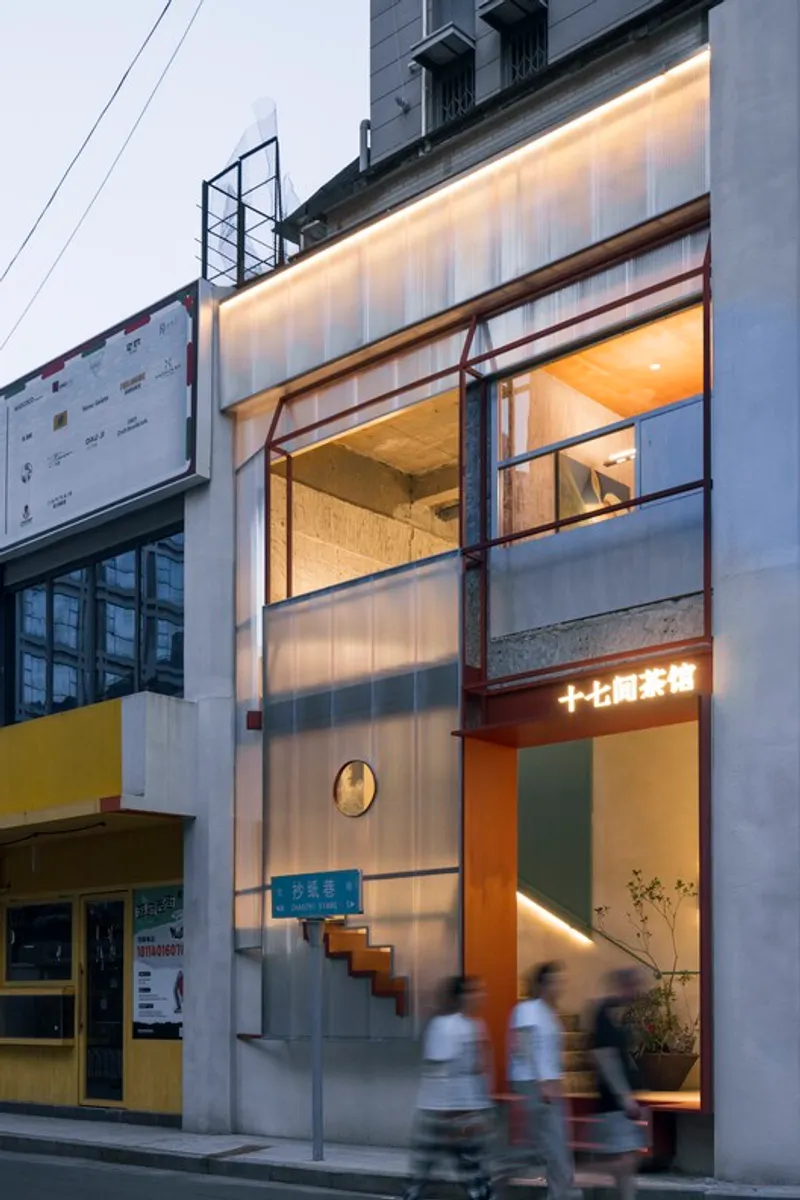
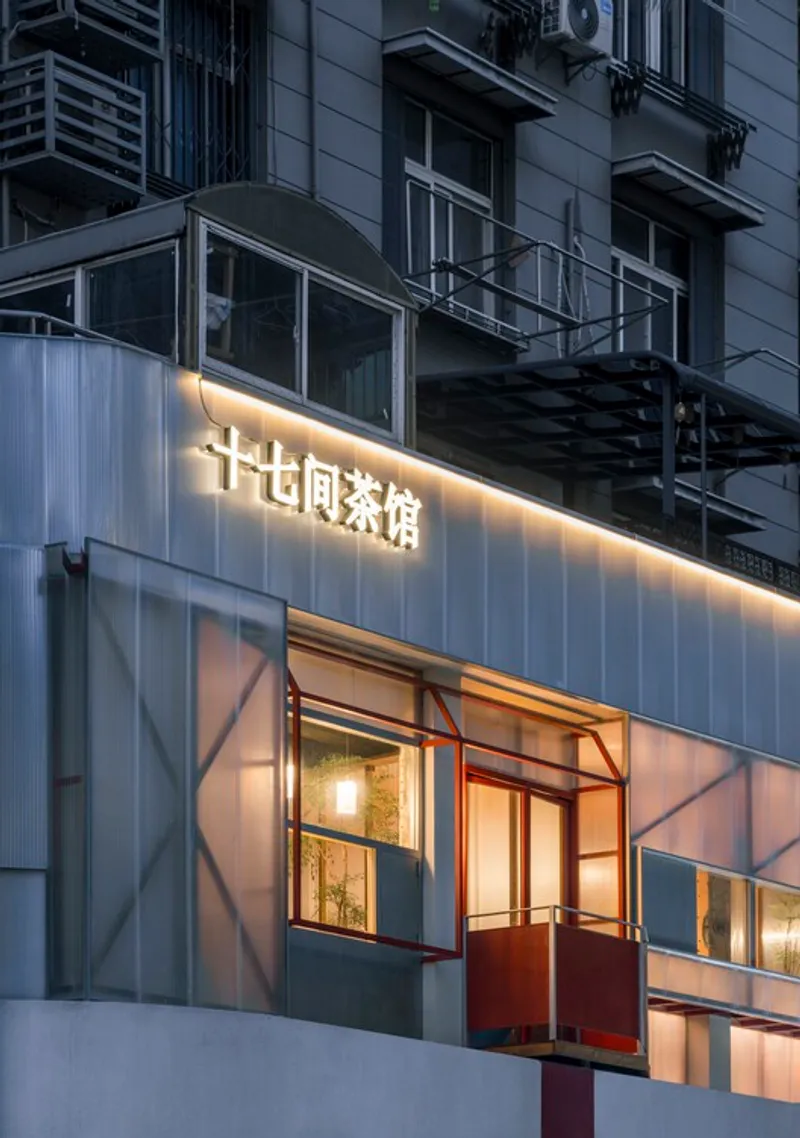
The façade plays a crucial role in mediating the relationship between interior and exterior. Wrapped in translucent polycarbonate panels, the building allows light to filter through while partially revealing the layered spaces within. Red linear elements accentuate key architectural features such as windows, corners, and entrances, providing a subtle visual identity.
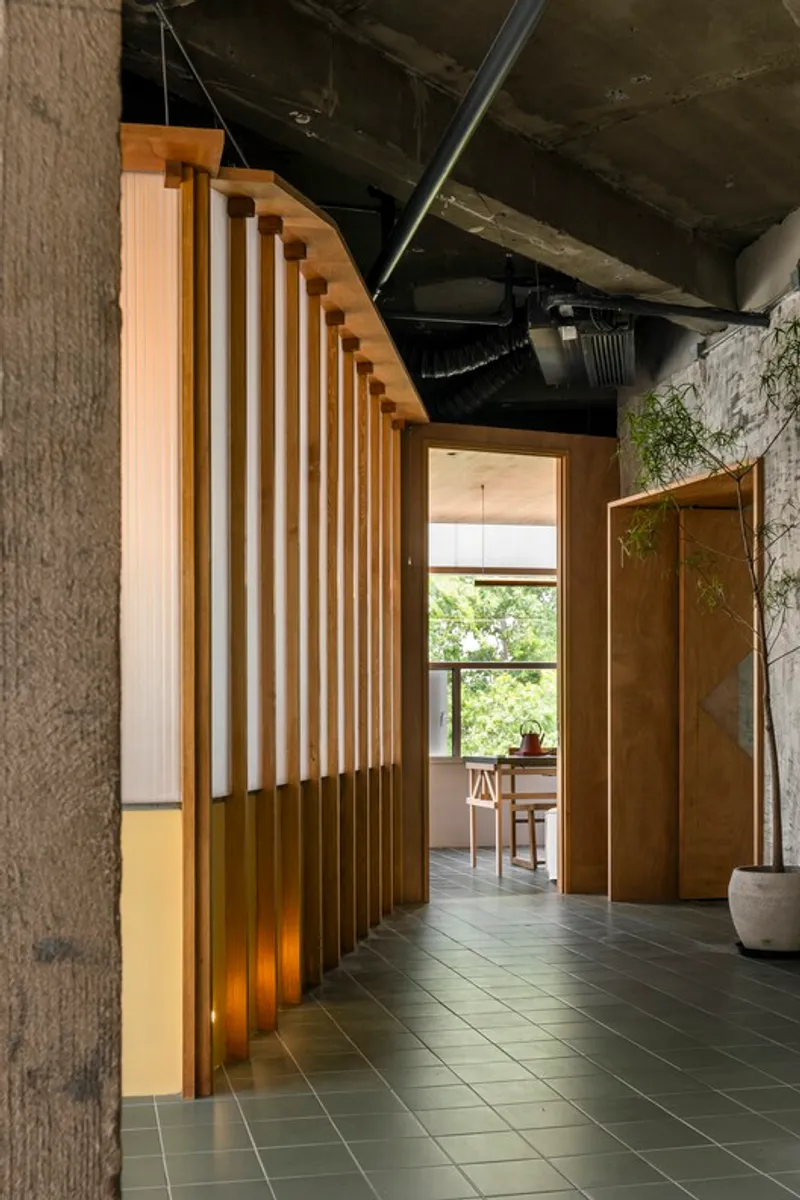
At night, the teahouse transforms into a glowing lantern within the urban fabric. The soft illumination highlights the depth and complexity of the interior, making the previously hidden space visible in a gentle and inviting way.
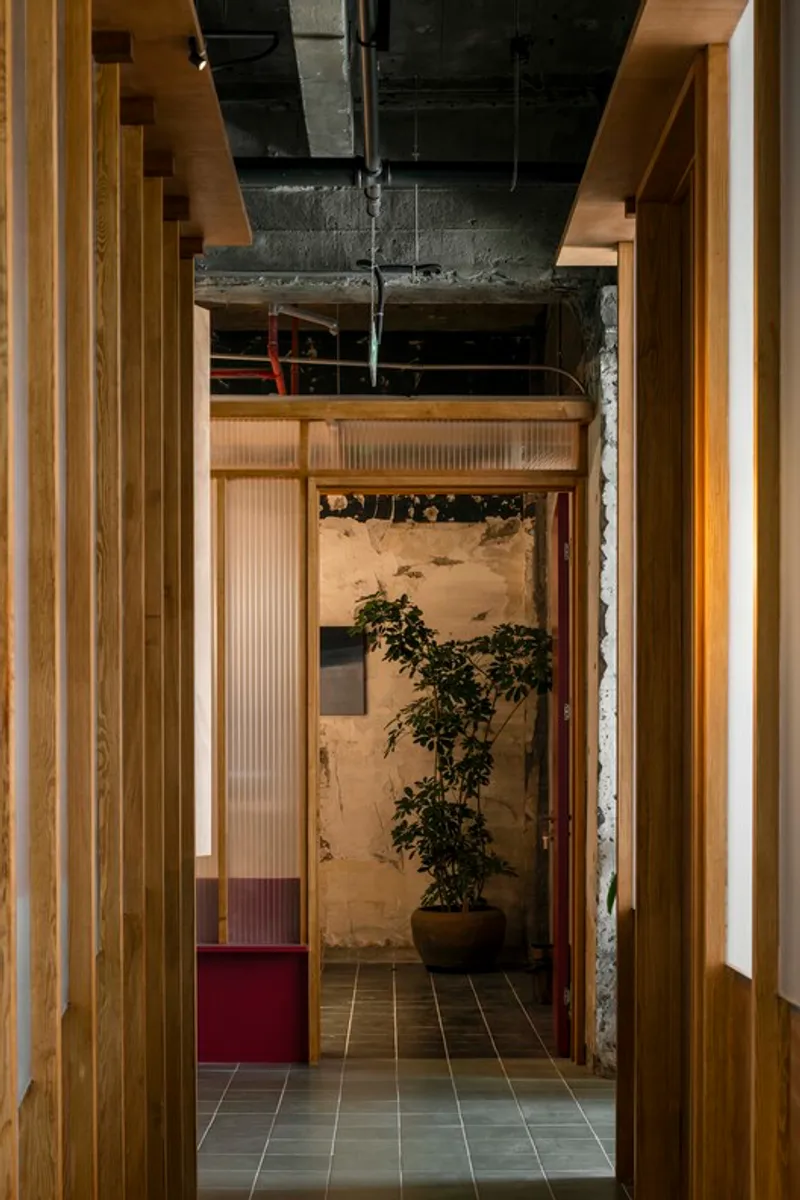
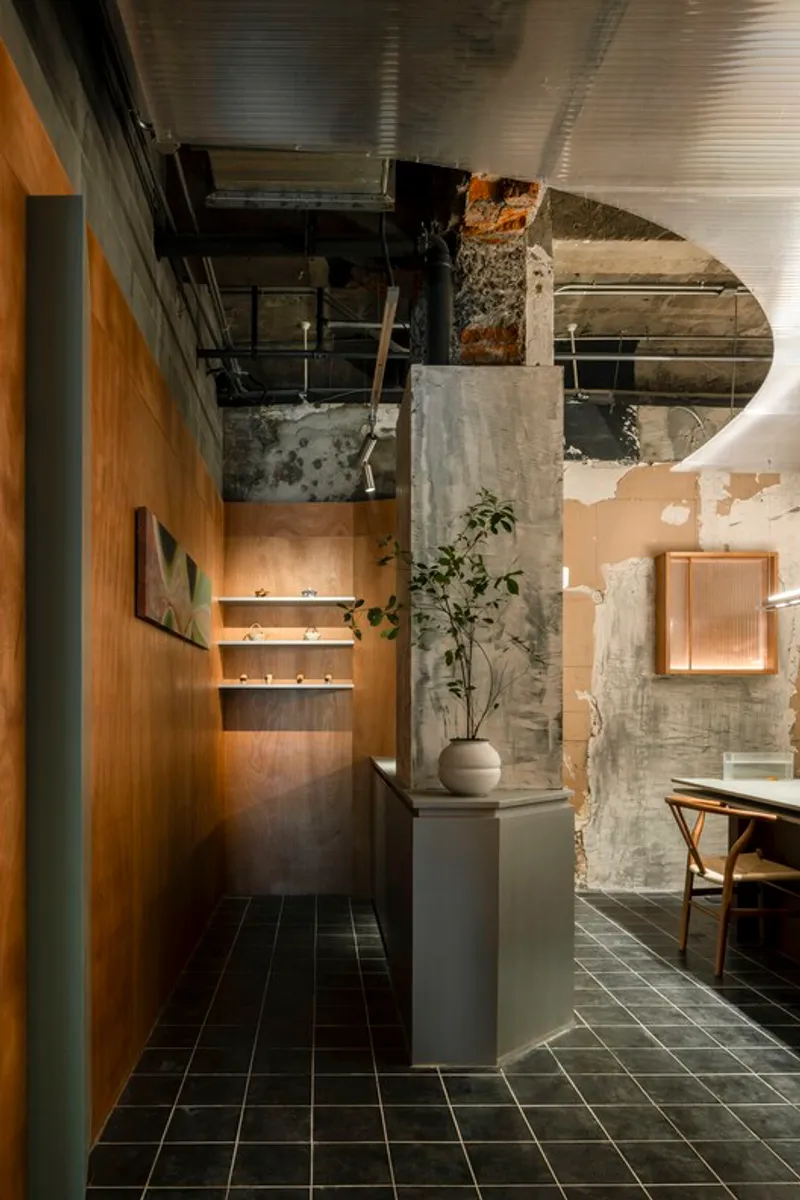
Light is a defining element throughout the project. Natural light enters through openings and translucent surfaces, shifting throughout the day and continuously altering the perception of space. This dynamic quality reduces the sense of enclosure and enhances the atmosphere of calm and relaxation.
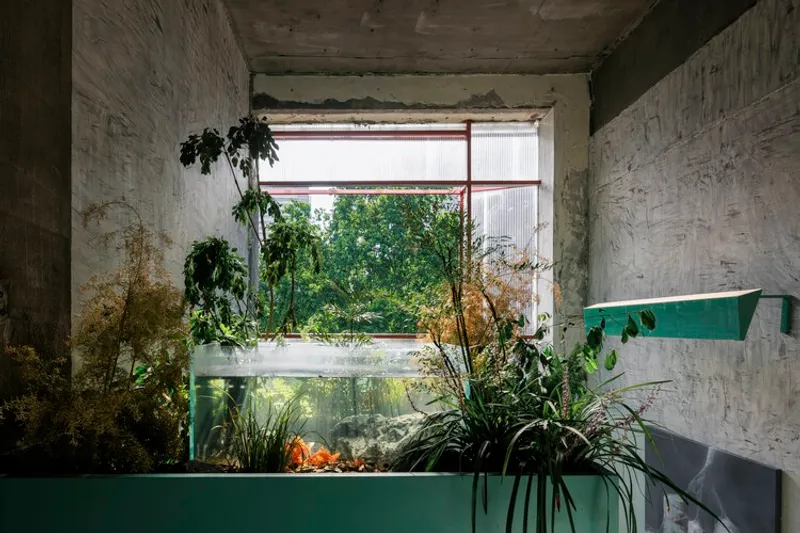
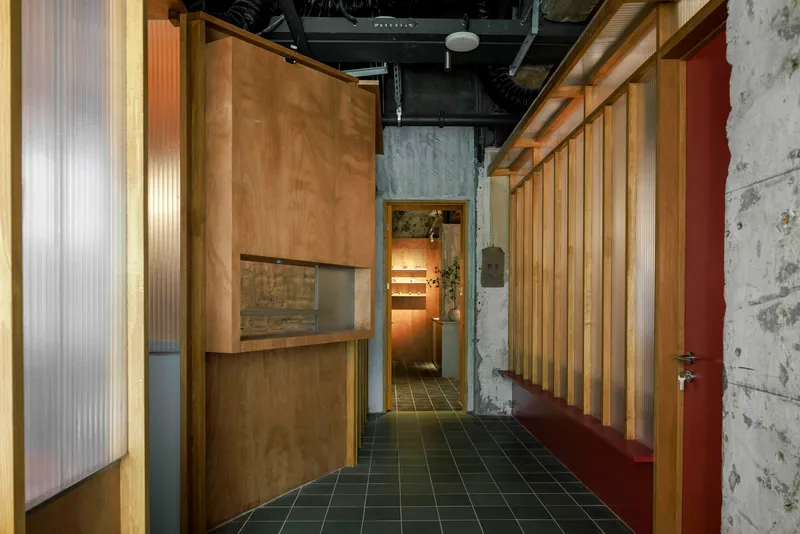
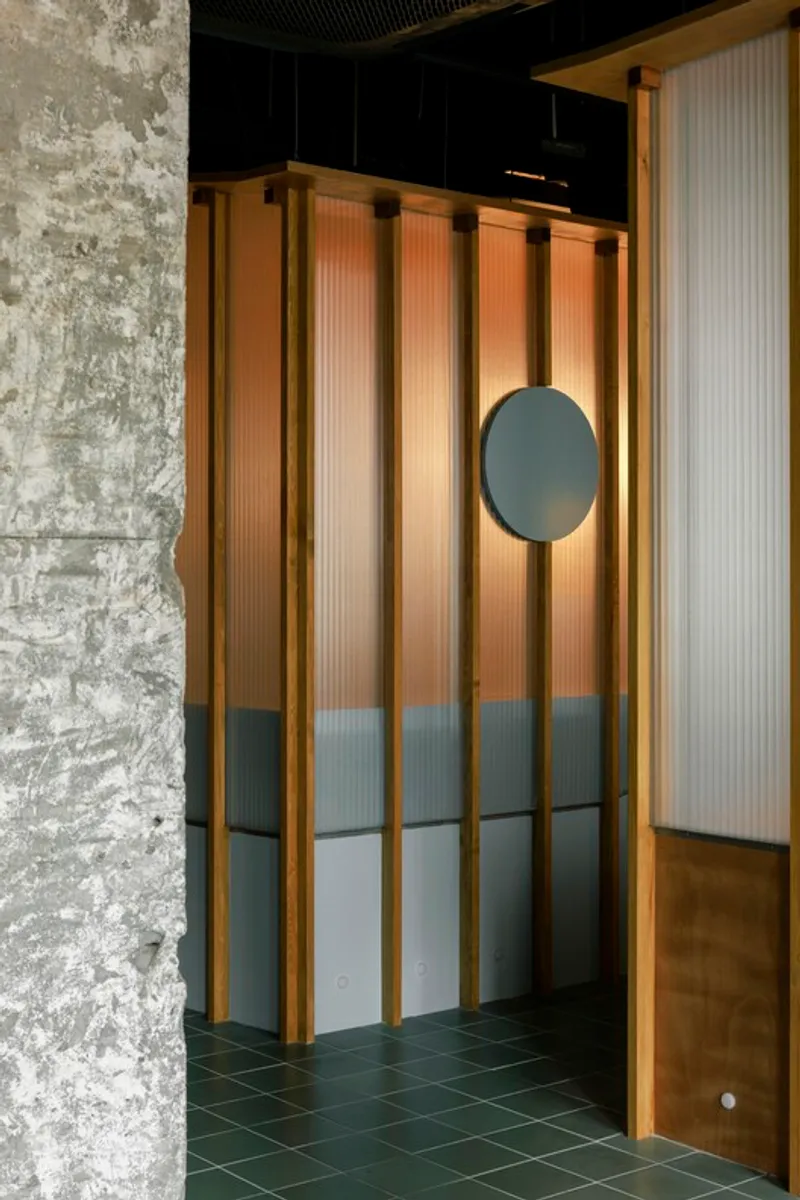
Material choices reinforce this sensory experience. The combination of wood, concrete, and soft lighting creates a balanced environment that feels both contemporary and grounded. The textures and tones contribute to a warm yet minimal aesthetic, allowing the spatial composition and light to take precedence.
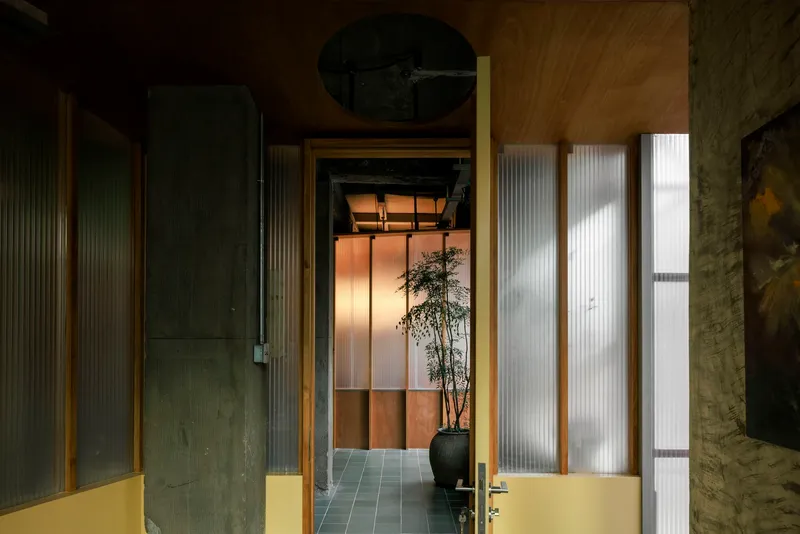
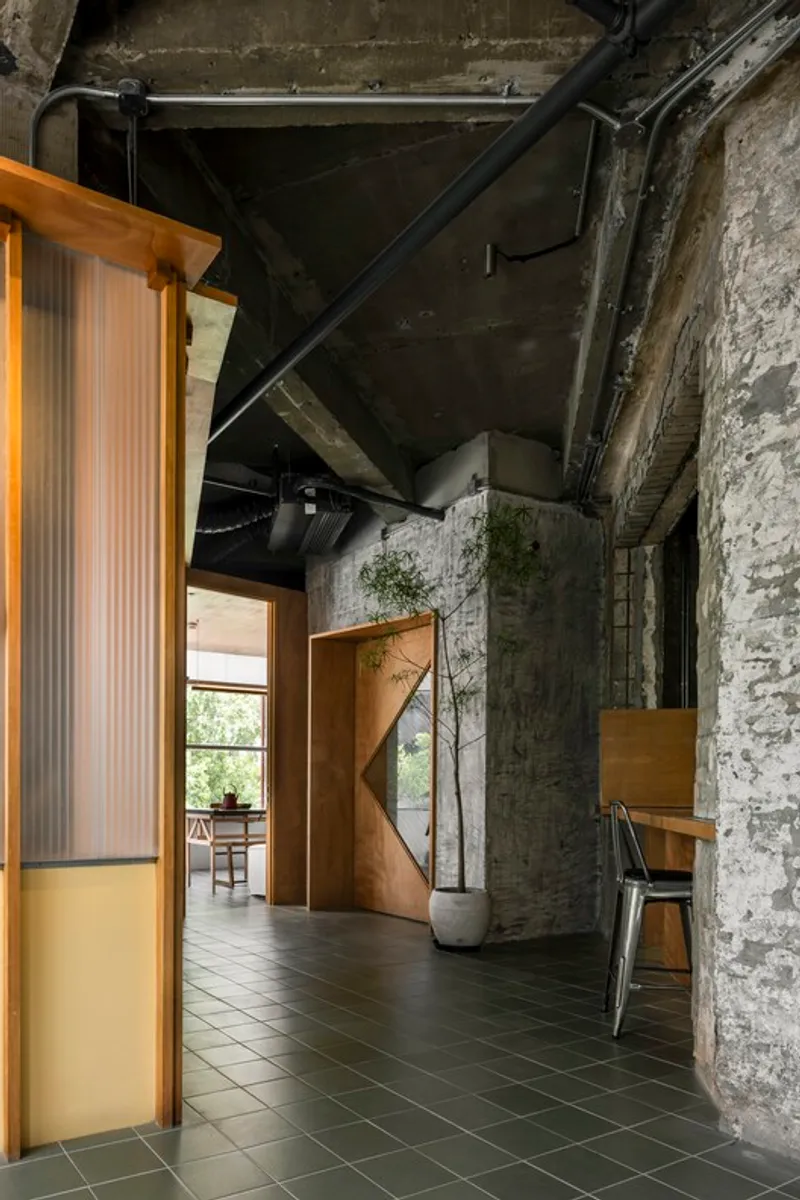
Ultimately, Seventeen TeaHouse is more than a place for tea, it is a spatial journey. By reorganizing an overlooked urban condition, the project creates a layered interior world that reflects the rhythms of the city while offering a moment of pause within it. Through its interplay of light, geometry, and movement, the teahouse becomes a social vessel that is both intimate and open, hidden yet deeply connected to its surroundings.
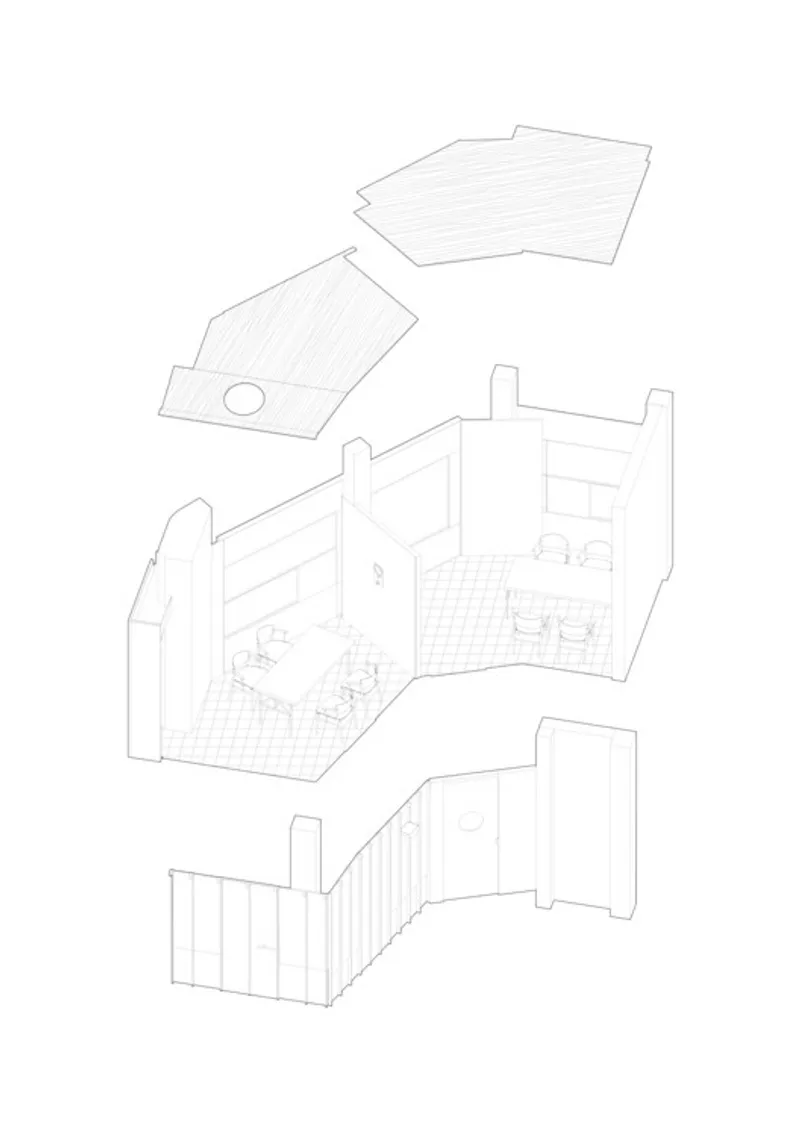
All the Photographs are works of Guowei Liu


Popular Articles
Popular articles from the community


Hill & Cross Opera: Sculptural Opera House Architecture Shaped by Tallinn’s Landscape and Identity
Hill & Cross Opera reimagines opera house architecture in Tallinn through its sculptural hill, civic plaza, glass wave and a luminous cross.

Conexión: Biophilic Design Reimagines High-Rise Living in Hong Kong
Conexión reimagines high-rise living in Hong Kong through biophilic design, green facades, shared spaces, daylight, water and nature within.

ALGAL REALM: A Bio-Integrated Lunar Habitat Design for Life Beyond Earth
ALGAL REALM reimagines lunar habitat design with algae-powered life support, 3D-printed regolith, and vertical living for a lunar future.

The Musturak Paradise: Senior Living Architecture for a Connected Future in Temara, Morocco
The Musturak Paradise reimagines senior living architecture in Temara via private homes, social spaces, culture, community, and shared care.

Similar Reads
You might also enjoy these articles

FAMM Arquitectura Organizes Ten Villas Around Courtyards and Jungle in Nosara, Costa Rica
El Molino pairs two elongated volumes with deep overhangs and timber louvers to build a compact coastal community five minutes from the beach.
Oscar Niemeyer's Ibirapuera Park Pavilions Define São Paulo's Cultural Identity in Concrete and Curve
A constellation of modernist volumes set within São Paulo's most important urban park, conceived for the city's 400th anniversary in 1954.
Sanjay Puri Architects Wraps a Jaipur Office Tower in Capsule-Shaped Green Buffers
A nine-level climate-responsive workplace near Jaipur Airport uses stacked planter terraces and aluminium screens to fight 40°C heat.
RHO Converts a Berlin Spree-Side Industrial Courtyard into Enkime's 1,000 m² Agency Headquarters
A social media agency's new home in Charlottenburg trades glossy branding for concrete waffle ceilings, glazed tile, and sheer curtains.

Explore Architecture Competitions
Discover active competitions in this discipline

Challenge to reimagine the Iron Throne

Photograph architecture without architects

Illustrate the lost glory of Angkor Wat - Render Challenge

Design challenge to reuse E-waste
Comments (0)
Please login or sign up to add comments
No comments yet. Be the first to comment!