
Shirokanedai House Renovation: Harmonizing Traditional Japanese Architecture with Modern Design
Shirokanedai House Renovation by ROOVICE transforms a 50-year-old Tokyo home, blending traditional Japanese elements with modern design, light-filled interiors, and enhanced earthquake safety.


The Shirokanedai House Renovation is a meticulous reinterpretation of a 50-year-old two-storey wooden home located in Tokyo’s vibrant Minato ward. Commissioned by a seasoned real estate professional, the property had been long rented out. Upon regaining control, the owner sought a renovation that preserved the building’s original character while modernizing it for continued rental use. With demolition costs in Japan being high and the structure in generally good condition, ROOVICE transformed the home into a contemporary, functional, and aesthetically compelling space.
Structural Upgrades and Earthquake Resilience
A key focus of the renovation was earthquake-resistant reinforcement, ensuring both safety and longevity. The structural improvements laid the groundwork for the aesthetic and functional upgrades that followed. By strengthening the building’s core, the renovation achieved a balance between modern performance standards and preservation of the home’s original charm.
Ground Floor Transformation
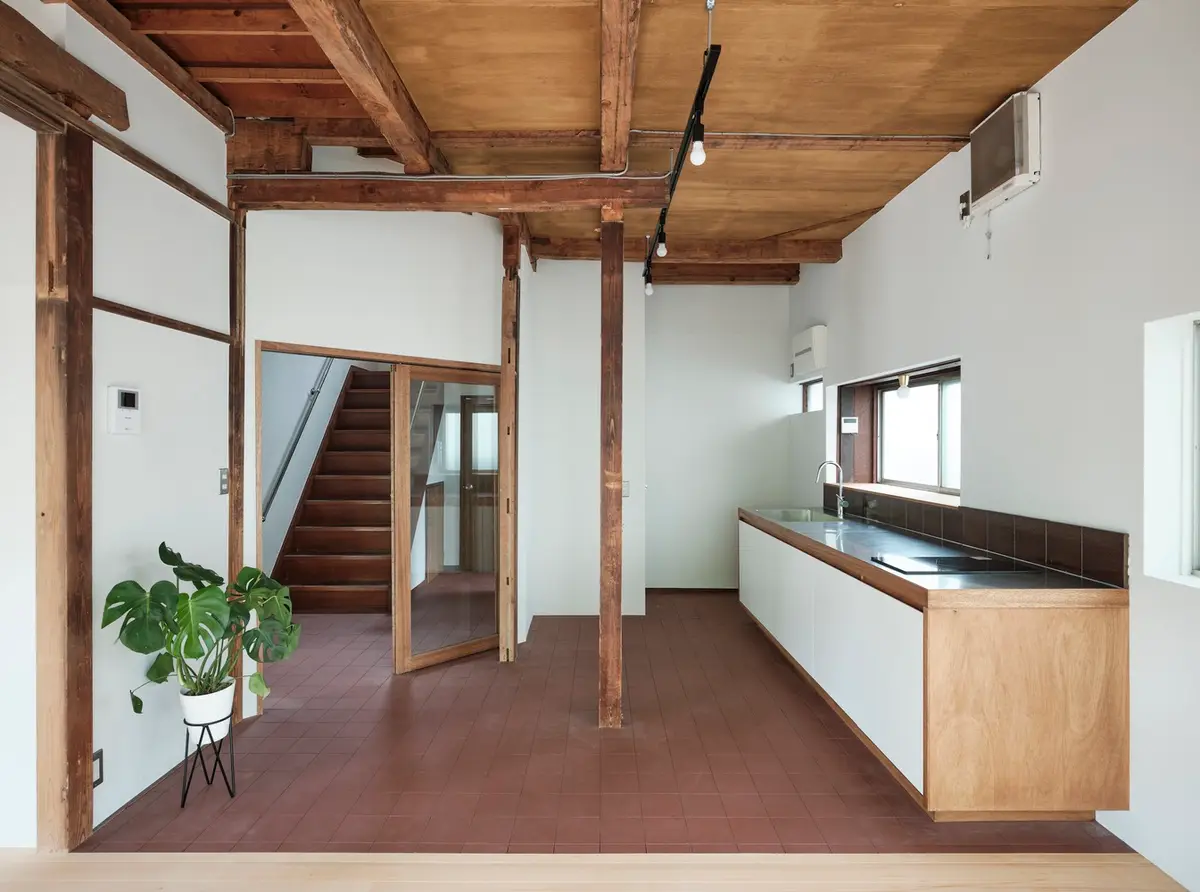
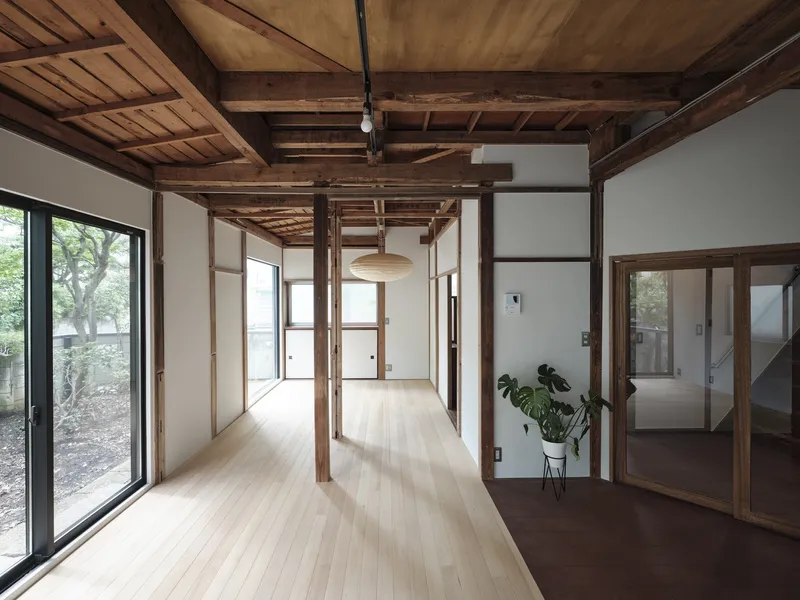
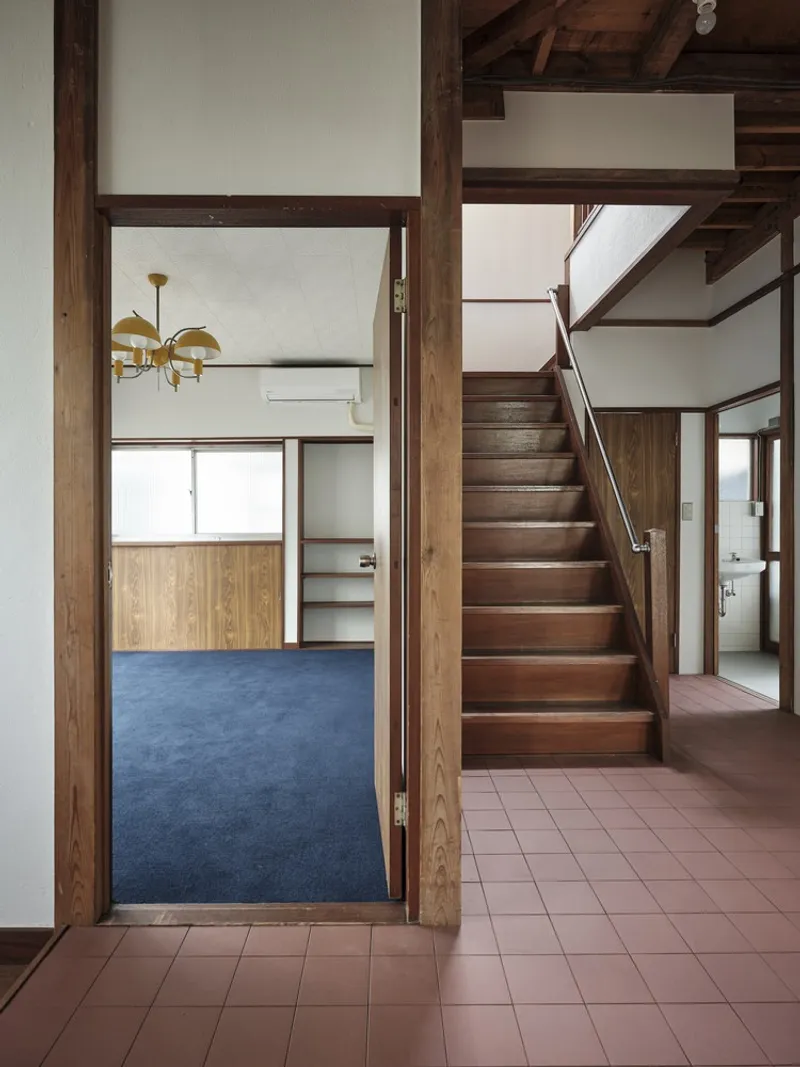
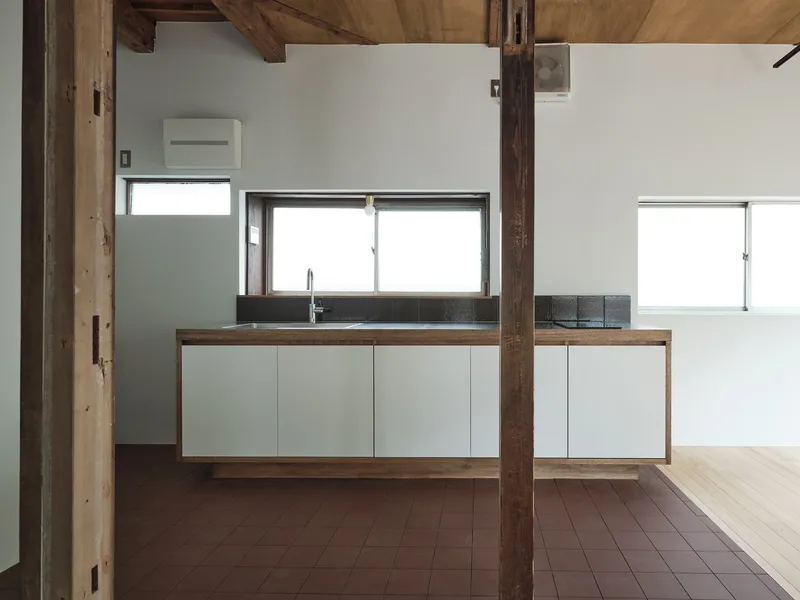
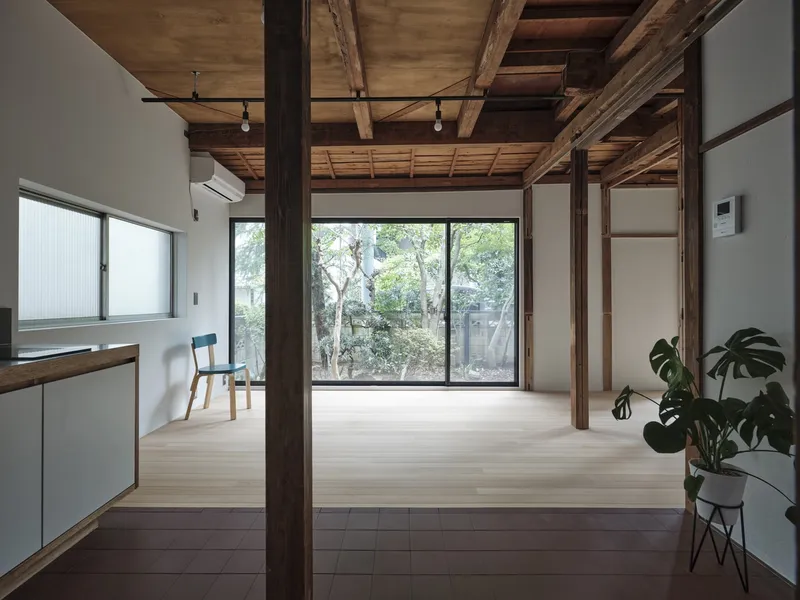
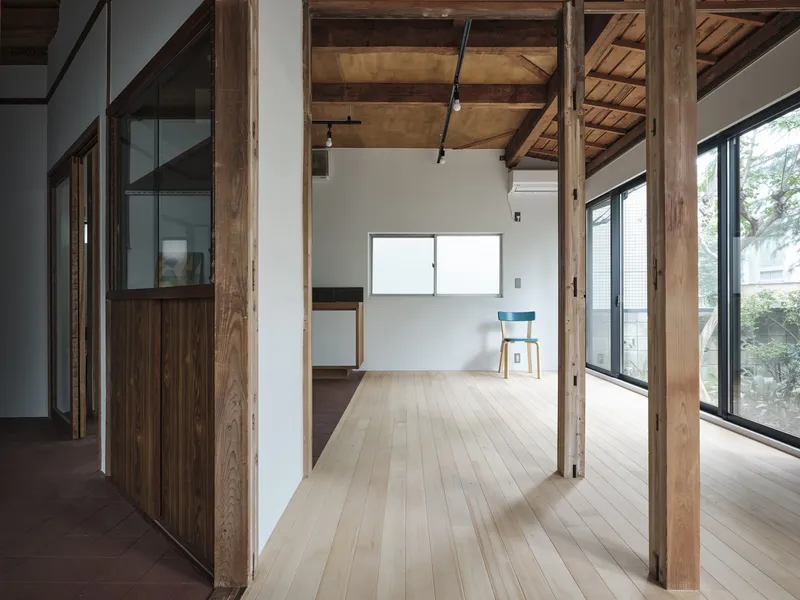
The original first-floor layout featured dark, compartmentalized rooms, typical of older Japanese homes. To create a more open and inviting interior, ROOVICE removed the dividing walls and ceiling boards, combining the former kitchen and two tatami rooms into a single, expansive living space.
- Walls were repainted in crisp white, replacing the dull gray tones and enhancing natural light.
- New windows were installed, filling the space with daylight and improving ventilation.
- Tatami floors were replaced with sleek hemlock wooden flooring, covering the traditional kotatsu stove pit.
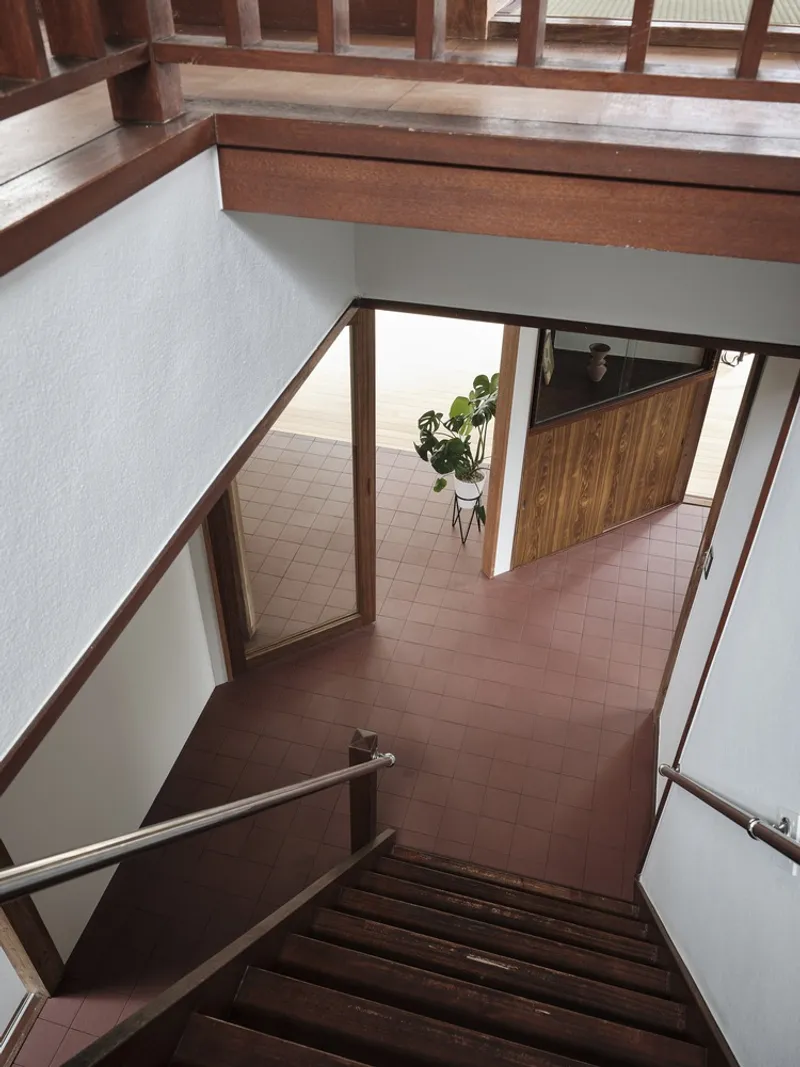
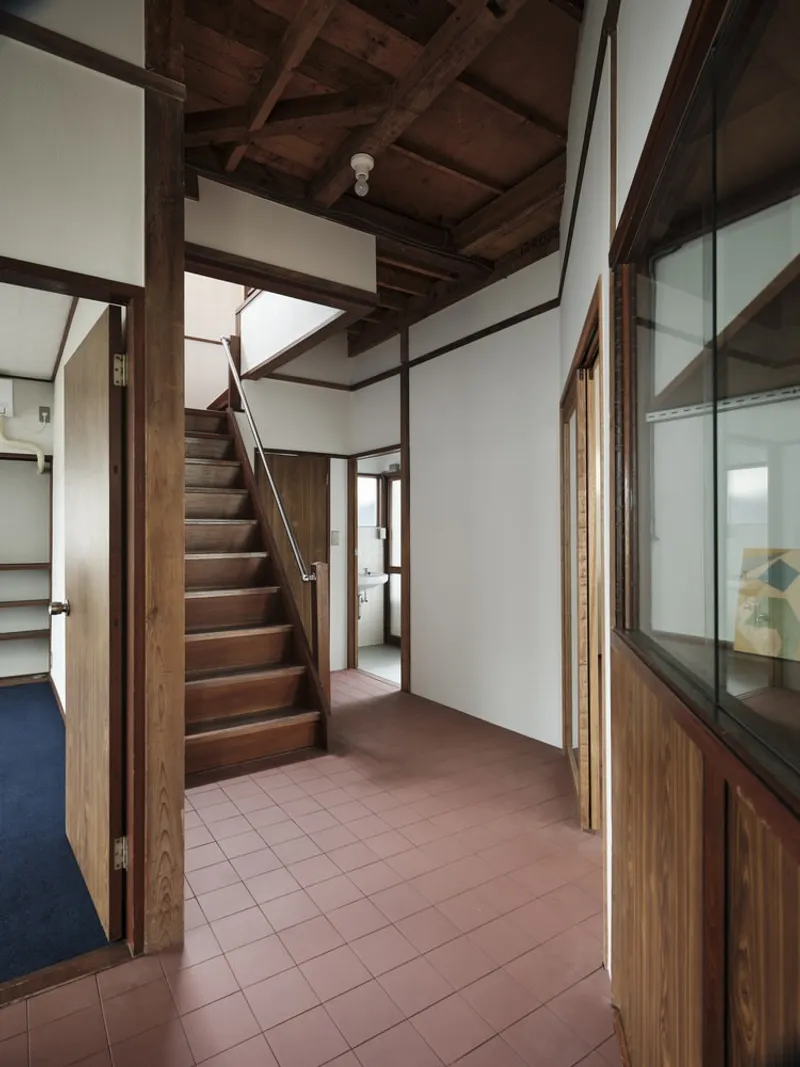
- The kitchen and corridor floors feature clinker tiles, complemented by a custom-made kitchen counter for modern functionality.
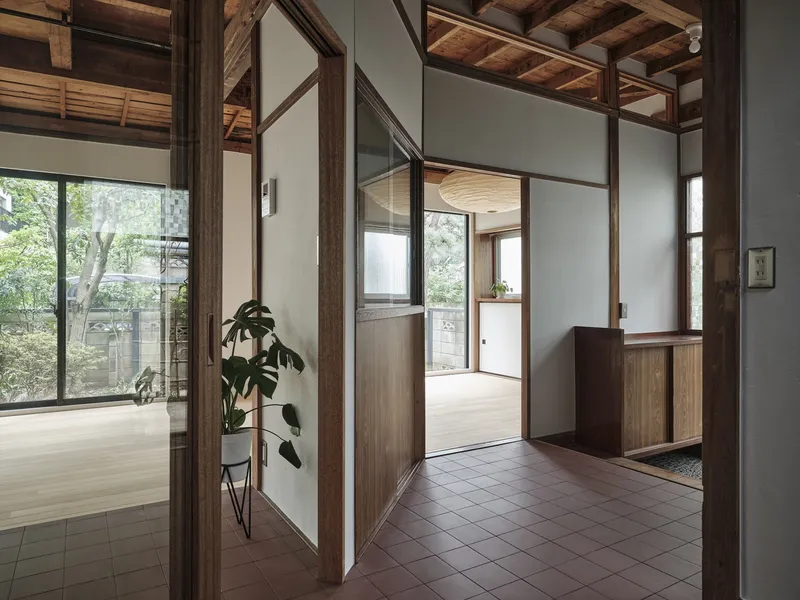
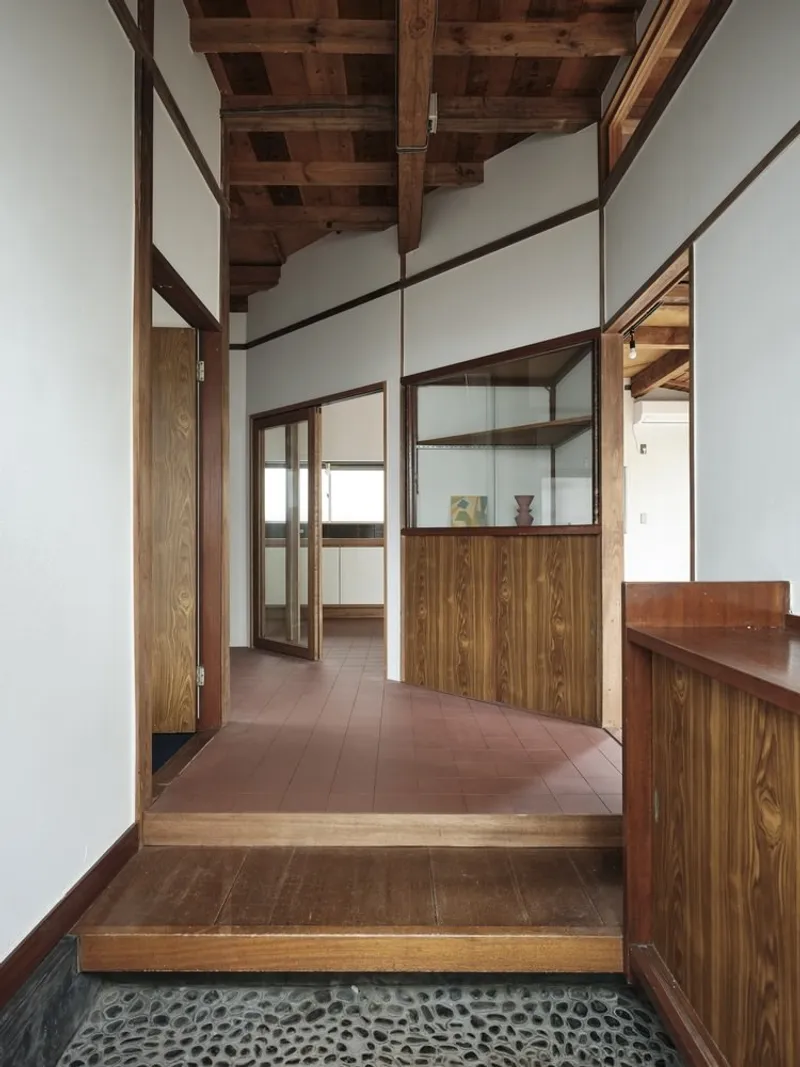
A triangle-shaped built-in cupboard in the corridor wall was highlighted by a diagonal wall leading into the kitchen, creating visual continuity. A glass door, designed to mirror the cupboard’s shape, enhances both practicality and aesthetics.
Bathroom and Utility Enhancements
The bathroom underwent significant improvements to optimize space and functionality:
- Washing machine accommodation was expanded.
- PVC flooring replaced older surfaces in the front bathroom area.
- A new bathtub was installed alongside white wall tiles, while Tamaishi tiles—small pebble-like stones reminiscent of the Shōwa era—were used for bathroom and toilet floors.
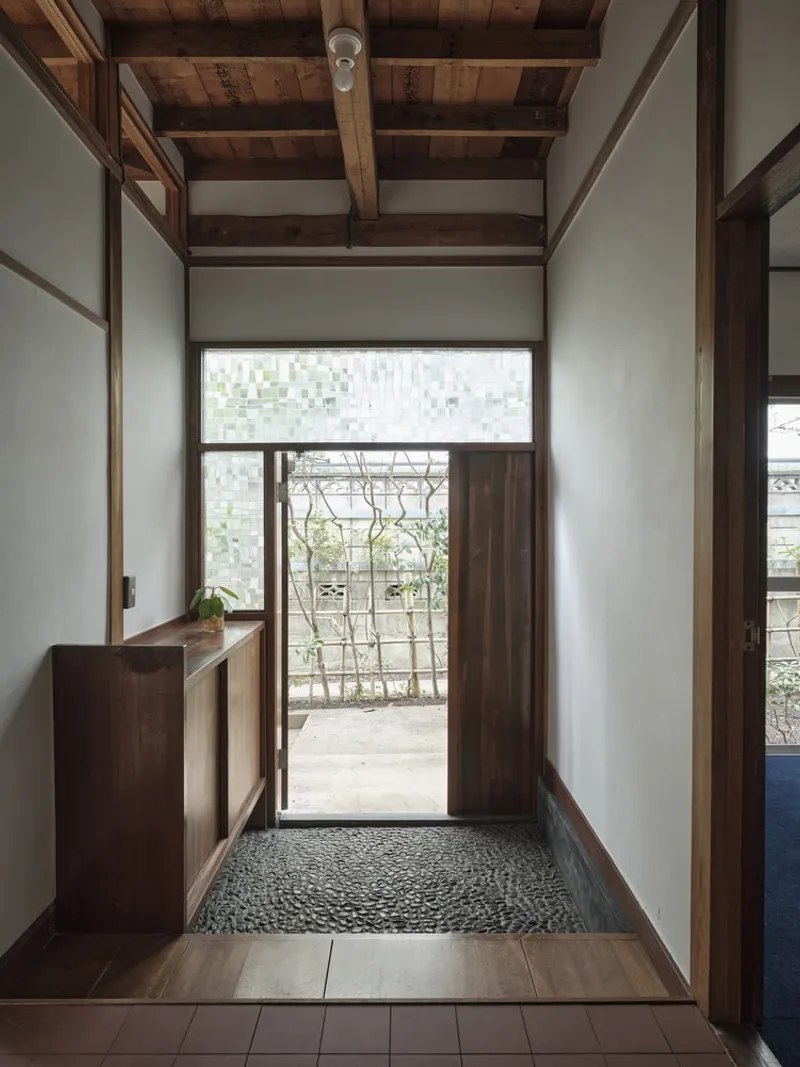
- The wooden steps leading to the garden were replaced with traditional stone steps, strengthening the indoor-outdoor connection.
These updates reinforce the home’s blend of traditional charm and modern practicality, reflecting thoughtful attention to detail.
Second-Floor Renovation
Upstairs, ROOVICE carefully balanced modern updates with preservation of traditional elements:
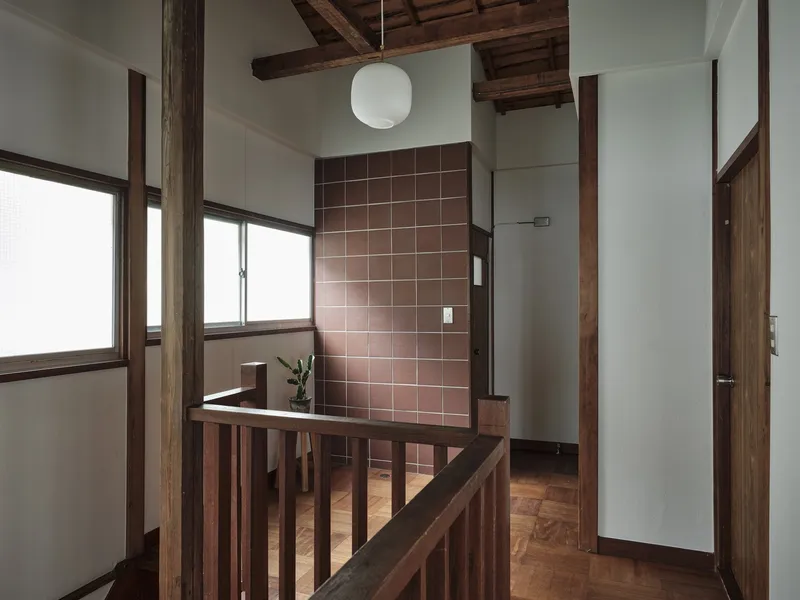
- The old corridor kitchenette was removed, and the wall was tiled with the same clinker tiles used on the first floor.
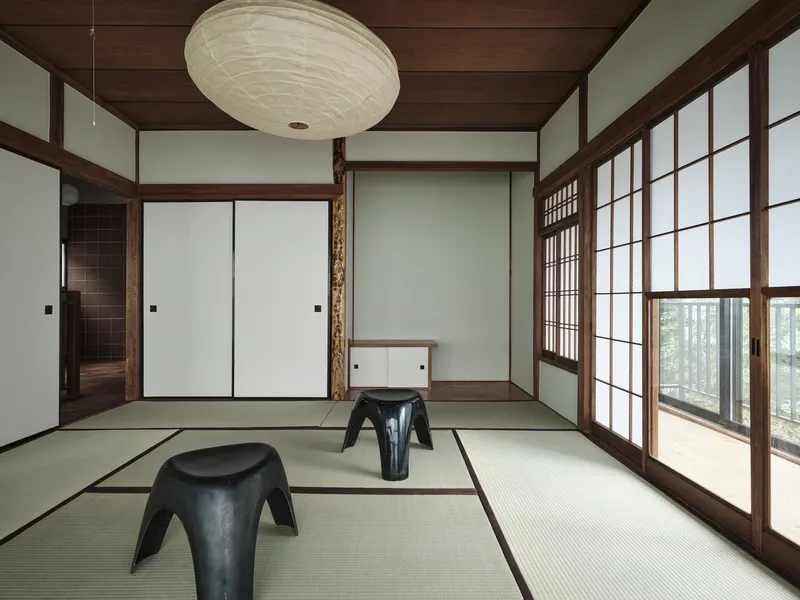
- Existing tatami rooms were retained with new tatami mats and refurbished shoji doors.
- Flooring and windows were updated to match the ground floor, maintaining cohesive interior continuity.
- In a third room, deteriorated wooden boards were replaced with lauan wood, and a beige carpet added warmth and texture.
- The balcony received waterproofing treatment, and the fencing was repainted black, adding subtle modern elegance.
These renovations enhance safety, comfort, and visual coherence, bridging traditional Japanese living with contemporary design solutions.
Design Philosophy and Impact
The Shirokanedai House Renovation exemplifies ROOVICE’s approach to adaptive reuse and residential renovation. By integrating modern materials, safety upgrades, and traditional Japanese elements, the project achieves:
- Enhanced earthquake resilience
- Open, light-filled interiors
- Seamless indoor-outdoor connections
- Functional kitchens and bathrooms for modern living
- Preservation of cultural and historical character
This project not only revitalizes a historic home but also ensures its continued appeal for rental or family use, demonstrating the potential of thoughtful renovations in dense urban Japanese contexts.
Through careful planning and expert execution, the Shirokanedai House Renovation achieves a harmonious blend of heritage preservation, modern comfort, and aesthetic refinement. ROOVICE’s design ensures that the home remains safe, functional, and visually compelling while honoring its traditional Japanese roots, a prime example of successful adaptive reuse in Tokyo’s residential architecture.
All photographs are works of
Akira Nakamura


Popular Articles
Popular articles from the community


Conexión: Biophilic Design Reimagines High-Rise Living in Hong Kong
Conexión reimagines high-rise living in Hong Kong through biophilic design, green facades, shared spaces, daylight, water and nature within.

Lunar Spiral: Space Architecture Shaped by the Mathematics of the Universe
Lunar Spiral reimagines space architecture through Fibonacci geometry, lunar regolith, levitating habitats, and self-sustaining Moon living.

Hill & Cross Opera: Sculptural Opera House Architecture Shaped by Tallinn’s Landscape and Identity
Hill & Cross Opera reimagines opera house architecture in Tallinn through its sculptural hill, civic plaza, glass wave and a luminous cross.

ALGAL REALM: A Bio-Integrated Lunar Habitat Design for Life Beyond Earth
ALGAL REALM reimagines lunar habitat design with algae-powered life support, 3D-printed regolith, and vertical living for a lunar future.

Similar Reads
You might also enjoy these articles


FAMM Arquitectura Organizes Ten Villas Around Courtyards and Jungle in Nosara, Costa Rica
El Molino pairs two elongated volumes with deep overhangs and timber louvers to build a compact coastal community five minutes from the beach.

Oscar Niemeyer's Ibirapuera Park Pavilions Define São Paulo's Cultural Identity in Concrete and Curve
A constellation of modernist volumes set within São Paulo's most important urban park, conceived for the city's 400th anniversary in 1954.

Sanjay Puri Architects Wraps a Jaipur Office Tower in Capsule-Shaped Green Buffers
A nine-level climate-responsive workplace near Jaipur Airport uses stacked planter terraces and aluminium screens to fight 40°C heat.
RHO Converts a Berlin Spree-Side Industrial Courtyard into Enkime's 1,000 m² Agency Headquarters
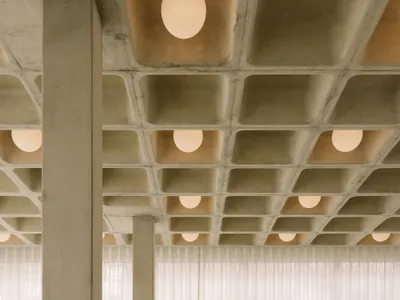
A social media agency's new home in Charlottenburg trades glossy branding for concrete waffle ceilings, glazed tile, and sheer curtains.

Explore Architecture Competitions
Discover active competitions in this discipline

Challenge to design luxury tourism on rails

Challenge to reimagine the Iron Throne

Photograph architecture without architects

VR headsets Storefront design competition
Comments (0)
Please login or sign up to add comments
No comments yet. Be the first to comment!