

Sustainable Office Architecture: The Sparkasse Markgräflerland Service Center in Weil am Rhein
Explore sustainable office architecture through the Sparkasse Markgräflerland Service Center, highlighting adaptability, energy efficiency, and eco-friendly design.


In the ever-evolving world of architecture, sustainable office architecture has become an essential focus. As businesses and organizations strive to create functional, eco-friendly, and adaptable workspaces, architects are responding by designing buildings that are not only efficient but also adaptable for the long term. One such example is the Service Center for Sparkasse Markgräflerland in Weil am Rhein, designed by LRO GmbH & Co. KG Freie Architekten BDA.
This office building exemplifies the principles of sustainable office architecture, combining innovative design, energy-efficient systems, and a flexible floor plan to ensure its longevity. In this article, we will explore how this building sets new standards in sustainable and adaptable office design, offering insights into the future of architecture.
Key Features of Sustainable Office Architecture
Flexible and Adaptable Design
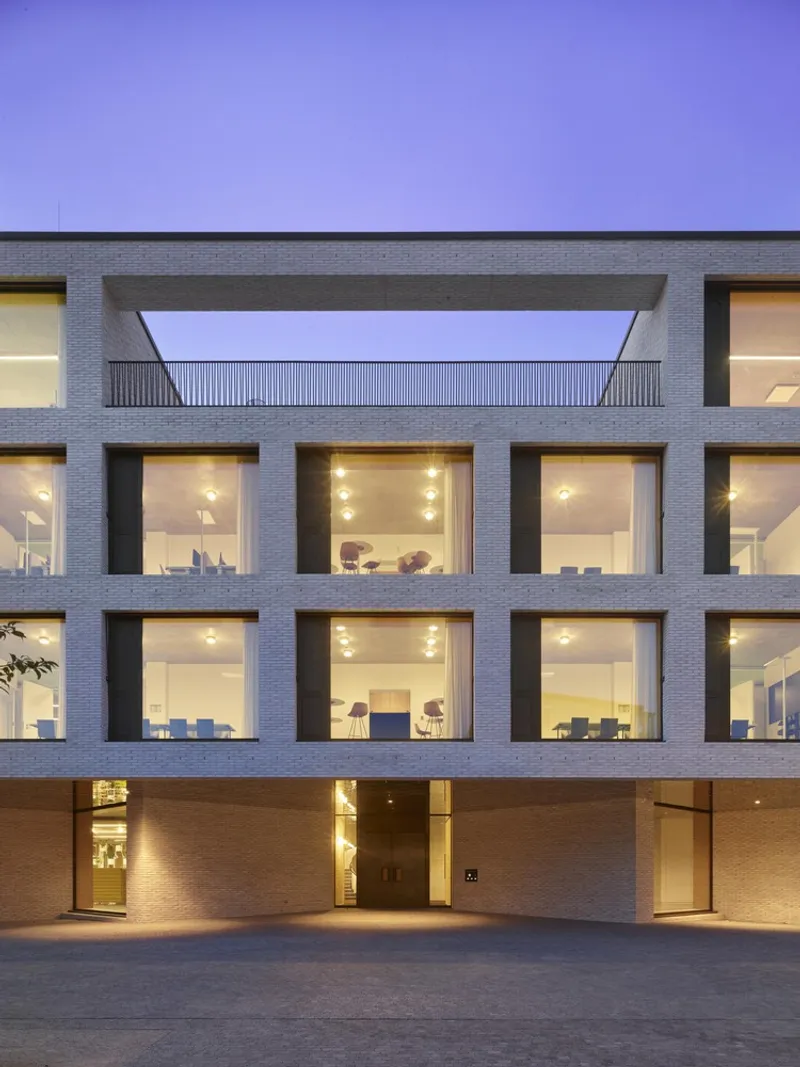
One of the cornerstones of sustainable office architecture is adaptability. The Service Center for Sparkasse Markgräflerland integrates a flexible floor plan that accommodates changing needs over time. With a grid of light-colored bricks and rectangular windows, the building seamlessly blends into the surrounding residential area, while offering a spacious forecourt and an interior hall that can be divided into functional units.
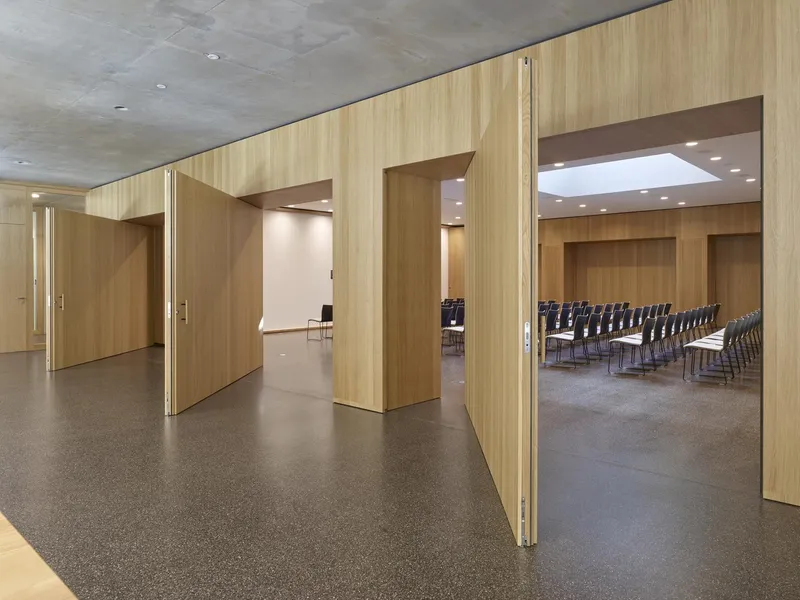
The office floors are designed to be easily configurable, allowing for up to eight separately functioning units, which can be leased to different tenants. This adaptability helps the building remain relevant even as the needs of its users evolve, minimizing the environmental impact associated with future renovations or rebuilds.
Sustainable Materials for Long-Term Durability
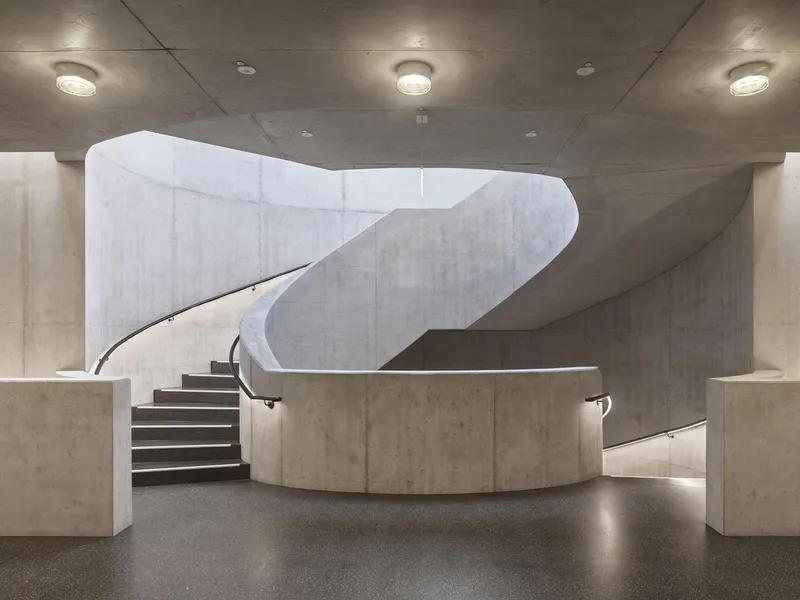
A key principle of sustainable office architecture is the use of durable and environmentally responsible materials. The Sparkasse building uses high-quality, long-lasting materials such as clinker brick, timber-aluminum windows, and exposed concrete ceilings. These materials are not only energy-efficient but are also easily repairable, reducing the need for frequent replacements and contributing to the building's sustainability.
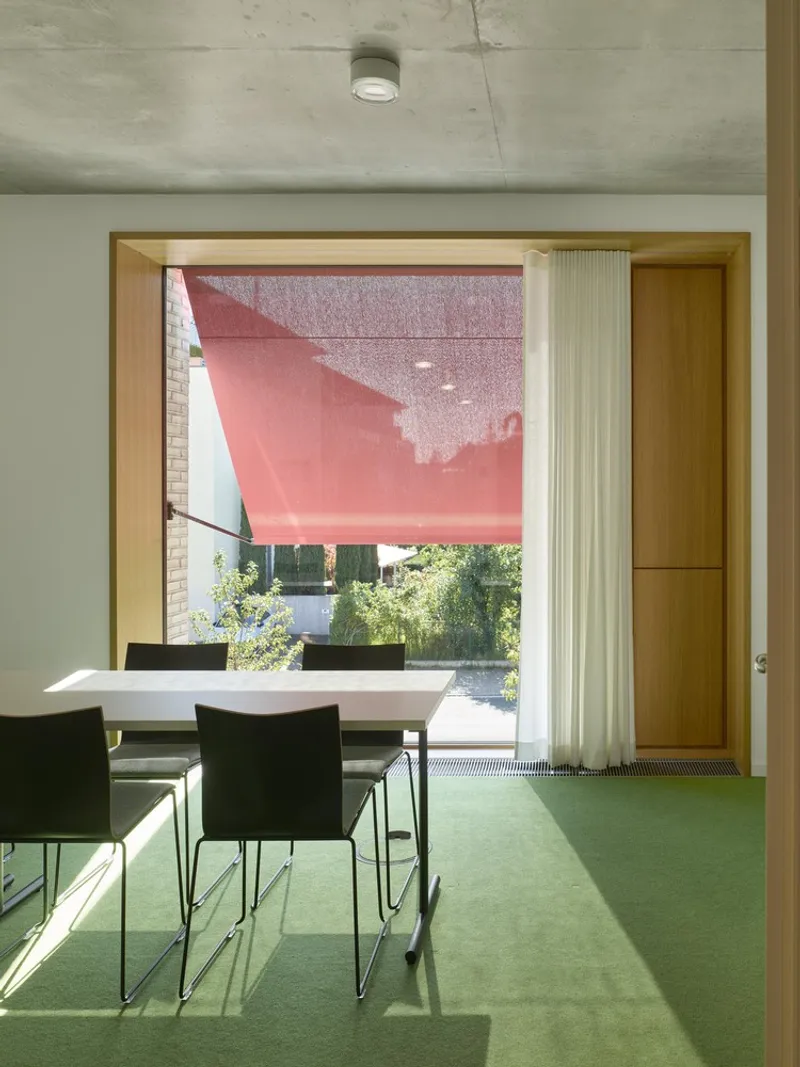
Inside the building, the material palette includes oak built-in furniture, white modular partitions, and green carpeting, emphasizing the use of natural materials to create a healthy and energy-efficient environment.
Maximizing Natural Light and Ventilation
Effective use of natural light and ventilation is crucial in sustainable office architecture. The Sparkasse Service Center incorporates large expanses of glass and an internal courtyard that allows for optimal daylighting and cross-ventilation. The design also integrates low-velocity air diffusers and central exhaust air intakes, ensuring a comfortable indoor environment without excessive energy consumption.
This thoughtful design approach reduces reliance on artificial lighting and air conditioning, further contributing to the building's sustainability.
Energy Efficiency and Environmental Impact
Concrete Core Temperature Control
To meet the challenges of energy efficiency in a modern office building, the Service Center for Sparkasse Markgräflerland uses concrete core temperature control. This system takes advantage of the thermal mass of the concrete slabs to regulate the building’s temperature, providing base-load heating and cooling. This reduces the building's energy consumption by maintaining a stable internal temperature without excessive reliance on external heating or cooling systems.
Additionally, the building is connected to the municipal district heating network, providing a consistent and energy-efficient method of temperature regulation.

Renewable Energy Integration
In line with the principles of sustainable office architecture, the building’s roof is equipped with photovoltaic panels to generate renewable energy. This not only reduces the building's carbon footprint but also contributes to its long-term energy independence. The integration of solar power into the design reflects a commitment to sustainability and reduces the reliance on non-renewable energy sources.

Urban Integration and Public Accessibility
Designing with Urban Context in Mind
The Service Center for Sparkasse Markgräflerland is situated in a complex urban environment, with residential buildings to the east and a dilapidated row of houses to the west. The architects designed the building to respect the surrounding urban context while addressing these challenges.
The ground floor aligns with the neighboring residential buildings, preserving the long-term urban development potential. The upper floors, which project above the plaza, ensure that the building maximizes its allowable volume without obstructing future urban development.
The building’s forecourt is open to the public, offering a welcoming space that enhances the urban environment while maintaining a flexible and adaptable structure for future changes.
The Future of Sustainable Office Architecture
The Service Center for Sparkasse Markgräflerland serves as an exemplary model of sustainable office architecture. By incorporating flexible design elements, using durable materials, and focusing on energy efficiency, the building provides a blueprint for future office spaces that are both functional and eco-friendly. As businesses continue to prioritize sustainability, architects will play a key role in designing buildings that meet both environmental goals and the changing needs of the workforce.

All Photographs are work of Roland Halbe



Popular Articles
Popular articles from the community


AL-JANNAH: Sustainable Architecture and Permaculture for Afghan Widows
AL-JANNAH uses sustainable architecture and permaculture to create resilient oasis of housing, learning, work and renewal for Afghan widows.

The Musturak Paradise: Senior Living Architecture for a Connected Future in Temara, Morocco
The Musturak Paradise reimagines senior living architecture in Temara via private homes, social spaces, culture, community, and shared care.

The Ocean Hive: Sustainable Architecture for a Self-Sufficient Civilization at Sea
The Ocean Hive imagines sustainable architecture at sea, where modular habitats, algae, wave power and ocean waste sustain a growing colony.

Conexión: Biophilic Design Reimagines High-Rise Living in Hong Kong
Conexión reimagines high-rise living in Hong Kong through biophilic design, green facades, shared spaces, daylight, water and nature within.

Similar Reads
You might also enjoy these articles


Hodi-Mandai Geram
Project Function: Preservation and revitalization of the Intangible heritage and socio-spatial identity of the Hodi by Housing, Cultural Memory Center, Sacred Grove, landscape, local tourism economy


Olio Towers: A Mid-Rise for Performers That Fuses Housing, Rehearsal, and Stage
Located blocks from Houston's Theater District, this modular tower stacks living units around a central performance atrium.

Oasis: Modular Green Housing Carved into Dhaka's Urban Fabric
A shortlisted Plugin Housing entry reclaims unauthorized settlements in Dhaka with stepped concrete volumes, green roofs, and ventilation-driven design.

Black Hole: A Floating Megastructure for the Post-Physical Era
Emiliano Mazzarotto envisions a spherical, self-scaling arena where e-sports, digital hotels, and holographic stadiums replace traditional public space.

Explore Office Building Competitions
Discover active competitions in this discipline



Challenge to reimagine the Iron Throne


Photograph architecture without architects


Illustrate the lost glory of Angkor Wat - Render Challenge


Design challenge to reuse E-waste
Comments (0)
Please login or sign up to add comments
No comments yet. Be the first to comment!