
THE FUSION
Different Cultures, Different Cuisines, Unifying Common Place
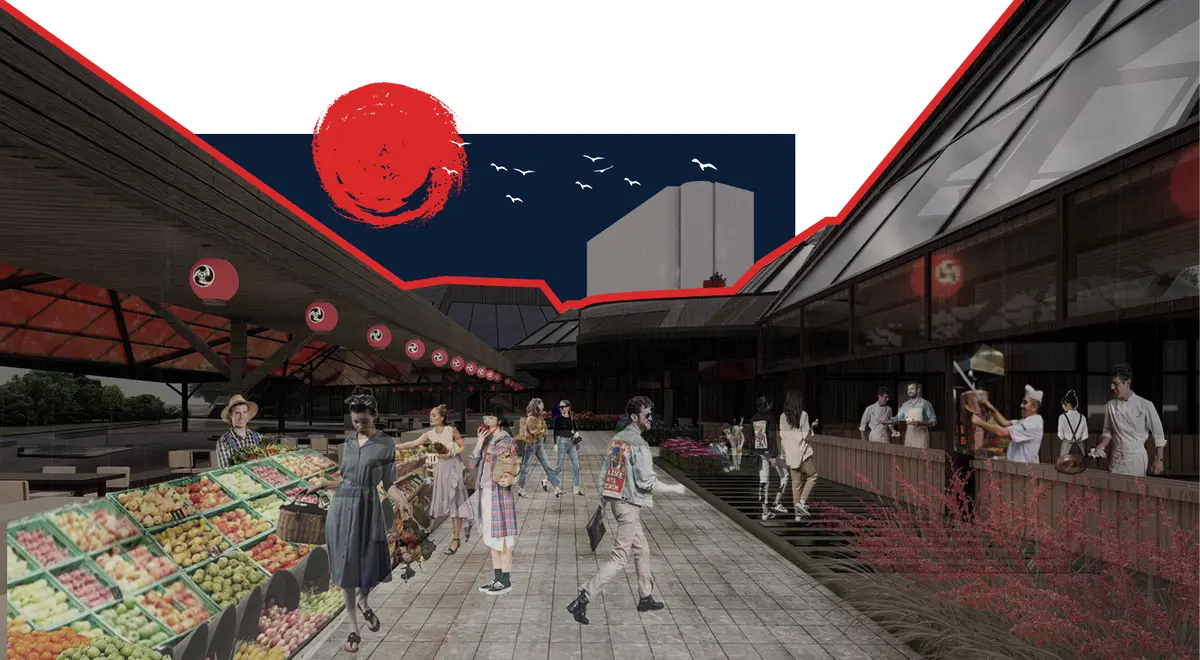
The Fusion project was designed as a public food forum in Tokyo, Japan, with five separate restaurants.
World Food Culture History
The culinary cultures of the societies are shaped according to the geographical conditions of the region they live in, agricultural characteristics, socio-economic conditions, religious characteristics and relations with other societies. In this context, the project was designed as a cultural fusion space.
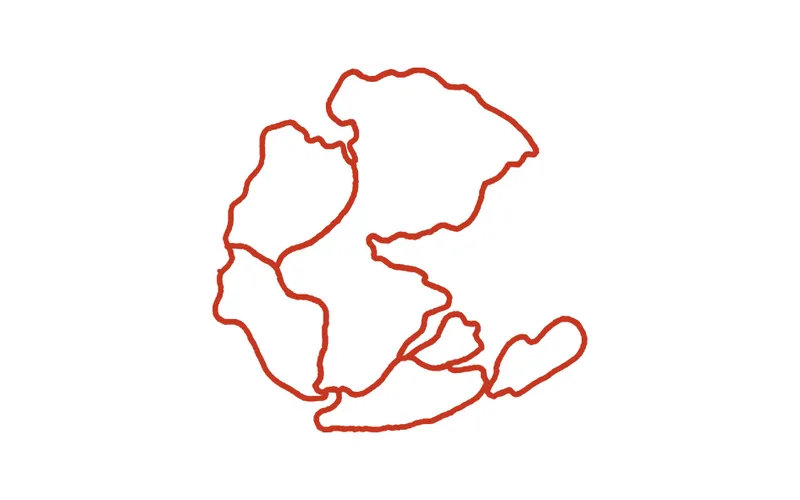
Culinary cultures began to separate after the foundations of the art of cooking were laid in Mesopotamia, where the first settled life began and agriculture was made for the first time. The first of this distinction has been realized as Asian and Chinese cuisine. While it is seen that Chinese cuisine has influenced Japanese cuisine, Asian cuisine is seen to be based on many different cultures. One of the main concepts of the project was the separation of food cultures as a whole in the Mesopotamian era and creating different riches. In the project, the evaluation of Japanese, Chinese, Egyptian, Turkish and cultural fusion cuisines, which have different cuisines, makes a historical reference to the Mesopotamian age, as well as a reference to Kintsugi, a Japanese philosophy.
Kintsugi-Gestalt
Using the Kintsugi technique, artists combine broken ceramics with gold and silver to create works that bear the original and unique traces of experience. Kintsugi art also reminds us of the Gestalt perspective. According to the Gestalt theory; The whole expresses a different meaning than the sum of its parts. When you meticulously combine a smashed pot with the art of kintsugi, the new pot is much more than the broken pieces that make up that pot. The Fusion project, in the context of bringing different culinary cultures together, creates a common sharing area by bringing together the culinary cultures that were separated in ancient times and creates a space for the reflection of those cultures.

Recyclying-Upcyclying-Kintsugi
On the one hand, Kintsugi reminds us of the value of recycling rather than throwing it away in our age where consumption has increased to the extent of waste. In this context, the project has been integrated with a decomposition-composting method within its own body, since it constantly produces food residues on a daily basis. The wastes obtained from the kitchens are sent to the compost machines in the recycling area, where the residues are converted into fertilizers and materials are created for the agricultural areas in the project. At the same time, the project rain water is collected and cleaned and recycled to the structure for reuse. Irrigation in agricultural areas has been integrated with the drip system and water consumption has been minimized.

Context
The project is located on a seaside land in Tokyo, Japan. Therefore, the main settlement decision of the project was based on the relationship with the sea. In this context, the facades of the buildings in the project face the sea. Based on this orientation, a forum area facing the sea was designed and enriched by placing sales units and food kiosks around this forum area. Japanese street culture has been characterized by traditional food stalls called 'yatai' since the 1600s. An average of 10 people chat with each other while they eat in yatai, which gained popularity after World War II. The street designed in the project is designed in a way that allows socializing in this way.The street food culture, which is very common in Japan, was supported by the design of the project, and food streets for food shopping were designed on both sides of the forum area. Since the project is a food culture forum, four different chimney-like structures were created in order to reflect the project kitchen function on the form. At the same time, these chimneys can be considered as modernizations of the iconic steep roofs of Japanese local architecture. On the basis of the project, besides being evaluated as an intercultural bridge, it also has the characteristics of a bridge that connects the two sides of the land on which it is located.

Programme
While the food and beverage areas on the ground floor of the project make reference to the Japanese street culture, the concept restaurants designed for each cuisine on the upper levels are enriched with interior designs specific to each culture in order to increase the culinary experience. The project is supported by permanent and temporary exhibitions promoting food cultures beyond being just a food and beverage venue. In addition, the cooking and preparation processes of the dishes were designed in a way that the visitors could observe, and it was aimed to provide information about the food preparation processes of each culture.
Zen Gardens
The basic principle of Japanese garden art is to redesign nature in a reduced form and to adapt nature to the garden by adding the emotions and beauties of its own soul. In this direction, the project is designed to provide a unity with green. The greens in the park, located on one side of the land, were combined with the street axis in the project and enriched by creating a green axis on the land. While designing the natural environment, the zen gardens were integrated into the project by using natural elements such as trees such as azalea maple, dry branches, sand and moss in the zen garden.
Materials
Humidity in Japan can be relatively high even in winter, so buildings in traditional Japanese architecture are often built with wood, which naturally allows for very good ventilation. The Fusion project was designed in a modernized way based on the use of wood in traditional Japanese architecture. The main carrier body was formed with prefabricated laminated wooden constructions and covered with a wooden construction.
Landmark
The Fusion project gives the impression of a full fairground with its functions and public programs, the coexistence of cultures and the different experiences it offers. The project, which is open to public visits, offers a panoramic view of the city's natural lands and the sea. The dining and gathering areas on the ground floor and the pier specially designed for the project constitute a meeting point and viewing area for Tokyo.

Popular Articles
Popular articles from the community


Singing Woman: An Opera House That Performs Before the Curtain Rises
Ovidiu Cristian Pavel's conceptual opera house translates Estonia's choral identity into a sculpted waterfront landmark facing the Baltic Sea.


ETEH Reworks the Shared Spaces of São Domingos School in Brazil Around Timber, Color and Hanging Plants
At São Domingos School in Brazil, 436 m² of hall, refectory and library are recast with timber joinery, a yellow and blue code and trailing greenery.

Aquadapt: An Underwater Habitat That Rewrites Its Rooms by the Hour
Curved modules ring the seabed while one shell shifts from breakfast room to cinema, farm and football pitch as residents' needs change.

Cube Design Draws an Ecological Corridor Between Two Shenzhen Hills with the Nankai Building
Beside Shenzhen's container docks, the Nankai Building pairs stacked balconies with a climbing green screen to connect two hillsides across its height.

Similar Reads
You might also enjoy these articles

Vereda Arquitetos Renovates a 40-Square-Meter Apartment Inside Niemeyer's Copan Building
A compact unit in São Paulo's most iconic residential tower gets a material overhaul that pairs exposed concrete with bold blue Formica.

Shakur's House: Exposed Brick as an Interior Organiser in a 168 m² Mashhad Residence
Brick moves indoors in this Mashhad residence, where masonry walls, glass partitions and teal planes sequence a compact home without closing it off.

Day and Night Park: A Time-Based Urban Newsstand in Beijing
A temporary urban newsstand in Beijing blending travel, light, and reading through poetic colors, compact form, and community-focused design.

Modernist Patio Renovation in El Masnou, Barcelona by Oliver Segura Arquitectura + Cebrià Arquitectura
Modernist patio renovation blending tradition and innovation with a movable pool, leveled floors, and Catalan materials in El Masnou.

Explore Hospitality Building Competitions
Discover active competitions in this discipline


Challenge to reimagine the Iron Throne

Photograph architecture without architects

Illustrate the lost glory of Angkor Wat - Render Challenge

Design challenge to reuse E-waste
Comments (0)
Please login or sign up to add comments
No comments yet. Be the first to comment!