Transformative Designs: Inner-City Schools Embrace Innovative Architecture for a Bright Future
Can Innovative School Can Innovative School Designs Revitalize Inner-City Education?


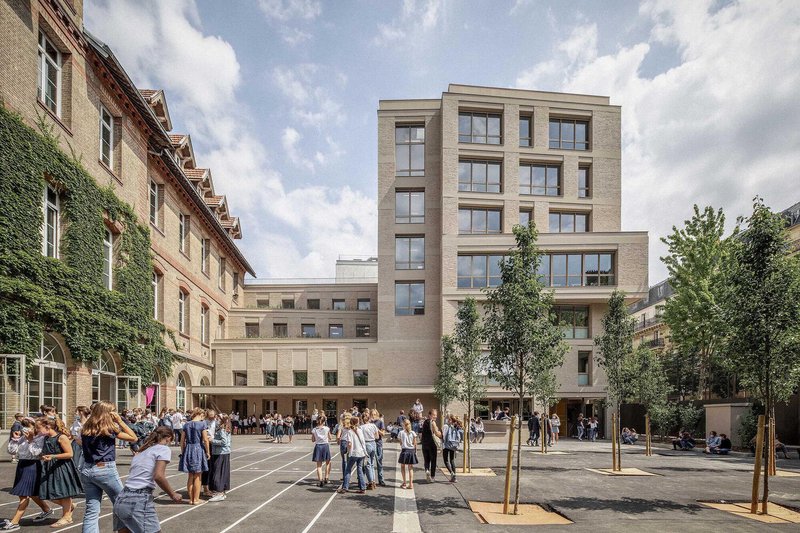
In bustling urban landscapes, inner-city schools often face numerous challenges due to architectural constraints. From noise and air pollution to limited space and tight budgets, these schools grapple with creating quality educational environments. However, a new wave of innovative design solutions showcases how inner-city schools can overcome these obstacles and provide students with green, sustainable spaces. Let's explore four remarkable examples that exemplify the potential of inner-city school architecture.
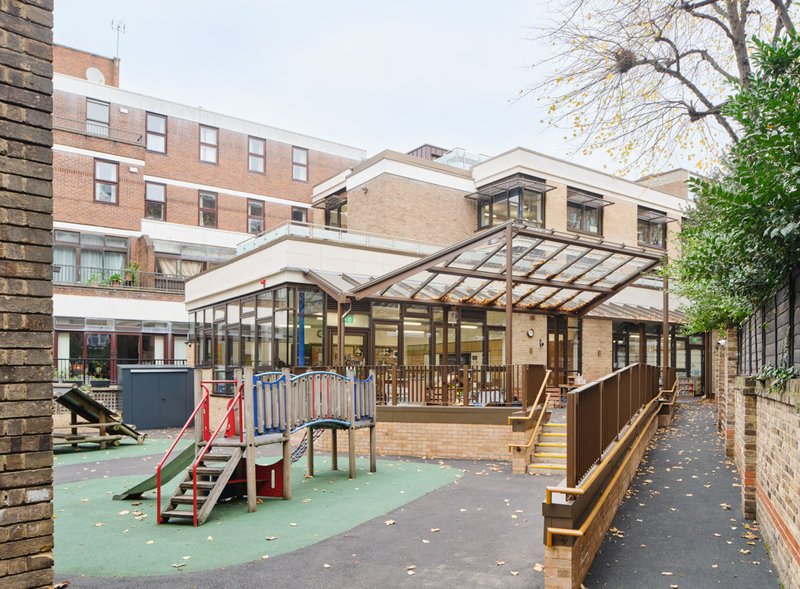
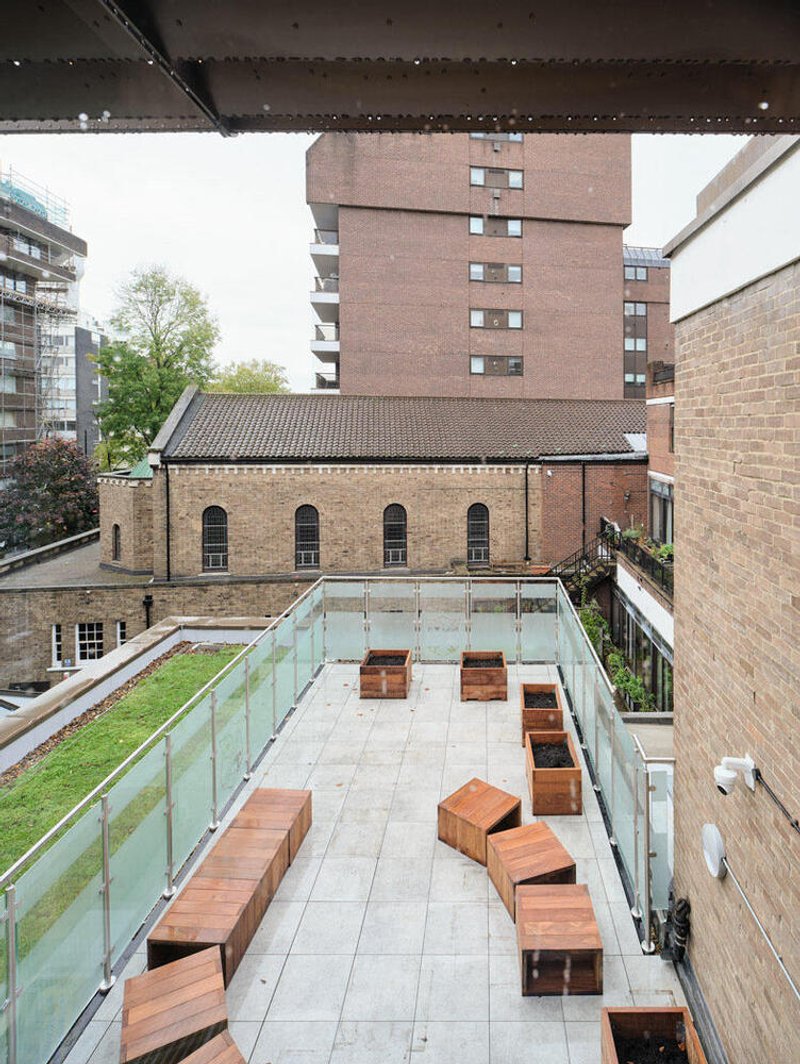
Located in St. John's Wood, London, St. Christina's Primary School faced a constricted site alongside a Chapel and a Convent, leaving no room for expansion. Paul Murphy Architects devised a solution by exchanging a single-story section for a three-story extension. By stacking additional stories, the school preserved its outdoor space, creating new roof terraces for outdoor teaching. The architects incorporated large roof lights, clerestory glazing, and full-height corner windows to infuse the interior with ample natural light, resulting in a spacious and airy learning environment.
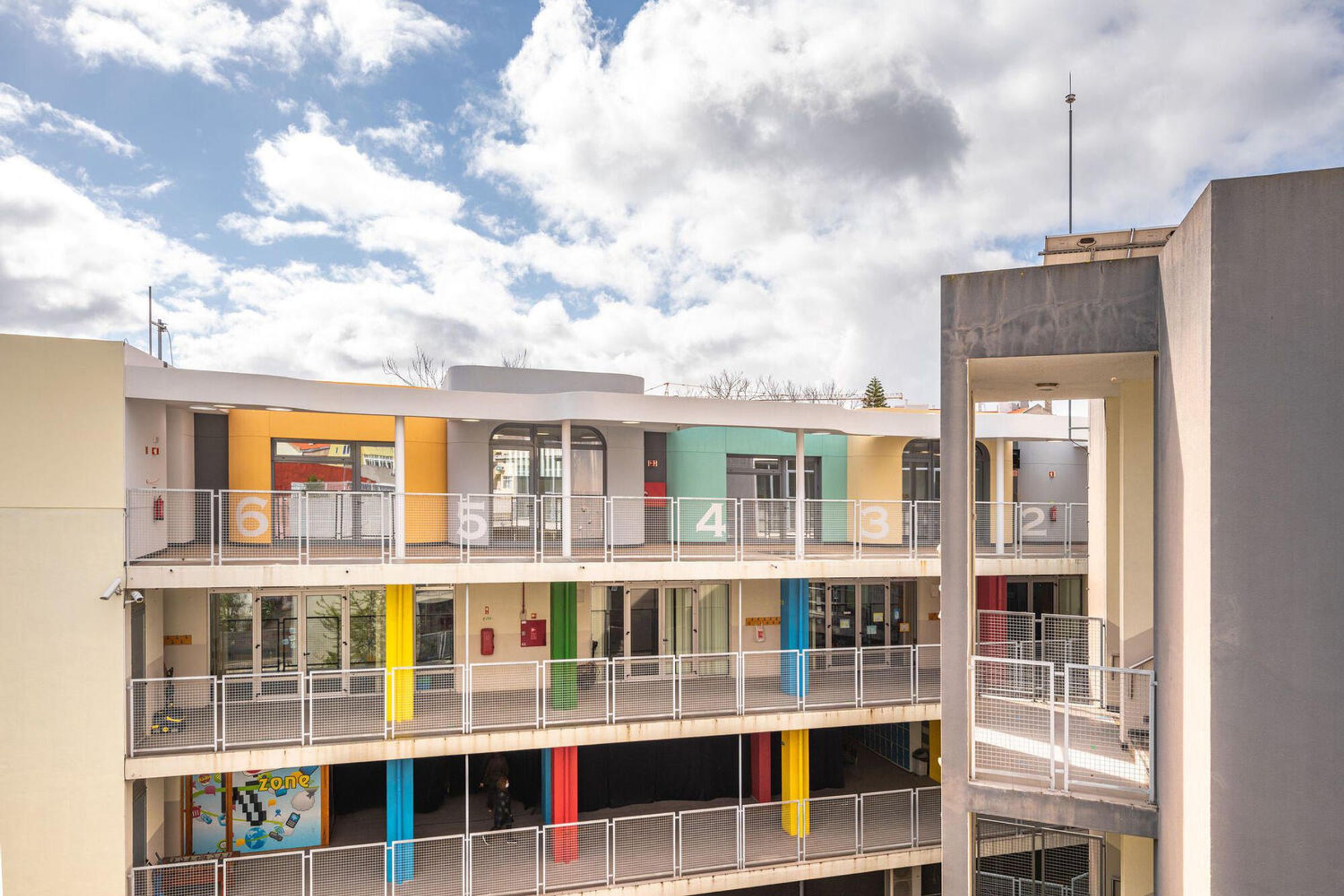
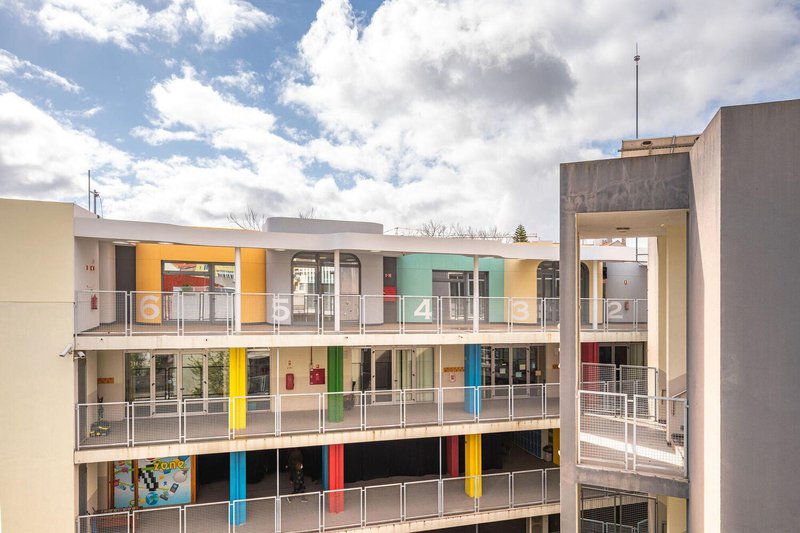
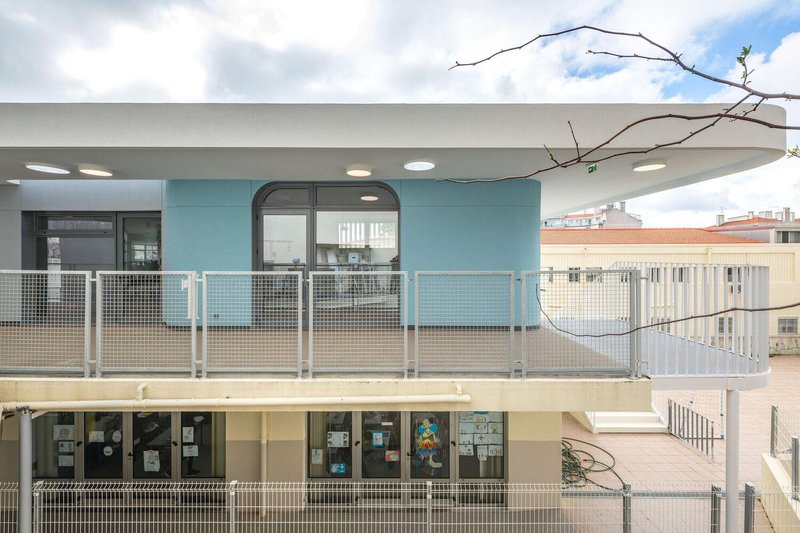
In central Lisbon, the Grémio School underwent an extension designed by Falanstério Atelier de Arquitetura. To minimize the visual impact on neighbouring residential areas, the architects opted for green roofs, which improved thermal conditions and provided low-maintenance landscaping. The new building's arrangement of classrooms prioritized exterior balconies over connecting corridors, enhancing students' connection with the outdoors. With a focus on serenity and harmony, the architects employed rounded shapes, pastel colours, and weather-protecting curved canopies to inspire calm, socialization, and inclusivity within the school.
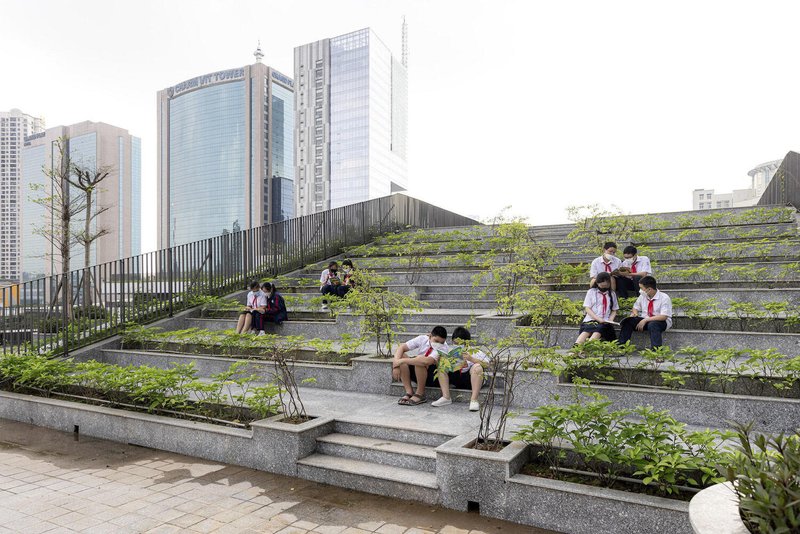
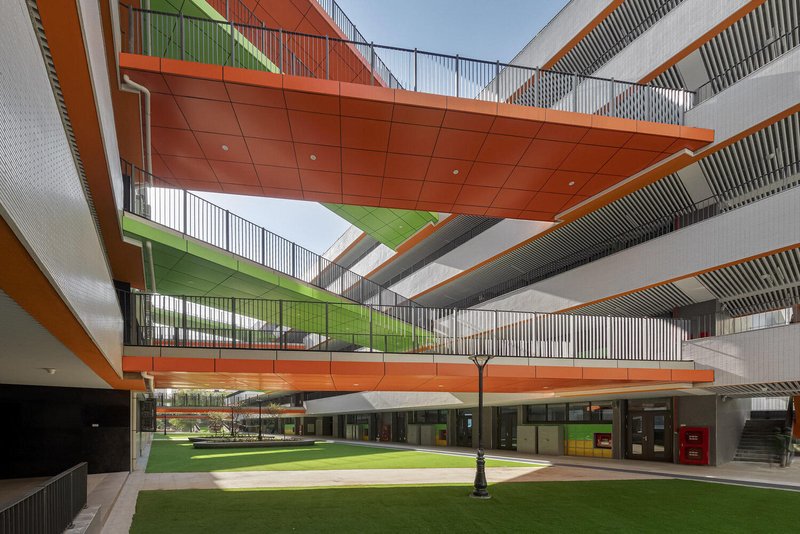
Tran Duy Hung Secondary School in Hanoi, Vietnam, aimed to create a green space and botanical garden for students. Designed by Sunjin Vietnam Joint Venture Company, the school's roof serves as an experiential natural space where students can develop a deeper understanding of the environment. The architects carefully arranged classrooms and communal areas to maximize passive ventilation, natural lighting, and noise protection, creating optimal comfort for students in the densely populated area of Hanoi.
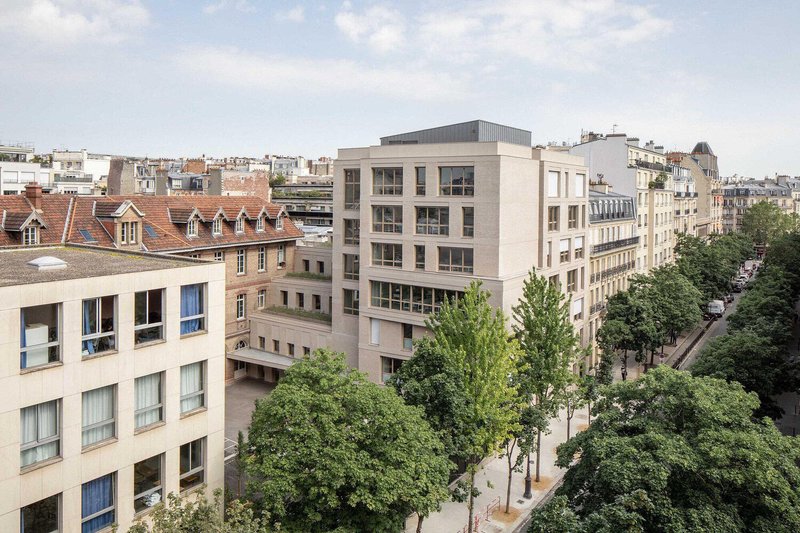
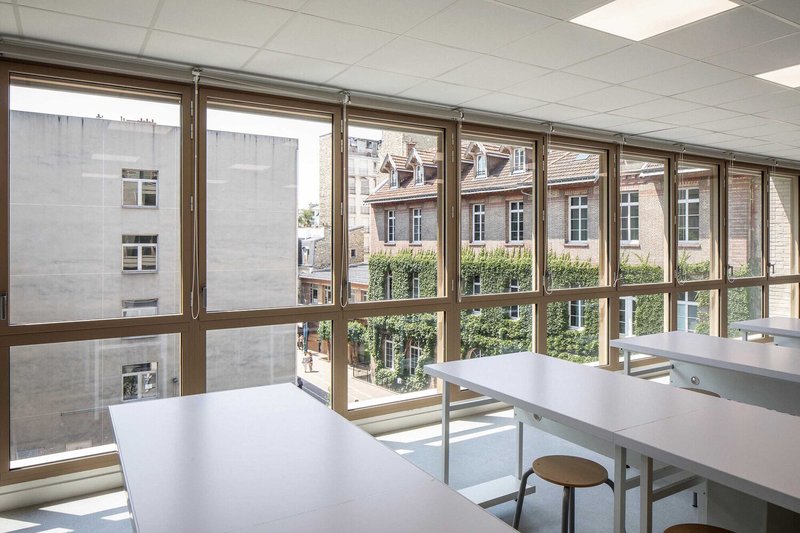
Overcoming regulatory limitations in Paris, France, Notre-Dame des Oiseaux High School demolished an existing pavilion and replaced it with a six-story extension that seamlessly integrated with the 19th-century building. Designed by Bien Urbain - Atelier d'architecture, the new construction sought longevity through simplicity and sobriety. The compact and efficient organization of volumes adhered to regulatory requirements while paying homage to the surrounding architecture and Parisian stone with its handmade blond bricks.
These innovative projects demonstrate that inner-city schools can overcome the challenges of urban architecture and create exceptional learning environments. By prioritizing green spaces, natural light, and thoughtful design, these schools serve as beacons of inspiration for the future of inner-city education. Through adaptive reuse or new construction, inner-city schools are solving the problems associated with limited space and transforming urban architecture to better serve students and their communities.