
Transforming Urban Green Spaces: Service Stations of Changning Outer-Ring Ecological Park Belt by Atelier Z+ and YeArch
The Service Stations of Changning Outer-Ring Ecological Park Belt blend adaptive reuse, timber architecture, and community spaces, enhancing Shanghai’s greenway and ecological landscape.

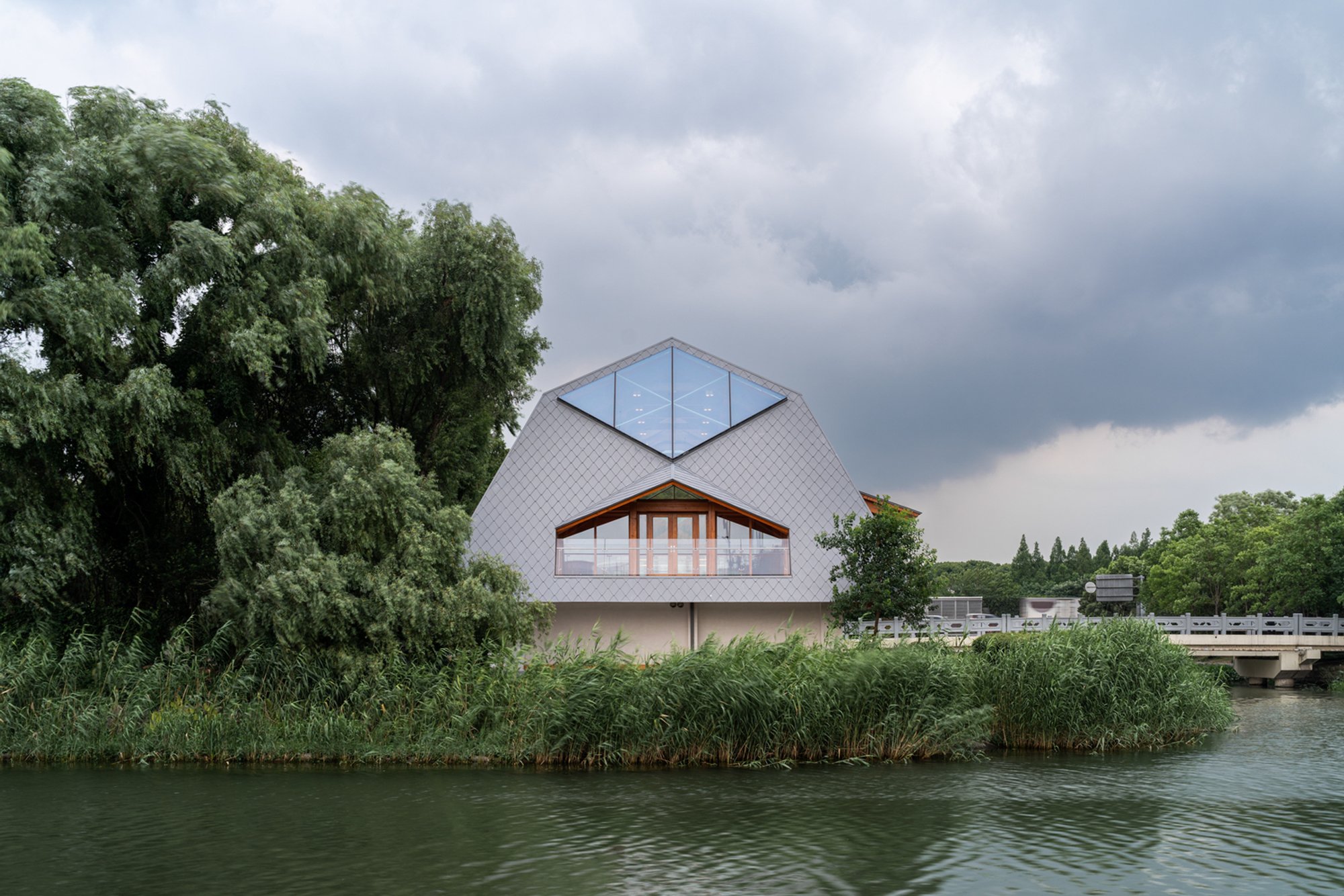
The Service Stations of Changning Outer-Ring Ecological Park Belt, designed by Atelier Z+ in collaboration with YeArch Studio, represent a thoughtful integration of ecological sustainability, historical preservation, and community-focused public architecture in Shanghai, China. Completed in 2023, this project reimagines the Outer-Ring Ecological Park Belt—a 6.25-kilometer greenway spanning from the Suzhou Creek in the north to Hongqiao Avenue in the south—through adaptive reuse, sensitive architectural interventions, and innovative timber structures.
Context and Historical Preservation
Originally established in 1995 as a protection forest, the Outer-Ring Greenbelt featured informal village houses built by locals in the 1970s and 1980s. These structures served as maintenance gang houses and flood control warehouses. Recognizing their historical and cultural significance, the design team carefully refurbished these buildings, preserving their legacy while integrating modern service station functions. This approach exemplifies context-specific design, uncovering latent spatial potential while minimizing disruption to the built environment.
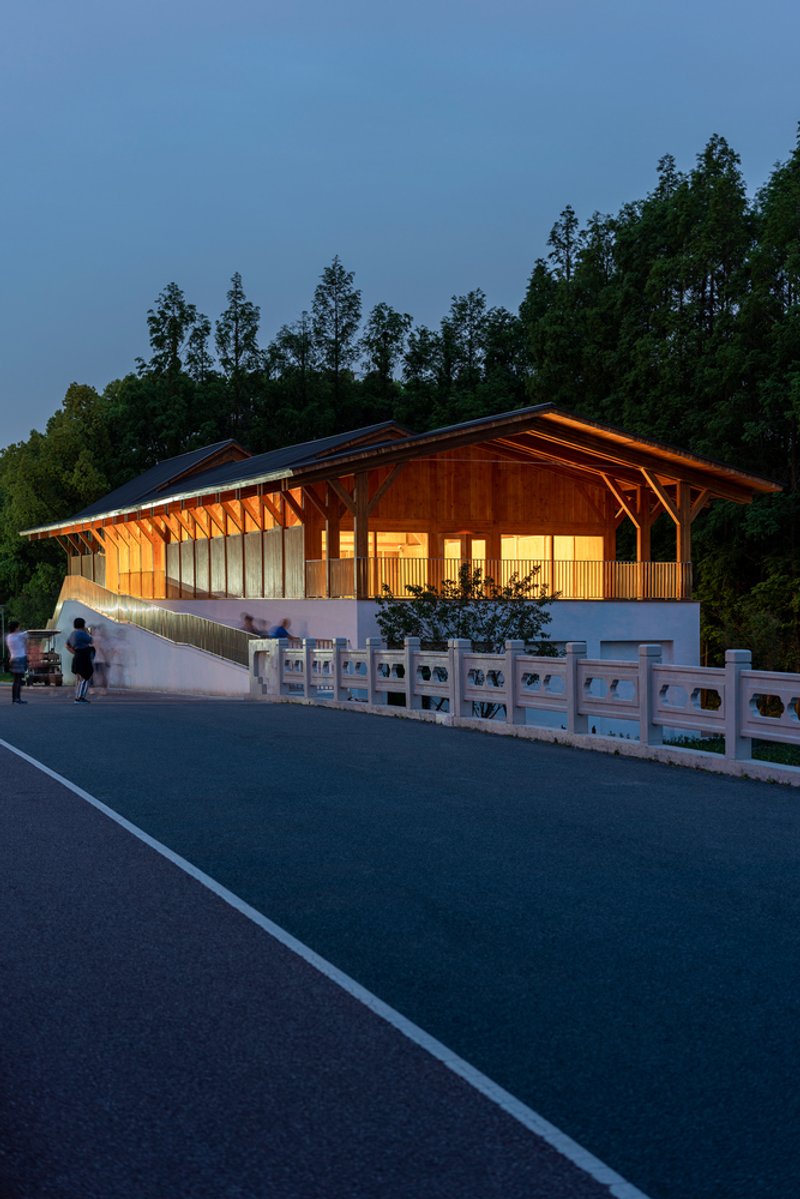
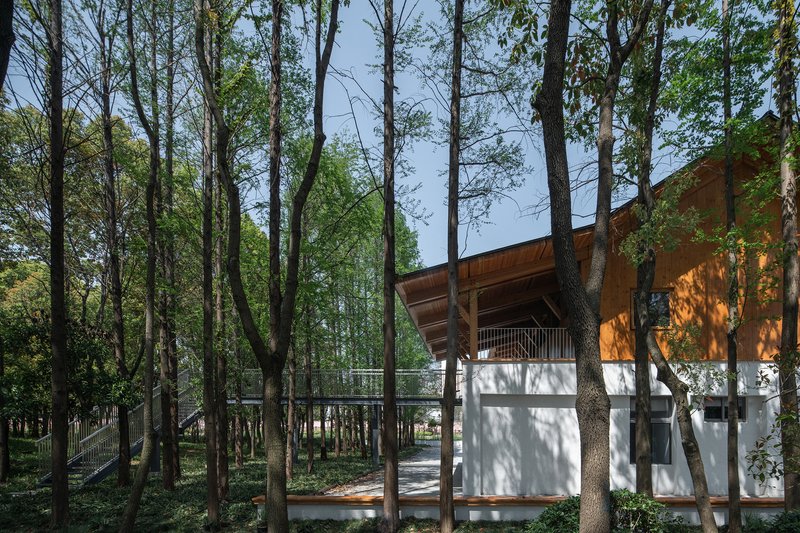
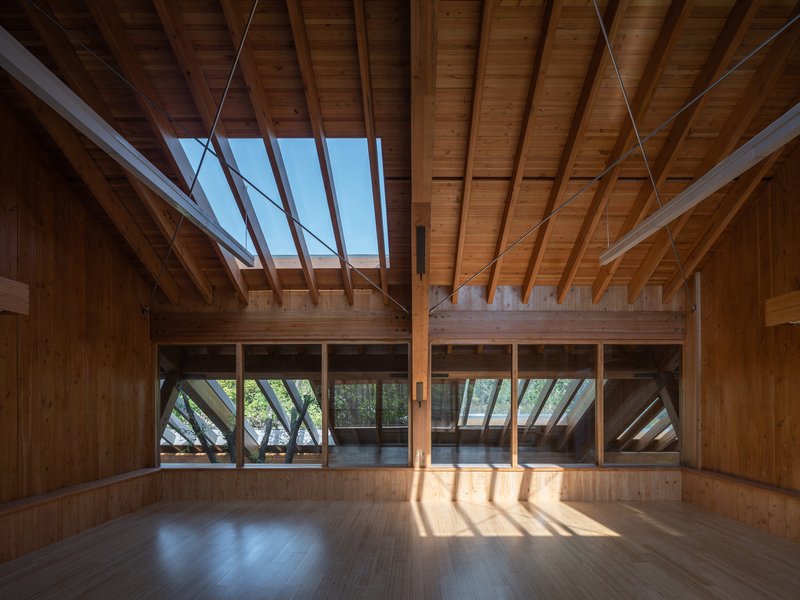
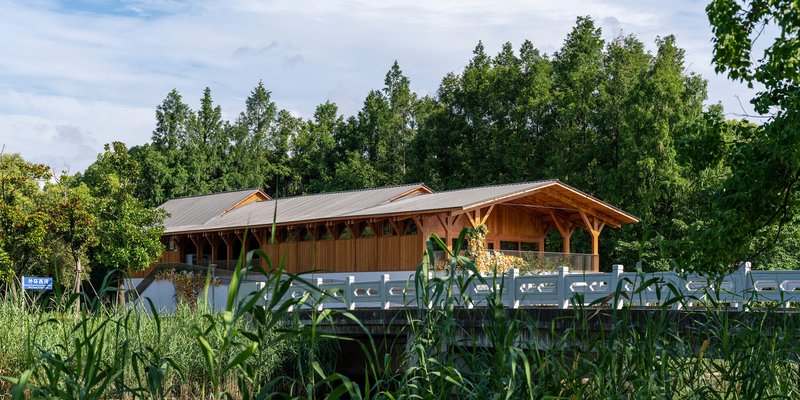
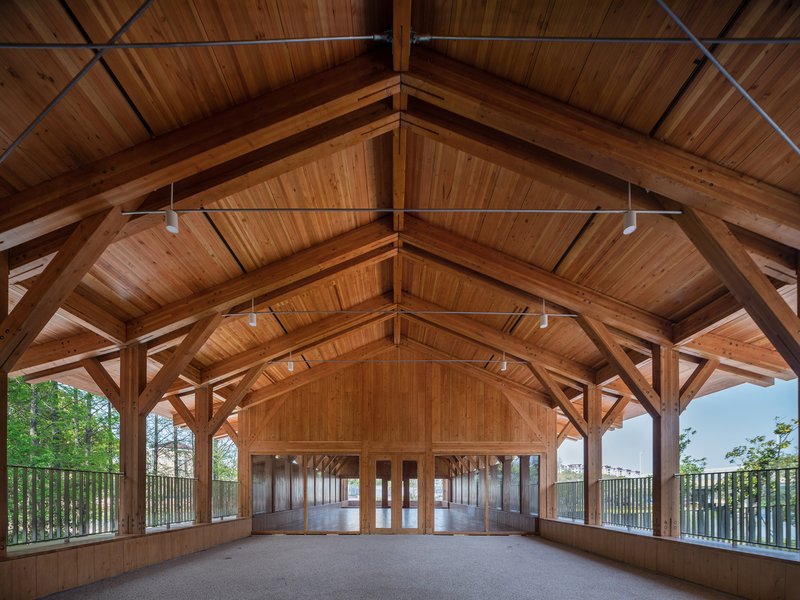
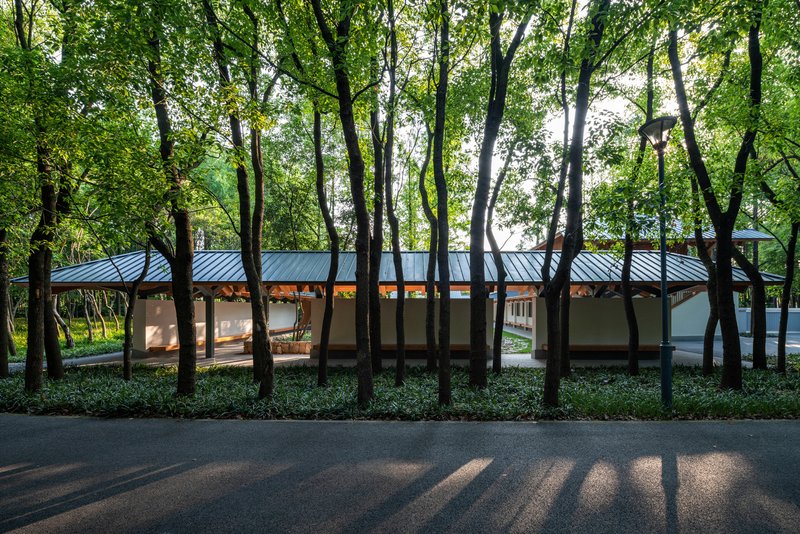
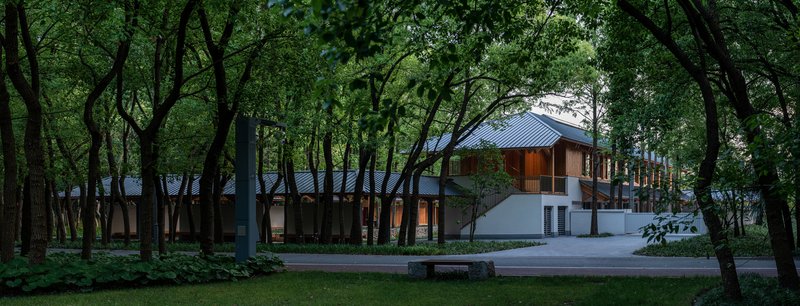
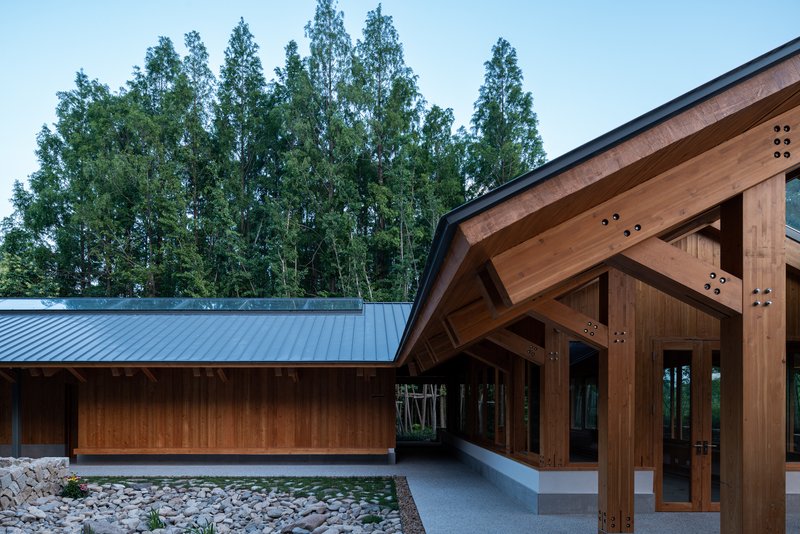
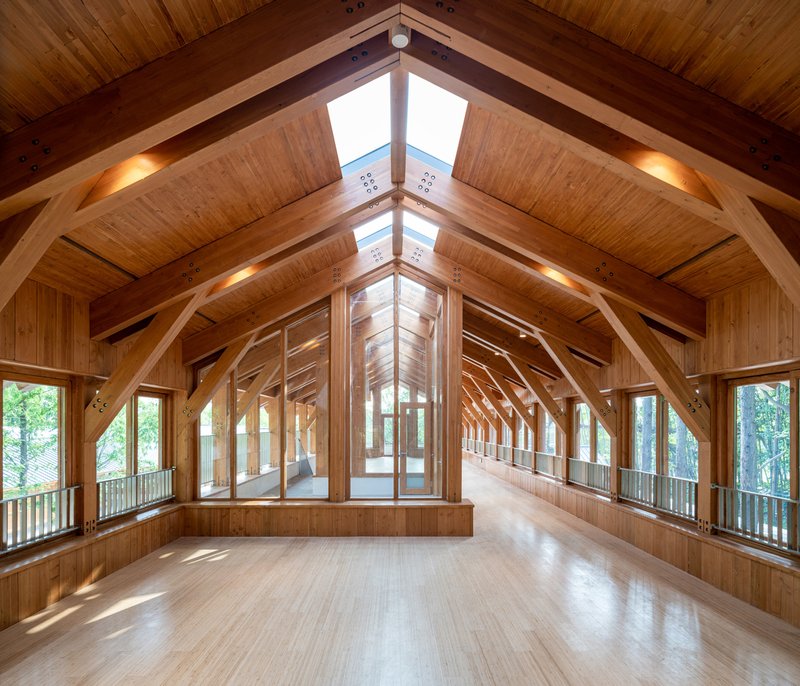
By retaining the original masonry-concrete structures on the ground floors and replacing upper portions with glued laminated timber (glulam) roofs, each service station engages harmoniously with its surroundings. The transformation respects the rustic character of rural Yangtze River Delta houses, ensuring that architectural interventions enhance rather than overpower the natural landscape.
Architectural Design and User Experience
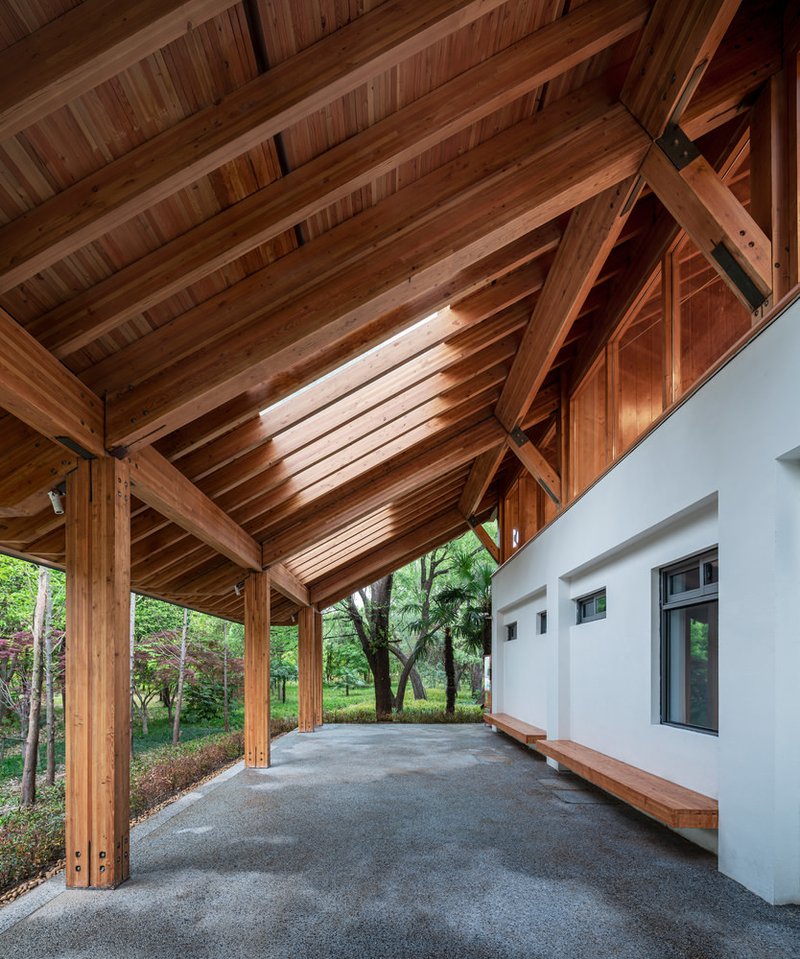
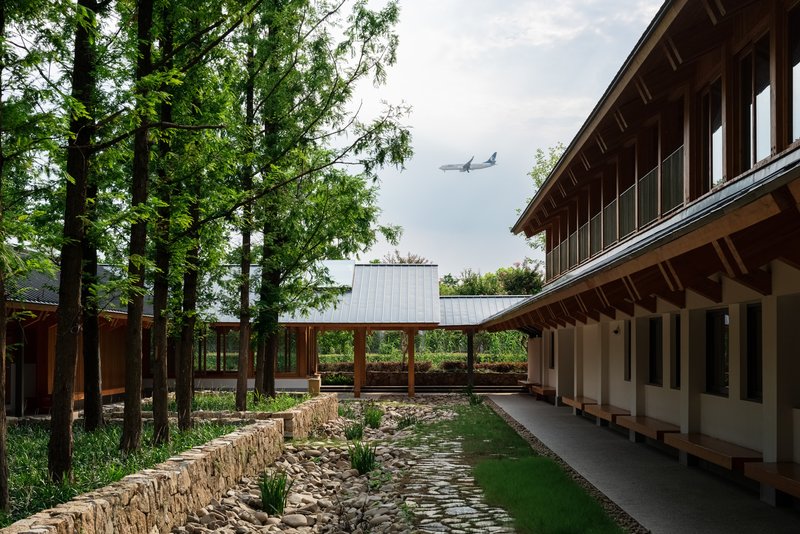
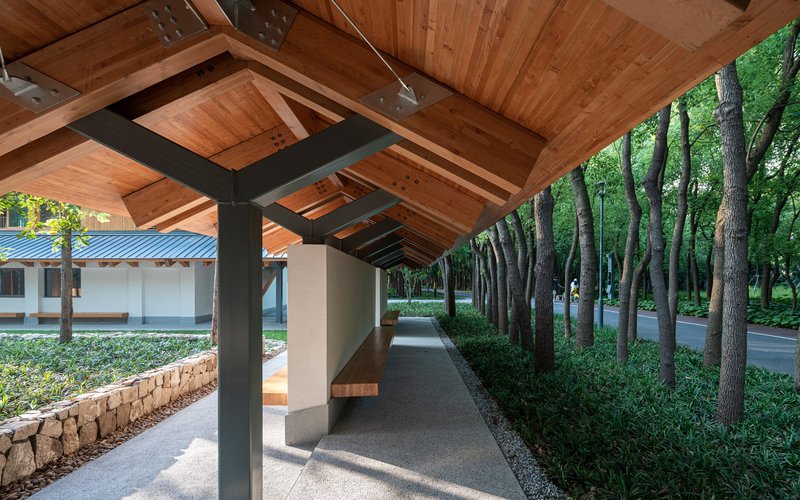
The five service stations along the ecological park belt function as multifunctional public spaces, including lounges, restrooms, reading areas, educational spaces, and community interaction hubs. The design expands user engagement through gray space features, such as corridors, loggias, eaves galleries, and balconies, which provide informal resting areas and amenities like vending machines, shared umbrellas, and storage lockers.
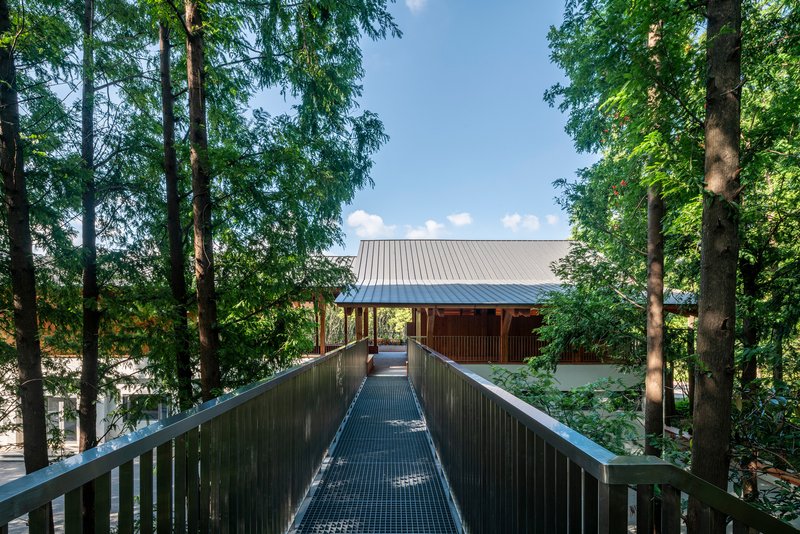
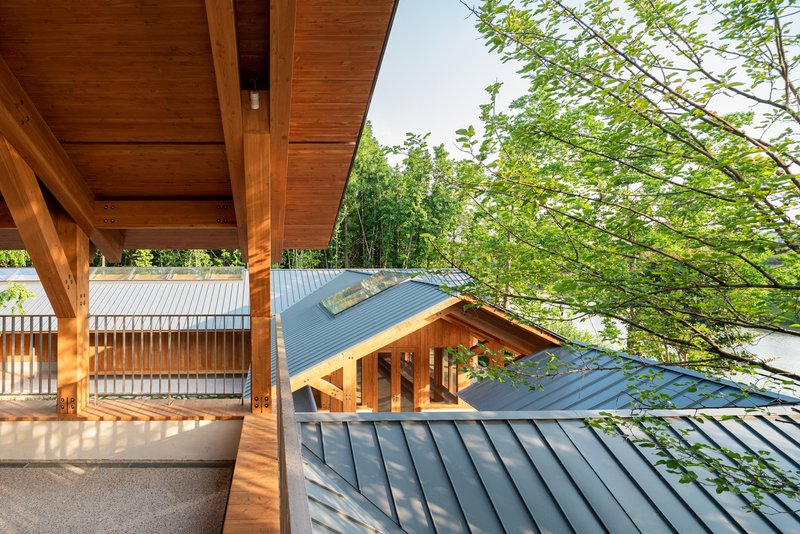
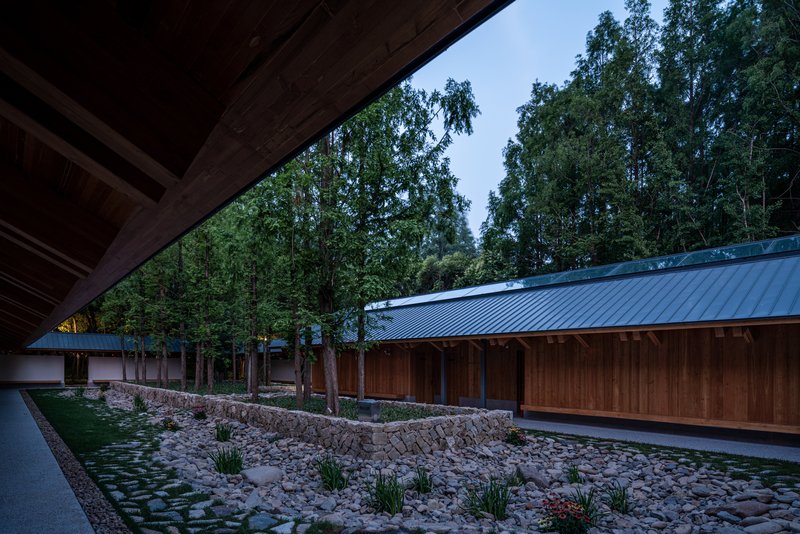
The buildings’ layouts, materials, and tectonic details create a warm, approachable atmosphere. The masonry-concrete pedestals are coated with textured white paint, while exposed timber beams, columns, and roof boarding highlight natural textures. Facades clad in timber integrate interior and exterior environments, promoting a sense of cohesion with the surrounding greenery. The deeply projecting pitched roofs, crafted with matte gray or silver-gray titanium zinc and Al-Mg-Mn alloy sheeting, add dynamic silhouettes while blending with the natural environment.
Individual Station Highlights
- No.1 Service Station (521.2 m²): Features a courtyard filled with Metasequoia trees, offering shade, tranquility, and a strong visual connection to nature.
- No.3 Service Station (688.5 m²): Includes a sky bridge leading directly into the Metasequoia forest, integrating circulation paths with the natural landscape.
- No.4 Service Station (353.9 m²): Innovative eave gallery with roof openings to accommodate infrastructure like electrical poles without disturbing structural harmony.
- No.5 Service Station (515.3 m²): Repurposes the archetype of barns to transform everyday banality into an engaging urban landscape feature.
Each station is carefully designed to highlight the ecological, cultural, and spatial qualities of the site, creating a seamless dialogue between architecture and environment.
Sustainable and Adaptive Design Approach
The project exemplifies eco-friendly and adaptive architectural practices, balancing preservation with modern functionality. By reusing existing structures, incorporating timber construction, and designing flexible public spaces, the service stations promote sustainable urban development. This model demonstrates how adaptive reuse can revitalize neglected areas while providing meaningful, engaging community amenities.
The Service Stations of Changning Outer-Ring Ecological Park Belt showcase an exemplary fusion of history, ecology, and modern architecture. Atelier Z+ and YeArch Studio have created a series of functional, aesthetically compelling public spaces that strengthen community engagement, preserve heritage, and enhance Shanghai’s urban green infrastructure. These stations exemplify how careful design interventions can transform ordinary buildings into landscape amplifiers, enriching the urban ecological and cultural environment.
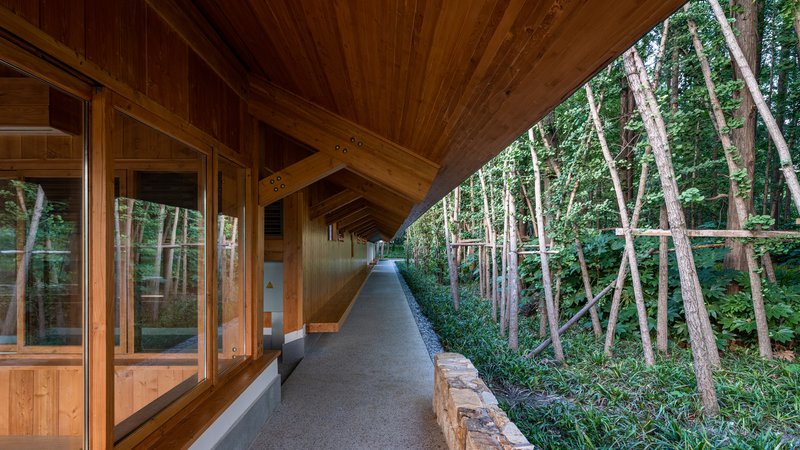
All photographs are works of Min Yang, Bei Bei



Popular Articles
Popular articles from the community

The Ken Roberts Memorial Delineation Competition (Krob)
As the most senior architectural drawing competition currently in operation anywhere in the world, it draws hundreds of entries each year, awarding the very best submissions in a series of medium-based categories.

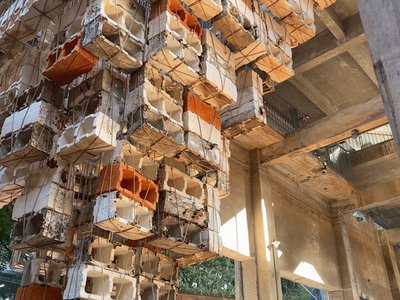
Inverted Architecture Installation by Studio Link-Arc: Exploring the Intersection of Architecture and Living Organisms
Inverted Architecture Installation by Studio Link-Arc blends mycelium, sustainability, inverted design, ecological cycles, and urban adaptive architecture in Shenzhen.


Solar Steam: A Climate-Responsive Architecture That Redefines the Monument
A climate-responsive memorial architecture that transforms heat, decay, and time into a living system reflecting humanity’s ecological impact.


Similar Reads
You might also enjoy these articles

Free Architecture Competitions You Can Enter Right Now
No entry fees, real prizes. Here are the best free architecture competitions open for submissions in 2026.
Top 15 Architecture Competitions to Enter in 2026
From student-friendly idea competitions to prestigious international awards, here are the best architecture competitions open for entries in 2026. Updated regularly.

DIY & Engineering in Computational Design : Enter the BeeGraphy Design Awards
Showcase Your Creativity with Computational Design and Open Source Projects
Innovative Design Solutions: Award-Winning Projects from Recent Architecture Competitions
Exploring award-winning architectural projects shaping the future of design, sustainability, and community.


Explore Architecture Competitions
Discover active competitions in this discipline




The International Standard for Design Portfolios


The Global Benchmark for Architecture Dissertation Awards


The Global Benchmark for Graduation Excellence


Challenge to reimagine the Iron Throne
Comments (0)
Please login or sign up to add comments
No comments yet. Be the first to comment!